Brian At Armagh(c.1000s)
A Year On Campaign
The year 1005 is one of the clearest moments in the reign of Brian Bórama, better known as Brian Boru, when politics, warfare and ecclesiastical display came together in a single, memorable northern expedition. The annalists do not give us a modern narrative with dates for each stage, and their calendars do not always align perfectly with our year numbering. Even so, several independent Irish records place Brian’s presence at Armagh, his offering on Patrick’s altar and his attempt to draw the northern kingdoms into obedience firmly in or very close to 1005. This was not a quiet year of administration. It was a year in which the new high-king’s claim to rule Ireland was tested on the roads, river crossings and sacred centres of the north.
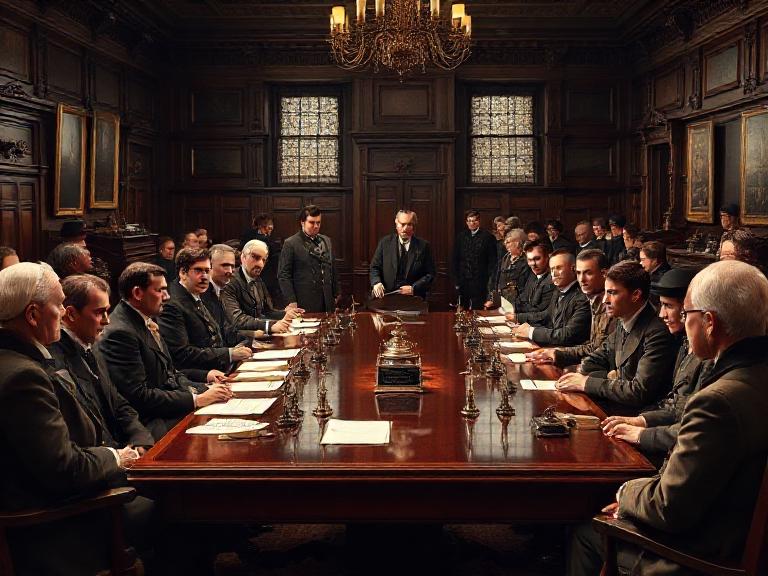
Brian had risen from the kingship of Dál Cais and Munster to dominate southern Ireland, defeating Dublin and Leinster at Glenn Máma in 999 and compelling Máel Sechnaill mac Domnaill, the long-established king of Tara, to acknowledge his superiority in 1002. Yet in 1005 that settlement still needed to be made real. High-kingship in early medieval Ireland was not a centralised state with officials in every province. It rested on hostages, tribute, military demonstrations, marriage alliances, church patronage and the ability to make other kings appear in one’s company. The annals therefore describe Brian moving not as a solitary monarch but with an army and with “the royalty of Ireland” around him.
Armagh And Authority
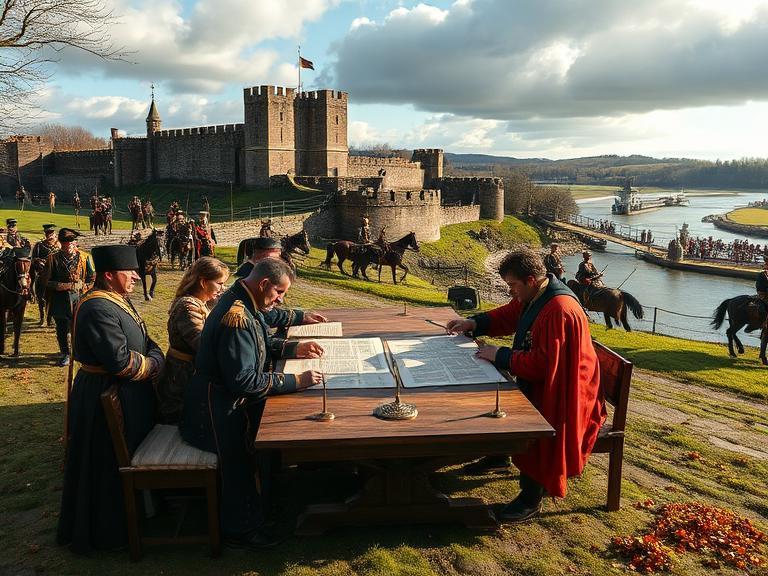
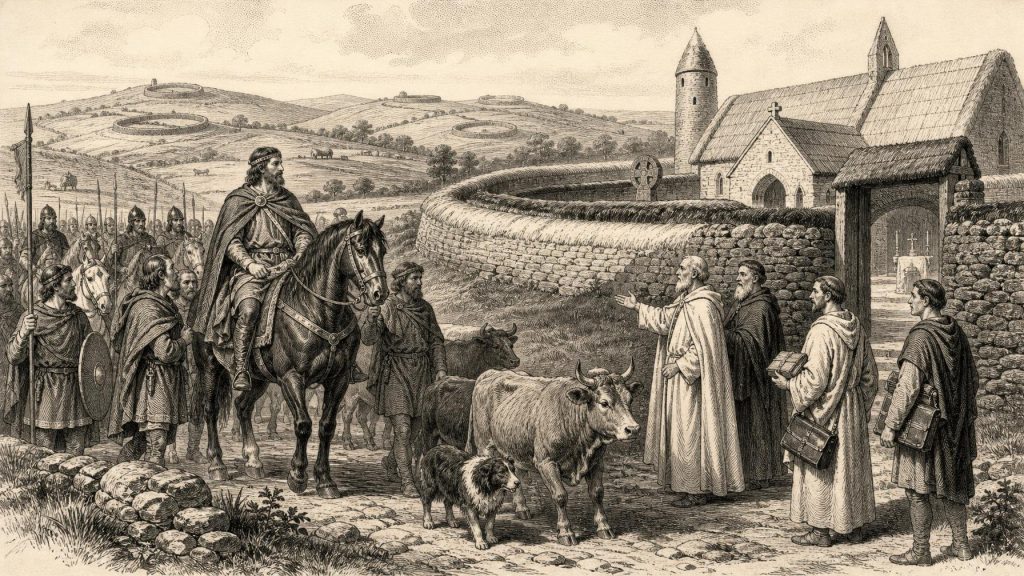
The most famous act of the year was Brian’s visit to Armagh. The Annals of Ulster state that Brian brought an army to Ard Macha, accompanied by the royal élite of Ireland, and left twenty ounces of gold on Patrick’s altar before returning with pledges. The detail is politically charged. Armagh was not merely an important monastery: it claimed primacy through its association with St Patrick, and its churchmen preserved texts, relics and traditions that could turn royal favour into sacred legitimacy. By placing gold on Patrick’s altar, Brian publicly linked his kingship with the most prestigious ecclesiastical claimant in Ireland.
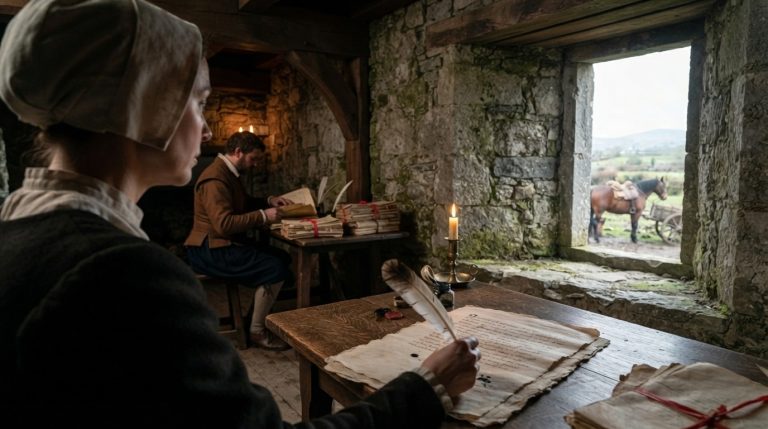
The Book of Armagh gives the visit an even sharper resonance, though here caution is needed. A Latin and Irish entry in the manuscript confirms the rights and prerogatives of Armagh and refers to Brian as imperator Scotorum, usually translated “emperor of the Irish” or “emperor of the Gaels”. The note has often been connected with the events of 1005, but scholars have debated whether it was written exactly during that visit or during another encounter between Brian and Armagh’s clerics in the following years. What can be said responsibly is that the text belongs to Brian’s lifetime, is closely connected to his alliance with Armagh, and expresses a remarkably elevated view of his authority.
That title should not be misunderstood as a coronation in the later European sense. No Irish kingdom in 1005 had an imperial bureaucracy, a standing national army or a single capital. The word mattered because it placed Brian above ordinary kings and suggested that his rule embraced not only Munster but the island’s wider Gaelic political community. It also served Armagh. If Brian recognised Patrick’s church as chief among Irish churches, Armagh in turn could present his supremacy as something sanctified rather than merely forced by arms.
The Northern Problem
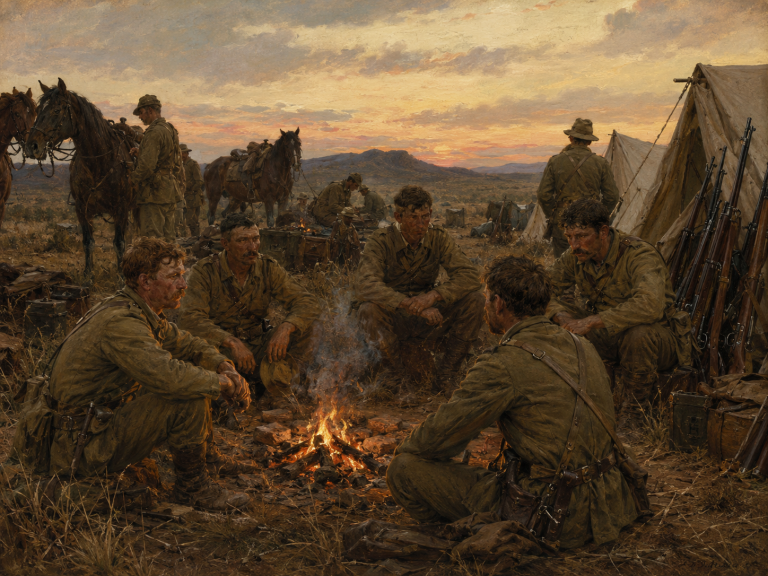
Brian’s northern expedition was directed towards Cenél Conaill, Cenél nEógain and Ulaid, the powers north of Sliab Fuait and around the old royal and ecclesiastical landscapes of Ulster. The Annals of Inisfallen describe a muster of the Gaels and foreigners south of Sliab Fuait to Armagh and to Ráith Mór of Mag Line in Ulaid, with the aim of obtaining hostages from Cenél Conaill and Cenél nEógain. Another entry says simply that Brian went to Armagh and camped at Emain Macha, the ancient royal site close to the ecclesiastical city. This image of an army encamped near Emain was deliberate theatre: Brian was using geography, memory and military pressure together.
The annalistic evidence is not perfectly uniform about the success of the expedition. The Annals of Ulster give the most triumphant version, saying that Brian returned with the pledges of the men of Ireland. The Four Masters, drawing on older material, preserve a more detailed itinerary through Connacht, over Assaroe, into Tír Conaill, Cenél nEógain, Dál Riata, Dál nAraidi, Ulaid and Conaille Muirtheimne; yet that account also says that while the Ulaid gave hostages, Brian did not obtain those of the races of Conall and Eógan. The difference matters. It suggests that 1005 was a major assertion of high-kingship, but not the final pacification of the far north.
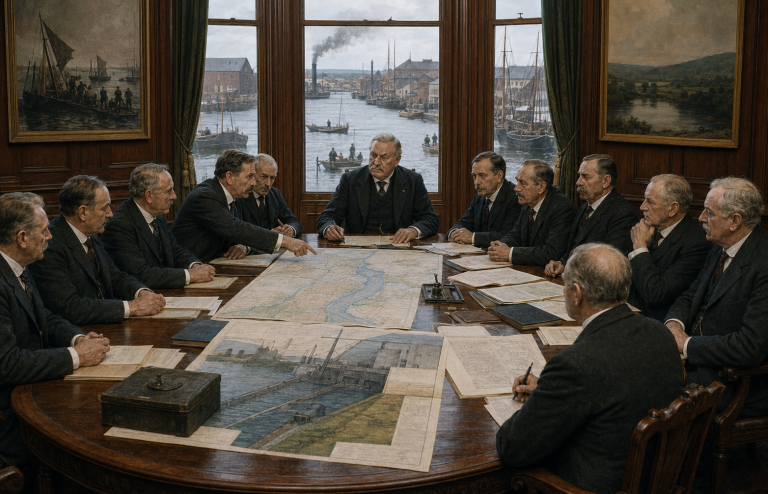
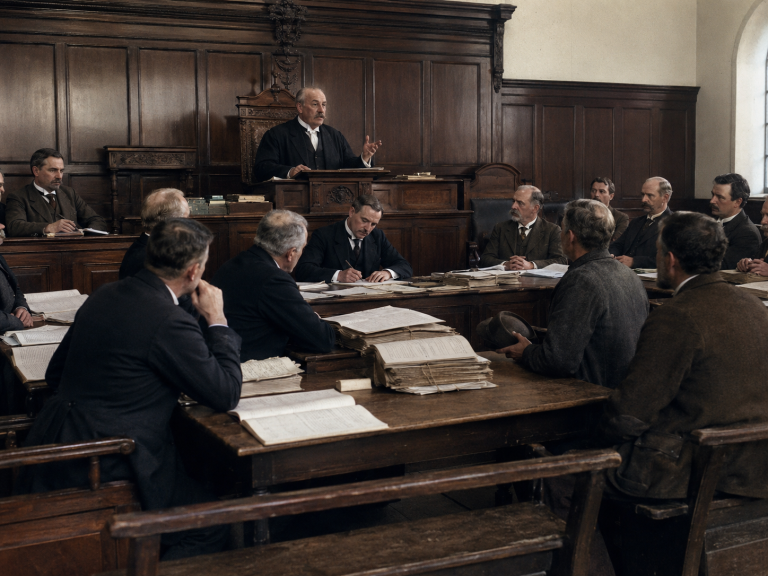
Máel Sechnaill’s position in this year was delicate. He had once been Brian’s chief rival and still retained immense prestige as king of Mide and Tara. In the campaigning world of 1005 he appears less as an independent claimant than as a great king operating within the political order Brian had imposed. Later annalistic entries for the year associate him with action against raiders from Ailech, and his continued importance in the midlands helps explain why Brian’s armies used routes through Mide and assembly places such as Tailtiu. Brian could dominate Ireland only by managing, not erasing, the older Uí Néill order.
Violence In Ulaid
While Brian projected authority from Armagh, Ulaid itself was unstable. The Annals of Ulster record that Gilla Comgaill, king of Ulaid, was killed by his own brother Máel Ruanaid. They also record that Áed son of Tomaltach, king of Leth Cathail, was killed by Flaithbertach Ua Néill during an invasion of that territory. A further entry notes a rout of the Ulaid and Uí Echach at Loch Bricrenn, where Artán, heir-designate of Uí Echach, fell. These were not isolated court quarrels. They reveal a province weakened by dynastic competition, external pressure from Cenél nEógain and the opportunism of ambitious neighbours.
Flaithbertach Ua Néill, who would become one of the leading northern figures of the early eleventh century, emerges in these notices as a forceful and dangerous actor. His attacks on Leth Cathail and his involvement in conflict around Ulaid show that Brian’s northern policy was not simply a march against passive opponents. The high-king was entering a region already in motion, where local killings could alter alliances and where the taking of hostages could be undone by the next campaign season.
Scarcity And Ordinary Lives
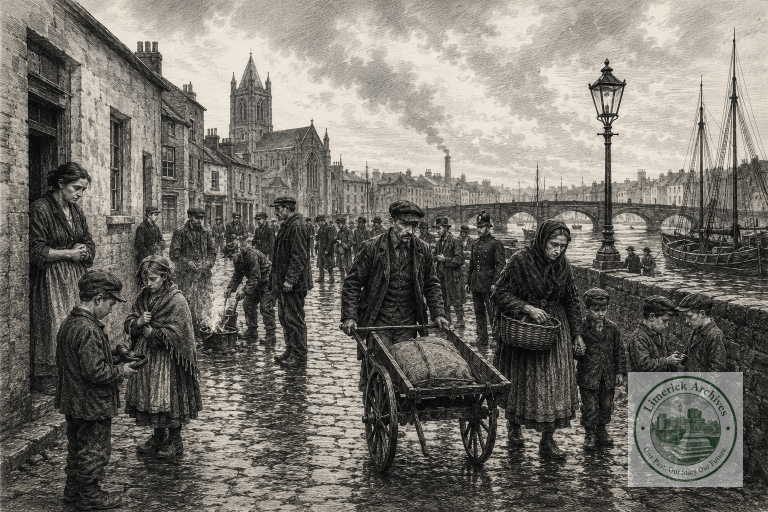
The Annals of Inisfallen preserve a stark notice for 1005: the Ulaid abandoned their land because of scarcity and scattered throughout Ireland. The entry is brief, but it opens a window onto the experience of people below the level of kings. “Scarcity” may refer to crop failure, shortage of food, disruption caused by warfare, or a combination of pressures. Whatever its precise cause, the result was movement. Families, clients, labourers, dependants and church communities in affected areas may have sought food, protection or patrons elsewhere.
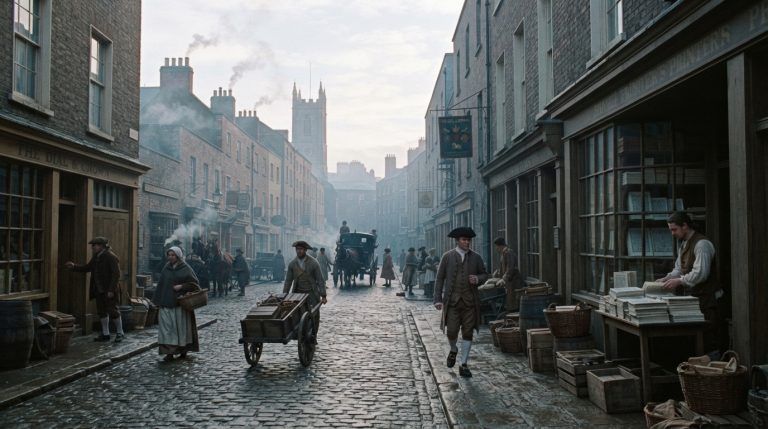
In rural Ireland most people lived within a landscape of farms, ringforts, crannogs, ecclesiastical estates, routeways and seasonal pasture. Wealth was still heavily measured in cattle, but cereal production, dairying, pigs, sheep, crafts and tribute all formed part of the economy. The military events of 1005 depended on that agrarian world. Armies needed food; kings took cattle; hostages guaranteed tribute; churches collected dues and received offerings. For an ordinary farming household, a royal hosting could mean the passing of armed men, requisitioned supplies, danger to stock and the possibility that local lordship would change hands.
The notice of scarcity in Ulaid should also temper any overly heroic reading of the year. Brian’s offering of gold at Armagh and his elevated title in the Book of Armagh are impressive, but the same year’s record includes hunger, displacement and killings among regional rulers. Early medieval kingship promised peace and protection, yet it often operated through coercion. The success of a king could be measured by the pledges he carried home; the cost might be borne by communities whose harvests, cattle and security were already strained.
Towns, Trade And The Foreigners
The annals describe Brian’s muster as including both Gaedil and foreigners, a reminder that the Norse-Irish towns were now woven into island politics. Dublin, ruled by Sitriuc Silkbeard after the upheavals around Glenn Máma, was not outside Irish affairs. Its ships, warriors, craftsmen, coinage and trade links made it valuable to any king seeking island-wide power. By around this period Dublin was minting silver pennies in Sitriuc’s name, copying English models and reflecting the city’s place in an Irish Sea economy connected to Britain and beyond.
No surviving source lets us follow a Dublin merchant or craftsman through 1005 specifically. Still, the participation of “foreigners” in Brian’s hostings shows that the towns were not merely targets of Gaelic kings; they could also be allies, clients or military resources. Goods, silver, slaves, textiles, metalwork and cattle moved through these networks. Brian’s supremacy therefore rested partly on his ability to command not only the older rural kingdoms but also the maritime wealth of the Hiberno-Norse ports.
What 1005 Meant
By the end of the year, Brian had made one of the most dramatic statements of his reign. He had brought an army to Armagh, honoured Patrick’s altar with gold, associated himself with the church that claimed primacy in Ireland, and pressed the northern dynasties for hostages. Yet the records also show limits: Cenél Conaill and Cenél nEógain were not simply absorbed; Ulaid was torn by violence; scarcity scattered people from their lands; and the old Uí Néill networks remained necessary to the running of politics.
For Ireland, 1005 was therefore not the completion of unity but a year of assertion. Brian’s kingship looked wider and more sacral than that of most earlier rulers, but it still had to be renewed by movement, gifts, force and negotiation. The scene at Armagh — an ageing Munster king, northern clerics, relics, gold, hostages and an army within sight of ancient Emain Macha — captures the essence of the year. Power in Ireland was being reimagined, but it was still being made in the old ways: on campaign, before altars, and under the watchful eyes of rival kings.
Primary Sources
- The Annals of Ulster: Year U1005
- The Annals of Ulster
- Annals of the Kingdom of Ireland by the Four Masters
- Annals of Inisfallen
- Chronicon Scotorum
- The Book of Armagh: Dublin, Trinity College, MS 52
- ‘Emperor of the Irish’: Brian Boru and the Battle of Clontarf 1014 — Rise to Power
- Brian Boru and the Book of Armagh
- Brian Boru — Brian Boru Millennium
- Brian Bórama (Bóruma, Boru)
- Ua Néill, Flaithbertach
- Sitriuc Silkbeard (Sitric, Sigtryggr Ólafsson Silkiskeggi)
- Patrick (Patricius, Pátraic, Pádraig)
- Coins and Money in Ireland from the 10th Century to the Present Day
- Coin: Sihtric Anlafsson Silkbeard
- Early Medieval Archaeology Project Report
- Early Medieval Ireland: Archaeological Excavations 1930–2009
- The Archaeology of Livestock and Cereal Production in Early Medieval Ireland, AD 400–1100
- Agriculture, Settlement and Society in Early Medieval Ireland
- The Vikings in Ireland
- The Primatial Claims of Armagh, Kildare and Canterbury
- The Book of Armagh