
Archived: 9 September 2026
Abstract
Around 34,000 calibrated years BP, Ireland experienced severe climatic change before the Last Glacial Maximum. Cold open grassland, steppe and tundra supported diverse mammals, documented chiefly at Castlepook Cave, County Cork. Its disturbed, long-lived deposits contain reindeer, bears, wolves, arctic foxes, mammoths, giant deer and Ireland’s only spotted-hyaena remains, but do not represent one moment. A reindeer bone possibly cut by tools suggests human contact around 33,000 years ago, yet lacks secure context. No hearths, tools, settlements or burials confirm permanent occupation. Expanding ice later erased landscapes and deposits, leaving Castlepook crucial evidence for pre-glacial environments but unresolved human history.
Read Article

Archived: 9 September 2026
Abstract
About 33,900 calibrated years before present, Ireland experienced unstable MIS 3 conditions, with fluctuating ice, sea levels and open steppe-tundra habitats. Castlepook Cave, County Cork, preserves fauna including mammoth, reindeer, giant deer, hyaena, wolf and Arctic fox, although disturbed deposits and revised dates demand caution. Evidence indicates a cold-adapted animal community and carnivore activity, not a single contemporaneous landscape. A cut-marked reindeer femur plausibly suggests Upper Palaeolithic visitors butchered game, but cannot prove settlement. No associated tools, hearths or human remains exist. Later glaciation destroyed or buried evidence, leaving caves as fragile archives of possible early human presence in Ireland.
Read Article

Archived: 9 September 2026
Abstract
31,923 BCE is an approximate modern label within Marine Isotope Stage 3, not a datable Irish event. Castlepook Cave in north Cork preserves disturbed pre-Last Glacial Maximum faunal remains, including reindeer, bears, wolves, Arctic foxes, lemmings, giant deer, mammoths and hyaenas. These animals indicate a fluctuating, open, cold environment rather than permanent ice cover. A reindeer femur dated to 31,000 BCE may bear a stone-tool butchery mark, potentially Ireland’s earliest human evidence. However, no associated tools, hearths or settlement survive, and the mark remains contested. The evidence suggests possible hunter-gatherer visits, not proven occupation, during a landscape transformed by glaciation.
Read Article

Archived: 9 September 2026
Abstract
Around 33,900 years ago, Ireland was a cold, changing Late Pleistocene landscape, with lower sea levels, open vegetation and advancing ice sheets. Castlepook Cave, County Cork, preserves Ireland’s richest assemblage of vertebrate remains from this period, including mammoth, giant deer, reindeer, bear and hyaena. Its deposits accumulated over millennia and cannot reconstruct a single ecosystem or event. A reindeer femur reportedly bearing a stone-tool cut mark suggests possible human butchery around 31,000 BC. However, no associated tools, hearths, dwellings or human remains confirm settlement. Ireland’s earliest possible human activity therefore remains fragmentary, while later glaciation erased or buried much evidence.
Read Article

Archived: 9 September 2026
Abstract
At the notional date of 31,925 BCE, Ireland lay in a cold, unstable Late Pleistocene environment preceding maximum glaciation. Open steppe, shifting coastlines, glaciers and periglacial conditions supported intermittent fauna including reindeer, mammoth, giant deer, bears, wolves, Arctic foxes and hyaenas. Castlepook Cave, County Cork, contains a reindeer femur, roughly 33,000 years old, possibly cut by a stone tool during butchery. If confirmed, this suggests transient human presence, not permanent settlement or a defined culture. Cave disturbance, incomplete early excavation, glacial erosion and drowned landscapes limit interpretation. Secure settlement appears only in Mesolithic, after deglaciation, around early eighth millennium BCE.
Read Article

Archived: 9 September 2026
Abstract
Ireland around 31,926 BCE cannot be reconstructed as a calendar-year history. During later Marine Isotope Stage 3, before the Last Glacial Maximum, a cold, unstable landscape faced expanding and regionally variable ice. Cave deposits, particularly at Castlepook, preserve sparse evidence of mammoth, reindeer, giant deer, bears and hyaenas, indicating intermittently habitable open environments. A marked reindeer femur may record human butchery about 33,000 years ago, but remains contested and proves neither settlement nor continuous occupation. Disturbed early excavations complicate interpretation. No secure evidence exists for communities, artefacts, farming, politics, religion or art. Sustained settlement appears after deglaciation, around 8000 BCE.
Read Article

Archived: 9 September 2026
Abstract
Around 31,927 BCE, Ireland lay in Marine Isotope Stage 3, before major Last Glacial Maximum ice expansion. Derryvree sediments in County Fermanagh, dated broadly to 36,900–31,700 years before present, preserve evidence of ice-free but intensely cold tundra terrain. Similar deposits indicate exposed north-central ground until about 34,000 years ago, before advancing ice transformed habitats. Cave remains demonstrate diverse Pleistocene fauna, although dates and associations require caution. No securely dated human settlement or community is known. A possibly butchered reindeer bone from Castlepook may indicate an early visit, but remains unconfirmed. The record principally documents environmental change, not conventional human history.
Read Article

Archived: 9 September 2026
Abstract
Around 31,928 BCE, Ireland lay in the Midlandian glacial stage, before the Last Glacial Maximum. Cold, unstable conditions created open grassland, periglacial erosion, altered rivers and lower sea levels, while expanding ice increasingly reshaped landscapes. Later glaciation destroyed much evidence, making caves crucial archives. Castlepook Cave in County Cork preserves remains of mammoth, giant deer, reindeer, predators and small cold-adapted mammals, demonstrating a varied fauna. A possibly tool-marked reindeer bone may indicate fleeting Upper Palaeolithic human contact, but cannot prove settlement. No associated tools, hearths, dwellings or social record survive. Ireland was a marginal, changing environment, not a human homeland.
Read Article

Archived: 9 September 2026
Abstract
31,929 BCE is a modern label for a Late Pleistocene phase, not a recoverable Irish year. During Marine Isotope Stage 3, Ireland experienced cold, unstable conditions before the Last Glacial Maximum, with fluctuating ice margins, sea levels and landscapes. Organic silts at Derryvree, County Fermanagh, dated broadly to 36,900–31,700 cal BP, indicate locally ice-free intervals and treeless wet vegetation. Cave deposits, including Castlepook, show cold-stage mammals occurred during the wider period, though not necessarily then. No securely dated human evidence exists. Later glaciation erased much evidence; surviving sediments, landforms and fauna provide an incomplete environmental record of developing Irish glaciation.
Read Article
Archived: 9 September 2026
Abstract
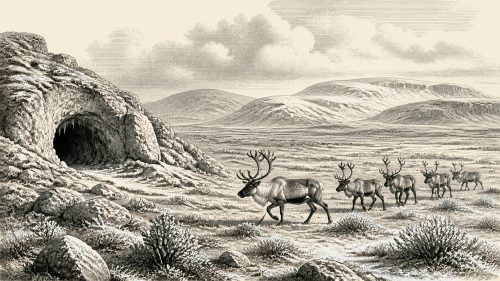
Around 31,930 BCE, Ireland was a cold, unstable Late Pleistocene landscape before maximum glaciation, with altered coasts and water separating it from Britain. Castlepook Cave in County Cork preserves fauna dating broadly to Marine Isotope Stage 3, including reindeer, mammoth, giant deer, predators and cold-adapted species, indicating open tundra or steppe environments. A reindeer femur reportedly bearing stone-tool cut marks may signal brief Upper Palaeolithic human activity, but excavation methods, mixed deposits, carnivore disturbance and uncertain dating prevent conclusions. No tools, hearths, homes or occupation layers prove settlement. The evidence suggests animals occupied southern Ireland; people may have visited intermittently.
Read Article

Archived: 9 September 2026
Abstract
At roughly 31,931 BCE, Ireland lay in the climatically unstable Late Pleistocene, before the maximum extent of the last British–Irish Ice Sheet. Its cold, changing landscapes probably included open grassland, tundra, bare ground and restricted woodland, supporting mammals such as reindeer, mammoth, giant deer, bears, wolves, hyaenas and Arctic foxes. Castlepook Cave, County Cork, preserves crucial but imperfect faunal evidence. A reindeer femur reportedly bears a stone-tool cut mark, suggesting possible human butchery around 31,000 BCE. However, disturbed old deposits and the absence of settlements preclude claims of permanent occupation. Later glaciation and rising seas obscured sites; research remains necessary.
Read Article

Archived: 9 September 2026
Abstract
Around 31,932 BCE, Ireland lay in a cold, unstable pre-Last Glacial Maximum environment as the British–Irish Ice Sheet expanded. Precise annual dating is impossible; evidence derives from radiocarbon-dated cave fauna and reconstructions. Castlepook Cave, County Cork, preserved remains including mammoth, reindeer, giant deer, bear, wolf, Arctic fox, lemmings and hyaena, indicating intermittently habitable open terrain. A reindeer bone may bear stone-tool marks and date to about 33,000 years ago, suggesting a possible human visit. However, disturbed old collections and uncertain context prevent proof of occupation. Later glaciation erased much evidence, while modern re-dating and excavation continue refining Ireland's Palaeolithic record.
Read Article

Archived: 9 September 2026
Abstract
31,933 BCE is an artificial label for a period near the onset of the last Irish Ice Sheet's expansion, rather than a datable event. Ireland experienced uneven cooling, changing coastlines and glaciated landscapes, while maximum ice extent followed later. Buried sediments in Fermanagh indicate areas remained ice-free until roughly 34,000 years ago. Castlepook Cave, Cork, preserves remains of mammoth, giant deer, reindeer, bear, hyaena and Ice Age animals, demonstrating open habitats and food webs. A possibly butchered reindeer bone suggests, but does not prove, human visits. No evidence establishes settlement, society or political history; environmental change dominates the fragile record.
Read Article

Archived: 9 September 2026
Abstract
31,934 BCE is a modern label for Late Pleistocene Ireland, not a date for a documented event. During unstable MIS 3 conditions, Ireland was probably partly ice-free, with cold open habitats, altered coastlines and increasingly severe glaciation approaching. Castlepook Cave in County Cork preserves fauna, including reindeer, mammoth, bear, wolf and hyaena, accumulated across long periods. A reindeer femur reportedly bears a stone-tool butchery mark dated about 33,000 BCE, offering tentative evidence of a human visit. Disturbed deposits and lacking associated artefacts prevent claims of settlement. No direct evidence supports Irish society, culture or occupation; dating and excavation are required.
Read Article
Archived: 9 September 2026
Abstract
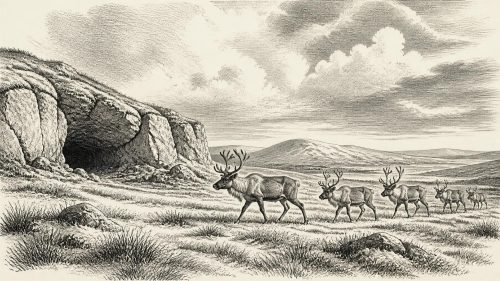
31,935 BCE is not a precisely recoverable Irish date but falls within Marine Isotope Stage 3, a fluctuating cold period preceding the Last Glacial Maximum. Ireland supported open steppe-tundra environments, coastlines and diverse Ice-Age fauna. Castlepook Cave, County Cork, preserves bones of mammoth, giant deer, reindeer, hyena and animals, although its long-accumulated deposits cannot establish contemporaneous species or human activity. A reported stone-tool cut mark on a reindeer femur suggests a possible early Upper Palaeolithic visit, but not permanent settlement. No evidence supports farming, polities, warfare or symbolic culture. Approaching glaciation subsequently transformed landscapes and obscured much potential archaeological evidence.
Read Article
Archived: 9 September 2026
Abstract
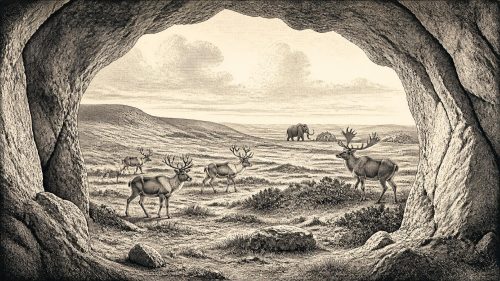
31,936 BCE is a modern label for a late Pleistocene period, not a datable Irish event. Ireland lay in a cold, unstable landscape before the Last Glacial Maximum, as expanding ice and changing sea levels reshaped routes, habitats and surviving evidence. Southern caves, particularly Castlepook in County Cork, preserve remains of mammoth, reindeer, giant deer, bears, foxes, hyaenas and other fauna, though deposits span long periods and were disturbed. No secure human settlement is known. A possibly tool-marked reindeer bone, dated near 33,000 years ago, may indicate brief human activity, but requires confirmation. Glacial erosion explains Ireland's scant surviving evidence.
Read Article

Archived: 9 September 2026
Abstract
About 31,937 BCE, Ireland was a cold, open and environmentally unstable landscape in the later Last Glacial Period, approaching maximum glaciation. Lower sea levels altered coastlines and may have eased animal movement from Britain and Europe. Castlepook Cave, County Cork, preserves remains of reindeer, mammoth, giant deer, predators and other fauna, though deposits span different times. A reindeer bone reportedly bearing stone-tool butchery marks may indicate human passage around 33,000 years ago, but cannot prove permanent occupation. Later ice erosion and inundation destroyed evidence. No society, culture, trade or institutions can be inferred; sustained settlement is documented from the Mesolithic.
Read Article

Archived: 9 September 2026
Abstract
31,938 BCE is a modern label for an imprecisely dated phase of late Marine Isotope Stage 3, not an identifiable Irish event. Ireland experienced unstable, cold conditions before maximum glaciation, with open grassland, sedges, dwarf shrubs and marked seasonality indicated by Ulster pollen and beetles. Castlepook Cave preserves a diverse fauna, including reindeer, mammoth, bear, giant deer and hyaena, showing changing animal access despite uncertain routes. A cut-marked reindeer bone may indicate Upper Palaeolithic butchery and brief human visits. However, no associated camp or tools prove settlement. The period chiefly reveals a changing Ice Age landscape and rare, precarious evidence.
Read Article

Archived: 9 September 2026
Abstract
Around 31,939 BCE, Ireland was experiencing unstable Late Pleistocene conditions near the expansion of the last Irish Ice Sheet, rather than a single uniformly glaciated landscape. Glacial, sedimentary and cave evidence indicates cold open habitats supporting reindeer, mammoth, giant deer, bears, wolves, Arctic foxes, lemmings and hyaenas, especially in southern caves. Castlepook Cave's dated reindeer femur, possibly cut-marked by a stone tool, raises the prospect of brief Upper Palaeolithic human activity. Nevertheless, disturbed deposits and absent tools, hearths or settlements preclude proof of permanent occupation. No social, cultural or political reconstruction is justified. Secure Irish settlement appears after 8000 BCE.
Read Article

Archived: 9 September 2026
Abstract
Around 31,940 BCE, Ireland lay within the climatically unstable Late Pleistocene, before the Last Glacial Maximum and peak British–Irish Ice Sheet expansion. Lower sea levels altered coastlines, while later glaciation reshaped landscapes and destroyed much earlier evidence. Southern coastal deposits, including those at Courtmacsherry, confirm pre-maximum landscapes survived beneath later tills. Cave assemblages, notably at Castlepook, preserve reindeer, deer and other cold-stage fauna, indicating open grazing environments. A possibly butchered reindeer bone may suggest a brief human visit around 33,000 years ago, but remains unconfirmed. Secure evidence of human occupation appears much later, with substantial settlement beginning in the Mesolithic.
Read Article

Archived: 9 September 2026
Abstract
Labelled 31,941 BCE, this period represents approximately 33,900 years before present, during the climatically unstable Late Pleistocene. Ireland was not yet wholly ice-covered, but cold, seasonal tundra-steppe supported animals including reindeer, mammoth, giant deer, lemmings, wolves and rare spotted hyaenas. Castlepook Cave, County Cork, preserves disturbed remains from repeated episodes, demonstrating ecological links with north-west Europe. A reportedly cut-marked, dated reindeer femur may indicate human butchery and brief Upper Palaeolithic visits, but cannot prove settlement or continuity. No contemporary Irish camps, tools, hearths, burials, monuments or cultural evidence are securely known. Later ice expansion profoundly reshaped landscapes and obscured evidence.
Read Article

Archived: 9 September 2026
Abstract
Around 31,942 BCE, Ireland experienced a cold, unstable Late Pleistocene climate before the Last Glacial Maximum, with ice coverage varying regionally and open tundra-like habitats in ice-free areas. Castlepook Cave, County Cork, preserves a time-layered fauna including mammoth, reindeer, giant deer, bears, wolves, hyaenas and lemmings, demonstrating ecological connections with north-west Europe. Cave deposits cannot reconstruct a single moment, and earlier dating requires reassessment. Human occupation at this date remains unproven: a possible cut-marked reindeer bone needs further testing. Secure evidence of people in Ireland is far later, during the Younger Dryas. No societies, settlements or events can be identified.
Read Article

Archived: 9 September 2026
Abstract
31,943 BCE is a modern label within a broad late-Pleistocene range, not a datable Irish year. Radiocarbon calibration, geological evidence and disturbed deposits require caution. During Marine Isotope Stage 3, Ireland had cold, open habitats, changing coastlines and advancing ice, but was not uniformly ice-covered. Castlepook Cave in County Cork preserves rich fauna, including mammoth, reindeer, giant deer, bear and hyaena, though remains accumulated over long periods and do not prove human hunting. A cut-marked reindeer bone suggests possible early visitation, yet secure Palaeolithic settlement evidence remains absent. Ice erosion explains sparse records; future discoveries may clarify Ireland’s changing landscape.
Read Article

Archived: 9 September 2026
Abstract
At 31,944 BCE, Ireland was entering a prolonged cold phase, although the extent of advancing ice remains uncertain and the island was not necessarily wholly glaciated. Lower sea levels altered coastlines, but no secure land route is known. Castlepook, or Mammoth, Cave in County Cork preserves Ireland’s richest pre-Last Glacial Maximum vertebrate assemblage, including mammoth, reindeer, giant deer, predators and lemmings, accumulated across many millennia rather than one moment. These animals indicate changing open steppe-tundra environments. Human presence is unproven: possible butcher marks require confirmation, while secure evidence dates only to about 12,800 years ago. Later ice obscured earlier evidence.
Read Article
Archived: 9 September 2026
Abstract
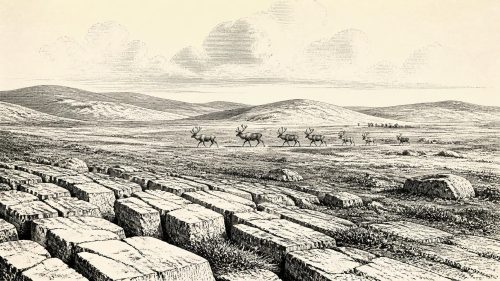
About 31,945 BCE is a retrospective label, not a dateable Irish event; evidence concerns the climatically variable later Ice Age before the Last Glacial Maximum. Expanding ice and later erosion destroyed or disturbed much evidence, explaining Ireland’s sparse Palaeolithic record. Southern caves, particularly Castlepook, preserve bones accumulated over millennia, documenting mammoths, giant deer, reindeer, bears, hyenas and other cold-adapted fauna. A possibly tool-marked reindeer bone may indicate a brief human visit, but lacks secure context or supporting artefacts and cannot demonstrate settlement. Environmental change later transformed habitats. Subsequent recolonisation produced Palaeolithic and Mesolithic evidence, without proving continuity from earlier visitors.
Read Article
Archived: 9 September 2026
Abstract
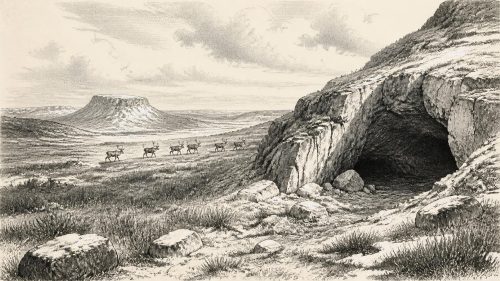
About 34,000 years before present, Ireland experienced cold, unstable Marine Isotope Stage 3 conditions as the British–Irish Ice Sheet began expanding. Deposits at Derryvree and Greenagho indicate north-central areas remained ice-free until roughly this period, although local glaciers and periglacial processes occurred. Open tundra-like habitats supported reindeer, giant deer, spotted hyaenas, bears and other fauna, evidenced especially at Castlepook Cave. A marked reindeer bone may indicate brief Upper Palaeolithic butchery, but cannot prove permanent human occupation. No settled communities or political institutions are evidenced. Changing coastlines, glaciation and disturbed deposits obscure evidence, leaving animal life and possible mobile human visits.
Read Article

Archived: 9 September 2026
Abstract
31,947 BCE is an approximate modern label for later Pleistocene Ireland, not a witnessed year. During Marine Isotope Stage 3, cooling fostered uneven ice growth, though much of Ireland may still have contained exposed grassland, rivers, caves and changing coasts before the Last Glacial Maximum. Glacial erosion explains the scarcity of archaeological evidence. Castlepook Cave preserves remains of mammoth, reindeer, giant deer, predators and other cold-adapted fauna, accumulated across different periods. A possibly stone-tool-marked reindeer bone, dated around 33,000 years ago, may indicate a brief human visit, not settlement. Ireland’s evidence chiefly records environmental transformation, while human activity remains uncertain.
Read Article
Archived: 9 September 2026
Abstract
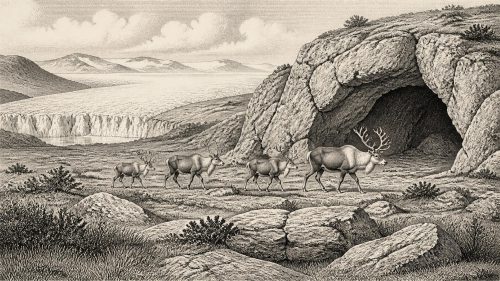
Around 31,948 BCE, Ireland lay within the climatically unstable Late Pleistocene, before the Last Glacial Maximum. Ice growth was substantial but regionally uncertain, while lower sea levels transformed coastlines without guaranteeing easy land connections. Geological landforms, offshore sediments and caves preserve fragmentary evidence of glaciation and changing fauna, including mammoth, reindeer, giant deer, bear and hyena. Later ice erosion and sea-level rise destroyed or submerged much evidence. No securely dated human artefacts, occupations or communities are known; possible transient visits remain unproven. Agriculture, villages, politics, trade and ritual belong to later periods. Ireland’s significance lies in its glacially reshaped environment.
Read Article
Archived: 9 September 2026
Abstract
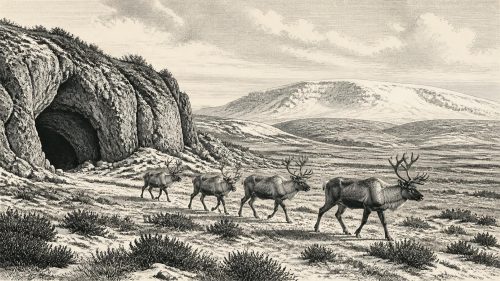
Around 31,949 BCE, Ireland lay in the climatically unstable Late Pleistocene, approaching maximum glaciation but retaining intermittently ice-free terrain in the south. Crag Cave speleothems indicate changing conditions, while lower sea levels reshaped coasts. Castlepook Cave’s mixed deposits preserve cold-adapted fauna, including reindeer, mammoth, lemmings, predators and giant deer, suggesting open steppe-tundra habitats. A possibly butchered reindeer bone dated about 33,000 years ago offers tentative evidence of human visitation, not settlement. No contemporary Irish tools, hearths, burials or communities are securely known. Environmental change, cave evidence and uncertainty therefore define this remote period, preceding later proven Upper Palaeolithic occupation there.
Read Article

Archived: 9 September 2026
Abstract
Around 31,950 BCE, Ireland lay within the Midlandian cold stage of the Late Pleistocene, before the Last Glacial Maximum. Its treeless, periglacial landscapes comprised tundra, grasses, sedges, dwarf shrubs, unstable rivers and frost-shattered ground, while lowered seas altered coastlines without necessarily providing easy land routes. Cave deposits, especially Castlepook in Cork, preserve evidence of mammoth, reindeer, giant deer, predators and Arctic-adapted mammals, though accumulated remains cannot reconstruct one ecosystem. A possibly cut-marked reindeer bone, dated near 33,000 years ago, may indicate human butchery. Yet no settlement, tools, hearths or continuous occupation are established. It represents environmental change and tentative presence.
Read Article




