Archived: 26 September 2026
Abstract
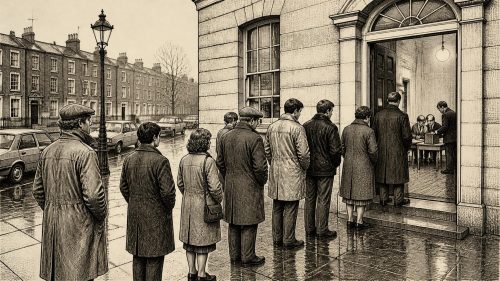
In 1982, Ireland endured two general elections, the collapse of governments and changes between Charles Haughey and Garret FitzGerald amid recession, unemployment, borrowing and tax protests. Haughey’s precarious minority relied on Tony Gregory’s inner-city development agreement before losing confidence; the MacArthur affair and telephone-tapping allegations further damaged public trust. Northern Ireland elected a Stormont Assembly, but nationalist boycotts limited its legitimacy as violence continued, including fatal bombings in London and Ballykelly. Social change included abolition of school corporal punishment and Dublin’s first crematorium. Constitutional debate on abortion intensified, while cultural, neutrality and Falklands issues underscored unresolved political divisions across Ireland.
Read Article

Archived: 11 October 2026
Abstract
In 1831, Ireland experienced escalating conflict over tithes, compulsory payments supporting the established Church, despite most occupiers being Catholic. Organised resistance, including Patt Lalor’s boycott strategy, culminated at Carrickshock, County Kilkenny, where twelve constables and a process-server were killed. The census recorded approximately 7.8 million people amid poverty and land pressure. Edward Stanley established the basis for non-denominational national education. At Ralahine, County Clare, an Owenite co-operative sought security through shared labour and profits. Catholic and evangelical institutions developed, while James Hardiman’s Irish Minstrelsy promoted Irish-language poetry. The year combined coercion with reform, social experimentation, demographic observation and cultural assertion.
Read Article
Archived: 11 October 2026
Abstract
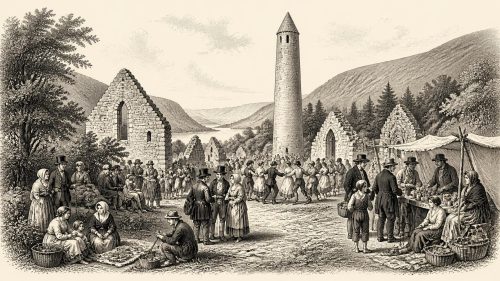
In 1813, Catholic emancipation dominated Irish politics as Henry Grattan’s relief bill advanced at Westminster before collapsing over parliamentary admission and proposed state influence on episcopal appointments, opposed by bishops and Daniel O’Connell. Sectarian tension erupted at Garvagh, County Londonderry, where armed Protestants and Orangemen repelled Ribbonmen during a fair. An unsuccessful census initiative reflected administrative uncertainty, while observations of poverty, fever and education highlighted social pressures. Cultural life included Hugh Porter’s poetry and Glendalough’s patron festival. In September, the Limerick meteorite fell near Adare, becoming Ireland’s largest recorded meteorite fall and was preserved for scientific study as material evidence.
Read Article
Archived: 13 October 2026
Abstract
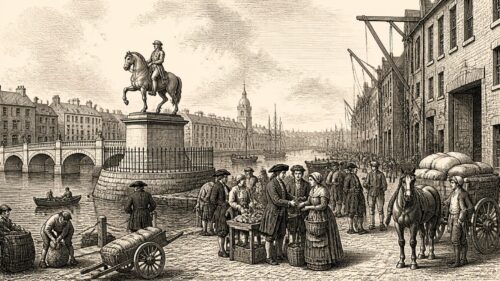
In 1722 George I authorised English ironmaster William Wood to mint up to 360 tons of copper halfpence and farthings for Ireland, initiating a controversy over currency, trade and political authority. Issued in London without Irish parliamentary consultation, the fourteen-year patent alarmed critics amid Ireland’s restricted autonomy following the 1720 Declaratory Act, although Swift’s attacks and parliamentary condemnation came later. Ireland’s rural economy, unequal imperial trade and unreliable small change formed its background. Executive government, policing proclamations and penal restrictions demonstrated state power. Dublin simultaneously celebrated Hanoverian rule with George I’s statue, while print culture widened constitutional unease more widely.
Read Article
Archived: 13 October 2026
Abstract
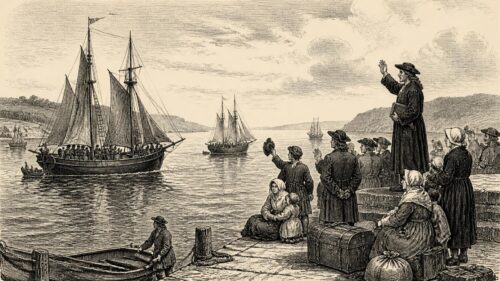
In 1718, Ireland’s significant developments centred on migration, religion and voluntary institutions rather than rebellion. Five vessels carried Presbyterian emigrants from Ulster to Boston, beginning a durable Atlantic movement driven by tenancy insecurity, economic pressures, religious disabilities and colonial opportunity. Ireland’s Protestant ruling order continued to disadvantage Catholics and dissenters, while Sherlock v Annesley highlighted contested Irish autonomy. Six surgeons founded Dublin’s Cook Street infirmary for injured poor, precursor to Jervis Street Hospital. A Ballybough cemetery lease recorded Jewish life. Church appointments and Catholic diocesan administration demonstrated competing authorities, while Thomas Parnell’s death connected Irish culture with British literary networks.
Read Article

Archived: 16 October 2026
Abstract
In 1624, Lord Deputy Falkland’s government used proclamations to extend royal control over Irish religion, commerce, arms, dress and settlement, although enforcement proved uneven. A January order expelling Catholic clergy was soon suspended, revealing resilient networks sustained by patrons and continental links. Regulations on logwood, cattle markets, customs, weights and measures sought more governable trade and communities. Ulster policy balanced Protestant plantation ambitions with dependence on Irish tenants, while reforms targeted deficiencies in the Londonderry scheme. Elite succession and peerage reinforced crown connections. Ussher and Messingham mobilised Irish Christian history for Protestant and Catholic claims, amid continuing Gaelic cultural debate.
Read Article
Archived: 16 October 2026
Abstract
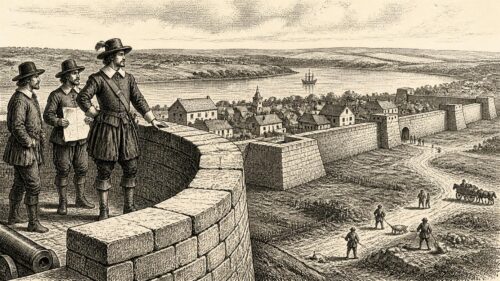
1619 was marked by surveys, construction and institutional change rather than a single national event. Captain Nicholas Pynnar’s inspection of Ulster Plantation estates assessed fortifications, settlers, farms, mills, arms and compliance, revealing uneven progress and persistent Irish presence. At Londonderry, newly completed walls demonstrated Crown authority, but sparse population, incomplete gates and inadequate watch shelter exposed vulnerability. A May deadline sought removal of Irish occupants from undertakers’ lands, though implementation proved limited. Estate houses, churches, schools and mills advanced colonial order. Dublin saw administrative government, episcopal succession and Ireland’s first medical book printed, foreshadowing enduring social and confessional tensions ahead.
Read Article
Archived: 16 October 2026
Abstract
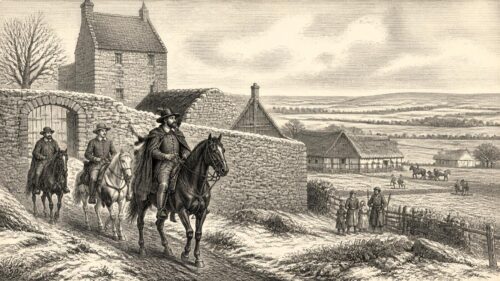
In 1618, Stuart government in Ireland used municipal law, land policy and inspection to reinforce royal authority, Protestant conformity and plantation. Waterford lost its charter after electing recusant civic officers, demonstrating that corporate liberties depended upon religious obedience. Commissioners examined plantation schemes in Longford and O’Carroll country, while an October order required native Irish occupiers to leave assigned Ulster plantation lands by May 1619. In November Captain Nicholas Pynnar was commissioned to inspect settlement, fortifications, tenants and arms in Ulster’s escheated counties. Aodh Mac Cathmhaoil’s Irish-language Catholic book, published at Louvain, and Richard Stanihurst’s death in Brussels highlighted Catholic connections.
Read Article
Archived: 16 October 2026
Abstract
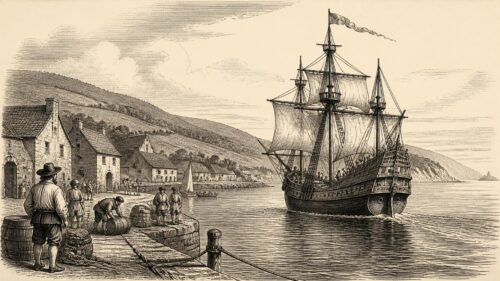
In 1617 Ireland was being reshaped by Atlantic commerce, plantation, religious pressure and cultural debate. Sir Walter Ralegh’s Guiana fleet provisioned at Cork before departing, demonstrating the port’s capacity. The Crown, under Lord Deputy Oliver St John, extended administration through land disputes, grants and titles, including Hamilton’s Strabane barony within the incomplete Ulster Plantation. In Munster, the Barrymore family shifted its seat to Castlelyons. An October proclamation renewed action against Catholic clergy, though Catholic practice endured. Gaelic poets contested regional honour and historical authority, while Barnabe Rich’s satire criticised colonial society. These developments reveal negotiated change rather than settled peace.
Read Article
Archived: 16 October 2026
Abstract
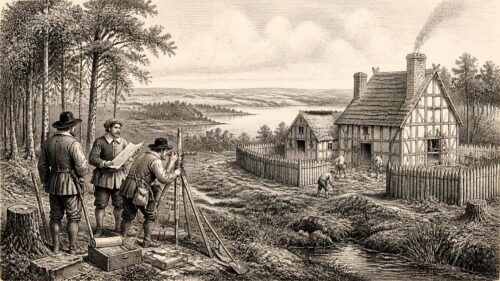
In 1613, the administration intensified its remaking of Ireland through Ulster plantation surveys, municipal charters and a contested parliament. Josias Bodley’s inspection exposed settlement, while London’s Irish Society incorporated Londonderry and developed its county; Belfast and Coleraine gained corporations and parliamentary representation. These boroughs promoted trade and security but supplied Protestant votes. When parliament met in Dublin, conflict over Sir John Davies’s election as Speaker revealed Catholic fears of engineered representation, religious coercion and dispossession. Petitions and a inquiry failed to secure accommodation. Henry Ussher’s death marked change amid conformity. New institutions reshaped land, faith and politics without achieving consent.
Read Article
Archived: 26 October 2026
Abstract
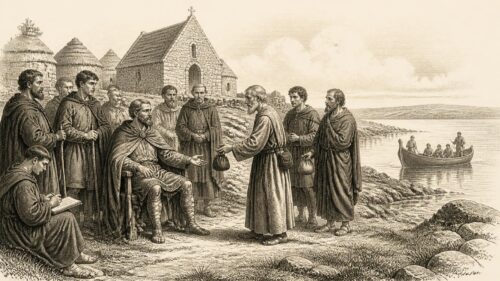
In 990, Irish annals recorded dispersed connected conflicts involving kings, churches and maritime raiders. Máel Sechnaill of Mide defeated north Munster forces at Fordroma, where Domnall of Uí Fhorga died, demonstrating contested regional power rather than national unity. A son of Ímar left Waterford, while foreigners raided Ross Carbery and captured its lector, Airbertach mac Cos Dobráin. Brian son of Cennétig ransomed him at Scattery, displaying authority and resources. Brian’s brother Marcán became abbot of Emly, strengthening dynastic church links. Derry was plundered, and notices of a poet’s and a king’s deaths underline learning, ecclesiastical wealth, violence and political fragmentation.
Read Article

Archived: 5 October 2026
Abstract
Thirty thousand years BCE is not a recoverable Irish historical year but falls within a broad Late Pleistocene range. At Derryvree, County Fermanagh, freshwater sediments between glacial tills record an ice-free wetland interval, dated approximately 36,900–31,700 calibrated years BP. Plant and insect remains indicate cold, treeless tundra-steppe conditions before expanding ice sheets reshaped Ireland. Cave faunas, notably Castlepook’s, demonstrate connections with north-west European ecosystems, including reindeer, mammoth, giant deer and predators. No secure human settlement exists; a possibly cut reindeer bone suggests only uncertain contact. Evidence supports changing environments and intermittent access, not political, cultural or social reconstruction in detail.
Read Article

Archived: 24 September 2026
Abstract
Nominally dated 30,762 BCE, this period belongs to Ireland’s fluctuating Late Pleistocene MIS 3, not a precisely identifiable year. Ice margins, sea passages and habitats changed regionally, leaving fragmentary evidence. Derryvree, County Fermanagh, preserves freshwater sediments, bogbean and mountain avens, indicating a local cold, tundra-like wetland during an ice-free or ice-marginal interval. Castlepook Cave, County Cork, contains Late Pleistocene remains including mammoth, reindeer, giant deer, predators and smaller cold-adapted animals, accumulated across several episodes. Human presence remains unproven: a possibly cut-marked reindeer bone suggests investigation-worthy visitation, not settlement. Ireland’s history here is palaeoecological, shaped by environmental instability and uncertain preservation.
Read Article

Archived: 24 September 2026
Abstract
At roughly 36,900–31,700 calibrated years BP, Derryvree near Maguiresbridge preserved freshwater sediments and organic remains between glacial tills. These record a local ice-free interval during MIS 3, followed by renewed glaciation. Mosses, bogbean, grasses, sedges, juniper and cold-adapted plants indicate wet, open tundra-like terrain with shallow pools and severe seasonality. Castlepook Cave fossils show that mammoth, giant deer, reindeer and predators occurred in Ireland during this broad period, though not necessarily together. No secure evidence identifies people, settlements, trade or beliefs at this date. Repeated glaciation and later sea-level rise obscured evidence. The record reveals local environments, not precise history.
Read Article

Archived: 21 September 2026
Abstract
Around 33,000 years before present, during Marine Isotope Stage 3, Ireland experienced a variable Ice Age environment rather than a precisely datable historical year. Castlepook Cave in County Cork preserves fauna including mammoth, reindeer, giant deer, predators and cold adapted mammals, although its disturbed deposits combine material from different periods. Revised radiocarbon dating increased its importance. A reindeer femur, dated about 31,000 BCE, bears a possible stone tool cut mark, potentially Ireland’s earliest evidence of human activity. However, no hearths, tools or settlements confirm occupation. Open steppe tundra supported animals; later glaciation erased much evidence and reshaped Ireland profoundly thereafter.
Read Article
Archived: 20 September 2026
Abstract
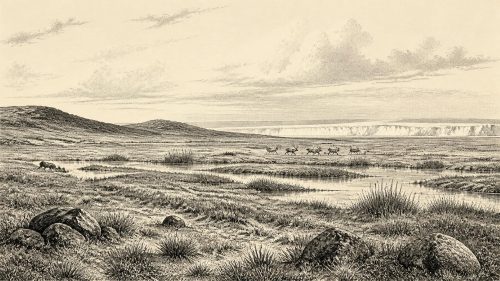
Around 31,000 BCE, Ireland lay within the cold, unstable Marine Isotope Stage 3, with lower seas, shifting ice, and open tundra-like habitats rather than modern coastlines or forests. Wetland deposits in Fermanagh preserve plants adapted to cold, moist conditions. Castlepook Cave, County Cork, contains re-dated animal remains showing that reindeer, mammoth, giant deer, bears, wolves, Arctic foxes and hyaenas occurred during parts of this period. A possibly cut-marked reindeer femur suggests brief Upper Palaeolithic human contact, but no secure occupation site exists. Environmental evidence, not events or societies, defines this fragmentary era, continually reassessed through improved dating and research methods.
Read Article

Archived: 8 September 2026
Abstract
31,954 BCE is a notional date within MIS 3, not a recorded Irish year. Ireland then comprised volatile Late Pleistocene environments supporting cold-adapted fauna, including reindeer, mammoth, giant deer and carnivores, before the Last Glacial Maximum. Castlepook Cave, County Cork, provides a possible earliest human trace: a reindeer femur with a mark plausibly made by a stone tool during butchery. Poorly recorded early excavations, disturbed cave deposits and uncertain dating prevent stronger conclusions about settlement, hunting or access routes. No evidence supports communities, culture or politics. Later glaciation obscured evidence; secure sustained settlement begins only in the Mesolithic millennia later.
Read Article

Archived: 8 September 2026
Abstract
Around 31,993 BCE, Ireland was a cold, unstable landscape during the later Last Glacial Period, not a documented human society. Calendar-year precision is impossible: radiocarbon and geological evidence provide only broad, uncertain ranges. Fermanagh deposits indicate open tundra, severe seasons and sparse vegetation, while changing ice and lower seas altered terrain and coastlines. Castlepook Cave preserves diverse Late Pleistocene fauna, including mammoth, giant deer, reindeer, predators and smaller mammals, demonstrating connections with north-west Europe, though not their presence in one year. No securely dated Irish settlement, tools or burials exist from this period. Later glaciation reshaped landscapes and obscured evidence.
Read Article


