
Dublin Invested(c.1000s)

Exact Event
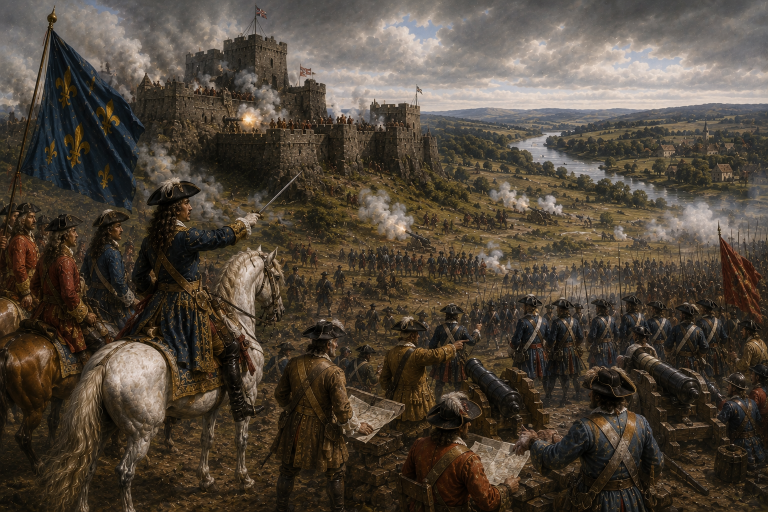
The event is not a modern anniversary attached to an uncertain medieval year, but one of the rarer Irish entries for the period with a named day. The Annals of Inisfallen, a Munster-centred chronicle preserved in a twelfth-century manuscript and edited from medieval material, opens its annal for the year 1000 with the calendrical note that the Kalends of January fell on the second feria, that is Monday. Its next notice says that the men of Mumu, Munster, invaded Áth Cliath, Dublin, burned it, and invested it on the Kalends of January. That phrase fixes the action to the first day of the year in the annal’s own reckoning.
What happened in Dublin was the immediate aftermath of Brian mac Cennétig’s victory over the forces of Dublin and Leinster at Glenn Máma. Brian, later remembered as Brian Bórama or Brian Boru, had risen from the Dál Cais heartland around the lower Shannon to become king of Munster and the chief rival of Máel Sechnaill mac Domnaill, the Uí Néill king of Tara. A political settlement in the late 990s had divided influence between them, but Dublin and Leinster remained vital prizes. Dublin was not merely a raiding base or a Norse enclave. By 1000 it was a wealthy port, a slaving and trading centre, and a military power whose cavalry and ships could alter the balance between Irish overkings.
The annalistic wording is terse, but it is vivid. Munster troops entered Áth Cliath, set it alight, and besieged or occupied it. They also burned Caill Tomair as fuel. The name means Tomar’s wood or grove, and later interpretation has connected Tomar with Thor; whatever its precise character, the destruction of the wood was remembered as a charged act, not just the gathering of convenient timber. In a landscape where trees, assembly places and boundaries carried social and religious meanings, felling or burning a named grove beside Dublin proclaimed conquest in a language that contemporaries understood.
The king who fled was Sitriuc Silkbeard, son of Amlaíb Cuarán and one of the longest-lived rulers of Hiberno-Scandinavian Dublin. The Annals of Inisfallen say that he escaped from the battle to Ulaid, the north-eastern kingdom, but found no protection in Ireland until he handed over hostages to Brian. Hostages were not symbolic courtesies. They were living guarantees of submission and good behaviour, drawn from a ruler’s kin or leading supporters. By taking them, Brian turned victory in the field into enforceable political dominance. The same entry ends by saying that Brian gave the fort back to the foreigners, meaning the Norse or Hiberno-Norse inhabitants. Dublin was chastened, not erased.
Other annals help to place the notice, even where they do not give the same exact day. The Annals of Ulster record, under a year headed ‘AD 999 alias 1000’, that the foreigners returned to Áth Cliath and gave hostages to Brian. Chronicon Scotorum records that after Glenn Máma, Máel Sechnaill and Brian went to Dublin, remained there for a week, carried off gold, silver and captives, and expelled Sitriuc. The Annals of Tigernach likewise note the foreigners again in Dublin and their hostages to Brian. These parallel notices confirm the broad sequence: battle, occupation or plundering of Dublin, Sitriuc’s expulsion or flight, and his eventual submission.
The differences between the chronicles are a warning as well as a resource. Medieval Irish annals were not modern newspapers. They were compiled, copied and sometimes adjusted within learned ecclesiastical communities, each with its own regional perspective and chronological habits. The Inisfallen account is especially close in sympathy to Munster and to Brian’s dynasty; the Ulster tradition uses a cautious double dating at this point. Yet the exact statement ‘on the Kalends of January’ belongs to the medieval record itself. It should not be moved from a nearby battle date, nor inflated into details the sources do not provide. We can say that Dublin was invaded, burned and invested on 1 January in the Inisfallen chronology; we cannot reconstruct street-by-street fighting or the experiences of named townspeople.
For Dubliners, the day must have been frightening and disruptive. The settlement around the defended longphort and the river crossing had houses, workshops, quays, merchants, enslaved people, craftsmen and families with Irish, Scandinavian and mixed connections. Fire in a timber town was a weapon and a catastrophe. But the political result was not simple destruction. Brian needed Dublin’s wealth, shipping and military usefulness. Within a short time the city was again functioning under its own ruler, now bound by hostages and by the memory of defeat. Sitriuc would later be Brian’s son-in-law and, in 1014, his enemy at Clontarf.
The New Year’s Day entry therefore catches Ireland at a turning point. It shows Brian not as a legendary national liberator fighting a single foreign enemy, but as a hard-headed overking working within the mixed political world of early medieval Ireland. Irish kings, Leinster rivals and Hiberno-Scandinavian Dubliners all made alliances across cultural lines when advantage required it. On this day, however, the advantage lay with Munster. The smoke over Áth Cliath announced that Brian mac Cennétig had converted a battlefield victory into authority over the richest town in Ireland.