Stark Famine(c.1840s)

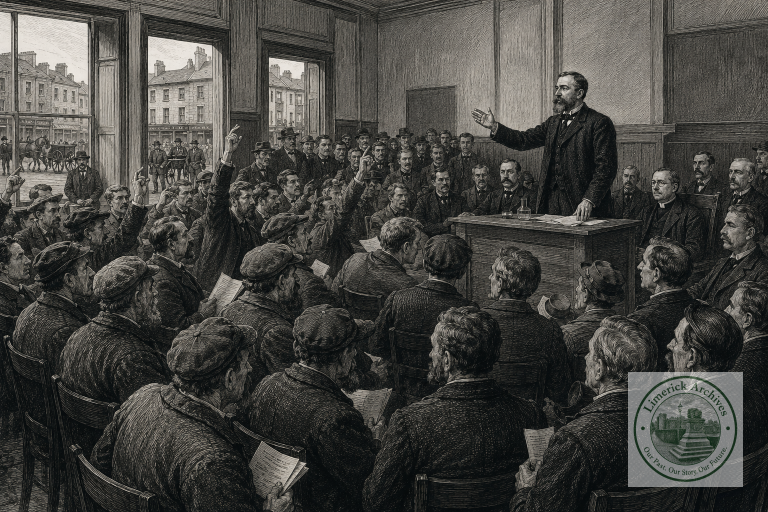
On March 4, 1847, operating under the Gregorian calendar standard throughout the United Kingdom of Great Britain and Ireland, the Great Famine tightened its grip across the island with devastating severity. No single localized battle or legislative decree defines this exact calendar day, yet it fell during the bleakest phase of the catastrophe universally remembered as “Black ’47.” By the early months of 1847, successive total failures of the potato crop—upon which the vast majority of the rural laboring population depended entirely for basic subsistence—had destroyed the nutritional foundation of Irish society, plunging millions into absolute destitution, rampant disease, and mass starvation.
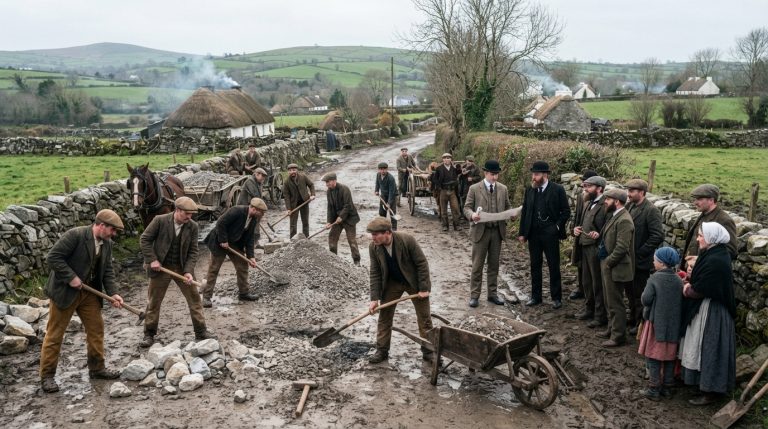
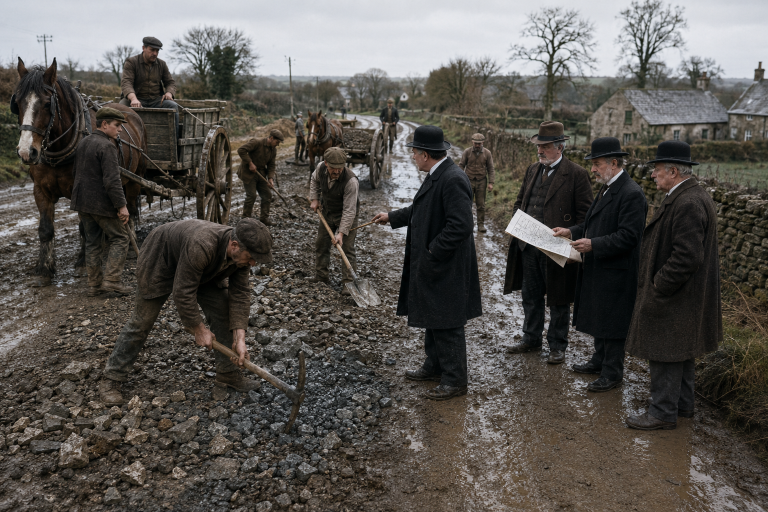
The immediate backdrop to this date was defined by the profound failure of existing relief mechanisms established by the British government under Prime Minister Lord John Russell. The initial reliance on public works schemes, intended to provide impoverished laborers with wages to purchase artificially inflated food supplies, collapsed under the sheer weight of destitution. Tens of thousands of starving, physically exhausted men, women, and children were forced to break stones on mountainous roads in freezing winter weather while receiving inadequate rations. By March 1847, the government was desperately transitioning from public works to direct food distribution through soup kitchens, authorized under the newly enacted Temporary Relief Act, commonly known as the Soup Kitchen Act.
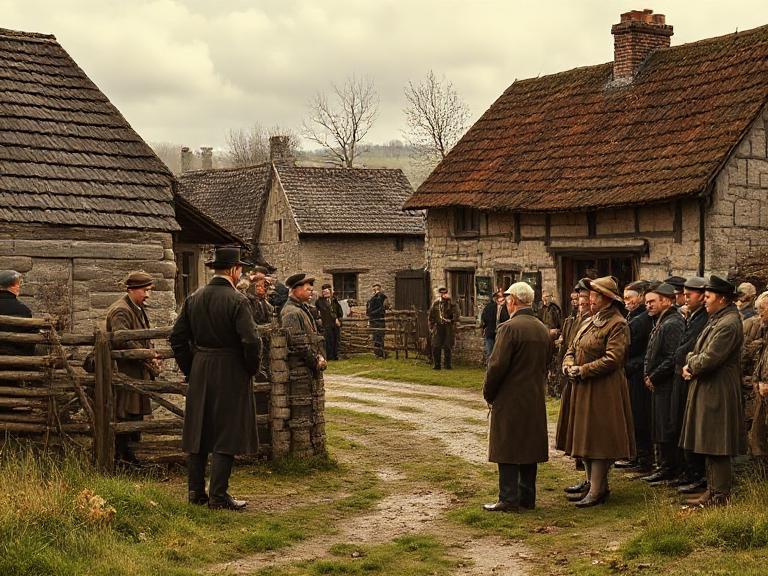
Across rural districts in the west, south, and midlands, the human toll of the crisis was visible in horrifying relief. Contemporary medical reports, workhouse registers, and relief committee minutes recorded staggering mortality rates driven not only by direct starvation but also by epidemic diseases such as relapsing fever, “famine fever” (typhoid), and dysentery. Workhouses designed to shelter a fraction of the destitute were overwhelmed beyond capacity, operating in squalid conditions where disease swept rapidly through overcrowded wards. Thousands of families abandoned their small cabins, wandering along country roads in desperate search of food or admission to local relief depots, only to perish by the wayside.
The policy framework governing British relief efforts was heavily influenced by prevailing nineteenth-century economic orthodoxies of laissez-faire capitalism and moral hazard. Influential officials, most notably Treasury administrator Sir Charles Trevelyan, believed that government intervention should not interfere with private trade and that extensive state-funded relief would create long-term dependency among the Irish peasantry. Consequently, while Ireland suffered catastrophic food shortages and massive human loss, large quantities of grain, livestock, and butter continued to be exported from Irish ports to British markets under the protection of military and police escorts to satisfy rent payments due to absentee landlords.
Evictions accelerated sharply during this period as desperate landlords, crushed by mounting poor-rate taxes levied to support local destitute populations, cleared their estates of impoverished tenants unable to pay rent. The notorious “rate-in-aid” burden and the infamous “Quarter Acre Clause” introduced later that year meant that any tenant holding more than a quarter of an acre of land was legally barred from receiving public relief unless they surrendered their holding entirely. This cruel legislative choice forced thousands of families to choose between immediate starvation or permanent homelessness, leading to the destruction of entire rural townlands and fueling the massive wave of transatlantic emigration.
Emigration transformed from a steady trickle into an overwhelming human exodus during the spring of 1847. Tens of thousands of desperate individuals converged on ports such as Cork, Limerick, Waterford, and Dublin, seeking passage on cargo vessels bound for Liverpool, North America, and Australia. These vessels, quickly dubbed “coffin ships” by contemporaries, were frequently overcrowded, poorly provisioned, and unsanitary, resulting in staggering mortality rates from typhus and cholera during the Atlantic crossing. Those who survived arrival in ports like Grosse Île near Quebec or epidemic-stricken quarantine stations in New York faced severe destitution in foreign lands.
Public awareness and charitable mobilization expanded significantly in response to the deepening catastrophe, transcending domestic boundaries. Relief committees established by the Quakers (the Central Relief Committee of the Society of Friends), alongside international donations from as far away as the United States, India, and the Ottoman Empire, channeled vital food, clothing, and medical supplies to the worst-affected western counties. Indigenous philanthropic efforts, led by local clergy of all denominations, doctors, and relief organizers, worked tirelessly under harrowing conditions to establish soup kitchens and distribute meal to starving parishioners.
The long-term demographic, political, and cultural consequences of the tragedy unfolding in early 1847 altered the trajectory of Irish history permanently. The famine decimated the traditional Irish-speaking rural communities of the western seaboard, accelerated the permanent decline of the cottage economy, and cemented deep-seated political resentment toward British administrative indifference. By the time the acute phase of the famine subsided at the end of the decade, Ireland’s population had been reduced by over a million dead and another million forced into permanent exile, creating a vast global Irish diaspora.
Thus, the bleak early-spring day of March 4, 1847, captured an island enduring one of the darkest chapters in European history. While government ministers in Westminster debated economic theory and relief budgets, the ordinary people of Ireland fought a desperate, daily battle for survival against starvation and pestilence. The structural devastation of Black ’47 shattered traditional rural society and forged an enduring collective trauma that shaped Irish national identity for generations to follow.
Primary Sources
1. Relief Commission Office Papers — Official correspondence and daily reports on distress and food scarcity — March 1847 files — National Archives of Ireland (Relief Commission Papers, REL) — Administrative records tracking the operational status of relief committees and soup kitchens across Ireland.
2. Society of Friends (Quakers) Central Relief Committee — Letter books and reports on famine conditions — Spring 1847 manuscripts — National Library of Ireland (MS 273–277) — Contemporary eyewitness accounts by Quaker volunteers detailing extreme destitution and mortality in the west of Ireland.
3. The Illustrated London News — Published reports, woodcut illustrations, and editorial commentary on Irish famine conditions — March 1847 issues — British Library collections — Contemporary journalistic coverage providing detailed visual and written documentation of the crisis for the British public.
4. Hansard’s Parliamentary Debates — House of Lords and House of Commons discussions regarding the Temporary Relief (Soup Kitchen) Act — March 1847 parliamentary sessions — British Library and online archives — Official legislative records capturing political debates on famine relief funding and economic policy.
5. Sir Charles Trevelyan — Official correspondence concerning Treasury policy and Irish relief — Spring 1847 letter collections — The National Archives, London (T 64 series) — Administrative letters outlining the government’s strict laissez-faire approach and reluctance to disrupt private grain markets.
6. Poor Law Commissioners for Ireland — Annual reports and local union minute books — March 1847 registers — National Archives of Ireland (BG series) — Official administrative records documenting workhouse overcrowding, mortality rates, and poor-rate collection struggles.
7. The Freeman’s Journal — Daily newspaper coverage of starvation, emigration, and relief measures — Early March 1847 editions — National Library of Ireland — Contemporary Irish press accounts detailing local suffering and public responses to the crisis.
8. Local Relief Committee Minutes (e.g., Clare, Mayo, and Cork committees) — Manuscript minute books — March 1847 records — National Archives of Ireland (CSORP and local collection holdings) — Granular administrative records tracking local food distribution, subscription lists, and desperate appeals for government aid.
9. Asenath Nicholson — *Ireland’s Bane: The Great Famine* (contemporary memoir and travel observations) — Written during her travels through famine-stricken districts in 1847 — Published 1851 — National Library of Ireland collections — Eyewitness testimony of an American philanthropist recording the plight of the rural poor.
10. Cork Examiner — Regional newspaper reports on port congestion and emigration departures — March 1847 issues — Cork City and County Archives — Contemporary journalism documenting the massive crowds boarding emigrant ships for North America.
11. Medical Reports of Dispensary Doctors — County health returns and fever hospital registers — Spring 1847 documents — National Archives of Ireland (Health Department historical records) — Professional medical evaluations detailing the spread of famine-related epidemics.
12. The Nation — Nationalist newspaper commentary on British economic policy and mass mortality — March 1847 editions — National Library of Ireland — Political essays and poetry criticizing government relief failures and documenting national trauma.
13. Board of Works Correspondence — Engineering reports on public works labor projects — March 1847 files — The National Archives, London (OW 4 series) — Official records detailing the physical exhaustion, low wages, and abandonment of public road works by starving laborers.
14. Archbishop John MacHale — Pastoral letters and correspondence concerning relief in Tuam — March 1847 documents — Dublin Diocesan Archives — Contemporary clerical records appealing for increased charity and condemning government inaction.
15. Emigrant Passenger Lists (Port of Liverpool and Dublin) — Custom house embarkation registers — March 1847 logs — The National Archives, London (BT 27 series) — Official shipping records tracking the surge of refugees fleeing the famine-stricken island.
16. British Relief Association — Executive committee minute books and financial accounts — Spring 1847 records — National Archives, Kew (HO 45 series) — Private philanthropic records detailing the collection and distribution of voluntary funds in Britain and Ireland.
17. Lord John Russell — Private and official correspondence regarding Irish policy — March 1847 collections — The National Archives, Kew (PRO 30/22) — Prime ministerial papers reflecting the political pressures and administrative challenges of managing the famine.
18. Encumbered Estates Court Foundation Papers — Preliminary legal records reflecting bankrupt landlord estates — March 1847 baseline data — National Archives of Ireland — Documentation showing the economic collapse of the landed gentry due to falling rents and heavy poor-law taxation.
19. Folklore Commission Oral History Collections (Later transcriptions of 1847 survivors’ family memories) — Collected folklore traditions — Department of Irish Folklore, University College Dublin — Preserved oral history documenting the localized memory of “Black ’47” and soup kitchen lines.
20. Archaeological Evidence: Unmarked Famine Graves and Workhouse Burial Grounds — Archaeological excavations of mass burial sites associated with workhouses active in 1847 — National Monuments Service archaeological reports — Physical bioarchaeological evidence confirming severe malnutrition, stress indicators, and mass mortality during the spring of 1847.