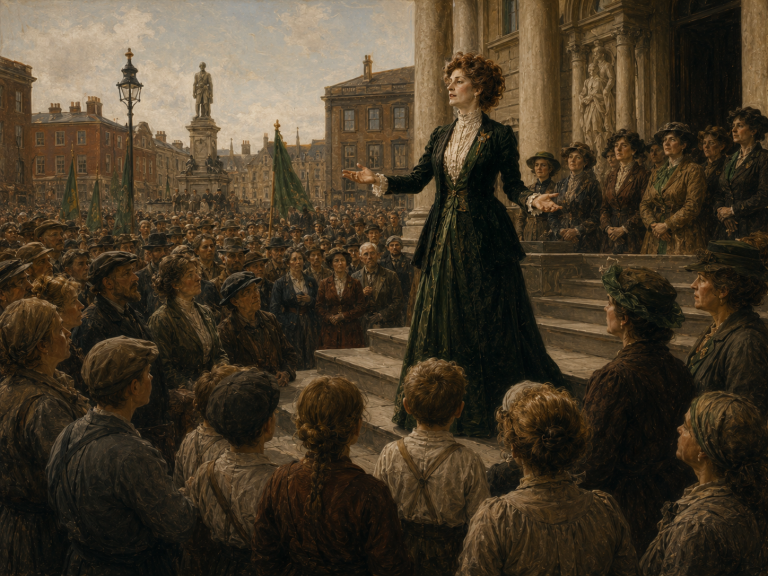

Occupied Dublin(c.1000s)
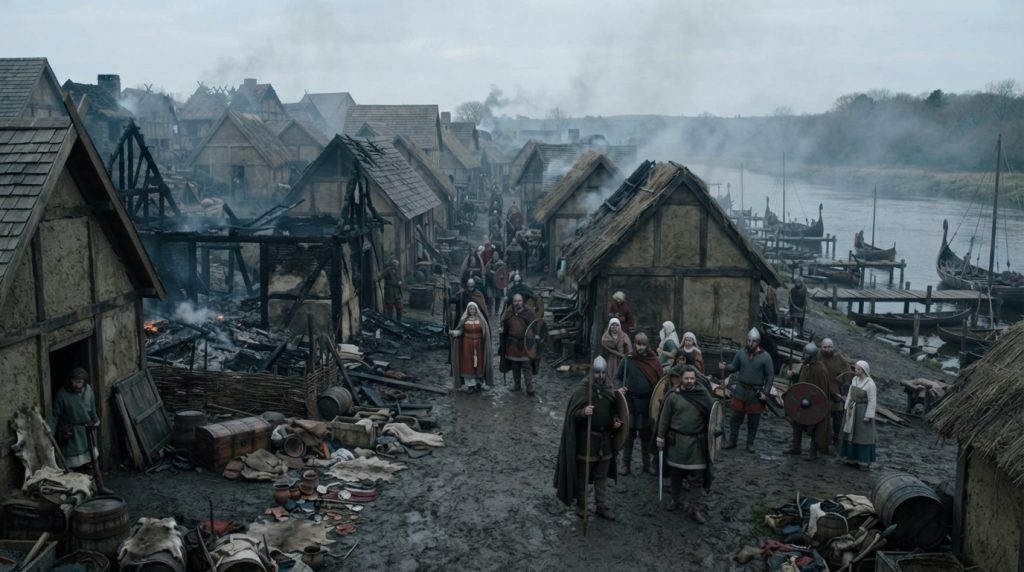
On 2 January 1000, no surviving Irish annal records a distinct event confined securely to that single day. Yet Dublin was still experiencing the immediate consequences of the Battle of Glenn Máma and the assault that followed. The Annals of Inisfallen states that Munster forces invaded Áth Cliath on 1 January, burned the settlement, invested it, and used timber from Caill Tomair as fuel. The Annals of Tigernach says Brian remained in Dublin for a whole week after entering it. Together, these sources place 2 January within the occupation, although the precise actions of that Tuesday are not recorded.
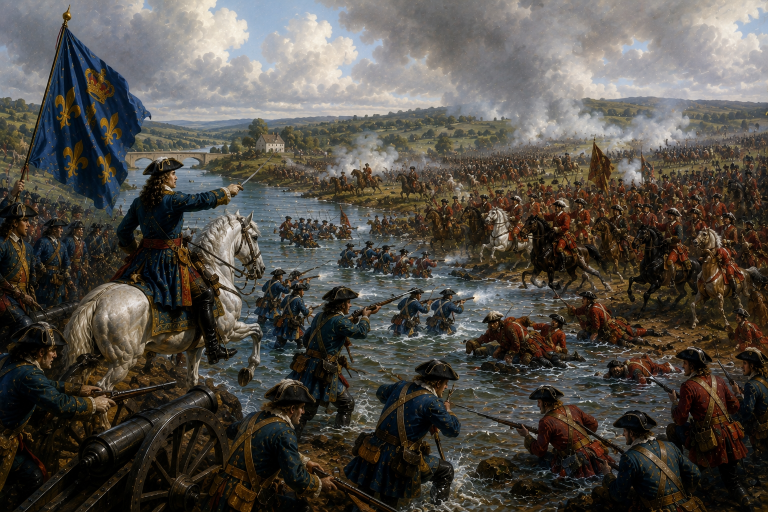
The background was the defeat suffered by the combined forces of Dublin and Leinster on 30 December 999. Brian son of Cennétig, king of Munster, and Máel Sechnaill son of Domnall, king of Tara, confronted the Dublin Norse and their Leinster allies at Glenn Máma. The Annals of Ulster specifically dates the battle to Thursday, 30 December. Numerous leading warriors were killed, and the victory opened the road to Dublin. What followed was not merely a punitive raid. The capture of the town challenged a strategically important centre in Ireland at the turn of the millennium.
Dublin was unlike most settlements in Ireland. It had grown from a Viking fortified base into a substantial port, trading town and royal centre. Its population combined Scandinavian and increasingly Irish influences, and its merchants participated in networks extending across the Irish Sea and beyond. Workshops produced metal goods, leatherwork, woodwork and textiles, while imported materials and silver circulated through the settlement. Coinage associated with Sitriuc, or Sigtrygg Silkbeard, was being struck around this period. For Brian, control of Dublin offered more than military prestige. It meant access to ships, traders, wealth, tribute, skilled craftsmen and an experienced fighting population.
The political order surrounding Dublin was fragmented and personal rather than national in the modern sense. Ireland contained many kingdoms ruled by competing dynasties, with larger rulers attempting to impose tribute, hostages and military obligations upon neighbours. Máel Sechnaill, ruler of Mide and king of Tara, had been the dominant northern overking, while Brian had rapidly extended Dál Cais power from Thomond across Munster. In 997 the two men reached an agreement dividing broad spheres of influence. Leinster and Dublin were placed within Brian’s southern sphere, but submission was unstable. Glenn Máma showed how limited negotiated overlordship could be.
On 2 January the defeated king of Dublin, Sitriuc son of Amlaíb, was probably still outside his city. The Annals of Inisfallen reports that he escaped from the battle to Ulaid but could obtain no lasting protection until he surrendered hostages to Brian. Exactly when during the following days this submission occurred is uncertain. Hostages were central to Irish politics because they guaranteed that subordinate rulers would honour agreements, render tribute or cease resistance. Brian’s eventual decision to return the fort to the foreigners was therefore not a retreat. It transformed Dublin from hostile power into subordinate ally, at least temporarily.
For ordinary Dubliners, the days following the battle must have been disruptive, but the evidence does not permit reconstruction of individual experiences. The annals describe burning, plunder and the removal of captives, yet they do not name merchants, craftspeople, women, children or householders affected. Archaeology shows that late tenth-century Dublin consisted largely of closely packed timber houses, fenced plots, workshops, lanes and riverside activity. Smoke from damaged buildings, soldiers in the streets, property loss and uncertainty over authority are reasonable consequences of the recorded sack, but detailed scenes cannot be stated as fact. Responsible reconstruction must distinguish evidence from plausible inference.
Beyond Dublin, most people in Ireland remained engaged in agriculture. Cattle were a major measure of wealth and a foundation of political tribute, but farming also included grain cultivation, dairying, pigs and sheep. Rural families lived in dispersed farmsteads and enclosed settlements, and seasonal work continued regardless of struggles among kings. Midwinter meant short days, difficult travel and greater reliance on stored food, livestock and household production. Events in Dublin would have mattered most directly to rulers, warriors, merchants and communities connected to the east coast, while many elsewhere experienced the new year through farming, kinship and local lordship.
Religion and literacy shaped how this moment was remembered. Christian monasteries and churches formed networks of worship, learning, landholding and political influence. Annalists recorded royal deaths, battles, ecclesiastical successions and notable calendrical events. The Annals of Ulster marks the year as the thousandth since the Incarnation of Christ and notes its calendrical characteristics, but there is no evidence of widespread millennial panic or celebration in Ireland. The dating shows that learned clerics could place their own time within Christian universal chronology. Modern ideas of people dramatically welcoming a new millennium should not be projected backwards onto 2 January 1000.
The attack did not eliminate Scandinavian Dublin. Later entries in both the Annals of Ulster and the Annals of Tigernach record the foreigners returning to the town and giving hostages to Brian. This restoration reveals the practical character of his power. A functioning Dublin under a compliant ruler was more useful than a permanently devastated settlement. The city could provide maritime connections, troops and revenue, while Sitriuc could continue ruling under altered political conditions. Such relationships were flexible rather than permanent. Alliances changed rapidly, hostages could be exchanged, and former enemies could become military partners when circumstances required. Dublin’s recovery would prove swift.
Thus 2 January 1000 belongs to a short but decisive interval in Irish history. No surviving chronicle allows us to assign a separate battle, proclamation or ceremony to the day itself. Its importance comes from its position within the occupation of Dublin after Glenn Máma and before Sitriuc’s eventual submission. Brian’s success marked another stage in his extraordinary rise from regional ruler to the most powerful king in Ireland, while Máel Sechnaill remained a formidable rival and partner. The events of these winter days exposed the interconnected worlds of Irish kingship, Scandinavian commerce, warfare, tribute and Christianity that shaped Ireland at the millennium.
Primary Sources
- Unknown Munster annalist — Annals of Inisfallen, AI1000.2 — 1 January 1000 — Records the invasion of Dublin by the men of Munster, the burning and investment of the town, the use of Caill Tomair as firewood, Sitriuc’s flight and his eventual provision of hostages to Brian. This is the closest surviving record to 2 January. Digital source: CELT, University College Cork.
- Unknown Munster annalist — Annals of Inisfallen, AI1000.1 — 1 January 1000 — Gives the calendrical opening of the year, recording the Kalends of January as Monday and noting the lunar calculation. It establishes the chronology immediately preceding 2 January. Digital source: CELT, University College Cork.
- Unknown annalist — Annals of Ulster, U1000.0–U1000.1 — 1 January 1000 — Records the Kalends of January and explicitly identifies the year as the thousandth since the Incarnation of Christ, providing contemporary evidence for Irish chronological understanding. Digital source: CELT, University College Cork.
- Unknown annalist — Annals of Ulster, U999.8 — 30 December 999 — Precisely dates the Battle of Glenn Máma to Thursday, 30 December, records Brian’s victory over Dublin and Leinster and states that he afterwards entered and plundered Dublin. Digital source: CELT, University College Cork.
- Unknown compiler — Chronicon Scotorum, CS999.4 — 999 — States that Brian and Máel Sechnaill went to Dublin after Glenn Máma and remained there for a week, removing gold, silver and captives and expelling Sitriuc. The week-long duration places 2 January within the occupation. Digital source: CELT, University College Cork.
- Unknown annalist — Annals of Tigernach, T999.3 — 999 — Records that Brian went to Dublin, remained there for a whole week, removed gold, silver and captives, burned the fortress and banished Sitriuc. This independently supports the occupation continuing through 2 January. Digital source: CELT, University College Cork.
- Unknown annalist — Annals of Ulster, U1000.4 — 1000 — Records the foreigners returning to Dublin and giving hostages to Brian. It establishes the political settlement following the occupation. Digital source: CELT, University College Cork.
- Unknown annalist — Annals of Tigernach, T1000.3 — 1000 — Records the foreigners once again established in Dublin and their hostages being surrendered to Brian, corroborating his new authority over the city. Digital source: CELT, University College Cork.
- Unknown compiler — Chronicon Scotorum, CS1000.2 — 1000 — States that the foreigners were again in Dublin and that their hostages were given to Brian. This provides a third annalistic tradition concerning Dublin’s restoration. Digital source: CELT, University College Cork.
- Unknown Munster annalist — Annals of Inisfallen, AI999.4 — 999 — Records Brian’s victory over the Dublin foreigners at Glenn Máma and states that many of the best warriors among the foreigners of Ireland fell there. Digital source: CELT, University College Cork.
- Unknown annalist — Annals of Ulster, U999.3 — 999 — Records Donnchad, king of Leinster, being imprisoned by Sitriuc of Dublin and Máel Mórda subsequently obtaining the kingship of Leinster, revealing the Dublin-Leinster political alliance preceding the battle. Digital source: CELT, University College Cork.
- Unknown compiler — Chronicon Scotorum, CS999.1 — 999 — Records the capture of Donnchad, king of Leinster, by Sitriuc son of Amlaíb, providing contemporary political background to Leinster’s upheaval before Glenn Máma. Digital source: CELT, University College Cork.
- Unknown compiler — Chronicon Scotorum, CS999.3 — 999 — Records the plundering of Kildare by the foreigners of Dublin, demonstrating the aggressive military activity of Dublin in Leinster before its defeat. Digital source: CELT, University College Cork.
- Unknown annalist — Annals of Tigernach, T999.2 — 999 — Also records Kildare being plundered by the foreigners of Dublin and provides independent evidence for hostilities immediately preceding Brian’s intervention. Digital source: CELT, University College Cork.
- Unknown Munster annalist — Annals of Inisfallen, AI997.2 — 997 — Records the agreement between Brian and Máel Sechnaill dividing spheres of authority and transferring the hostages of Leinster and Dublin to Brian. Essential background to the later rebellion. Digital source: CELT, University College Cork.
- Unknown Munster annalist — Annals of Inisfallen, AI998.2 — 998 — Records Brian taking the hostages of Connacht at Athlone and transferring them to Máel Sechnaill, illustrating the political importance of hostage-taking in contemporary kingship. Digital source: CELT, University College Cork.
- Unknown annalist — Annals of Ulster, U1000.3 — 1000 — Records the death of Ímar, king of Port Láirge, providing evidence for another Scandinavian-ruled Irish maritime centre active during the same year. Digital source: CELT, University College Cork.
- Unknown annalist — Annals of Tigernach, T1000.4 — 1000 — Records the death of Cellach Ua Maelcorgais, chief poet of Connacht, providing evidence for the recognised professional literary elite within contemporary Irish society. Digital source: CELT, University College Cork.
- Irish ecclesiastical scribes — Liber Hymnorum, Trinity College Dublin MS 1441 — c. 1000 — A collection of Latin and Irish religious hymns surviving in manuscripts associated with the period, providing primary material evidence for the bilingual Christian intellectual and devotional culture of Ireland around the millennium. Location: Trinity College Dublin Library, Manuscripts and Archives Research Library.
- Sitriuc III of Dublin and moneyer Fastolf — Hiberno-Norse silver penny, Crux type — c. 995–1000 — An early Dublin coin issued under Sitriuc, providing direct material evidence for royal authority, silver currency, overseas commercial connections and the increasingly urban economy of Dublin at precisely this period. Surviving examples are held by institutions including the British Museum.