Archived: 26 September 2026
Abstract
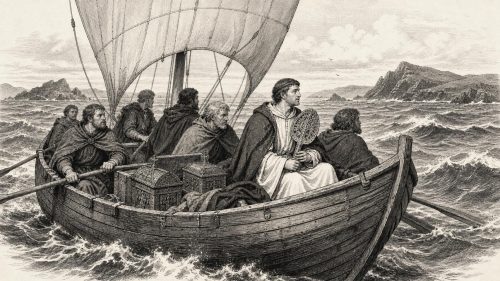
In 1034, Ireland lacked an uncontested high king, as regional dynasties, churches and maritime networks shaped a fragmented political landscape. Donnchad mac Briain of Munster ravaged Osraige, challenging its ruler’s expanding Leinster authority, while Flaithbertach Ua Néill resumed control of Ailech after his son’s death. Killings and treachery destabilised Connacht, Brega, Tethba and neighbouring regions. Ecclesiastical losses included leading figures at Cork, Mungret and Clonmacnoise, and Kells’s lector drowned returning from Scotland with companions and relics. Amlaíb, Dublin’s royal pilgrim, was killed en route to Rome. Annals reveal elite conflict and religious connections, while rural communities bore warfare’s economic burdens.
Read Article

Archived: 26 September 2026
Abstract
In 1032, annalistic records portray Ireland as a patchwork of competing lordships after the decline of island-wide kingship. Domnall ua Maíl Doraid of Cenél Conaill and Mathgamain Ua Riacáin of Brega were killed, while Mathgamain’s killer was blinded. Sitriuc of Dublin defeated neighbouring groups at the Boyne estuary. In Munster, Donnchad mac Briain married Ragnall’s daughter, reinforcing Norse-Gaelic connections amid regional tensions. Deaths of local rulers, officials and prominent churchmen reveal dispersed authority. The killing of Étrú Ua Conaing after violation of Emly underscored ecclesiastical protection. These fragmentary notices vividly depict warfare, alliance, church power, and political instability throughout Ireland.
Read Article
Archived: 26 September 2026
Abstract
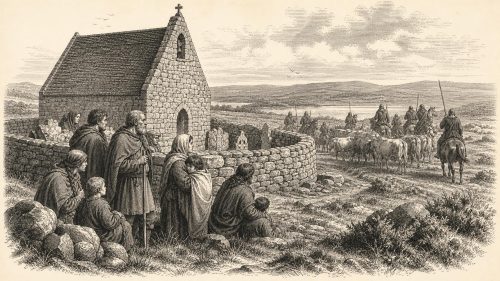
In 1031 Ireland remained politically fragmented after Brian Bóruma, as northern, southern and Hiberno-Norse rulers pursued power through raids, booty and captives. Flaithbertach Ua Néill returned from Rome while Aed Ua Néill campaigned against Cenél Conaill. Dublin’s Sitriuc Silkbeard was linked to Ardbraccan’s devastating plunder, and Waterford’s king was killed in Dublin. Churches at Ardbraccan, Swords, Kildare, Cell Chomair and Clonfert suffered burning, robbery or violence. Donnchad mac Briain raided Osraige but lost men; conflict also afflicted the Déisi. Obituaries emphasised learning, hospitality, piety and ecclesiastical office, revealing society’s religious resilience amid warfare, trade and local rivalry throughout Ireland alike.
Read Article

Archived: 26 September 2026
Abstract
In 1029, Ireland remained divided among competing Gaelic dynasties, church centres and Hiberno-Norse Dublin. Mathgamain Ua Riagáin of Brega captured Amlaíb, Dublin’s prince, whose release required an exceptional ransom of cattle, horses, silver, gold, hostages and a renowned sword, demonstrating links between rural and maritime economies. Killings of rulers in Uí Fhailgi, Fernmag, Conaille, Connacht and Cenél Conaill exposed persistent succession disputes and regional rivalries. At Inis na Lainne, a fire killed nobles and Drumcliff’s superior. Pilgrimage and church patronage connected elites to wider Christianity, while the death of master craftsman Máel Brigte Ua Brolcháin attests to skilled ecclesiastical culture.
Read Article

Archived: 26 September 2026
Abstract
In 1028, Ireland remained politically fragmented after Brian Bórama and Máel Sechnaill, with power contested through raids, killings, hostages and cattle wealth. Cenél nEógain plundered Tír Conaill, while the Conaille killed regional rulers. Sitriuc Silkbeard, Hiberno-Norse king of Dublin, and Flannacán of Brega made a prestigious pilgrimage to Rome, signalling wider Christian connections and developments associated with Dublin’s cathedral. Severe Lent snow disrupted people and livestock. Ecclesiastical deaths, Duleek’s plundering, and Slane’s collapsed oratory reveal churches’ institutional importance and vulnerability. Conflicting annals record violent regional succession, especially Connacht’s Brian Ua Conchobair, portraying a literate, agrarian, martial society linked to Europe.
Read Article

Archived: 26 September 2026
Abstract
In 1026, Ireland’s contested politics reflected the unsettled aftermath of Brian Bóruma and Máel Sechnaill’s deaths. Donnchadh mac Briain asserted Munster’s wider ambitions by taking hostages in Mide, Brega, Dublin, Leinster and Osraige, while hosting Patrick’s successor at Cenn Corad. Northern king Flaithbertach Ua Néill raided Mide, crossing ice to ravage Inis Mochta. Dublin remained a wealthy Hiberno-Norse power, alternately submitting and fighting. Leinster, Osraige and Mide saw killings, raids and shifting local leadership. Church offices, pilgrimages to Irish centres and Rome, and road building at Clonmacnoise demonstrate how religion, infrastructure and lordship sustained fragile regional power overall across Ireland.
Read Article
Archived: 26 September 2026
Abstract
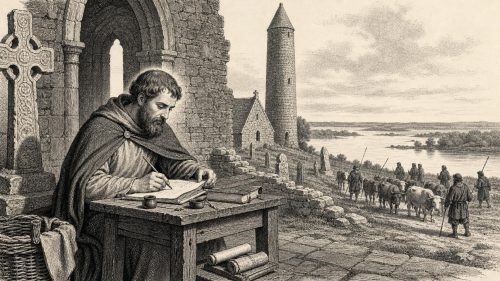
In 1023, Ireland experienced political fragmentation after Máel Sechnaill’s death. Rivalries destabilised Mide, where Domnall Ua Máel Sechnaill was killed, while Dublin’s Hiberno-Scandinavian rulers raided South Brega, killed Ainbíth Ua Cathasaigh, and seized King Donnchad Ua Duinn. Tadc son of Brian Bórama, a Munster dynastic rival, was killed by the Éile, allegedly at his half-brother Donnchad’s instigation. Connacht and northern kings also died in factional conflict. Clonmacnoise’s church lands were plundered of cattle. Annalists recorded January lunar and solar eclipses, spring drought, ecclesiastical deaths, and foreign rulers, revealing monastic learning and Ireland’s links across the Irish Sea and Christian Europe.
Read Article

Archived: 26 September 2026
Abstract
In 1021 Máel Sechnaill mac Domnaill’s restored overkingship remained active but fragile. He raided Dublin’s foreigners and Cenél nEógain, while Úgaire of Leinster defeated Sitriuc Silkbeard’s Dubliners near Delgany. Northern raids, killings and local conflicts exposed contested lordship around Airgialla. The murder of Áed, Máel Sechnaill’s heir, and other elite deaths weakened succession prospects in Mide. Amalgaid of Armagh made a politically significant visitation to Munster, asserting Patrician authority. Ecclesiastical deaths, Branacán’s drowning in Lough Ennell, and a reported shower of wheat in Osraige coloured annalistic memory. The year foreshadowed intensified struggle following Máel Sechnaill’s death in 1022 for Ireland.
Read Article

Archived: 26 September 2026
Abstract
In 1020, Ireland remained politically fragmented after Clontarf. Máel Sechnaill mac Domnaill led a coalition including Uí Néill, Donnchad mac Briain and Art Ua Ruairc to the Shannon, receiving Connacht hostages and asserting overkingship. Northern and eastern lesser kingdoms experienced blinding, killings and rapid succession disputes. Fires devastated Kildare, Glendalough, Clonard, Clonmacnoise, Swords and Armagh, damaging churches, treasures and settlement districts. Armagh’s blaze then preceded Máel Muire’s death and Amalgaid’s installation as Patrick’s successor; Patrick’s shrine and bell were also plundered. Annals additionally commemorate learned clerics, revealing churches as centres of wealth, scholarship, authority and vulnerability amid violent political competition.
Read Article

Archived: 26 September 2026
Abstract
In 1019, five years after Clontarf, Ireland remained politically fragmented despite Máel Sechnaill’s high-kingship. Donnchad mac Briain survived a sword attack that severed his right hand, while the death of Munster’s heir Mathgamain weakened Dál Cais networks. Sitriuc Silkbeard’s Dubliners raided Kells, killing inhabitants and carrying off captives and spoils. Lightning burned Kildare, and attackers violated Durrow’s stone church to seize and kill Mael Muad. Dynastic killings affected Ailech, Leinster and smaller kingdoms; northern raids, revenge killings and disease in Ára compounded insecurity. Annals portray churches as wealthy, vulnerable institutions and record interconnected sacred authority, warfare, succession and local life.
Read Article
Archived: 26 September 2026
Abstract
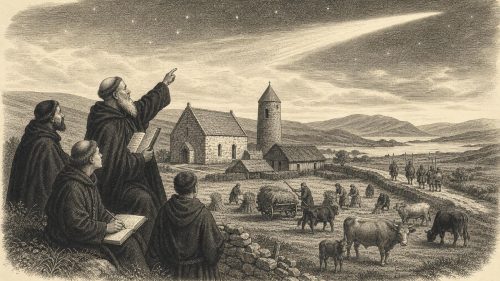
In 1018, four years after Clontarf, Ireland remained fragmented, as rival dynasties, Hiberno-Norse towns and local peoples pursued power through raiding, treachery and alliance. Máel Sechnaill’s authority in Mide was challenged when his steward and an allied king died during conflict in Fir Chell. Sitriuc Silkbeard of Dublin treacherously blinded Braen, son of Leinster’s Máel Mórda, ending his capacity to rule. Northern Uí Néill forces mobilised, while killings and plundering affected Gailenga, Tuatha Luigne and Óentreb. Ecclesiastical deaths reflected churches’ political and cultural importance; Waterford’s Norse king died. Annalists also recorded an autumn comet, revealing learned religious observation amid instability.
Read Article
Archived: 26 September 2026
Abstract
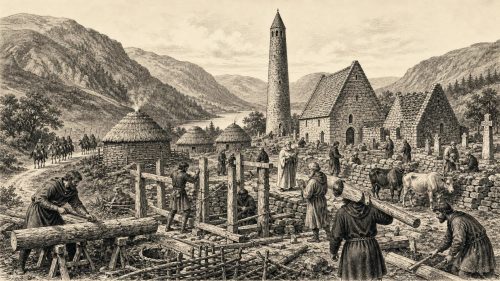
In 1017, three years after Clontarf, Ireland remained politically fragmented rather than settled under Máel Sechnaill mac Domnaill’s renewed overkingship. He defeated Dublin’s Hiberno-Scandinavian forces and Leinster men near Odhba, while dynastic killings eliminated several royal heirs and regional rulers in Ailech, Brega, Uí Méith and elsewhere. These internal conflicts reflected competitive succession among ruling kindreds. Church and learned communities also suffered: much of Glendalough burned, other ecclesiastical leaders died, and Inis Gaill Duib was destroyed as the scholar Anmchad drowned. Annals portray tense rebalancing, linking warfare, local lordship, monasteries, agriculture, and Dublin’s commercial power in post-Clontarf Ireland during 1017.
Read Article

Archived: 26 September 2026
Abstract
In 1014, Ireland’s layered kingship faced conflict over Brian Boru’s overlordship of Dublin and Leinster. On Good Friday, 23 April, Brian’s coalition, including Máel Sechnaill, defeated Leinster, Dublin and overseas Scandinavian forces at Clontarf. The costly victory killed Brian, his son Murchad, grandson Tairdelbach, Máel Mórda of Leinster and Sigurðr of Orkney, but neither destroyed Dublin nor expelled Scandinavians. Armagh’s elaborate burial rites strengthened Brian’s Christian royal memory. Subsequent Munster rivalries, provincial raids and deaths exposed continuing instability after the battle. Máel Sechnaill resumed central political importance, while Dublin remained a vital Hiberno-Norse trading centre within the Irish Sea world.
Read Article

Archived: 26 September 2026
Abstract
In 1013, Brian Bórama’s Irish overlordship faced coordinated resistance from Leinster and Hiberno-Norse Dublin under Máel Mórda and Sitriuc Silkbeard. Warfare spread across Mide, Brega, Leinster and Munster: Máel Sechnaill suffered losses near Dublin but countered raids, while northern rivals increased pressure. Brian and his son Murchad conducted prolonged campaigns, devastating Leinster, taking captives and advancing towards Dublin. Dublin’s fleet burned Cork, though Munster forces killed prominent Dubliners. Church relics, ecclesiastical authority, agriculture and fortifications featured in the conflict. Annals portray a Christian, literate yet violent society. No settlement emerged; 1013 established the conditions for Clontarf’s decisive battle in 1014.
Read Article
Archived: 26 September 2026
Abstract
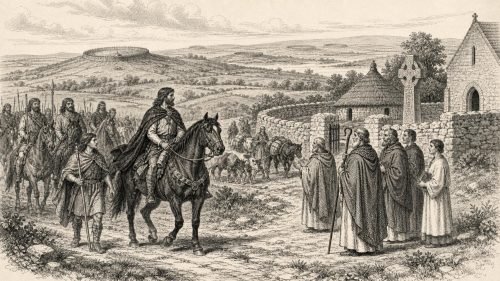
In 1006, Brian Bórama demonstrated the reach yet limits of his Irish overlordship by leading a broad coalition from Munster, Leinster, Mide, Connacht and Dublin through the north. His circuit secured Ulaid hostages and satisfied Armagh's claims, strengthening royal and ecclesiastical legitimacy, but Cenél Conaill and Cenél nEógain withheld submission. Provincial violence continued, including killings of regional kings, revealing unstable local rule. The deaths of Armagh churchmen underline clerical institutions' importance. A mild, food-rich winter offered relief after scarcity, while the army's passage burdened rural communities. Dublin's participation reflected its growing military, commercial and maritime value within Brian's negotiated supremacy.
Read Article

Archived: 26 September 2026
Abstract
In 1002 Brian Bórama transformed Irish politics by bringing an army to Athlone and taking hostages from Connacht and Mide, publicly demonstrating Máel Sechnaill mac Domnaill’s submission. Annals differ slightly in dating and emphasis, but confirm the event. Brian’s earlier successes over Leinster and Dublin enabled wider mobilisation, including Norse-Gaelic allies. Yet his subsequent northern expedition to Dundalk failed to secure hostages from Áed of Ailech and Eochaid of Ulaid, ending in truce. Raids, captives and ecclesiastical deaths reveal regional conflict. Coastal towns, trade and church institutions underpinned power. Brian emerged as leading king, but his island-wide overlordship remained incomplete.
Read Article

Archived: 26 September 2026
Abstract
In 1001, rivalry between Brian Boru of Munster and Máel Sechnaill of Mide centred on control of the midlands and Shannon. Brian’s growing power, strengthened by Dublin’s submission, threatened the older Uí Néill order, though Munster raiders were defeated in southern Mide. Máel Sechnaill and Cathal of Connacht constructed a causeway at Athlone to obstruct Munster fleets and defend Leth Cuinn, demonstrating both alliance and anxiety. Deaths among northern rulers exposed unstable regional politics. Changes at Armagh and clerical deaths underscored churches’ political and economic importance. The year remained inconclusive, but marked a defensive attempt to contain Dál Cais expansion.
Read Article

Archived: 26 September 2026
Abstract
In 1000, Ireland's annalists marked the millennium through sophisticated calendrical scholarship, without evidence of apocalyptic anxiety. After Brian Bórama and high-king Máel Sechnaill defeated Leinster and Dublin at Glenn Máma in late 999, Brian burned Dublin but restored it after Sitriuc Silkbeard submitted hostages, preserving its strategic trade and military value. Their alliance soon collapsed: Brian's coalition advanced towards Tara, but Máel Sechnaill destroyed its advance force in Brega, forcing withdrawal. Elsewhere deaths, blinding and killings exposed dynastic instability. Rural farming, raiding, urban craft and trade, Christianity and learning continued, while Brian's growing coalition foreshadowed his eventual high-kingship over Ireland.
Read Article
Archived: 26 October 2026
Abstract
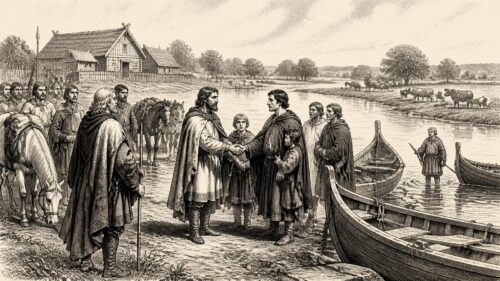
In 998, Brian of Munster and Máel Sechnaill of Tara jointly asserted authority across Ireland. At Athlone, Brian secured Connacht’s hostages within a week and transferred them to Máel Sechnaill, recognising Tara’s overlordship while displaying his own military reach. The kings also obtained guarantees from Dublin’s Hiberno-Scandinavian rulers. Athlone’s Shannon ford enabled movement between Mide and Connacht, making it a strategic political meeting point. Hostage-taking signified submission rather than territorial conquest. The year also saw the deaths of leading churchmen at Armagh and Clonmacnoise. Though later conflict approached, 998 demonstrated Brian’s growing power within an uneasy partnership with Máel Sechnaill.
Read Article
Archived: 8 October 2026
Abstract
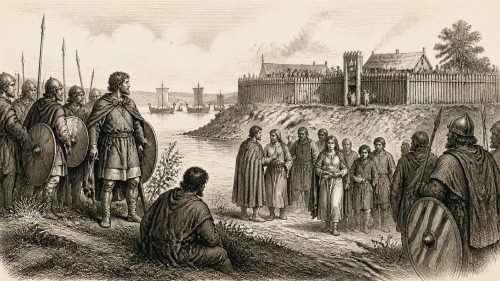
In 980, amid succession following Domnall ua Néill’s death, Máel Sechnaill mac Domnaill of Clann Cholmáin defeated Dublin and Isles forces at Tara. The victory, although not an expulsion of Norse power or unification of Ireland, enhanced his claim to wider supremacy. With Eochaid of Ulaid, he besieged Dublin for three days, securing hostages, tribute, release from Dublin’s exactions, and freedom for some Irish people held in bondage. Ragnall, Dublin’s heir, died in battle, while Amlaíb Cuarán retired penitently to Iona. Dublin’s commerce endured, but its political influence declined. Church deaths and regional killings exposed Ireland’s continuing fragmented, unstable kingship.
Read Article
Archived: 26 October 2026
Abstract
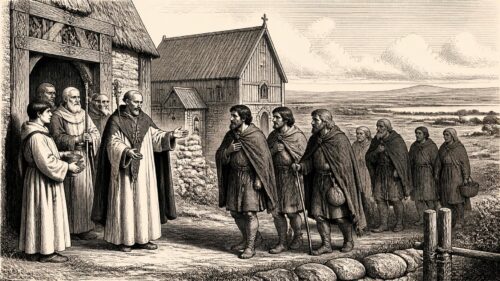
In 964, Dublin’s foreigners, led by Amlaíb Cuarán, plundered the wealthy ecclesiastical settlement of Kildare, demonstrating Dublin’s ability to project power into Leinster. Annals report that many captured clerics were ransomed by Niall ua Eruilb, whose silver-funded intervention restored people and enhanced his standing as protector of Brigit’s community. Muirenn, Kildare’s abbess or related female church officer, also died, though no source links her death directly to the raid. Chronicon Scotorum records cold, scarcity and grain dearth, while killings among northern kings and heirs reveal wider political instability. The selective record portrays a year of violence, hardship, patronage and survival.
Read Article
Archived: 26 October 2026
Abstract
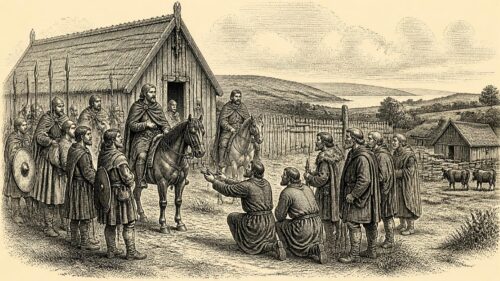
For Ireland in 960, the surviving record is brief but unusually revealing. It does not offer a single decisive battle, a royal inauguration or a named treaty. Instead, the nearest contemporary annalistic sequence preserves a cluster of movements: a northern ruler took pledges in Dál Araide; a man of the Dublin dynasty suffered defeat at an otherwise uncertain place; a figure called Muiredach made a wide circuit of Connacht; and Cathmug, associated with the great church of Lismore, died. Read carefully, these notices illuminate the practical business of power in a country of many kings, river routes and ecclesiastical communities.
Read Article
Archived: 27 October 2026
Abstract
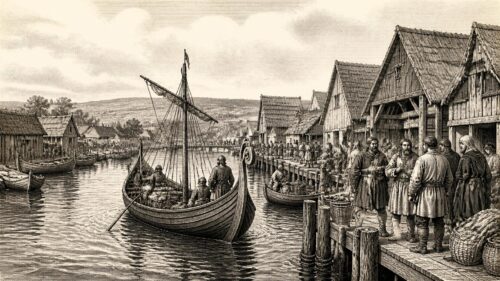
In 952, Amlaíb Cuarán was expelled from York and, according to Irish tradition and modern scholarship, returned to Dublin, redirecting his ambitions towards Ireland. His arrival followed Dublin’s recent raids, disease and political disruption, and unsettled his alliance with Congalach Cnogba, king of Tara. Domnall son of Donnchad, Clann Cholmáin heir to Tara, died, weakening a rival midlands dynasty; Flann ua Cléirig of southern Connacht also died. Ferdomnach of Clonmacnoise and Glendalough, alongside other ecclesiastical leaders, died. Dublin remained a thriving maritime trading centre using mixed forms of wealth, not yet its own coinage. No securely dated Irish battle occurred.
Read Article
Archived: 27 October 2026
Abstract
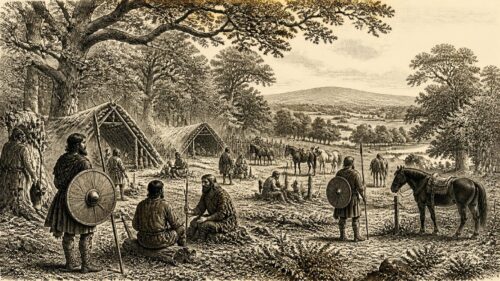
In 950, Ruaidrí ua Canannáin of Cenél Conaill pursued a serious claim to Tara, maintaining pressure on Mide and Brega for six months. His campaign ended at Muine Brócáin, where Dublin’s foreigners killed him and his kinsman Niall, preserving Congalach Cnogba’s position. Annalistic dates and battle figures vary, but the principal events are secure. Dublin’s forces also burned Sláine’s bell-house, killing clergy and destroying sacred objects. Elsewhere, Donnchad of Mide and Matudán of Ulaid died in kin-based conflicts. The year exposed fragmented kingship, politically engaged churches, Dublin’s inland influence, rural warfare, and seasonal environmental conditions, including an exceptional mast crop.
Read Article
Archived: 27 October 2026
Abstract
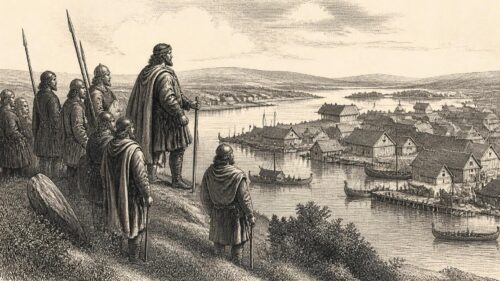
In 948, Congalach mac Máel Mithig, king of Brega and claimant to Tara, defeated and killed Blacair, ruler of Dublin’s Scandinavian dynasty. Annals differ over casualties and date, but agree that Blacair’s following suffered a defeat, perhaps through stratagem. The encounter reflected shifting alliances, dynastic rivalry and competition between Dublin’s prosperous port and neighbouring Irish kingdoms, rather than a simple ethnic conflict. Dublin survived under new rulers, while Congalach remained challenged by rivals. Conflict also affected churches: Colmán of Sláine died in captivity, and Clonmacnoise mourned Ainmire. Notices of Máel Sechnaill’s birth and Gormlaith’s death preserve dynastic and religious memory.
Read Article
Archived: 27 October 2026
Abstract
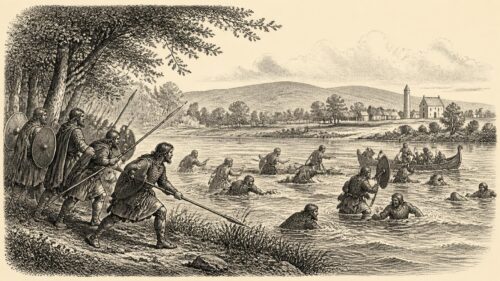
In 947, Ruaidrí ua Canannáin of Cenél Conaill defeated Congalach of Brega and Dublin's Amlaíb Cuarán at Sláine near the Boyne, killing or drowning many Dublin warriors. The encounter formed part of competing claims to Tara, not a national war, and highlighted Dublin's role in Irish politics. Elsewhere, Osraige routed Leinster, killing King Braen and other leaders, while northern nobles also died in obscure conflict. Cenél nÉogain made a notable silver gift to Armagh, affirming political and religious ties. Annals recorded ecclesiastical deaths, a travelling preacher, and marvels, revealing intertwined warfare, patronage, Christianity, and Irish Sea connections during the year.
Read Article
Archived: 27 October 2026
Abstract
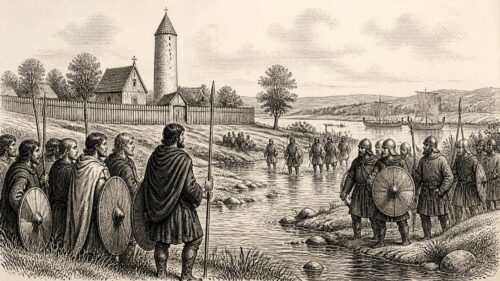
The year 946 sits in a difficult but revealing stretch of Irish history. It was a time when the claim to be king of Ireland was real enough to inspire campaigns, alliances and tribute, but not strong enough to make the island a single kingdom. Power rested in regional dynasties, church federations and the new Hiberno-Scandinavian town of Dublin. In the midlands and north-east, two Uí Néill contenders, Congalach Cnogba of Brega and Ruaidrí ua Canannáin of Cenél Conaill, were testing one another’s strength. Dublin’s ruler, Amlaíb Cuarán, was not an outsider to that contest: his forces could be allies,
Read Article
Archived: 27 October 2026
Abstract
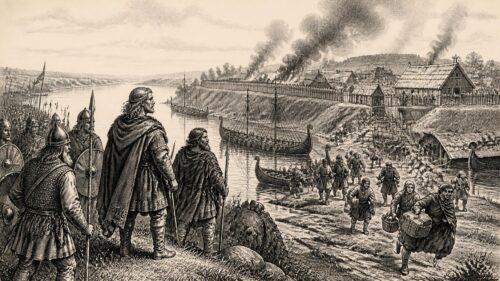
In 944, Donnchad Donn’s death after twenty-five years as king of Tara opened a contested struggle for Uí Néill supremacy. His nephew, Congalach of Brega, allied with Braen of Leinster to plunder Dublin, taking treasure, booty and possibly captives; one annal also alleges burning and four hundred deaths. The raid demonstrated Dublin’s vulnerability but did not establish conquest or end its political importance. Its wealth reflected its role as a Hiberno-Norse port within Irish Sea trade. Elsewhere, Cellachán of Cashel defeated northern Munster rivals, while local killings and ecclesiastical deaths then reveal persistent regional conflict and institutional continuity across Ireland.
Read Article
Archived: 27 October 2026
Abstract
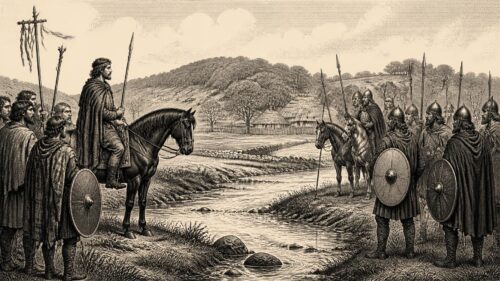
In 943, a sudden northern catastrophe altered the balance of Irish politics. Muirchertach mac Néill, king of Ailech and one of the foremost members of the Northern Uí Néill, was killed by a force from Viking Dublin. The loss was more than that of a successful war leader. Contemporary annalists styled him rígdamna Érenn, a man eligible for the kingship of Ireland, and the Annals of Ulster mourned him in a short verse as though the land of the Irish had been left bereft.The year’s evidence is concentrated, violent and uneven. It records clashes around Strangford Lough, the killing of
Read Article
Archived: 27 October 2026
Abstract
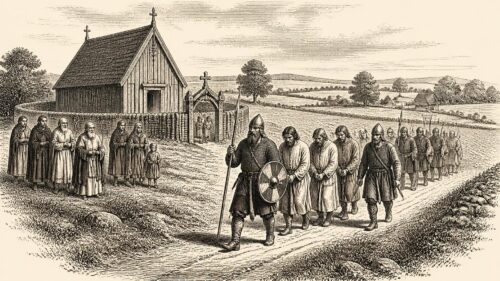
In the annal-year conventionally dated 938, Ireland saw political upheaval around Dublin and Leinster. Amlaíb son of Gothfrith returned to the Norse kingdom after Brunanburh, while its power extended towards Áth Truisten. He raided Cell Cuilinn, probably Kilcullen, plundering the church and carrying off many captives, a thousand in later accounts. Donnchad Donn and Muirchertach son of Niall prepared for battle but made peace, then besieged Dublin and ravaged its hinterland without evident conquest. Fergal of Ailech died, enabling Muirchertach to succeed, while regional rulers and church leaders died. The sources reveal contested authority, warfare, captivity, ecclesiastical vulnerability, and destruction.
Read Article





