
Archived: 8 October 2026
Abstract
In 1955, Ireland faced emigration, unemployment and rural decline under John A. Costello’s coalition government, despite claims of economic improvement. Farmers established the National Farmers’ Association in Dublin, seeking stronger influence over agricultural policy. Ireland joined the United Nations on 14 December, gaining an independent diplomatic platform while retaining neutrality and confronting partition. The BBC’s Divis transmitter introduced television broadcasting to Northern Ireland, extending media connections across the island. Radio Éireann launched its first soap opera, theatre provoked controversy and presented Beckett, and fire destroyed Cork Opera House. The year balanced domestic insecurity, institutional development, cultural change and international assertion.
Read Article

Archived: 8 October 2026
Abstract
Ireland in 1954 experienced political change, economic pressure, religious mass devotion and cultural innovation. Fine Gael’s John A. Costello led a minority inter-party government after Fianna Fáil’s electoral losses, amid concerns over employment, emigration, farming and housing. New legislation addressed development, land, housing and health, while Tayto and the Evening Press began trading. Marian Year pilgrimages made Knock a major national destination. The Gough Barracks arms raid signalled renewed republican militancy. Michael Manning’s execution at Mountjoy became the state’s last. Brendan Behan’s The Quare Fellow, Christy Brown’s My Left Foot and the first modern Bloomsday reflected increasingly challenging cultural voices.
Read Article

Archived: 8 October 2026
Abstract
In 1953, the Republic introduced adoption through An Bord Uchtála, formalising arrangements previously governed by families, churches and voluntary agencies. The Health Act extended a means-tested, graded system of medical provision rather than universal care. Fianna Fáil pursued restraint amid unemployment, rural insecurity and emigration. Dublin and Belfast jointly assumed control of the Great Northern Railway, demonstrating practical cross-border co-operation despite partition. An Tóstal promoted tourism and cultural confidence, while Samuel Beckett’s Paris première of En attendant Godot marked a literary milestone. In Northern Ireland, coronation television broadcasts reinforced British connections. Institutional change unfolded amid economic, religious and political divisions.
Read Article

Archived: 8 October 2026
Abstract
Ireland in 1952 combined political continuity with economic and social change. De Valera’s government, facing balance-of-payments difficulties, unemployment and emigration, imposed austerity while pursuing regional development, consolidated social welfare, protected agricultural workers and reorganised tourism. The Foyle Fisheries Act created cross-border machinery for managing shared waters, while Northern Ireland expanded Belfast’s water supply despite joblessness. The Adoption Act established the Republic’s first legal adoption framework, though its eligibility and religious rules reflected contemporary values. Public life included an Aer Lingus disaster, sporting and cultural achievements, and O’Kelly’s uncontested re-election. The year produced institutions without resolving partition, poverty or population loss.
Read Article

Archived: 8 October 2026
Abstract
In 1951, Noel Browne’s resignation over the Mother and Child Scheme exposed conflicts between social reform, Catholic authority, medical interests and governmental caution. The inter-party government then fell amid agricultural disputes; May’s election returned Fianna Fáil as largest party, enabling Éamon de Valera to lead a minority administration. The census recorded 2,960,593 people, as emigration largely offset natural increase amid economic insecurity. Welfare pensions rose, agricultural workers gained half-holidays, and electrification and peat development continued. The Arts Act established An Chomhairle Ealaíon. In Northern Ireland’s Westminster poll, Unionists retained dominance despite Nationalist victories and a narrowly contested West Belfast seat.
Read Article
Archived: 8 October 2026
Abstract
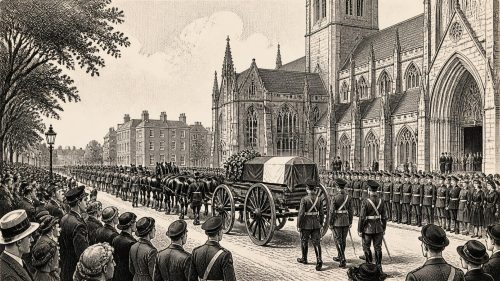
In 1949 Ireland became a republic, ending the Crown’s remaining external role, while Britain’s Ireland Act reinforced Northern Ireland’s constitutional position within the United Kingdom. Southern political leaders united publicly against partition, but efforts to link reunification with NATO membership failed. Post-war recovery remained uneven, with shortages, emigration, rural poverty and extensive state regulation continuing alongside electrification, statistical development and welfare administration. Housing, health and public services expanded gradually. Douglas Hyde’s funeral honoured a founder of cultural nationalism whilst exposing denominational divisions in public ceremony. The year combined republican assertion with enduring partition, social constraints, institutional growth and cultural ambition.
Read Article

Archived: 8 October 2026
Abstract
In 1948, Fianna Fáil lost its Dáil majority after sixteen years, enabling John A. Costello to lead the First Inter-Party Government, supported by Clann na Poblachta, Labour and others. The coalition addressed post-war housing, welfare, health, employment and agricultural trade, while Ireland joined European recovery co-operation and concluded a British trade agreement. Costello’s September Canadian announcement preceded the Republic of Ireland Act, enacted in December. Although effective only in 1949, it repealed the External Relations Act, ended the Crown’s remaining external role and authorised presidential functions. Partition remained unchanged, while An Taisce’s foundation and Olympic return suggested national civic renewal.
Read Article

Archived: 8 October 2026
Abstract
In 1947, severe winter weather, poor harvests and continuing rationing exposed Ireland’s dependence on imported coal, disrupted transport and worsened rural fodder shortages. Food controls deepened hardship for households. Against this hardship, Oldtown became the first Irish village publicly connected under the Rural Electrification Scheme, signalling gradual modernisation. The Health Act reorganised public-health administration, while James Larkin’s death recalled labour struggles. Clann na Poblachta’s by-election successes challenged Fianna Fáil. Shannon gained customs-free status, the Enterprise Express linked Belfast and Dublin, and UN membership was vetoed. Cultural landmarks included Cork Ballet Group’s debut and Cavan’s All-Ireland football victory in New York.
Read Article
Archived: 8 October 2026
Abstract
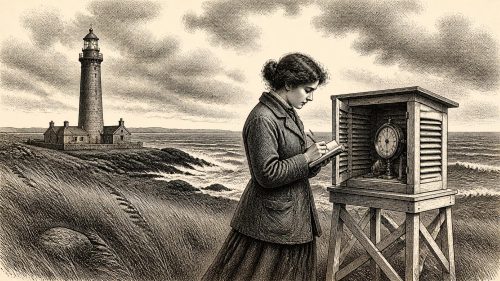
During 1944, neutral Ireland endured Emergency shortages, rationing and transport disruption while remaining strategically entangled in the war. At Blacksod Point, Maureen Flavin’s weather observations assisted Allied forecasting before the Normandy landings, illustrating neutrality’s limits. De Valera rejected Allied demands to expel Axis diplomats, defending sovereignty amid espionage concerns and partition. Fianna Fáil won a Dáil majority in May. Children’s allowances began in August, easing family pressures. December’s Transport Act prepared Córas Iompair Éireann, while the Abbey staged Joseph Tomelty’s Belfast-set play, The End House. The year combined democratic continuity, cautious social reform and preparations for postwar reconstruction across Ireland.
Read Article
Archived: 8 October 2026
Abstract
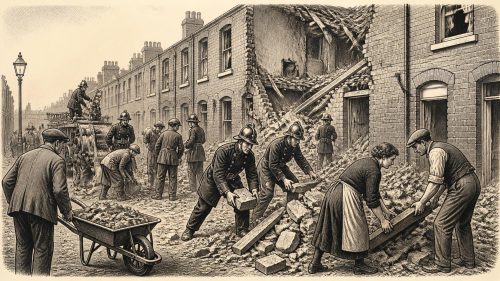
In 1941, neutral Éire faced the Second World War’s consequences despite preserving its Emergency policy. German raids devastated Belfast, a British industrial centre, killing hundreds and prompting fire brigades from Dublin and other southern towns to assist. On 31 May, German bombs killed twenty-eight people, injured over ninety and destroyed about 300 homes in Dublin’s North Strand. The attack demonstrated neutrality’s limits amid diplomatic tension over Northern Irish conscription and Churchill’s appeals for Irish participation. Shortages of food, fuel and imports led to rationing, expanded turf supplies and Irish Shipping’s creation. Maritime dangers and cross-border relief underscored Ireland’s wartime vulnerability.
Read Article

Archived: 8 October 2026
Abstract
In 1940, neutral Éire faced danger as German victories transformed its strategic position. De Valera defended neutrality, expanded emergency powers and rejected Britain’s unity proposal, judging it insecure and incompatible with sovereignty. The government suppressed IRA activity, while Seán Russell died during an abortive German-backed mission. On 26 August, German bombs killed three women at Campile creamery, Ireland’s first fatal Luftwaffe raid. Shortages prompted censorship, restrictions and compulsory tillage to strengthen food security. Northern Ireland mobilised for Britain, with Belfast industry expanding and John Miller Andrews succeeding Craigavon. The Bell appeared, while in December John Charles McQuaid became Dublin’s archbishop.
Read Article

Archived: 9 October 2026
Abstract
In 1939, Ireland faced both European war and republican militancy. The Government strengthened internal security through the Offences Against the State Act, while air-raid precautions reflected fears of attack. Following Germany’s invasion of Poland, constitutional amendments and the Emergency Powers Act enabled neutral Ireland to regulate security, supplies and communications. Dublin denied belligerents use of its territory and ports, despite British pressure, asserting sovereignty after the Treaty Ports’ return. Northern Ireland entered the war with Britain, underscoring partition’s consequences. Refugee appeals highlighted Nazi persecution. The December IRA raid on Dublin’s Magazine Fort demonstrated that armed challenges to State authority persisted.
Read Article

Archived: 9 October 2026
Abstract
In 1936, the Irish Free State accelerated constitutional change under de Valera. Abolition of the Seanad created a unicameral Oireachtas, while Edward VIII’s abdication enabled removal of the Crown and governor-general from domestic government, retaining limited royal functions abroad. Economic War pressures, despite a coal-cattle agreement, sustained hardship and arguments over protectionism, while the census documented social conditions. The Spanish Civil War polarised opinion, although government maintained non-intervention. Catholic confidence appeared in Mullingar’s new cathedral; Peig and Ireland To-day reflected cultural life. Aer Lingus’s Iolar inaugurated Bristol flights. Partition endured, but 1936 anticipated the 1937 constitution and its future direction.
Read Article
Archived: 9 October 2026
Abstract
In 1933 Fianna Fáil secured a Dáil majority, enabling Éamon de Valera’s government to pursue a stronger interpretation of Irish self-government. The Constitution (Removal of Oath) Act ended compulsory parliamentary declarations involving the Crown and repealed the Treaty’s overriding constitutional status, though Ireland remained short of a republic. Anglo-Irish conflict over land annuities continued to damage agricultural exports during the Economic War. Protectionist measures promoted cereals, industrial credit and sugar production, while land reform and unemployment assistance expanded state intervention. Government suppression of Blueshirt mobilisation preceded Fine Gael’s formation. Meanwhile, Northern Ireland’s Unionist administration remained firmly entrenched, underscoring partition’s persistence.
Read Article
Archived: 9 October 2026
Abstract
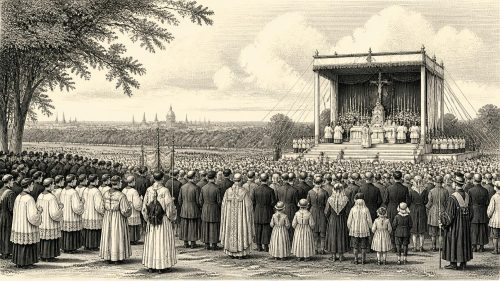
In 1932 Fianna Fáil, led by Éamon de Valera, replaced Cumann na nGaedheal through constitutional politics, marking peaceful anti-Treaty accession to Free State power. The government challenged Treaty symbols, introduced oath-removal legislation, and withheld land annuities, provoking Britain’s tariffs and the Economic War. Dublin’s International Eucharistic Congress displayed Catholic confidence, while de Valera enhanced standing at the League of Nations and Irish athletes won Olympic gold. In Northern Ireland, Stormont’s opening embodied unionist permanence. Simultaneously, Belfast outdoor-relief protests briefly united Catholic and Protestant workers against depression, securing improved payments amid police repression. Partition, hardship, sovereignty and divergent cultures remained unresolved.
Read Article
Archived: 9 October 2026
Abstract
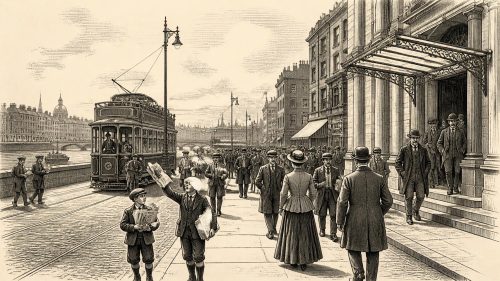
In 1931 the Irish Free State gained legislative autonomy through the Statute of Westminster, while unresolved Treaty issues, partition and political rivalry persisted. Cosgrave’s government faced Fianna Fáil’s growing constitutional challenge, republican fears and economic depression affecting farming, exports, employment and emigration. The Public Safety Act introduced emergency powers after Saor Éire’s congress, revealing anxieties about violence. The Four Courts reopened, symbolising post-Civil War recovery. Flooding struck Cork, while An Óige encouraged rural travel. The Irish Press began publication, strengthening nationalist political communication. Dublin’s first state-sponsored St Patrick’s Day parade projected order, although industrial unemployment remained severe in Northern Ireland.
Read Article

Archived: 9 October 2026
Abstract
In 1928, the Irish Free State consolidated institutions after civil conflict through constitutional, administrative, economic and cultural measures. The Oireachtas abolished direct-democracy provisions, revised Seanad arrangements, increased old-age pensions and extended regulation of trade, agriculture, welfare, safety and forestry. New Saorstát banknotes and coinage displayed Irish symbols while retaining sterling parity. Construction of the Shannon hydroelectric scheme advertised modernisation before generation began. Major James Fitzmaurice joined the first east-to-west Atlantic flight, and Cosgrave signed the Kellogg–Briand Pact. Tailteann Games, Pat O’Callaghan’s Olympic victory, new Irish-language and cosmopolitan theatres, and gallery legislation promoted cultural visibility despite partition and deep political division.
Read Article
Archived: 9 October 2026
Abstract
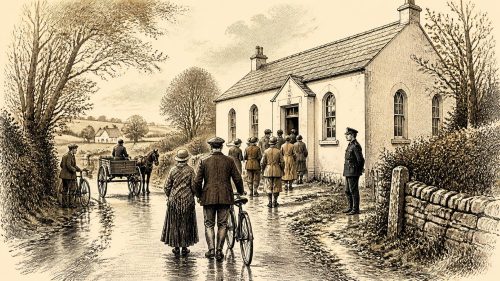
In 1927, Irish Free State politics moved decisively towards parliamentary competition. Fianna Fáil won 44 seats in June but initially refused the Oath of Allegiance. Kevin O’Higgins’s assassination at Booterstown exposed continuing republican violence, prompting the Public Safety Act. In August, de Valera and his deputies entered the Dáil, treating the oath as a political formula; September’s election established Fianna Fáil as the principal opposition. Government advanced land reform, liquor regulation, jury law and electrification. Partition remained entrenched, while diplomatic activity strengthened international status. Joyce’s Pomes Penyeach reflected Irish culture’s international reach. Unresolved divisions remained, but conflict shifted towards elections.
Read Article
Archived: 9 October 2026
Abstract
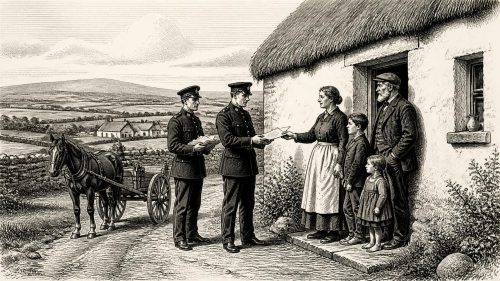
In 1926, the Irish Free State consolidated its institutions amid demographic decline, political division and economic change. The first Free State census counted 2,971,992 people, confirming rural depopulation, emigration, agricultural dependence, Catholic predominance and limited Irish-language knowledge. Legislation addressed allotments, school attendance and shop hours while accommodating farm labour. Construction of the Shannon hydro-electric scheme at Ardnacrusha demonstrated technological ambition, though reliant on foreign expertise. Éamon de Valera’s break with Sinn Féin produced Fianna Fáil, establishing a new republican organisation. Partition endured, while Cosgrave’s government asserted greater Commonwealth equality at the Imperial Conference. Women participated in political and peace activism.
Read Article
Archived: 9 October 2026
Abstract
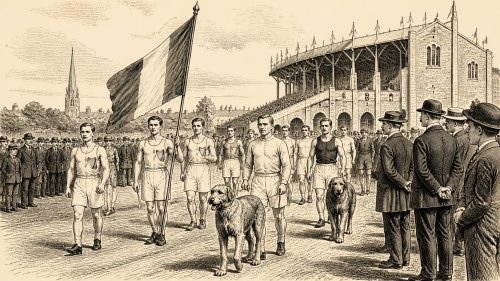
In 1924, the Irish Free State strengthened its authority after civil war. Government resistance to Liam Tobin’s Army Crisis affirmed civilian control and led towards a smaller professional army. New courts, policing and administrative laws established regular state institutions, while prosecutions for Civil War acts ended. The Boundary Commission began work amid nationalist expectations. Fiscal retrenchment, notably reduced old-age pensions, caused hardship. Railway legislation sought economic integration. Ireland competed independently at the Paris Olympics and hosted the Tailteann Games, projecting cultural confidence despite republican boycott. Irish-language education expanded. The year combined constitutional consolidation, austerity, unresolved partition and contested national self-presentation.
Read Article
Archived: 9 October 2026
Abstract
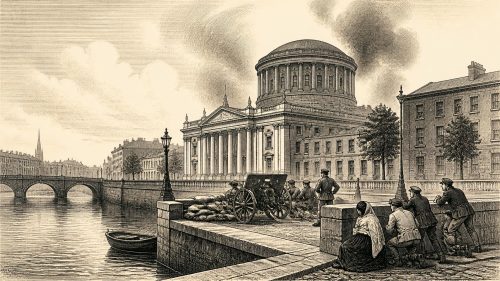
In 1922, Dáil Éireann ratified the Anglo-Irish Treaty, splitting Sinn Féin and the IRA between supporters of dominion status and republican opponents. Michael Collins led the Provisional Government as Northern Ireland remained separate amid continuing sectarian violence. Failed mediation and the anti-Treaty occupation of the Four Courts led to National Army bombardment on 28 June, initiating Civil War. Fighting devastated Dublin, destroyed the Public Record Office’s Record Treasury, and spread nationwide. Arthur Griffith and Collins died in August. Under W. T. Cosgrave, the Free State Constitution established democratic institutions. On 6 December the Free State began; Northern Ireland opted out.
Read Article
Archived: 9 October 2026
Abstract
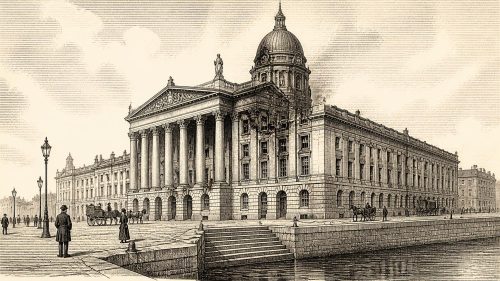
In 1921, Ireland moved from intense War of Independence fighting towards truce and treaty, amid coercion, raids and executions. IRA engagements at Crossbarry and Tourmakeady maintained pressure, while the Custom House burning destroyed records but cost lives and arrests. May elections confirmed Sinn Féin’s southern mandate and established Northern Ireland’s unionist government. The 11 July truce ended principal IRA–Crown operations but not Belfast’s sectarian violence. London negotiations produced the December Anglo-Irish Treaty, creating a dominion Free State while retaining the Crown, partition and British naval facilities. Signed but unapproved, it deeply divided republicans, leaving border, constitutional and security questions unresolved.
Read Article
Archived: 9 October 2026
Abstract
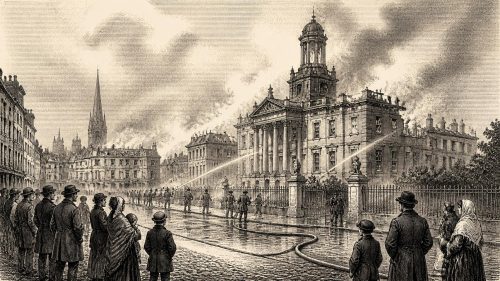
In 1920, Ireland’s political crisis widened into conflict across elections, workplaces, civic institutions and homes. Sinn Féin and Labour gained local authority, helping Dáil Éireann establish parallel courts, finance and propaganda, while Britain answered with emergency powers, troops, Black and Tans and Auxiliaries. IRA attacks, reprisals and executions, including Kevin Barry’s, intensified war. Cork symbolised the crisis through Tomás MacCurtain’s murder, Terence MacSwiney’s hunger-strike death and the city’s burning. Bloody Sunday and Kilmichael deepened violence. Labour resistance exposed regional divisions. Sectarian expulsions in Belfast accompanied the Government of Ireland Act, which legislated partition, shaping the 1921 truce and eventual negotiations.
Read Article
Archived: 9 October 2026
Abstract
In 1919, Sinn Féin MPs established Dáil Éireann at Dublin’s Mansion House, declaring independence, adopting a Democratic Programme and claiming authority denied by Britain. The same day, the Soloheadbeg ambush killed two policemen, signalling escalating conflict. De Valera’s escape, presidency and mission strengthened republican propaganda and fundraising. The Dáil developed ministries, a loan, publicity and courts, aided by Cumann na mBan, despite proscription. Limerick’s permit strike demonstrated labour resistance. British repression accompanied plans for separate parliaments, foreshadowing partition. By December, the attempted assassination of Lord French highlighted violence. Ireland ended with rival British and republican authorities, amid hardship and uncertainty.
Read Article
Archived: 9 October 2026
Abstract
In 1918, Britain’s attempt to impose conscription on Ireland, amid the failure of the Irish Convention, united constitutional nationalists, Sinn Féin, labour, Catholic clergy and local communities. Pledges, a national strike and women’s activism helped make enforcement politically hazardous, while arrests under the alleged German Plot enhanced Sinn Féin’s standing. Simultaneously, influenza caused 10,651 recorded deaths, straining households and institutions. After the Armistice, an expanded electorate voted in December. Sinn Féin won 73 of 105 seats, displacing the Irish Parliamentary Party, although unionism remained strong in the north-east. The year reshaped nationalist politics and foreshadowed Ireland’s subsequent revolutionary political conflict.
Read Article
Archived: 9 October 2026
Abstract
In 1916, Ireland was transformed by the Easter Rising, launched in Dublin after plans for German arms support failed and Eoin MacNeill’s countermand limited mobilisation. Rebels proclaimed a republic from the GPO, but British artillery, street fighting and fires devastated the city, killing many civilians. Pearse surrendered on 29 April; martial law, secret courts martial, executions, arrests and internment subsequently increased republican sympathy and organisation. Casement was executed in August. Meanwhile, Irish soldiers fought and died at the Somme, while Home Rule negotiations between Redmond, Carson and Lloyd George collapsed. Changes reflected a divided society with an altered political future.
Read Article
Archived: 9 October 2026
Abstract
In 1915, the First World War intensified Ireland’s political, social and cultural divisions. The sinking of RMS Lusitania off Kinsale brought global conflict directly to Cork, killing about 1,198 people, including Hugh Lane and Thomas O’Brien Butler. John Redmond’s National Volunteers demonstrated continued constitutional strength, while Irish troops endured heavy losses at Gallipoli and prepared for France. Recruitment increasingly provoked opposition. Meanwhile, IRB-linked Volunteers secretly planned a 1916 rising, seeking German aid, while James Connolly promoted socialist militancy. O’Donovan Rossa’s Dublin funeral became a major republican demonstration. Cultural bodies debated nationalism, and wartime prices and hardship affected communities nationwide unevenly.
Read Article

Archived: 9 October 2026
Abstract
In 1914, Ireland experienced social hardship after the Dublin Lockout, escalating conflict over Home Rule, and the growth of armed volunteer movements. The Curragh crisis undermined army neutrality, while Ulster Volunteers imported arms at Larne. Nationalists responded through Cumann na mBan’s formation and the Howth gun-running, followed by fatal shootings at Bachelor’s Walk. Efforts to resolve Ulster’s status at the Buckingham Palace Conference failed. Britain’s entry into the First World War transformed priorities. Although the Third Home Rule Act received Royal Assent in September, it was immediately suspended. Redmond’s call for wartime enlistment divided the Irish Volunteers, deepening political uncertainty.
Read Article
Archived: 9 October 2026
Abstract
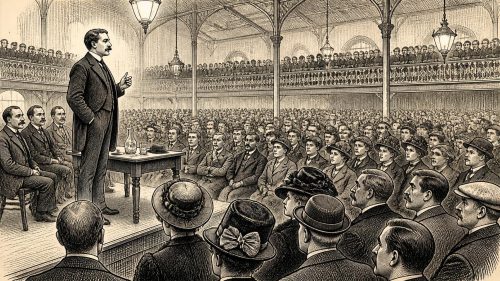
In 1913, the Third Home Rule Bill intensified conflict between constitutional nationalism and Ulster unionism, whose Volunteer Force prepared to resist self-government. Dublin’s Lockout pitted James Larkin’s ITGWU against employers led by William Martin Murphy, bringing exclusion, Bloody Sunday violence, hunger and disputes over relief for children. The collapse of Church Street tenements, killing seven, highlighted urban housing failures. Labour activists formed the Irish Citizen Army, while nationalists founded the Irish Volunteers at the Rotunda in response to unionist militarisation. Cultural debates involving Yeats and the Gaelic League reflected public identities, leaving Ireland divided, mobilised and distrustful of parliamentary solutions.
Read Article
Archived: 9 October 2026
Abstract
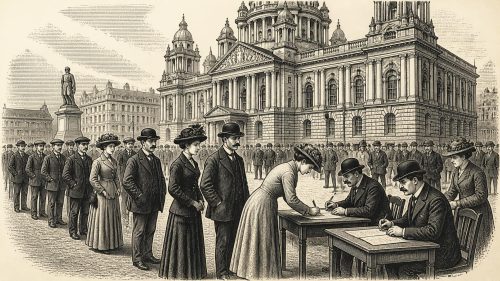
In 1912, the Third Home Rule Bill made limited Irish self-government a realistic prospect, though it remained under parliamentary debate and reserved major powers to Westminster. John Redmond’s Irish Parliamentary Party supported it, while Ulster unionists, led by Edward Carson and backed by British Conservatives, demonstrated mass resistance at Balmoral and signed the Ulster Covenant and women’s Declaration on Ulster Day. Belfast’s industrial strength, sectarian divisions and summer disturbances revealed mounting tension. Suffragists challenged women’s exclusion from reform. Titanic’s Queenstown call highlighted migration and regional connections. Cultural activity continued, but unresolved Home Rule, unionist mobilisation and social divisions foreshadowed crisis.
Read Article




