
Archived: 26 September 2026
Abstract
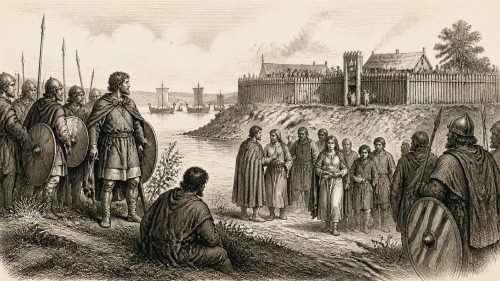
In 1000, Ireland's annalists marked the millennium through sophisticated calendrical scholarship, without evidence of apocalyptic anxiety. After Brian Bórama and high-king Máel Sechnaill defeated Leinster and Dublin at Glenn Máma in late 999, Brian burned Dublin but restored it after Sitriuc Silkbeard submitted hostages, preserving its strategic trade and military value. Their alliance soon collapsed: Brian's coalition advanced towards Tara, but Máel Sechnaill destroyed its advance force in Brega, forcing withdrawal. Elsewhere deaths, blinding and killings exposed dynastic instability. Rural farming, raiding, urban craft and trade, Christianity and learning continued, while Brian's growing coalition foreshadowed his eventual high-kingship over Ireland.
Read Article
Archived: 8 October 2026
Abstract
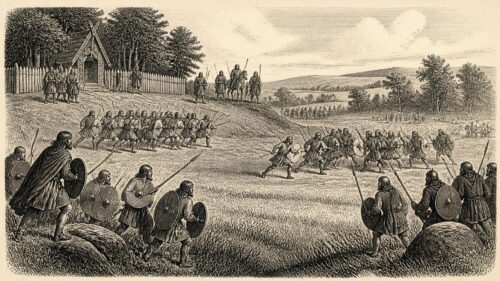
In 980, amid succession following Domnall ua Néill’s death, Máel Sechnaill mac Domnaill of Clann Cholmáin defeated Dublin and Isles forces at Tara. The victory, although not an expulsion of Norse power or unification of Ireland, enhanced his claim to wider supremacy. With Eochaid of Ulaid, he besieged Dublin for three days, securing hostages, tribute, release from Dublin’s exactions, and freedom for some Irish people held in bondage. Ragnall, Dublin’s heir, died in battle, while Amlaíb Cuarán retired penitently to Iona. Dublin’s commerce endured, but its political influence declined. Church deaths and regional killings exposed Ireland’s continuing fragmented, unstable kingship.
Read Article
Archived: 13 October 2026
Abstract
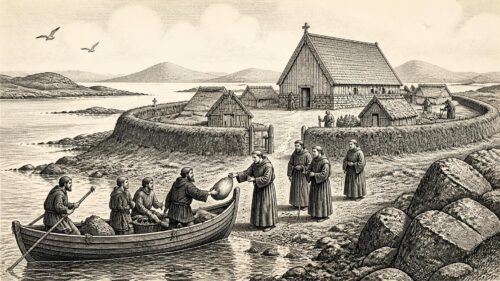
In 714, Irish annals recorded concentrated warfare, political upheaval and environmental strain. Murchad Midi of Clann Cholmáin defeated Brega rivals in two encounters at Bile Tened, while Fogartach of southern Brega was expelled to Britain and Forbassach of Uí Fhailgi was killed in Mide. Other conflicts occurred among Uí Echach and Bairche, and Munstermen killed Clárainech’s travelling religious community. Selbach rebuilt Dún Ollaig in Dál Riata, highlighting Irish Sea links. Ailén Daingen, probably a fortified lake settlement, was destroyed. A great drought and bright autumn night were also noted, revealing a fragmented society vulnerable to conflict and natural pressures alike.
Read Article
Archived: 13 October 2026
Abstract
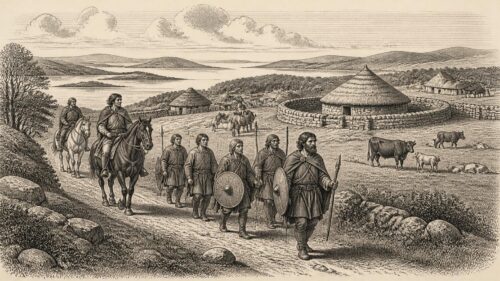
In 713, annalistic evidence records political and ecclesiastical transitions across Ireland and the Gaelic sea-world. Cormac, king of Munster, died in battle at Cam or Carn Feradaig, opening a succession from which Cathal son of Finguine emerged. Cú Cherca of Osraige and Sechnasach of Uí Maine also died, while other killings illustrate regional violence. Church leaders Fáilbe Bec of Clonmacnoise and Bishop Baetán died. At Iona, Dorbéne held the primacy for five months before dying on 28 October. These notices reveal overlapping local kingships, influential monastic networks, and links between Ireland, Iona, Pictland and Northumbria during a year of change.
Read Article
Archived: 13 October 2026
Abstract
Annals for 707 record political, ecclesiastical and environmental developments in a divided, rural Ireland. Indrechtach mac Dúnchado, overking of Connacht, was killed by northern Uí Néill leaders and allies, demonstrating continuing rivalry without proving conquest. Congal Cennmagair, king of Tara, led a host against Leinster, though no outcome is known. Dúnchad became superior of Iona, reinforcing the monastery’s Irish Sea importance, while Bishop Coibdenach of Ardstraw died and Béc of Bairche undertook religious pilgrimage. Two northern tremors occurred in December. These sparse notices illuminate interconnected kingship, church networks, mobility and agrarian society, while leaving everyday conditions largely unrecorded to historians.
Read Article
Archived: 13 October 2026
Abstract
In 706, Irish annals recorded deaths rather than events, revealing ecclesiastical and political transitions amid uncertain chronology. Osséne son of Gallust, abbot of Clonmacnoise, died, affecting a Shannon monastery sustained by rural production, river movement and communities. Flann Febla, abbot of Armagh, also died, marking change at Ireland’s Patrician church. Conchobor, king of Cenél Cairpri, died or was killed, though sources conflict. Notices of Bruide son of Derile suggest Irish Sea connections, while Cellan son of Sechnusach, the learned, reflects valued scholarship despite disputed dating. The sparse record depicts rural, plural, Christian Ireland structured by kinship, churches and regional power.
Read Article

Archived: 8 October 2026
Abstract
Ireland around 30,117 BCE lay within the climatically unstable Late Pleistocene, as the British–Irish Ice Sheet expanded unevenly and low sea levels reshaped coasts and possible dispersal routes. Derryvree, County Fermanagh, preserves freshwater organic deposits between glacial tills, indicating a treeless, wet tundra-like mosaic during a local ice-free interval. Castlepook Cave, County Cork, contains a time-spanning fauna including reindeer, mammoth, giant deer, predators and cold-adapted small mammals, demonstrating ecological richness but not a single contemporary assemblage. A cut-marked reindeer bone may suggest human carcass processing, yet no secure evidence proves settlement. Regional records reveal ice, water, vegetation and animal movements.
Read Article

Archived: 8 October 2026
Abstract
Labelled 30,118 BCE, this horizon represents an uncertain Late Pleistocene interval, not a precise Irish date. During Marine Isotope Stage 3, Ireland contained shifting ice, periglacial terrain, wetlands and open grazing country as the British–Irish Ice Sheet expanded towards its later maximum. Derryvree sediments indicate local ice-free freshwater environments, while Castlepook Cave preserves cold-adapted fauna including mammoth, reindeer, giant deer, hyaena and wolf. An incised reindeer femur may indicate early human butchery, but its insecure context and lack of associated tools prevent firm conclusions. Later glaciation destroyed much evidence, requiring cautious interpretations based on dated deposits, animal remains and landforms.
Read Article
Archived: 8 October 2026
Abstract
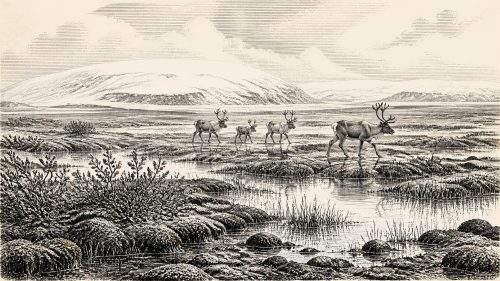
At approximately 30,119 BCE, Ireland lay within the climatically unstable later Marine Isotope Stage 3, beyond precise calendar dating or historical record. At Derryvree, County Fermanagh, organic sediments between two glacial tills document an ice-free local landscape of shallow pools, mosses, sedges, herbs and tundra-like vegetation. They demonstrate regional climatic fluctuation, not an ice-free island. Lower seas and shifting ice altered coasts, while Crag Cave records intermittent conditions. Faunal remains at Castlepook Cave indicate open-country mammals. A marked reindeer bone suggests tentative Upper Palaeolithic human activity, but no secure settlement evidence exists. Environmental change and renewed glaciation define this period.
Read Article

Archived: 8 October 2026
Abstract
Although 30,120 BCE lies within Derryvree’s calibrated radiocarbon range, no year-specific Irish history can be recovered. During unstable Marine Isotope Stage 3, Fermanagh’s Derryvree deposits record an ice-free interval between glacial advances: cold, treeless wetlands of pools, sedges, grasses, mosses, juniper and herbs. Later ice buried and preserved this evidence. Castlepook Cave in Cork contains remains of diverse Ice Age animals, but mixed deposits prevent a single contemporary reconstruction. A modified reindeer bone may indicate brief human butchery, not settlement. Ireland was periodically habitable amid shifting ice and sea conditions, yet lacks evidence for societies, economies, culture or enduring occupation.
Read Article

Archived: 8 October 2026
Abstract
About 30,121 BCE, Ireland lay in a cold, unstable Late Ice Age landscape as the British–Irish Ice Sheet expanded. Open tundra-like habitats, altered coastlines and routes supported cold-adapted fauna, while glaciation later destroyed or buried much evidence. Castlepook Cave in County Cork preserves Ireland’s vertebrate archive for this period, though its mixed deposits span many millennia and were excavated. Bones of mammoth, reindeer, giant deer, hyaena, wolves and Arctic mammals demonstrate animal access. A possibly tool-marked reindeer bone may indicate human activity around 33,000 years ago, but cannot establish settlement, society or sustained occupation. The period remains an environmental history.
Read Article

Archived: 8 October 2026
Abstract
30,122 BCE cannot be reconstructed as a precise year, but falls within a late-MIS-3 interval represented by the Derryvree BIRM-166 organic silt. Deposited between glacial tills in County Fermanagh, it records a locally ice-free freshwater tundra wetland with grasses, sedges, dwarf shrubs, mosses, insects and water plants. Ireland formed an unstable mosaic of ice, periglacial terrain and open habitats before later ice-sheet expansion. Castlepook Cave, County Cork, preserves diverse cold-stage fauna, including mammoth, reindeer and predators, though remains accumulated over time. A marked reindeer bone may indicate human butchery, but sustained occupation remains unproven. Evidence illuminates environmental change, not society.
Read Article

Archived: 7 October 2026
Abstract
30,123 BCE is a modern label for an uncertain Late Pleistocene horizon, not a recorded Irish year. At Derryvree, County Fermanagh, organic freshwater sediments between glacial tills, radiocarbon-dated broadly to this period, preserve bogbean, pollen, mosses and insects. They indicate locally ice-free, treeless tundra wetland with pools, sedges, grasses, herbs and juniper. Ireland experienced changing ice margins before the later Last Glacial Maximum, while lower sea levels did not guarantee access routes. Castlepook Cave, County Cork, contains cold-climate fauna. A possibly tool-marked reindeer bone may indicate human carcass processing, but cannot demonstrate settlement. No evidence supports society, agriculture or institutions.
Read Article

Archived: 7 October 2026
Abstract
About 32,000 calibrated years before AD 1950, Ireland lay within the climatically unstable Late Pleistocene. Derryvree, County Fermanagh, preserves freshwater organic sediments between glacial tills, demonstrating an interval of ice-free, treeless wetland amid advancing ice. Its plants indicate sedges, mosses and hardy herbs in tundra-like, periglacial conditions. Cave remains show that cold-adapted fauna, including reindeer, giant deer, mammoth and hyaena, reached Ireland during wider MIS 3, though not necessarily together. A potentially cut-marked Castlepook reindeer bone suggests, but does not establish, Upper Palaeolithic human presence. Evidence supports environmental change and episodic animal movement, not settlement, society, trade or recorded events.
Read Article

Archived: 7 October 2026
Abstract
About 32,000 years before present, Ireland was a cold, unstable Marine Isotope Stage 3 landscape, increasingly affected by the expanding British–Irish Ice Sheet. Open grassland, steppe and tundra-like habitats supported mobile large mammals, although coasts, ice margins and sea routes remained variable. Castlepook Cave in County Cork, Ireland’s richest pre-Last Glacial Maximum vertebrate archive, preserves time-mixed remains including mammoth, reindeer, giant deer, bear and hyena. Its disturbed deposits cannot prove simultaneous species or human hunting. A possibly cut-marked reindeer bone may indicate a brief human visit, but no secure settlement exists. Growing ice later reshaped terrain and obscured earlier evidence.
Read Article

Archived: 7 October 2026
Abstract
Thirty-thousand years BCE is a modern chronological label, not a recoverable Irish year. Around this period, during MIS 3, Ireland experienced fluctuating climates and advancing, retreating ice. At Derryvree near Maguiresbridge, freshwater silts between two tills, broadly dated to 34,950–29,750 BCE, preserve cold treeless wetland plants and insects, demonstrating locally habitable refuges between glacial episodes. Castlepook Cave’s imperfectly recorded fauna, including mammoth, reindeer, giant deer and predators, indicates connections with wider mammoth-steppe ecosystems. A possible cut-marked reindeer bone may suggest human presence, but no secure evidence establishes settlement. Environmental instability, later glaciation and fragmented survival of evidence prevent conventional history.
Read Article
Archived: 7 October 2026
Abstract
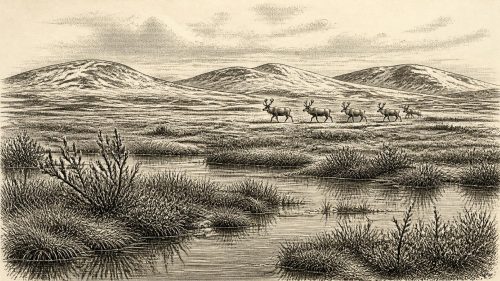
Rather than a precise historical year, 30,127 BCE denotes a Late Pleistocene, Marine Isotope Stage 3 interval of climatic instability before the Last Glacial Maximum. Ireland comprised shifting cold environments, with uncertain ice extent. Derryvree, County Fermanagh, preserves a buried freshwater wetland, dated broadly to this period, whose plants indicate treeless periglacial conditions and shallow water. Castlepook Cave, County Cork, contains a long, disturbed accumulation of mammal bones, including mammoth, reindeer and hyaena, demonstrating diverse Ice-Age fauna. A cut-marked reindeer femur may indicate human butchery, but cannot prove settlement. Evidence reveals ecological richness, not a historical chronicle for this island.
Read Article
Archived: 7 October 2026
Abstract
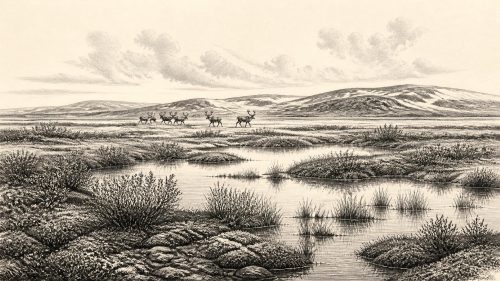
30,128 BCE is a modern label for a Late Pleistocene interval, not a recoverable Irish historical date. Environmental evidence from Derryvree, County Fermanagh, records a cold, treeless wetland between glacial advances, with sedges, grasses, mosses, aquatic plants and hardy shrubs. Castlepook Cave, County Cork, preserves MIS 3 fauna including mammoth, reindeer, giant deer, predators and scavengers, indicating productive open habitats. A possibly tool-marked reindeer bone suggests, but does not establish, early human presence. Lower sea levels altered routes, while later ice destroyed evidence. These fragile archives reveal changing ecosystems before extensive glaciation, not named communities, events or institutions in Ireland.
Read Article

Archived: 7 October 2026
Abstract
Thirty thousand years BCE is not a precise recoverable Irish date, but falls within unstable late Marine Isotope Stage 3. At Derryvree, County Fermanagh, organic sediments between glacial tills, dated broadly to 36,900–31,700 calibrated years BP, preserve a cold, treeless freshwater wetland of mosses, sedges, hardy plants and periglacial insects. Ireland experienced shifting ice margins before the later glacial maximum, with fragmented evidence of changing environments. Castlepook Cave, County Cork, records cold-adapted mammals, including mammoth, reindeer and giant deer, across long periods. A possibly tool-marked reindeer bone may indicate a human visit, but no evidence demonstrates settlement, culture or institutions.
Read Article

Archived: 7 October 2026
Abstract
Labelled 30,130 BCE, this period falls in late Marine Isotope Stage 3, as Ireland moved towards, but had not reached, maximum glaciation. Conditions were cold, open and changing, with lower seas and unstable ice margins linking Ireland ecologically to north-west Europe. Castlepook Cave, County Cork, preserves Ireland’s principal pre-maximum vertebrate archive, including mammoth, giant deer, reindeer, bear, hyena, lemmings, Arctic fox and wolf. Its mixed, disturbed deposits cannot date all species together, though modern redating has revised ages older. The evidence indicates mobile Ice Age fauna in patchy tundra-like habitats, not human settlement. Secure human activity appears 12,800 years ago.
Read Article
Archived: 7 October 2026
Abstract
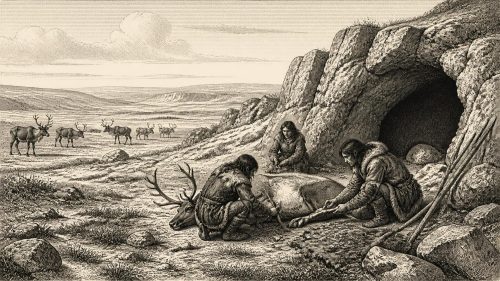
About 32,000 calibrated years BP, Ireland lay within an unstable Ice Age environment, as ice, sea levels and climates changed over periods. The British–Irish Ice Sheet's local extent remains uncertain, while open tundra-steppe supported reindeer, mammoth, horse and predators. Castlepook Cave, County Cork, produced a reindeer femur with a possible stone-tool cut or chop, tentatively indicating Palaeolithic human handling around 31,000 BC. However, disturbed deposits, antiquarian excavation and absence of associated tools or habitation evidence prevent claims of settlement or continuity. The record instead suggests possible brief hunter incursions amid ecological opportunity, reconstructed through fragmentary bones, sediments, landforms and dates.
Read Article
Archived: 7 October 2026
Abstract
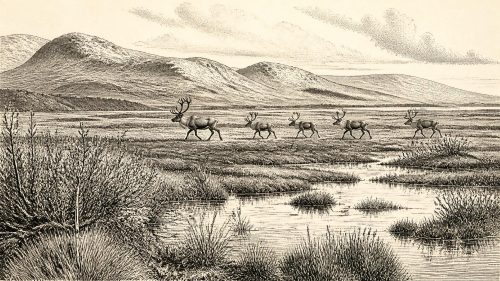
At roughly 32,000 years before present, Ireland lay within the climatically unstable Marine Isotope Stage 3. Evidence from sediments, fossils, caves and glacial landforms permits environmental reconstruction but not precise history. At Derryvree, County Fermanagh, freshwater deposits between tills record tundra-like marsh vegetation, aquatic life and ice-free conditions during a broad calibrated interval encompassing 30,132 BCE. Castlepook Cave, County Cork, preserves remains of mammoth, reindeer, giant deer and predators, though its mixed deposits cannot establish contemporaneity. A cut-marked reindeer bone may indicate human activity, but no secure settlement evidence exists. Later glaciation erased much evidence, leaving a fragmentary environmental record.
Read Article

Archived: 7 October 2026
Abstract
About 30,133 BCE, Ireland cannot be described through annual history, but Late Pleistocene evidence indicates a cold, changing MIS 3 environment. Derryvree, County Fermanagh, preserves freshwater deposits dated broadly to this period, showing treeless tundra-like wetlands with sedges, mosses and cold-adapted plants between glacial episodes. Castlepook Cave, County Cork, contains a mixed, complex fauna including mammoth, reindeer, giant deer, lemmings, Arctic fox, wolf and hyaena, demonstrating open cold habitats but not contemporaneity. A possibly tool-marked reindeer bone suggests human activity around 33,000 years ago, although no settlement is proven. Later ice and sea-level change destroyed or obscured much surviving evidence.
Read Article

Archived: 7 October 2026
Abstract
Around 30,134 BCE, Ireland was approaching the Last Glacial Maximum, although ice expansion varied regionally and no precise annual reconstruction is possible. Cave deposits, notably Castlepook near Doneraile, preserve a disturbed, long accumulated record of MIS 3 fauna, including mammoth, giant deer, reindeer, bears, wolves, foxes, hyaenas and lemmings. These remains indicate intermittent open, treeless cold habitats and connections with north-west Europe, not a uniform national fauna. Human occupation remains unproven: a possibly butchered reindeer bone suggests brief presence but lacks secure context. Growing ice fragmented habitats and obscured evidence, leaving ecological change rather than social or political history here.
Read Article

Archived: 7 October 2026
Abstract
Thirty thousand years BCE is not a precise recoverable Irish date but falls within Marine Isotope Stage 3. At Derryvree, County Fermanagh, radiocarbon-dated freshwater deposits, sealed between tills, record an ice-free interval before later glaciation. Their plants, insects and sediments reveal cold, treeless tundra wetlands with pools, mosses, sedges and short seasonal productivity. Castlepook Cave, County Cork, yielded diverse remains of reindeer, mammoth, horse, predators and other open-country fauna, though accumulation spans time. A cut-marked reindeer femur may indicate human activity, but proves neither settlement nor society. Together, the sites document severe yet habitable, climatically unstable Late Pleistocene Irish landscapes.
Read Article

Archived: 7 October 2026
Abstract
About 30,136 BCE, Ireland lay within the cold, changing environment of Marine Isotope Stage 3, as conditions developed towards later extensive glaciation. Open steppe-tundra, sparse vegetation and periglacial processes characterised landscapes, although ice extent, coastlines and access remained uncertain. Castlepook Cave in County Cork preserves time-averaged remains of mammoth, reindeer, deer, bears, wolves, foxes, hares, lemmings and hyaenas, indicating intermittent use by cold-adapted fauna. Revised dating and disturbed deposits prevent reconstruction of a single moment. A cut-marked reindeer bone may indicate an early human visit, but permanent settlement, social organisation and economy remain unproven; environmental change is the historical theme.
Read Article

Archived: 7 October 2026
Abstract
Around 30,137 BCE, Ireland lay within the climatically unstable Marine Isotope Stage 3, and evidence permits no precise annual reconstruction. At Derryvree, County Fermanagh, organic sediments between glacial tills record a temporary, cold ice-free wetland, with grasses, sedges, bogbean and water-milfoil, later buried by advancing ice. Castlepook Cave, County Cork, preserves fauna including reindeer, mammoth, giant deer, bear, hyaena and Arctic lemming, indicating links with wider Europe. A possibly cut reindeer bone suggests, but cannot confirm, human visits. No settlement, tools, institutions or culture are securely attested. Ireland was a dynamic, intermittently habitable landscape approaching more extensive regional glaciation soon.
Read Article

Archived: 7 October 2026
Abstract
About 30,138 BCE, Ireland experienced fluctuating Late Pleistocene conditions during Marine Isotope Stage 3, before the Last Glacial Maximum. Ice, tundra, wetlands and meltwater varied regionally; lower sea levels did not guarantee a permanent land bridge to Britain. Derryvree, County Fermanagh, preserves a radiocarbon-dated freshwater deposit indicating ice-free, treeless tundra and diverse wetland plants. Castlepook, or Mammoth Cave, near Doneraile, yielded reindeer, mammoth, giant deer and other cold-adapted fauna. A marked reindeer femur may record Ireland’s earliest human butchery, but proves neither settlement nor continuous occupation. These sites offer a tentative environmental and archaeological horizon, not a conventional historical event.
Read Article

Archived: 7 October 2026
Abstract
Around 30,139 BCE, Ireland was a climatically unstable Late Pleistocene landscape approaching extensive glaciation. Ice was advancing unevenly, while lower sea levels connected the island ecologically to wider north-west Europe. Castlepook Cave near Doneraile yielded reindeer, mammoth, giant deer, predators and cold-adapted smaller mammals, indicating open steppe-tundra habitats and complex food webs. A marked reindeer bone may indicate human butchery about 33,000 years ago, but poor excavation records and absent associated artefacts preclude claims of settlement. Any visitors were likely mobile foragers. Glaciation reshaped terrain and obscured earlier evidence, leaving uncertainty central to this period’s history and its interpretation today.
Read Article
Archived: 7 October 2026
Abstract
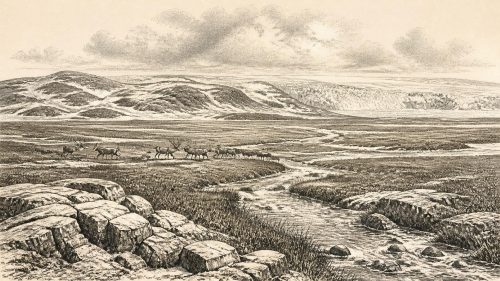
Around 30,140 BCE, Ireland faced severe climatic deterioration as the British–Irish Ice Sheet expanded, although local conditions varied. Later glaciation and changing seas destroyed or obscured much evidence, preventing precise reconstruction. Exposed areas supported treeless tundra, grassland and sparse scrub inhabited by mammoth, reindeer, giant deer, predators and smaller cold-adapted animals. Castlepook Cave in County Cork preserves important faunal remains and a debated cut-marked reindeer bone, possibly indicating brief Upper Palaeolithic human activity. However, no settlement, tools, human remains or cultural assemblage confirms permanent occupation. Travel routes remained uncertain and hazardous. Ireland’s environment is better documented than its possible visitors.
Read Article




