Archived: 3 November 2026
Abstract
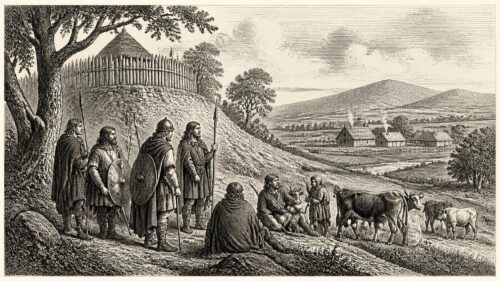
In 645 CE, Ireland cannot be described through a single securely dated island-wide event. The most substantial notices attached to this year occur in the Annals of Inisfallen, but that chronicle’s own modern edition signals that its entries for the year are chronologically displaced when compared with the Annals of Ulster and Annals of Tigernach. It records a battle at Cenn Con, the death of a ruler of the Déisi, and the repose of a churchman called Mac na Cerda. These are important evidence for the political and ecclesiastical world in which 645 fell, but responsible history must separate the
Read Article
Archived: 3 November 2026
Abstract
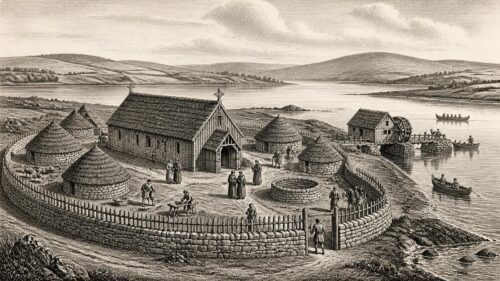
In 644 CE, Ireland’s surviving annalistic tradition presents a compact but revealing cluster of deaths, warfare and disputed royal authority. Yet the date must be handled with care. The notices now grouped under 644 were copied into chronicles centuries after the events, and the parallel annals do not always place them in the same numbered year. What can responsibly be said is that, around this calendar year, the political order was unsettled after the death of Domnall mac Áedo, a major northern Uí Néill ruler, while Leinster, Osraige, Munster and the north-east each appear in the record through named people
Read Article
Archived: 3 November 2026
Abstract
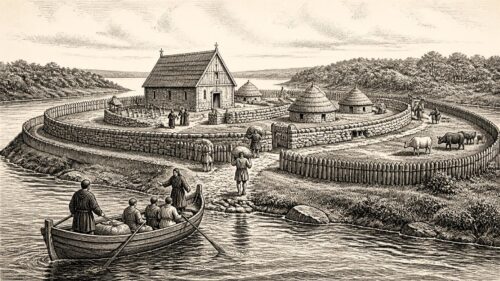
In 643, Irish annals recorded disputed succession after the death of Domnall mac Áedo, a prominent northern Uí Néill ruler. Sources variously named his nephews Cellach and Conall Cáel as successors or described shared authority with Diarmait and Blathmac of the southern Uí Néill. Chronological differences place these events around 642–643, but all reflect uncertainty over wider kingship. Regional conflict, including the battle of Cenn Con, demonstrated the independence of Munster dynasties. The death of Bishop Crónán of Naendruim also illustrates the political and economic importance of churches. Ireland remained a network of competing kingdoms, kin groups and ecclesiastical communities.
Read Article
Archived: 3 November 2026
Abstract
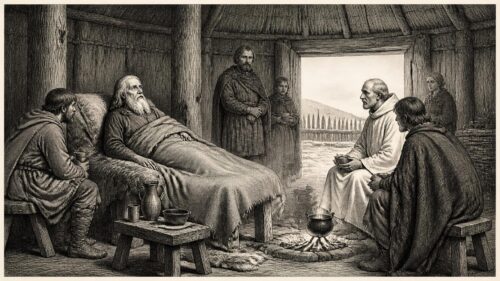
In 642 CE, the most consequential Irish event securely attached to the year was the death, at the end of January, of Domnall mac Áedo. The Annals of Ulster calls him rex Hiberniae, ‘king of Ireland’, an unusually emphatic title in an island divided among many kingships. Its notice is brief, yet its language makes Domnall’s death a landmark: a powerful overking had gone, and the political arrangements he had sustained were left to be tested. The same annal also records the killing of Ailill son of Colmán, king of Cenél Loegaire, a Uí Néill people of Brega. Thus the
Read Article
Archived: 3 November 2026
Abstract
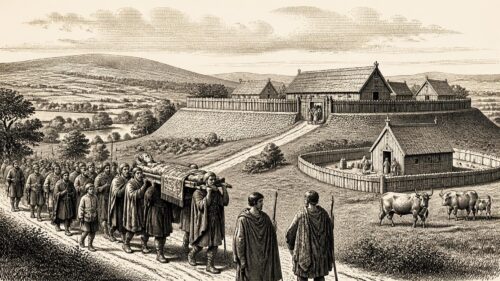
In 641 CE, the securely dateable Irish development is the death of Cúán mac Amalgado, a king of Munster from the Eóganacht Áine branch of the Eóganachta. The surviving annalistic notice is brief: it records his death without a place, cause, successor’s inauguration or account of public reaction. Yet the loss of a provincial overking mattered. In a country of many small kingdoms, Munster’s ruler stood within a dense hierarchy of client peoples, churches, kin-groups and rival royal lines. Cúán’s death therefore marks a real, if sparsely described, transition in the political life of southern Ireland. A Death in the
Read Article
Archived: 4 November 2026
Abstract
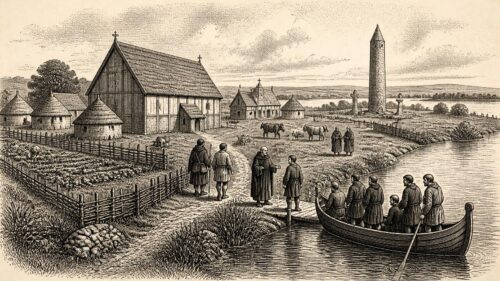
In 640 CE, the clearest securely reconstructed Irish annalistic notices are not of a decisive battle within Ireland or a change of high kingship, but of deaths in the ecclesiastical world. Crónán moccu Loégde, abbot of Clonmacnoise, died, and the annals also record the death of Mochua of Balla in Connacht. These brief notices are valuable precisely because they reveal what early medieval record-keepers considered worth preserving: the passing of men who led important religious communities. They also place Ireland in a year of wider Gaelic political tension, for a battle and siege involving the following of Domnall Brecc of
Read Article
Archived: 4 November 2026
Abstract
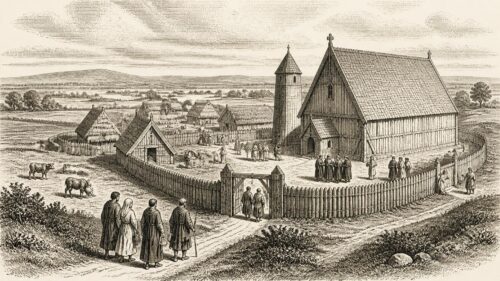
In 639 CE, the most significant Irish development that can be placed with reasonable confidence in this calendar year was the death of Áed Dub, bishop and abbot of Kildare. His obituary is brief, but it illuminates a great deal: in seventh-century Leinster, an important church could be led by a member of a ruling dynasty, and religious office could be an instrument of regional authority as well as pastoral care. The year’s surviving notices also record deaths at Nendrum and Leighlin, the killing of a man named Congal son of Dúnchad, the death of Ailill son of Áed Rón,
Read Article
Archived: 4 November 2026
Abstract
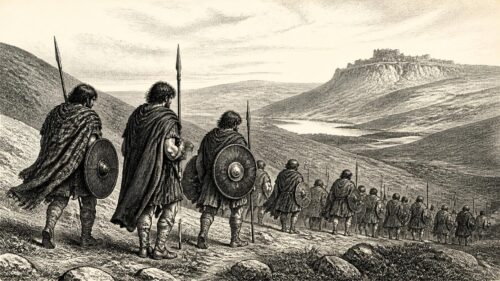
In 638 CE, the clearest event linked to Irish history was not fought on the island of Ireland itself, but in the Irish Sea world to which north-east Ireland belonged. Chronicon Scotorum records a battle at Glenn Muiresan in which the followers of Domnall Brec were put to flight, followed by the besieging of Eten. Domnall Brec was king of the Cenél nGabráin, the leading kindred of Dál Riata: a Gaelic sea-kingdom whose territories and connections extended between Argyll and the coast of Antrim. The annal therefore preserves a hard, if brief, sign that the political shocks of the late
Read Article
Archived: 4 November 2026
Abstract
In 637 CE, Ireland’s most consequential recorded development was a pair of connected battles: Mag Rath and Sailtír. Medieval annals place them on the same day and present them as a decisive victory for Domnall mac Áedo, the leading Uí Néill ruler of the north-west, over the challenge mounted by Congal Cáech, overking of Ulaid. The year also brought the death of Failbe Flann, king of Mumu, and the recorded repose of the churchman Mo-Chutu of Raithen. These notices are brief, but together they reveal a kingdom of rival dynasties, military followings and powerful churches, tied to western Scotland as
Read Article
Archived: 4 November 2026
Abstract
In 636 CE, the clearest Irish event is an expulsion rather than a battle or royal accession: Carthach, better known as Mochuda or Mo Chutu, was driven from the monastery of Raithen, modern Rahan in County Offaly, at Eastertide. The terse record in the annals gives neither a speech, a march nor a legal judgement. Yet this removal of a prominent abbot from a major midland community was politically meaningful, religiously charged and consequential for the history of southern Ireland. Modern reference scholarship places the expulsion in 636, while also warning that the early annals preserve difficult and sometimes displaced
Read Article
Archived: 6 November 2026
Abstract
Irish ContextThe supplied evidence begins with an important distinction: Aidan was Irish, but the mission discussed here did not unfold in Ireland itself. One source describes him as an Irish monk who had studied under St. Senan and then became a monk at Iona about 630, while another identifies him as an Irish monk from the monastery founded by St. Columba on Iona. That matters because the evidence links Aidan’s identity to Irish monastic formation, but the actual setting of the 635 mission was elsewhere. The sources therefore support an Irish connection through person and training, not through the geography
Read Article
Archived: 6 November 2026
Abstract
Year FrameFor 634 CE, the safest starting point is the annalistic year itself rather than any attempt to build a continuous event story. The surviving Irish annals do not present a modern narrative; they list brief notices under year headings, and the preserved evidence for this year is uneven across texts. In the Annals of Inisfallen, the entry for 634 contains three short notices: the repose of Mo-Bae moccu Alldae, the death of Rónán son of Fergus, and the slaying of Catluan. In the Annals of the Four Masters, the equivalent year also preserves several notices, including deaths and battles,
Read Article
Archived: 6 November 2026
Abstract
Yearly FrameThe annalistic evidence for 633 CE in the retrieved material is extremely slight. In the Annals of the Four Masters, the year entry states only that Failbhe Flann, king of Munster, died. That is the secure core of the year’s record here. No second event is attached to the same year in this witness, and no explanatory detail follows the notice. A careful account must therefore begin from the fact of the death and from the limits of the record, not from any imagined fuller story.This brevity is not a defect in the historian’s work but a condition of
Read Article
Archived: 7 November 2026
Abstract
Year EvidenceFor 632 CE, the safest starting point is the annal entry itself. In the Annals of Tigernach, the year is marked by a compact cluster of notices: the battle of Fid Eoin, the death of Eochaidh Buidhe son of Aedán, the battle of Dún Cethirn, and another death notice. Because annalistic dating is terse and often compressed, these entries form the secure core for the year. Anything beyond them depends on comparison and caution rather than direct statement.The broader annalistic landscape shows why restraint is necessary. Nearby years in the same tradition continue to list battles, deaths, and rulership
Read Article
Archived: 7 November 2026
Abstract
Yearly RecordFor 631 CE, the surviving notices are short and uneven. The Annals of Tigernach preserves only the year heading for T631 in the excerpt here, with no event notice attached in the visible passage. By contrast, the Annals of the Four Masters and the Annals of Inisfallen both supply specific entries for the same year. This makes 631 visible chiefly as a moment of record, not as a year with many securely dated events.The same material also shows that the year was not recorded in only one way. The Four Masters assigns 631 to the eighth year of Domhnall
Read Article
Archived: 7 November 2026
Abstract
Year EvidenceFor 630 CE, the evidence is annalistic rather than narrative, and the surviving notices are short. The Annals of Ulster provide a year-heading for AD 630 and attach to it only one battle notice and one death notice. That limits what can be said securely about the year itself. The surviving record here is not a continuous chronicle of political life, but a sequence of dated items whose scope depends on each annal's own entry for the year.The same year is represented more fully in the Annals of Tigernach and in the Annals of the Four Masters, both of
Read Article
Archived: 7 November 2026
Abstract
Year FrameFor 629 CE, the annalistic record opens only a narrow window. One Tigernach entry is placed under T629 and reports a battle at Ard Corann. A separate comparative notice says that the same event appears in the Annals of Ulster as 629, while Tigernach places it in 630. That is enough to discuss the year, but only by staying close to the wording of the texts and not by filling the gap with invented detail.The year can therefore be treated as a dated notice rather than a full narrative. The surviving wording names a battle, identifies a victor, and
Read Article
Archived: 7 November 2026
Abstract
Year DatingThe clearest single marker for 628 comes from the Annals of Ulster, which labels the entry as the Kalends of January and states that it is AD 627, alias 628. In that same notice the year is attached to a sequence of events: a battle at Bolg Luatha, another at Both, the slaying of Suibne Menn, the repose of Colum son of Bairdéne, the killing of Cuiméne son of Colmán, the devastation of Laigin by Domnall, and Domnall son of Aed son of Ainmire beginning to reign. This is the firmest chronological anchor among the excerpts.That same cluster is
Read Article
Archived: 8 November 2026
Abstract
Year WitnessThe year 627 appears in the annals as a brief cluster of notices, not as a continuous narrative. In the Four Masters, the entry is explicitly marked as the Age of Christ 627 and as the fourth year of Domhnall. It then records the battle of Ath Abla, the death of Dicul son of Fearghus at the hands of the Munstermen, and the foundation of Inis Medcoit by Bishop Aedhan.Chronicon Scotorum also preserves a 627 entry, but its contents are different. In the supplied excerpt, the year is marked under the Kalends and then records the battle of Ard
Read Article
Archived: 8 November 2026
Abstract
Year MarkersThe annalistic record for 625 CE is compact, and its most explicit year-marker comes from the Annals of Ulster, which opens the entry with the kalends of January and then describes the year as dark. That same notice places several deaths in the year: Áedán son of Cumuscach, Colmán son of Comgallán, Rónán son of Tuathal, and Mongán son of Fiachna of Lurga. The entry also preserves a poetic aside attached to those deaths.A parallel compilation, the Annals of Inisfallen, presents the same year with a different selection of notices. Its 625 entry records the repose of Colmán Stélláin,
Read Article
Archived: 8 November 2026
Abstract
Year MarkersThe year 624 CE is fixed most clearly in the Annals of Ulster, where the calendrical notice gives AD 624 and immediately characterizes the year as dark. That opening does not narrate events in itself, but it does frame the notices that follow as belonging to that year. The same compilation then lists several deaths under the same year heading, allowing the year to be identified without importing material from elsewhere.The Annals of the Four Masters also mark the year explicitly, giving the Age of Christ, 624, and then noting the first year of Domhnall, son of Aedh, son
Read Article
Archived: 9 November 2026
Abstract
Yearly FrameThe year 623 CE survives in the annals as a cluster of short notices rather than a continuous narrative. In the Annals of Ulster, the annual slot marked AD 622 includes the death of Fergna, abbot of Í, the repose of Mac Laisre, abbot of Ard Macha, and Finnia, abbot of Ner, before the storming of Ráth Guala by Fiachna son of Baetán. The sequence is compact and factual, with no explanatory link between the items.The Annals of Inisfallen and the Annals of the Four Masters place nearby notices under their own year labels rather than under a single
Read Article
Archived: 9 November 2026
Abstract
Year EntryThe year 622 appears in these annals as a set of brief notices rather than a single connected story. Ulster opens with the year label and then lists a battle, a drowning, deaths, another battle, and further deaths. The Four Masters similarly mark 622 and continue with battles and obits. In both witnesses, the year heading is the secure anchor, while the notices remain compact and separate.Inisfallen also preserves the year, but it does so through later cross-references to AU 622. Those references attach Cennbag and Cenn Delgthen to the same year as Ulster. The wording is not identical
Read Article
Archived: 9 November 2026
Abstract
Dating EvidenceThe clearest secure evidence for AD 621 is the Annals of Ulster year block headed with that date. In the surviving entry, the notices follow one another without day-level dating and name Cenn Deilgthen, Conaing son of Aedán, several deaths, Lindas, Caemgein of Glenn dá Locha according to some, Cennbag, Ailill son of Cellach, and Colgu son of Cellach. The record is terse, but the year itself is explicit.That same block also shows the limits of what can be said with confidence. The passage offers a sequence of notices, yet it does not explain how they relate to one
Read Article
Archived: 9 November 2026
Abstract
Year RecordThe strongest evidence for 620 CE comes from the annalistic entry that explicitly labels the year and then lists several deaths. It gives the tenth year of Suibhne and records Seanach Garbh, abbot of Cluain Fearta Breanainn Clonfert; Colman son of Coimgellan; Aedh son of Cumascach; Ronan son of Tuathal, lord of the Airtheara; and Cormac Caemh with Illann son of Fiachra. On this wording alone, 620 survives as a compact year of named deaths.The same entry continues with two more notices securely tied to the year by the surrounding annal rubric. One says that Mongan son of Fiachra
Read Article
Archived: 10 November 2026
Abstract
Year ScopeThe surviving notices for 619 CE are brief and uneven, but they are not empty. Across the excerpts, the year is represented by deaths, a destruction notice, and an earthquake, rather than by a connected narrative. The safest reading stays close to the wording of each annal and resists turning the material into a fuller account than the passages allow.The witnesses also show that chronology must be handled separately for each annal. Inisfallen and Ulster place material under their 619 entries, while Tigernach places some comparable notices under T618 and others in its T619 sequence. That visible mismatch matters,
Read Article
Archived: 10 November 2026
Abstract
Year FrameThe annal compilers mark 618 CE as a distinct year inside their own chronological sequences. In the Annals of Ulster, the year opens with the Kalends of January and then gives notices under U618. Tigernach and Chronicon Scotorum also place their material under annual headings. That shared framing lets the year be identified securely, but it does not authorize adding events that the entries do not actually name.The year headings also show that 618 is part of a continuing sequence rather than a stand-alone story. Ulster’s notices are arranged after earlier annual items and then continue into later ones,
Read Article
Archived: 10 November 2026
Abstract
Year MarkersThe surviving notices for 617 CE are brief and uneven. In the Annals of Inisfallen, the year is represented by the burning of Bennchor of Ulaid and by associated death notices. In Chronicon Scotorum, the year opens with the burning of Donnán of Aig on 17 April, the laying waste of Torach, and a death notice for Fergus son of Colmán Mór. The excerpts preserve only these named entries.The year is also visible through cross-reference, but not in a single uniform pattern. One Inisfallen notice for Bennchor points to AU 616, while the separate Donnán notice is cross-referenced to
Read Article
Archived: 10 November 2026
Abstract
This study examines the evidence for Ireland in 616 CE as preserved in a small group of annalistic entries. It separates notices securely placed in that year from nearby material assigned differently in other annals. The year is marked by clerical deaths, a murder, the death of Fergus son of Colmán Mór, a ravaging of Armagh, and an earthquake in Gaul in Tigernach, while Inisfallen and Chronicon Scotorum provide partially overlapping but not identical chronologies. The result is a careful year-by-year account that preserves what is directly stated and leaves gaps unfilled within the limits of the surviving annal entries.
Read Article
Archived: 10 November 2026
Abstract
Year MarkersThe surviving record for 615 must begin with chronology, because the relevant annals do not present the year in exactly the same way. In the Annals of Ulster, the notices grouped here appear after a heading that reads AD 614, followed by the year marker and then the brief entries. In the Annals of Tigernach, the comparable material appears under T615. The difference is plain in the text and requires caution in any modern summary.That caution is strengthened by Inisfallen, which does not simply repeat the same wording but cross-references the battle of Sliab Tuath to AU 615. Its
Read Article





