Archived: 2 November 2026
Abstract
In 675 CE, a battle brought down Cenn Fáelad mac Blathmaic and raised his cousin Fínnechta Fledach mac Dúnchada to the kingship of Tara. The event was a decisive change within the dominant southern branch of the Uí Néill, rather than the founding of a new Irish state or the conquest of a unified island. The contemporary annalistic tradition is terse but emphatic: Cenn Fáelad was killed, Fínnechta was victorious, and Fínnechta then began to reign. For a year with few securely dated Irish happenings, this violent transfer of power is its central historical fact.A Battle With Uneasy GeographyThe principal
Read Article
Archived: 2 November 2026
Abstract
In 674 CE, the annals place Ireland’s most consequential recorded development in a struggle within the Síl nÁedo Sláine, an important branch of the Southern Uí Néill. Cenn Fáelad, son of Blathmac and styled king of Tara in later historical reckoning, was killed in battle; his kinsman Fínnechta Fledach emerged as victor and began to rule. The terse report offers neither battlefield narrative nor a reliable location. Yet it marks a real change in the leadership of the midlands, where claims to the kingship of Tara depended less on a unitary national state than on kinship, military following, tribute, alliances
Read Article
Archived: 2 November 2026
Abstract
In 673 CE, the Irish annals conventionally group together a small but revealing set of notices: the killing of Domangart, king of Dál Riata; the burning of Mag Luinge; the capture of two named men; the death of Cormac son of Máel Fothartaig; and the voyage to Ireland of Fáilbe, abbot of Iona. None is supplied with a month, day or full narrative. Even the year requires care: the Annals of Ulster preserve these entries under their annal 673 while displaying an Anno Domini equivalent of 672, whereas the Annals of Tigernach place the closely corresponding material under 673. Modern
Read Article
Archived: 2 November 2026
Abstract
In 672 CE, Ireland’s annalistic record places a local northern battle, a royal succession, a destructive fire at Armagh and an unusually plentiful woodland harvest within the same year. None of these notices offers a full narrative, and none is dated to a particular month or day. They are brief entries preserved in chronicles copied much later, whose year-numbering is not perfectly uniform: the Annals of Ulster’s entry conventionally assigned to 672 even carries an internal AD 671 heading. The safest conclusion is therefore that these events belong to the annalistic year 672, rather than that their exact modern calendar
Read Article
Archived: 2 November 2026
Abstract
In 671 CE, the most consequential recorded Irish event was the killing of Sechnassach mac Blathmaic, king of Tara, at the beginning of winter. The terse notice in the Irish annals is unusually revealing despite its brevity: it names his killer, Dub Dúin of Cenél Cairpri, and preserves a four-line verse remembering the king’s household as rich in bridles, horse-switches and surplus. The same annalistic year also records a battle at Druim Cepais, the death of Fergus son of Crunnmael, the death of Bran Finn of the Déisi in one source, and Máel Ruba’s sea-voyage from Ireland to Britain. Together
Read Article
Archived: 2 November 2026
Abstract
In 670 CE, Ireland’s surviving annalistic record preserves a stark notice: “Great snow fell. A great famine occurred.” The entry, in the Annals of Tigernach, is brief enough to conceal almost everything a modern reader wants to know: how long the snow lay, which districts suffered most, whether harvest stores failed, and how many people died. None of that can responsibly be supplied. Yet the pairing of exceptional snowfall and famine is itself important. In an overwhelmingly agrarian society, winter weather could turn stored food, fodder, livestock and labour into matters of survival. The year is therefore best approached through
Read Article
Archived: 2 November 2026
Abstract
In 669 CE, Ireland’s surviving annalistic tradition preserves a brief but unusually revealing cluster of notices: a great snowfall and famine; the deaths of leading churchmen; the passing of Máel Fothartaig, king of Uí Thuirtri; and the killing of Máel Dúin son of Máenach. These are sparse records, not a continuous narrative, and they must be handled carefully. The early Irish annals have notorious chronological offsets between manuscripts and modern calendar years. Yet the severe snow and famine are placed under a heading explicitly equated with AD 669 in the Annals of Ulster, while Cumméne Find’s death is conventionally dated
Read Article
Archived: 2 November 2026
Abstract
In 668 CE, the surviving Irish record brings together a northern battle, a western monastic foundation and evidence of continuing movement across the Irish Sea. These are not events with securely known days or seasons. They are annalistic notices, preserved in texts copied long after the seventh century and subject to differing chronological systems. The year is nevertheless conventionally associated with the battle of Fertas between the Ulaid and the Cruithin, and with Bishop Colmán’s journey to Inis Bó Finne, where he founded a church. The Annals of Ulster place both under their entry U668, although that manuscript’s calendrical heading
Read Article
Archived: 2 November 2026
Abstract
In 667 CE, Ireland was still living through the human consequences of a great mortality that had begun several years earlier. The clearest annalistic entry assigned to this year records a plague in which four abbots of Bangor—Berach, Cuimíne, Colum and Aedán—died. It also records fighting at Áine between the Araid and the Uí Fhidgeinti, in which Eógan son of Crunnmael was killed, and the slaying of Bran Finn, king of the Déisi of Munster. These brief notices are unusually revealing: disease could strike centres of authority as well as households; local warfare continued amid loss; and Ireland remained a
Read Article
Archived: 2 November 2026
Abstract
In 666 CE, Ireland remained in the grip of the great epidemic remembered in the Irish annals as the buide Chonaill, while a battle at Áine brought together the Arada and the Uí Fhidgeinti and cost the life of Eógan son of Crunnmáel. These are the securely relevant notices in the Annals of Ulster under its heading for AD 666. The same entry also records the death of Cernach Sotal, son of Diarmait. They are brief records, not narratives: they do not tell us the cause of the disease, the size of either force, the precise location of the battlefield,
Read Article
Archived: 2 November 2026
Abstract
In 665 CE, Ireland stood in the shadow of a grave mortality while conflict still continued between powerful regional groups. The clearest event placed directly in this calendar year is the battle of Loch Fén, recorded by the Annals of Inisfallen as a fight between the men of Munster and Connacht in which Talamnach, son of Laidcenn, was killed. The notice is stark: it supplies neither a victor nor a cause. Yet its very brevity is revealing. Even amid epidemic loss, kings and war-bands remained able to mobilise, cross regional boundaries and contest territory or political influence. The battle also
Read Article
Archived: 2 November 2026
Abstract
In 664 CE, Ireland entered a year remembered above all for the arrival of a devastating epidemic. The Irish annals place its coming on 1 August, stating with unusual precision that “the plague reached Ireland” and that it first raged at Mag Itha of Fotharta. This is one of the firmest dates attached to an early medieval Irish disease outbreak. Yet the surviving records are terse, copied and rearranged centuries after the events; their year headings do not always coincide exactly with modern chronological conventions. What can responsibly be said is that, during the calendar year 664, mortality reached Ireland,
Read Article
Archived: 2 November 2026
Abstract
In 663 CE, Ireland’s annalistic record is dominated not by a famous battle or a royal inauguration, but by deaths: above all that of Guaire Aidne, remembered as king of Connacht, and by the loss of senior churchmen at Bangor and Ferns. The year is a useful reminder that early Irish history is often preserved in short, retrospective notices rather than continuous narrative. Those notices nonetheless reveal a society in which royal standing, kinship, monasteries and burial places were tightly interwoven. They also require care over dating. The Annals of Ulster preserve these notices under U663, while their internal year-equivalent
Read Article
Archived: 2 November 2026
Abstract
In 662 CE, Irish annalists associated a cluster of political deaths, a battle within the southern Uí Néill and the passing of a celebrated church scholar with this year. The evidence is unusually revealing but not perfectly uniform. The Fragmentary Annals explicitly place the battle of Ogoman, the death of King Máenach of Munster and that of Cummíne Fota in 662; other annalistic compilations place some of the same notices under adjacent year-headings. This is a familiar problem in early Irish chronology, not a reason to discard the events. It does mean that no day, season or sequence within the
Read Article
Archived: 2 November 2026
Abstract
In 661 CE, Ireland’s annals preserve an unusually revealing cluster of deaths, a journey across the Irish Sea, a dynastic battle in the midlands and the passing of a Munster king. None makes a complete national narrative by itself. Together, however, they show how power, learning and religious authority were distributed across a landscape of competing kindreds and ecclesiastical communities. The year is especially associated with Cummian or Cuimíne Fota, ‘Cummian the Tall’, the celebrated scholar linked with Clonfert on the Shannon. His death was commemorated not merely as the loss of a churchman but as the removal of a
Read Article
Archived: 2 November 2026
Abstract
In 660 CE, Ireland’s annals associate the year above all with a battle at Ogaman, at a place called Cenn Corbadáin, and with a striking rupture within the ruling dynasty of the southern Uí Néill. The event is conventionally assigned to 660 by the Annals of the Four Masters and the Annals of Tigernach, but early Irish annalistic chronologies do not align perfectly: the Annals of Ulster place the same fighting under their entry for 661, while the Fragmentary Annals give 662. This is not evidence for several separate battles. Rather, it is a reminder that the modern calendar labels
Read Article
Archived: 2 November 2026
Abstract
In 659 CE, Ireland’s surviving annalistic record is unusually quiet about battles, harvests and royal assemblies, but it is not empty. The Annals of Ulster, in an entry whose calendar heading explicitly identifies the year as AD 659, records a cluster of deaths: Bishop Fínán son of Rímid, Colmán of Glendalough, Daniél bishop of Cenn Garad, Echaid son of Blathmac, Conall Crannamna, and Eóganán son of Tóthalán. This is firm evidence for what the annalist chose to commemorate, rather than a complete record of all that happened. It offers a revealing cross-section of the Irish world: an important Leinster church,
Read Article
Archived: 2 November 2026
Abstract
In 658 CE, the most securely attested Irish developments were not a single great battle or royal assembly, but a cluster of deaths that reveal how closely political authority, ecclesiastical institutions and regional society were intertwined. The annals record the deaths of Díma Dub, bishop of Condaire or Connor, and Cuiméne, bishop of Nendrum in Strangford Lough. The Annals of the Four Masters, compiled much later but drawing on older annalistic material, also place in this year the death of Sillán, bishop of Daiminis, probably Devenish in Lough Erne, on 17 May. Its same entry calls 658 the second year
Read Article
Archived: 2 November 2026
Abstract
In 657 CE, Ireland’s surviving annalistic record preserves a year of transition, deaths and unsettling signs rather than a single decisive campaign. A later annalistic tradition places the opening of the joint rule of Diarmait and Blathmac, sons of Áed Sláine, in this year. The Annals of Ulster, whose internal year-numbering is offset at this point, explicitly labels its entry U658 as AD 657: it records several deaths, the death of Guret, king of Alt Clut on the Clyde, a violent windstorm, and an extraordinary cow at Láthair Briúin said to have borne four calves. The notices are brief, but
Read Article
Archived: 2 November 2026
Abstract
In 656 CE, the surviving Irish annals place a small but revealing cluster of deaths, a battle and an extraordinary report from the countryside within the year. None amounts to a narrative of a united Irish kingdom: Ireland was divided among many dynasties and petty kingdoms, while churches and monasteries exercised influence across political frontiers. Yet the entries for this year illuminate several connected worlds: the Columban community of Iona, the ecclesiastical landscape of Meath and Munster, local violence, cattle-centred rural life, and Ireland’s close relationship with northern Britain. The evidence is terse and must be handled cautiously, but it
Read Article
Archived: 2 November 2026
Abstract
In 655 CE, Ireland’s historical record is unusually thin, and its dating is unusually difficult. No contemporary Irish chronicle survives in an original seventh-century manuscript, while later annals sometimes assign the same occurrence to different years. The most defensible approach is therefore to treat 655 as a cautiously reconstructed point in a sequence rather than as a year illuminated by a full narrative. A cluster of annalistic notices connected with this date nevertheless reveals a political landscape of small but ambitious kingdoms, a church embedded in regional society, and an island whose learned communities kept Ireland’s affairs in view alongside
Read Article
Archived: 2 November 2026
Abstract
In 654 CE, a violent change at the summit of the Uí Néill reshaped the balance of power in Ireland. Conall Cóel, son of Máel Coba of Cenél Conaill, was killed by Diarmait mac Áedo Sláine. The notice is brief, but its implications were substantial: a northern claimant to the pre-eminent kingship had been removed by a member of the southern Uí Néill line rooted in Brega and associated with Tara. Other annalistic notices connected with this year record killings in Connacht, the deaths of senior clerics at Clonard, and a battle in northern Britain involving Dál Riata. Together they
Read Article
Archived: 3 November 2026
Abstract
In 653 CE, the clearest Irish political event preserved by the annalistic tradition was a battle in Connacht: the battle of Airther Seóla. The Annals of Tigernach and Chronicon Scotorum record that Marcán son of Tommán, king of the Uí Maine, was killed, while Cenn Fáelad son of Colgu and Máenach son of Báithín, king of the Uí Briúin, were victorious. This is a small entry, but a consequential one. It reveals competition between powerful Connacht dynasties, the lethal stakes of regional kingship, and the way an encounter in one locality could reshape authority far beyond a battlefield. The evidence
Read Article
Archived: 3 November 2026
Abstract
In 652 CE, the Irish annalistic record conventionally places a striking cluster of deaths among leading churchmen alongside a local dynastic battle in the midlands. Yet this is also a year that demands unusual chronological care. The surviving Annals of Ulster group these notices under U652, but their own kalend entry identifies the year as AD 651; related chronicles and later compilations distribute some of the same material under different years. The safest conclusion is not that every event can be fixed to a modern 1 January–31 December 652, but that these events belong to the narrowly defined historical horizon
Read Article
Archived: 3 November 2026
Abstract
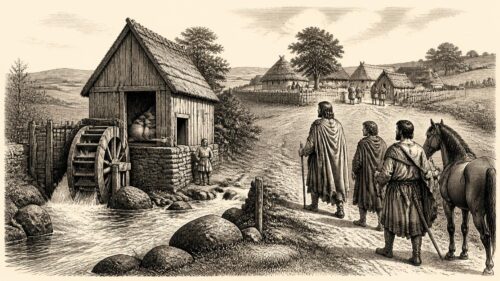
In 651 CE, the Irish annals associate one striking episode with the year: the killing of Dúnchad and Conall, sons of Blathmac son of Áed Sláine, at or beside the mill of Máel Odhrán. The surviving accounts are terse, poetic and chronologically complicated, so the event should not be treated as a securely dated incident on a modern calendar day. Yet it is firmly lodged in the annalistic sequence conventionally discussed under 651. The deaths mattered because the victims belonged to the powerful Síl nÁedo Sláine of Brega, a leading southern branch of the Uí Néill. Their violent end, remembered
Read Article
Archived: 3 November 2026
Abstract
In 650 CE, Ireland’s surviving historical record centres on a violent dispute within the northern Uí Néill, but it also offers unusually revealing glimpses of the island’s fragmented political world. The annals place a battle at Dún Cremthainn in this year, in which Óengus, son of Domnall, was killed by Cellach and Conall Cóel, sons of Máel Coba. Yet early Irish chronology requires care. The Annals of Ulster labels this as its entry U650 while its calendrical heading equates that annal-number with AD 649; modern reference works conventionally place the battle in 650. Other annalistic compilations assign different Irish events
Read Article
Archived: 3 November 2026
Abstract
In 649 CE, Irish annalistic tradition places two violent political reversals in Connacht: the killing of Raghallach mac Uatach, described as king of Connacht, and the defeat of Guaire of Aidne by Diarmait mac Áedo Sláine at the battle of Carn Conaill. These were not incidents in the history of a unified Irish state. Ireland was divided among numerous peoples, dynasties and client kingdoms, while ambitious rulers sought influence through raiding, alliance, tribute and control of ecclesiastical centres. Yet the events associated with this year reveal how quickly local conflict could draw in rulers from across the island, and how
Read Article
Archived: 3 November 2026
Abstract
In 648 CE, Ireland was governed through many competing kingships, churches and kin-groups rather than by a single state, and the surviving evidence must be handled with unusual care. A famous cluster of notices is assigned to this year by the seventeenth-century Annals of the Four Masters: the ninth year of Conall and Cellach, the death of Maincheni, abbot of Meanadrochit, the conflict of Cúil Corra in which Cillíne son of Forannán of Uí Failge was killed, and the death of Cugamhna son of Suibne. Yet the older annalistic traditions place the same cluster several years later, under their annal
Read Article
Archived: 3 November 2026
Abstract
In 647 CE, Máel Cobo son of Fiachnae, overking of Ulaid, was killed by his nephew Congal Cennfhota son of Dúnchad. The notice is brief, but it preserves a decisive act of dynastic violence in north-east Ireland. Máel Cobo belonged to Dál Fiatach, one of the competing royal kindreds of Ulaid; Congal belonged to the same dynasty and was the son of Máel Cobo’s brother Dúnchad. This was not an invasion or a clash between distant peoples. It was a killing within the ruling family, at a point when possession of the overkingship of Ulaid could turn on the survival,
Read Article
Archived: 3 November 2026
Abstract
In 646, the Annals of Ulster record the killing of Scannal son of Béc, styled king of the Cruithin, and the death of Mac Laisre, abbot of Bangor. Scannal’s violent death reflects continuing political competition in north-east Ulaid after the battle of Mag Roth, though the annals name neither his killer nor location. Mac Laisre’s obituary marks a leadership change at Bangor, an important monastery beside Belfast Lough with wider Irish Sea connections. Sparse sources reveal little else about the year, but these notices illuminate the coexistence of vulnerable secular rulership and enduring ecclesiastical institutions within a predominantly rural society.
Read Article





