
Archived: 16 September 2026
Abstract
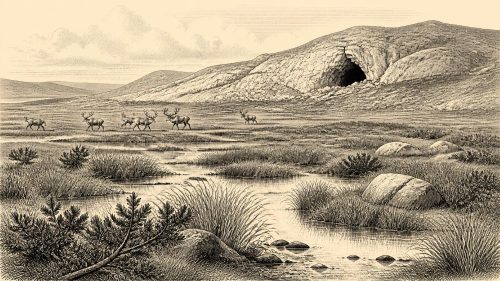
Labelled 31,579 BCE, this period in Ireland belongs broadly to Marine Isotope Stage 3, not a datable calendar year. Before the Last Glacial Maximum, fluctuating cold conditions, low sea levels and changing routes linked Ireland intermittently with wider Europe. Derryvree sediments in Fermanagh record ice-free, waterlogged tundra vegetation and insects. Castlepook Cave in Cork preserves a disturbed important fauna, including reindeer, mammoth, giant deer, horse, predators and mammals. A marked reindeer femur, 33,000 years old, may indicate stone-tool butchery and Ireland’s earliest human visit. However, it proves neither hunting nor settlement; evidence remains fragmentary, and future study may revise conclusions.
Read Article
Archived: 16 September 2026
Abstract
Around 31,585 BCE, Ireland was a cold, open Ice Age landscape during Marine Isotope Stage 3. Radiocarbon evidence cannot identify this calendar year precisely, but Derryvree’s sub-till sediments indicate treeless tundra wetlands, grasses, sedges and freshwater habitats during a broadly relevant interval. Castlepook Cave preserves a diverse fauna, including reindeer, mammoth, giant deer, bear, wolf, Arctic fox, lemmings and hyaena, though dates and deposits require caution. A reported cut-marked reindeer bone suggests possible early human activity, but no secure evidence establishes settlement or a defined culture. Growing ice would later transform these landscapes. The period is understood through environmental evidence.
Read Article

Archived: 16 September 2026
Abstract
Around 31,592 BCE, Ireland lay within the climatically unstable Late Pleistocene, before maximum glaciation, when some areas remained ice-free. Subsequent ice sheets destroyed much evidence. Derryvree in Fermanagh preserves a tundra-like freshwater wetland, demonstrating productive open habitats. Castlepook Cave in Cork produced mammoth, reindeer, horse, giant deer and carnivore remains, showing that large animals reached Ireland during favourable intervals. A marked reindeer femur, possibly cut by a stone tool, suggests Upper Palaeolithic visitors, but cannot prove permanent settlement or continuous occupation. No contemporary Irish evidence identifies society, culture, politics or daily life; human presence remains tentative amid later encroaching glaciation.
Read Article
Archived: 15 September 2026
Abstract
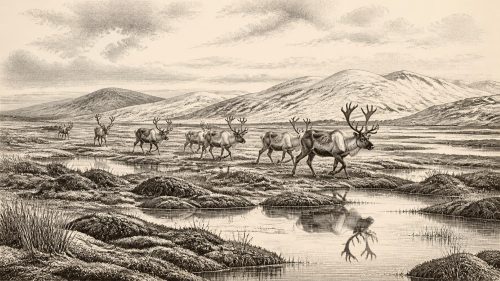
Around 31,621 BCE, a modern label within Marine Isotope Stage 3, Ireland experienced an unstable, cold Ice Age environment rather than a documented historical year. Derryvree sediments in Fermanagh record a locally ice-free tundra of wet hollows, sedges and mosses between glacial advances, while Crag Cave calcite demonstrates intermittent milder conditions. Castlepook Cave in Cork preserves mixed remains of mammoth, reindeer, giant deer and predators, indicating links with wider Eurasian fauna. A cut-marked reindeer femur may indicate exceptionally early human carcass processing, but its disturbed context prevents conclusions about settlement. No evidence supports permanent communities, agriculture, politics or named cultures.
Read Article

Archived: 15 September 2026
Abstract
At the modern date 31,627 BCE, Ireland lay in the climatically unstable later Pleistocene, approaching the Last Glacial Maximum. Evidence is sparse and disrupted by later ice. Buried organic beds at Derryvree, County Fermanagh, indicate an ice-free interval with treeless, cold muskeg of mosses, sedges, herbs, dwarf willow and juniper. Castlepook Cave, County Cork, preserves remains of mammoth, hyaena, reindeer, giant deer and other fauna, indicating varied open habitats and links with wider Europe. A cut-marked reindeer femur may record human carcass processing, but cannot prove permanent settlement. No political, cultural or social history is recoverable; environmental change dominates here.
Read Article

Archived: 15 September 2026
Abstract
31,646 BCE is a retrospective label, not a datable Irish event, and evidence concerns the wider Late Pleistocene environment. Before the Last Glacial Maximum, parts of Ireland may have remained ice-free amid unstable, open habitats and lower seas. Castlepook Cave in County Cork preserves mixed faunal remains, including mammoth, reindeer, hyena and other cold-adapted species, spanning different periods. A reindeer femur dated roughly 33,000 years ago bears a possible stone-tool cut mark, suggesting hunters may have processed it. However, no associated settlement or tools exist. Castlepook therefore indicates possible intermittent human visits, while demanding cautious interpretation and further scientific research.
Read Article

Archived: 15 September 2026
Abstract
Around 31,655 BCE, Ireland was in Marine Isotope Stage 3, before the Last Glacial Maximum, with fluctuating ice, low sea levels and cold, varied habitats. Castlepook Cave near Doneraile preserves bones from repeated Late Pleistocene episodes, including mammoth, reindeer, hyaena, bear, wolf and Arctic fox, but mixed deposits prevent reconstruction of a single fauna or occupation. Derryvree wetlands indicate treeless tundra-like conditions. A dated Castlepook reindeer femur bearing a possible stone-tool mark may indicate brief human contact, yet cannot prove settlement. No securely associated camps, tools, hearths or cultural evidence exist. The record chiefly documents ecology, climate and uncertainty alone.
Read Article
Archived: 15 September 2026
Abstract
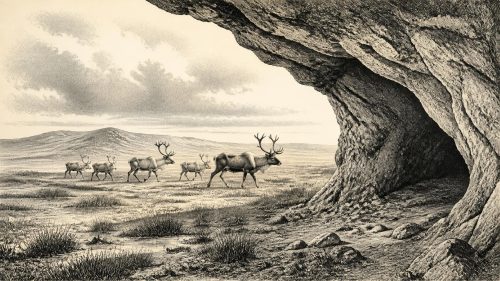
31,658 BCE is a modern chronological label, not a recorded Irish event. Castlepook Cave, County Cork, preserves Ireland’s principal pre-Last Glacial Maximum mammal archive, accumulated through carnivore activity, natural deaths, water movement and early excavation. Its bones, dated broadly from over 45,000 to about 20,000 BP, document intermittent cold-stage fauna including reindeer, mammoth, hyaena and wolves. A reindeer femur, assigned approximately 31,000 BC, bears a possible stone-tool butchery mark, potentially Ireland’s earliest evidence of human handling. It does not prove settlement or continuous occupation. Ireland then supported open, variable habitats before later ice-sheet expansion obscured much earlier evidence from view.
Read Article
Archived: 15 September 2026
Abstract
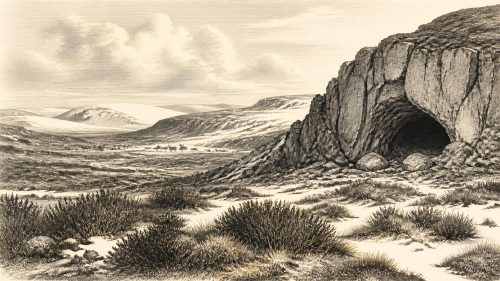
Circa 31,672 BCE, Ireland occupied a climatically unstable Late Pleistocene frontier, with open steppe-tundra, changing coastlines and uneven ice expansion. Castlepook Cave near Doneraile preserves a time-mixed fauna including mammoth, reindeer, giant deer, hyaena, Arctic fox and lemmings, showing intermittent cold-stage habitats. A reindeer femur, dated broadly to about 33,000 years ago, bears an incision interpreted as stone-tool butchery, suggesting an Upper Palaeolithic human visit. The evidence cannot establish a precise year, permanent settlement, identity, beliefs or social organisation. Any people were probably mobile foragers, while cave deposits require secure contexts, tools and sites to confirm Ireland’s earliest human presence.
Read Article

Archived: 15 September 2026
Abstract
Around 31,680 BCE, Ireland lay within the climatically unstable MIS 3 cold stage, where ice margins and habitats changed repeatedly. Derryvree in Fermanagh preserves freshwater deposits indicating open, waterlogged tundra, with sedges, mosses, dwarf willow and bogbean. Castlepook Cave in Cork contains MIS 3 remains of mammoth, reindeer, giant deer, predators and cold-adapted species, showing Ireland’s place in a wider Ice-Age ecosystem. A marked reindeer femur may indicate butchery by people, but lacks secure context. No evidence establishes permanent settlement, communities, political life or cultural practices; the period’s history is chiefly environmental, fragmentary and cautiously interpreted from sparse surviving evidence.
Read Article

Archived: 15 September 2026
Abstract
Around 31,695 BCE, during later Marine Isotope Stage 3, Ireland was cold, open and partly affected by advancing glaciation. Buried freshwater deposits at Derryvree and Greenagho in Fermanagh demonstrate ice-free terrestrial environments before renewed ice advances. Castlepook Cave, County Cork, preserves remains of reindeer, mammoth, giant deer, bear, wolf and hyaena, indicating a Late Pleistocene grazing and predator landscape. A reindeer femur bearing a possible stone-tool cutmark may represent Ireland’s earliest human trace, but its uncertain cave context precludes proof of settlement. No tools, hearths, burials or social institutions are known. Environmental evidence, rather than human history, defines this period.
Read Article
Archived: 14 September 2026
Abstract
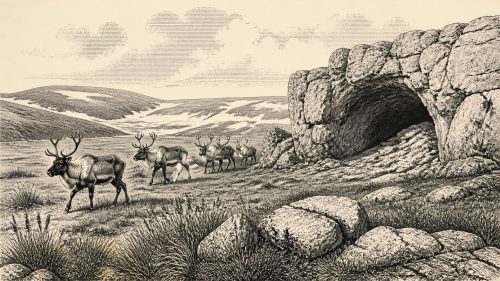
Circa 31,734 BCE, Ireland lay within the climatically unstable Late Pleistocene, not a precisely datable historical year. Ice, changing sea levels and open, locally variable landscapes shaped habitats for reindeer, giant deer, mammoth and spotted hyaena. Castlepook Cave in north Cork preserves important but disturbed animal remains from this period. A radiocarbon-dated reindeer femur bears a linear mark possibly made by a stone tool during butchery, potentially indicating Ireland’s earliest human visit. However, lacking associated tools, hearths or settlements, it cannot demonstrate permanent occupation. The evidence supports a harsh, productive landscape intermittently used by animals and perhaps mobile hunting parties.
Read Article

Archived: 14 September 2026
Abstract
At approximately 31,740 BCE, Ireland lay within the fluctuating cold conditions of Marine Isotope Stage 3, before the last British–Irish Ice Sheet reached its greatest extent. Castlepook Cave near Doneraile preserves remains of mammoth, reindeer, giant deer, hyaena, lemmings and other fauna, indicating open, largely treeless habitats. An incised reindeer femur may record processing with a stone tool and therefore a Upper Palaeolithic human visit. However, old excavation context and absence of associated tools or settlement prevent certainty. The evidence neither proves permanent occupation nor later ancestry. Ice and seas obscured traces; later human activity is confirmed in County Clare.
Read Article
Archived: 14 September 2026
Abstract
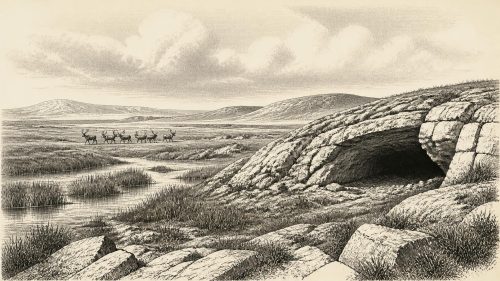
Centred on the modern label 31,745 BCE, the article explains that Ireland’s evidence for this period is climatic and archaeological, not historical. Castlepook Cave in County Cork preserves a mixed Late Pleistocene faunal record, including mammoth, giant deer, reindeer, hyaena and Arctic species, indicating fluctuating cold, open environments during MIS 3. A marked reindeer femur, possibly cut by a stone tool, may indicate human activity around 33,000 radiocarbon years ago, predating secure Irish evidence. However, disturbed deposits, uncertain associations and absent tools or settlements prevent confirmation. Research continues, while the cave remains evidence of ecological change and transient human visitation.
Read Article
Archived: 14 September 2026
Abstract
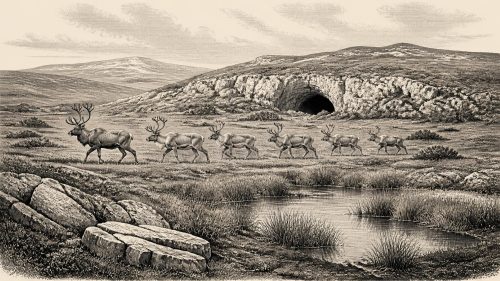
31,750 BCE is a modern label for a broad, climatically unstable MIS 3 interval, not a recoverable Irish historical year. Derryvree, County Fermanagh, preserves freshwater sediments dated broadly to 36,900–31,700 cal BP, indicating cold, treeless tundra wetlands during an ice-free phase between glacial advances. Lower sea levels reshaped coasts and may have enabled animal movements, although specific routes remain unknown. Castlepook Cave, County Cork, yielded diverse cold-stage fauna, including reindeer, mammoth and hyaena. A reindeer femur bearing a possible stone-tool cut may indicate early human presence, but associated artefacts and secure occupation evidence are absent, preventing conclusions about permanent settlement.
Read Article
Archived: 14 September 2026
Abstract
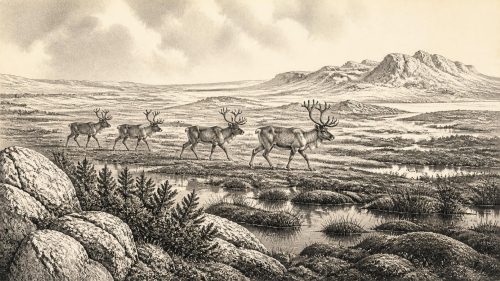
Around 31,778 BCE, Ireland lay within the climatically unstable later Marine Isotope Stage 3, before the Last Glacial Maximum. Lower seas altered coastlines and potential routes. Evidence from Derryvree indicates ice-free areas could support wet, treeless tundra vegetation during milder intervals. Castlepook Cave near Doneraile preserves a disturbed but important Ice Age fauna, including mammoth, giant deer, reindeer, hyaena and bear. A reindeer femur reportedly bears a stone-tool butchery mark and may represent Ireland's earliest human evidence. However, its poor context and uncertain interpretation preclude claims for permanent settlement, communities, routes or institutions. It therefore documents only tentative human presence.
Read Article

Archived: 14 September 2026
Abstract
Around 31,798 BCE, Ireland formed part of a changing Late Pleistocene landscape, with fluctuating ice, lower seas and intermittently exposed cold, open terrain. Evidence is regional and uncertain, since later glaciation destroyed or disturbed much of the record. Castlepook Cave in County Cork yielded reindeer, hyaena, bear, fox, hare, lemming and mammoth remains, accumulated at different times through natural and animal processes. A reindeer leg bone, dated roughly 33,000 years ago, bears a possible stone-tool cut mark, suggesting human activity. It cannot prove settlement, population continuity or social life. Castlepook instead highlights Ireland’s Ice-Age fauna and evidence for Palaeolithic visitors.
Read Article

Archived: 10 September 2026
Abstract
31,824 BCE is not a recoverable historical year but a point within unstable Marine Isotope Stage 3, before the Last Glacial Maximum. Ireland’s ice, coastlines and possible routes from Britain changed regionally, while evidence is fragmentary. Derryvree, County Fermanagh, preserves older deposits showing treeless, wet tundra with sedges, pools and cold-adapted life. Castlepook Cave, County Cork, yielded mammoth, reindeer, giant deer, bear and Ireland’s only spotted hyaena remains, though its bones span different periods. An incised reindeer femur may indicate human butchery, but lacks secure context. No settlements, tools, institutions or beliefs can be identified; research may clarify human presence.
Read Article

Archived: 10 September 2026
Abstract
Around 31,847 BCE, Ireland lay within the climatically unstable MIS 3 interval, not a precisely datable historical year. Cold, varied landscapes included periglacial tundra wetlands, documented at Derryvree, while later glaciation erased much evidence. Castlepook Cave, County Cork, preserves mixed remains of reindeer, mammoth, giant deer, hyaena, wolves, lemmings and other fauna, indicating periodically open, treeless habitats. A reindeer femur reportedly bears a stone-tool cut mark, suggesting possible human carcass processing around 31,000 BCE. However, no associated tools, hearths or settlement evidence confirm occupation. Changing sea levels, ice and lost coastal deposits obscure access routes. Perhaps transient human visits occurred.
Read Article

Archived: 9 September 2026
Abstract
The label 31,870 BCE denotes an approximate Late Pleistocene, Marine Isotope Stage 3 horizon, not a datable Irish year. Ireland experienced cold, periglacial conditions and growing ice, with open tundra-like landscapes and changing routes to Britain and Europe. Castlepook Cave near Doneraile preserves fauna including reindeer, mammoth, giant deer, hyaena, wolves and bears, accumulated over separate episodes. A reindeer femur, possibly cut by a stone tool about 33,000 years ago, may indicate brief Upper Palaeolithic human activity. However, disturbed cave deposits and limited evidence preclude claims of settlement, society or continuous occupation. Climate, ice and faunal movement dominate the record.
Read Article

Archived: 9 September 2026
Abstract
About 31,871 BCE is not a meaningful historical year but an approximate label for later MIS 3, roughly 34,000 calibrated years ago. Castlepook, or Mammoth, Cave in County Cork yielded a reindeer femur reportedly bearing stone-tool butchery marks. If confirmed, it may indicate a brief Upper Palaeolithic visit, not permanent settlement. Early excavation, mixed deposits and dating uncertainty require caution. The cave’s fauna, including reindeer, mammoth, giant deer, predators and lemmings, demonstrates a cold, open, changing landscape supporting animals before the glacial maximum. Ireland’s earliest secure human evidence remains a cut-marked bear bone from Clare, dated about 12,810–12,590 calibrated BP.
Read Article

Archived: 9 September 2026
Abstract
31,877 BCE is a modern approximation for a broad later Pleistocene interval, not a recoverable Irish year. Before the Last Glacial Maximum, Ireland contained regionally varied, cold, open tundra and wetlands, evidenced by Derryvree deposits in Fermanagh. Castlepook Cave Cork’s Awbeg valley preserves fauna, including reindeer, mammoth, giant deer, predators and, accumulated across different times rather than one moment. A dated reindeer femur may bear human cut marks, suggesting brief Upper Palaeolithic visitation, but disturbed contexts prevent certainty. No settlements, tools, identities or social institutions are securely known. The evidence portrays active Ice Age ecosystems and possible early human presence.
Read Article

Archived: 9 September 2026
Abstract
Labelled 31,913 BCE, this period cannot be treated as an observable calendar year, but lies within late Marine Isotope Stage 3, before the Last Glacial Maximum. Ireland was a cold, unstable mosaic of open vegetation, with advancing yet regionally variable ice. Castlepook Cave, County Cork, preserves crucial fossil evidence, including reindeer, mammoth, giant deer and predators, accumulated across different episodes. A reindeer femur reportedly bearing a stone-tool cut mark may indicate early human butchery, but remains unconfirmed and cannot prove settlement. Secure evidence places humans in Ireland only during the terminal Pleistocene. The era chiefly represents ecological change preceding glaciation.
Read Article
Archived: 9 September 2026
Abstract
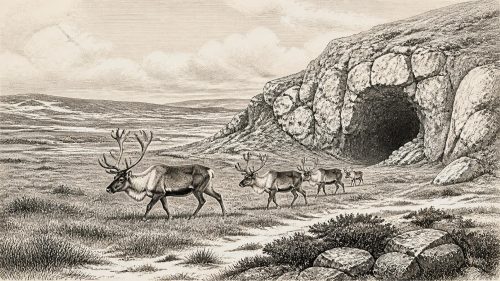
About 31,918 BCE, Ireland lay within the later Last Glacial Period, as climate deteriorated before the Last Glacial Maximum. Castlepook Cave near Doneraile, County Cork, preserves remains of reindeer, mammoth, hyaena and other cold-adapted fauna, demonstrating repeated animal presence rather than one contemporaneous landscape. A reindeer femur bearing probable stone-tool butchery marks, dated to roughly 33,000 years ago, may indicate Ireland's earliest human visit. However, disturbed cave deposits and limited evidence preclude claims of settlement. Lower sea levels may have facilitated movement, though routes remain uncertain. Expanding ice later transformed this exposed, seasonal frontier. Research may revise this fragile picture.
Read Article
Archived: 9 September 2026
Abstract
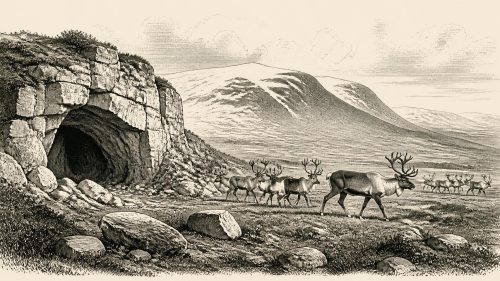
31,919 BCE is a modern label for a Late Pleistocene period, not a recoverable Irish historical year. Before the Last Glacial Maximum, deposits in Fermanagh indicate that some Irish landscapes were intermittently ice-free, although conditions varied regionally. Castlepook Cave in County Cork preserves a chronologically mixed fauna including reindeer, mammoth, giant deer, hyaena and other cold-stage animals, demonstrating habitable environments. A cut-marked reindeer femur may indicate human butchery around 33,000 BCE, but disturbed deposits, alternative explanations and absent artefacts prevent confirmation. Later glaciation created a vast gap; securely dated human activity appears only over twenty millennia later in County Clare.
Read Article

Archived: 8 September 2026
Abstract
Around 31,953 BCE, Ireland lay within the climatically unstable later Ice Age, approaching expanded glaciation. Evidence from Castlepook, or Mammoth, Cave in County Cork confirms a diverse Marine Isotope Stage 3 fauna, including reindeer, mammoth, giant deer, bears, wolves and Arctic species. A reindeer femur, dated about 33,000 years ago, has a possible stone-tool butchery mark, perhaps indicating Ireland's earliest human activity. However, disturbed cave deposits and lack of associated tools or habitation prevent conclusions about settlement. Ice later damaged much archaeological evidence. No local polities, warfare, art or culture can be established; human presence remains possible, fleeting and uncertain.
Read Article

Archived: 8 September 2026
Abstract
Around 31,956 BCE, Ireland lay within the variable cold conditions of Marine Isotope Stage 3, before the Last Glacial Maximum. Its landscapes included tundra-like open vegetation, periglacial environments and regionally uncertain ice cover, while lower seas did not guarantee human access. Castlepook Cave in County Cork preserves Ireland’s pre-maximum vertebrate assemblage, including mammoth, reindeer, giant deer, hyaena and predators. A possibly cut-marked reindeer bone, dated near 33,000 years ago, may indicate brief human activity, but remains unconfirmed and cannot establish settlement. No secure Palaeolithic habitation, tools, burials or art date to this period. Evidence instead depicts changing environments and fauna.
Read Article

Archived: 8 September 2026
Abstract
Ireland around 31,957 BCE lay within Marine Isotope Stage 3, a cold, changing Late Pleistocene period lacking written history or proven settlement. Castlepook Cave in County Cork yielded reindeer and other cold-stage fauna. A marked reindeer femur, interpreted as stone-tool butchery, may indicate brief human presence, but lacks securely associated tools or occupation evidence. Radiocarbon dates require calibration and cannot establish an exact year. Cave deposits were disturbed, while later glaciers erased or rearranged much evidence. Growing ice eventually covered Ireland at the Last Glacial Maximum. The find suggests possible early, discontinuous contact, but future excavation and dating remain necessary.
Read Article

Archived: 8 September 2026
Abstract
Around 31,973 BCE, Ireland was part of a climatically unstable, open Ice Age landscape, with changing coastlines, ice conditions and access routes. Cave faunas show that reindeer, mammoths, giant deer, bears, wolves, hyaenas and smaller cold-adapted animals occupied the island intermittently. At Castlepook Cave, County Cork, a reindeer femur bears a deep mark possibly made by a stone tool during butchery, potentially indicating an early human visit. However, disturbed deposits, uncertain dating and absence of associated tools, hearths or settlements prevent confirmation of occupation. The find prompts further research into Ireland’s earliest, fragile evidence of human presence in deep prehistory.
Read Article

Archived: 8 September 2026
Abstract
Around 31,974 BCE, Ireland was entering an unstable, increasingly severe phase of the last glacial cycle, though conditions varied regionally and cannot be reconstructed for a single year. Ice had not yet reached its maximum extent, but landscapes, coastlines and routes of access were changing as sea levels fell. Cave finds show cold, open environments supporting reindeer, bears, mammoth and other fauna. At Castlepook Cave, County Cork, a reindeer femur possibly cut with a stone tool, dated about 33,000 years ago, may represent Ireland’s earliest human activity. It proves neither settlement nor hunting. Later glaciation obscured evidence; occupation came post-glacially.
Read Article




