Archived: 16 October 2026
Abstract
In 1635, Thomas Wentworth’s Dublin administration intensified efforts to reshape Ireland through parliamentary legislation, religious conformity, economic regulation and investigations of land title. Parliament passed measures on correction houses, alehouses, husbandry, clergy and Protestant schools, but failed to secure promised protections for established estates. Crown pressure reached Ulster when London plantation companies lost their charter, and peaked in Connacht, where Galway jurors at Portumna rejected the king’s claimed title and were fined and imprisoned. Wentworth also crushed Lord Mountnorris politically. Meanwhile, Hugh Ward’s death at Louvain marked a loss to Irish scholarship. The year revealed widening distrust of coercive government.
Read Article

Archived: 16 October 2026
Abstract
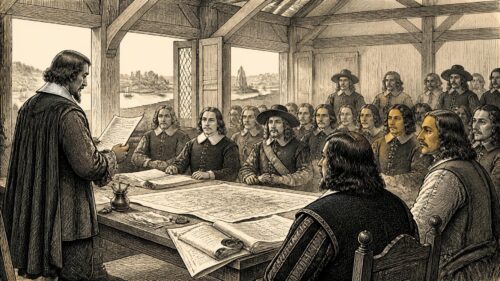
In 1634, Thomas Wentworth convened Charles I’s first Irish parliament, tightly managing elections, procedure and debate from Dublin Castle. Parliament unanimously granted six subsidies, expecting enactment of the Graces, concessions sought by Catholic and Old English elites, especially secure land titles. Wentworth subsequently refused the crucial land-security measure, confirming that revenue did not purchase limits on royal power. He also constrained parliamentary action over Sir Vincent Gookin’s inflammatory letter. Church convocation adopted the English Thirty-Nine Articles under pressure, advancing conformity despite resistance. Meanwhile, Geoffrey Keating completed Irish-language history; customs, trade and emigration to Spanish Flanders linked Ireland to Stuart Europe.
Read Article
Archived: 16 October 2026
Abstract
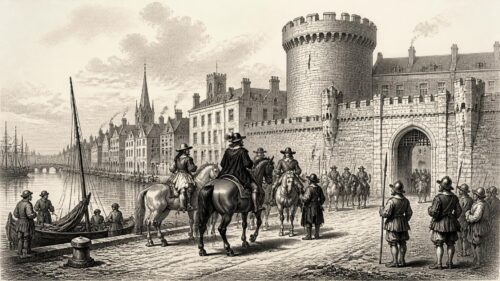
In 1633 Thomas Wentworth arrived as Charles I’s lord deputy, replacing interim rule by the lords justices and initiating a centralised Irish administration. Facing heavy debts and limited revenue, he prioritised customs, trade regulation, provincial accounts and a self-financing government, while cautiously managing Catholic and Protestant interests. He promoted allies, including Christopher Wandesford, John Bramhall and the earl of Ormond, and prepared for a future parliament. Church developments included St Columb’s Cathedral’s completion and inquiries into ecclesiastical resources. Meanwhile, the Four Masters continued preserving Gaelic history in Donegal. The year established stronger royal direction amid confessional, social and cultural divisions.
Read Article
Archived: 16 October 2026
Abstract
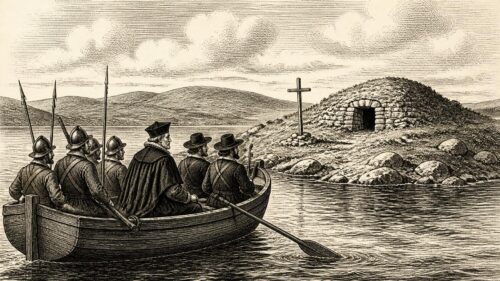
In 1632, Ireland experienced mounting political, fiscal and religious strain under Lords Justices Adam Loftus and Richard Boyle, while Charles I appointed Thomas Wentworth as future lord deputy. Government need for army revenue prompted Boyle’s proposed recusancy fines, but Loftus and Wentworth favoured negotiation, preserving fragile Catholic expectations surrounding the Graces. In October, Bishop James Spottiswood destroyed St Patrick’s Purgatory cave at Lough Derg, forcefully suppressing a major Catholic pilgrimage. Meanwhile Catholic synodical discipline, Ussher’s historical scholarship, plantations and planned towns reflected competing religious and colonial visions. The year exposed an uneasy peace, foreshadowing Wentworth’s more rigorous administration in Ireland.
Read Article
Archived: 16 October 2026
Abstract
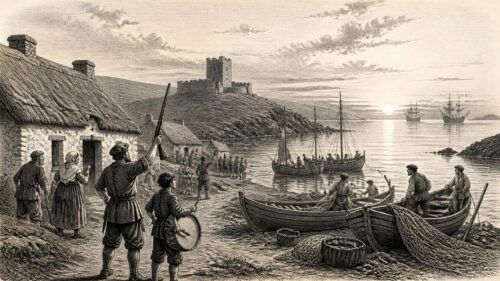
In 1631, Baltimore, a West Cork fishing settlement shaped by plantation, local rivalries and Atlantic commerce, suffered a corsair raid. Before dawn on 20 June, forces led by Murad Reis the Younger seized 107 inhabitants, chiefly women and children, after landing from vessels sailing from Algiers. The captives entered North African systems of sale, labour, ransom and household service; few are known to have returned. Suspicions of local collusion remain unproven. The raid exposed limited coastal protection. Elsewhere, royal honours reinforced hierarchy, Patrick Fleming founded a college in Prague and died in Bohemia, and Sir Henry Docwra died in Dublin.
Read Article

Archived: 16 October 2026
Abstract
In 1630, Ireland experienced contested government, religion and cultural memory rather than a single decisive event. Lords Justices Adam Loftus and Richard Boyle governed after Falkland’s departure, amid rivalries, plantation ambitions and uncertainty over Catholic concessions. Authorities suppressed visible Catholic houses in Dublin, although household networks sustained recusant worship. Malachy Ó Queely’s appointment as Tuam archbishop demonstrated continuing Catholic organisation. On 19 April, Franciscan scholar Mícheál Ó Cléirigh completed the Martyrology of Donegal, preserving Irish sacred learning and helping establish collaboration later associated with the Four Masters. Cork’s tomb commission highlighted elite Protestant power, Catholic insecurity, and uneven state authority.
Read Article
Archived: 16 October 2026
Abstract
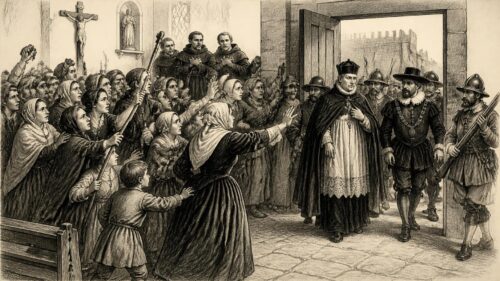
In 1629, Ireland experienced administrative change, religious tension and renewed Catholic confidence. Henry Cary’s recall left Richard Boyle and Adam Loftus as lords justices, committed to royal order and Protestant ascendancy. Despite pressure on recusancy, Dublin’s Catholic networks expanded, exemplified by Poor Clares returning from Flanders to found a convent. On St Stephen’s Day, officials led by Archbishop Lancelot Bulkeley raided the Franciscan chapel in Cook Street. Congregants, notably merchant widow Elinor Nugent and other women, rescued friars and drove raiders into hostile streets. The incident exposed Catholic urban solidarity, women’s agency, transnational links, and the limits of state coercion.
Read Article
Archived: 16 October 2026
Abstract
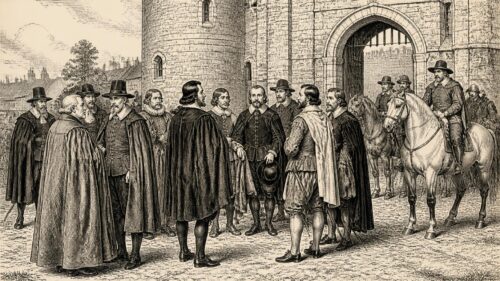
In 1627, Irish politics centred on negotiations over Crown funding, land security and Catholic disabilities. After failed discussions with Lord Deputy Falkland, a convention appointed eleven agents, mainly Old English Catholics but including Protestants, to negotiate in England. Their mission anticipated, but did not yet constitute, the Graces agreed in 1628. Spanish invasion rumours heightened security concerns without producing an expedition. Government business included Adam Loftus’s recall, creation of a Second Serjeant-at-Law, and William Brabazon’s elevation as earl of Meath. William Bedell became Trinity’s provost, encouraging Irish-language ministry. Robert Boyle was born at Lismore, within the prominent Protestant plantation elite.
Read Article
Archived: 16 October 2026
Abstract
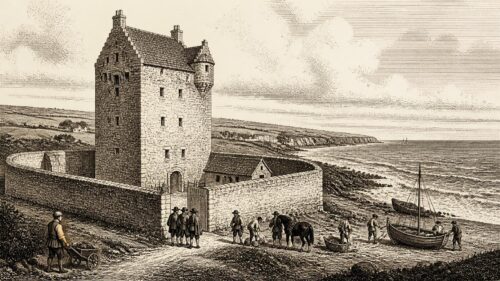
Charles I’s accession in 1625 retained Henry Cary, Viscount Falkland, as lord deputy of an Irish administration dependent on London yet weakened by faction, financial shortages and religious division. Fears of war with Spain exposed decayed coastal defences and unpaid troops; Falkland’s cess shifted military costs onto communities. James Ussher became archbishop of Armagh, strengthening the Protestant establishment despite enduring Catholic networks and no settlement on toleration. Oaths imposed on Connacht officeholders demonstrated administrative expansion. Land disputes after Robert Ponte’s killing in Wicklow illustrated plantation pressures. Ballygally Castle reflected continuing settlement in Ulster, while Moryson’s writing preserved conquest-era attitudes enduring.
Read Article

Archived: 16 October 2026
Abstract
In 1623, Lord Deputy Viscount Falkland sought to reduce Irish administration’s costs while reinforcing royal control over revenue, land and religion. Correspondence recorded poverty and efforts to improve customs income. June orders promoted Protestant conformity through oaths, regulated school staff and action against recusants, though obedience remained uneven. Malcolm Hamilton’s consecration as Church of Ireland archbishop of Cashel demonstrated reliance on Protestant networks shaped by Ulster settlement; James Ussher’s republished scholarship supported confessional claims. In October, commissioners investigated timber waste in crown-claimed Ranelagh, linking woodland, survey, law and income. These measures reveal tensions beneath apparent peace, not a settled kingdom.
Read Article

Archived: 16 October 2026
Abstract
In 1622, James I’s Irish Commission investigated administration, revenue, courts, church provision, military costs, landholding and plantation policy during the replacement of Lord Deputy Oliver St John by Viscount Falkland. Commissioners documented Ulster’s plantation, where British settlement, construction and Protestant institutions often fell short, while Irish tenants remained important. Complaints revealed insecurity among Gaelic landholders and elites. Falkland arrived in September amid demands for economy and authority. At his inauguration, Bishop James Ussher urged enforcement against recusancy, provoking Catholic opposition and criticism within the Church of Ireland. The year exposed financial weakness, contested power, incomplete colonisation and persistent religious division.
Read Article
Archived: 16 October 2026
Abstract
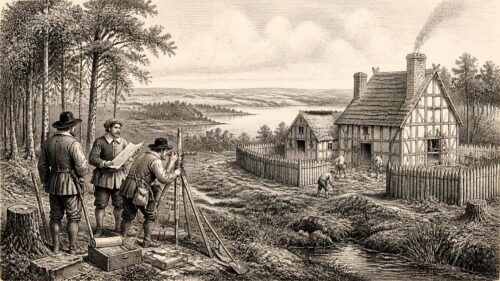
In 1613, the administration intensified its remaking of Ireland through Ulster plantation surveys, municipal charters and a contested parliament. Josias Bodley’s inspection exposed settlement, while London’s Irish Society incorporated Londonderry and developed its county; Belfast and Coleraine gained corporations and parliamentary representation. These boroughs promoted trade and security but supplied Protestant votes. When parliament met in Dublin, conflict over Sir John Davies’s election as Speaker revealed Catholic fears of engineered representation, religious coercion and dispossession. Petitions and a inquiry failed to secure accommodation. Henry Ussher’s death marked change amid conformity. New institutions reshaped land, faith and politics without achieving consent.
Read Article
Archived: 17 October 2026
Abstract
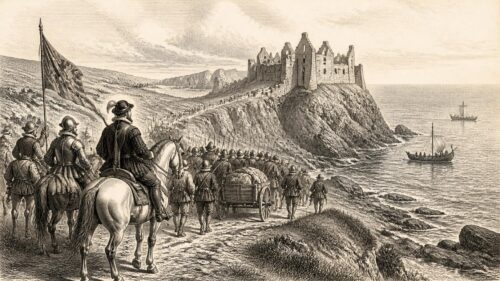
In 1584 Sir John Perrot became lord deputy, pursuing Elizabethan efforts to convert military victory into durable government. He appointed Richard Bingham in Connacht and John Norris in Munster, where the Peyton Survey prepared forfeited Desmond lands for plantation amid famine and displacement. Negotiations revived towards the Composition of Connacht, while O’Reilly territory was organised as County Cavan. Perrot captured Dunluce but failed to subdue Sorley Boy MacDonnell or secure Ulster. Dermot O’Hurley’s execution highlighted confessional repression. Galway extended harbour defences, and Stanihurst published Latin history. Crown authority expanded through surveys, counties and garrisons, yet remained contested, costly and insecure.
Read Article
Archived: 17 October 2026
Abstract
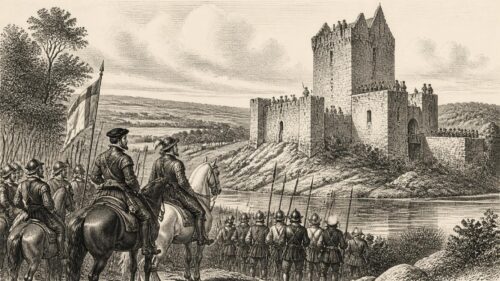
In 1574 Tudor authority faced pressures across Ireland. In Munster, Desmond’s restored influence, Geraldine Combination and his son’s seizure of Derrinlaur Castle challenged crown control; Fitzwilliam and Ormond captured the castle in August, and Desmond submitted at Cork on 2 September, though settlement remained fragile. In Ulster, Essex’s failing Clandeboye colony suffered plague, shortages and mutiny before his destructive campaigns and arrest of Sir Brian mac Phelim O’Neill, whose family and followers were killed or executed. Unpaid troops burdened Pale communities, while Catholic links endured through Edmund Tanner’s Roman appointment. The year revealed Tudor power’s coercive reach and governing limits.
Read Article
Archived: 18 October 2026
Abstract
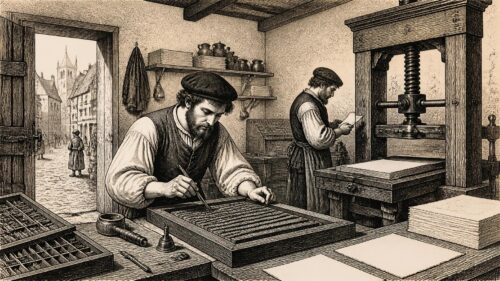
In 1551, Ireland’s overlapping jurisdictions exposed the limits of Edward VI’s government. Dublin and the Pale remained the strongest centres of royal authority, while Gaelic rulers and aristocratic lordships retained armed followers, local law and diplomatic connections. The printing of an English prayer book in Dublin gave religious reform a cultural landmark. A change of lord deputy altered government leadership, while intervention in Ulster contributed to an O’Neill succession conflict. Together, print, appointment and warfare revealed an administration seeking wider control without commanding a unified island. Religious policy and dynastic rivalry therefore developed within enduring regional divisions and negotiated authority.
Read Article
Archived: 18 October 2026
Abstract
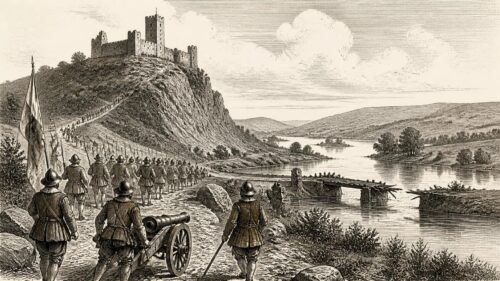
In 1536, Tudor authority in Ireland expanded after the Kildare revolt through Leonard Grey’s appointment as lord deputy, the Dublin parliament and military campaigning. Parliament asserted Henry VIII’s royal supremacy over the Irish church, attainted Kildare interests and initiated changes to religious property, though enforcement remained limited and monastic dissolution was incomplete. Grey captured Carrigogunnell Castle and destroyed its bridge, exploiting regional rivalries. Elsewhere, Connacht experienced succession disputes, raids, artillery warfare, sanctuary violations and the burning of Dromahair monastery. Plague, smallpox and illness compounded instability, while deaths of lords and poet Tomás Ó hUiginn marked cultural loss. Local lordship remained.
Read Article
Archived: 18 October 2026
Abstract
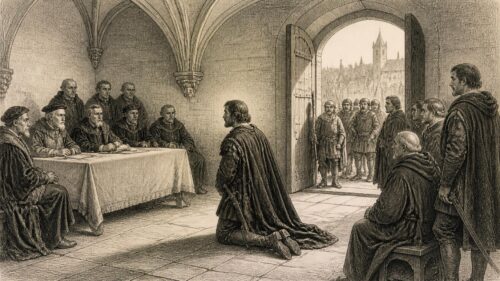
In 1534, Thomas FitzGerald, vice-deputy and heir to Kildare, renounced Henry VIII at Dublin’s St Mary’s Abbey after his father Gerald was recalled and imprisoned in London. Claiming papal loyalty, Thomas besieged Dublin Castle, mobilised Geraldine, Gaelic and Pale support, and sought foreign aid, but faced opposition from towns, Butlers and royal officials. War brought raiding and devastation across surrounding regions; Archbishop John Alen was murdered after capture near Clontarf. Gerald died in the Tower in September, making Thomas earl. Sir William Skeffington’s October arrival with a royal army shifted the balance, leaving Thomas entrenched at Maynooth under a truce.
Read Article

Archived: 19 October 2026
Abstract
In 1489, Ireland experienced a severe epidemic, recorded by the annals among ruling, learned, military and ecclesiastical households, though its precise nature and scale remain unknown. A November royal order demanded Dublin remove refuse, dung and swine, reflecting fears that polluted air caused pestilence and harmed commerce and government. Northern lordships remained violent: Conn Ó Néill raided Ó Catháin territory and seized hostages, while dynastic deaths altered regional politics. After harvest, Aodh Ruadh Ó Domhnaill campaigned eastwards, raided the Route, captured Belfast Castle and reportedly demolished it. Despite disaster and conflict, civic, religious, learned and lordly institutions continued functioning precariously.
Read Article
Archived: 19 October 2026
Abstract
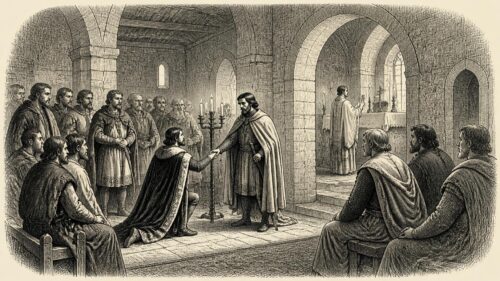
In 1488 Sir Richard Edgecombe secured renewed allegiance to Henry VII after Ireland’s leaders had supported Lambert Simnel. At Kinsale, Waterford, Dublin, Drogheda and Trim, towns and magnates received pardons and swore fealty. Gerald FitzGerald, earl of Kildare, negotiated rather than submitted unconditionally, taking a solemn oath at St Thomas’s while retaining his regional power; royal control was reinforced through Dublin Castle. Beyond the Pale, warfare, succession disputes, hostage-taking and alliances shaped Gaelic and Anglo-Irish lordships. Religious reform flourished at Donegal, while deaths from smallpox, losses among learned figures and destructive weather exposed insecurity. The settlement restored cooperation, not rule.
Read Article
Archived: 19 October 2026
Abstract
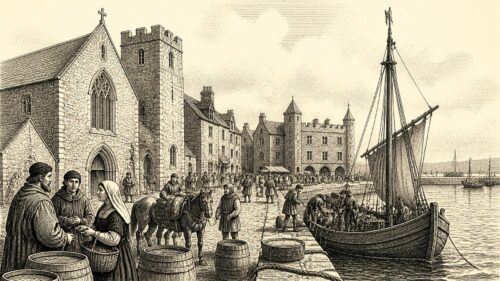
In 1484, Ireland comprised the English lordship, autonomous towns, Anglo-Irish magnates and Gaelic dynasties, each governed through distinct but connected powers. Under Richard III, Gerald FitzGerald, earl of Kildare, dominated Dublin administration, while parliament regulated coinage, revenues, religious property, fortification and urban affairs. Galway strengthened its position when St Nicholas’s became collegiate and Richard granted the town a mayoralty. Elsewhere, insecurity persisted: northern war between O’Neill and O’Donnell coincided with a violent Maguire succession dispute in Fermanagh, involving murder, raids, captives and church attacks. Annals also record deaths, imprisonment and pastoral wealth, revealing fragmented political and social life across Ireland.
Read Article
Archived: 22 October 2026
Abstract
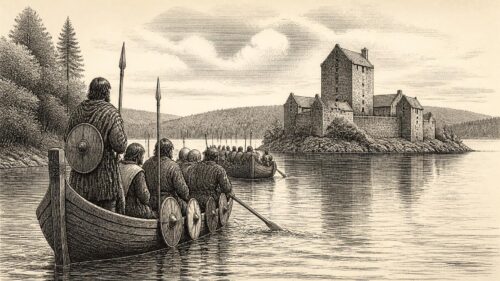
In 1369, Ireland’s contested lordships were shaped by dynastic conflict, royal administration and ecclesiastical change. Pilib Ó Raghallaigh, king of east Breifne, was imprisoned by nephews at Lough Oughter, but his son-in-law, Pilib Maguire of Fermanagh, captured the island castle by boat and restored him. Allied resistance had earlier failed at Blencup. William Windsor arrived as royal lieutenant, summoned a Dublin parliament, and executed Diarmait Mac Murchadha and his designated successor, demonstrating force without securing Leinster. In Thomond, Mathghamhain Ó Briain died and Brian Sreamhach succeeded. Church deaths in Oriel and Breifne underscored political importance. Alliances and waterways shaped power.
Read Article

Archived: 22 October 2026
Abstract
In 1361, Lionel of Antwerp, Edward III’s son and earl of Ulster, arrived in Ireland as royal lieutenant with troops to reinforce the threatened English lordship. Landing at Dublin in September, he campaigned in Leinster, where Gaelic rulers remained powerful. Irish annals recorded the deceptive seizure and subsequent custodial deaths of Art Mac Murchadha and Domnall Riabach, though details remain uncertain. Lionel transferred the Exchequer to fortified Carlow, creating a forward administrative and financial base without displacing Dublin’s importance. Meanwhile, the widespread epidemic Cluiche an Rí, probably pestis secunda, intensified economic and military pressures, demonstrating the limitations of royal intervention.
Read Article
Archived: 23 October 2026
Abstract
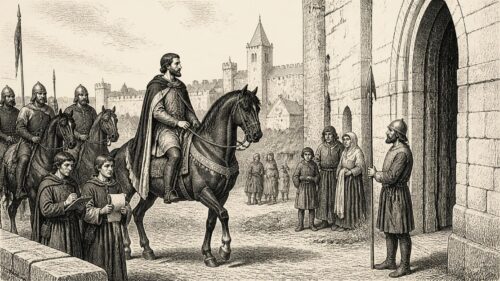
In 1355 Edward III appointed Maurice fitz Thomas FitzGerald, first earl of Desmond, justiciar of Ireland, and he began serving in August. His restoration after earlier conflict with the crown demonstrated royal dependence on powerful Anglo-Irish magnates. Dublin’s institutions could not control a politically fragmented island, where Gaelic and Anglo-Irish lordships exercised overlapping authority. Plague’s recent effects worsened economic and military pressures. Annal-dated reports describe killings, successions and retaliatory warfare in Bréifne, Annaly, Muintir Eolais and Connacht, alongside ecclesiastical and legal continuity. Desmond’s appointment was firmly dated, but annal chronology requires caution. Governance relied on negotiated regional, often violent power.
Read Article
Archived: 23 October 2026
Abstract
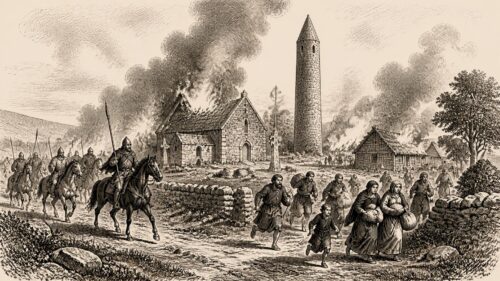
In 1346, Ireland experienced political instability, warfare and dearth following the death of Sir Ralph Ufford, the royal justiciar. Gaelic and settler forces contested Leinster, capturing castles, raiding communities and damaging churches. On 5 May, Diarmaid Mac Giolla Phádraig and an Ó Cearbhaill ally burned Aghaboe, including its church, cemetery and St Canice’s shrine, a religious and communal loss. Wheat prices reflected scarcity, worsened by conflict. Walter de Bermingham became justiciar in May but violence continued, including northern defeats, killings and winter raids. John Clyn’s annals document events, while evidence does not place the Black Death in Ireland before 1348–49.
Read Article
Archived: 23 October 2026
Abstract
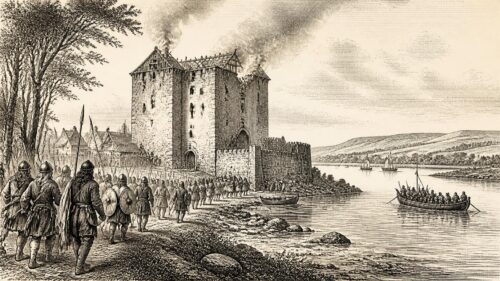
In 1332, Ireland’s lordship faced acute political and social strain. Sir William de Bermingham was executed in Dublin after politically charged conspiracy proceedings, while his son Walter was released. Thomond forces destroyed Bunratty Castle, whereas Anthony de Lucy recovered and garrisoned Arklow. Hostages seized castles at Limerick and Nenagh, exposing fragile authority; civic action restored Limerick. Raids, rivalries and warfare affected Munster, Leinster, Connacht and Ulster. Disease and exceptionally expensive wheat compounded hardship after famine. Edward III’s planned expedition was abandoned for Scotland, weakening government and leading to Lucy’s replacement by John Darcy. Richard FitzRalph’s Oxford chancellorship illustrated Irish connections.
Read Article

Archived: 23 October 2026
Abstract
In 1331, authority in Ireland was asserted, evaded and fought over in several very different places at once. At Dublin, Edward III’s government sent a new justiciar and issued ambitious instructions for reform. In Leinster, raiders captured a royal castle and struck at the estates of the archbishop of Dublin. In Connacht, a lord abandoned secular rule for the monastery just as an army burned through his son’s territory. The surviving records do not create a complete national narrative: they are annals, administrative measures and later compilations, each with its own priorities. Yet together they show a lordship in which
Read Article

Archived: 24 October 2026
Abstract
In 1328 Ireland endured crop damage, illness, destructive winds and scarcity, recorded across annalistic traditions. Political authority remained fragmented: William de Burgh returned to his Ulster inheritance, while royal orders sought to restrain magnates and an attempted Scottish-Irish peace meeting failed. De Burgh, Connacht and Thomond allies suffered defeat against Brian Bán Ó Briain; violence also killed John de Bermingham, earl of Louth. Obituaries reveal losses to legal, ecclesiastical and musical culture, amid church factionalism. On 2 November Edward III created James Butler earl of Ormond, granting Tipperary’s liberty and strengthening royal influence through territorial, judicial and commercial patronage networks.
Read Article

Archived: 25 October 2026
Abstract
In 1274 Connacht suffered a rapid succession crisis after the death of Áed mac Fedlimid Ua Conchobair, a powerful king who had resisted Gaelic and Anglo-Norman opponents. Eogan mac Ruaidrí succeeded him but was killed by kin in Roscommon’s friars’ church after three months. Áed mac Cathail Dall then ruled for a fortnight before being killed at Grainsech Sruthra, leaving Tadc mac Toirrdelbaig king. Elsewhere, deaths and killings altered lordship in Brefne, Annaly and Dartry. Dublin’s forces were defeated at Glenmalure, while Edward I’s coronation and Thomas de Clare’s arrival linked Ireland to Plantagenet politics. The year revealed fragmented power.
Read Article
Archived: 26 September 2026
Abstract
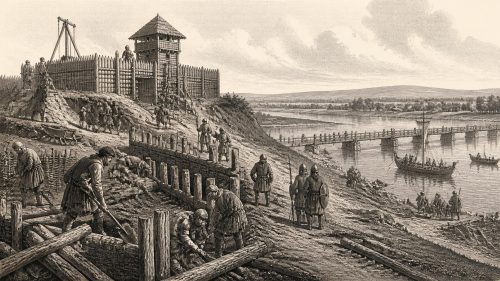
In 1213, King John’s submission of England and Ireland to Pope Innocent III altered the lordship’s international status, while Henry of London became archbishop of Dublin and justiciar. Royal and settler forces campaigned in Mide, defeating Cormac Ó Máel Sechlainn’s allies and building castles at Athlone, Birr, Durrow and Kinnitty to control crossings and routes. Cormac nevertheless recovered influence, illustrating frontier instability. Ulster saw Gaelic feuds, Anglo-Norman attacks, church plundering, Coleraine Castle’s construction and Áed Ó Néill’s raids. Clerical deaths highlighted enduring ecclesiastical centres. Ireland remained politically plural, as castles, warfare, alliances and royal administration reshaped contested regions across Ireland.
Read Article

