Cattle, Kings And Clergy(c.1000s)

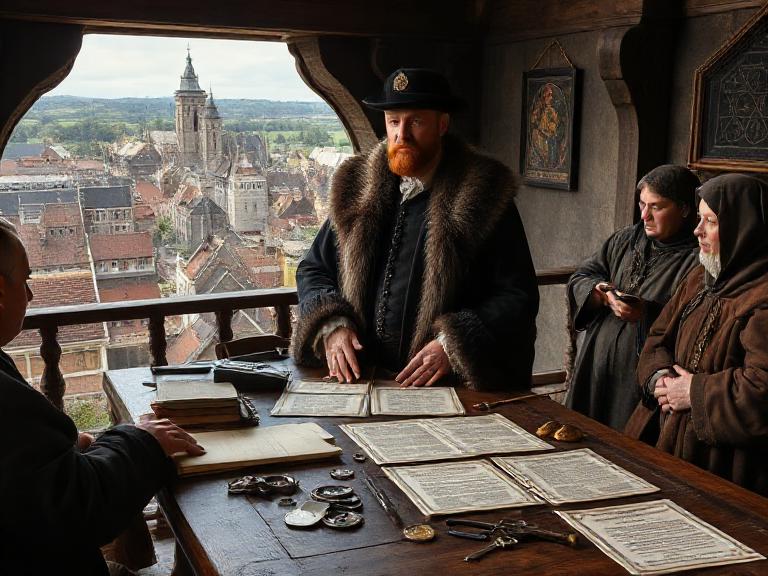
The surviving Irish notices for 1009 are brief, but they open a revealing window onto an island in which lordship was enforced by cattle-raids, hostages, dynastic marriages and ecclesiastical prestige. The year was not one of the famous turning-points of Brian mac Cennétig’s career, and it should not be treated as if Ireland were already a single, settled kingdom under him. Rather, the annals show a tense political landscape: Brian’s high-kingship was real and formidable, but other rulers still acted with considerable freedom. Máel Sechnaill mac Domnaill of Mide struck Leinster; Flaithbertach Ua Néill pressed southward and eastward from the north; Connacht, Bréifne and their neighbours fought; and Armagh and Kells remained central to the religious and learned life of the country.
Reading A Sparse Year
The Annals of Ulster place the Kalends of January for 1009 on a Saturday, with the first day of the moon. The Annals of Inisfallen give the same weekday and lunar detail. Such entries remind us that the annalists were not writing modern narrative history: they arranged events under annual headings, often without exact dates, and different chronicles sometimes place related material under adjacent years. The Annals of the Four Masters, compiled much later from earlier materials, place several events corresponding to 1009 under their 1008 heading, while their 1009 entry is marked by the editors as “recte 1010”. For a responsible account of 1009, the safest course is to focus on events assigned to the year by the earlier annalistic tradition, especially the Annals of Ulster, while noting corroboration or variation where other annals preserve it.
Brian’s Overlordship, Not A Modern State
By 1009 Brian mac Cennétig, king of Munster and claimant to the kingship of Ireland, had already forced a major reordering of Irish politics. His rise had broken the long Uí Néill hold on the high-kingship, and his visit to Armagh in 1005, with gifts and an agreement recorded in the Book of Armagh, gave his rule a powerful religious endorsement. Yet the events of 1009 show how limited even an exceptional high king’s reach could be. Provincial and sub-provincial rulers still raided, fought, blinded rivals, exacted tribute and negotiated power through their own local networks.
Brian himself is most visible in 1009 through the death of Dub Chablaig, recorded as the daughter of the king of Connacht and wife of Brian. The annals do not explain the political consequences of her death, and we should not invent them. Even so, such a notice is significant. Royal marriages were not merely private relationships: they linked dynasties, helped sustain alliances and gave rulers claims upon the loyalties of neighbouring peoples. The death of a Connacht-born wife of Brian therefore belonged to the same world of power politics as cattle tribute and hostages, even if the sources give us no scene of mourning, succession dispute or immediate diplomatic crisis.
Máel Sechnaill And Leinster
The most forceful political entry for the year states that “great and predatory vengeance” was taken by Máel Sechnaill on the Laigin, the people of Leinster. The wording is vivid but unspecific. It does not name a battlefield, list casualties or explain the grievance. It does, however, show Máel Sechnaill acting as a major military power after losing the high-kingship to Brian. As king of Mide, he remained central to affairs in the midlands and east, especially where Leinster, Brega, Dublin and Mide met.
The same annual cluster records that Máel Mórda, king of Leinster, fell from his horse and broke his leg. This is not said to have occurred in battle, and it would be misleading to connect it directly to Máel Sechnaill’s vengeance unless the source did so. Still, the entry gives a glimpse of the fragility of personal kingship. In a society where rulers led armies, rode between assemblies and relied on physical presence to collect tribute and enforce obedience, a serious injury to a king mattered. Leinster in 1009 appears not as a passive province under Brian, but as a contested arena between local royal authority and pressure from Mide.
Flaithbertach Ua Néill And The North
Flaithbertach Ua Néill, king of Ailech and a leading figure among the northern Uí Néill, is another dominant presence in the year. The Annals of Ulster record that Maelán, described as king of Uí Dorthainn, was killed by the Cenél Eógain in the middle of the Trian Mór at Armagh “as a result of a commotion of the two armies”. The phrasing suggests a volatile confrontation rather than a carefully described set-piece battle. Armagh was not only a sacred centre associated with Patrick; it lay in a politically sensitive zone where ecclesiastical authority, northern dynastic ambition and wider Irish kingship overlapped.
Another entry states that Donnchad Ua Céili was blinded by Flaithbertach in Inis Eógain and put to death afterwards. Blinding was a recognised political act in medieval Ireland and elsewhere: it could render a rival unfit for kingship without necessarily killing him at once. In this case the mutilation was followed by death, underlining the ruthlessness of northern dynastic competition. Flaithbertach also raided as far as Brega and took a great tribute in cows. That raid carried northern power deep towards the eastern midlands, into a region closely tied to Máel Sechnaill’s sphere. It demonstrates that Brian’s Ireland was still a web of competing hegemonies, not a kingdom administered from a single centre.
Connacht, Bréifne And Local Violence
The annals also preserve a short notice of conflict between the Connachta and the men of Bréifne: a defeat was inflicted on the Connachta by Bréifne, and afterwards the Connachta defeated the men of Bréifne. The symmetry of the entry may compress a campaign, a feud or successive engagements into one terse sentence. It gives no names of commanders and no numbers of dead. What it does reveal is a frontier of persistent rivalry between Connacht and the north-midland lordships.
Chronicon Scotorum and the Four Masters add further notices that fit this disturbed regional picture: Tadc Dubsúilech, son of the king of Connacht, was killed by the Conmaicne, and Matudán, king or lord of Síl Anmchada, was killed by his own brother. The Annals of Inisfallen record the death of Aed, king of the Déisi, and the death of Ruaidrí son of Cétfaid. These entries are spare, but collectively they show how politics operated below the level of high kings. Brothers, border peoples, overkings and local dynasties were all part of the machinery of power.
Armagh Roofed In Lead
One of the most concrete developments of 1009 is architectural and ecclesiastical: the oratory of Armagh was roofed with lead. This short notice is easy to overlook beside raids and killings, but it is highly important. Lead roofing required wealth, skilled work and access to materials not available to every church. It marks Armagh as a place capable of mobilising resources for a prestigious building project at the very moment when its claim to primacy in Ireland was politically valuable.
The notice also belongs to the wider story of stone and high-status church building in early medieval Ireland. Many churches and oratories had long been timber structures, and references to substantial stone churches or expensive roofing stand out in the annals. Armagh’s investment in its fabric in 1009 should be seen alongside its role as the church of Patrick and as a partner in Brian’s programme of legitimacy. The annals do not say that Brian paid for the lead roof, so that should not be claimed. But the improvement shows that Armagh’s community was materially strong and symbolically ambitious in this period.
Kells, Coarbs And Church Succession
Two church deaths further illuminate the year. Cathal son of Carlus, successor of Cainnech, died, as did Máel Muire Ua hUchtáin, coarb of Kells. A coarb was the heir or successor of a founding saint, holding authority over a church and its lands, relics and dependants. These were not merely devotional offices. They involved property, learning, patronage and political relationships with kings.
Kells had recently been the scene of one of the most famous events in Irish manuscript history: the theft in 1007 of the Great Gospel of Colum Cille, usually associated with the Book of Kells, from the great stone church at Cenannas. That theft is not an event of 1009, but it is relevant context for the death of Kells’s coarb two years later. The monastery remained a wealthy and symbolically charged Columban centre, where sacred books were treasured not simply as texts but as relics, legal objects and markers of institutional prestige.
Poetry, Learning And Memory
The death of Clothna son of Aengus, called chief poet of Ireland, is another firmly dated notice. The annals tell us nothing about his compositions in this entry, and no elaborate biography should be built from it. Yet the title itself matters. A chief poet belonged to the learned elite whose work preserved genealogy, praise, legal memory, place-lore and political reputation. In a world where royal claims depended on ancestry and public honour, poets were not decorative figures at the edge of power. They helped define power.
Clothna’s death therefore sits naturally beside the deaths of churchmen. Ireland’s learned culture in 1009 was sustained by overlapping institutions: monasteries, schools, courts and hereditary intellectual families. Latin learning, vernacular scholarship and oral performance all contributed to the culture that produced annals, saints’ traditions, legal materials and praise-poetry. The year gives us only a name and a title, but that is enough to show that intellectual authority was being recorded alongside royal and military events.
Cattle, Tribute And Everyday Life
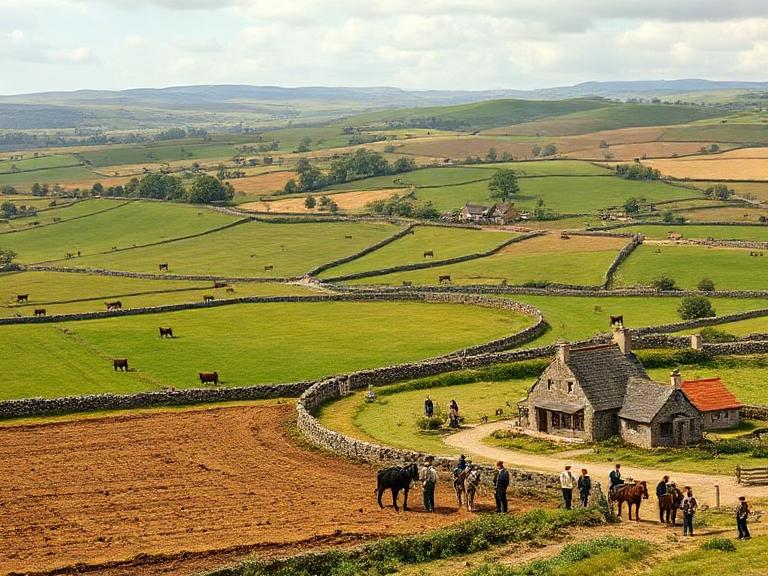
The annals rarely describe ordinary households directly, but the events of 1009 point towards the economic foundations of daily life. Flaithbertach’s raid into Brega brought away a great tribute in cows; Máel Sechnaill’s action against Leinster is described as predatory; regional warfare between Connacht and Bréifne probably involved plunder as well as armed honour. Cattle were wealth, food supply, legal value and political currency. To seize cows was to damage a rival’s household economy, reward followers and demonstrate lordship.
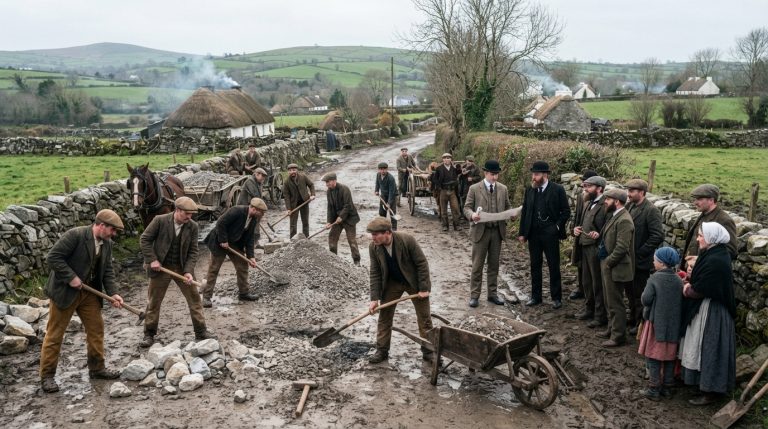
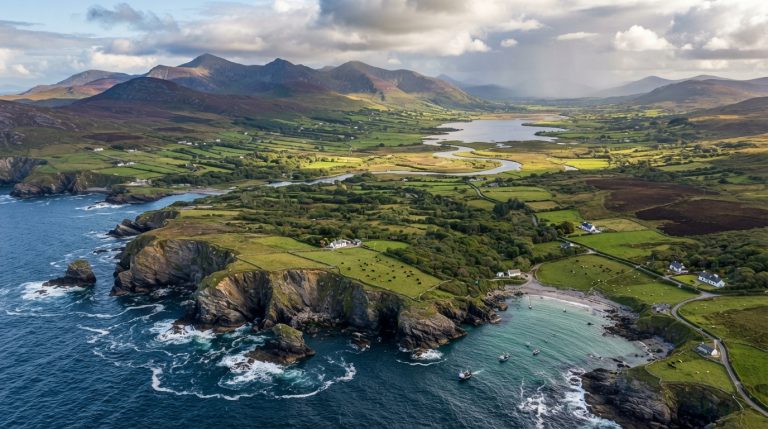
Most people in Ireland still lived in rural settlements: farmsteads, ringforts, crannogs and ecclesiastical estates set within a managed agricultural landscape. Grain, dairy produce, pigs, sheep, hides and labour all mattered, but cattle had a special place in law and status. Urban life existed too. Dublin, Waterford, Limerick, Cork and Wexford were Hiberno-Norse towns embedded in Irish Sea trade, and Dublin had been striking silver pennies since the late tenth century. No major Dublin event is securely recorded for 1009 in the principal Irish annals, so the towns should be treated as background rather than as the centre of this particular year.
A Year Of Pressure
In retrospect, 1009 lies in the tense middle years before the better-known crises of the next decade. It was not a quiet year, but its significance lies in cumulative pressure rather than one decisive battle. Máel Sechnaill remained aggressive in the east. Flaithbertach Ua Néill showed the continuing strength of northern Uí Néill power. Connacht and Bréifne fought in their own sphere. Armagh strengthened its sacred architecture. Kells, Ros Cré and other churches passed through changes of personnel. A royal woman connected to Brian died, and the chief poet of Ireland passed from the record.
The year therefore reveals an Ireland of competing authorities: high king, provincial king, local ruler, coarb, poet and monastic community. Brian’s supremacy was the largest fact of the age, but the annals for 1009 show how much political life still depended on local action, personal alliances and the movement of cattle, armies and relics through the landscape.
Primary Sources
- The Annals of Ulster
- Annals of Inisfallen
- Chronicon Scotorum
- Annals of the Four Masters
- The Annals of Ulster: CELT Edition Information
- Annals of Inisfallen: CELT Edition Information
- Chronicon Scotorum: CELT Edition Information
- Annals of Tigernach: CELT Edition Information
- Chronological Synchronisation of the Irish Annals
- Home Page for Dr Daniel P. McCarthy
- The Chronology and Sources of the Early Irish Annals
- Brian Bórama (Bóruma, Boru) | Dictionary of Irish Biography
- Ua Néill, Flaithbertach | Dictionary of Irish Biography
- Viking-Irish Alliances | Emperor of the Irish: Brian Boru and the Battle of Clontarf 1014
- Rise to Power | Emperor of the Irish: Brian Boru and the Battle of Clontarf 1014
- Brian Boru and the Book of Armagh
- Brian Boru | Brian Boru Millennium
- St Patrick | Archdiocese of Armagh
- Saint Patrick | St Patrick’s Church of Ireland Cathedral, Armagh
- The Archaeology of Early Christianity in the North of Ireland, Volume 1
- The Book of Kells | Trinity College Dublin Library
- The Book of Kells | Irish Studies | Saint Mary’s University
- The Irish Charters in the Book of Kells
- Viking | National Museum of Ireland
- 950–1450: Vikings, Normans and Medieval Mints | National Museum of Ireland
- Dublin’s Foundations: A Viking Legacy | Dublin City Council
- Early Medieval Ireland: Archaeological Excavations 1930–2009
- The Economy of Early Medieval Ireland
- Early Medieval Ireland: Investigating Social, Economic and Settlement Change, AD 400–1100
- Satire and Medieval Irish Poetry | Maynooth University