
Dublin Sacked(c.1000s)

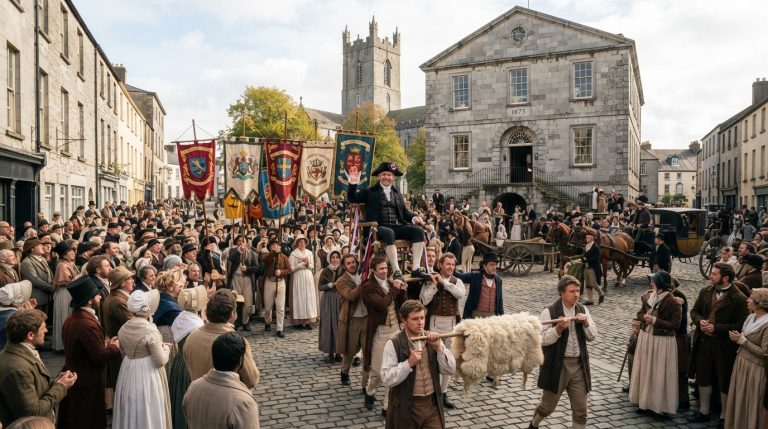
On 1 January 1000, the Kalends of January, Ireland entered the new year amid the immediate consequences of a major military victory. Two days earlier, on 30 December 999, Brian son of Cennétig, king of Munster, and Máel Sechnaill son of Domnall, king of Tara, had defeated the allied forces of Dublin and Leinster at Glenn Máma, probably in the borderlands southwest of Dublin. The Annals of Inisfallen then places a dramatic event on 1 January itself: the men of Munster invaded Dublin, set fire to the settlement, invested it, and burned Caill Tomair, the “Wood of Thor”, for fuel.
This was not an attack on an insignificant coastal outpost. By the year 1000 Dublin had developed from a Viking longphort into a major Irish urban and commercial centre. Its Scandinavian dynasty was deeply entangled in Irish politics and warfare. The town linked Ireland to trading networks across the Irish Sea and northern Europe. Silver, textiles, livestock, metalwork and human captives moved through its markets. Coinage associated with King Sitriuc, or Sigtrygg Silkbeard, was being struck in Dublin around this period, marking a new monetary economy alongside Ireland’s older systems of tribute and exchange.
The assault cannot be understood without the struggle for supremacy that had intensified during the preceding years. Máel Sechnaill was a ruler of the Uí Néill and held the kingship of Tara, while Brian had transformed Dál Cais fortunes and established himself as king of Munster. The Annals of Inisfallen records that in 997 the two rulers divided spheres of authority, with Leinster and the Dublin foreigners falling within Brian’s claimed sphere. Such arrangements were not partitions of a modern state. Authority depended on dynastic power, military success, tribute, hostages and shifting alliances among provincial kings and lesser kingdoms.
Leinster and Dublin resisted Brian’s expansion. During 999, Sitriuc son of Amlaíb and Máel Mórda of Leinster were associated in opposition to him. The Annals of Tigernach records that Kildare was plundered by the Dublin foreigners, while the Annals of Ulster describes the confrontation at Glenn Máma. Brian and Máel Sechnaill combined their forces, and the Dublin-Leinster army attacked them. The result was a severe defeat for Dublin and its allies, with leaders killed. Medieval accounts differ in chronology and detail, but the Annals of Ulster dates the battle to Thursday, 30 December 999, placing the attack on Dublin immediately afterwards.
The Annals of Inisfallen is unusually precise about what followed on 1 January. Munster forces entered Áth Cliath, the Irish name for Dublin, burned it and maintained an occupation. They also cut and burned Caill Tomair. The name is conventionally interpreted as “Thor’s Wood” and preserves a trace of Scandinavian religious culture near Christian Dublin, although its character and location remain uncertain. Its destruction was more than an incidental detail to the annalist. Whether it was a sacred place, remembered cult site or simply a landmark associated with Norse Dublin, its appearance in the record gives the day unusual historical texture.
Sitriuc escaped from the defeated Dublin forces and sought refuge among the Ulaid in the north. According to the Annals of Inisfallen, he could find no protection in Ireland until he gave hostages to Brian. Hostages were instruments of politics: they guaranteed submission, agreements and tribute, and their surrender demonstrated an imbalance of power. Other annalistic traditions say Brian remained in Dublin for a week, carried away gold, silver and captives, burned the fortress and expelled Sitriuc. These accounts should not be combined uncritically, yet together they show that Glenn Máma was followed by an effort to break Dublin’s political independence.
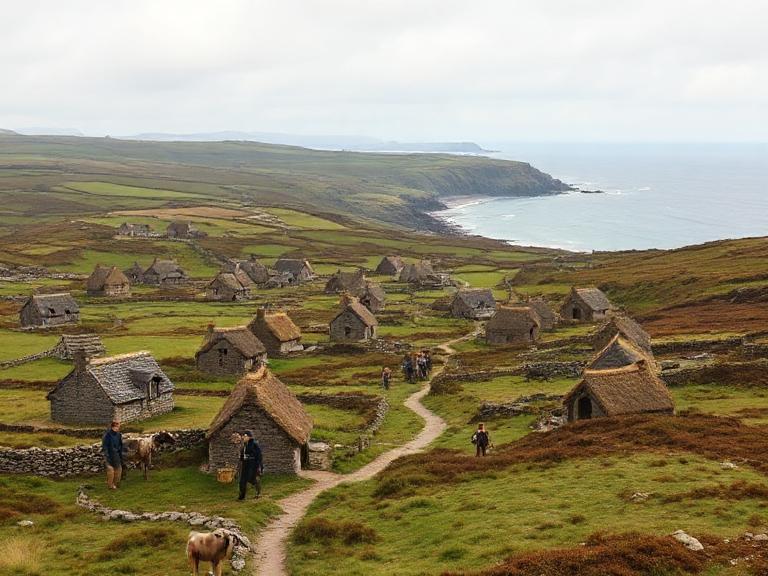
For people, 1 January 1000 would have looked very different depending on where they lived. Most inhabitants of Ireland were rural, living in farmsteads and small settlements rather than towns. Cattle remained central to wealth, status and food production, while grain cultivation, dairying, pigs and sheep supported local economies. Ringforts and enclosed farmsteads were familiar features of the landscape. Travel was by foot, horse, river and coastal vessel, with roads varying in quality. Monasteries remained centres of worship, literacy, craft production and local influence. News travelled through messengers, clerical communities, markets, assemblies and the networks of powerful families.
Christianity shaped the calendar and the written record through which the day is known. Irish annalists noted the Kalends of January, lunar calculations, deaths of churchmen, royal successions, battles and other memorable events. The Annals of Ulster explicitly recognised the year as the thousandth from the Incarnation of Christ, although medieval chronological systems could differ by a year from modern reckoning. Monastic communities at Armagh, Clonmacnoise, Kells, Glendalough and Cork preserved books and learning while existing within the political world of kings and dynasties. Religious institutions possessed land, attracted patronage and could themselves become targets during warfare and raiding.
The burning of Dublin did not destroy the city permanently, nor did it end Scandinavian influence in Ireland. The Annals of Inisfallen states that Brian gave the fort back to the foreigners after Sitriuc submitted, while the Annals of Ulster records that the Dubliners returned and gave hostages to Brian. This reveals Brian’s strategy. Dublin was more useful as a subordinate commercial and military centre than as an empty ruin. Its ships, wealth and warriors could strengthen whichever ruler controlled its allegiance. The city recovered, and Sitriuc remained a figure for decades, showing how rapidly defeated rulers could re-enter Ireland’s shifting alliances.
Seen from the distance of a millennium, 1 January 1000 is unusually well documented for a single day in early medieval Ireland. It was not the opening of a symbolic new millennium, and there is no evidence that contemporaries celebrated it in the modern sense. Its importance lies in the attack on Dublin and the political transformation surrounding it. Brian’s victory strengthened his position against Leinster and Dublin and formed part of the expansion that would soon challenge Máel Sechnaill himself. The events surrounding this day illuminate an Ireland of competing kings, prosperous trading towns, powerful churches and increasingly ambitious rulers at the millennium’s turn.
Primary Sources
- Unknown Munster annalist — Annals of Inisfallen, AI1000.2 — 1 January 1000 — The strongest surviving source for the exact day. It records the Munster invasion and burning of Dublin, the investment of the settlement on the Kalends of January, the burning of Caill Tomair, Sitriuc’s flight and his eventual surrender of hostages to Brian. Digital location: CELT, University College Cork.
- Unknown Munster annalist — Annals of Inisfallen, AI1000.1 — 1 January 1000 — The calendrical heading records the Kalends of January as the second feria, Monday, with the twenty-first day of the moon, providing important chronological evidence for the date. Digital location: CELT, University College Cork.
- Unknown annalist — Annals of Ulster, U1000.0–U1000.1 — 1 January 1000 — Records the Kalends of January, the lunar calculation and the year as the thousandth since the Incarnation of Christ, demonstrating how Irish churchmen understood and recorded the millennium. Digital location: CELT, University College Cork.
- Unknown annalist — Annals of Ulster, U999.8 — 30 December 999 — Dates the Battle of Glenn Máma specifically to Thursday, 30 December, and records Brian’s subsequent entry into and plundering of Dublin. This is essential evidence for reconstructing the forty-eight hours preceding 1 January. Digital location: CELT, University College Cork.
- Unknown Munster annalist — Annals of Inisfallen, AI999.4 — 999 — Records Brian’s victory over the forces of Dublin at Glenn Máma and the severe losses suffered by the Dublin army immediately before the New Year attack. Digital location: CELT, University College Cork.
- Unknown compiler — Chronicon Scotorum, CS999.4 — 999 — Records the combined army of Brian and Máel Sechnaill at Glenn Máma, the defeat of Dublin and the subsequent occupation of Dublin for a week, with gold, silver and captives carried away and Sitriuc expelled. Digital location: CELT, University College Cork.
- Unknown annalist — Annals of Tigernach, T999.3 — 999 — Records Brian’s advance upon Dublin, a week-long occupation, the removal of gold, silver and captives, the burning of the fortress and Sitriuc’s expulsion. It provides an important independent annalistic tradition concerning the sack. Digital location: CELT, University College Cork.
- Mícheál Ó Cléirigh and fellow compilers — Annals of the Kingdom of Ireland by the Four Masters, M998.11 — compiled 1632–1636 from earlier annalistic material; event placed under 998 in its chronology — Preserves a detailed tradition of Glenn Máma, the week in Dublin, the seizure of treasure and prisoners, the burning of the fortress and Sitriuc’s expulsion. Its chronology is offset and must not be used alone for the exact date. Digital location: CELT, University College Cork.
- Unknown annalist — Annals of Ulster, U1000.4 — 1000 — Records the return of the Dublin foreigners to Áth Cliath and their provision of hostages to Brian, establishing the political settlement that followed the burning of the city. Digital location: CELT, University College Cork.
- Unknown annalist — Annals of Tigernach, T1000.3 — 1000 — Records the foreigners again established in Dublin and their hostages being delivered to Brian, corroborating his temporary political supremacy over the city. Digital location: CELT, University College Cork.
- Mícheál Ó Cléirigh and fellow compilers — Annals of the Kingdom of Ireland by the Four Masters, M999.8 — annalistic year 999 — Records the foreigners back at Dublin and giving hostages to Brian. Useful corroborative evidence, although the Four Masters’ chronology around this period differs from that of other annals. Digital location: CELT, University College Cork.
- Unknown annalist — Annals of Ulster, U1000.3 — 1000 — Records the death of Ímar, king of Port Láirge, or Waterford. This provides contemporary evidence for another powerful Scandinavian-urban community operating within Ireland during the same year. Digital location: CELT, University College Cork.
- Unknown annalist — Annals of Tigernach, T1000.4 — 1000 — Records the death of Cellach Ua Maelcorgais, chief poet of Connacht, providing evidence for the continuing importance and recognised status of professional learned and poetic elites in Irish society. Digital location: CELT, University College Cork.
- Unknown annalist — Annals of Ulster, U1000.7 — 1000 — Records Brian’s hosting to Ferta Nime in Mag Breg, the movement of Dublin and Leinster cavalry and Máel Sechnaill’s attack upon them. It demonstrates that the political and military struggle continued after Dublin’s submission. Digital location: CELT, University College Cork.
- Unknown annalist — Annals of Tigernach, T1000.7 — 1000 — Records Brian advancing towards Tara with forces from southern Connacht, Osraige, Leinster and Dublin, followed by Máel Sechnaill’s destruction of a Dublin raiding force. It illustrates the rapidly changing alliances of the year. Digital location: CELT, University College Cork.
- Unknown Munster annalist — Annals of Inisfallen, AI997.2 — 997 — Records the meeting of Brian and Máel Sechnaill and the division of political spheres between Leth Cuinn and Leth Moga, together with the transfer to Brian of hostages from Leinster and Dublin. Essential background to the crisis of 999–1000. Digital location: CELT, University College Cork.
- Unknown Munster annalist — Annals of Inisfallen, AI998.2 — 998 — Records Brian’s expedition to Athlone, his acquisition of Connacht hostages and their transfer to Máel Sechnaill. It reveals the role of hostages and negotiated overlordship immediately before Glenn Máma. Digital location: CELT, University College Cork.
- Unknown Irish scribes — Liber Hymnorum, Trinity College Dublin MS 1441 — c. 1000 — A manuscript of devotional hymns in Latin and Irish dating approximately to the period itself. It provides direct material evidence for the religious, literary and bilingual culture of Irish ecclesiastical communities around the millennium. Digital location: Trinity College Dublin Digital Collections.
- Sihtric III of Dublin; moneyer Fastolf — Hiberno-Norse silver penny, Crux type — c. 995–1000 — One of the earliest coins struck in Ireland. Issued under Sitriuc/Sigtrygg Silkbeard at Dublin, it is direct material evidence for royal authority, trade, silver currency and Dublin’s sophisticated economy immediately before the city’s capture. Location: British Museum, registration 1838,0919.8.
- Óengus mac Óengobann — Félire Óengusso Céli Dé (Martyrology of Óengus the Culdee) — c. 828–833 — An Irish calendar of saints organised by the days of the year. Although earlier than 1000, it is valuable primary evidence for the ecclesiastical calendar and devotional culture inherited by Irish religious communities at the millennium, including the significance attached to the Kalends of January. Digital location: CELT, University College Cork.