Archived: 28 October 2026
Abstract
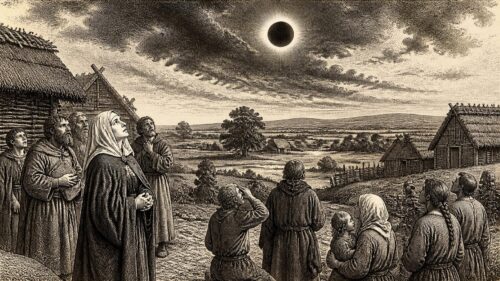
On 16 June 885, a total solar eclipse, recorded as daylight darkening and stars appearing, provides a secure chronological anchor for conflicting Irish annalistic dates. The year also brought major losses at Kildare: Abbess Tuileflaith, Bishop Scannal and Muiredach son of Bran, king of Leinster and abbot, died, while a secret killing was reported without explanation. Máel Pátraic, king of Airgialla, was slain by associates. Other royal and ecclesiastical deaths affected Brega, Meath, Clonfert and Glasnevin. No campaign or Viking raid is attested. An alleged speaking infant at Craeb Laisre shows annalists preserved marvels alongside wider political and religious change.
Read Article
Archived: 28 October 2026
Abstract
In 884, Domnall mac Muirecáin, king of the Leinstermen and member of the Uí Fháeláin branch of Uí Dúnlainge, was killed by his associates in circumstances unrecorded by the annals. His death destabilised Leinster’s contested overkingship; Muiredach mac Brain succeeded briefly, while Domnall’s brother Cerball later gained power. Cairpre mac Dúnlaing, ruler of western Life, also died, though no connection is known. Scannlán, bishop of Kildare, died, affecting a major ecclesiastical institution. These changes occurred amid pressure from Osraige, Tara and Dublin’s Scandinavian power. The sparse records reveal political vulnerability but provide no evidence for a wider campaign or conspiracy.
Read Article
Archived: 28 October 2026
Abstract
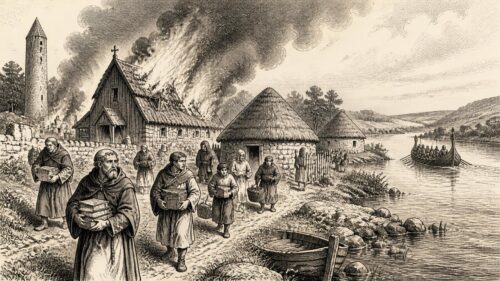
In 883, Les Mór (Lismore), an important Munster monastery on the Blackwater, was burned by an unnamed son of Ímar, illustrating the reach of Scandinavian dynastic violence beyond coastal centres. The annals provide no details of casualties, damage or motive, but the attack threatened a community dependent on religious prestige, land, stores and local support. Elsewhere, Eochucán of Ulaid was killed, Aengus, heir designate of the North, was beheaded, and rulers in Brega and Meath died or were slain. Deaths of bishops at Armagh and Lusca also mattered. These fragmentary records depict contested local kingship, interconnected Irish-Scandinavian politics, and insecurity.
Read Article
Archived: 28 October 2026
Abstract
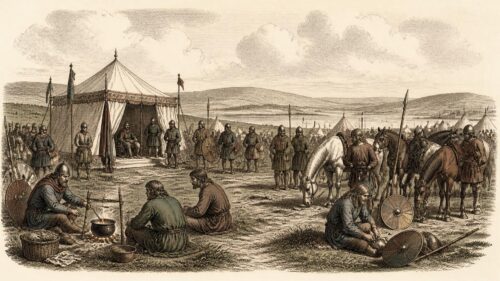
In 882, annalistic sources record Flann Sinna, king of Tara, asserting authority through campaigns, alliances and hostage-taking. With a mixed Irish and Scandinavian army, he entered northern Fochla, camped at Mag Eitir dí Glais, invaded Armagh and reportedly secured hostages from Cenél Conaill and Cenél nEógain. He also raided Munster and took hostages there. Elsewhere, the Conaille defeated the Ulaid, killing King Ainfíth and other nobles, while Scannlán of Dún Lethglaise was killed. Deaths included Connacht’s king Conchobor and several prominent churchmen. The records portray fragmented politics, where military power, ecclesiastical prestige and shifting alliances shaped rule across Ireland broadly.
Read Article
Archived: 28 October 2026
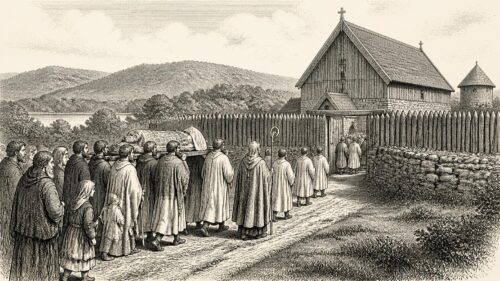
Abstract
In 881, the Annals of Inisfallen record the death of Aed of In tAilén, described as bishop and confessor of Ireland, though his church and byname remain uncertain. Corrected annalistic chronology also places Flann Sinna’s northern expedition in this year. Leading Irish and Scandinavian forces, he camped at Mag Eitir dí Glais, invaded Armagh, and received hostages from Cenél Conaill and Cenél nEógain, asserting overlordship through military pressure and negotiation. The evidence highlights churches as influential, vulnerable centres of learning and wealth, Scandinavian participation in politics, and the limits of medieval records, which reveal no securely dated crises or conditions.
Read Article
Archived: 28 October 2026
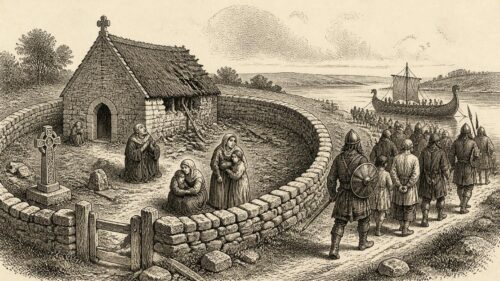
Abstract
In the annalistic sequence assigned to AD 880, Scandinavian raiders destroyed Cianán’s oratory at Duleek, County Meath, and carried away many people. The attack struck a wealthy, well-connected ecclesiastical community, demonstrating the continuing vulnerability of Irish churches despite growing Scandinavian settlement around Dublin. Bárid, a prominent Norse leader probably linked to Dublin and perhaps son of Ímar, died soon afterwards; annalists attributed his death to Cianán’s supernatural vengeance, though its circumstances remain uncertain. Occurring early in Flann Sinna’s reign, the raid illustrates limited royal control, Irish Sea power, captivity’s human cost, and the overlap of raiding, settlement, religion, and politics.
Read Article
Archived: 28 October 2026
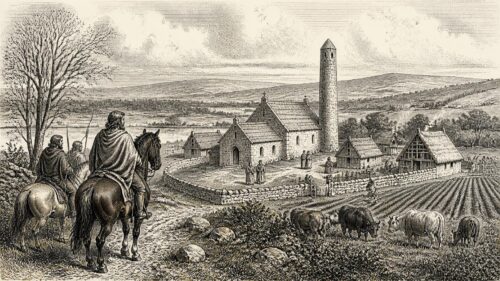
Abstract
In 879, Áed Findliath, northern Uí Néill ruler and king of Tara, died at Druim Inasclainn, modern Dromiskin. His death brought Murchad son of Máel Dúin to the northern kingship and Flann Sinna of Clann Cholmáin to Tara, reviving a northern-southern Uí Néill alternation. Annals also record deaths among regional chiefs and church leaders, exposing widespread succession uncertainties. Foreigners captured Armagh’s superior Máel Coba and lector Mochta, demonstrating ecclesiastical vulnerability amid Scandinavian maritime activity. Spring fodder scarcity, followed by autumn abundance, highlighted cattle’s economic importance. The year revealed decentralised politics, influential churches, local instability, and relationships renegotiated after royal change.
Read Article
Archived: 28 October 2026
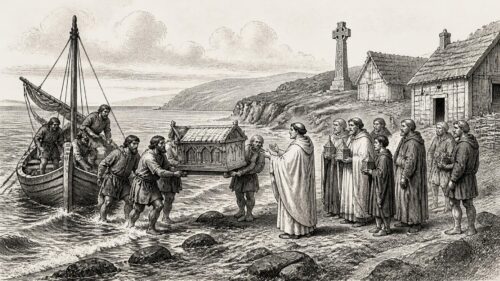
Abstract
In 878, whose annalistic dating requires caution, Ireland experienced local political instability, disrupted public ceremony, unusual weather reports and significant religious refuge. Gairbíth of Conaille and Cumuscach of Uí Chremthainn were killed in northern conflicts, while Congal of Ciarraige Luachra died in Munster. Tailtiu’s major fair was cancelled without stated justification, signalling a failure of collective order and lost opportunities for trade and negotiation. Annals recorded a great wind, lightning, supposed blood-rain, and lunar and solar eclipses in October. Most notably, Colum Cille’s shrine and relics reached Ireland, removed from danger posed by Scandinavian foreigners, affirming Columban resilience and continuity.
Read Article
Archived: 28 October 2026
Abstract
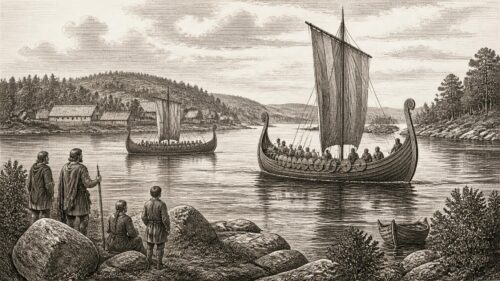
A Year of Flight and Rival FleetsIn 877, Ireland stood at the centre of a volatile Irish Sea world. The most striking notice for the year is not an Irish battle or royal assembly, but the arrival of an overseas king in flight: Rhodri son of Merfyn, ruler of the Britons, came to Ireland to escape the Dubgaill, or “dark foreigners”. The wording of the Irish annals is brief, but its implications are considerable. A king from Gwynedd and the wider Welsh political sphere could seek safety across the sea, while Scandinavian rivalries reached from Dublin and northern Ireland into
Read Article
Archived: 28 October 2026
Abstract
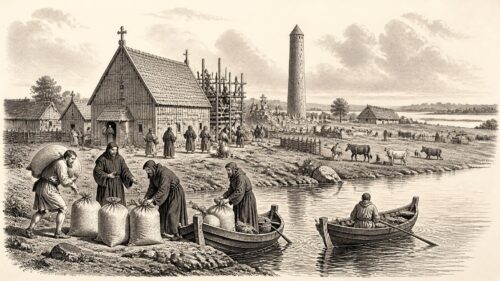
In 876, the Annals of Inisfallen record the deaths of Rechtabra son of Bran, king of Leinster, and Eógan, abbot of Clonmacnoise. Rechtabra’s death potentially unsettled Leinster’s contested kingship, where succession depended upon kinship, alliances and support rather than primogeniture. Eógan’s death affected a major church whose religious, economic and political influence extended across Ireland. Rural production, estate obligations and riverine communications nevertheless continued. Uncertain Annals of Ulster notices, conventionally placed in 877 but internally dated 876, describe Rhodri of Gwynedd’s flight to Ireland and Scandinavian conflict at Strangford Lough. Records portray institutional transition within a changing Irish Sea world.
Read Article
Archived: 28 October 2026
Abstract
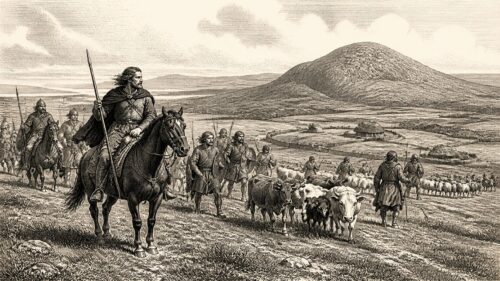
In 875, Muiredach son of Bran led Leinster’s army on a rapid destructive raid to Sliab Monduirn in the Armagh region, demonstrating provincial rivalry without proving a specific target. Annals also record deaths of prominent churchmen at Clonmacnoise, Kildare, Ferns, Tallaght, Lusk and Glendalough, whose offices combined religious leadership, learning, property and political connections. Across the Irish Sea, Picts suffered heavily against the Dubgaill, while Oistín, son of Dublin-associated Viking ruler Amlaíb, was killed. These fragmentary notices reveal interconnected warfare, ecclesiastical succession and maritime Scandinavian power, rather than a unified Ireland or detailed national narrative. The evidence cautions against invention.
Read Article
Archived: 28 October 2026
Abstract
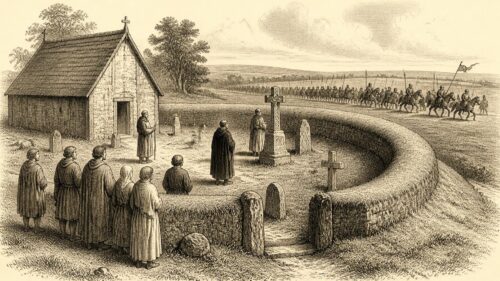
In 874, Féthgna, successor of Patrick and head of religion in Ireland, died after a long leadership of Armagh, highlighting that church’s political and spiritual authority. Áed Findliath, king of Tara, campaigned in Leinster, profaning Cell Ausili, probably Killashee, and burning other churches, demonstrating the vulnerability of sacred sites during royal coercion. Clerical deaths at Roscommon and Tamlacht emphasised the importance of bishops and scribes in administering wealthy, learned ecclesiastical communities. Foreign raiders plundered Cell Mór of Mag Enir. Against a changing Viking background following Ímar’s death, the year revealed Ireland’s interwoven military, religious, economic and intellectual pressures across society.
Read Article
Archived: 28 October 2026
Abstract
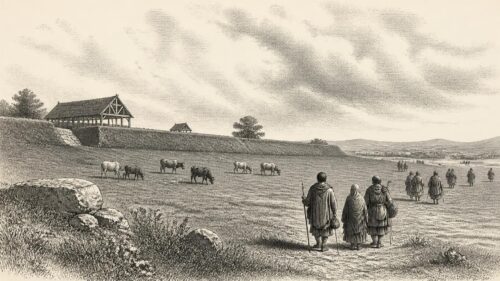
In 873, amid uncertain annalistic dating, Ireland experienced political change across local kingdoms and the Irish Sea world. Ímar, pre-eminent Norse ruler associated with Dublin, died, weakening but not ending Scandinavian influence; his dynasty remained important. Irish kings Dúnchad of Cashel and Cerball of Osraige raided Connacht, while Dublin forces plundered Munster. Lethlabar of Dál nAraide died, reshaping succession and rivalry in Ulaid. Several lesser rulers and church leaders also died. Most notably, Tailtiu’s great assembly failed to convene without adequate cause, apparently exposing Áed Findliath’s weakened royal authority. These events reveal resilient communities, enduring institutions, and fragmented, competitive power.
Read Article
Archived: 28 October 2026
Abstract
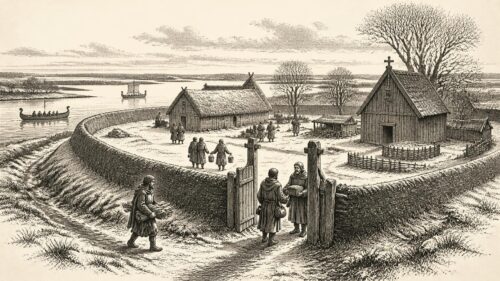
In 872, Irish annals record deaths, ecclesiastical transitions and an inland winter raid rather than major battles or assemblies. Cenn Fáelad, king of Cashel and abbot of Emly, died after illness, uniting royal and religious authority. Ferdomnach of Clonmacnoise, Gnia of Duleek, and several church leaders also died, highlighting monastic networks of learning, patronage and resources. Mugrón of Connacht and Máel Ruanaid of northern Uí Moccu Uais likewise died. Around 1 February, foreign rulers massacred or raided communities from Trí Maige and Trí Comainn to Slieve Bloom, demonstrating inland vulnerability. The year reveals plural, literate institutions exposed to Scandinavian-led violence.
Read Article
Archived: 28 October 2026
Abstract
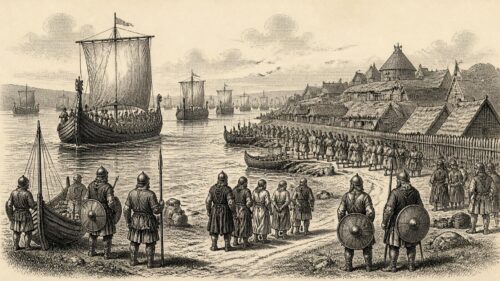
In 871, Amlaíb and Ímar returned to Dublin from Alba with an annalistically reported fleet of 200 ships and captives from Britain, demonstrating Scandinavian maritime power and forced human movement. Dún Sobairche, probably Dunseverick, was stormed in an unprecedented assault involving foreigners and Cenél nEógain, though its circumstances remain unclear. Cathalán, joint king of Ulaid, was deceitfully killed, while Ailill of Leinster died at Norse hands. Annals also recorded prominent ecclesiastical deaths, including the historian Cú Raí. These sparse, uneven records collectively depict regional political instability, enduring church networks, and Dublin’s growing role in Irish Sea warfare, commerce, and communication.
Read Article
Archived: 28 October 2026
Abstract
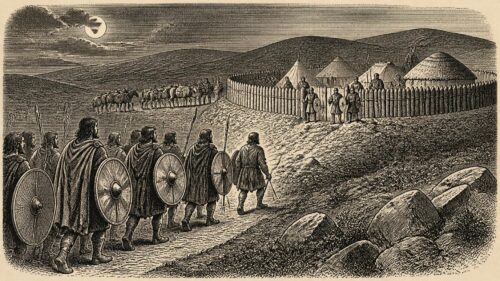
In 870, Áed Findliath, king of Tara, invaded Leinster from the Dublin region, allied with his brother-in-law Cerball of Osraige and Cennétig of Loíches. Leinster’s king Muiredach led resistance, attacking Cerball’s camp at Dún Bolg by night. Despite losses, including Cennétig’s son, the attackers retreated, leaving the wider struggle unresolved and no recorded tribute or hostages. Annals also record deaths of prominent abbots, bishops and anchorites, notably at Clonard and Kildare, illustrating ecclesiastical influence. Meanwhile Dublin’s Norse rulers Amlaíb and Ímar besieged and plundered Dumbarton Rock, demonstrating Ireland’s political and military connections across the Irish Sea during this eventful year.
Read Article
Archived: 28 October 2026
Abstract
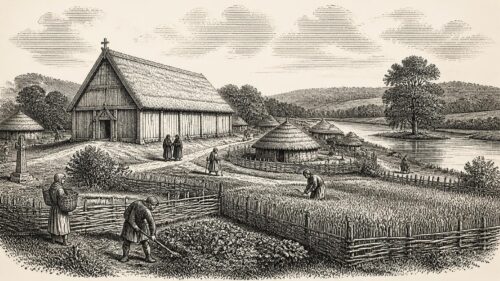
Ireland’s history for 869 is defined by chronological uncertainty. Annalistic material aligned with AD 869 is conventionally discussed under 870, requiring caution over events including Suairlech’s death at Clonard. Áed Findliath, king of Tara, was consolidating authority after his 868 victory over opponents from Brega, Leinster and Scandinavian groups. Ireland remained tense, with Leinster, Osraige and Dublin poised for conflict. Clonard, a major religious and political centre, faced the impending loss of its influential bishop-abbot. Violence, including Amlaíb’s assault on Armagh, exposed ecclesiastical vulnerability. The following year’s Leinster campaign illuminates pressures building, while Dublin’s Scandinavian power shaped alliances and rivalries.
Read Article
Archived: 28 October 2026
Abstract
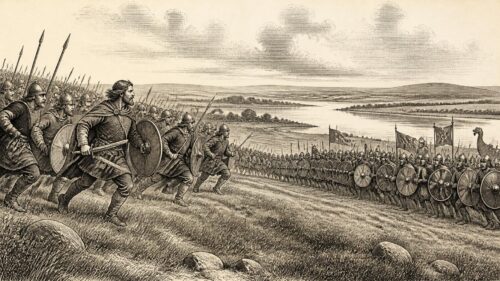
In 868, Áed Findliath, king of Tara, defeated a coalition of Brega, Leinster and Scandinavian fighters at Cell Ua nDaigri, probably near Killineer. Dated to 6 September by Chronicon Scotorum, the battle killed Flann of Brega and many allies, while Áed’s forces also suffered serious losses. It demonstrated both Tara’s contested authority and Vikings’ role as participants in Irish dynastic politics. Annals also recorded deaths of abbots and scribes, including leaders at Clonmacnoise, Glendalough and Tallaght, revealing monastic institutions’ importance. A water event in Sliab Cualann and a Martinmas windstorm completed a year marked by conflict, ecclesiastical change and uncertainty.
Read Article
Archived: 28 October 2026
Abstract
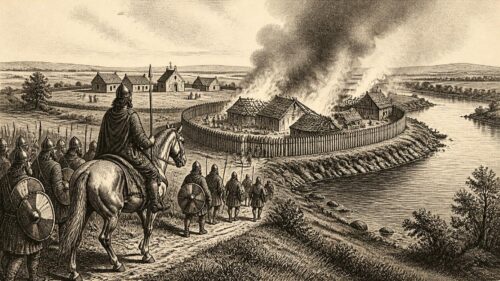
In 867, Cennétig mac Gaíthéne of Loígis and Máel Ciaráin son of Rónán burned Amlaíb’s fort at Clondalkin, near Viking Dublin, reportedly killing one hundred foreign leaders. The attack, recorded with chronological variation in Irish annals, followed or coincided with dynastic division among Dublin’s Scandinavian rulers after Auisle’s killing. It checked, but did not end, Viking power; Dublin remained active and any subsequent assault is uncertain. Clondalkin’s monastic setting illustrates competition for resources and communications. The year also saw Gaelic succession conflicts and clerical deaths, while churches, literacy, trade, craft production and maritime networks endured amid political fragmentation and warfare.
Read Article
Archived: 28 October 2026
Abstract
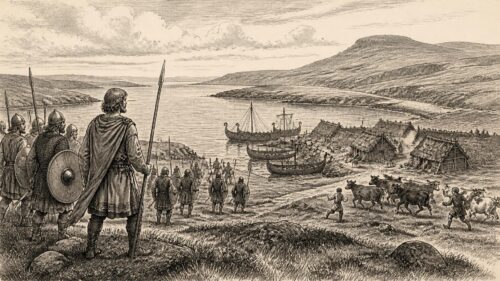
In 866, Áed Findliath, king of Tara, attacked Scandinavian longphuirt in Cenél nÉogain and Dál Araidi, defeated their forces at Lough Foyle, seized livestock and claimed 240 deaths. The campaign damaged northern maritime bases connected to wider Irish Sea networks, though its scope remains uncertain. Meanwhile, Dublin-associated rulers Amlaíb and Auisle raided Pictish Fortriu, taking hostages. In the west, jarl Tomrar plundered Clonfert, exposing monastic vulnerability despite later miraculous accounts of his death. Ecclesiastical notices underline church institutions’ importance. These events portray Ireland as a politically fragmented, interconnected maritime society, where warfare, trade, religious centres and agricultural resources shaped power.
Read Article
Archived: 28 October 2026
Abstract
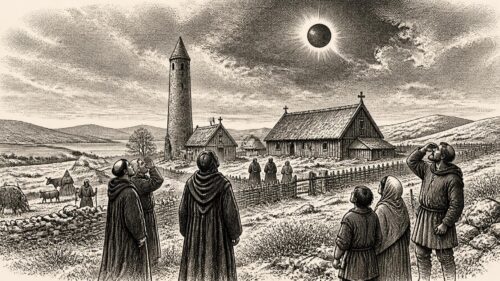
In 865 Irish annals recorded a solar eclipse on 1 January, confirmed by modern astronomy, and a lunar eclipse later that month, providing an unusually secure chronological anchor. Obituaries reveal ecclesiastical networks linking Kildare, Iona, Tallaght and Pictland: Cellach, abbot of Kildare and Iona, died among the Picts. Political instability appeared in the killing of Tadc, king of Uí Chennselaig, by his brothers and supporters, and the death of Tigernach of Loch Gabhair. Áed Findliath’s wider authority remained limited. Norse Dublin shaped the background, but Clondalkin’s burning is securely dated to 867, illustrating annalistic chronological problems within a fragmented polity.
Read Article
Archived: 28 October 2026
Abstract
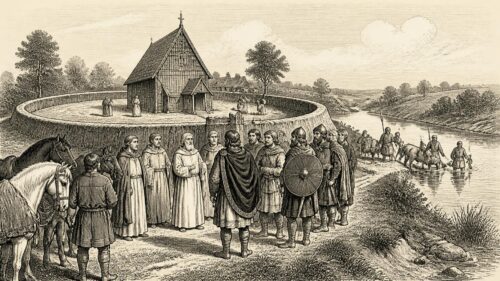
In 864, Ireland’s fragmented politics were marked by coercion, shifting alliances and Scandinavian involvement. Áed Findliath consolidated authority by blinding Lorcán of Mide, while Amlaíb of Dublin drowned Conchobor at Clonard, demonstrating foreign rulers’ influence in inland dynastic struggles. Áed and Flann of Brega defeated the Ulaid, whereas Cerball of Osraige pursued raids, devastation, cattle seizures and hostages across Leinster and Munster. Annals also record ecclesiastical deaths and appointments at Louth, Terryglass and Kildare, alongside a Clare king’s death. Differing annal dates and partisan later narratives require caution, but collectively portray interconnected regional powers, churches and communities vulnerable to warfare.
Read Article
Archived: 28 October 2026
Abstract
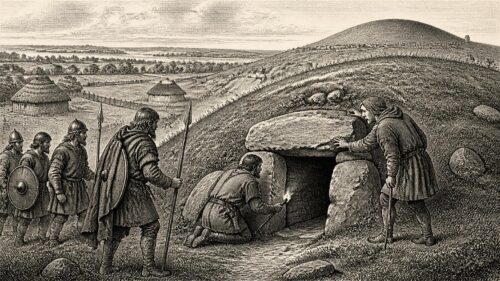
In 863, Scandinavian rulers Amlaíb, Ímar and Auisle, allied with Lorcán of Mide, plundered Flann son of Conaing’s Brega lands and searched named souterrains at Cnogba, Dubad and elsewhere. The unprecedented searches exposed underground refuges as stores or shelters within the contested Boyne landscape. The year also saw Norsemen kill Muirecán of Nás, reshaping Leinster politics, while Muiredach, prior of Armagh and king of the Airthir, died in dynastic violence. Later Fragmentary Annals report Cerball of Osraige defeating foreigners and recovering booty. Together, these notices portray shifting Irish-Scandinavian alliances, politically entangled churches, and insecurity reaching concealed spaces broadly across Ireland.
Read Article
Archived: 28 October 2026
Abstract
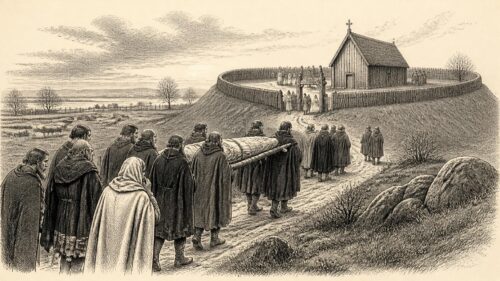
In 862 Máel Sechnaill mac Máele Ruanaid, Clann Cholmáin king of Mide and acclaimed king of all Ireland, died on 27 November after sixteen years, transferring Tara’s kingship to Áed Findliath of Cenél nÉogain. Earlier, Áed, Flann of Cianachta Brega and Scandinavian allies, including Amlaíb, raided Mide, exposing the limits of Máel Sechnaill’s negotiated supremacy. In Osraige, Cerball mac Dúnlainge and Cennétig defeated Rodolb’s Scandinavian fleet. Obituaries for churchmen and physician Máelodar attest religious and learned authority. Beneath dynastic conflict and maritime warfare, rural communities, church estates and agricultural production sustained Ireland’s competing kingdoms and their rulers throughout the year.
Read Article
Archived: 28 October 2026
Abstract
For Ireland, 861 is a year best approached through a small number of sharply focused annalistic notices rather than a continuous national narrative. The surviving records do not permit a day-by-day reconstruction, and their year-numbering sometimes differs between compilations. Yet several entries securely associated with this year illuminate the pressures shaping Irish political life: a change of ruler at Cashel, contention in the midlands involving Áed son of Niall and foreign allies, a victory claimed for the high king Máel Sechnaill, and the continued importance of royal assemblies. Together they show an island governed not by a single settled state,
Read Article
Archived: 28 October 2026
Abstract
In 860, Irish politics were shaped by warfare, alliance and contested authority. Cerball mac Dúnlainge of Osraige defeated raiders associated with Port Láirge at Achad mic Erclaige, probably Agha near Kilkenny, protecting inland routes and royal prestige. Máel Sechnaill mac Máele Ruanaid assembled a broad coalition for a northern campaign against Áed Findliath, but failed to secure lasting supremacy. Annalistic accounts, especially the Fragmentary Annals, combine historical evidence with pro-Cerball literary embellishment. Armagh’s church leadership mediated oaths and legitimised power, while Scandinavian groups remained political actors. Notices of deaths among rulers and scholars reveal interconnected secular, ecclesiastical and local communities.
Read Article
Archived: 29 October 2026
Abstract
In 859, Máel Sechnaill mac Máele Ruanaid, king of Tara, faced an invasion of Mide by Osraige's Cerball mac Dúnlainge allied with Scandinavian leaders Amlaíb and Ímar. A royal assembly at Ráith Áeda Meic Bric, probably Rahugh, negotiated peace under ecclesiastical witness. Cerball accepted dues to Patrick's community, and Osraige was reoriented from Munster towards Leth Cuinn, strengthening Máel Sechnaill while preserving Cerball's rule. Munster's king, Máel Gualae, guaranteed the settlement but was later killed by Scandinavians. Conflicting annalistic chronologies and narratives complicate details. The settlement demonstrated church-backed negotiation amid shifting Irish-Scandinavian alliances, yet failed to end warfare and instability.
Read Article
Archived: 29 October 2026
Abstract
In 858 Máel Sechnaill mac Máel Ruanaid, king of Tara, led a large coalition into Osraige and Munster after resistance to his overlordship and complaints about Cerball of Osraige’s tribute-taking. His forces penetrated Munster, defeated its interests at the unlocated Carn Lugdach, killed Déisi king Máel Cróin, and extracted hostages across the province. Cerball nevertheless raided Leinster and, allied with Scandinavian ruler Ímar, defeated opponents in Ara Tíre. Ecclesiastical and regional royal deaths reflected fragmented authority, while notices of Pictish and West Saxon kings reveal wider connections. A wet autumn damaged crops, compounding disruption from armies, raiding, requisitions and hostage-taking.
Read Article
Archived: 29 October 2026
Abstract
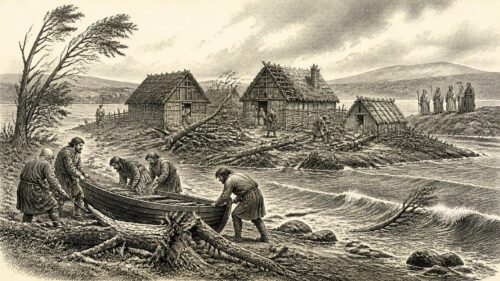
In 857, Ímar and Amlaíb routed Caitil Find and his Gall-Gaídil in Munster, demonstrating competition among Scandinavian-Gaelic forces rather than a simple Irish-Viking conflict. The annals provide no location, casualties or outcome for Caitil. The Annals of Inisfallen also record Búitíne’s fleet arriving in Ireland, without explaining its purpose. Matudán, king of Ulaid, died, possibly after entering clerical life, while Maengal of Fore and Siadal of Dísert Ciaráin also died. At Tailtiu, three people were killed by lightning, and a severe windstorm damaged trees and lake islands. These notices depict Ireland connected through maritime movement, regional power and monastic networks.
Read Article
Archived: 29 October 2026
Abstract
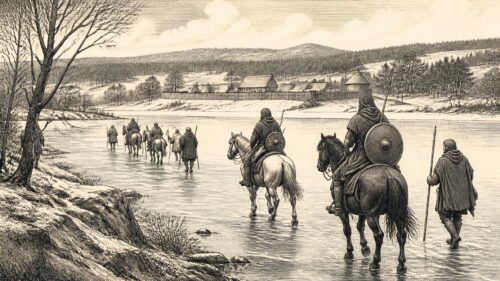
In 856, Ireland experienced severe frost, political coercion and dispersed conflict. Frozen lakes and rivers altered travel across the island. Máel Sechnaill mac Máele Ruanaid visited Cashel and took Munster hostages, demonstrating temporary dominance rather than permanent conquest. He also fought heathen forces with Gall-Goídil allies, reflecting fluid Irish Sea loyalties. Áed son of Niall routed Norse-Irish troops at Glenn Foichle. Norse violence struck ecclesiastical centres, including Lusk’s oratory and Slane’s bishop Sodomna, while Lismore and other churches recorded clerical deaths. Horm, a Scandinavian leader, was killed in Wales, underscoring the wider maritime political world. Annalistic dating remains chronologically uncertain.
Read Article





