Archived: 29 October 2026
Abstract
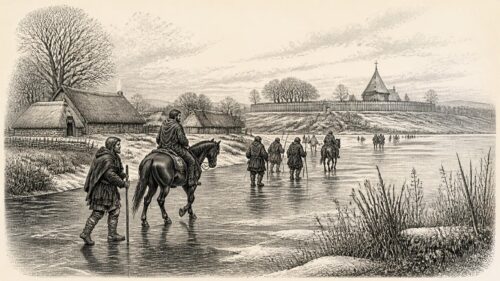
In 855, Ireland experienced an exceptional freeze: from late November to early January, lakes and rivers supported pedestrians and horses, disrupting transport, food supplies and rural life while opening unusual routes. A later annal links the frost to a deadly raid at Loch Cenn. Máel Sechnaill mac Máele Ruanaid took hostages at Cashel, asserting overlordship amid Munster’s divisions. He fought heathen forces with Norse-Irish allies, illustrating intertwined Irish and Scandinavian politics. Norsemen burned Lusca’s oratory, while Áed son of Niall routed Norse-Irish in the north. Death notices for Lismore and Lathrach Briúin clerics underline churches’ intellectual, economic and political roles.
Read Article
Archived: 29 October 2026
Abstract
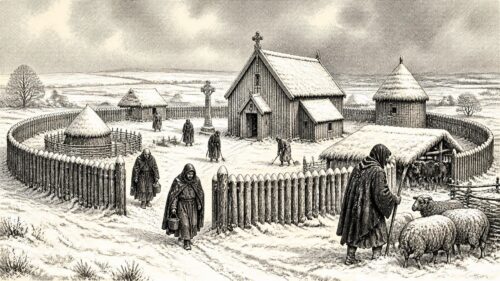
In 854, Irish annals recorded the death of Cathan, abbess of Kildare, highlighting the influence of major ecclesiastical communities and female leadership. Exceptional snow fell on 23 April, probably disrupting travel, livestock care and spring farming, though no famine was reported. Áed son of Niall raided Ulaid, killing prominent opponents and many others, while Fínnechta was treacherously killed and Muiredach of Ard Cianachta died. Abbots at Monasterboice, Achad Bó and Inis Cáín Dega were also commemorated, including one who drowned. These local events reveal an Ireland shaped by regional conflict, church continuity, hazardous travel and unusual weather, amid Scandinavian influence.
Read Article
Archived: 29 October 2026
Abstract
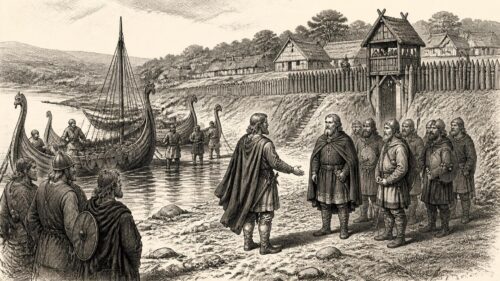
In 853, Amlaíb, son of the king of Laithlind, arrived in Ireland, where Scandinavian groups submitted to him and tribute was extracted from Irish communities. Although often linked with Norway, Laithlind’s location remains uncertain, and the annals do not establish a unified foreign conquest. The year also saw Norsemen kill Cathmal, co-king of Ulaid; Echtigern of south Leinster murdered in an internal struggle; and Áilgenán, king of Cashel, die. Local Munster successions and deaths of prominent clerics reflected Ireland’s multiple political and ecclesiastical centres. Annalistic dating varies, while evidence chiefly records elites, violence and exceptional events, leaving ordinary life obscure.
Read Article
Archived: 29 October 2026
Abstract
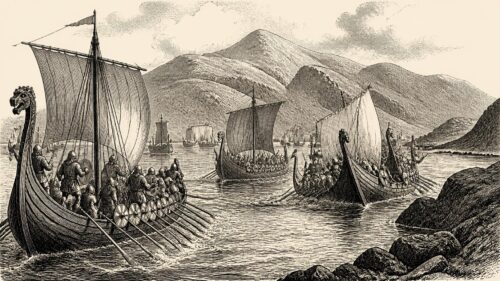
In 852, rival Viking fleets fought for three days at Snám Aignech, probably Carlingford Lough. Annals disagree over leaders, numbers and victors, but confirm a major struggle between competing overseas groups. Raiders from Linn Duachaill devastated Armagh, Ireland’s foremost Patrician church, while later tradition describes some local collaboration. That year also saw deaths of Armagh’s rival coarbs, Forannán and Diarmait, complicating recovery. Elsewhere, Cianachta defeated foreigners in eastern Brega. The evidence depicts contested coastal waters, vulnerable yet resilient ecclesiastical centres, local resistance, and fragmented Irish politics under Máel Sechnaill across a predominantly rural society, rather than outright conquest or collapse.
Read Article
Archived: 29 October 2026
Abstract
In 851, rival Viking groups contested Ireland’s eastern seaways. The Dubgenti attacked Dublin’s Finngenti, killing many and plundering their longphort, but suffered heavy losses when attacking the defended base at Linn Duachaill near Annagassan. These events reveal competition for ships, wealth, captives and strategic ports rather than a unified Viking campaign. Meanwhile, Máel Sechnaill mac Máele Ruanaid, king of Tara, convened rulers and churchmen at Armagh, strengthening northern alliances and authority. He also helped kill Cináed of Cianachta, a rebellious regional rival, despite guarantees. Foreign violence killed Eochu of Fir Rois. The year illustrates contested military, political and ecclesiastical power.
Read Article
Archived: 29 October 2026
Abstract
In 850, Irish annals record Cináed son of Conaing, king of Cianachta, rebelling against Máel Sechnaill, king of Tara, with overseas warriors described as foreigners. His forces devastated Uí Néill territories from the Shannon to the sea, attacking churches and secular lordships. They captured and destroyed Loch Gabair, identified with Lagore crannóg, a politically significant elite residence in southern Brega. Nearby oratories at Treóit and possibly Nuarrach were burned, causing casualties. Obituaries and local killings reveal ecclesiastical and regional politics. A notice of Loch Laig draining highlights environmental change. The year depicts rural Ireland under pressure, interconnected yet politically fragmented.
Read Article
Archived: 29 October 2026
Abstract
In annalistic year 849, a fleet of seven score ships arrived in Ireland to compel obedience from Scandinavian groups already established there, causing disruption. The evidence does not identify its leader, landing place or achievements. Meanwhile, Máel Sechnaill of Tara maintained an encampment at uncertain Crufaid, while regional rulers died or were killed, including Flannacán of Dál Araidi. Ecclesiastical notices recorded deaths, Robartach of Sláine's voluntary exile, and Indrechtach of Iona's arrival carrying Colum Cille's sacred objects. Máel Bresail, king of Mugdorna turned cleric, was killed by heathens. The annals depict overlapping political, religious and Scandinavian conflicts, not a campaign.
Read Article
Archived: 29 October 2026
Abstract
In 848, Irish annals recorded a cluster of victories over Viking forces, although later compilations and exaggerated casualty figures require caution. Máel Sechnaill of Tara defeated raiders at Forach, while Ólchobar of Munster and Lorcán of Leinster killed Tomrair, a prominent Scandinavian jarl and deputy, at Scíath Nechtain. Tigernach of Lagore and the Eóganacht of Cashel won further successes. Ólchobar also campaigned against the Viking fort at Cork, though its outcome is unknown. These actions demonstrated regional resistance, not national unity, amid disruption to communities and churches. Viking bases and activity endured, but victory enhanced Irish confidence and standing abroad.
Read Article
Archived: 29 October 2026
Abstract
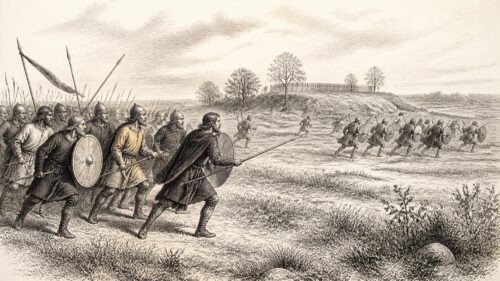
The surviving record for 847 CE begins not with a battle but with weather. The Annals of Ulster, whose annal labelled U848 corresponds to AD 847, notes a great snowfall on 1 February. It gives no duration, no depth and no tale of disaster; it is therefore unsafe to turn the notice into a ‘great winter’. Yet the entry is revealing. Snow sufficient to merit notice altered movement, grazing and work across a predominantly rural island, at a moment when armed forces, food supplies and communications already faced exceptional strain. In the same year Ireland saw a remarkable sequence of
Read Article
Archived: 29 October 2026
Abstract
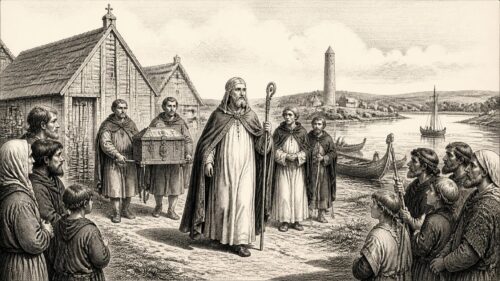
In 846, Ireland experienced dynastic change and Viking violence amid disputed annalistic dating. Niall Caille, northern Uí Néill king of Tara, drowned in the Callan near Armagh, enabling Máel Sechnaill of Clann Cholmáin to claim Tara, though opposition persisted. Scandinavian raiders defeated Connachtmen and plundered Baislec in Roscommon, demonstrating their growing ability to use waterways and strike inland. Forannán, abbot of Armagh, returned from Munster with Patrick’s relics after earlier abduction, reinforcing Armagh’s authority. Deaths of abbots and regional rulers reveal interconnected ecclesiastical and local political structures. The year showed Ireland divided yet resilient under intensified external pressure and uncertainty.
Read Article
Archived: 29 October 2026
Abstract
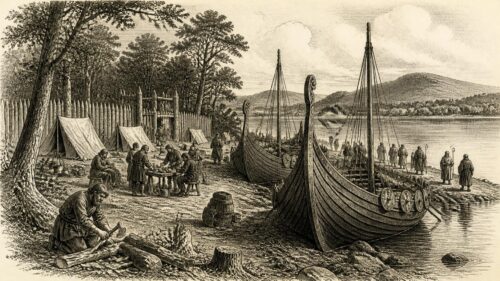
Conventionally dated to 845, Tuirgéis’s campaign demonstrated Viking access to Ireland’s inland waterways. From a defended base on Loch Rí, foreigners plundered Connacht and Mide, burning major Shannon monasteries including Clonmacnoise, Clonfert, Terryglass and Lorrha. Raids brought deaths, captives, stolen relics and disruption, though religious communities survived and rebuilt. Irish resistance remained regional: Niall son of Áed defeated foreigners in the north-west, while Máel Sechnaill strengthened his position in Mide amid dynastic conflict. Máel Sechnaill captured and drowned Tuirgéis at Loch Uair, checking rather than ending Scandinavian power. Dublin-based Vikings also continued inland operations, illustrating multiple independent active raiding groups.
Read Article
Archived: 29 October 2026
Abstract
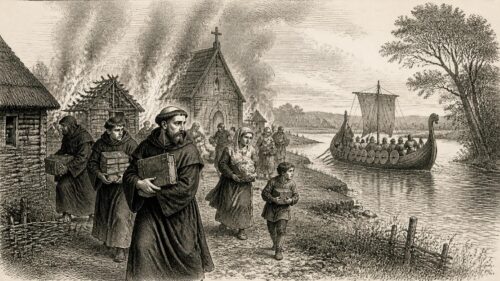
In 844, raiders described as heathens from Loch Rí burned Clonfert, an important Shannon ecclesiastical settlement associated with St Brendan. The campaign also killed Tolarc, lord of Fella, while his kinsman Finnechán escaped; Máel Mithig son of Cináed likewise died at heathen hands. Annals securely date Clonfert’s burning but do not justify a detailed unified narrative. Rónán, former abbot of Clonmacnoise, and Cairpre son of Cathal, king of Leinster, also died. These sparse records reveal inland waterborne raiding, vulnerability among churches and rulers, and Ireland’s interconnected yet politically fragmented communities. Clonfert survived, though the immediate destruction remains unknown in detail.
Read Article
Archived: 29 October 2026
Abstract
Conventionally dated to 843, despite annalistic chronological discrepancies, the year is chiefly recorded through deaths that affected Irish political, ecclesiastical and scholarly life. Máel Ruanaid son of Donnchad, king of strategically important Mide, died, leaving his dynasty poised for the later rise of his son Máel Sechnaill. Fergus son of Fothaid, king of Connacht, also died, creating uncertainty in another major province. Conglach, vice-abbot of Clonmacnoise, died after the monastery’s recent Viking plundering. Donnacán, an Irish scribe and anchorite, died in Italy, demonstrating enduring continental links. Viking pressure remained a background threat, although no battle is securely recorded for 843.
Read Article
Archived: 29 October 2026
Abstract
In 842, Ireland experienced political turnover, local conflict and Scandinavian pressure. Máel Ruanaid of Mide, Fergus of Connacht and Cairbre of south Leinster died, raising uncertain questions of succession within a fragmented system of dynasties and overlordship. Annals record killings among Irish groups. Foreigners associated with Loch Rí killed Tolorg, chief of Féli, while his kinsman Finnacán escaped, demonstrating raiders’ reach along the Shannon. The Four Masters date their burning of Clonfert to 842, although Ulster places it in 843. Clerical deaths and an Irish scribe’s death in Italy reveal ecclesiastical networks amid insecurity, while sources remain incomplete and problematic.
Read Article
Archived: 29 October 2026
Abstract
In 841, Irish annals recorded Scandinavian forces remaining on Lough Neagh and establishing fortified naval camps at Linn Dúachaill and Duiblinn. These longphuirt enabled repeated raids into the midlands, Leinster and Uí Néill territories, threatening churches, communities and regional economies while supporting provisioning and ship maintenance. Irish politics remained equally violent: Feidlimid of Munster marched to Carman in Leinster, but Niall Caille defeated him at Mag Óchtair, where Feidlimid's crozier was abandoned. Dynastic conflict included Diarmait's killing by Máel Sechnaill and Áed's treacherous murder. The year revealed an unconquered yet reoriented Ireland, facing persistent maritime power alongside rivalry among kings.
Read Article
Archived: 29 October 2026
Abstract
In 840, Viking raiders operating from Lough Neagh plundered Lugbad, capturing bishops, priests and scholars, demonstrating an inland capacity to hold prisoners. Armagh was also burned, although earliest evidence does not identify those responsible. Simultaneously, Feidlimid mac Crimthainn of Munster invaded the midlands and reached Tara, challenging Niall Caille’s northern Uí Néill authority; Niall countered in contested border districts. The year exposed links between waterways, churches, learning and royal power. Annalistic chronology remains uncertain, particularly regarding Viking camps at Dublin and Linn Duachaill, conventionally dated to 841. Nevertheless, 840 marked a transition towards sustained Viking operations and intensified interprovincial rivalry.
Read Article
Archived: 29 October 2026
Abstract
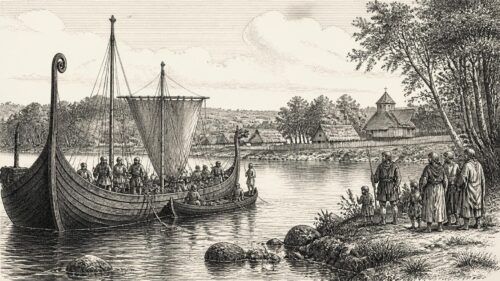
In 839 Scandinavian raiders operated from Lough Neagh, plundering northern Irish communities and churches, revealing new inland reach though no base can be proven. The annals record burnings at Ferns and Cork, demonstrating violence across Ireland. Ecclesiastical deaths and Armagh's disputed abbacy show churches remained centres of learning, property and political influence amid disruption. Killings of regional kings and church officials expose fragmented dynastic politics, while Máel Sechnaill's role at Durrow foreshadowed rising Clann Cholmáin power. Viking destruction of Fortriu in northern Britain heightened the wider maritime threat. Together, these records portray vulnerable yet active societies confronting mobile overseas raiders.
Read Article
Archived: 29 October 2026
Abstract
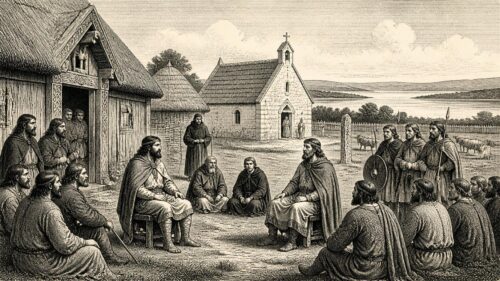
In 838, Feidlimid mac Crimthainn of Munster and Niall Caille of Tara confronted competing claims to supremacy at a royal conference remembered differently by the Annals of Ulster and Inisfallen. Ulster records an inconclusive meeting at Cloncurry; Inisfallen claims Niall submitted at Clonfert, making Feidlimid king of Ireland. Historians reject any settled all-Ireland outcome. Leinster’s succession was unsettled after King Bran’s death, while Connacht suffered a Viking defeat. Scandinavian raiders used Lough Neagh to plunder northern territories and churches, and burned Ferns and Cork. Annals also record clerical continuity and local killings, revealing an increasingly connected, contested, insecure Irish society.
Read Article
Archived: 29 October 2026
Abstract
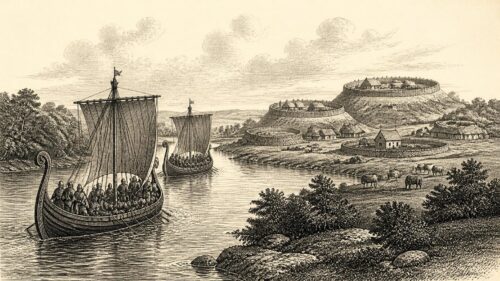
In 837, coordinated Scandinavian forces markedly intensified attacks on Ireland. Two fleets of sixty ships operated on the Boyne and Liffey, plundering Mag Life and Brega, including churches, forts and settlements. Brega's men defeated raiders at Deoninne and killed leader Saxolb, but the foreigners routed the Uí Néill at Inber na mBárc. Inland ecclesiastical centres, including Inis Cealtra and Lough Erne churches, suffered destruction or plunder. The heathens first took Áth Cliath, though no permanent Dublin settlement is proven before the 841 longphort. Political rivalries and provincial deaths compounded a fragmented response, making 837 an exceptional escalation in river-based raiding.
Read Article
Archived: 29 October 2026
Abstract
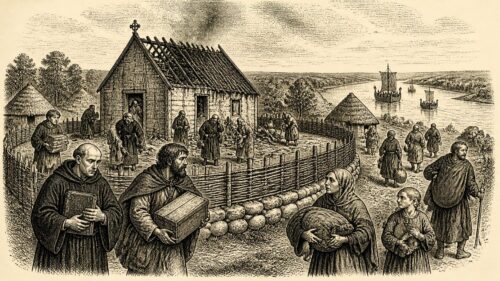
In 836, annalistic evidence depicts Ireland facing overlapping political, ecclesiastical, raiding and environmental pressures. Feidlimid mac Crimthainn of Munster seized and blockaded Kildare, apparently supporting Diarmait’s rival claim to Armagh against Abbot Forannán. Diarmait meanwhile carried Patrick’s law and insignia through Connacht, asserting Patrician authority. Scandinavian raiders plundered and partly burned Kildare, attacked southern Brega, devastated Connacht and defeated the northern Déisi. Connacht also suffered internal conflict at Drong. A remarkable abundance of nuts and acorns obstructed streams. Death notices for leading clerics reveal institutional continuity amid disruption, without suggesting permanent Viking settlement or Irish political unity at this time.
Read Article
Archived: 29 October 2026
Abstract
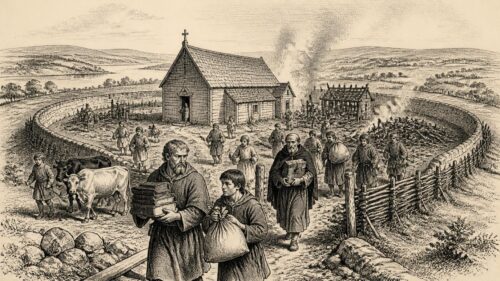
In annalistic 835, Ireland experienced intertwined political, ecclesiastical and military pressures. Niall Caille, northern Uí Néill ruler, installed Bran son of Fáelán in Leinster and devastated Mide, asserting northern influence against rival powers. Deaths of regional kings and churchmen reflected widespread instability. Foreign raiders plundered Ferns, Clonmore and Druim Ing, while burning Mungret and other western Munster churches, exposing wealthy religious centres. On 6 March, one third of Clonmacnoise burned, though its cause remains unknown. Forannán succeeded Diarmait as abbot of Armagh. Fragmentary annals reveal communities whose political authority, resources and security were vulnerable to violence throughout the island alike.
Read Article
Archived: 29 October 2026
Abstract
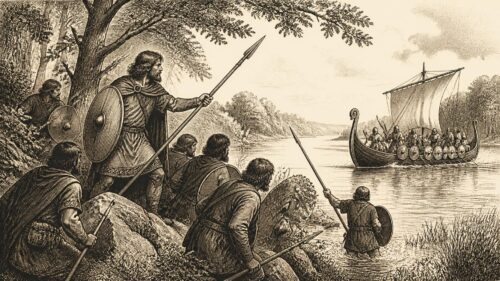
In 834, Irish annals recorded Scandinavian raids, local resistance, political killings, ecclesiastical deaths and a destructive fire, though their chronology and detail remain uncertain. Dúnadach son of Scannlán, king of Uí Fidgenti, defeated foreigners, demonstrating that Munster rulers could repel raiders. Glendalough, Slane and Finnabair Abha were plundered, illustrating the vulnerability of wealthy church communities across Ireland. Much of Clonmacnoise burned, but the cause is unknown. Deaths of Leinster’s king Cellach and other rulers altered local politics, while leading clerics died. Fragmentary records portray overlapping violence, instability and institutional continuity rather than a simple Viking conquest of Ireland in 834.
Read Article
Archived: 29 October 2026
Abstract
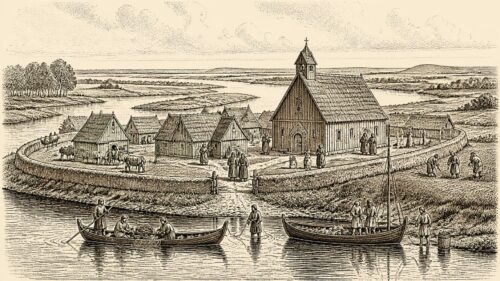
In 833, Ireland’s major churches functioned as religious centres, estates, communications hubs and political assets amid rivalry between provincial kings. Conchobar of Tara died, and Niall Caille of Cenél nÉogain succeeded him, defeating foreigners near Derry with Murchad. Feidlimid of Cashel attacked Clonmacnoise and Durrow, killing community members and burning church lands, probably targeting rival patronage networks rather than destroying churches. Kildare suffered bloodshed, while Lismore was burned amid uncertain local conflict. Viking raiders plundered Clondalkin, Druim Inasclainn and Loch Bricrenn, though Irish forces resisted. Deaths of Connacht and western Munster rulers further unsettled alliances, illustrating a connected, contested landscape.
Read Article
Archived: 29 October 2026
Abstract
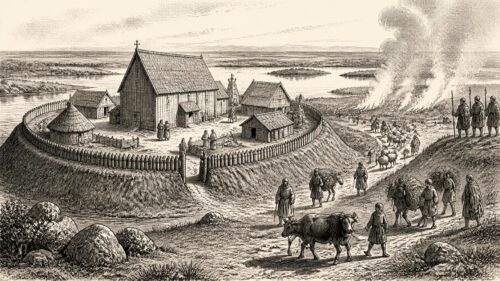
In 832, Irish annals recorded contested kingship, monastic violence and Scandinavian raids. Conchobor of Tara and Artrí of Armagh died, succeeded in Tara by Niall Caille, who defeated foreigners near Derry. Feidlimid of Cashel killed members of Clonmacnoise and Durrow and burned their protected territories, demonstrating that Irish rulers also threatened ecclesiastical centres. Cellach son of Bran attacked Kildare’s community. Foreign raiders plundered Clondalkin, burned Drumiskin and raided Loch Bricrenn, where Congalach died near ships. Regional rulers and churchmen also died, while Lismore and southern Munster suffered violence. The sources preserve consequences, but often omit motives, perpetrators and ordinary experience.
Read Article
Archived: 29 October 2026
Abstract
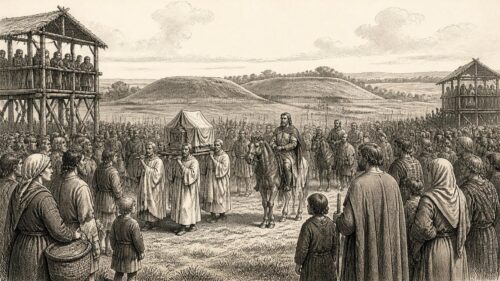
In annalistic 831, Ireland faced converging religious, political and maritime crises. At Tailtiu, dissension over Mac Cuilinn’s shrine and Patrick’s relics caused deaths during the royal fair. Scandinavian raiders defeated Armagh’s community at unidentified Aignig, taking many captives, and seized Conaille’s king Máel Brigte and his brother for removal by ship. Armagh also suffered royal coercion under Conchobor of Tara. Conchobor plundered Life, while Feidlimid of Cashel advanced against Brega with Munster and Leinster forces. Ecclesiastical deaths and relic movements underline church networks. The fragmented annals reveal contested authority, linking sacred prestige, warfare, captivity and seaborne travel across the island.
Read Article
Archived: 29 October 2026
Abstract
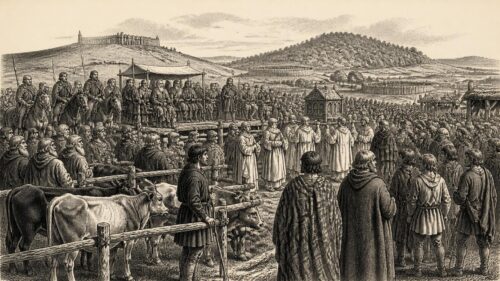
In 830, Ireland’s fragmented political and ecclesiastical powers collided at Tailtiu, where a dispute over Mac Cuilinn’s shrine and Patrick’s relics caused many deaths during the major assembly. Diarmait, abbot of Iona, returned with Columban sacred objects, illustrating ecclesiastical connections across the North Channel. Scandinavian raiders captured Conaille’s king and brother, and defeated Armagh’s community at Aignig. Armagh also suffered royal coercion from Conchobor of Tara. Feidlimid of Cashel campaigned into Meath, provoking Conchobor’s counter-raid. Death notices for Kildare, Movilla and Armagh leaders, alongside Óengus’s Martyrology, reveal enduring religious learning amid instability. The annalistic chronology itself remains uncertain and reconstructed.
Read Article
Archived: 29 October 2026
Abstract
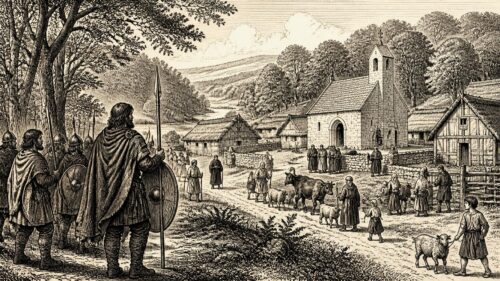
In 829, as dated by the Annals of Ulster despite its U830 heading, Feidlimid mac Crimthainn, king of Munster, projected power into the midlands and Connacht. He burned Foire, probably Fore in Westmeath, and inflicted a major defeat on the southern Uí Briúin, though details remain unknown. Munstermen also killed Folloman, brother of Conchobor mac Donnchada, king of Tara, intensifying their rivalry. Deaths of abbots, bishops and local kings underline the interdependence of ecclesiastical institutions, dynasties and regional politics. No Viking attack is recorded that year; Irish warfare itself threatened settlements and churches. The year showed expansionist pressure, without resolution.
Read Article
Archived: 29 October 2026
Abstract
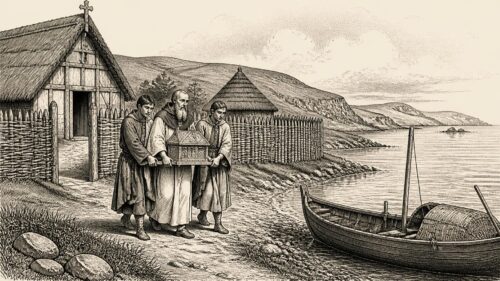
In 828, as calibrated in the Annals of Ulster rather than the displaced Viking material assigned to 827, Ireland’s record combines deaths, violence and religious travel. Muiredach of Leinster and several lesser kings died, alongside leading churchmen and an ecclesiastical steward, illustrating layered political and institutional authority. Conaing was treacherously killed, while Mide defeated Connacht in an otherwise unexplained battle. Diarmait, abbot of Iona, carried Colum Cille’s relics to Scotland, demonstrating maritime links within the Columban world, although no motive is recorded. The sparse evidence depicts a fragmented yet connected society shaped by rulership, warfare, churches, economy and sea routes.
Read Article
Archived: 29 October 2026
Abstract
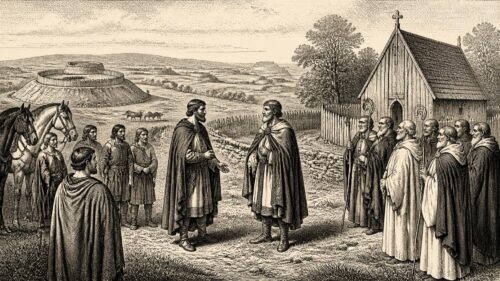
In 827, Irish annals recorded conflict, church politics, Viking raids and royal diplomacy across a divided island. Niall Caille of Cenél nÉogain defeated forces of Ulaid and Airgialla at Leth Cam near Armagh, strengthening his influence and supporting Éogan Mainistrech’s ecclesiastical position. Church leaders also died at Tallaght, Fir Rois and Cell Achaid. Viking raiders burned Lusk, ravaged eastern districts and defeated a Leinster encampment, killing Conall of the Fortuatha. Violence disrupted fairs at Tailtiu and Colmán. Finally, Munster’s Feidlimid and Tara’s Conchobor held a royal conference at Birr, acknowledging competing powers amid instability within Ireland’s political and religious life.
Read Article
Archived: 29 October 2026
Abstract
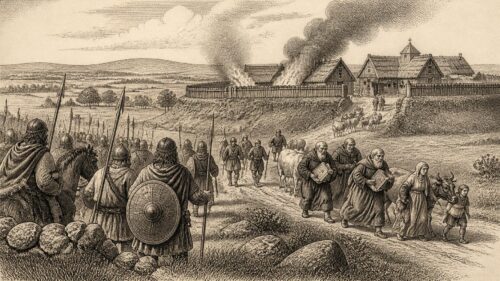
In 826, as conventionally dated despite annalistic discrepancy, Feidlimid mac Crimthainn, king of Munster, led an army into the midlands and burned Delbna Bethra, threatening Mide and estates linked to Clonmacnoise. His campaign challenged Conchobar mac Donnchada’s authority at Tara amid rivalry later followed by negotiations at Birr. Deaths of kings in Brega and Mide, and the deceitful killing and wounding of rulers in Tethba, exposed fractured local lordship. Ecclesiastical leaders died at Armagh, Clonard and Clonfert. A plague warning caused widespread fear, while Daire’s law was renewed in Connacht. No securely dated Viking raid is recorded in principal annals.
Read Article





