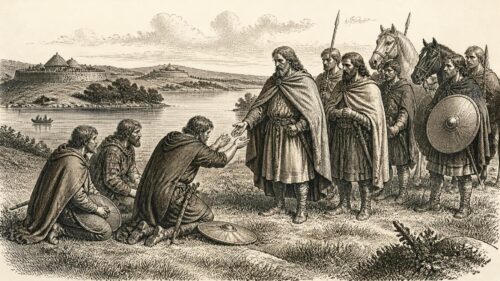
Archived: 27 October 2026
Abstract
In 915, Ireland experienced interconnected political, religious and military pressures rather than a decisive battle. Óengus, Flann Sinna’s designated heir, died, weakening the ageing king of Tara, while Domnall of Ailech died in penitence, confirming his half-brother Niall Glúndub’s northern prominence. Flann’s sons Donnchad and Conchobor rebelled in Mide, but Niall’s army secured their submission and a truce with Brega, enhancing his influence. Scandinavian forces based at Waterford Harbour plundered Munster churches and settlements. Deaths of leading clerics and the treacherous wounding of a local king reveal institutional and regional instability. The year foreshadowed later succession conflicts and Viking warfare.
Read Article
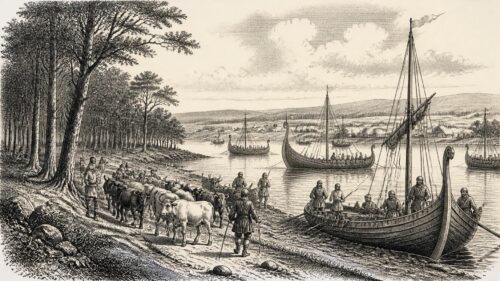
Archived: 27 October 2026
Abstract
In 914, a great Scandinavian fleet entered Waterford harbour, raided northern Osraige, and inaugurated a renewed phase of Viking power in Ireland. The sheltered waterways offered access to south-eastern resources, while wider Irish Sea rivalries linked the newcomers to maritime politics. Meanwhile, Niall of Ailech defeated Ulaid forces, made peace with Áed of Ulaid, then suffered heavy losses when Mide men ambushed his foragers. Flann Sinna campaigned amid accusations of church profanation. Flaithbertach became king of Cashel and Eochu abbot of Emly. These events showed enduring Irish rivalries, institutions, and negotiated authority alongside Waterford's growing strategic importance in subsequent decades.
Read Article
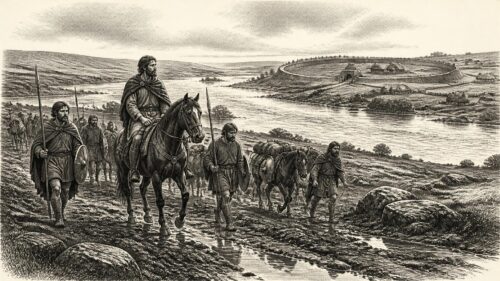
Archived: 27 October 2026
Abstract
In the annalistic year conventionally called 913, Niall son of Áed, king of Ailech, campaigned in north Connacht, routing the Uí Amalgada and men of Umall, killing or capturing many. Elsewhere, Donnchad and Máel Mithig defeated forces from southern Brega and Leinster, while Congalach of Conaille Muirthemne was killed by his brother after attacking a church household. Vikings defeated a new Ulaid fleet off England, with Irish losses. Churchman Máel Brigte travelled to Munster to ransom a Welsh pilgrim. Death notices recorded clerics, nobles and a chief poet. Annals called the year dark and rainy, reflecting an interconnected, fractured island.
Read Article
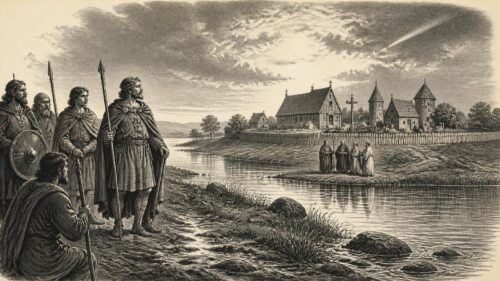
Archived: 27 October 2026
Abstract
In 912, Irish annals centre on Cernachán son of Duiligén, who removed a captive from Armagh’s sanctuary and who was then killed at Loch Cerr. Niall son of Áed, king of Ailech, drowned Cernachán there, asserting Patrick’s church protection and northern Uí Néill authority. The episode reveals sanctuary, kinship and violence within fragmented kingship. Nearby notices record Niall’s campaigning, conflict between Brega and Leinster, clerical deaths and an accidental fire at Armagh. Annals also describe wet, dark weather and an appearance of Halley’s Comet. Maritime entries show Ulaid fleets, Welsh captives, ransom networks and Scandinavian activity across the Irish Sea.
Read Article
Archived: 27 October 2026
Abstract
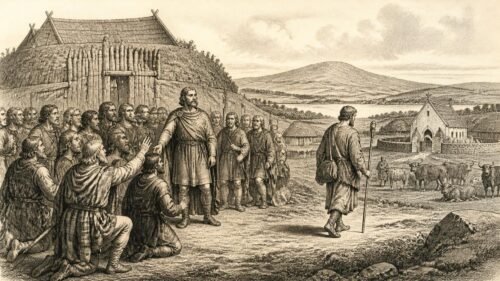
In 911 Domnall, son of Áed Findliath, relinquished the kingship of Ailech by adopting the pilgrim’s staff, a religious renunciation, and his brother Niall succeeded him. Annals of Inisfallen, Chronicon Scotorum and Ulster support the succession, although dating conventions preclude fuller detail. The transfer preserved Cenél nÉogain control of a major northern power, whose authority relied on clientage, tribute, military service and ecclesiastical connections. Domnall died in penitence in 915. Ireland remained politically fragmented under Flann Sinna of Tara; Niall was commander. Records also note a Leinster heir’s death and a phenomenon, while communities sustained networks through agriculture and obligations.
Read Article
Archived: 27 October 2026
Abstract
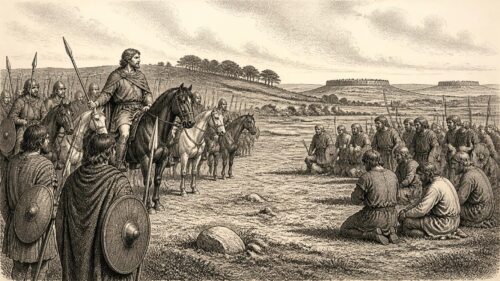
The securely dated core of 910 is not a Viking landing or a famous royal death, but a hard-fought assertion of power in Ireland’s central and western midlands. Flann Sinna, king of Tara and leading ruler of the southern Uí Néill, defeated the men of Bréifne with the help of his sons. The encounter, recorded in the Annals of Ulster and more fully in Chronicon Scotorum, cost the life of Flann son of Tigernán, king of Bréifne, as well as other nobles. It was a severe reverse for a kingdom situated on Mide’s north-western approaches, and a reminder that Flann’s
Read Article
Archived: 27 October 2026
Abstract
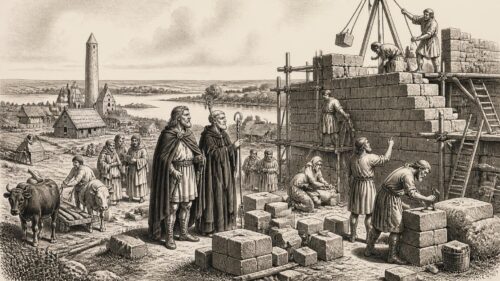
In 909, Flann Sinna, king of Tara, and Colmán Conaillech sponsored a stone church and sacristy at Clonmacnoise, whose surviving north wall attests early Irish monumental masonry. Situated beside the Shannon, the foundation served a populous religious and lay settlement while displaying royal power, ecclesiastical wealth and political connections. The nearby Cross of the Scriptures similarly linked Christian teaching with patronal commemoration. Following Flann’s victory at Belach Mugna in 908, his ally and son-in-law Cerball of Leinster died, prompting dynastic change. Annals also note regional rulers’ and churchmen’s deaths, cattle disease, and killings in Brega. Some battles remain insecurely dated.
Read Article
Archived: 28 October 2026
Abstract
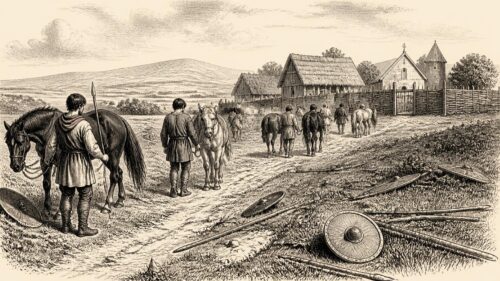
On 13 September 908, Munster’s king-bishop Cormac mac Cuilennáin was defeated and killed at Belach Mugna, or Mag Ailbe, by forces led by Flann Sinna of Tara, Cerball of Leinster and Cathal of Connacht. The battle ended Munster’s expansion, killing allied rulers and ecclesiastical leaders, including Cellach of Osraige, and strengthened Flann’s influence without unifying Ireland. Cormac’s reputation as scholar, scribe, bishop and anchorite illustrates overlapping royal and clerical authority. Annals record northern aggression, church deaths and uncertain reports, revealing rivalry, institutional Christianity and Irish Sea connections. Sources caution against treating later narratives, casualty totals or Viking involvement as certain.
Read Article
Archived: 28 October 2026
Abstract
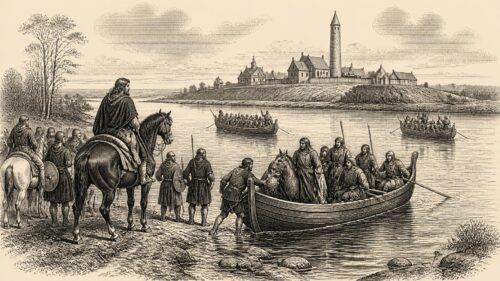
In 907, Cormac mac Cuilennáin, king-bishop of Cashel, and Flaithbertach mac Inmainén led Munster forces through the midlands, challenging Flann Sinna and Uí Néill influence. Annals record fighting at Mag Léna, the death of Máel Craíbe of Cenél Fiachrach, Connacht hostages, and fleet-borne plundering around Lough Ree. Their Christmas campaign reached Uí Néill territories, Mag Aí and Clonmacnoise, requiring eighty ferryings, an uncertain phrase indicating arduous transport. These expeditions demonstrated Munster’s mobile, alliance-based power without creating unified rule. Cét became king of Corcu Modruad locally. Mortality is noted cautiously in Ulster’s annals; Cormac’s defeat came the following year in 908.
Read Article
Archived: 28 October 2026
Abstract
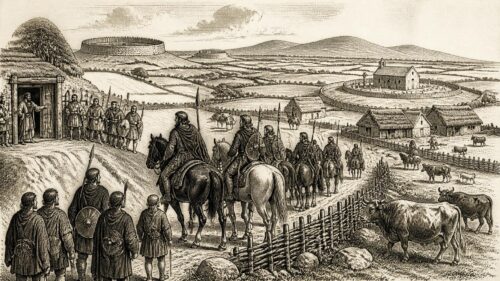
In 906 Flann Sinna, king of Tara, led a major campaign into Munster, apparently with Cerball of Leinster, ravaging territory described as stretching from Gabrán to Limerick. Annalistic evidence confirms the expedition but provides no precise route, battles, captures or settlement. The raid demonstrated Tara’s capacity to project force, while exposing the contested nature of Irish overlordship. Munster, led by Cormac of Cashel, remained powerful and retaliated in 907; conflict culminated in Cormac’s defeat and death in 908. Deaths of northern rulers, Ciarmac of Uí Fhidgeinte, and Bangor’s abbot Indrechtach also marked the year, illustrating intertwined political and ecclesiastical change.
Read Article
Archived: 28 October 2026
Abstract
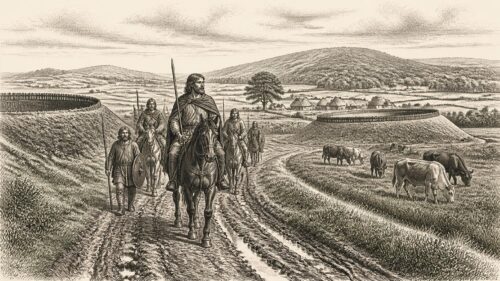
In 905, the Annals of Ulster record Flann Sinna, king of Tara, leading an expedition into strategically important Osraige, amid rivalry with Munster and instability within its ruling dynasty. The source does not specify fighting or outcomes, but the march demonstrated royal pressure in a region linking Leinster and Munster. Máel Ciaráin, bishop of Lann Léire, and Lachtnán, abbot of Ferna, died, highlighting ecclesiastical succession and local power. In the north, Cenél nÉogain prevented battle between Domnall and Niall, sons of Áed Findliath. These sparse notices reveal interconnected kingship, church institutions, rural resources, diplomacy, and tensions preceding wider conflict soon.
Read Article
Archived: 28 October 2026
Abstract
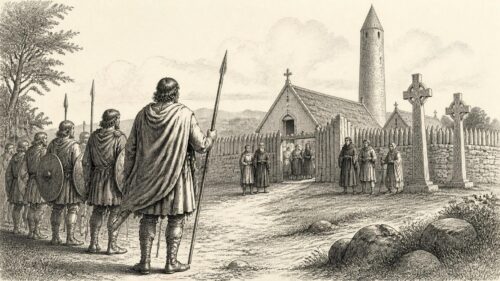
In 904, Flann Sinna, king of Tara, violently confronted his adult son Donnchad at Kells, where the Annals of Ulster record the profanation of the sacred site and the beheading of many men near its oratory. The episode, imperfectly dated, reveals dynastic conflict overriding sanctuary. Deaths of the leaders of Clonmacnoise, Glendalough and Emly marked transitions within influential ecclesiastical centres. Beyond Ireland, Ímar, grandson of Ímar, was killed by men of Foirtriu, reflecting instability after Dublin’s 902 expulsion of Scandinavian rulers. Later attribution of Clonmacnoise’s stone church to 904 is unreliable; evidence dates it to 909 rather than that year.
Read Article
Archived: 28 October 2026
Abstract
In 903, Irish annals recorded political and ecclesiastical transitions rather than a major campaign. Máel Finnia of Brega, recently associated with Dublin’s Scandinavian expulsion, died and received praise emphasising piety, generosity and martial authority. At Treóit near Tara, Máel Mithig and Áengus committed an unnamed killing at Flann Sinna’s instigation, showing royal influence exercised through kinship and local allies. Deaths among rulers in Laíges, Tuirbe and Uí Cheinnselaig indicated regional succession pressures. Senior churchmen also died, underlining monasteries’ administrative and political importance. Divergent annals require chronological caution. The year reveals power resting on fragile relationships between dynasties, churches and communities.
Read Article
Archived: 28 October 2026
Abstract
In 902, forces led by Cerball of Leinster and Máel Finnia of Brega expelled Dublin’s Scandinavian rulers from Áth Cliath, ending the city’s phase as a fortified naval and commercial base. Annals describe abandoned ships and wounded fugitives, but do not permit reconstruction of battle details or prove every Scandinavian inhabitant left Ireland. Archaeology indicates a diverse settlement of warriors, traders, craftspeople and families, while residual occupation complicates claims of complete abandonment. Elsewhere, Finnguine of Cashel was killed, enabling Cormac’s accession, and ecclesiastical leadership changed at Lathrach Briúin. The expulsion transformed regional power without ending Scandinavian influence or Dublin’s restoration.
Read Article
Archived: 28 October 2026
Abstract
In 901, Máel Ruanaid, designated heir of Ireland and son of high king Flann Sinna, was burned to death with companions by the Luigne, exposing the insecurity of succession and the reach of local rivalries. Among the victims were a neighbouring king and an ecclesiastical superior, illustrating intertwined secular and religious power. Annalistic dating remains uncertain, particularly for Cormac son of Cuilennán's accession as bishop-king of Cashel, generally placed in 901–902. Notices of abbots' deaths show monasteries' regional importance. The article cautions against assigning Dublin's Viking expulsion, famine, or other undocumented events securely to 901, despite gaps in surviving evidence.
Read Article
Archived: 28 October 2026
Abstract
In 900, Irish annals recorded environmental strain, political deaths, ecclesiastical life and raiding across a fragmented island. A rainy year and scarcity among cattle, with related references to bread shortage, exposed dependence on pastoral and arable production, though they do not prove famine. Tadc son of Conchobor, overking of the three Connachta, died after penitential renunciation associated with Ciarán’s Dun Cow; Mac Étig of Dál Araidi also died. Scandinavian raiders plundered Kildare, a wealthy sacred centre. Deaths of prominent churchmen and an Alban king further reveal Irish Sea connections, while Clonmacnoise’s prestige linked lordship, learning and religious authority in Ireland.
Read Article
Archived: 28 October 2026
Abstract
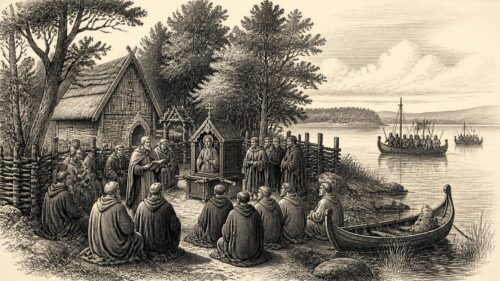
In 899, Chronicon Scotorum recorded a rainy year and bread shortage, alongside political and ecclesiastical disruption in central Ireland. Connacht raiders entered western Mide, profaned Inis Aingin on Lough Ree during a synod attended by Cairbre Crom, bishop of Clonmacnoise, and Ciarán’s shrine, and killed one unnamed man. The men of western Mide defeated the raiders at Áth Luain the same day, leaving unspecified casualties. The annals also note Argadán, abbot of Corcach’s death. These events reveal food insecurity, strategic waterways, regional warfare and church authority as interwoven features of early medieval Irish society. Scholars date these events to 899.
Read Article
Archived: 28 October 2026
Abstract
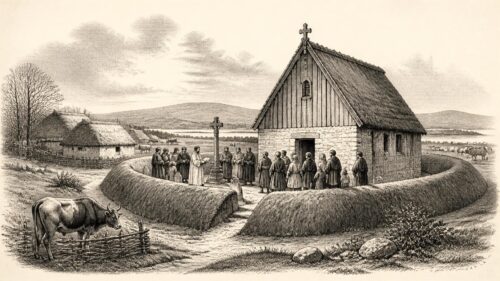
In 898, annalistic records portray Ireland as a landscape of vulnerable regional kingships and influential churches. Aidíth son of Laigne, king of Ulaid, was killed by his associates, probably amid intensified rivalry after military defeat, although motives and successor remain unknown. Cairpre, superior of Lann Léire at Dunleer, died, marking transition within a powerful ecclesiastical community. A reported shower of blood at Ard Cianachta was recorded as an extraordinary, possibly portentous phenomenon. In Corcu Bascinn, west Clare, King Flann son of Cathrannach died and his brother Lennán succeeded, illustrating dynastic continuity. Divergent annalistic chronologies require caution in dating these events.
Read Article
Archived: 28 October 2026
Abstract
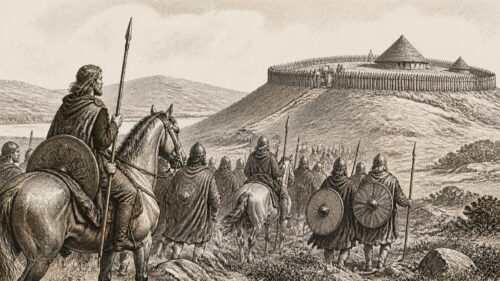
In annalistic 897, Máel Finnia of Brega defeated Ulaid and Dál nAraidi forces at Rath Cró, killing two kings and wounding Aidíth of Ulaid. Flann Sinna of Tara campaigned in Connacht, extracting pledges that demonstrated contested high-kingship. Uathmarán of Uí Fhailgi was killed by his own people, while Cormac of Mothail gained Déisi kingship after killing Máel Bennachta. Cathasach, tanist-abbot of Armagh, died. Aidíth was later murdered by associates. Dublin remained Scandinavian in 897; its expulsion belonged to 902. The sources reveal regional warfare, unstable succession and church politics, but cannot support broader claims about ordinary life or environmental conditions.
Read Article
Archived: 28 October 2026
Abstract
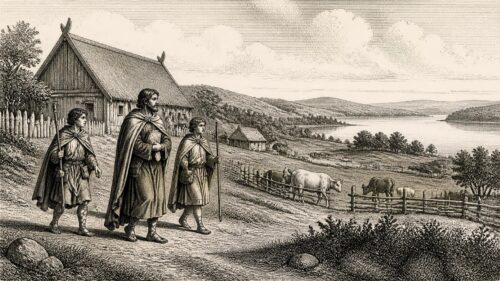
In the annalistic year conventionally rendered 896, Ireland experienced interconnected regional crises rather than a single national conflict. Flann son of Lonán, acclaimed as Ireland’s chief poet, was killed by the Uí Fhothaid in the Déisi. Norse leaders Sitriuc and Amlaíb, linked to Ímar’s dynasty, died in separate violence, revealing Scandinavian divisions and resistance by coastal peoples. Máel Achaid, Clonmacnoise’s designated successor, was killed amid retaliation involving Delbna Bethra, while senior clerics died peacefully. Brega, Ulaid, Osraige and Munster saw killings or rivalry; Cenn Gégáin assumed Cashel’s kingship. Sparse annals show cultural, ecclesiastical and political authority intertwined across fragmented lordships.
Read Article
Archived: 28 October 2026
Abstract
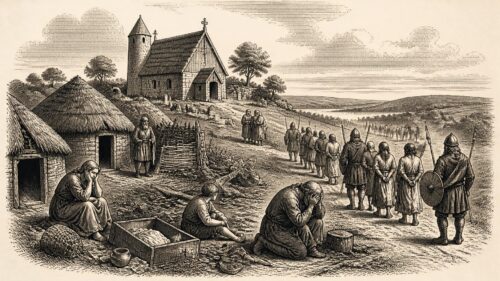
In 895, during the year, according to annalistic chronology, Dublin raiders led by Glún Iarainn plundered Armagh, reportedly carrying off 710 captives and damaging its church. The attack exposed the vulnerability of a major ecclesiastical and political centre. Elsewhere, Dub Lachtna of Caisel and churchman Máel Petair died; Cellach, Brega’s leading heir, was treacherously killed; and Muiredach of Ulaid fell in regional conflict. Heavy snowfall and great scarcity disrupted subsistence, likely worsening hardship without proving direct causes for violence. These fragmented records portray Ireland as interconnected kingdoms and churches, where sacred wealth, political succession, and ordinary survival remained precariously entwined.
Read Article
Archived: 28 October 2026
Abstract
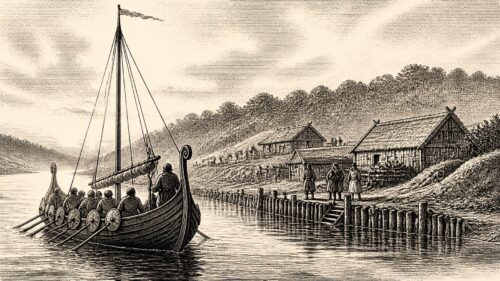
In 894, Irish annals record significant political and ecclesiastical developments. An unnamed son of Ímar returned to Ireland after dissension among Scandinavians at Dublin, although neither his aims nor success is known. Diarmait son of Cerball assumed kingship of Osraige, restoring dynastic rule in a strategic region between Munster and Leinster. Deaths of ecclesiastical stewards and abbots, including officers of Patrick’s community, Clonmacnoise and Lismore, underline monastic institutions’ temporal authority. Later annals preserve traditions concerning fairs, warfare and church profanation, but their chronology is uncertain. The evidence depicts fragmented Ireland shaped by regional rivalries, church power and Irish Sea mobility.
Read Article
Archived: 28 October 2026
Abstract
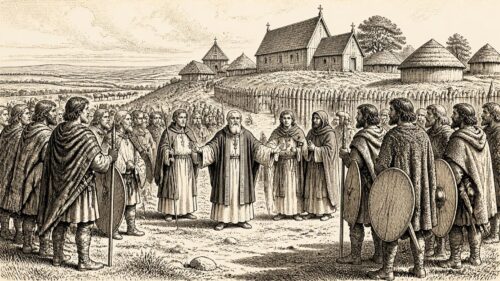
In 893, surviving annals depict Ireland as a landscape of ecclesiastical, dynastic and Scandinavian power. Mochta, bishop, anchorite and scribe of Armagh, died, emphasising the church’s learned authority. At Whitsun, Cenél nEógain and Ulaid forces fought at Armagh; Máel Brigte imposed settlement under Patrick’s honour through compensation, hostages and executions. Dublin’s Scandinavian leadership split between a son of Ímar and the jarl Sigfrith, prompting departures but not ending Viking activity. Congalach, heir designate of Brega, also died, exposing uncertain succession. These fragmentary records reveal sacred centres enforcing political claims amid interconnected Irish Sea conflict and the burdens borne by communities.
Read Article
Archived: 28 October 2026
Abstract
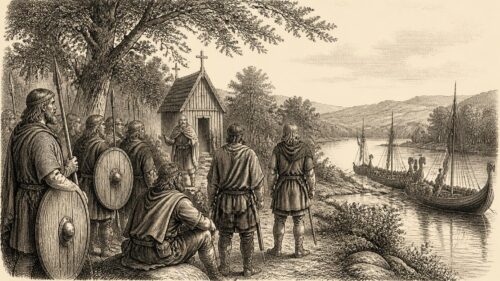
In 892, Riaccán son of Dúngal, of Osraige’s ruling dynasty, defeated Scandinavian forces associated with Waterford, Wexford and St Mullins, demonstrating local resistance along vital river routes. The annals’ reported two hundred heads signal a major victory but not a precise casualty total. Ireland remained politically fragmented under Flann Sinna’s loose overkingship; Tigernán of Bréifne also died. Obituaries for Máel Brigte of Clonmacnoise and Máel Corgais of Lorrha underline churches’ religious, economic and political importance. On 11 November, the Martinmas storm destroyed trees, houses and oratories. These notices portray a society dependent on vulnerable waterways, lordships, monasteries and rural resources.
Read Article
Archived: 28 October 2026
Abstract
In 891, Irish annals record three modest yet revealing events: the death of Gormán son of Mugrón, king of Glennamain; the death of Flann mac Máel Dúin, abbot of Iona; and Máel Petair son of Cúán’s acquisition of Clonfert. Variant annalistic naming of Iona’s abbot illustrates the uncertainties of transmitted chronology, though scholars generally identify Faelán and Flann as one man. Iona remained an active Columban centre despite earlier Scandinavian raids, while authority was gradually shifting towards Irish houses such as Kells. Clonfert’s succession reflected ecclesiastical control of land, revenues and patronage. Gormán’s death demonstrates Ireland’s fragmented local kingship clearly.
Read Article
Archived: 28 October 2026
Abstract
In 890, Scandinavian raiders, described in the annals as Gaill, plundered the ecclesiastical centres of Ardbraccan, Donaghpatrick, Dulane and Glendalough. Although the record supplies few details, the attacks exposed the vulnerability of wealthy, politically connected monasteries in Meath, Leinster and the Wicklow uplands. Probably operating within Dublin’s sphere, the raiders exploited river, coastal and overland routes amid shifting Irish-Scandinavian alliances. The raid occurred during Flann Sinna’s contested kingship and demonstrated limits to Tara’s influence. Plundering disrupted religious, economic and social life without proving wholesale destruction. Further raids followed in 891, while Dublin’s Scandinavian settlement was expelled in 902 by allies.
Read Article
Archived: 28 October 2026
Abstract
In 889, unevenly dated annals record political strain across Ireland. Domnall, son of Áed Findliath, led northern Uí Néill forces and a foreign contingent against the southern Uí Néill, though no battle or outcome is described. The royal assembly at Tailtiu was not held, signalling impaired authority in the midlands. Dub Lachtna became king of Cashel and Tadc king of Connacht, while Tuadcar, bishop of Clonmacnoise, died. These notices demonstrate contested power, fragile public institutions and significant succession, but do not establish a coordinated crisis or provide evidence for wider conditions such as famine, weather, or economic disruption in Ireland.
Read Article
Archived: 28 October 2026
Abstract
In 888, annalistic evidence records a major setback for Flann Sinna, king of Tara, when Dublin-centred foreigners defeated his coalition at the Battle of the Pilgrim. The deaths of Connacht’s king Áed and prominent churchmen exposed the breadth and fragility of Flann’s alliances. Meanwhile, Norse king Sigfrith was killed by a kinsman, and Cerball of Osraige died, altering regional politics. Northern Uí Néill forces campaigned against the south, while Tailtiu’s royal fair was not held. The year also saw Armagh’s abbot die and noted a change affecting religious women, illustrating intertwined political, ecclesiastical and social authority in contemporary Irish society.
Read Article
Archived: 28 October 2026
Abstract
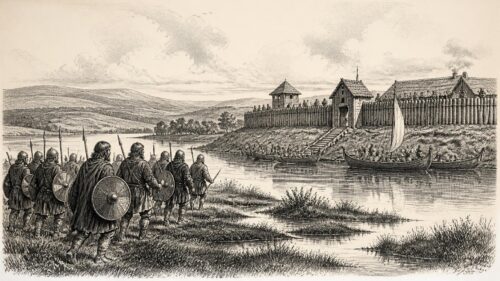
In 887, annalistic records describe a Connacht victory over the foreigners of Limerick, though details and dating remain uncertain. The defeat may have destroyed an early Shannon longphort, disrupting Scandinavian power without ending it. Notices also record the pilgrim Anealoen bringing the Law of Sunday and a divinely authorised leaf, alongside reforms concerning hair and tonsure. Deaths of abbots demonstrate monastic influence, while the obituary of Máel Mura of Othain marks the loss of Ireland’s chief poet-historian. Together these sparse entries reveal a society shaped by warfare, religious reform, learning, and interconnected political, ecclesiastical, and maritime worlds across the island.
Read Article
Archived: 28 October 2026
Abstract
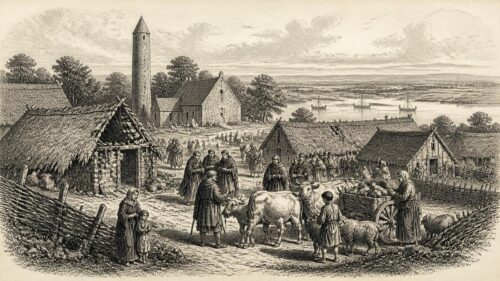
In 886, Irish annals record political violence, raiding and destruction across several regions. In Ulaid, Éiremón son of Áed, one of two kings, was killed by Eolóir, probably a Scandinavian-connected leader; Fiachna son of Ainfíth subsequently died at the hands of his own associates. At Kildare, heathen raiders plundered the church settlement, taking 280 people, including vice-abbot Suibne, and its wealth to ships. The captives included the ecclesiastical community, not only clergy. Dún Tidill in Ara was also destroyed. These fragmentary records reveal divided kingship, maritime networks, ecclesiastical vulnerability and the limits of annalistic evidence amid farming, worship and learning.
Read Article





