
Archived: 10 October 2026
Abstract
In 1875, Irish politics exposed emerging strains within constitutional nationalism. John Mitchel’s two Tipperary victories, followed by parliamentary disqualification and his death, made elections vehicles for protest. Charles Stewart Parnell entered Parliament for Meath, while Joseph Biggar’s resistance to coercion foreshadowed new Westminster tactics. Thomas Croke became archbishop of Cashel, initially concentrating on diocesan affairs. Population decline, emigration and livestock dependence reflected post-Famine economic change, while Dublin’s whiskey fire revealed urban industrial danger. Railway expansion, Ireland’s first rugby international, and Hibernian Football Club’s foundation demonstrated widening commercial, sporting and migrant connections, anticipating later political and agrarian conflicts across Irish society.
Read Article
Archived: 10 October 2026
Abstract
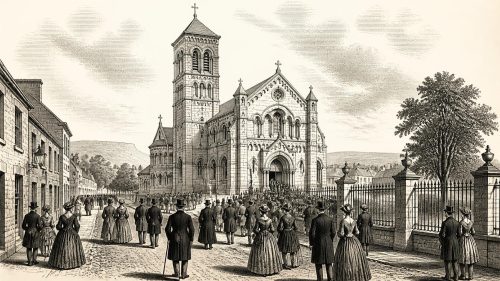
In 1874, Isaac Butt’s Home Rule League won about sixty of Ireland’s 103 Westminster seats, displacing Liberals and establishing a broad but undisciplined constitutional movement. Butt’s proposed Irish legislature, retaining imperial responsibilities at Westminster, received little British support, exposing the gap between electoral representation and influence. Parliament nevertheless handled Irish courts, loans, licensing and navigation. Cardinal Cullen opened Sligo’s Catholic cathedral, symbolising institutional confidence. Registration recorded 141,288 births and 91,961 deaths, while 73,184 people emigrated, chiefly young adults. Agriculture, weather and rural administration remained central to life. Births included Kathleen Lynn, Ernest Shackleton, Annie Moore and Cathal Brugha, among others.
Read Article
Archived: 10 October 2026
Abstract
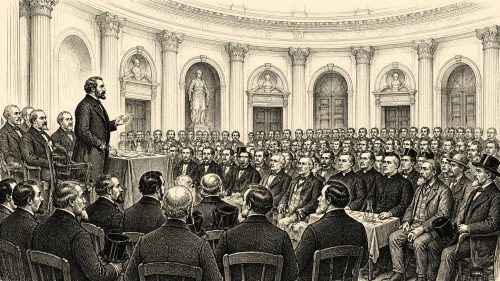
In 1873, Gladstone’s failed University Education (Ireland) Bill exposed divisions over denominational higher education, destabilised his ministry, and left Catholic demands unmet despite liberalising Trinity restrictions. The controversy strengthened Isaac Butt’s case for domestic self-government. At Dublin’s Rotunda, delegates transformed the Home Government Association into the Irish Home Rule League, seeking an Irish legislature within the United Kingdom and Empire. Land insecurity, emigration and unequal rural wealth persisted despite livestock-based agriculture and limited tenant protections. Railway, drainage, poor-law and sanitary reforms signalled uneven modernisation. The opening of St Eugene’s Cathedral in Derry reflected Catholic institutional confidence amid continuing sectarian tensions.
Read Article
Archived: 10 October 2026
Abstract
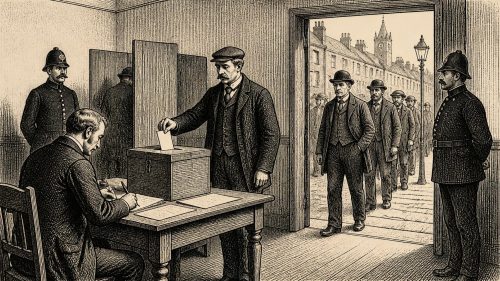
In 1872, the Ballot Act introduced secret voting for Irish parliamentary and municipal elections, first tested at Londonderry City, where Conservative Charles Lewis won a four-cornered by-election. Franchise restrictions and local religious, social and political influence nevertheless persisted. Isaac Butt’s Home Rule movement expanded through contested elections, linking constitutional reform with tenant grievances. Repeal of the Party Processions Act enabled nationalist demonstrations: Derry’s passed peacefully, but Belfast’s Hannahstown procession preceded severe sectarian rioting, deaths and displacement. Religious education, Church affairs, agricultural change, urban institutions and literary publication reflected pressures. Lord Mayo’s assassination in India highlighted Ireland’s connections to imperial government.
Read Article

Archived: 10 October 2026
Abstract
In 1871, Ireland experienced constitutional, demographic, agrarian and civic change. The Church of Ireland was disestablished, ending its privileged state position while preserving it as a self-governing voluntary body. The census recorded 5,412,377 people, confirming continuing post-Famine decline and emigration, alongside Belfast’s industrial growth. Land reform under the 1870 Act offered limited tenant protections, but agrarian violence prompted the coercive Westmeath Act, permitting detention without trial in proclaimed districts. Isaac Butt’s election for Limerick advanced constitutional home government. Belfast opened Ormeau Park, while expanding national education and Trinity’s academic life highlighted uneven access, religious tensions and unresolved inequalities across Ireland.
Read Article

Archived: 10 October 2026
Abstract
In 1870, Irish politics increasingly moved from Fenian insurrection towards constitutional campaigning, though prisoner amnesty remained contentious. Isaac Butt founded the Home Government Association at Bilton’s Hotel, uniting disparate interests behind a federal-style Irish legislature within the Crown and empire. Gladstone’s Landlord and Tenant (Ireland) Act recognised Ulster custom, improvements and eviction compensation, but neither secured fair rents nor ownership. Church of Ireland disestablishment, legislated in 1869, awaited implementation in 1871, while its Representative Church Body was established. Emigration, infant mortality, literacy and livestock farming highlighted pressures. The year transformed methods and principles without settling Ireland’s land or religious questions.
Read Article
Archived: 10 October 2026
Abstract
In 1869, Gladstone’s Irish Church Act reshaped Ireland’s settlement by legislating disestablishment of the Church of Ireland, effective in 1871, while protecting clergy and reorganising property. It ended grants to Maynooth and Presbyterian ministers through compensation arrangements, prompting new church financing and governance. Selective release of Fenian prisoners sustained amnesty agitation, with Isaac Butt emerging as a constitutional nationalist figure. Inquiries into tenant rights and agricultural improvements prepared the ground for land reform in 1870. Mary Ward’s death near Parsonstown in an experimental steam carriage marked Ireland’s first recorded mechanised road fatality. Master McGrath’s Waterloo Cup victory generated sporting pride.
Read Article
Archived: 10 October 2026
Abstract
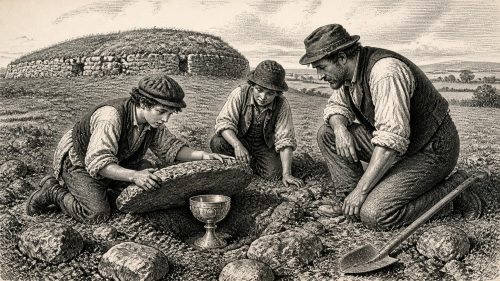
In 1868, Ireland faced a constitutional crisis over the Anglican Church of Ireland, whose privileged status conflicted with the Catholic majority and Presbyterian presence. Gladstone’s resolutions, Commons victories and Liberal election gains made disestablishment unavoidable, although legislation followed in 1869. Franchise reform enlarged, but did not democratise, the male electorate, while Gladstone’s ministry symbolised reform through Catholic lord chancellor Thomas O’Hagan. Fenian prosecutions sustained security fears. National schools expanded amid attendance, and industrial schools extended state control. Emigration, pastoral change and poverty persisted. St Colman’s Cathedral began at Queenstown, Valentia Observatory opened, and the Ardagh Chalice discovered during potato digging.
Read Article
Archived: 10 October 2026
Abstract
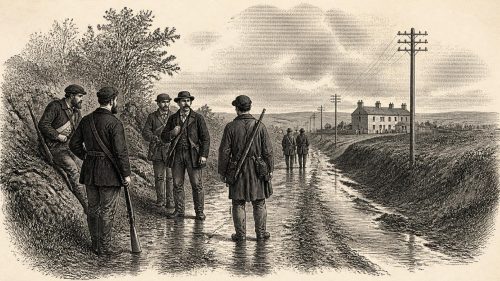
In 1867 the Irish Republican Brotherhood launched a poorly coordinated Fenian rising seeking an independent republic and social reform. After alarms including the failed Chester Castle raid, authorities extended habeas corpus suspension, arrested suspects, and strengthened policing. On 5 March, insurgents attacked police and coastguard stations, disrupted telegraphs and railways, and assembled near Dublin and in Munster. Better-armed government forces, intelligence, poor communications, inadequate weapons, and absent mass support quickly defeated them. Peter O'Neill Crowley's later death fostered martyrdom. The year brought Fenian rescues and executions in Manchester, transportation to Western Australia, the Clerkenwell bombing, hardship, reform, and Orange mobilisation.
Read Article

Archived: 10 October 2026
Abstract
In 1866, Ireland experienced political repression alongside religious, educational and technological change. Parliament suspended habeas corpus amid fears of Fenian conspiracy, enabling 752 arrests and weakening republican organisation before the failed 1867 rising. Fenian raids into Canada highlighted nationalism’s Atlantic dimension, while Paul Cullen’s elevation as Ireland’s first cardinal symbolised Catholic institutional confidence, also visible in Belfast’s St Peter’s Church. Anne Jellicoe founded Alexandra College, extending advanced educational opportunities for women. Railway expansion to Westport and changing livestock agriculture altered rural life. Most dramatically, the successful Valentia–Newfoundland telegraph cable connected Ireland to North America, making Kerry a global communications hub.
Read Article

Archived: 10 October 2026
Abstract
In 1865, Dublin’s International Exhibition at Earlsfort Terrace showcased Irish art, industry and agriculture, affirming civic ambition, imperial connections and establishment loyalty, while masking persistent rural poverty and inequality. July’s restricted-franchise general election returned Palmerston’s Liberals, but offered no agreed Irish political programme. More consequentially, police suppressed the Fenian Irish People in September, arresting leading Irish Republican Brotherhood activists. James Stephens was captured in November but escaped Richmond Bridewell. Green Street trials sentenced O’Leary, Luby and O’Donovan Rossa to penal servitude, creating nationalist symbols. Catholic Archbishop Paul Cullen opposed revolutionary secrecy. Livestock remained vital, and W. B. Yeats was born.
Read Article
Archived: 10 October 2026
Abstract
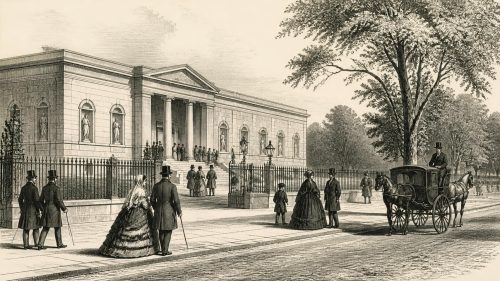
In 1864, Ireland saw expanding state and cultural institutions alongside social and political division. Civil registration of births, deaths and marriages began, while Dublin’s National Gallery opened and scientific collecting continued. A memorial tower to Daniel O’Connell was begun at Glasnevin, affirming Catholic nationalist memory. Post-famine agricultural consolidation, livestock growth, emigration and the foundation of Cork’s Munster Bank indicated uneven economic change. Belfast’s August sectarian riots caused deaths, injuries and controversy over policing, prompting a royal commission. Meanwhile, the Irish Republican Brotherhood organised clandestinely through The Irish People, and Archbishop Cullen founded the Irish Ecclesiastical Record, strengthening Catholic institutional authority.
Read Article

Archived: 10 October 2026
Abstract
In 1863, post-Famine Ireland remained marked by poverty, precarious employment, local distress and continued emigration, linking communities with Britain and North America. Parliamentary debates addressed relief, destitution and insecure tenant tenure, while drainage legislation promoted estate improvement without resolving tenant rights. The Poor Removal Act addressed welfare disputes arising from migration. Against this background, James Stephens and Irish Republican Brotherhood associates established The Irish People in Dublin on 28 November, funded partly by American Fenians. Edited and managed by organisers, the newspaper provided public republican platform, encouraging recruitment and fundraising. Belleek Pottery’s Parian production also indicated uneven national industrial development.
Read Article

Archived: 10 October 2026
Abstract
In 1862, Ireland saw significant infrastructural, civic and institutional development alongside enduring poverty and political frustration. Edward Harland and Gustav Wolff formed their Belfast shipbuilding partnership, while Ulster Hall opened, symbolising the city’s industrial and cultural confidence. The railway reached Sligo, and a Stranraer–Larne steam service improved connections with Scotland. Dublin gained statutory authority for a municipal fire brigade. Meanwhile, parliamentary debates highlighted severe rural distress and workhouse dependence; Poor Law changes expanded infirmary care and child boarding-out. Churches marked Archbishop Beresford’s death, republican organisation persisted covertly, and Irish communities remained connected to America, literature, and expanding national education systems.
Read Article
Archived: 10 October 2026
Abstract
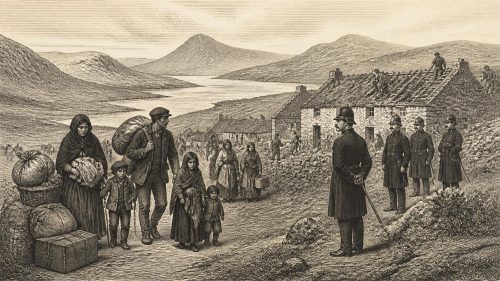
In 1861, Ireland faced continuing post-Famine decline, emigration and unequal development. The Derryveagh evictions in Donegal saw John George Adair remove 244 people from forty-seven families, with police enforcing lawful writs and homes destroyed. Parliamentary debate exposed tenants’ lack of security, while poor-law authorities assisted displaced families. Census enumeration recorded 5,798,967 inhabitants, reflecting sustained demographic loss, although household returns were later destroyed. Land-improvement legislation promised rural progress amid continuing insecurity. Queen Victoria reviewed troops at the Curragh, while Dublin’s Mater Misericordiae Hospital opened. Belfast’s linen industry expanded, Sheridan Le Fanu began a novel serial, and Irish scholar John O’Donovan died.
Read Article

Archived: 10 October 2026
Abstract
In 1860, Ireland remained shaped by post-Famine population loss, insecure rural tenancies and religious division. Deasy’s Act recast landlord–tenant relations as contractual, consolidating rules while failing to secure customary tenant-right or resolve ownership of improvements. Census legislation prepared a detailed 1861 enumeration, though household returns were later destroyed. Education expanded but attendance and progression remained limited, amid denominational conflict. Sectarian disturbances in Ulster prompted restrictions on party emblems and renewal of coercive policing. Railways, coaches, ports and emigration strengthened internal and Atlantic links, while the Irish Republican Brotherhood stayed clandestine. Boucicault’s The Colleen Bawn popularised a commercial theatrical Ireland abroad.
Read Article
Archived: 10 October 2026
Abstract
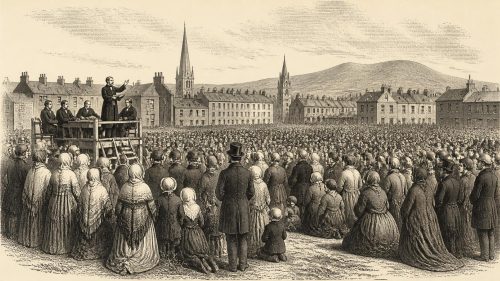
In 1859, post-Famine Ireland displayed religious revival, political restriction, migration and uneven modernisation. The Ulster Evangelical revival, rooted in earlier prayer meetings, reached peak visibility through mass gatherings, conversions and controversy, strengthening Protestant culture while provoking clerical criticism. Westminster elections operated under a narrow property franchise, leaving most people excluded. Dublin saw the launch of The Irish Times and the National Gallery’s foundation stone. The Pomona’s wreck off Wexford killed 424, highlighting emigrants’ perils. Railways reached Enniskillen and linked Tralee with Killarney, yet rural hardship deepened. Meanwhile, Fenian reorganisation abroad connected secret republicanism with Ireland’s diaspora and future political conflict.
Read Article
Archived: 10 October 2026
Abstract
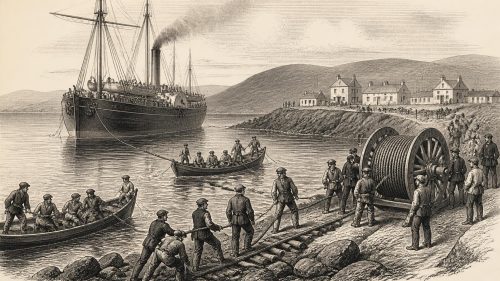
In 1858, Ireland experienced political, technological and social change. James Stephens founded the secret Irish Republican Brotherhood in Dublin, supported by Irish-American networks and committed to republican revolution. Valentia Island became the Irish terminus of the first transatlantic telegraph cable, briefly linking Britain and North America before failure. Post-Famine society continued to be reshaped by emigration, altered farming, poverty administration and Griffith’s Valuation. Infrastructure included Ballinacourty lighthouse, while Edward James Harland acquired Belfast’s Queen’s Island shipyard. Dundalk opened a free public library. These developments revealed uneven modernisation, connecting Ireland more closely with Atlantic migration, imperial commerce, industry and revolutionary politics.
Read Article

Archived: 10 October 2026
Abstract
In 1857, post-Famine Ireland remained marked by emigration, altered landholding and poverty, while political representation was limited by property-based voting. The general election strengthened Liberals but also revealed the weakness of the tenant-right Independent Irish Party. Belfast's Orange Day riots, prolonged through summer, exposed sectarian tensions and discredited a predominantly Protestant police force, prompting a later inquiry. Administrative reforms, including the Boundary Survey Act and Griffith's Valuation, expanded state oversight of land and taxation. Institutions and enterprises included Kilkenny's St Mary's Cathedral, Dublin's Natural History Museum, zoo breeding, Gallaher's tobacco venture and Scrabo Tower, illustrating reconstruction, commerce and contested authority.
Read Article
Archived: 10 October 2026
Abstract
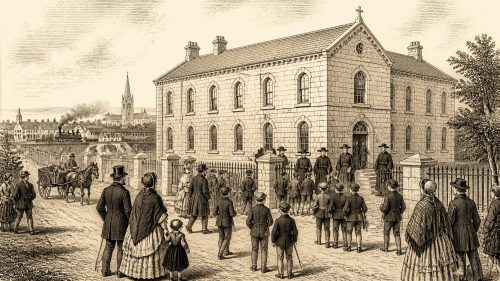
In 1856, post-Famine Ireland remained marked by depopulation, emigration, poverty and institutional reform. Poor Law debates addressed electoral fraud and the removal of destitute migrants from Britain, while estate sales and legislation on public works, drainage and valuation reshaped land, waterways and local taxation. St Mel’s Cathedral opened for worship in Longford, symbolising renewed Catholic confidence after construction halted during the Famine. Mullingar’s Hevey Institute combined charitable elementary schooling with classical education. In Dublin, Michael Henry Gill acquired McGlashan’s publishing business, while the murder of a railway cashier at Broadstone highlighted railway commerce. Reconstruction proceeded alongside continuing displacement and insecurity.
Read Article
Archived: 10 October 2026
Abstract
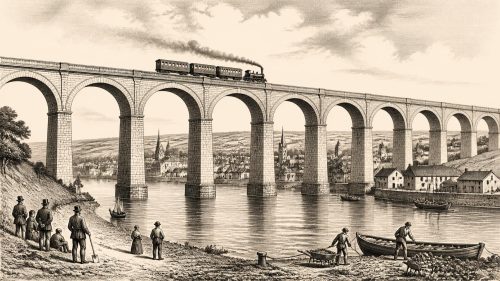
In 1855, post-Famine Ireland combined reconstruction with enduring demographic loss, poverty and emigration. The Boyne Viaduct opened on 5 April, completing rail travel between Dublin and Belfast and strengthening commerce, while offering no cure for insecure livelihoods. Agriculture increasingly favoured livestock, larger holdings and grazing; Encumbered Estates Court sales, workhouses and migration continued to reshape communities. Charles Gavan Duffy’s August farewell and departure for Australia, followed by Frederick Lucas’s death, symbolised the Tenant League’s collapse. Irish people served in the Crimean War. St Mary’s Cathedral, Killarney, was consecrated; George Petrie published traditional melodies; library legislation and Dublin Zoo reflected institutions.
Read Article
Archived: 10 October 2026
Abstract
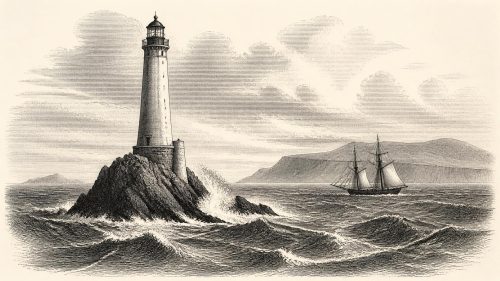
In 1854, Ireland remained deeply marked by famine, depopulation, poverty, emigration and changing landholding. Fastnet Lighthouse opened to improve Atlantic navigation, yet the emigrant ship Tayleur was wrecked off Lambay, killing hundreds and exposing migration’s dangers. Poor-law institutions managed continuing hardship while mass emigration connected Ireland with Britain, America and Australia. Tenant-right politics weakened amid conflict between Archbishop Paul Cullen and Frederick Lucas over clerical involvement. John Henry Newman opened the Catholic University of Ireland, despite limited resources and no degree-granting charter. The National Gallery Act and Charles Davis Lucas’s Baltic heroism also reflected Ireland’s developing cultural and imperial connections.
Read Article
Archived: 10 October 2026
Abstract
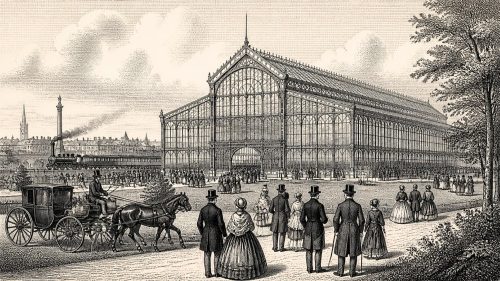
Dublin’s Great Industrial Exhibition opened on Leinster Lawn in May 1853, funded largely by railway contractor William Dargan and organised with the Royal Dublin Society. Its glass-and-iron halls displayed art, manufacture, machinery and Irish antiquities, projecting modernity after the Famine, though access remained socially limited. Queen Victoria’s August visit amplified its civic and imperial significance. Meanwhile, population decline, emigration, workhouses and estate sales showed continuing hardship. Tenant Right politics fractured as leading advocates accepted office. Gladstone extended income tax to Ireland despite objections. Plans for a gallery and Catholic university developed, while John Mitchel escaped transportation, symbolising enduring nationalist exile.
Read Article
Archived: 10 October 2026
Abstract
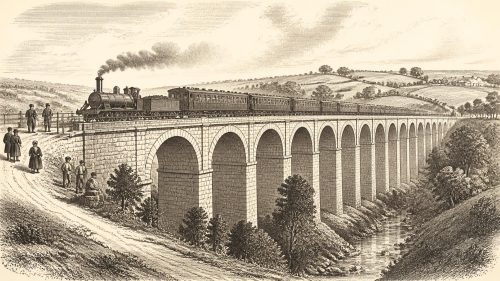
In 1852, post-Famine Ireland remained shaped by depopulation, emigration, poor-law hardship, estate sales and rural insecurity. William Sharman Crawford’s Tenant Right Bill sought recognition of Ulster custom, compensation for improvements and limits on eviction, but failed despite sustained Commons debate. The Tenant Right League united Catholic, Presbyterian and nationalist reformers, securing forty-eight pledged MPs in the July election, though its unity remained fragile. Derby’s government introduced further land bills in November, but fell before settlement. Meanwhile, Craigmore Viaduct opened the Belfast–Dublin route, symbolising industrial investment. Belfast’s British Association meeting also highlighted worsening urban sanitary conditions amid Ireland’s uneven post-Famine transformation.
Read Article

Archived: 10 October 2026
Abstract
In 1851, Ireland’s census recorded 6,552,385 inhabitants, a decline of 1,659,330 since 1841, exposing famine mortality, disease, eviction and emigration while imperfectly distinguishing deaths from departures. Losses were greatest in western and southern potato-dependent districts, accelerating the disappearance of poor cabins and weakening Irish-speaking communities. Emigration remained immense, reshaping families and local economies. Estate sales under the Encumbered Estates Act, limited tenant-improvement legislation and Tenant Right agitation intensified land questions. The Medical Charities Act expanded dispensary provision. John Henry Newman’s appointment advanced plans for a Catholic university. Meanwhile, Ulster linen exhibitors at the Great Exhibition displayed industrial strength amid devastation.
Read Article

Archived: 10 October 2026
Abstract
In 1850, Ireland remained scarred by famine despite a less destructive, uneven potato blight. Workhouses, poor-law debt, eviction, emigration and a shrinking rural labour market continued to shape survival. Land insecurity intensified as the Encumbered Estates Court facilitated sales of indebted properties. The Dublin Tenant-Right Conference formed the Irish Tenant League, uniting diverse reformers behind fair rents, secure tenure and free sale of tenants’ interests. The Synod of Thurles, led by Paul Cullen, strengthened Catholic discipline, episcopal authority and Roman alignment, while opposing the Queen’s Colleges. These initiatives made 1850 a hinge between catastrophe and political, social and religious change.
Read Article

Archived: 10 October 2026
Abstract
In 1849, the Great Famine continued as blight, hunger, eviction, overcrowded workhouses and disease devastated Ireland. Cholera killed 772 of 1,077 recorded cases at Ballinasloe Union Workhouse, illustrating inmates’ vulnerability. Relief depended heavily on inadequate local rates; the May rate-in-aid redistributed Irish, rather than British, resources. The Incumbered Estates Act signalled restructuring of landownership, while emigration, consolidation and evictions altered rural life. Young Ireland leaders were transported, and unrest persisted; Dolly’s Brae exposed sectarian tensions. Victoria’s tour, new Queen’s Colleges and the Dublin–Cork railway projected progress, yet famine, political conflict and social upheaval still continued across the island’s fractured communities.
Read Article

Archived: 10 October 2026
Abstract
In 1848, renewed potato blight shattered hopes of Irish recovery after the catastrophic famine year of 1847, deepening hunger, disease and regional inequality. With soup kitchens closed, Poor Law unions, overcrowded workhouses and restricted outdoor relief became central, often forcing destitute tenants to surrender land. Cholera’s arrival foreshadowed mortality. Meanwhile, European revolutions inspired Young Ireland militants. John Mitchel’s United Irishman prompted the Treason Felony Act and his transportation; The Irish Felon briefly continued radical journalism. After habeas corpus was suspended, Smith O’Brien’s poorly supplied rising collapsed at Ballingarry. Subsequent trials created nationalist martyrs, while emigration, eviction and death devastated communities.
Read Article

Archived: 10 October 2026
Abstract
Black ’47 marked the Great Famine’s worst turning point, after potato failure had exhausted household resources and public works proved inadequate. The Temporary Relief Act replaced wages with cooked rations, feeding about three million people daily at its peak through local soup kitchens, aided by Quakers and publicised by Alexis Soyer. Hunger and overcrowding accelerated fever, while Poor Law reforms expanded outdoor relief but shifted costs to impoverished localities. The Gregory Clause pressured small occupiers to surrender land for aid. Political divisions persisted amid O’Connell’s death. Kitchens closed prematurely, workhouses overflowed, and mass emigration intensified, leaving Ireland’s countryside fundamentally altered.
Read Article
Archived: 10 October 2026
Abstract
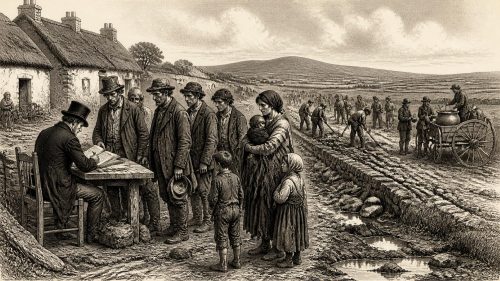
In 1846, a second, devastating potato blight transformed Ireland’s food crisis into catastrophe, destroying the staple relied upon by labourers, cottiers and smallholders. Although food continued to be produced and imported, poverty and rising prices denied many access. After Peel resigned, Russell’s government prioritised market supply and paid public works over direct food provision. The Labour Rate Act rapidly expanded employment schemes, but delayed wages, harsh outdoor labour, local debt and administrative failures deepened suffering and disease. Political division split the Repeal movement, while local and Quaker relief networks emerged. By winter, conditions had laid the foundations for Black ’47.
Read Article





