
Archived: 25 October 2026
Abstract
In 1240, one journey gave Irish politics an unusually direct connection with the court of King Henry III of England. Feidlim Ua Conchobair, king of Connacht, crossed the sea to present his case before the English king. The Annals of Connacht state plainly that he went to complain of the Galls and Gaels of Ireland: that is, of both the Anglo-Norman settlers and lords commonly called ‘Foreigners’ in Irish chronicles, and Irish opponents. The annalists say that Henry received him with great honour and that Feidlim returned safely, cheerful and satisfied. The brief notice does not preserve the arguments, concessions
Read Article
Archived: 25 October 2026
Abstract
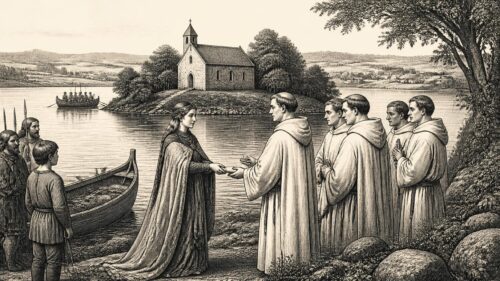
In 1239, Ireland’s fragmented politics combined warfare, lordship and religious patronage. Domnall Mac Lochlainn defeated rival forces at Carnteel, regaining Tír Eógain after Anglo-Norman intervention. Maurice FitzGerald’s forces raided around Sligo, probing Ó Domnaill territory without securing lasting conquest. In Breifne, Fergal Ó Raigillig’s killing illustrated regional and dynastic conflict, though its date is disputed. Lasairfina, daughter of Cathal Crobderg Ó Conchobair and wife of Ó Domnaill, granted land at Ros Birn to Trinity Abbey on Lough Key. Cashel confirmed Dominican Dáuíd son of Cellach as archbishop. Annalistic discrepancies caution against certainty, while revealing intertwined power, land, kinship, and church.
Read Article
Archived: 25 October 2026
Abstract
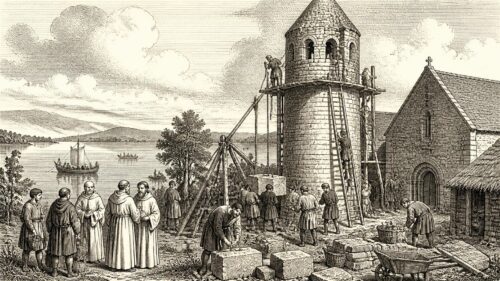
In 1238, Anglo-Irish leaders Maurice FitzGerald and Hugh de Lacy campaigned in the north, deposing Domnall Mac Lochlainn, installing an Ó Néill claimant and taking hostages from Cenél nEógain and Cenél Conaill. In Connacht, barons extended castle building after the 1235 partition, while dynastic killings, captures and raids demonstrated insecurity. A Bréifne force plundered Cluain Coirpthe, causing deaths among pursuers. Annadown’s bell-tower was built beside Lough Corrib, though its exact form remains uncertain. Archbishop Felix Ó Ruadáin died after resigning and becoming a monk in Dublin. Overall, the annals depict contested power expressed through hostages, fortifications, violence and ecclesiastical construction.
Read Article
Archived: 25 October 2026
Abstract
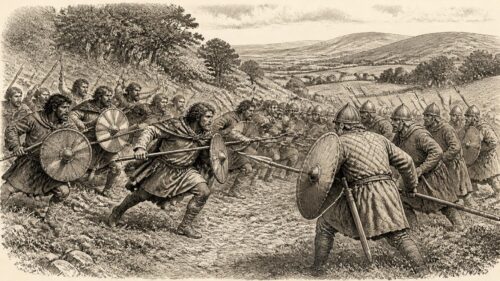
In 1237 Fedlim mac Cathail Chrobdeirg Ua Conchobair led a Connacht coalition against rival Ua Conchobair claimants, defeating troops linked to the Justiciar at Drumrat and devastating opponents’ lands. His forces briefly controlled Magh Luirg and Lough Key, where land was granted to a Holy Trinity community, while Fedlim later executed hostages. He subsequently made peace with the Justiciar, receiving the Five King’s Cantreds free of tribute, as Irish barons began castle-building in Connacht. Church reform advanced through Archbishop Máel Muire Ó Lachtáin’s Athlone synod. Clarus Mac Máelín founded a canons’ monastery on Trinity Island, while several prominent clerics died.
Read Article
Archived: 25 October 2026
Abstract
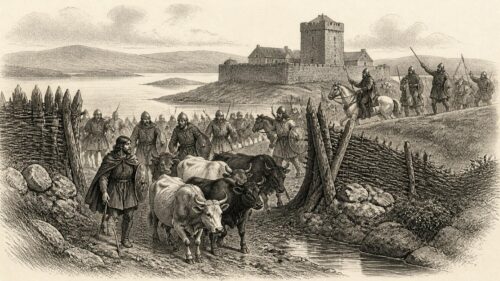
In 1236, Connacht remained unstable after Anglo-Norman conquest, as Maurice FitzGerald displaced Fedlimid Ó Conchobair, who escaped northwards. FitzGerald’s forces pillaged lands, captured women and built a stronghold, while Brian Ó Conchobair ruled with foreign support. Fedlimid returned with allies and raided Rindoon’s defended settlement for cattle, but his dispersed forces were defeated. Richard de Burgh later backed him, yet warfare devastated Tuam, Mayo and surrounding districts, including churches and their food stores. Burned sanctuaries, captivity, hunger and scarcity marked the year. Ecclesiastical authority proved ineffective against violence, although Tuam’s archbishop-elect gained English and papal confirmation. No durable settlement emerged.
Read Article
Archived: 25 October 2026
Abstract
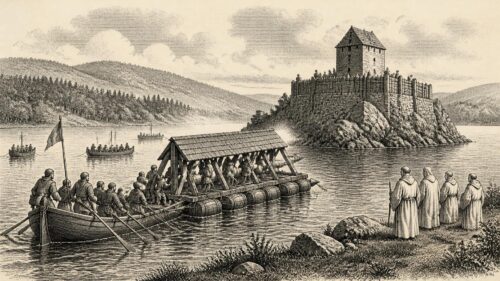
In 1235, Richard de Burgh and Justiciar Maurice FitzGerald led a broad Anglo-Irish army into Connacht, burning Roscommon and Elphin, raiding cattle, and disrupting communities. The expedition extended into Thomond, forcing King Donnchad Ó Briain to surrender hostages and tribute, before pursuing Fedlimid Ó Conchobair’s allies across western coastal and island regions. At Lough Key, attackers deployed ships, siege engines and a floating ram to capture the Rock, but its garrison lost it within twenty nights. Fedlimid later made peace and retained five cantreds. The campaign demonstrated lordship power, yet Connacht remained damaged, politically contested and far from securely conquered.
Read Article
Archived: 25 October 2026
Abstract
In 1234, Richard Marshal, earl of Pembroke and lord of Leinster, brought his rebellion against Henry III’s Poitevin advisers to Ireland. Supported by Leinster allies, he recovered positions and captured Limerick, but royalist magnates Maurice FitzGerald, Hugh de Lacy and Walter de Lacy defeated him on the Curragh of Kildare on 1 April. Wounded and detained, Marshal died at Kilkenny on 16 April and was buried there. His defeat strengthened royal authority, restored Richard de Burgh’s Connacht interests under restrictive terms, and prepared subsequent expansion. Meanwhile, fighting at Tralee demonstrated continuing conflict between settler powers and Gaelic dynasties across Ireland.
Read Article
Archived: 25 October 2026
Abstract
In 1233 Feidlimid mac Cathail Chrobderg Ua Conchobair regained Connacht after his coalition, assembled with Cormac Mac Diarmata at Druim Grecraige, routed and killed his cousin Áed mac Ruaidrí and leading supporters. The victory displaced Ruaidrí Ua Conchobair’s descendants, despite Anglo-Norman involvement on both sides. Annalists interpreted Áed’s defeat through alleged crimes against churches, but their accounts also record political propaganda. Feidlimid destroyed four rival castles, including Bun Gaillme and Dunamon, asserting territorial control and imposing praised order. In Breifne, Cathal Ua Ráigillig’s forces defeated William de Lacy’s raiders. Obituaries illuminate church households’ roles in landholding, hospitality, mediation and welfare.
Read Article
Archived: 25 October 2026
Abstract
In 1232, Connacht’s contested kingship linked local dynastic rivalry to English royal politics. Richard de Burgh released Fedlimid Ó Conchobair after his patron Hubert de Burgh’s fall, while Áed mac Ruaidrí retained a precarious restoration. De Burgh’s castle at Bun Gaillme and Adam Staunton’s at Dunamon embodied efforts to secure enduring authority. Conchobar, Áed’s son, died invading the Three Tuatha, weakening his dynasty. Elsewhere, chieftains fought, hostages were taken, crops destroyed and coastal warfare continued. Yet churches were consecrated, regular canons organised, and religious figures were praised for learning, hospitality and care, showing warfare and institution-building advancing together across Ireland.
Read Article
Archived: 26 October 2026
Abstract
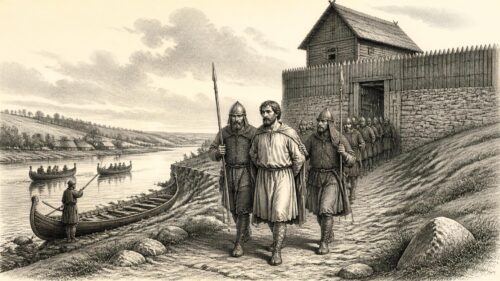
In 1231 Richard de Burgh captured Fedlimid mac Cathail Chrobdeirg Ó Conchobair at Meelick, despite guarantees, exposing the fragility of Gaelic rulers’ alliances with Anglo-Norman power. Imprisoned in strategically placed Shannon castle, Fedlimid’s fate left Connacht contested; his release and later victory belonged to subsequent years. Annals also record Connacht’s religious and local life: deaths among ruling families, Boyle Abbey’s pilgrim connections, episcopal succession at Elphin, and Dionysius Ó Mórda’s death on Trinity Island. They note learned status, Mac Diarmata’s market project, a waterborne Breifne raid, and Ualgarc Ó Ruairc’s fatal Holy Land pilgrimage, revealing active networks amid political instability.
Read Article
Archived: 26 October 2026
Abstract
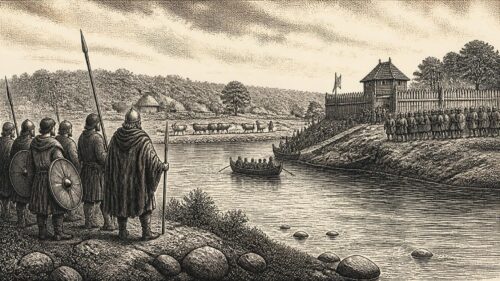
In 1230, Áed mac Ruaidrí Ó Conchobair’s revolt against Richard de Burgh, Mac William, intensified Connacht’s succession crisis. De Burgh assembled Anglo-Norman and Gaelic allies, advanced through Galway and Mayo, secured submissions and hostages, and defeated Donn Óc Mac Airechtaig’s forces at Fincharn. His troops devastated communities sheltering with cattle in remote terrain, causing hunger, deaths and dispossession. At Lough Key, de Burgh installed Fedlimid mac Cathail Chrobdeirg as king and expelled Áed, who sought Ó Néill’s protection in Tír Eógain. The year also recorded Áed Ó Néill’s death and obituaries illuminating ecclesiastical leadership, monastic craftsmanship and scholarship across Ireland.
Read Article
Archived: 26 October 2026
Abstract
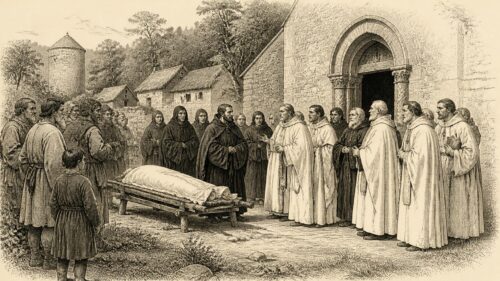
In 1229, the disputed burial of Diarmait Mac Gilla Carthaig, erenach of Tibohine, exposed rivalry between Boyle’s Cistercians and Trinity’s canons, leaving his body at Drum for three days before settlement. The year also brought clerical deaths, resignations and the loss of learned canon Gerald Ó Catháin, amid Connacht’s instability after 1228. Duibessa Ó Conchobair died as a nun, while rulers of Desmond and Corcu Laígde died. Henry III granted Dublin a mayoralty and Drogheda urban liberties, disafforested lands linked with Glendalough, and Ballybeg Priory was conventionally founded. These events reveal regional institutions, succession, patronage and authority across medieval Ireland.
Read Article
Archived: 26 October 2026
Abstract
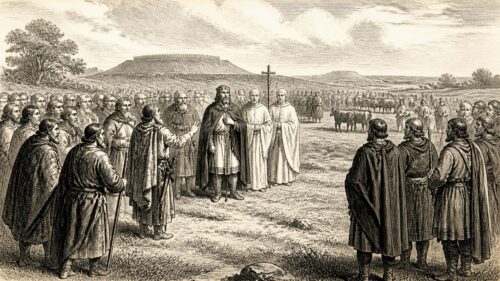
In 1228, Áed Ó Conchobair of Connacht was murdered in Leinster, intensifying dynastic conflict. Richard de Burgh, newly appointed justiciar, helped oversee a Connacht assembly that inaugurated Áed son of Ruaidrí at Carnfree, rejecting his elder brother Toirrdelbach. The settlement failed: warfare, cattle seizures and plunder devastated much of Connacht, causing hunger, displacement, and the flight of clergy and learned people. Elsewhere, lineage killings affected Breifne, royal administration promoted Magna Carta and land claims, and Dublin’s archiepiscopal succession became contested. Coleraine’s fortification was renewed, while Irish annalists noted Francis of Assisi’s canonisation, revealing Ireland’s wider ecclesiastical connections during the year.
Read Article
Archived: 26 October 2026
Abstract
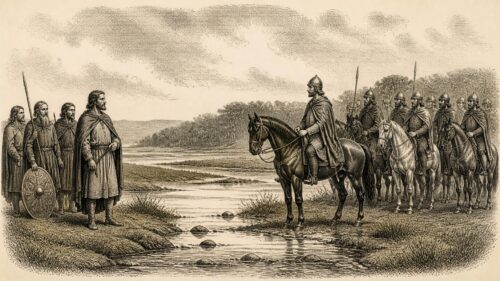
In 1227, Connacht faced intensified pressure from the English lordship, dynastic rivals and regional raiders. Summoned to Dublin, King Áed mac Cathail Chrobdeirg Ó Conchobair escaped an alleged plot through William Marshal’s intervention. He subsequently captured William de Marisco and companions at Lathach Caich, attacked Athlone, and exchanged prisoners for his children, Connacht hostages and a peace. Meanwhile Geoffrey de Marisco and Áed’s rivals took hostages, raided Connacht and constructed castles at Rindoon and Athleague, strengthening Shannon frontier control. Warfare brought cattle theft, captivity and local killings. Famine, cold and sickness compounded insecurity, while crusading observances linked Ireland to Christendom.
Read Article
Archived: 26 October 2026
Abstract
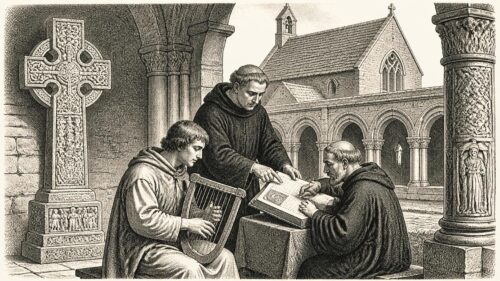
In 1226, Connacht remained unstable after Cathal Crobderg Ua Conchobair’s death, as his son Áed faced dynastic rivals, neighbouring lords and changing English policy. Killings, attacks on houses, captivity and local feuds across Connacht, Breifne and Iar-Chonnacht exposed fractured authority. Henry III ordered Geoffrey de Marisco to demand Connacht’s surrender from Áed, advancing Richard de Burgh’s interests despite opposition among colonial magnates. Cathal Ua Raigillig destroyed Cill Mór castle, illustrating the vulnerability of frontier strongholds. Deaths of bishops, nobles and Cong’s learned erenagh also marked the year, while religious houses preserved learning, patronage and dynastic commemoration amid wider ongoing conflict.
Read Article
Archived: 26 October 2026
Abstract
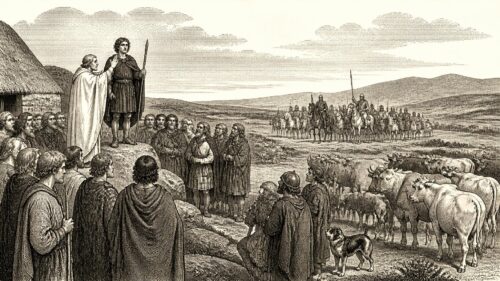
In 1225, Connacht was devastated by a succession war after Cathal Crobderg Ó Conchobair’s death. Toirrdelbach, son of Ruaidrí Ó Conchobair, was inaugurated at Carnfree with support from Áed Ó Néill and Connacht allies, but Áed mac Cathail regained power through Anglo-Norman, Thomond and local assistance. Campaigns centred on cattle, territory and hostages, displacing communities and bringing plunder, killings, drowning, hunger and exposure. Alliances repeatedly shifted, while church and secular lands suffered alike. A second rising failed, forcing Ruaidrí’s sons back to Ulster. Fever, disrupted harvests and ploughing compounded destruction, leaving Áed restored but Connacht socially and economically shattered severely.
Read Article
Archived: 26 October 2026
Abstract
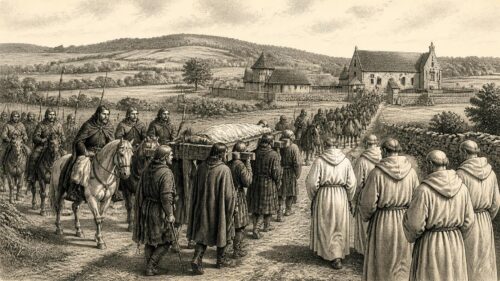
In 1224, Cathal Crobhderg Ua Conchobair’s death at Knockmoy ended a Connacht reign and enabled his son Áed’s swift, but contested, succession. Cathal had combined authority with diplomacy towards Henry III, seeking security for Connacht and recognition of Áed. Meanwhile William Marshal suppressed Hugh de Lacy’s rebellion, retaking Trim Castle through campaigning supported by Anglo-Norman and Gaelic allies. Áed joined these wider struggles, attacking castles and resisting rivals backed by Áed Ua Néill. Church life included Cathal’s Cistercian burial, learned clerics, and the arrival of Dominicans. War, weather and livestock disease disrupted agriculture, exposing dependence on cattle, supplies and alliances.
Read Article

Archived: 26 September 2026
Abstract
In 1223 Ireland remained politically fragmented, with Henry III’s lordship concentrated in towns and lowlands while Gaelic rulers retained regional power. William Marshal’s Welsh campaign and Hugh de Lacy’s return heightened uncertainty in Ulster and Meath. In Connacht, local men captured William de Lacy’s built crannog. Clonmacnoise burned, destroying churches and valuables, though church construction continued at Tech Sinche. Episcopal deaths, resignations and elections altered ecclesiastical leadership, while Connacht lost clerical and political figures. Raiding, hostage-taking and violations of sanctuary exposed local conflict. A severe September wind damaged standing oats, underlining agricultural vulnerability. Annalistic dates and accounts require cautious interpretation.
Read Article

Archived: 26 September 2026
Abstract
In 1222, Ireland remained politically divided between Gaelic lordships and the Anglo-Norman lordship, whose authority was strongest in eastern and south-eastern towns and castles. Hugh de Lacy’s return exposed fragile royal control: Henry III restored some inherited lands but retained Ulster, while annals link de Lacy’s alliance with Áed Ó Néill to raids, Culrathain’s destruction and negotiated terms at Dundalk. An exceptional great wind damaged buildings, woods, churches and ships, disrupting rural, maritime and commercial life. Annals also record ecclesiastical deaths, elite benefaction and moral judgement. Farming, trade, kinship, warfare and religious institutions bound together a connected yet uneven society.
Read Article

Archived: 26 September 2026
Abstract
In 1221, Ireland remained divided among Gaelic rulers, Anglo-Norman lords, royal officers and church institutions. Geoffrey de Marisco was removed as justiciar amid concerns over revenues, and Archbishop Henry of London returned to office, strengthening crown oversight from Dublin. Marisco nevertheless led a destructive expedition into Desmond, ruining crops and building a castle at Mag Rátha. Papal legate James visited, addressing ecclesiastical affairs and prompting resentment over clerical payments. In Connacht, Diarmait Ua Conchobair’s seaborne bid for kingship ended in his death, exposing succession tensions. The death of scholar Diarmait Ua Cú Lecháin attests to religious learning and manuscript production.
Read Article

Archived: 26 September 2026
Abstract
Ireland in 1220 comprised competing lordships, Gaelic kingdoms, ecclesiastical communities and growing towns rather than a unified polity. Walter de Lacy’s attempted castle at Áth Liag was abandoned after Cathal Crobderg Ua Conchobair intervened, demonstrating limits to frontier expansion. Connacht’s succession remained insecure as a rival claimant sought western maritime support. At Derry, the successor to St Columba’s office prompted disputes resolved through local consent and Armagh’s arbitration. Papal intervention, church consecration and episcopal death illustrate religious connections and instability. Annalistic dating differs for several events. Trade, farming, crossings and markets linked regions, while conflict shaped movement, supplies and authority.
Read Article

Archived: 26 September 2026
Abstract
In 1219, Ireland’s power remained fragmented among Gaelic kings, Anglo-Norman lordships, churches and Henry III’s wider dominions. William Marshal died, prompting a managed succession in Leinster under Isabel de Clare’s continuing inheritance, supported by officials including seneschal Walter Purcell. In Munster, Diarmait Mac Carthaig captured Henry Butler’s Timoleague castle and its hostages, exposing colonial vulnerabilities. Domnall Mór Ó Domnaill secured submissions in northern borderlands, while Cathal Crobderg Ua Conchobair exercised authority in Connacht amid Richard de Burgh’s competing claims. Ecclesiastical deaths and succession, alongside papal involvement in the Ferns dispute, underscored church influence. Events revealed shifting, contested lordships throughout Ireland.
Read Article

Archived: 26 September 2026
Abstract
In 1218, Ireland remained a patchwork of competing royal, Anglo-Norman, Gaelic and ecclesiastical powers. Under Henry III’s regency, William Marshal’s Leinster interests shaped lordship government, including regulation of shipping. His land dispute with Ailbe, bishop of Ferns, exposed conflict between royal procedure, papal intervention and Irish clerical rights. Annals recorded northern killings, a failed Meath raid into Connacht and burning at Athlone, demonstrating frontier insecurity. Deaths and successions confirmed resilient local kingships. The consecration of Boyle Abbey, church administrators’ careers, pilgrimage, and losses among poets and scholars also reveal religious patronage, learning and communal institutions amid persistent nationwide political contestation.
Read Article

Archived: 26 September 2026
Abstract
In 1217, Ireland was a fragile lordship governed for the child Henry III from Dublin, alongside powerful Anglo-Norman magnates and resilient Irish kingdoms. Royal orders promised liberties to loyal subjects, promoted markets, Waterford settlement, land claims, engineers, castle defence and exchequer control. Strategic tensions surrounded the Lacys, Carrickfergus and Carlingford. Government policy sought English dominance in senior church appointments, despite continuing local influence. Annals record Irish fishermen killed on Man, Anglo-Norman raiding near Armagh, retaliatory cattle seizures and a favourable harvest. Marriage, commerce, ecclesiastical links and maritime travel connected communities, but coercion, exclusion and contested authority exposed the Crown’s reach.
Read Article

Archived: 26 September 2026
Abstract
In 1216, Ireland remained divided between Gaelic lordships, the Anglo-Norman Lordship and wider Plantagenet rule. King John’s final orders concerning Walter de Lacy’s estates illustrated royal administration and cross-channel aristocratic ties. After John died, the child Henry III inherited the Lordship, governed through councillors, William Marshal and Dublin justiciar Geoffrey de Marisco. Castle-building and Robert Travers’s disputed appointment at Killaloe exposed coercive colonial expansion. Church affairs linked Ireland closely to Rome through vacancies, papal interventions and diocesan reform. Gaelic rulers maintained authority, including Cathal Crobhdearg’s Ballintubber foundation, while annals recorded killings and legal scholarship, revealing overlapping jurisdictions, allegiances and cultures.
Read Article

Archived: 26 September 2026
Abstract
In 1215, Ireland remained politically fragmented: King John controlled ports, towns, castles and lordships, while Irish kings and kindreds retained power. Magna Carta concerned England, but John’s crisis affected Ireland, prompting efforts to raise revenue and reconcile magnates, notably Walter de Lacy. Royal rule relied on fines, hostages, castles and negotiated claims, while frontier insecurity persisted. Geoffrey de Marisco became justiciar. Irish forces under Áed Ua Néill defeated Ulster’s settlers. New Ross gained limited shipping rights, Cratloe was granted, and Armagh’s archbishop attended Lateran IV. Warfare, commerce, church reform and regional rivalries showed Ireland connected to John’s dominions yet divided.
Read Article

Archived: 26 September 2026
Abstract
Irish annals portray 1214 as a period of contested lordship rather than national unity. Anglo-Norman castles at Clonmacnoise and Durrow provoked Cormac Ó Máel Sechlainn’s raids, involving cattle seizure, burning and attacks on church resources. Ualgarg Ó Ruairc raided settler-held Carbury, while deaths among Connacht lords and churchmen marked shifting local authority. Ulster records, though chronologically disputed, describe plunder at Derry, castle-building at Coleraine, resistance to settlers and destruction at Carlingford. Ecclesiastical communities remained influential yet vulnerable. Dublin received authority for commercial infrastructure. King John’s papal settlement formally included Ireland, but did not establish uniform control over its competing regions.
Read Article
Archived: 26 September 2026
Abstract
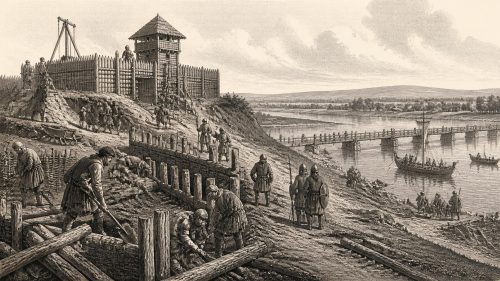
In 1213, King John’s submission of England and Ireland to Pope Innocent III altered the lordship’s international status, while Henry of London became archbishop of Dublin and justiciar. Royal and settler forces campaigned in Mide, defeating Cormac Ó Máel Sechlainn’s allies and building castles at Athlone, Birr, Durrow and Kinnitty to control crossings and routes. Cormac nevertheless recovered influence, illustrating frontier instability. Ulster saw Gaelic feuds, Anglo-Norman attacks, church plundering, Coleraine Castle’s construction and Áed Ó Néill’s raids. Clerical deaths highlighted enduring ecclesiastical centres. Ireland remained politically plural, as castles, warfare, alliances and royal administration reshaped contested regions across Ireland.
Read Article

Archived: 26 September 2026
Abstract
In 1212, royal efforts to extend King John’s Irish lordship through castles, taxation and military campaigns met persistent resistance. John de Gray’s northern offensive built Clones and Cáel Uisce castles, but forces associated with Áed Méith Ua Néill and other Gaelic leaders defeated raiders and destroyed both strongholds. Seaborne warriors from Galloway and the Isles ravaged Derry and Inishowen, aided by Cenél Conaill. In Meath, Cormac Ua Máel Sechlainn defeated English forces, while Munster and Desmond saw fort-building and dynastic conflict. Administrative records reveal expanding royal finance, yet authority remained uneven, shaped by alliances, tribute, churches, raids and regional rivalries.
Read Article

Archived: 26 September 2026
Abstract
In 1211, King John’s Irish lordship remained fragile despite his previous campaign against the de Lacys. John de Gray, royal justiciar, sought to consolidate control through castles, garrisons, revenue collection and alliances, as recorded in the Irish Pipe Roll. At Athlone, Richard de Tuit and eight others died when a new tower collapsed, highlighting frontier tensions and disputes over church land. In the north, Áed Méith Ua Néill repelled foreign forces at Narrow Water, demonstrating organised resistance. Irish rulers negotiated through hostages and temporary agreements. Royal power expanded through administration and fortification, but Ireland remained a patchwork of competing jurisdictions.
Read Article





