Archived: 29 October 2026
Abstract
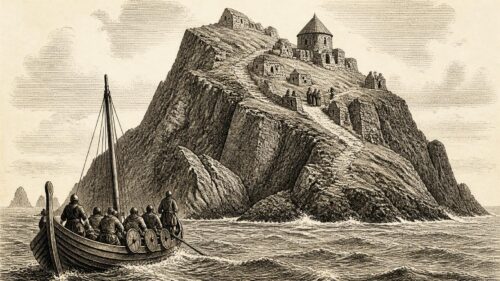
In 824 Scandinavian raiders attacked two Irish religious communities, Bangor in Ulaid and Sceilig off Kerry. At Bangor, they plundered the monastery, destroyed an oratory and violently disturbed the shrine and relics of its founder, Comgall, damaging a centre of dynastic and ecclesiastical prestige. At remote Sceilig, Étgal was captured and died of hunger and thirst, providing a rare named victim. Annalistic dating confirms both incidents despite manuscript chronological complications. The raids demonstrate mobile maritime danger across northern Irish Sea and Atlantic routes, not a unified campaign or permanent settlement. They marked early Viking-age insecurity; permanent Scandinavian bases came later.
Read Article
Archived: 29 October 2026
Abstract
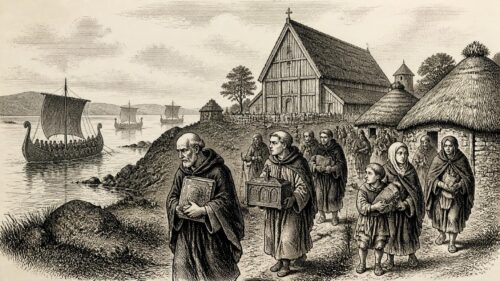
In 823, the Irish annals record Viking raiders attacking Bangor, breaking Comgall’s shrine, plundering its oratory and killing churchmen, though the monastery survived. Feidlimid of Munster and Armagh’s bishop asserted Patrick’s law in Munster, while Feidlimid also burned Galinne and suffered defeat at Mag Aí against Cathal of Uí Maine. Conflict around Clonmacnoise involved resignations, deaths, the killing of a tanist-abbot and compensation in churches. In the north, Niall son of Áed displaced Murchad as ruler of Ailech. Other deaths, including Tethba’s king and lightning fire at Armagh, underline Ireland’s interconnected yet contested ecclesiastical and political landscape across the island.
Read Article
Archived: 29 October 2026
Abstract
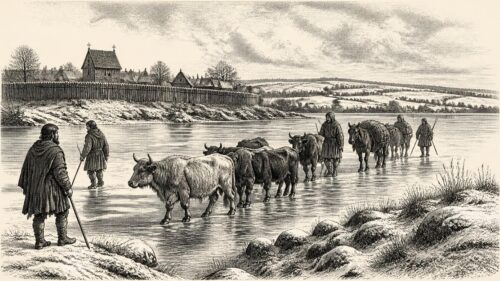
Annals conventionally dated to 821 depict severe winter conditions, when ice enabled livestock and laden traffic to cross waters, reshaping movement across Ireland. Political rivalry centred on Brega: Murchad of Cenél nÉogain gained secret submissions after reaching Ard Brecáin, while Conchobar of Mide later campaigned there, inflicting heavy losses and compelling Uí Chernaig submission. Other killings involved Ard Ciannachta. In Connacht, Uí Briúin suffered defeat at Tarbga; in Bréifne, Cenél Feidlimthe killed King Máel Dúin. Local groups also defeated the Delbna. Deaths of leaders at Birr and Achad Bó underline monasteries' political, economic and scholarly importance amid fragmented, competing lordships.
Read Article
Archived: 29 October 2026
Abstract
In 820 Feidlimid mac Crimthainn of the Eóganacht Chaisil became king of Caisel, Munster’s overkingship. Recorded by the Annals of Inisfallen, despite difficulties in other annals, his accession began a twenty-seven-year reign. The circumstances of succession, amid rivalry between Eóganacht branches, remain unknown. His authority depended upon kinship, armed support, tribute, alliances and ecclesiastical recognition within politically fragmented Ireland. Caisel controlled a central Munster landscape, while churches supplied wealth, status and influence. Rural producers sustained ecclesiastical power. Scandinavian raiding was an established threat though no dated attack occurred in Ireland that year. Later military campaigns extended Feidlimid’s influence beyond Munster.
Read Article
Archived: 29 October 2026
Abstract
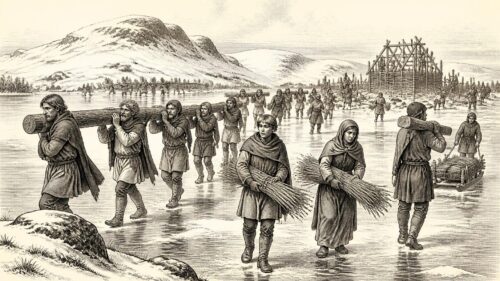
In 818 Ireland experienced an exceptional winter, with rivers and lakes frozen from Epiphany to Shrovetide, enabling travel, hunting and the transport of building materials across Lough Erne. Politically, Áed Oirdnide intervened in Leinster after Muiredach son of Bran’s death, redistributing authority among Bran’s grandsons. Churchmen carried saints’ shrines through Munster and Connacht, while violence breached ecclesiastical protection. In Connacht, Uí Briúin kings defeated Uí Maine at Forath amid regional rivalry. Deaths of abbots and rulers marked shifting local power. On 21 October, fire destroyed a third of Clonmacnoise, damaging a major ecclesiastical settlement and its communities’ buildings and livelihoods.
Read Article
Archived: 29 October 2026
Abstract
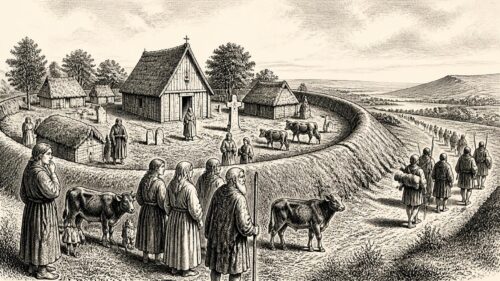
In 815, Irish annals recorded deaths, killings and the plunder of Cluain Creamha, revealing political and ecclesiastical vulnerability. Muirgius son of Tomaltach, dominant Uí Briúin overking of Connacht, died, ending a reign amid rivalries. Men of Bréifne and Síl Cathail attacked Cluain Creamha, killing people and despoiling an ecclesiastical community. Southern Brega lost kings Conall son of Niall and Fócarta son of Cernach. After Cenél Conaill killed his brother Colmán, Áed Oirdnide campaigned northwards. Annals also note deaths of churchmen at Cell Moinne, Lugmad and Iona, while no Viking raid is explicitly recorded for Ireland in the surviving annalistic sources.
Read Article
Archived: 29 October 2026
Abstract
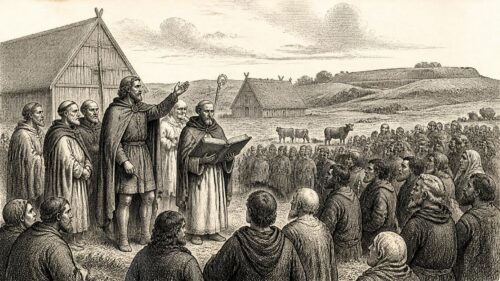
In 814, Muirgius son of Tommaltach, overking of Connacht, and Fairchellach, abbot of Clonmacnoise, campaigned through Uí Maine, killing many people described as innocents. Muirgius later promulgated Ciarán’s law at Cruachain, demonstrating cooperation between royal and ecclesiastical power. In Leinster, the sons of Bran defeated Uí Chennselaig. At Kells, completion of a Columban church preceded Iona abbot Cellach’s resignation and Diarmait’s appointment. Deaths included bishops, abbots, scribes and teachers, notably Fairchellach and the murdered Bishop Máel Dúin. Annals also recorded great distress and severe illnesses, without identifying their cause, revealing interconnected warfare, religious authority, construction, learning and hardship across Ireland.
Read Article
Archived: 29 October 2026
Abstract
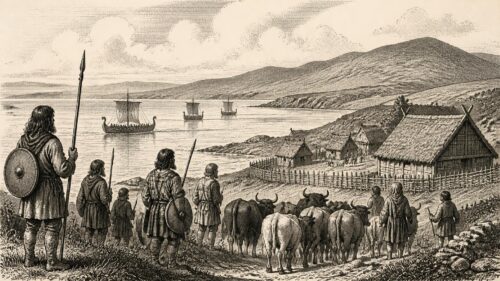
In 813, Dúnadach, king of Umall in modern County Mayo, and Coscrach son of Flannabra were killed when heathen seaborne raiders defeated local forces. The annals provide no details of the battle, loot, or lasting conquest, but place it amid western coastal fighting following Irish resistance in 812. The year also saw Daire’s law promulgated among the Uí Néill, probably protecting cattle, a vital economic resource. Obituaries for rulers and church leaders illustrate dispersed political and ecclesiastical authority. These events depict Ireland as a landscape of vulnerable coasts, regional kingdoms, valuable herds and religious communities, rather than a unified state.
Read Article
Archived: 29 October 2026
Abstract
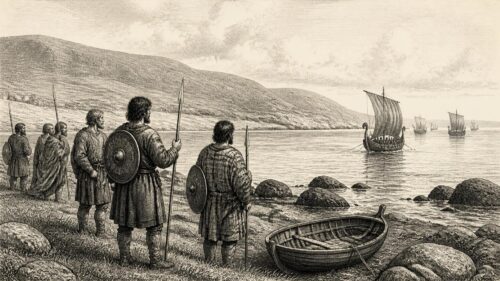
In 812, Irish communities faced Scandinavian raids along the western and south-western coasts. Men of Umall killed raiders, while heathens slaughtered Conmaicne; Cobthach, king of Loch Léin, also defeated a raiding party in Munster. These local successes did not end the threat, as later attacks showed. In Connacht, Muirgius son of Tomaltach plundered southern territories amid Uí Briúin expansion, while the Calraige of Lurg were slaughtered by the Uí Briúin. Daire’s law was promulgated in Connacht, reflecting ecclesiastical and political networks. Deaths of prominent church leaders emphasised churches’ administrative, scholarly and social importance throughout Ireland during an unsettled historical year.
Read Article
Archived: 30 October 2026
Abstract
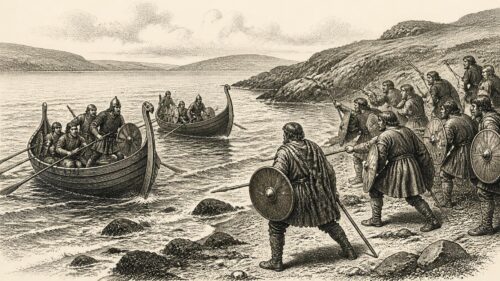
In 811, annalistic evidence records Scandinavian raiding and Irish political religious activity across Ireland. Men of Umall killed raiders, while Scandinavians defeated the Conmaicne; Cobthach of Loch Léin likewise slew raiders in Munster. These mobile incursions brought no proven permanent settlement. Muirgius son of Tomaltach, king of Connacht, led a southern hosting, though its destination and outcome remain unknown. Daire's law was promulgated in Connacht, demonstrating ecclesiastical and secular cooperation. Deaths of prominent abbots, bishops and regional kings highlighted interconnected religious institutions and fragmented political authority. The year reveals local resistance, royal ambition, church privilege, and pressures on coastal communities.
Read Article
Archived: 30 October 2026
Abstract
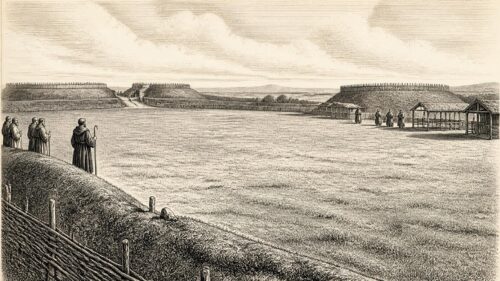
In 810, Tallaght’s monastic community prevented the royal fair at Tailtiu after the Uí Néill violated its sanctuary, leaving the assembly devoid of expected horses and chariots. Subsequent gifts to Tamlacht indicate public redress and demonstrate ecclesiastical leverage over Áed son of Niall’s kingship. Nuadu, abbot of Armagh, carried Patrick’s law and a casket to Connacht, extending Patrician claims without recorded outcome. The Ulaid defeated Scandinavian raiders, the first surviving annalistic Irish victory, though details remain unknown. Death notices recall monastic and aristocratic life, while the disrupted fair depended upon agricultural surplus and rural exchange across early medieval Irish society.
Read Article
Archived: 30 October 2026
Abstract
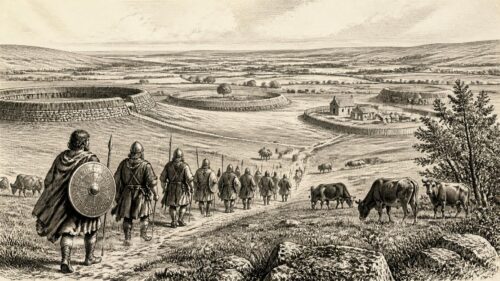
Conventionally dated to 808, the annals record a short-lived Connacht–Mide challenge to Áed Oirdnide, king of Tara. Led by Conchobar of Mide with Muirgius of Connacht’s support, a force occupied Tír ind Aenaig near Tailtiu for three nights before retreating; Áed retaliated by burning Mide’s borders. The episode illustrates contested kingship, strategic assembly sites and coercion through agricultural devastation. Other notices record the death at Kildare of the deposed Leinster king Fínnechta, and deaths of leading churchmen at Armagh, Linn Duachail and Cell Achaid. They also note Cinaed’s killing in Mag Cobo, thus revealing local violence alongside wider political rivalry.
Read Article
Archived: 30 October 2026
Abstract
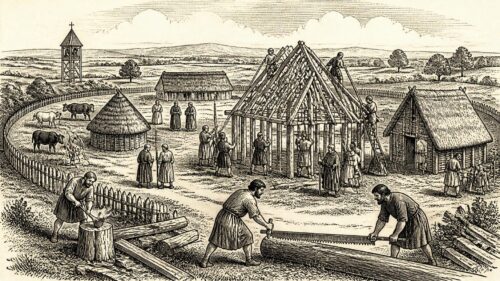
In 807, annalistic sources record the construction of a new Columban monastery at Cenannas, later Kells, probably strengthening Iona’s Irish connections after attacks on its community. Raiders described as gentiles burned Inis Muiredaig and attacked another site, possibly coastal Roscam, demonstrating monastic vulnerability to seaborne violence. Conflict also erupted between Cork and Clonfert, causing heavy losses among ecclesiastics. Deaths included Armagh’s abbot Connmach, regional rulers Artgal and Murchad, and the anchorite-scribe Elarius. Killings in Airthir and Kintyre underline political instability. Under Áed Oirdnide’s overlordship, Ireland remained fragmented. A blood-red moon was also noted, while chronology differs among annals in transmission.
Read Article
Archived: 30 October 2026
Abstract
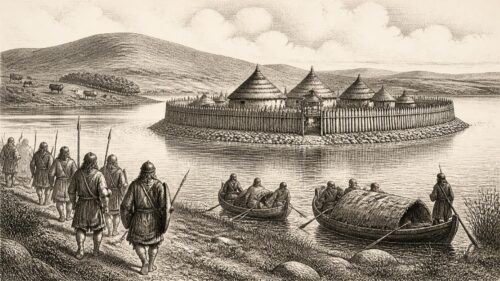
In 802, annalistic records reveal interconnected political, military and ecclesiastical pressures across Ireland and the Irish Sea. After Muiredach of Mide died, Áed Oirdnide, king of Tara, led an armed hosting into Mide and divided its rule between Conchobar and Ailill, sons of Donnchad Midi. In Connacht, Muirgius destroyed the crannóg fortress at Loch Riach, demonstrating power near Uí Maine. Heathens burned Iona, a major Columban centre linking Ireland and Scotland. Deaths included Queen Euginis, rulers of Osraige and Mugdorna, and prominent abbots and churchmen. These events show authority dispersed among dynasties, local kingdoms and monasteries, not one unified state.
Read Article
Archived: 30 October 2026
Abstract
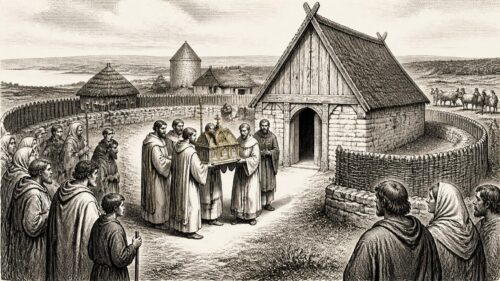
In 801, Irish annals record the enshrinement of relics of Rónán son of Berach at Dromiskin in a gold-and-silver casket, demonstrating monastic wealth, patronage and saintly prestige. Bresal son of Ségéne died after thirty-one years as abbot of Iona, a major Columban centre linked to Ireland; no raid there is attested that year. Warfare between the Ulaid and Uí Echach Coba killed Echu son of Ailill and Cairell son of Cathal, although Cairell’s force won. Obits included abbots, nobles, Be Fáil and the anchorite Ninnid. Bresal of Cenél Loégairi was murdered by kinsmen. Rainy summer affected society reliant on farming.
Read Article
Archived: 30 October 2026
Abstract
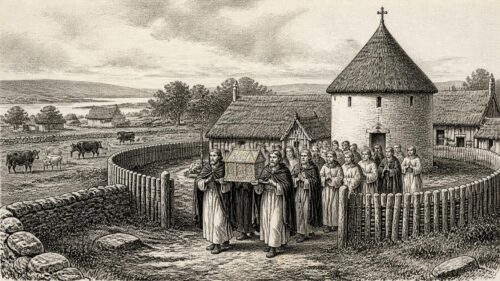
In 800, the Annals of Ulster record a battle between the Ulaid and Uí Echach Cobha, in which Echu, king of Cobha, died and Cairell’s force prevailed. Bresal of Cenél Loégairi was killed by his brothers, illustrating dynastic rivalry. Rónán’s relics were placed in a gold and silver casket, showing ecclesiastical resources and devotion. Deaths included abbots of Clondalkin, Domnach Sechnaill and Iona, linking Ireland to Columban networks across the Irish Sea. A rainy summer affected rural conditions without recorded disaster. Together, these selective notices reveal contested kingship, influential churches, maritime connections, and an agrarian society closely dependent on weather.
Read Article
Archived: 30 October 2026
Abstract
In 799, as conventionally dated despite annalistic chronological differences, Ireland’s fragmented politics intertwined warfare, dynastic rivalry, ecclesiastical authority and environmental hardship. Muirgius son of Tomaltach won the internal Connacht battle of Dún Ganiba, while Ailill of Uí Maine died. At Finnabair in Tethba, Murchad son of Domnall defeated forces including two Cenél Cairpri kings. Clann Cholmáin kinsmen killed Abbot Blathmac and treacherously slew Domnall son of Donnchad. Heavy snowfall killed people and cattle. Numerous abbots died, and Gormgal promulgated Patrick’s law in Connacht, affirming church influence. No Viking raid was recorded; domestic conflict and vulnerability dominated the year across Ireland.
Read Article
Archived: 30 October 2026
Abstract
In 798, according to the Annals of Ulster’s chronology, Muirgius son of Tommaltach defeated fellow Connacht forces at Dún Ganiba, strengthening Uí Briúin Aí authority without securing permanent provincial control. Elsewhere, Murchad son of Domnall won at Finnabair in Tethba, where several rulers died. The annals also record kin-slaying, the murder of Abbot Blathmac, deaths among secular and ecclesiastical leaders, and severe snowfall that killed people and cattle. Gormgal son of Dindathach proclaimed Patrick’s law in Connacht, illustrating church power. These events reveal a politically fragmented Ireland shaped by warfare, succession, religious authority, and environmental vulnerability during this turbulent period.
Read Article
Archived: 30 October 2026
Abstract
In 796, the Annals of Inisfallen briefly recorded heathens in Ireland, indicating the presence of non-Christian outsiders amid early Viking activity, but providing no evidence for a raid, landing site, settlement or permanent colony. Nearby annals record attacks on islands and churches, though chronology and corroboration remain uncertain. The same year saw the deaths of Colla son of Fergus, king of Connacht and rival to the rising Muirgius, and Máel Coba, king of Ciarraige Luachra. These events reveal politically fragmented, rural Ireland, where powerful churches and coastal communities faced emerging maritime threats without abandoning established dynastic, economic and religious life.
Read Article
Archived: 30 October 2026
Abstract
In 795, Irish annals recorded the burning of Rechru by heathens, generally identified as Scandinavian raiders and conventionally regarded as Ireland’s first surviving notice of Viking activity. Rechru’s location, possibly Rathlin or Lambay, and the raid’s scale remain uncertain; associated references may concern Skye or a shrine. The year also saw Leinster’s overking Bran Ardchenn and Queen Eithne killed by a rival dynast, weakening Donnchad Midi’s political alliances, and the death of Armagh’s abbot Faendelach. These events occurred within a rural, church-centred society connected by vulnerable seaways. They signalled emerging maritime insecurity, not immediate Scandinavian permanent settlement or Irish transformation.
Read Article
Archived: 30 October 2026
Abstract
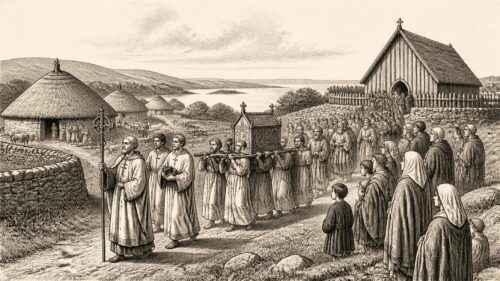
In 794, Irish annals record interconnected religious, political and maritime developments, while remaining sparse about causes and outcomes. The relics of Trian travelled on circuit, extending ecclesiastical authority among communities. Donnchad of Mide led forces supporting Leinster against Munster, while Áed son of Niall invaded Mugdorna Maigen, illustrating regional rivalry rather than national unity. Deaths of senior figures at Armagh, Bangor, Clonmacnoise, Tuaim Gréine and Cluain Bairenn marked significant ecclesiastical transitions, including female leadership. Reports of Scandinavian devastation around Britain warned Irish communities of mounting seaborne danger, preceding securely recorded attacks on Irish islands in following years and transforming horizons.
Read Article
Archived: 30 October 2026
Abstract
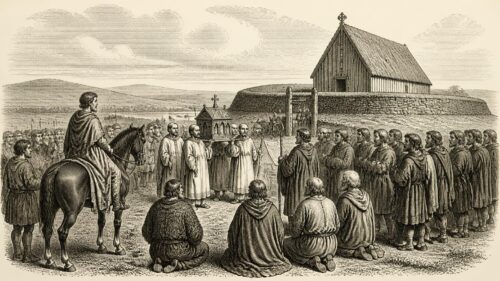
In 793, Ireland’s annals depict religious institutions as instruments of regional power rather than a unified kingdom. Muirgius of Connacht supported the promulgation of Comán’s law, while Munster’s Artrí was formally acknowledged as king alongside Ailbe’s law, probably strengthening Emly’s ecclesiastical claims. Armagh suffered the death of abbot Dub dá Leithe, other notable obituaries, and violent violation by Uí Chremthainn, followed by restoration. Tóla’s relics were taken on circuit, extending sacred authority beyond monasteries. In south-west Munster, the king of Corcu Duibne died at Conchenn. Chronological uncertainties remain, and however no securely recorded Viking raid occurred in Ireland that year.
Read Article
Archived: 30 October 2026
Abstract
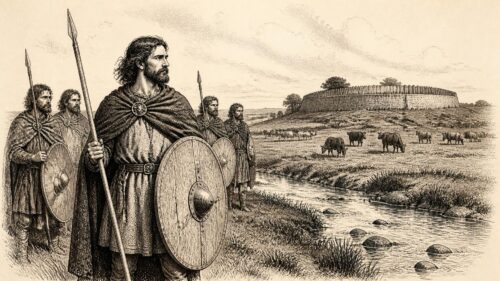
In 792, Muirgius son of Tommaltach of Síl Muiredaig defeated and killed Cináed son of Artgal at Sruth Cluana Argait, probably Cloonargid, establishing his effective overkingship of Connacht. A related battle at Ard Maic Rími crushed Uí Ailello forces and killed rulers from Cairpre and Bréifne, strengthening Muirgius without ending Connacht’s political rivalry. Annals also record deaths of kings in Dál nAraidi, Uí Fhiachrach, Dál Riata and elsewhere. Máel Ruain, founder of Tallaght’s influential religious community, died peacefully. These compressed notices reveal an Ireland shaped by contested dynastic authority, ecclesiastical succession, agricultural communities, and interconnected secular and religious power structures.
Read Article
Archived: 30 October 2026
Abstract
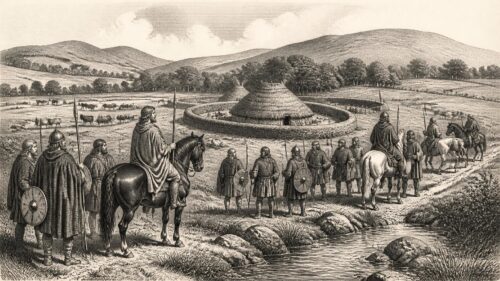
In 791, Muirgius son of Tommaltach defeated and killed rival claimant Cináed son of Artgal at Sruth Cluana Argait, establishing his reign over Connacht. Both belonged to competing Uí Briúin lineages, and a further defeat of the Uí Ailello, with several regional rulers killed, suggests wider consolidation. The annals date the entry under U792 but identify the year as 791. Muirgius's victory strengthened Uí Briúin Aí, though provincial authority remained contested and dependent on tribute, followers and land. The year also recorded deaths of rulers and churchmen, notably Máel Ruain of Tallaght, influential monastic reformer. No Viking raid is recorded.
Read Article
Archived: 30 October 2026
Abstract
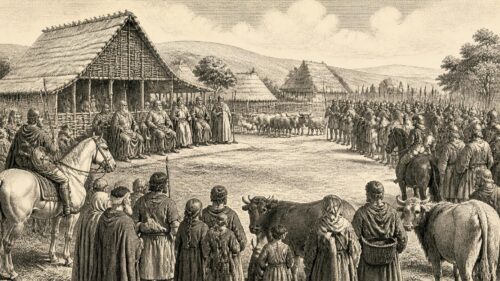
In 790, recorded in the Annals of Ulster under a chronologically disputed heading, Donnchad Midi of Clann Cholmáin defeated Áed Ingor of Cenél nÉogain at Tailtiu, the prestigious Uí Néill assembly site. Allies from Uí Chremthainn died with Áed’s force, demonstrating complex political connections. Diarmait of Tethba was killed at Ard Ablae, while regional kings of Uí Maine and Airthir also died. Obituaries marked leading clerics’ deaths across major churches, and Connacht’s king Artgal died at Iona. Rural farming, ecclesiastical estates and assemblies underpinned society. No securely dated Viking raid belongs to this year; indigenous rivalry dominated political life throughout.
Read Article
Archived: 30 October 2026
Abstract
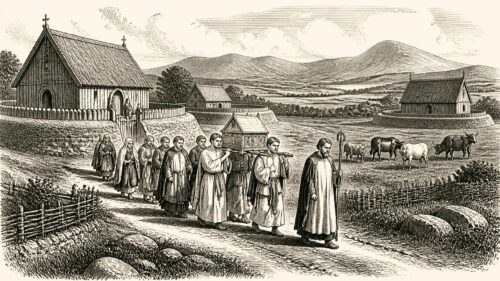
The Irish annal entered under AD 789 in the modern edition of the Annals of Ulster presents a country of intensely local politics, powerful churches and fragile material settlements. Its internal annal number is U790, a reminder that early Irish chronologies require care; nevertheless, the editor’s calendar heading places the cluster of notices considered here in 789 CE. The record does not describe one national event. Instead it preserves sharp glimpses from Connacht, Ulster, Leinster, Munster and the Dublin region: a battle at Áth Rois, deaths among kings and abbots, a major killing in the north-east, a church burned, and,
Read Article
Archived: 30 October 2026
Abstract
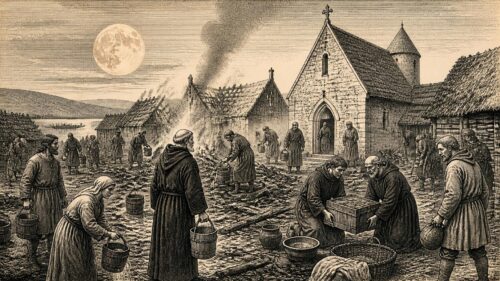
In 787, Irish annals record the death of Máel Dúin, king of In Fochla, creating a transition within the Cenél nÉogain dynasty rather than a national succession. In Connacht, Ciarán of Clonmacnoise’s law was proclaimed, extending ecclesiastical authority and protections with secular support after unrest. Deaths of abbots and bishops at several churches illustrate religious institutions managing land, learning and ritual. Daire Calgaid, probably Derry, suffered a fire of unknown cause. Annalists also noted a blood-red Moon on 18 February, preserving a celestial observation without establishing its explanation. These entries reveal intertwined political, religious and authority in early medieval Ireland.
Read Article
Archived: 30 October 2026
Abstract
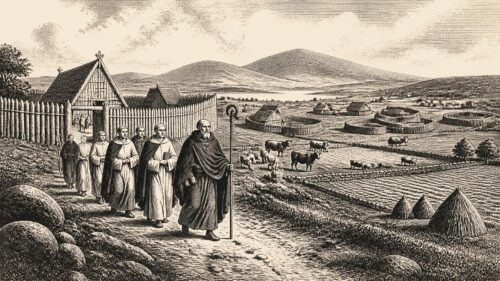
In 786, annalistic evidence depicts Ireland as politically fragmented but connected by ecclesiastical networks. In Connacht, the Uí Briúin were defeated at Gola, while the Uí Fhiachrach of Muirisc killed Flaithgal of Umall and his nobles; Tipraite of Connacht and Conall of Uí Maine also died. In the north, Máel Dúin of Cenél nEógain defeated and expelled Domnall of Cenél Conaill. Dub dá Bairenn, abbot of Clonard, visited Clonard’s Munster ecclesiastical sphere. Deaths among abbots, bishops, scholars and ascetics, notably at Kildare, underline church institutions’ importance. They nonetheless show clearly volatile local lordship, rural dependence, and durable religious authority throughout.
Read Article
Archived: 30 October 2026
Abstract
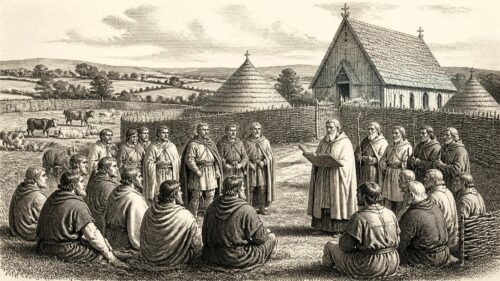
In 784, the Annals of Inisfallen record that the Law of Ailbe operated throughout Munster, indicating a provincial ecclesiastical settlement backed by saintly and likely secular authority. No surviving text identifies its rules, sponsors or proclamation, but such cána could protect churches, regulate obligations, secure revenues and reinforce peace. The measure reflected Emly’s importance and Munster’s contested kingship, without proving any specific ruler’s involvement. Notices of abbots’ deaths at Clonmacnoise and Terryglass reveal interconnected religious institutions. On 27 November, Irish-born Virgil of Salzburg died, demonstrating Irish ecclesiastical influence abroad. Together, these events illuminate sacred authority, political negotiation and rural obligations.
Read Article
Archived: 30 October 2026
Abstract
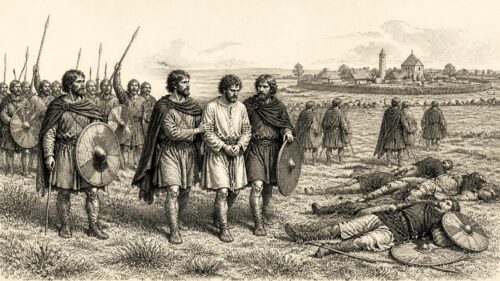
In 782, Ruaidrí son of Fáelán defeated his cousin Bran son of Muiredach at the Curragh near Kildare, killing allies including Mugrón of Uí Fhailgi and capturing Bran. The Leinster struggle involved rival Uí Dúnlainge branches and allied regional interests, amid wider pressure from Donnchad Midi of Tara, Bran’s father-in-law. In Connacht, King Artgal son of Cathal adopted the pilgrim’s staff, declaring a journey to Iona for the following year. Annals also record numerous ecclesiastical deaths, illustrating monastic administration and influence. Careful chronology is essential, since Four Masters entries are misdated; 782 reveals clearly intertwined dynastic, religious and maritime connections.
Read Article

