
Archived: 21 October 2026
Abstract
In 1392, Ireland experienced local warfare, succession disputes and notable deaths rather than an island-wide turning point. Niall Ó Néill of Tír Eógain led a major expedition against the English around Dundalk, achieving temporary mastery. Northern tensions intensified after Henry Aimhreidh Ó Néill’s death and the capture of his son by Toirdelbach Ó Domhnaill. In Connacht, Ó Conchobair Donn’s army burned Uí Maine, revealing fractured regional alliances. Deaths of Archbishop Grigair Ó Mocháin, the countess of Desmond and other nobles highlighted ecclesiastical and aristocratic networks. English administration remained uncertain as Thomas of Woodstock’s lieutenancy failed and Roger Mortimer was appointed.
Read Article
Archived: 21 October 2026
Abstract
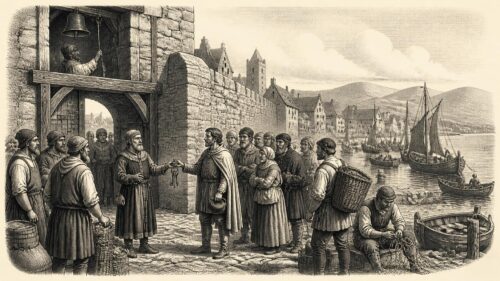
On 10 May 1389, Galway’s bell summoned burgesses and townspeople to surrender the keys of its gates to William Burke, lord of Upper Connacht, excluding royal ministers. Following a 1388 oath of fealty and grants of revenues, the action reflected local insecurity and accommodation, while retention of customs suggested caution. Galway’s choice occurred amid Connacht’s shifting wars, raids, captures, killings and pragmatic settlements, where control of resources shaped power. Annals record contested successions and deaths across Ireland. With government weakened after Robert de Vere’s fall and only later reorganised under John Stanley, authority remained fragmented among towns, lords and communities.
Read Article

Archived: 21 October 2026
Abstract
On 5 November 1388, Galway’s burgesses publicly swore fealty to William Burke of Clanricarde, transferring royal local revenues, except customs, and demonstrating preference for regional protection over Richard II’s distant authority. Their bloodless revolt formed part of wider competing jurisdictions. Connacht suffered extensive warfare among O’Conor branches and allied lordships, involving raids, burning of homes and corn, prisoners, hostages and mercenary forces. Conflict also touched Assaroe and north-western territories, while violence killed learned men and a local lord. Fosterage linked Desmond’s heir with an O’Brien household. Despite de Vere’s fall, royal administration issued writs, but lacked effective command in Ireland.
Read Article
Archived: 21 October 2026
Abstract
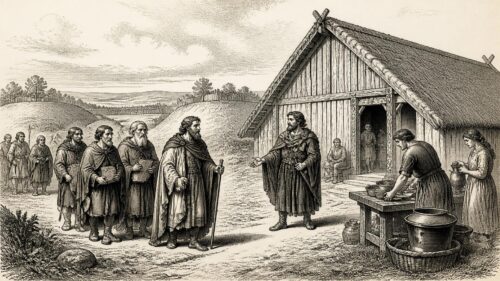
In 1387 Niall Ó Néill junior built a house at Emain Macha to support Ireland’s learned companies, linking Ulster lordship with cultural patronage. The year also saw deaths of chief poet Gofraidh Fionn Ó Dálaigh and historian-scribe Ruaidhri Ó Cianáin, illustrating networks sustained by aristocratic hospitality. Annals record feuding, killings and Nualaith Ó Fearghail’s capture in the Midlands, while Richard Óg de Burgh died in Connacht. In Munster, royal officials mediated discord between Desmond and Ormond. Deaths and marriages reflected ecclesiastical, kinship and Irish Sea connections. Sparse sources nevertheless show authority negotiated through force, patronage, reputation and learning across Ireland.
Read Article

Archived: 21 October 2026
Abstract
In 1386, Irish annals recorded local conflicts, raids and settlements rather than a single national event. Domnall Ó Conchobair’s coalition devastated Mac Wattin Barrett territory in Tirawley, killing leaders, taking a castle and destroying orchards. Connacht warfare shifted rapidly between raiding, pursuit, victory and negotiated peace among competing dynasties. Art Mór Mac Murchadha defeated the English of Ossory, while Midland feuds involved killings, castle seizures and hostage-taking. Richard II created Robert de Vere duke of Ireland, though he never visited; administration continued through deputies and chancery. Elite deaths and burials also marked status, kinship and lordship across a fragmented island.
Read Article
Archived: 21 October 2026
Abstract
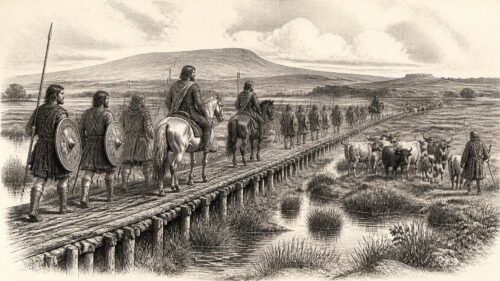
In 1385, Ireland comprised overlapping Gaelic and Anglo-Irish jurisdictions, where warfare shaped authority, movement and livelihoods. Murchadh Ó Conchobair of Uí Fhailghe and Cenél Fiachach defeated the English of Meath at Tóchar Cruacháin Brí Eile, killing the sheriff and many others, though lasting consequences remain unknown. Dublin appointed Alexander de Balscot chancellor, while appeals for Richard II’s intervention and Robert de Vere’s lordship grant exposed administrative weakness. Connacht endured organised burnings, cattle raids, crop destruction, killings, captivity and hostage-taking before a negotiated partition and peace. The year also recorded deaths of notable clerics, rulers, women and scholar Tanaide Ó Maolconaire.
Read Article
Archived: 21 October 2026
Abstract
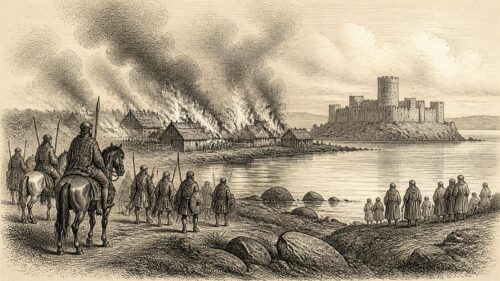
In 1384, Niall Ó Néill burned Carrickfergus, demonstrating Gaelic power against a major crown-held port and castle, though the sources do not show that the fortress fell. In Connacht, Ruaidhrí Ó Conchobair died of plague after a long reign, prompting rival inaugurations and provincial warfare, including attacks on lordly strongholds. Plague and other deaths affected leading families and rulers across Ireland, while feuds caused further killings. Annals also recorded deaths of churchmen and scholars, reflecting enduring learned institutions. Within the lordship, mediation addressed conflict between Ormond and Desmond, and Sir Philip Courtenay appointed Ormond chief governor, illustrating fragmented regional authority.
Read Article
Archived: 21 October 2026
Abstract
In 1383, fragmented Ireland experienced renewed royal administration, northern warfare and serious disease. Richard II appointed Sir Philip Courtenay lieutenant, who arrived at Waterford in September, while Ralph Cheyne served as chancellor. In Ulster, Niall Mór Ó Néill’s coalition burned and plundered territories associated with English lordship. During the campaign, his son Aodh Óg and Raibilin Savage fatally wounded one another, provoking further killing among the Bissets. Annalists reported widespread plague throughout Ireland, including the death in captivity of Art Magennis. Deaths, killings and successions among secular and religious leaders reveal local instability, while hospitality remained an important lordly ideal.
Read Article
Archived: 21 October 2026
Abstract
In 1382, Ireland was divided among royal administration, Anglo-Irish magnates and Gaelic rulers. Ruaidhrí Ó Conchobair, king of Connacht, arrested rival chiefs at an assembly, exposing insecure personal power. Raids in Corcomroe and Desmond destroyed homes, crops and lives, while imprisonment claimed members of the Ó Briain dynasty. Deaths, including that of James Butler, earl of Ormond, altered lordly succession. William Tany resumed the Irish chancellorship, maintaining crown government through the great seal. Finghin Mac Giolla Phádraig founded a Dominican friary at Aghaboe, demonstrating enduring religious patronage. Annals also remembered women, clerics, entertainers and heirs, reflecting regional, interconnected medieval society.
Read Article
Archived: 21 October 2026
Abstract
In 1381, Ireland’s political geography was defined less by a single frontier than by a patchwork of competing lordships, castles, family claims and negotiated loyalties. King Richard II was lord of Ireland, but royal government was strongest in and around the Anglo-Irish towns and lordships of the east and south-east. Beyond them, Gaelic rulers, Gaelicised settler dynasties and Crown officers all exercised power in overlapping ways. The year’s clearest focal point was Athlone: a fortified crossing of the Shannon whose possession mattered not merely to the town, but to the balance between Meath and Connacht.Edmund Mortimer, earl of March and
Read Article
Archived: 21 October 2026
Abstract
In 1380 Edmund Mortimer, Richard II’s lieutenant and claimant to Ulster and Connacht, brought military resources and royal authority to Ireland. Gaelic rulers, notably Niall Mór Ó Néill, initially accommodated him, but Mortimer’s treacherous arrest of Art Mág Aonghusa damaged confidence and exposed limits to his influence. Campaigning in Ulster coincided with dynastic killings, territorial conflicts and successions among Gaelic and Anglo-Irish lordships across Ireland. In Dublin, Mortimer summoned parliament, secured clerical taxation for defence, and enforced discriminatory religious admissions rules. Murage at Ardee and ecclesiastical deaths reflect administrative and social continuity. The year demonstrated Ireland’s fragmented, contested political order.
Read Article
Archived: 21 October 2026
Abstract
On 31 May 1379, Niall Mór Ó Néill defeated Pilib Mag Uidhir, lord of Fir Manach, and Domnall Ó Néill at Dreach, probably near Kinawley. Annals record serious Maguire losses but not the battle’s course. The victory asserted Ó Néill influence without ending Fir Manach’s power. Subsequent killings, including that of Pilib’s son Cú Chonnacht, exposed fragile lordships and kin rivalries. Notices of Gaelic, English and Hiberno-English elites, marriage alliances, church officers and learned figures reveal a plural political society. Edmund Mortimer’s October appointment as lieutenant foreshadowed intervention, though he arrived only in 1380. Ordinary people's experiences remain largely unrecorded.
Read Article

Archived: 21 October 2026
Abstract
In 1378, Ireland comprised overlapping political worlds rather than a unified national arena. Around Dublin, the English lordship defended Tallaght against O’Byrne pressure with 120 hobblers, compensated raid losses, mobilised tenants, regulated arms, and guarded Carlow during parliament. Exchequer officials collected debts, valued royal lands and administered payments, demonstrating limited but active government in core counties. Annalistic accounts record killings, rival successions and alliances among Burke, Mac Raghnaill, O’Rourke, Maguire and other lordships. Deaths of a bishop in Rome, scholars, poets and legal authorities reveal ecclesiastical and learned networks. Fragmentary sources portray power as military, fiscal, familial, scholarly and local.
Read Article
Archived: 21 October 2026
Abstract
In 1377, Ireland’s regional lordships experienced warfare, fortification, religious loss and constitutional change. Clann Cuilein defeated Richard Burke’s Clanricarde force in Thomond, while Ruaidhrí Ó Conchobair overcame an alliance of Mac William Burke and Uí Maine at Roscommon. In Moylurg, war between Mac Diarmata and Ruaidhrí brought killings and the burning of crops and buildings, before peace and compensation. John O’Ferrall built Lissardowlin Castle in Annaly. Assaroe monastery burned, and prominent clerics and lords died. Edward III’s death, Richard II’s succession, and Robert Wikeford’s chancellorship affected Dublin government, whose authority coexisted with powerful local networks and military retinues across Ireland.
Read Article
Archived: 21 October 2026
Abstract
In 1376, Sir William Windsor’s recall from Ireland followed resistance to his taxation and administration, as communities defended their customary right to consent. Maurice FitzGerald and then James Butler replaced him, but weakness persisted there. Warfare continued: English forces raided Annaly, whose O’Farrell lord retaliated with destructive incursions; Bran Ó Broin regained Wicklow and Newcastle castles; and northern lords faced captivity and death. Tadhg Ó Ruairc of West Breifne died, succeeded by his brother Tighearnán. Annals also recorded deaths among distinguished Gaelic historians, poets and ollamhs, underscoring the resilience of learned institutions amid fragmented authority, frontier conflict and contested lordship.
Read Article
Archived: 21 October 2026
Abstract
In 1375, Ireland’s fragmented political order was revealed through warfare, succession, negotiation and administration. Niall Ó Néill defeated the English or Anglo-Irish of Downpatrick, killing Sir James of Malahide and others, demonstrating northern Gaelic strength. In Leinster, Donnchad Caemánach Mac Murchada was treacherously killed, opening the way for Art Mór’s later rise. Connacht rivals exchanged Roscommon and Ballintober castles, while Thomas succeeded Sir Edmund Albanach Mac William Burke. Raids, betrayals and kin killings exposed local insecurity. Annals recorded religiously framed deaths and poet Máel Sechlainn Ó Domhnalláin. William de Windsor’s cash-strapped administration operated as Edward III sought support at Westminster.
Read Article

Archived: 21 October 2026
Abstract
In 1374, Ireland was shaped by contested local lordships rather than unified conflict. Cú Choicriche Óg Mac Eochagáin, chief of Cenél Fiachach, was murdered near Athlone while accompanying the Bishop of Meath; his killer was brutally executed. William de Windsor returned as royal lieutenant, but crown authority remained limited. Connacht saw Theobald Burke, Mac William’s heir, killed by Uí Maine, while Annaly warfare claimed Máel Sechnaill Ó Fearghail. Feuds followed disputed killings. Annals also record Niall Ó Néill’s victory over Ulster settlers, though its date is uncertain. Deaths including historian Máel Sechnaill Ruad Ó Duibhgeannáin underline violence and fragmented authority.
Read Article
Archived: 21 October 2026
Abstract
In 1373, Irish annals record violence across contested lordships rather than a national campaign. Meath raiders killed Ruaidrí Ó Fergail, his son and followers in Annaly; Donnchad Ó Fergail pursued them, inflicted losses, but was slain by an arrow and his men defeated. Elsewhere, William Dalton and Meath’s sheriff were killed, while Connacht disputes brought treachery, hostage killing and injury. Dynastic murders affected Maguire and de Burgh figures. Deaths of noblewomen, churchmen, historians and poets reveal interconnected elites and learning. A destructive wind damaged churches. These entries portray overlapping Gaelic, settler and administrative powers, with chronology sometimes uncertain in places.
Read Article

Archived: 22 October 2026
Abstract
Records for 1372 reveal Ireland’s overlapping Gaelic, Hiberno-English and royal jurisdictions. Sir William Windsor left the lieutenancy in March, succeeded by Gerald FitzGerald, while Robert Ashton became justiciar in June amid inquiries into Windsor’s administration. Annals commemorate Brian Mór Mac Mathghamhna’s treacherous killing, although sources dispute whether it occurred in 1371 or 1372; his death affected Oriel’s politics. Seoán Mór Ó Dubhagáin, historian to Uí Mhaine, died at Rinn Dúin, where Gaelic scholarship met a former colonial settlement. Deaths, succession, capture and conflict in Connacht and the midlands further demonstrate political, social and religious interdependence, while underscoring annalistic chronology’s limitations.
Read Article
Archived: 22 October 2026
Abstract
In 1371, Ireland remained politically fragmented, with royal, urban, Anglo-Irish, Gaelic and ecclesiastical authorities competing through law, warfare, patronage and local alliances. Dublin successfully petitioned Edward III against exactions imposed by lieutenant William de Windsor. In Ormond, Murchadh Ó Madden was killed by an exceptional arrow-shot, while Brian Ó Cennétig died amid regional conflict. Tadhg Óg Ó Conchobair was murdered after captivity in Sligo Castle. Annals associate Domhnall Ó Dubhda with capturing north Connacht castles and redistributing land. Archbishop John Ó Gráda died, plague claimed musician Amlaim Mac Senaig, and obituaries stressed hospitality, learning, patronage and genealogical memory across Ireland.
Read Article
Archived: 22 October 2026
Abstract
In 1370, Brian Sreamhach Ó Briain defeated and captured Gerald FitzGerald, earl of Desmond, near Monasternenagh, then pressured Limerick, which was burned and briefly placed under Mac Conmara control. King’s lieutenant William of Windsor secured Desmond’s release, recovered the city and agreed reparations of cattle and timber. His government, hampered by inadequate funds, also faced fighting in Wicklow. Elsewhere, Niall Mór Ó Néill consolidated Tyrone through hostages, land grants, marriage and victory over Brian Mór Mac Mathghamhna. Captures, succession disputes and raids in Breifne and Leinster further demonstrated that Irish power rested on local alliances, coercion, resources and negotiated settlements.
Read Article
Archived: 22 October 2026
Abstract
In 1367, fragmented political authority shaped Ireland, as English lordship coexisted with powerful Gaelic and Gaelicised dynasties. Following the 1366 Statutes of Kilkenny and Lionel’s departure, Gerald FitzGerald, earl of Desmond, became justiciar, governing with limited resources. In Connacht and Breifne, Clann Muirchertaigh’s armed movement, the burning of a Mac Diarmata stronghold, and counterattacks demonstrated endemic warfare. At Traigh Eothuile, or Beltra Strand, Domnall Ó Conchobair’s coalition destroyed Tadc Ó Conchobair’s gallowglasses. Dynastic violence also killed Derbail Mac Diarmata. In Breifne, Cú Chonnacht Ó Raigillig relinquished lordship for religious life, while several prominent churchmen and learned figures died that year.
Read Article
Archived: 22 October 2026
Abstract
In 1366 Lionel of Antwerp, Edward III’s lieutenant, summoned a parliament at Kilkenny to reinforce the weakening English lordship of Ireland. Its Statutes sought to separate English and Irish inhabitants by restricting intermarriage, fosterage, language, dress, law, ecclesiastical office and cultural exchange. They also regulated warfare, military service, abuses, markets, land, sport and church authority, exposing anxieties about defence and administration. The measures chiefly targeted the lordship rather than Gaelic Ireland and indicate cultural contact rather than achieved control. Contemporary annals record regional conflicts and shifting lordships beyond royal reach. Lionel’s November departure demonstrated the statute’s limits amid Ireland’s diversity.
Read Article
Archived: 22 October 2026
Abstract
In 1365, Niall Ó Néill, newly king of Tír Eógain, led a coalition into Oriel, besieging Brian Mac Mathghamhna before an unauthorised assault shattered the settlement and killed allies. Dynastic contention also reshaped Connacht, Magh Luirg and East Bréifne, where deaths, accessions, warfare and Cú Chonnacht Ó Raghallaigh’s religious retirement altered lordship. Raids on border communities demonstrated the human cost of rivalry. Ecclesiastical leaders and learned travellers remained active across Irish Sea networks. In the English lordship, Lionel of Antwerp briefly returned England, while Thomond’s rulers submitted diplomatically. The year reveals authority as negotiated through warfare, kinship, religion and accommodation.
Read Article
Archived: 22 October 2026
Abstract
In 1364, Ireland experienced interconnected transitions rather than a single crisis. Aodh Reamhar Ó Néill, influential king of Tír Eoghain, died and was succeeded by Niall Mór, whose position rested on dynastic support and military power. Diarmait Ó Briain of Thomond and several regional lords, heirs, women and learned figures also died, altering local networks. Lionel of Antwerp campaigned in Laois before returning to England; James Butler of Ormond governed temporarily amid tensions between English-born and Irish-born settlers. Annals, some uncertainly dated, record raids, alliances and mercenary warfare in western regions, revealing power sustained through lordship, kinship, resources and learning.
Read Article

Archived: 22 October 2026
Abstract
In 1363, Ireland comprised overlapping political worlds rather than a unified realm. Lionel of Antwerp, Edward III’s lieutenant, received English money, troops and lordship revenues to sustain royal authority, while regulation of purveyance and weights addressed administrative abuses. Dublin remained crucial: Lionel granted civic liberties on 26 September, confirmed by Edward in November, strengthening the Guildhall’s jurisdiction and commercial governance. Elsewhere, annals recorded deaths of Magnus Ó Domhnaill and Áed Mag Uidir, killings, captivity and inter-kindred conflict in Connacht and neighbouring regions. A severe windstorm damaged churches and houses and sank vessels, disrupting communities, trade and transport networks across waterways.
Read Article

Archived: 23 October 2026
Abstract
In 1359 Cathal Óg Ó Conchobair defeated Cenél Conaill at Ballyshannon, capturing leading men and extending warfare into Tír Chonaill. The battle affected regional lordly networks across Connacht, Donegal and Breifne; the wounded claimant Matha Mag Samradháin later died. Ransom negotiations linked the victory to the transfer of Lebor na hUidre and Leabhar Gearr, demonstrating manuscripts’ political and learned value. In Desmond, Cormac Mac Carthaigh Mór died during a siege, succeeded by Domhnall Óg. Other deaths highlighted contested succession, while eminent judge Aed Mac Aedacáin’s death marked legal learning’s importance. James Butler became chief governor, reflecting Ireland’s divided political authority.
Read Article
Archived: 23 October 2026
Abstract
In 1356, Áed son of Toirrdelbach Ó Conchobair was killed at Baile Locha Deacair after allegedly abducting Donnchad Carrach Ó Cellaig’s wife, prompting allied retaliation by Ó Cellaig, Clann an Bhaird and Uí Maine. Áed son of Feidlim claimed full kingship of contested Connacht amid further dynastic deaths. Killings and successions elsewhere, including Tír Chonaill, reflected fragmented lordship. In Dublin, Justiciar Maurice fitz Thomas FitzGerald died, and Gearoidín Tyrrell was publicly executed. The deaths of Armagh’s primate, Clogher’s bishop and relic-keeper Solam Ó Melláin marked ecclesiastical losses. Sources document political violence but cannot establish precise circumstances or wider economic conditions.
Read Article
Archived: 23 October 2026
Abstract
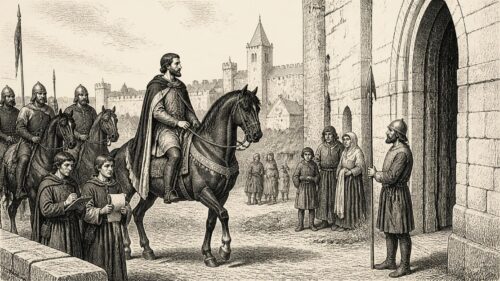
In 1355 Edward III appointed Maurice fitz Thomas FitzGerald, first earl of Desmond, justiciar of Ireland, and he began serving in August. His restoration after earlier conflict with the crown demonstrated royal dependence on powerful Anglo-Irish magnates. Dublin’s institutions could not control a politically fragmented island, where Gaelic and Anglo-Irish lordships exercised overlapping authority. Plague’s recent effects worsened economic and military pressures. Annal-dated reports describe killings, successions and retaliatory warfare in Bréifne, Annaly, Muintir Eolais and Connacht, alongside ecclesiastical and legal continuity. Desmond’s appointment was firmly dated, but annal chronology requires caution. Governance relied on negotiated regional, often violent power.
Read Article
Archived: 23 October 2026
Abstract
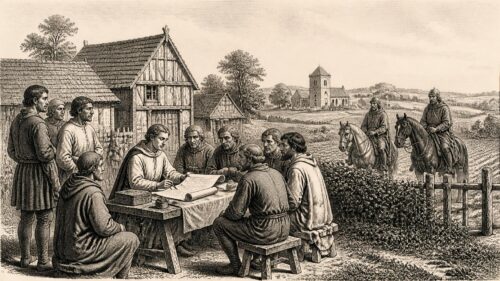
In 1354, Ireland experienced executions, warfare, dynastic killings, deaths and administrative inquiry amid the aftermath of plague. Annals recorded Mac Murchada’s execution by the Galls, followed by wider conflict, while Clann Aedha Buidhe and Dundalk’s Galls heavily defeated Aodh Ó Néill. Local struggles killed rulers in Laois and Connacht, although Domhnall Ó Dubhda succeeded his father in Uí Fhiachrach. Bishops and learned ollamhs also died. Justiciar Thomas de Rokeby governed through courts and inquiries, including valuation of the Pembroke estates at Wexford. Tenant complaints of poverty and high prices reveal hardship. The year demonstrates fragmented authority, cross-community alliances and insecurity.
Read Article

