Archived: 9 October 2026
Abstract
In 1926, the Irish Free State consolidated its institutions amid demographic decline, political division and economic change. The first Free State census counted 2,971,992 people, confirming rural depopulation, emigration, agricultural dependence, Catholic predominance and limited Irish-language knowledge. Legislation addressed allotments, school attendance and shop hours while accommodating farm labour. Construction of the Shannon hydro-electric scheme at Ardnacrusha demonstrated technological ambition, though reliant on foreign expertise. Éamon de Valera’s break with Sinn Féin produced Fianna Fáil, establishing a new republican organisation. Partition endured, while Cosgrave’s government asserted greater Commonwealth equality at the Imperial Conference. Women participated in political and peace activism.
Read Article
Archived: 9 October 2026
Abstract
In 1916, Ireland was transformed by the Easter Rising, launched in Dublin after plans for German arms support failed and Eoin MacNeill’s countermand limited mobilisation. Rebels proclaimed a republic from the GPO, but British artillery, street fighting and fires devastated the city, killing many civilians. Pearse surrendered on 29 April; martial law, secret courts martial, executions, arrests and internment subsequently increased republican sympathy and organisation. Casement was executed in August. Meanwhile, Irish soldiers fought and died at the Somme, while Home Rule negotiations between Redmond, Carson and Lloyd George collapsed. Changes reflected a divided society with an altered political future.
Read Article
Archived: 9 October 2026
Abstract
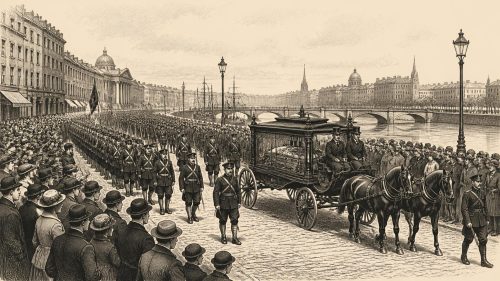
In 1915, the First World War intensified Ireland’s political, social and cultural divisions. The sinking of RMS Lusitania off Kinsale brought global conflict directly to Cork, killing about 1,198 people, including Hugh Lane and Thomas O’Brien Butler. John Redmond’s National Volunteers demonstrated continued constitutional strength, while Irish troops endured heavy losses at Gallipoli and prepared for France. Recruitment increasingly provoked opposition. Meanwhile, IRB-linked Volunteers secretly planned a 1916 rising, seeking German aid, while James Connolly promoted socialist militancy. O’Donovan Rossa’s Dublin funeral became a major republican demonstration. Cultural bodies debated nationalism, and wartime prices and hardship affected communities nationwide unevenly.
Read Article
Archived: 9 October 2026
Abstract
In 1913, the Third Home Rule Bill intensified conflict between constitutional nationalism and Ulster unionism, whose Volunteer Force prepared to resist self-government. Dublin’s Lockout pitted James Larkin’s ITGWU against employers led by William Martin Murphy, bringing exclusion, Bloody Sunday violence, hunger and disputes over relief for children. The collapse of Church Street tenements, killing seven, highlighted urban housing failures. Labour activists formed the Irish Citizen Army, while nationalists founded the Irish Volunteers at the Rotunda in response to unionist militarisation. Cultural debates involving Yeats and the Gaelic League reflected public identities, leaving Ireland divided, mobilised and distrustful of parliamentary solutions.
Read Article
Archived: 9 October 2026
Abstract
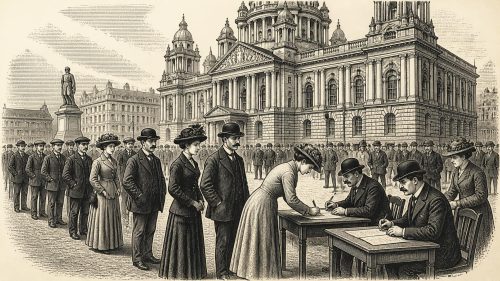
In 1912, the Third Home Rule Bill made limited Irish self-government a realistic prospect, though it remained under parliamentary debate and reserved major powers to Westminster. John Redmond’s Irish Parliamentary Party supported it, while Ulster unionists, led by Edward Carson and backed by British Conservatives, demonstrated mass resistance at Balmoral and signed the Ulster Covenant and women’s Declaration on Ulster Day. Belfast’s industrial strength, sectarian divisions and summer disturbances revealed mounting tension. Suffragists challenged women’s exclusion from reform. Titanic’s Queenstown call highlighted migration and regional connections. Cultural activity continued, but unresolved Home Rule, unionist mobilisation and social divisions foreshadowed crisis.
Read Article
Archived: 9 October 2026
Abstract
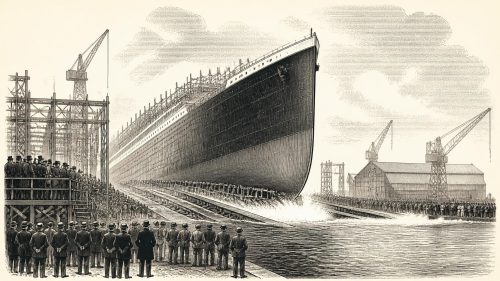
In 1911, Ireland remained under Westminster rule but faced deepening constitutional, social and economic divisions. The census documented continuing population decline through emigration, rural livelihoods, and the mixed fortunes of Irish language revival. The Parliament Act removed the Lords’ absolute veto, making Home Rule more attainable, while Carson’s Craigavon rally demonstrated organised Unionist resistance. Belfast launched Titanic, symbolising industrial strength and Unionist ties to Britain. Labour militancy emerged through Larkin’s Irish Worker and the Wexford lockout. Suffrage organisations expanded women’s public activism. Royal visits and the Parnell monument reflected competing loyalties, as Ireland’s divergent futures became increasingly visible to contemporaries.
Read Article

Archived: 9 October 2026
Abstract
In 1909, Ireland remained within the United Kingdom, yet social, political and cultural change accelerated. Old-age pensions, introduced in January, gave qualifying elderly people a statutory income. The Irish Land Act advanced tenant purchase and addressed western congestion, while the People’s Budget and the United Irish League’s baton convention exposed nationalist divisions, prompting William O’Brien’s All-for-Ireland League. James Larkin’s general union established an Irish labour base. University reform replaced the Royal University with national and Belfast institutions. Synge’s death, Irish-language opera and the Clare Island Survey reflected innovation. On 31 December, Harry Ferguson’s monoplane achieved Ireland’s first self-designed, self-built flight.
Read Article

Archived: 9 October 2026
Abstract
In 1908, Ireland remained within the United Kingdom, but institutional developments strengthened its public sphere. The Irish Universities Act created frameworks for the National University of Ireland and Queen’s University Belfast, addressing Catholic educational grievances while preserving regional distinctions. Patrick Pearse’s St Enda’s school promoted culturally nationalist bilingual education. Hanna Sheehy-Skeffington and Margaret Cousins founded the Irish Women’s Franchise League, demanding equal parliamentary voting rights. Hugh Lane’s Municipal Gallery and the Georgian Society advanced civic cultural memory, while Derry’s Guildhall fire exposed urban vulnerability. Tom Clarke’s Dublin return indicated emerging republican organisation, and impending old-age pensions promised limited social support.
Read Article
Archived: 9 October 2026
Abstract
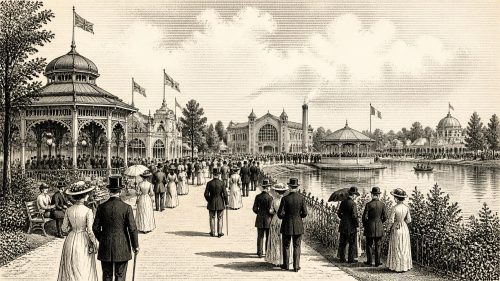
In 1907 Ireland displayed contrasting modernities. Dublin’s Irish International Exhibition at Herbert Park celebrated industry, art and entertainment, while Belfast labour unrest, led by James Larkin, brought transport and docks near paralysis, prompted military intervention and police mutiny. Synge’s Playboy riots exposed disputes over national culture. Birrell’s limited Irish Council Bill collapsed after nationalist rejection, encouraging separatist alternatives. The Evicted Tenants Act and cooperative movement addressed rural hardship, though poverty persisted. Dublin Castle’s Crown Jewels vanished. Marconi’s Clifden station opened wireless links to Canada, illustrating Ireland’s role in technology. Overall, the year revealed stalled constitutional reform, competing visions of progress.
Read Article
Archived: 9 October 2026
Abstract
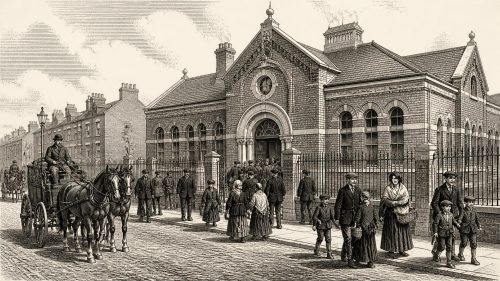
In 1906, Liberal victory left John Redmond’s Irish Parliamentary Party hopeful but unable to secure Home Rule, while James Bryce pursued administrative reform. The Labourers (Ireland) Act empowered local authorities to build cottages and plots, laying foundations for rural security. Dublin’s Iveagh Trust Baths expanded washing and recreation facilities, and licensing legislation restricted drinking hours. University education remained divided after Catholic bishops rejected a mixed Trinity arrangement. Cultural nationalism gained visibility through Douglas Hyde and Peter O’Connor’s Athens protest. Michael Davitt’s death recalled the Land War generation. The year exposed constitutional, social, religious and national tensions while creating welfare institutions.
Read Article
Archived: 9 October 2026
Abstract
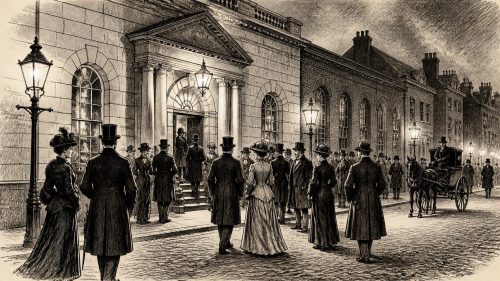
In 1904, Ireland remained under Westminster rule, yet political, economic and cultural initiatives widened debate over its future. Dunraven’s Irish Reform Association advocated limited administrative devolution, while the Irish Parliamentary Party pursued Home Rule and Arthur Griffith promoted Hungarian-inspired national self-reliance. The 1903 Land Act began transferring estates to tenants, alongside co-operative schemes and continuing hardship in congested districts. Gaelic League activities, the first official public camogie match, and the Oireachtas advanced cultural revival. On 27 December the Abbey Theatre opened in Dublin, establishing a permanent national stage. Industrial Belfast contrasted sharply with the mainly agricultural south and west regions.
Read Article
Archived: 9 October 2026
Abstract
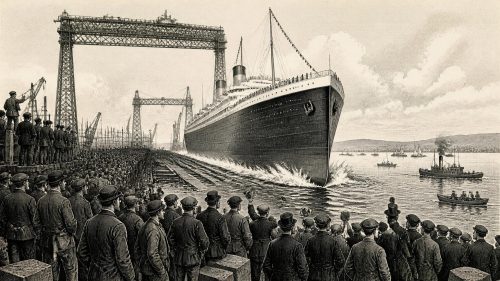
In 1901, Ireland remained within the United Kingdom, governed from Dublin Castle, while Edward VII’s accession exposed divided responses to imperial authority. Land reform continued through a limited Purchase of Land Act, amid unresolved congestion, rents and tenant demands. The census recorded 4,458,775 people, documenting demographic decline, regional contrasts, religion, literacy, occupations and 641,142 Irish speakers. Cultural nationalism expanded through Thomas O’Donnell’s parliamentary protest, the Gaelic League, GAA and Irish-language theatre. Belfast’s launch of the White Star liner Celtic demonstrated industrial and Atlantic connections. The year revealed enduring structures alongside political, social and cultural transformation at the century’s active opening.
Read Article
Archived: 9 October 2026
Abstract
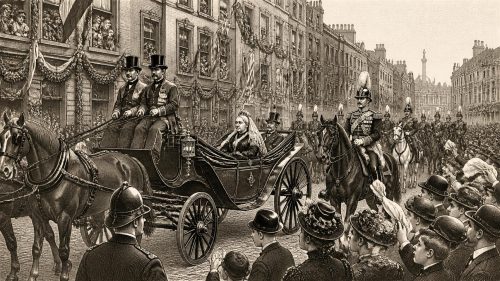
In 1900, Ireland remained under the Union, but competing imperial, nationalist, economic and cultural forces markedly intensified. Queen Victoria’s final Dublin visit and creation of the Irish Guards highlighted Irish participation in the Boer War, while nationalists opposed British rule and sympathised with the Boers. John Redmond reunited the Irish Parliamentary Party, which won most Irish seats, though restricted voting, uncontested constituencies and unionist government limited its effect. Horace Plunkett’s new agricultural department promoted rural improvement and co-operation. Nationalist women, Gaelic League activists and theatre practitioners expanded cultural organisation. Oscar Wilde died in Paris, a Dublin-born writer of global stature.
Read Article
Archived: 9 October 2026
Abstract
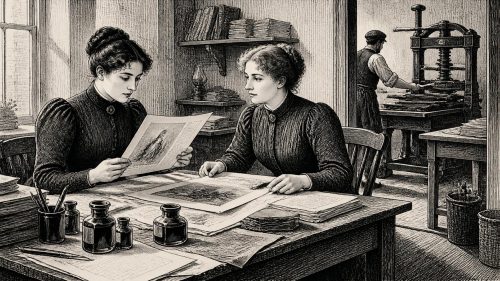
In 1896, Ireland saw no single decisive crisis, but several developments foreshadowed later change. Alice Milligan and Anna Johnston launched Belfast’s Shan Van Vocht, promoting cultural nationalism, women’s participation and 1798 commemoration. Home Rule remained divided and politically stalled under John Dillon and John Redmond. The Land Law Act advanced tenant purchase without ending rural inequality. James Connolly helped found the Irish Socialist Republican Party, linking independence with workers’ interests. Maynooth gained pontifical university status. Dublin opened its first electric tram service, while Belfast’s industry prospered unevenly. Discovery of the Broighter Hoard connected contemporary cultural revival with Ireland’s ancient past.
Read Article
Archived: 10 October 2026
Abstract
In 1883, Ireland remained divided by unresolved land ownership, coercive government and demands for Home Rule, while the aftermath of the Phoenix Park murders shaped prosecutions and political debate. The Labourers (Ireland) Act established a cautious framework for sanitary authorities to build rural cottages, foreshadowing later reforms. Nationalist organisation persisted through Parnell, the National League and transatlantic support. Catholic institutions expanded with Belfast’s Mater Hospital and a Jesuit University College in Dublin. Completed O’Connell monument figures, international rugby, emigration, a Tyrone tramway proposal and George Moore’s first novel reflected wider civic, economic and cultural change amid continuing uncertainty, national tensions.
Read Article
Archived: 10 October 2026
Abstract
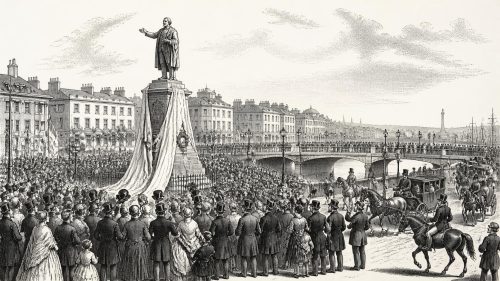
1882 in Ireland combined attempted settlement, assassination, land relief, coercion, injustice, and nationalist reorganisation. Informal negotiations between Parnell and Gladstone’s government secured nationalist releases and promised arrears relief, prompting Forster’s resignation. Days later, Irish National Invincibles murdered Chief Secretary Lord Frederick Cavendish and under-secretary Thomas Henry Burke in Phoenix Park, damaging constitutional nationalism. The government responded with the Prevention of Crime Act and the limited Arrears of Rent Act. At Maamtrasna, inadequate interpretation imperilled Irish-speaking defendants; Myles Joyce was executed and posthumously pardoned. Parnell’s supporters founded the Irish National League, while Dublin unveiled O’Connell’s monument, affirming constitutional public national aspirations.
Read Article
Archived: 10 October 2026
Abstract
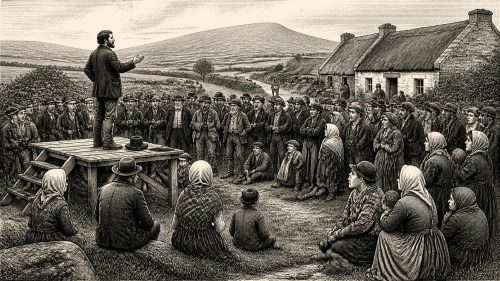
In 1879, poor harvests, falling agricultural prices and insecure small tenancies caused distress in Connacht, reviving fears of hunger, debt and eviction. On 20 April, tenants meeting at Irishtown, County Mayo, transformed a local rent dispute into agitation. Further meetings led to the Mayo Land League at Castlebar in August and the Irish National Land League in Dublin in October, connecting rural protest with Parnell’s parliamentary nationalism. Isaac Butt died, while Home Rule leadership was contested. In August, Knock villagers reported a Marian apparition, investigated by church authorities. Relief efforts began, and university reform created the Royal University of Ireland.
Read Article
Archived: 10 October 2026
Abstract
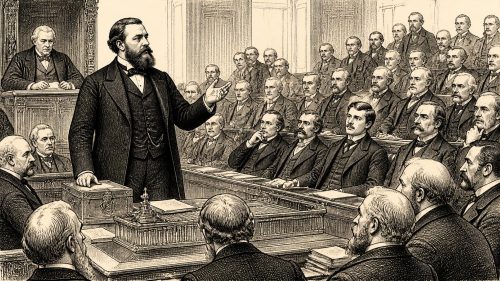
In 1876, Isaac Butt’s request for a Commons committee on Irish self-government was defeated overwhelmingly, exposing Westminster’s resistance and divisions within Home Rule, where Parnell advocated repeal of the Union. Land tenure remained contested despite the 1870 Act; parliamentary initiatives and Return of Owners of Land highlighted insecurity and concentrated property, although harvests were good. Railway consolidation created Great Northern Railway, while Dublin established an artisans’ dwellings company. The Dublin Women’s Suffrage Association, led by Anna Haslam, organised campaigning. The Society for the Preservation of the Irish Language formed, signalling cultural activism amid continuing emigration, rural dependence and British rule.
Read Article
Archived: 10 October 2026
Abstract
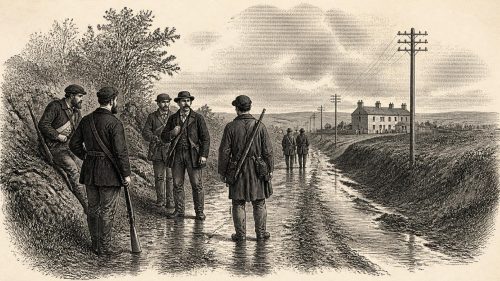
In 1867 the Irish Republican Brotherhood launched a poorly coordinated Fenian rising seeking an independent republic and social reform. After alarms including the failed Chester Castle raid, authorities extended habeas corpus suspension, arrested suspects, and strengthened policing. On 5 March, insurgents attacked police and coastguard stations, disrupted telegraphs and railways, and assembled near Dublin and in Munster. Better-armed government forces, intelligence, poor communications, inadequate weapons, and absent mass support quickly defeated them. Peter O'Neill Crowley's later death fostered martyrdom. The year brought Fenian rescues and executions in Manchester, transportation to Western Australia, the Clerkenwell bombing, hardship, reform, and Orange mobilisation.
Read Article

Archived: 10 October 2026
Abstract
In 1865, Dublin’s International Exhibition at Earlsfort Terrace showcased Irish art, industry and agriculture, affirming civic ambition, imperial connections and establishment loyalty, while masking persistent rural poverty and inequality. July’s restricted-franchise general election returned Palmerston’s Liberals, but offered no agreed Irish political programme. More consequentially, police suppressed the Fenian Irish People in September, arresting leading Irish Republican Brotherhood activists. James Stephens was captured in November but escaped Richmond Bridewell. Green Street trials sentenced O’Leary, Luby and O’Donovan Rossa to penal servitude, creating nationalist symbols. Catholic Archbishop Paul Cullen opposed revolutionary secrecy. Livestock remained vital, and W. B. Yeats was born.
Read Article
Archived: 10 October 2026
Abstract
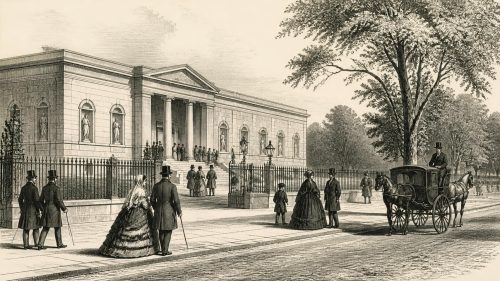
In 1864, Ireland saw expanding state and cultural institutions alongside social and political division. Civil registration of births, deaths and marriages began, while Dublin’s National Gallery opened and scientific collecting continued. A memorial tower to Daniel O’Connell was begun at Glasnevin, affirming Catholic nationalist memory. Post-famine agricultural consolidation, livestock growth, emigration and the foundation of Cork’s Munster Bank indicated uneven economic change. Belfast’s August sectarian riots caused deaths, injuries and controversy over policing, prompting a royal commission. Meanwhile, the Irish Republican Brotherhood organised clandestinely through The Irish People, and Archbishop Cullen founded the Irish Ecclesiastical Record, strengthening Catholic institutional authority.
Read Article

Archived: 10 October 2026
Abstract
In 1862, Ireland saw significant infrastructural, civic and institutional development alongside enduring poverty and political frustration. Edward Harland and Gustav Wolff formed their Belfast shipbuilding partnership, while Ulster Hall opened, symbolising the city’s industrial and cultural confidence. The railway reached Sligo, and a Stranraer–Larne steam service improved connections with Scotland. Dublin gained statutory authority for a municipal fire brigade. Meanwhile, parliamentary debates highlighted severe rural distress and workhouse dependence; Poor Law changes expanded infirmary care and child boarding-out. Churches marked Archbishop Beresford’s death, republican organisation persisted covertly, and Irish communities remained connected to America, literature, and expanding national education systems.
Read Article
Archived: 10 October 2026
Abstract
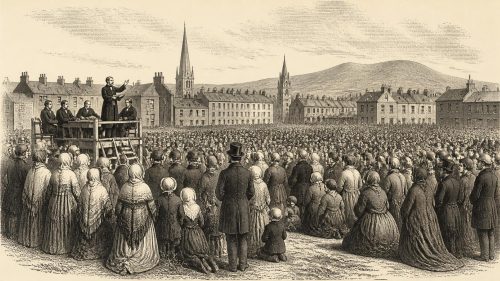
In 1859, post-Famine Ireland displayed religious revival, political restriction, migration and uneven modernisation. The Ulster Evangelical revival, rooted in earlier prayer meetings, reached peak visibility through mass gatherings, conversions and controversy, strengthening Protestant culture while provoking clerical criticism. Westminster elections operated under a narrow property franchise, leaving most people excluded. Dublin saw the launch of The Irish Times and the National Gallery’s foundation stone. The Pomona’s wreck off Wexford killed 424, highlighting emigrants’ perils. Railways reached Enniskillen and linked Tralee with Killarney, yet rural hardship deepened. Meanwhile, Fenian reorganisation abroad connected secret republicanism with Ireland’s diaspora and future political conflict.
Read Article

Archived: 10 October 2026
Abstract
In 1857, post-Famine Ireland remained marked by emigration, altered landholding and poverty, while political representation was limited by property-based voting. The general election strengthened Liberals but also revealed the weakness of the tenant-right Independent Irish Party. Belfast's Orange Day riots, prolonged through summer, exposed sectarian tensions and discredited a predominantly Protestant police force, prompting a later inquiry. Administrative reforms, including the Boundary Survey Act and Griffith's Valuation, expanded state oversight of land and taxation. Institutions and enterprises included Kilkenny's St Mary's Cathedral, Dublin's Natural History Museum, zoo breeding, Gallaher's tobacco venture and Scrabo Tower, illustrating reconstruction, commerce and contested authority.
Read Article
Archived: 10 October 2026
Abstract
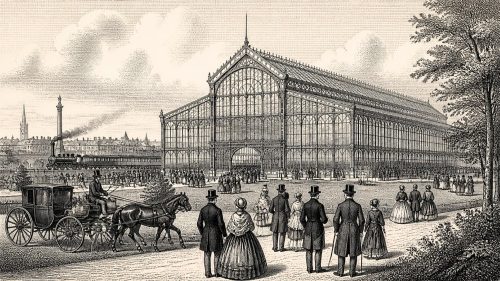
Dublin’s Great Industrial Exhibition opened on Leinster Lawn in May 1853, funded largely by railway contractor William Dargan and organised with the Royal Dublin Society. Its glass-and-iron halls displayed art, manufacture, machinery and Irish antiquities, projecting modernity after the Famine, though access remained socially limited. Queen Victoria’s August visit amplified its civic and imperial significance. Meanwhile, population decline, emigration, workhouses and estate sales showed continuing hardship. Tenant Right politics fractured as leading advocates accepted office. Gladstone extended income tax to Ireland despite objections. Plans for a gallery and Catholic university developed, while John Mitchel escaped transportation, symbolising enduring nationalist exile.
Read Article
Archived: 10 October 2026
Abstract
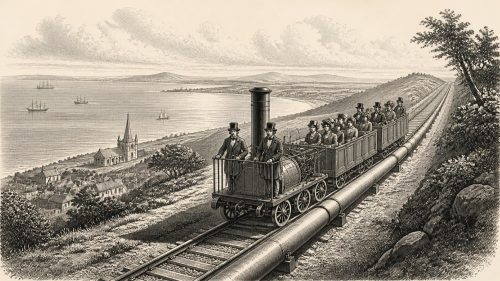
In 1844, Ireland combined political mobilisation, entrenched poverty and uneven modernisation. Daniel O’Connell’s conviction was overturned by the House of Lords, restoring him to public life but revealing limits on Repeal. Thomas Davis’s A Nation Once Again strengthened cultural nationalism within Young Ireland. Workhouses, already housing and relieving many people, exposed chronic vulnerability before the famine. The Dalkey Atmospheric Railway and Richard Turner’s engineering demonstrated technological ambition, while Belfast’s linen trade reflected industrial growth alongside insecurity. Catholic institution-building included St Malachy’s Church and Dublin’s first St Vincent de Paul conference. Francis Rynd’s hypodermic treatment illustrated Irish medical innovation amid precarity.
Read Article
Archived: 11 October 2026
Abstract
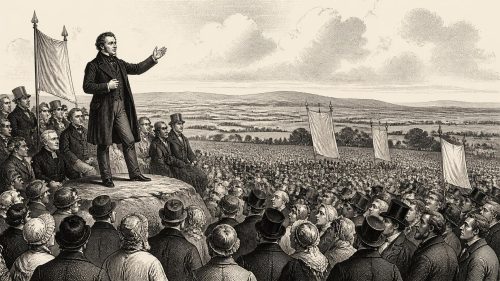
In 1843 Daniel O’Connell’s Repeal campaign sought restoration of an Irish parliament while retaining the Crown. Organised by the Repeal Association, enormous peaceful monster meetings at Trim, Tara and Mullaghmast mobilised supporters and linked self-government to Ireland’s nationhood, poverty, land insecurity and development. Thomas Davis and The Nation broadened its cultural nationalism, while clergy played organisational roles. Beneath pageantry, agricultural dependence, insecure tenancies and harsh Poor Law relief revealed social vulnerability. The prohibited Clontarf meeting marked the campaign’s defeat: O’Connell cancelled it to avert violence, after which government prosecutions began. Repeal failed, but 1843 shaped nationalism and highlighted Ireland’s crisis.
Read Article
Archived: 11 October 2026
Abstract
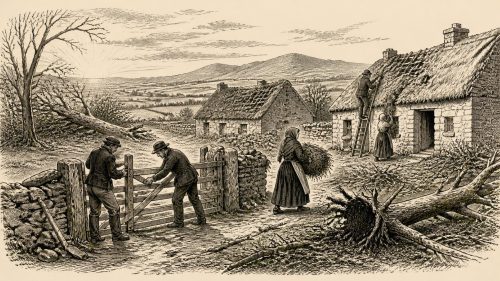
In 1839 Ireland experienced the Night of the Big Wind, a devastating storm of 6–7 January that damaged homes, farms, shipping and infrastructure, caused numerous deaths, and became a lasting marker in popular memory. Its effects intensified existing rural poverty and seasonal insecurity. Meanwhile, implementation of the 1838 Poor Law advanced through unions, guardians, rates and workhouse planning, while amendments refined administrative boundaries. Policing legislation strengthened state capacity in Dublin and nationally, amid O’Connell’s reform politics and continuing tithe disputes. National education and Griffith’s valuation expanded official knowledge. In August, the Belfast–Lisburn railway opened, signalling transport, commerce and institutional modernisation.
Read Article

Archived: 11 October 2026
Abstract
In 1822, Ireland endured agrarian unrest, food scarcity and emergency government. Lord Lieutenant Richard Wellesley inherited Rockite violence, chiefly in Munster, where the Insurrection Act, habeas corpus suspension, troops and special commissions produced prosecutions, transportation and executions. Poor harvests caused severe regional distress, especially in the west and south-west. Government coordinated charity and funded public works, employing labourers on roads, piers and harbours under engineers including Alexander Nimmo and Richard Griffith. Political divisions persisted over Catholic exclusion and the established Church. A new constabulary law encouraged organised policing. December's Bottle Riot, when a jar was thrown at Wellesley, symbolised conflict.
Read Article
Archived: 11 October 2026
Abstract
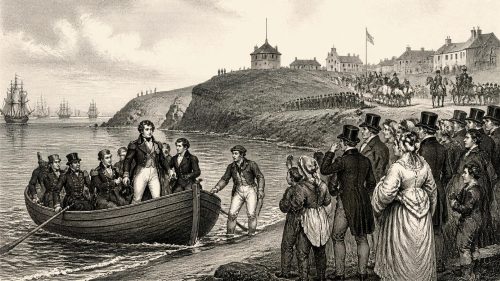
In 1821, Ireland experienced population growth, economic hardship, political exclusion and royal pageantry. The first comprehensive census recorded about 6.8 million people, exposing dependence on insecure rural livelihoods; most detailed returns were later destroyed in 1922. Post-war depression, rents, tithes and scarce employment contributed to Munster’s emerging Rockite disturbances. Westminster’s Catholic Disability Removal Bill passed the Commons but failed in the Lords, preserving Catholic exclusion from Parliament. George IV’s August landing at Howth inspired displays of loyalty, including Daniel O’Connell’s conciliatory participation, but brought no reform. Administrative changes and cultural activity highlighted tensions between Union, equality, rural insecurity and identity.
Read Article





