
Archived: 11 October 2026
Abstract
George IV’s accession in 1820 left Ireland under the Union, with limited property-based representation and Catholic exclusion from Parliament. Henry Grattan’s death removed a leading advocate of Catholic relief. Post-war depression and private-bank failures disrupted credit, trade and livelihoods, while Cork’s North Cathedral burned. The Dublin Gas Act, completion of the Lough Allen Canal, local schooling and the Royal Dublin Society reflected gradual improvement. Irish people also participated in Antarctic exploration and Cape Colony migration. In December, County Dublin freeholders at Kilmainham challenged an official loyal address, condemning the king’s treatment of Queen Caroline and Ireland’s distress, foreshadowing O’Connell’s mobilisation.
Read Article
Archived: 11 October 2026
Abstract
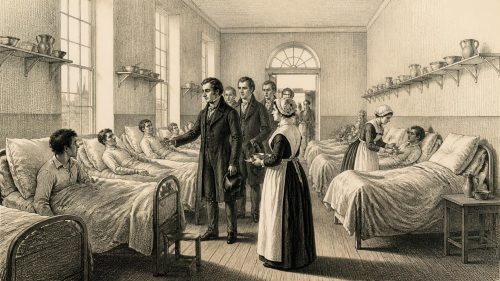
In 1817, Ireland faced severe scarcity, unemployment and typhus amid poor harvests and post-Napoleonic depression, though not an island-wide famine comparable to the Great Famine. Dublin fever surged in September, prompting Dr Steevens’ Hospital to open emergency wards for labourers, artisans and servants. Relief depended on fragmented charities, local bodies and government employment schemes, while new legislation addressed public works, grand-jury finance and institutional care. Fiscal integration with Britain advanced, and Catholic emancipation remained unresolved. Despite crisis, the Royal Canal reached Cloondara, Dunleary harbour construction began, temperance emerged in Skibbereen, and O’Reilly published an Irish-English dictionary, carefully preserving linguistic knowledge.
Read Article
Archived: 11 October 2026
Abstract
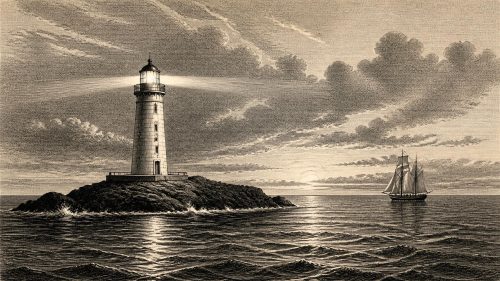
In 1815, Ireland, within the United Kingdom, faced transition from Napoleonic war to peace. Daniel O’Connell’s fatal duel with John D’Esterre heightened his prominence amid Catholic exclusion and Protestant civic power. Waterloo ended wartime demand, exposing agriculture’s dependence on British markets and foreshadowing hardship. New infrastructure included Tuskar Rock lighthouse, Charles Bianconi’s Clonmel–Cahir passenger service, and Cork’s first Irish-built steamship. Catholic public confidence appeared in St Mary’s Pro-Cathedral’s foundation and the Religious Sisters of Charity. The Dublin Society acquired Leinster House, William Drennan published reformist writing, and asylum governance was formalised, revealing Ireland’s changing political, religious, commercial and institutional systems.
Read Article
Archived: 11 October 2026
Abstract
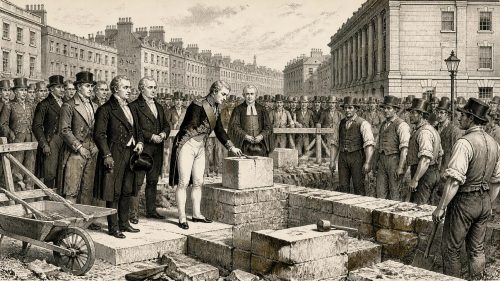
In 1814, post-Union Ireland faced peace as Napoleon’s abdication altered wartime trade while rural poverty and land tensions persisted. Robert Peel’s government answered disturbances, notably in Tipperary’s Middlethird, with the Peace Preservation Act, creating salaried magistrates and constables and strengthened coercive powers against unlawful combinations. Catholic politics were divided over a proposed Crown veto on bishops, with Daniel O’Connell opposing state control; emancipation remained unresolved. Dublin saw Whitworth lay the General Post Office foundation stone and Chapel Royal inaugurated, while Belfast’s Academical Institution opened. Shaw Mason began his parochial survey, and the Apprentice Boys Club formed in Derry, reflecting division.
Read Article

Archived: 11 October 2026
Abstract
In 1812, Catholic politics revived through the Catholic Board, which defended constitutional petitioning against Convention Act restrictions. Daniel O’Connell emerged as a forceful opponent of the proposed Crown veto over bishops’ appointments. At Westminster, Henry Grattan secured a Commons vote favouring consideration of Catholic claims, but no emancipation legislation followed. Robert Peel’s appointment as chief secretary strengthened Dublin Castle’s resistance. Wartime markets supported agricultural output and trade, yet rural households faced insecure holdings, rents and poverty. Wakefield surveyed these inequalities; Edgeworth’s The Absentee criticised distant landlordism. Sadler’s balloon attempt provided a fleeting spectacle amid unresolved political, social and economic tensions.
Read Article
Archived: 11 October 2026
Abstract
In 1811, Irish politics centred on Catholic emancipation and the legality of organised petitioning. Edward Hay’s plan for county-appointed petition managers prompted Chief Secretary Wellesley-Pole’s circular, invoking the Convention Act to restrain the Dublin Catholic Committee. The ensuing controversy exposed tensions between constitutional petitioning, representative organisation and Dublin Castle’s authority after the Union. Henry Grattan presented a Catholic petition at Westminster, but emancipation failed; nevertheless, Catholic activists developed safer organisational methods, influencing Daniel O’Connell’s later strategy. The year also saw the foundation of the Kildare Place Society, cultural works by Owenson and Knowles, and HMS Saldanha’s wreck at Lough Swilly.
Read Article
Archived: 11 October 2026
Abstract
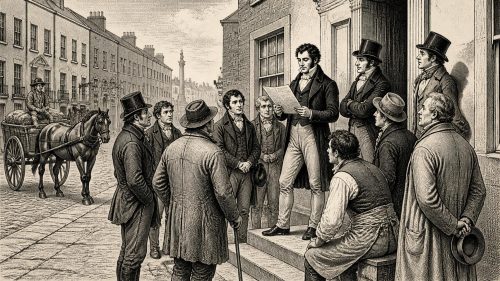
In 1810, nine years after Union, Ireland’s Catholics remained excluded from Parliament and offices despite earlier relief. Henry Grattan’s unsuccessful Westminster initiative exposed disputes over a proposed veto on episcopal appointments. Daniel O’Connell, opposing such control, issued a Dublin circular encouraging county committees to correspond with the Catholic Committee, strengthening constitutional, national organisation. Authorities nevertheless feared representative associations under the Convention Act. Parliament’s Unlawful Oaths (Ireland) Act punished coercive combinations amid rural insecurity. Meanwhile, agriculture dominated livelihoods, while Ulster linen connected production and Belfast commerce to wartime markets. Print, learned culture and Irish historical interests accompanied a contested public life.
Read Article
Archived: 11 October 2026
Abstract
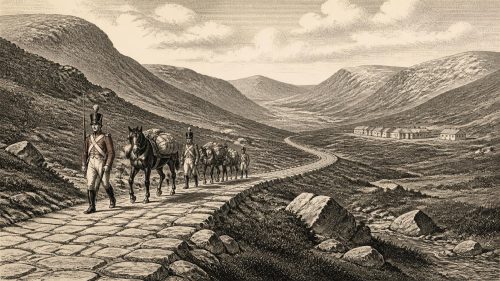
In 1809, post-Union Ireland remained governed through Dublin Castle, Westminster and local institutions amid war and unresolved Catholic disabilities. Administrative changes followed Arthur Wellesley’s departure for Portugal. Captain Alexander Taylor’s Military Road across Wicklow, completed in October, extended state access to former insurgent terrain. Legislation supported road improvements, Dublin waterworks, Church of Ireland buildings and investigation of bog reclamation. Nelson’s Pillar opened in Dublin, celebrating imperial naval power. Belfast manufacturing collapse prompted charitable relief, while Cork’s Magdalene asylum reflected religious social discipline. Edward Bunting’s music collection preserved and reshaped Irish harp traditions through print, illustrating infrastructure, commemoration and cultural interpretation.
Read Article

Archived: 11 October 2026
Abstract
In 1807, six years after Union, Ireland remained governed from Dublin Castle and Westminster amid war, restricted representation and unresolved Catholic claims. George III's opposition defeated a limited Catholic military service measure, toppling Grenville ministry. The new lord lieutenant, Duke of Richmond, and chief secretary Arthur Wellesley pursued security, elections and renewed coercive powers, including insurrection and arms legislation. Michael Dwyer’s colonial trial illustrated repression’s imperial reach. Dublin gained a paving board amid wartime commercial pressures. In November, Rochdale and Prince of Wales were wrecked in Dublin Bay, killing about 400 and prompting later plans for a harbour at Dunleary.
Read Article
Archived: 11 October 2026
Abstract
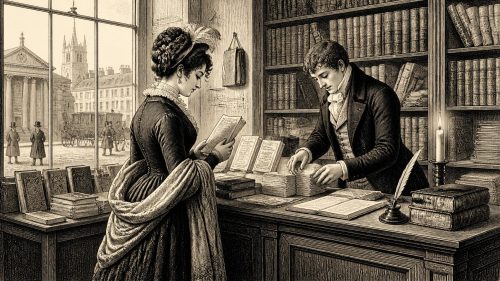
In 1806, five years after the Union, Ireland was governed increasingly through Westminster, while Catholic emancipation remained unrealised despite Lord Grenville’s sympathetic ministry. The United Kingdom election returned Irish MPs through restricted, patronage-driven constituencies, and wartime administration integrated Irish finance, trade and defence into imperial structures. Legislation regulated butter exports, excise, and charitable hospitals, illustrating expanding state oversight without comprehensive poor relief. Coastal defences reflected continuing fear of French invasion. Dublin retained elite social importance, marked by Arthur Wellesley’s marriage. Literary publishing proved significant: Sydney Owenson’s The Wild Irish Girl articulated Gaelic cultural survival, alongside satire and Ulster vernacular verse.
Read Article

Archived: 11 October 2026
Abstract
In 1805, Irish Catholics petitioned Westminster for equal political rights after the Union abolished Dublin’s parliament. Introduced by Charles James Fox and Lord Grenville, the loyal, constitutional appeal sought admission to Parliament and major offices, while rejecting papal temporal authority and threats to the Protestant establishment. Parliament decisively rejected it, exposing Catholic exclusion and establishing a pattern of failed emancipation campaigns until 1829. The state simultaneously transported Wicklow insurgent Michael Dwyer and companions to New South Wales. Ireland shared in Napoleonic war’s consequences after Trafalgar, while cultural life included Mary Tighe’s Psyche, William Rowan Hamilton’s birth, and Brian Merriman’s death.
Read Article
Archived: 11 October 2026
Abstract
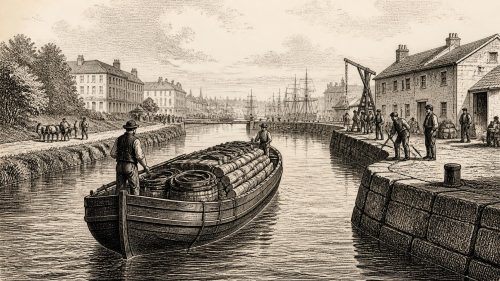
In 1804, Ireland remained shaped by the legacy of 1798, the Union and war with France. James Corcoran’s guerrilla band was destroyed near Enniscorthy, while transported Irish prisoners invoked Vinegar Hill during the failed Castle Hill rebellion in New South Wales. Invasion fears prompted a gun tower at Sutton and Edgeworth’s short-lived Dublin–Galway semaphore. Economic integration advanced when The Ranger completed the commercial Grand Canal passage from the Shannon to Dublin. Cork Street Fever Hospital admitted its first patients, providing isolation and care in the Liberties. These developments reveal governance, defence, infrastructure and philanthropy amid unresolved political and social grievances.
Read Article

Archived: 11 October 2026
Abstract
In 1803, amid post-Union discontent and renewed war with France, Robert Emmet organised a United Irish-inspired attempt to seize Dublin Castle and establish a provisional government. Conspirators produced pikes and explosives, while Anne Devlin carried messages, but weak coordination, limited firearms and absent regional support undermined the plan. On 23 July, the Thomas Street rising collapsed into confused violence; Lord Chief Justice Kilwarden and his nephew were murdered. Emmet was arrested, tried and executed, while Devlin and other suspects faced repression. Though militarily insignificant, the failure strengthened coercive government and preserved republican ideals of independence, popular sovereignty and inclusive citizenship.
Read Article
Archived: 11 October 2026
Abstract
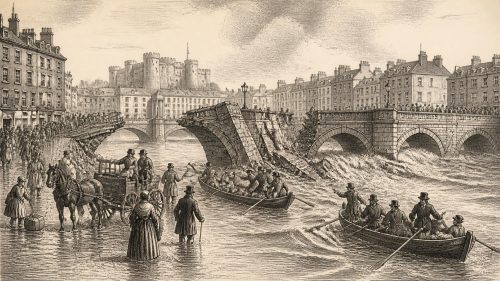
In 1802, Ireland adjusted to Union government as its first Westminster election exposed restricted representation and Catholic exclusion. The Treaty of Amiens briefly eased fears of French intervention, yet official vigilance persisted and Robert Emmet’s return signalled surviving revolutionary ambition. Social initiatives addressed poverty and disease: Edmund Rice began educating poor Catholic boys in Waterford, Cork opened a fever hospital, Dublin’s dispensary aided the poor, and Belfast’s library gained Linen Hall premises. In December, torrential rain flooded Dublin, bursting rivers and destroying Ormond Bridge. These events revealed a society experiencing constitutional change, unresolved grievances, voluntary reform, urban hardship and vulnerability.
Read Article
Archived: 11 October 2026
Abstract
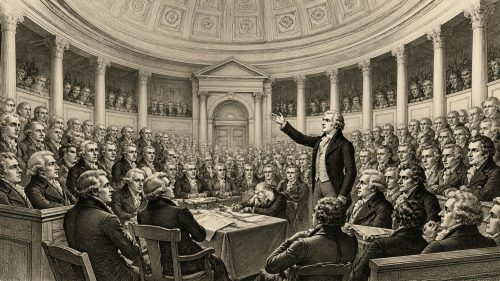
In 1800, Ireland remained a separate kingdom with its own parliament, courts and administration, but the Acts of Union passed in Dublin and London, ending its legislature from 1 January 1801. Cornwallis and Castlereagh secured support amid patronage, compensation and opposition led by Henry Grattan. The Union transferred limited Irish representation to Westminster, preserved the established Protestant church, and left Catholic emancipation unresolved. Post-rebellion repression continued, including Roddy McCorley’s execution, while food scarcity prompted controls on distilling and exports. Parliament also regulated trade, institutions and local improvements. Dublin retained political activity yet faced loss of its resident legislature and disruption.
Read Article
Archived: 11 October 2026
Abstract
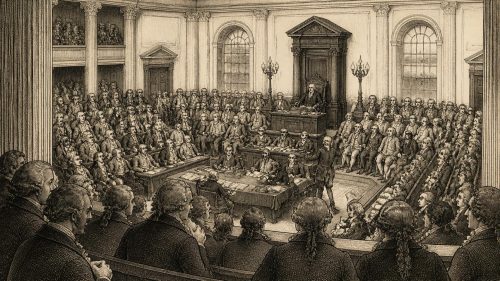
In 1799, post-rebellion Ireland remained militarised and insecure as Cornwallis and Castlereagh sought legislative union with Great Britain. Their proposal was defeated in the Commons, where Speaker John Foster led a narrow anti-union majority, although the Lords approved it. Public celebrations reflected resistance, but the unrepresentative Dublin parliament excluded Catholics. During the pause, government prepared to rebuild support through patronage. Courts martial, disturbed-district proclamations, prosecutions and transportation continued, tempered by Cornwallis’s commutations. Catholic bishops considered state oversight of appointments, while lay Catholics opposed union. Autumn rains damaged potatoes, raising subsistence fears amid wartime financial disruption. Ireland nevertheless faced constitutional change.
Read Article
Archived: 12 October 2026
Abstract
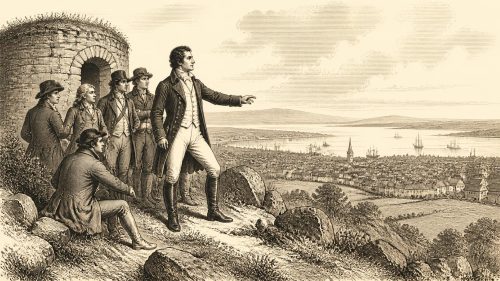
In 1795, wartime Ireland experienced reform, concession and sectarian conflict within its subordinate relationship to Britain. Lord Fitzwilliam’s arrival encouraged Catholic hopes of parliamentary admission, but London recalled him and defeated Grattan’s bill, undermining constitutional reform. United Irish leaders consequently moved further towards clandestine republicanism; Wolfe Tone departed for America seeking French support. Parliament nevertheless founded St Patrick’s College, Maynooth, to train Catholic clergy domestically. In County Armagh, the Battle of the Diamond confirmed Protestant dominance and prompted the formation of the Orange Order, followed by expulsions of Catholics. Routine infrastructure, legal and trade measures continued amid insecurity and polarisation.
Read Article
Archived: 12 October 2026
Abstract
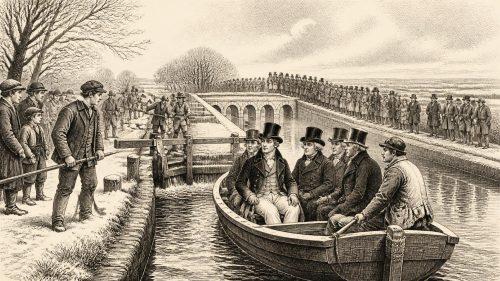
In 1794, Ireland combined commercial development with intensifying political repression. The Lagan Canal’s completion linked Belfast to Lough Neagh, improving Ulster’s transport connections, while a gunpowder enterprise at Ballincollig reflected wartime industrial demand. Dublin’s United Irishmen publicly advocated parliamentary reform, but official alarm over French links led to raids and suppression; William Drennan’s acquittal for seditious libel nevertheless encouraged reformers. Rural violence involving Defenders, militia and local grievances demonstrated wider insecurity, though Defenders remained distinct from United Irishmen. Fitzwilliam’s appointment as Lord Lieutenant raised hopes of Catholic concessions. Mary Leadbeater’s educational publication also testified to continuing cultural and moral debate.
Read Article
Archived: 12 October 2026
Abstract
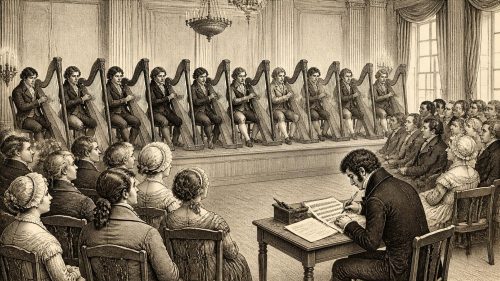
In 1792, Irish politics was shaped by Catholic relief, reform agitation and anxiety after the French Revolution. The Catholic Relief Act eased restrictions on education, law and mixed marriage but withheld voting and parliamentary rights. December’s Back Lane Convention demonstrated Catholic national organisation and petitioned for constitutional participation. In Belfast, United Irishmen and Volunteers promoted reform, religious unity and sympathy with France, prompting repression. The Belfast Harp Festival preserved a musical tradition through Edward Bunting’s transcription. Economic measures supported linen, fisheries, navigation, roads and enterprise while export embargoes revealed insecurity. Together these developments enlarged Ireland’s public sphere without producing revolution.
Read Article
Archived: 12 October 2026
Abstract
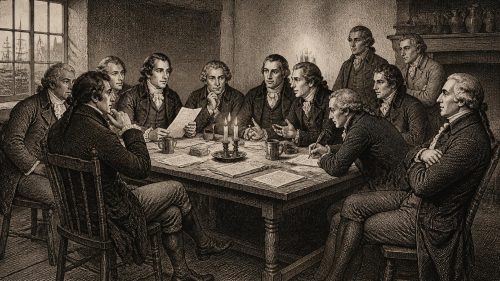
In 1791, Irish politics became organised without delivering constitutional change or Catholic emancipation. Belfast’s Bastille commemoration and the founding of the Society of United Irishmen linked parliamentary reform, Catholic inclusion and civic unity across religious divisions, influenced by Theobald Wolfe Tone. Dublin radicals, including John Keogh, Edward Byrne, James Napper Tandy and William Drennan, strengthened Catholic and reform movements, provoking divisions with conservative Catholic elites. The Dublin Custom House symbolised both commercial ambition and state authority, while the Grand Canal’s Barrow link improved transport to Waterford. Amid rural inequality, print, association and infrastructure widened horizons, marking transition towards popular politics.
Read Article
Archived: 12 October 2026
Abstract
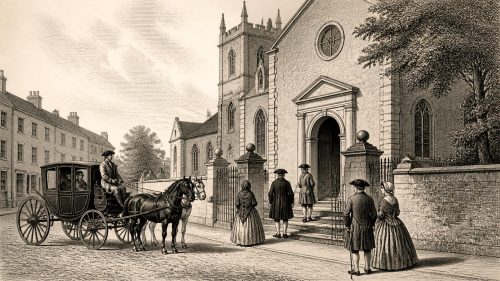
In 1787, Ireland’s Dublin parliament responded to agrarian unrest by passing the general Riot Act, amid Rightboy disturbances and attacks on property, tolls and officials. It also promoted manufactures, linen, trade and maritime regulation, while fiscal measures extended state oversight. Thomas Orde’s proposed nationwide school system, including free parish education, failed amid confessional distrust. John Butler, Catholic bishop of Cork and heir to Dunboyne, conformed to the Church of Ireland, an exceptional conversion reflecting Protestant privilege. Lord Lieutenant Rutland died in October, disrupting Castle politics. Cultural life saw Dublin theatre reorganisation and Prince William Henry’s visit to Curraghmore in December.
Read Article
Archived: 12 October 2026
Abstract
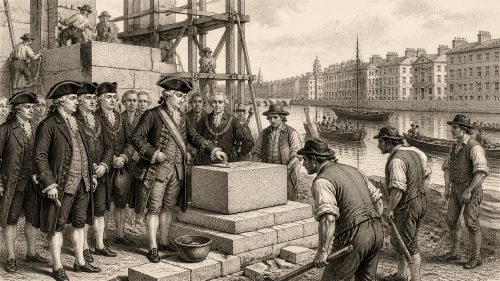
In 1786, Ireland combined constitutional autonomy with entrenched exclusion. The Dublin parliament, dominated by Protestant elites under Lord Lieutenant Rutland, operated after Pitt’s failed commercial proposals. In Dublin, Rutland laid the Four Courts foundation stone, while the Dublin Port Act created the Ballast Board to improve harbour administration and trade. These projects symbolised state infrastructure and employment. Meanwhile, Munster Rightboys protested tithes, rents and religious charges through intimidation and violence, exposing rural insecurity despite Catholic relief. The execution of George Robert FitzGerald demonstrated limits upon landed privilege. Declining Volunteers and restricted political participation underscored Ireland’s deep confessional and economic tensions.
Read Article

Archived: 12 October 2026
Abstract
In 1785, proposed commercial reforms exposed the limits of Ireland’s post-1782 legislative independence. Thomas Orde’s initial trade bargain, approved in modified form by the Irish Commons, was altered in Britain to require Irish conformity with British navigation and colonial legislation. Opposition led by Henry Grattan and Henry Flood defeated the revised scheme, leaving trade relations unresolved. Debate also highlighted restricted parliamentary representation, while William Drennan’s pamphlet urged Catholic-Protestant reform. Dublin’s Irish Academy was founded, reflecting learned and civic institutions. Richard Crosbie’s balloon flight thrilled Dublin, whereas a balloon-linked fire devastated Tullamore, demonstrating urban vulnerability and contrasting scientific excitement and disaster.
Read Article

Archived: 12 October 2026
Abstract
In 1784, Rutland’s new administration resisted Irish parliamentary reform, and Henry Flood’s measure was defeated, exposing the limits of legislative independence under Anglican patronage. Reform meetings and Volunteer delegates continued to demand broader representation, while Catholic leaders debated whether further relief risked existing gains. In County Armagh, raids by Peep o’ Day Boys amid competition for land, linen work and security prompted the first organised Defenders near Ballymacnab. Expanding linen exports and the Grand Canal service to Robertstown indicated commercial growth, yet insecurity and inequality persisted. The year ended without settlement, revealing divisions of power, religion, property and livelihood throughout.
Read Article
Archived: 12 October 2026
Abstract
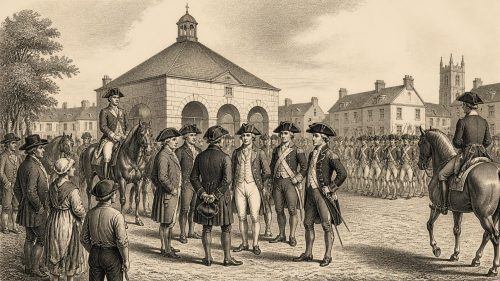
In 1782, Irish Patriots, supported by the predominantly Protestant Volunteer movement, secured major constitutional concessions during Britain’s wartime weakness. Dungannon resolutions, Henry Grattan’s parliamentary campaign and public mobilisation helped win repeal of the Declaratory Act, weakening British legislative supremacy, while Yelverton’s Act reformed Poynings’ Law and expanded Irish parliamentary initiative. The Catholic Relief Act eased property, educational and worship restrictions but withheld political equality. The settlement, later termed Grattan’s Parliament, preserved crown, empire, patronage and a narrow Protestant electorate. Meanwhile, poor harvests, rising prices and an export embargo revealed widespread insecurity. Ireland gained qualified legislative autonomy, not fully democratic self-government.
Read Article

Archived: 12 October 2026
Abstract
In 1780, Irish commercial concessions eased some restrictions on trade, but their dependence on Westminster reinforced Patriot demands for legislative authority. Henry Grattan’s April motion declaring that only Ireland’s King, Lords and Commons could legislate for the kingdom was defeated. On 13 July, 2,700 Ulster Volunteers assembled at Belfast and publicly endorsed the principle, transforming a defence force into a political movement. Volunteers connected civic organisation, commerce and constitutional agitation, although they were Protestant and excluded most Catholics. War, economic uncertainty and reform shaped the year. Administrative change brought Carlisle as lord lieutenant, but Ireland entered 1781 without legislative independence.
Read Article
Archived: 12 October 2026
Abstract
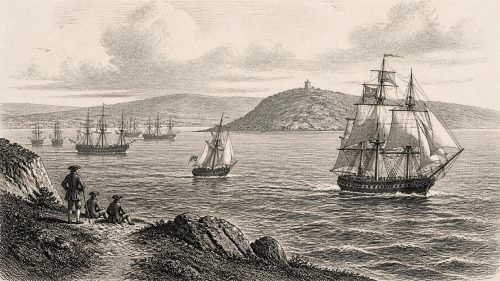
In 1777, Ireland felt the American war through disrupted markets, privateering and insecurity in the Irish Sea. Lord Buckinghamshire’s new Dublin Castle administration sought to preserve a system constrained by Westminster, franchises and Catholic exclusion. American privateers near Howth delayed linen shipping, threatening credit, employment and trade. Loss of colonial markets and provision embargoes exposed Ireland’s narrow, regulated economy. Thomas Campbell’s published survey criticised uneven development, inadequate institutions and penal exclusions, while advocating union rather than separation. Dublin’s theatre and print culture remained active. The year foreshadowed later Volunteer and free-trade crises, but did not deliver constitutional or commercial reform.
Read Article
Archived: 12 October 2026
Abstract
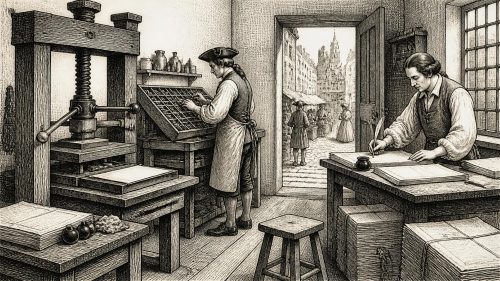
In 1776, Ireland, though a separate kingdom, was deeply affected by Britain’s war with the American colonies. An embargo on provisions exposed dependence on imperial trade, while the Tumultuous Risings Act targeted Whiteboy rural unrest rooted in land, tithe and tenancy grievances. Newspapers expanded political debate: Finn’s Leinster Journal printed the Declaration of Independence in August, and the Hibernian Magazine cautiously reproduced Paine’s Common Sense. Arthur Young’s travels recorded ports, linen districts and farms alongside poor roads, insecure smallholders and poverty. The year intensified awareness of inequality, constitutional constraint and economic vulnerability, foreshadowing campaigns for free trade and legislative independence.
Read Article
Archived: 12 October 2026
Abstract
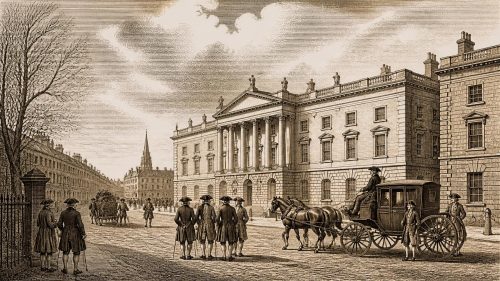
In 1775, the American war exposed tensions within Ireland’s restricted Protestant political order. Troop departures depleted the garrison, while authorities pragmatically tolerated Catholic recruitment despite penal disabilities. Atlantic links encouraged both loyalism and sympathy for the colonists, expressed in Dublin and Edmund Burke’s conciliation arguments. Henry Flood accepted office, weakening the Patriot interest, while Henry Grattan entered parliament through Charlemont patronage. Parliament managed supply and revenue under strong British influence. Catholics and Presbyterians remained disadvantaged, and debate connected religion, trade and constitutional constraints. War threatened linen markets and sharpened commercial grievances. Cultural life and tower damage reflected wider uncertainty locally.
Read Article

Archived: 12 October 2026
Abstract
In 1773, the killing of Art Ó Laoghaire near Carriganima exposed the unequal legal position of Catholics in Ireland. His feud with magistrate Abraham Morris, involving a horse and penal legislation, inspired Eibhlín Dubh Ní Chonaill’s enduring Irish-language lament. Morris’s acquittal and the disputed burial reinforced perceptions of unequal justice. Nationally, Lord Lieutenant Harcourt’s unsuccessful absentee-tax proposal revealed financial strain, landlord influence and limits on Dublin’s parliament. Linen, woollen promotion and trade sustained a diverse but dependent economy, while volunteer corps reflected Protestant local society. Goldsmith’s success and Leland’s contested history illustrated Ireland’s contribution to, and disputes within, British culture.
Read Article





