Start Exploring
Choose a route into Ireland’s past: follow the newest additions, find a particular year or subject, or browse every available period.

Day By Day
Welcome to Emerald Archives, where Ireland’s past awaits discovery. Our homepage provides a daily record of the latest articles added to our growing collection. Explore newly archived stories and see how each addition enriches our understanding of Irish history. From remarkable people and historic places to significant events and forgotten traditions, every article adds another piece to Ireland’s story. Visit regularly to browse our newest discoveries and follow our progress day by day. Whether you are researching your heritage or simply curious about the past, we invite you to explore, learn, and watch Emerald Archives grow with each new addition.
Archived: 2nd November 2026
Irish Sport
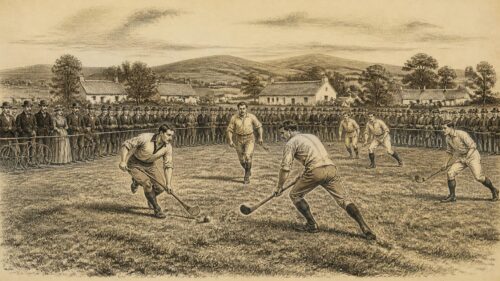
Sport has played a central role in Irish history as recreation, voluntary association, cultural inheritance and political expression. This article traces the relationship between older games and modern codification, the nineteenth-century growth of clubs, the founding of the Gaelic Athletic Association, women’s sporting organisation, Bloody Sunday at Croke Park, and the institutional complexities created by partition. It argues that Irish sport cannot be reduced to a single national tradition. Hurling and Gaelic football became powerful symbols, but rugby, soccer, cricket, athletics and many other pursuits reveal a more varied history shaped by class, gender, locality, migration and competing political identities.
Sechnassach’s Killing
Archived: 2 November 2026
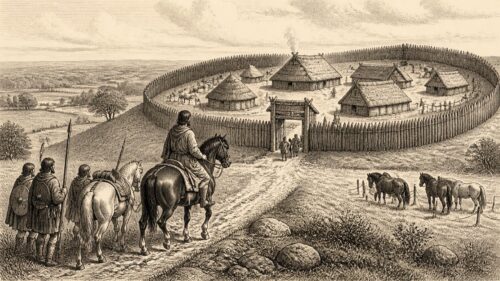
In 671, Sechnassach mac Blathmaic, king of Tara and member of Brega’s Síl nÁedo Sláine, was killed by Dub Dúin of Cenél Cairpri. An elegiac verse recalls his household’s horses, equipment and abundance, reflecting aristocratic status. His brother Cenn Fáelad succeeded later. Annals also note the uncertain death of Déisi ruler Bran Finn, Fergus son of Crunnmael, and the unexplained Battle of Druim Cepais. Máel Ruba voyaged to Britain, preceding his foundation at Applecross in 673. These fragmentary records reveal competitive kingdoms, maritime church links and a rural economy underpinning political power.
Archived: 2nd November 2026
Athlone Causeway
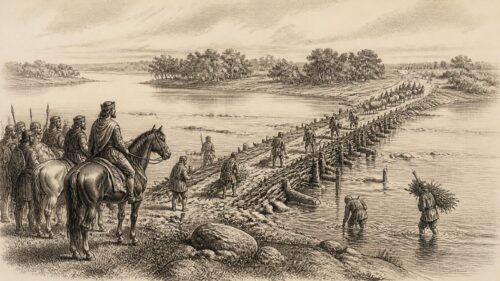
The Athlone Causeway was an early medieval crossing of the River Shannon at Áth Luain, documented in the Annals of Ulster under the year conventionally known as 1001. Attributed to Máel Sechnaill of Mide and Cathal son of Conchobor of Connacht, it stood at a natural ford between two major political regions. Its exact form has not been archaeologically identified, and claims about its materials or alignment must remain tentative. Yet the record illuminates the strategic importance of Athlone and anticipates later bridges, castles, warfare and urban development at Ireland’s central Shannon crossing.
Archived: 2nd November 2026
Cultural Commons
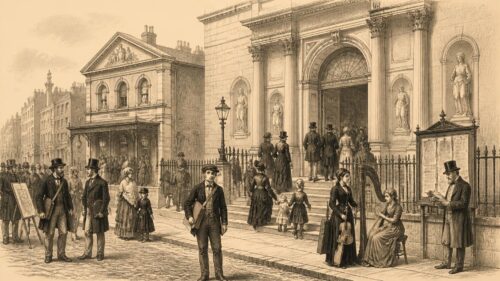
This article traces the Irish history of arts funding as the making of a cultural commons. Beginning with nineteenth-century public institutions and the private patronage behind the Abbey Theatre, it examines the creation of An Chomhairle Ealaíon under the Arts Act 1951, debates over artistic independence and taste, rural and local provision, tax support for artists, heritage institutions and later participation-led policy. It distinguishes evidence from interpretation and folklore, while recognising the separate constitutional framework of Northern Ireland. The central argument is that arts funding has shaped not only artistic production but also access, citizenship, memory and the meaning of public culture.
Archived: 2nd November 2026
Remote Care
Digital mental health has become an important part of Ireland’s recent mental-health history. This article traces its emergence from community-care reform and voluntary-sector innovation through the rapid expansion of remote support during the Covid-19 pandemic. It examines guided online CBT, crisis texting, telepsychiatry and public information services, while distinguishing documented achievements from wider claims about access. The evidence shows that digital channels can widen routes into support, but also that they depend on connectivity, privacy, literacy, clinical judgement and effective governance. Ireland’s 2026 strategy places these unresolved questions at the centre of future policy.
Tulach Árd
Archived: 2 November 2026
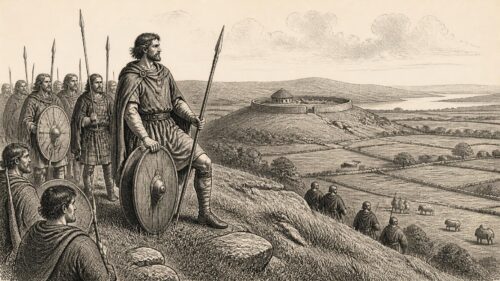
In annalistic year 672, Dúngal of Cenél Bógaine was defeated and killed by Loingsech at Tulach Árd, while Cenn Fáelad of Síl nÁedo Sláine succeeded his murdered brother as king of Tara. Armagh suffered a poorly explained fire, illustrating the vulnerability of an important ecclesiastical and political centre. An abundant mast crop suggested productive woodland resources, particularly for pig feeding, although it cannot indicate general prosperity. The annals also recorded upheaval in the Hebrides, the expulsion of Drost and the burning of Bangor of the Britons, reflecting Ireland’s connections across the Irish Sea.
Mag Luinge
Archived: 2 November 2026
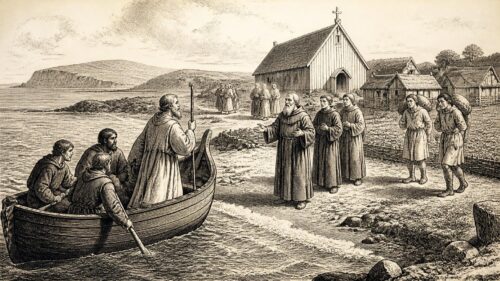
In 673, sparse Irish annals record the killing of Domangart, king of Dál Riata, the burning of Mag Luinge, the capture of named men, Cormac son of Máel Fothartaig’s death, and Abbot Fáilbe’s journey from Iona to Ireland. The evidence does not explain motives, locations or consequences in detail. Mag Luinge was probably a Columban monastery on Tiree, though this remains uncertain. Fáilbe’s visit demonstrates Iona’s active connections with Irish churches. Together, the notices reveal contested authority, vulnerable ecclesiastical communities and the importance of sea routes linking Ireland, Dál Riata and the Hebrides.
Brega Succession
Archived: 2 November 2026
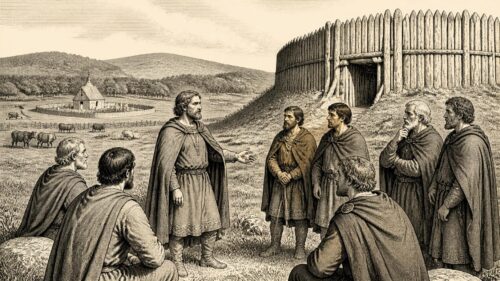
In 674, Cenn Fáelad of Síl nÁedo Sláine was killed in battle by his kinsman Fínnechta Fledach, who succeeded to the contested kingship of Tara. Annalistic dates vary slightly, but the succession crisis belongs closely to this year. The conflict reflected rival dynastic claims within Brega rather than a unified national war. The killing of Congal Cennfhota in Ulaid also affected political and marriage alliances linking north-east Ireland and the midlands. Beneath elite struggles lay an agrarian society sustained by cattle, grain and rural settlements, while churches preserved the brief records on which this history depends.
Archived: 2nd November 2026
Irish Neutrality
Russia’s full-scale invasion of Ukraine in February 2022 reopened one of Ireland’s oldest arguments: what does neutrality require of a small state confronted by aggression? This article traces the historical development of Irish military neutrality from the Emergency of 1939–45 through United Nations peacekeeping and European integration to the present Ukrainian crisis. It distinguishes formal military non-alignment from political impartiality, examines Ireland’s humanitarian and non-lethal assistance to Ukraine, and assesses the debate over the triple lock. The record shows not a fixed doctrine, but a contested tradition shaped by sovereignty, international law, collective security and public memory.
Fínnechta's Accession
Archived: 2 November 2026
In 675, Fínnechta Fledach mac Dúnchada defeated and killed his cousin Cenn Fáelad mac Blathmaic, succeeding to the kingship of Tara. The battle, later called Aircheltair and possibly fought at Tech Uí Máine in Dál Céltra, cannot be securely located. It marked a dynastic change within Síl nÁedo Sláine, the southern Uí Néill kindred based in Brega, rather than national unification. Control of Tara depended on descent, military strength, alliances and recognition. The conflict affected communities supplying royal retinues, although the annals record few details. Fínnechta’s reign lasted until 695, while later traditions and events should not be assigned to his accession year.
Ailech Frigrenn
Archived: 2 November 2026
In 676, Fínsnechtae Fledach, southern Uí Néill king of Tara, destroyed Ailech Frigrenn, a royal centre of the northern Cenél nÉogain. The attack demonstrated his recently secured authority but did not end northern autonomy. Annalistic dating is imperfect, though several sources associate the event with this year. The records also note killings among elite kindreds, whose circumstances remain unknown. Deaths of Colmán, bishop of Inis Bó Finne, and Fínán son of Airennán, together with Failbe’s return from Ireland, reveal active ecclesiastical and Irish Sea connections. The year illustrates the links between dynastic warfare, rural resources and religious institutions.
Loch Gabair
Archived: 2 November 2026
In 677, Fínshnechtae Fledach, king of Tara, defeated the Laigin near Loch Gabair in southern Brega, close to the royal landscape of Tara. The battle, apparently costly to both sides, defended his heartland but did not lead to the conquest of Leinster. The Leinster force was probably led by Fiannamail mac Máele Tuile, whose position survived the defeat. Other annalistic notices record the killing of Dúnchad of Airgíalla and an obscure violent encounter at Cúil Maine, reflecting widespread political instability. The death of Becán of Rùm also points to Ireland’s ecclesiastical links across the Irish Sea. Chronological uncertainty affects several notices.
Archived: 2nd November 2026
Fuel Protests
Irish fuel protests have exposed the country’s dependence on imported oil, road freight and dispersed transport networks. This article examines the haulier and fishing protests of 2000 alongside the nationwide blockades of April 2026, when rising international energy costs prompted convoys, depot disruptions and state emergency measures. It distinguishes documented events from later simplification, tracing the roles of excise duty, commercial diesel dependence, climate policy and critical infrastructure. The comparison shows that fuel disputes are never solely about tax: they are struggles over regional inequality, economic resilience, public authority and the boundary between effective protest and disruption of essential services.
Archived: 2nd November 2026
Coalition Priorities
January 2026 exposed the working priorities of Ireland’s Fianna Fáil–Fine Gael–Independent coalition. As the Dáil returned, government moved from programme-making towards implementation: social-protection and wage changes took effect, preparations intensified for Ireland’s EU Council Presidency, and the International Protection Bill initiated a major reform of asylum administration. The month also highlighted enduring pressures around housing, neutrality, international engagement and emergency response. Drawing on official government publications, parliamentary debates and Oireachtas research, this article distinguishes documentary evidence from interpretation and places the month within the longer adaptation of Irish coalition politics to domestic and European change.
Osraige Defeat
Archived: 2 November 2026
In 678, Fáelán Senchustul of Uí Cheinnselaig defeated Osraige, killing its king, Tuaim Snáma, and reportedly securing hostages that affirmed Osraige’s submission. The victory formed part of continuing pressure by Leinster’s southern dynasty on its neighbour. Colgú, king of Munster, also died, prompting a poorly documented royal transition. Annals record the deaths of bishops at Glendalough and Ferns, underlining the political and economic importance of church centres. Notices from western Scotland reflect continuing Irish Sea connections, though some are chronologically uncertain. No evidence records famine, plague or a nationwide crisis in Ireland that year.
Adomnán's Succession
Archived: 2 November 2026
In 679, the death of Fáilbe, abbot of Iona, brought Adomnán to leadership of the Columban network linking Ireland and western Britain. The annals also note the death of Cenn Fáelad, remembered as a learned man, though later stories of his scholarship cannot be accepted uncritically. Fínnechta Fledach, king of Tara, defeated Bécc Bairrche of Dál Fiatach at Tailtiu, demonstrating the reach but not the supremacy of Uí Néill power. Leinster’s kingship remained contested. These notices reveal a rural, cattle-centred society shaped by rival dynasties, churches and learned culture.
Bolgach Epidemic
Archived: 2 November 2026
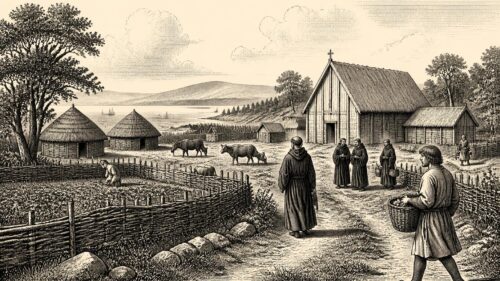
In 680, Irish annals record dynastic violence, ecclesiastical deaths, local conflict and a severe epidemic called bolgach. Fíanamail mac Máel Tuile, king of Leinster, was killed by Foidsechán of his household, apparently in connection with Fínnechta Fledach of Brega. Colmán, abbot of Bennchor (Bangor), and Máel Fothartaig, bishop of Ard Sratha, also died. Notices mention the siege of Dún Baite, a battle at Bodbgna and other killings. Bolgach may have been a blistering or smallpox-like disease, though its precise nature is uncertain. Irish annalists also noted Ælfwine’s death in northern Britain, reflecting cross-channel connections.
Ráith Mór
Archived: 2 November 2026
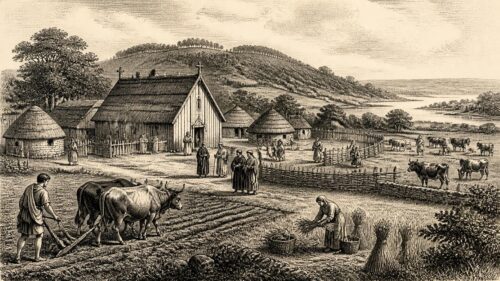
In 681, Irish annals record the killing of Cenn Fáelad, king of Connacht; a battle at Ráith Mór in Mag Line against Britons, where Cathasach, king of the Cruithin, died; and the death of Suibne, superior of Corcach. These brief, variant records demonstrate fragile regional kingship, conflict involving cross-channel contacts, and the public importance of ecclesiastical leaders. They do not establish a single coordinated campaign or detailed causes. Ireland remained divided among interconnected rural kingdoms and church communities, sustained by farming, livestock, patronage and kinship amid recurring local insecurity.
Cenn Fáelad
Archived: 2 November 2026
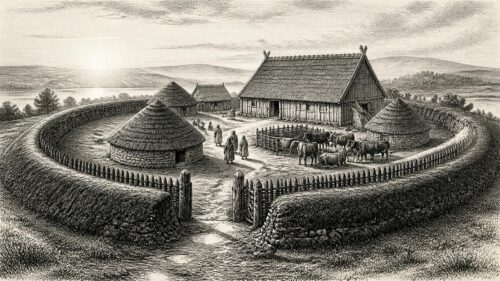
In 682, Cenn Fáelad son of Colgú, king of Connacht, was killed when Ulcha Derg of the Conmaicne Cúile and his followers stormed his residence. The annals confirm the death but give no motive, location or account of its consequences. It illustrates the fragile, negotiated character of provincial kingship among competing kindreds. Another Connacht king was slain the following year, though no direct connection is recorded. Elsewhere, a battle at Ráith Mór in Mag Line involved Britons and northern Irish rulers, while Pictish forces devastated Orkney. Rural communities, dependent on farming, livestock and churches, sustained the political and literate world that preserved these events.
Child Mortality
Archived: 2 November 2026
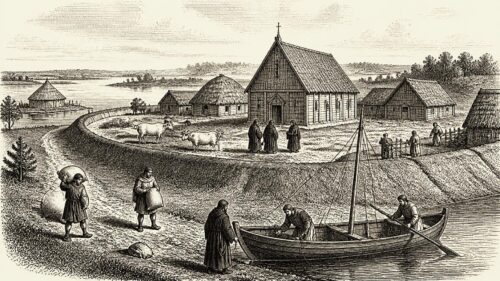
In 683, Irish annals record the killing of Dúnchad Muirisce, king of Connacht, and the deaths of Colgu son of Blathmac and Fergus of Cenél Cairpri at Corann. Two unnamed strongholds were also besieged, though the sources give no participants or outcomes. In October, a ‘mortality of children’ began, reportedly lasting three years, but cannot be identified with a specific disease. The year also saw the deaths of ecclesiastical figures including abbots linked to Cráeb Laisre and Clonmacnoise. Despite chronological variations between annals, the evidence presents 683 as a troubled year of contested kingship, warfare and widespread disease.
Brega Raid
Archived: 2 November 2026
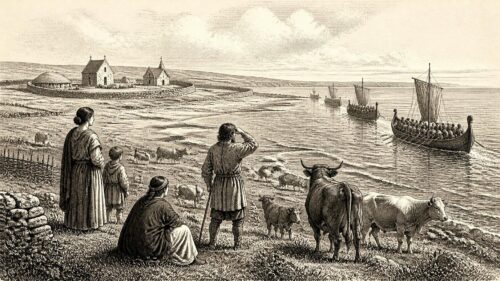
In June 684, King Ecgfrith of Northumbria sent an army under Berht to devastate Mag Breg, or Brega, a wealthy and politically important Irish kingdom. Irish annals and Bede record the destruction of churches; later tradition also reports plunder and captives. The raid struck settlements, ecclesiastical communities and agricultural resources, exposing the Irish Sea as a route for coercion as well as travel and exchange. Its precise motives, landing place, scale and course remain unknown. Contemporary records also note a mortality among children, while later accounts of famine, frost and captive returns cannot securely be assigned to 684.
Banbán's Obituary
Archived: 2 November 2026
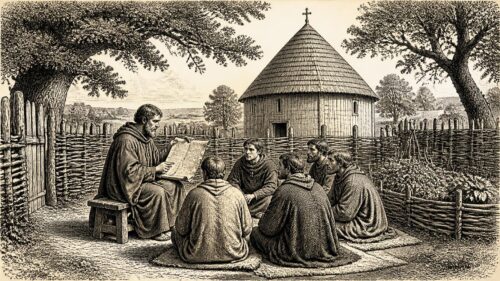
In 685, Irish annals record the deaths of Banbán, learned lector of Kildare, and Forcrann, abbot of Clonmacnoise, though differing chronologies prevent precise dating. Their notices demonstrate the importance of major churches as centres of learning, landholding, authority and record-keeping. Ireland remained politically fragmented under competing dynasties, with Fínnechta Fledach holding the overkingship of Tara rather than ruling a unified state. Irish writers also carefully recorded Ecgfrith of Northumbria’s defeat and death at Dún Nechtain on 20 May, reflecting ecclesiastical and political links across the Irish Sea.
Sixty Captives
Archived: 2 November 2026
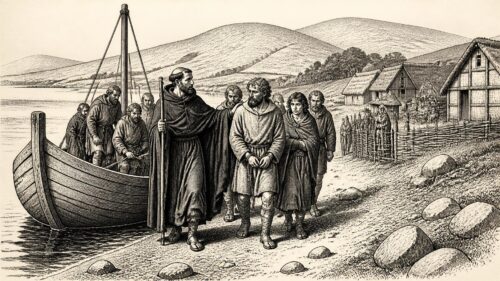
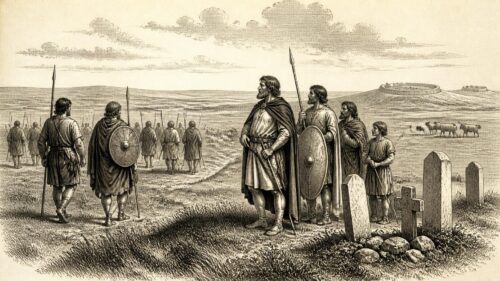
In 686, Adomnán, abbot of Iona, brought sixty former captives back to Ireland, probably following the Northumbrian raid on Brega in 684. Although the annals do not identify the captives or explain their release, the episode demonstrates links between Ireland, Iona and Northumbria, and the role of clerical diplomacy across the Irish Sea. The deaths of abbots at Glendalough and Corcach Mór, and of Bishop Oiséne, also reflect established religious communities. Ireland remained politically fragmented under regional rulers, including Fínshnechtae Fledach of Tara. Later-dated battles should not be assigned to 686.
Captive Returns
Archived: 2 November 2026
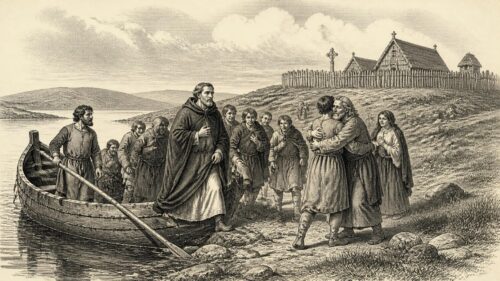
In the annalistic sequence for 687, Adomnán, abbot of Iona, returned sixty former captives to Ireland, probably people seized during King Ecgfrith of Northumbria’s raid of 684. Although the precise date and negotiations remain uncertain, Adomnán’s links with King Aldfrith and Northumbrian ecclesiastical networks likely enabled their release. The episode illustrates Irish Sea connections linking warfare, diplomacy and learning; Adomnán’s scholarly exchanges with Aldfrith may have occurred during related visits. The annals also record the deaths of abbots at Glendalough and Cork, and of a bishop attached to an uncertain monastery, alongside the unexplained killing of Feradach son of Congal.
Imlech Pich
Archived: 2 November 2026
In 688, the battle of Imlech Pich reshaped power in Brega when Niall son of Cernach Sotal defeated Congalach son of Conaing. Two of Congalach’s allies, the kings of Ard Cianachta and Conaille Muirthemne, were killed, while Congalach escaped, leaving rival claims unresolved. The defeat probably reduced Ard Cianachta’s independence and strengthened southern Brega. Elegiac verse recalls the wider human and material losses of warfare. The annals also record high-king Fínnechta Fledach’s temporary entry into clerical life and the death of Ségéne of Armagh, illustrating the close interconnection of royal, ecclesiastical and regional authority.
