Editorial — Conn Bacach O’Neill — Death
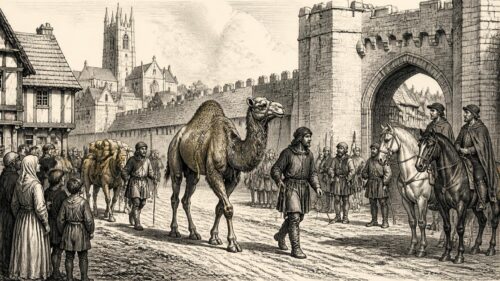
Welcome to the Emerald Archives Gazette. In today’s issue we look back at the latest additions to the archive. Whitehall Submission — In 1562, the most consequential Irish business of the year was conducted not in Dublin or Ulster but at the English court. Shane O’Neill, already the dominant claimant within Tír Eoghain, travelled to Whitehall to make his case directly before Elizabeth I. His journey exposed a basic difficulty in Tudor rule: the crown wished to turn powerful Irish lordships into obedient parts of a monarchy governed through English law, while Shane argued that the authority of “the O’Neill” belonged to an office chosen within his own people.
Dateline
The Day in Irish History
Welcome to the Emerald Archives Gazette. In today’s issue we look back at the latest additions to the archive.
Whitehall Submission — In 1562, the most consequential Irish business of the year was conducted not in Dublin or Ulster but at the English court. Shane O’Neill, already the dominant claimant within Tír Eoghain, travelled to Whitehall to make his case directly before Elizabeth I. His journey exposed a basic difficulty in Tudor rule: the crown wished to turn powerful Irish lordships into obedient parts of a monarchy governed through English law, while Shane argued that the authority of “the O’Neill” belonged to an office chosen within his own people. The encounter did not settle that dispute. Instead, it made the conflict over…
Armagh Siege — A Contest for UlsterIn 1561, the struggle between Seaán mac Cuinn Ó Néill—usually known as Shane O’Neill—and the Dublin administration became the central political crisis in Ireland. The immediate issue was authority in Ulster: whether O’Neill, already the dominant lord in Tír Eoghain, could extend his power over neighbouring lordships, or whether Elizabeth I’s government could contain him through armed intervention, rival claimants and alliances with other Gaelic and Scottish leaders. Yet the year also exposed a larger problem. Tudor government could issue proclamations, recruit an army and occupy a famous ecclesiastical site, but its effective reach beyond the Pale…
Religious Settlement — In 1560, Ireland’s government acquired a new instrument of rule: John Challoner became secretary of state for Ireland, a post intended to give the administration at Dublin a more continuous centre. The appointment was not, by itself, a conquest of the island. Rather, it exposed the problem confronting Elizabeth I’s government. Statutes could be passed in Dublin, letters and orders could be issued under seal, and officials could be named; yet authority beyond the Pale depended on negotiation, local alliances, food supplies and armed force. During the same year, the Irish parliament enacted Elizabeth’s religious settlement, while Shane O’Neill’s position…
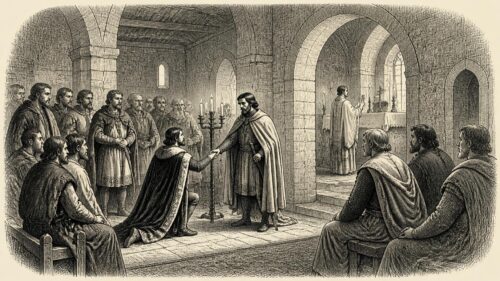
Tyrone Succession — In 1559 Ireland entered Elizabeth I’s reign with no single political centre strong enough to command the island. The queen’s accession on 17 November 1558 had changed the sovereign in Dublin, London and every royal document, but it did not dissolve the competing jurisdictions of Gaelic lordships, Old English earldoms, chartered towns and the crown’s shrinking zone of dependable authority around Dublin. The year’s most consequential Irish development was the death of Conn Bacach O’Neill, first earl of Tyrone, and the succession struggle that brought his legitimate son Shane into open collision with the crown’s legal claims. A Lordship Changes…
Thomond Succession — In 1558 Ireland was not transformed by one single event, but it was reshaped by a remarkable concentration of successions, military decisions and changes of allegiance. In Thomond, the crown intervened decisively in an O’Brien dynastic contest. In Munster, the death of the earl of Desmond brought Gerald FitzGerald to a powerful inheritance. In Ulster, Shane O’Neill eliminated a rival whose standing rested partly on English recognition. Above all, the death of Queen Mary on 17 November and the accession of Elizabeth placed Ireland’s contested politics within a new reign. Yet the year closed before Elizabeth’s Irish religious settlement had…
Midlands Plantation — A year of state-making and destructionIn 1557 the Tudor government attempted to turn military pressure into a permanent new order in the Irish midlands. Its most conspicuous achievement was legal: the Dublin parliament sat from 1 June to 2 July and authorised the shiring and settlement of territories long associated with the Ó Mórdha (O’More) of Laois and the Ó Conchobhair Fhailí (O’Connor Faly) of Offaly. Yet the year also showed the limits of paper authority. Government campaigns devastated the country they intended to secure; leading members of the displaced kindreds were executed or held as hostages; and in Ulster,…
Tudor Intervention — The evidence for 1556 is uneven, but it is unusually revealing. A change at Dublin Castle, a northern expedition, the seizure and release of midland hostages, a newly finished castle, a Thomond encounter and the killing of a leading poet all appear in the record. Taken together, they show an Ireland in which the Tudor state sought firmer control while Gaelic lordships, Old English magnates, churchmen and learned families still exercised authority on their own ground.A New Deputy at DublinOn 27 April Thomas Radcliffe, then Lord Fitzwalter and soon to become third earl of Sussex, was appointed lord deputy of…
Donegal Coup — In 1555, the most consequential Irish development securely associated with the calendar year occurred in the north-west: An Calbhach Ó Domhnaill used Scottish assistance, sea power and artillery to overthrow his own father, Manus, lord of Tír Chonaill. The episode was both a family seizure of power and a sharp illustration of Ireland’s wider political world. Gaelic lordships were not isolated survivals from an older age. Their rulers negotiated across the North Channel, hired professional soldiers, maintained castles, used written agreements and understood the value of gunpowder weapons. Yet authority could remain intensely personal, resting on kinship, hostages, military followings…
Kildare Restoration — In 1554, Irish politics acquired a powerful symbol of restoration: Gerald FitzGerald, the surviving heir of the Kildare Geraldines, recovered the title of earl of Kildare. The grant, made by Queen Mary on 13 May, did not simply reward one aristocrat. It brought back into public life the younger half-brother of Thomas ‘Silken Thomas’ FitzGerald, whose rebellion of 1534 had ended in execution, attainder and the destruction of the old Kildare ascendancy. Yet the year was not a return to the Ireland of the early sixteenth century. Authority was fragmented, religious policy was changing direction again, and warfare continued to…
Thomond Rivalry — A death and a disputed inheritance In 1553, Ireland’s political landscape was altered above all by changes of ruler, but the most immediate consequences were felt locally: in a Thomond town set on fire, in a church hierarchy abruptly reordered, and at the boundaries of lordships where a crown that claimed the whole island still governed unevenly. The year cannot responsibly be reduced to a single national event. English royal authority mattered intensely in Dublin, the Pale and the expanding garrison zones; elsewhere it had to bargain with, reward or confront regional powers whose own laws of inheritance, fosterage, tribute…
Clonmacnoise Plunder — In 1552, the Tudor government’s reach in Ireland was conspicuous but sharply limited. Its officers could commission inquiries, alter the currency, create offices of state and send armies out from Dublin, Athlone and the Pale. Yet the year’s most vivid records show how readily that authority met resistance: in Ulster, a costly expedition achieved neither submission nor durable peace; in the midlands, soldiers from a royal garrison stripped one of Ireland’s great ecclesiastical settlements; and in the north, Gaelic succession disputes gave Crown policy both opportunities and severe constraints. The events securely assigned to this year reveal not a kingdom…
Dublin Prayerbook — In 1551, Ireland’s political map still consisted less of a single governed realm than of overlapping jurisdictions, alliances and rival claims. Edward VI was king, and the Dublin administration claimed authority over the whole island, but its regular reach remained strongest in Dublin, the Pale and a scattering of garrisons. Beyond them, Gaelic lordships and great aristocratic territories retained armed followings, local law, hereditary expectations and diplomatic connections across the Irish Sea. The year brought this uneven kingdom into sharp focus: an English prayer book was printed in Dublin for the first time, a new lord deputy took office, and…
Powell’s Press — In 1550 Ireland stood at a point of transition, but not of simple transformation. Edward VI was king, and the Dublin administration claimed authority over the whole lordship and kingdom; yet its effective power was concentrated in the Pale, garrisoned towns, selected ports and the territories of co-operating magnates. Beyond them, Gaelic and Gaelicised lordships retained their own political languages, laws, military followings, learned families and networks across the Irish Sea. The year’s surviving record is therefore unusually revealing: it shows government plans for coinage, printing and land survey alongside diplomacy in Ulster and the hard realities of contested local…
Limerick Court — In 1549, Ireland’s political map was not redrawn by a single decisive battle or statute. Instead, the year is best understood through a series of linked episodes: a change at the head of the Dublin administration, a conspicuous peace meeting in Limerick, local killings and recoveries of strongholds in the midlands and west, and renewed continental interest in the island’s northern coast. Together they show how little control the Tudor crown actually possessed beyond its centres of power, and how much depended on bargains with regional lords.The most securely dated Irish events come from the annals, which are especially valuable…
Fort Protector — In 1548 the Tudor government’s struggle to extend its authority beyond the Pale acquired a new physical landmark in the midlands: Fort Protector, the garrison established at what became Portlaoise. The fort was not yet a plantation town, nor had the later counties of Queen’s and King’s been created. But its construction marked a decisive change in method. Rather than relying chiefly on negotiated submissions from powerful Irish lords, the Dublin administration increasingly sought to hold contested country with permanent soldiers, fortifications and supply lines. This was an especially consequential year because the government changed hands. Sir Anthony St Leger,…
Shannon Fortress — In 1547 Ireland felt the consequences of a royal death, but not in any simple or uniform way. Henry VIII died on 28 January and his nine-year-old son succeeded as Edward VI, king of England and Ireland. The change of monarch mattered in Dublin, in the Pale and in the calculations of Irish and Anglo-Irish lords. Yet it did not instantly remake government across the island. Sir Anthony St Leger remained lord deputy, the Crown’s recent policy of negotiating submissions with powerful Gaelic rulers still formally stood, and local rivalries continued to determine whether districts were peaceful, raided or militarised.…
Inis Saimer — In 1546, Ireland was not transformed by one decisive battle or parliament, but several sharply documented events exposed the tensions of mid-Tudor rule. The crown had styled Henry VIII king of Ireland since the legislation of 1541, yet authority still depended on bargains with great lords, the labour of garrisons, and the willingness—or coercion—of communities far beyond Dublin. This was Henry’s last full calendar year as king. It was also a year in which a feud at the top of government, a killing in the O’Donnell country, a new fort in the midlands and a debased coinage showed how unevenly…
Hacketstown Conflict — In 1545, Ireland was drawn at once into local struggles, an English king’s war in Scotland, a severe food shortage recorded in Connacht and Meath, and competing claims to religious authority. None of these developments made the island politically uniform. Tudor government was strongest in and around Dublin and depended elsewhere on bargains with magnates; Gaelic lordships retained their own dynastic priorities, armed followings and systems of obligation. Yet the year’s surviving records show how closely local affairs could be tied to wider seas, markets and jurisdictions.The evidence must be handled carefully. The Annals of the Four Masters, compiled in…
Clanricarde Succession — In 1544 the Tudor crown’s recently proclaimed Kingdom of Ireland was tested less by a single island-wide war than by the fragility of the agreements on which it rested. Henry VIII had taken the title king of Ireland only three years earlier, and his deputy, Sir Anthony St Leger, had sought to bring Gaelic and Old English lords into a common political framework through negotiated submissions, titles, land grants and personal alliances. That programme could look impressive in Dublin and London. On the ground, however, succession quarrels, cattle raids, contested castles and rival kinships continued to decide power. A Deputy…
Surrender Regrant — In 1543 the Tudor crown made one of its clearest attempts to translate Irish lordship into a form it could recognise, reward and regulate. The year’s decisive moments were not battles or conquests but acts of negotiation: Gaelic and Gaelicised magnates travelled to Henry VIII’s court; titles were exchanged for patents; rival kinsmen were reconciled at Dublin; and the vacancy at Armagh exposed the unsettled religious authority of the realm. These developments did not make Ireland obedient to a central government, nor did they erase older political habits. They did, however, show how Anthony St Leger’s administration hoped to extend…
Tyrone Earldom — In 1542, the Tudor crown’s attempt to turn Ireland from a lordship of uncertain reach into a kingdom of obedient subjects acquired its most striking northern convert. Conn Bacach O’Neill, lord of Tír Eoghain, travelled to Henry VIII’s court and in October accepted the earldom of Tyrone. His elevation did not mean that Ulster had become English in culture, law or political habit. It did, however, mark an important bargain: a leading Gaelic ruler accepted a place in the king’s peerage, while the crown recognised his commanding position in Tyrone. The year should not be treated as the simple beginning…
Irish Kingship — In 1541, a change made in Dublin altered the constitutional language of Irish government for centuries: Henry VIII ceased, in Irish law, to be styled merely lord of Ireland and became king of Ireland. The change was momentous, but it should not be mistaken for an instant conquest of the island. Tudor government was strongest in and around the Pale, while Gaelic and Gaelicised lordships exercised effective power over much of the country. The year’s real significance lies in the effort to turn a legal title into a practical political relationship—one based on allegiance to the crown, negotiated submission, English-style…
O’Donnell Diplomacy — In 1540 Ireland stood at an unsettled junction: Tudor government in Dublin was changing hands, religious houses and their estates were being drawn into the Crown’s financial machinery, and powerful Gaelic lordships continued to determine events across much of the island. The year did not bring a single conquest or constitutional settlement. Instead, it reveals several competing ways of exercising authority: letters sent over the Irish Sea, castles raised in contested country, religious communities defended or dispersed, and military expeditions that secured submission through pledges and hostages.The surviving evidence is uneven. Government records are fullest for Dublin, the Pale and…
Bellahoe Battle — In 1539, Ireland’s political and religious tensions became unusually visible in two very different places: at Bellahoe, on the Monaghan–Meath frontier, where Lord Deputy Leonard Grey routed a northern confederate army; and in Dublin, where the Crown pressed forward with the dissolution and remaking of religious institutions. These were connected developments. Henry VIII’s government sought not merely obedience from Irish lords but a new order in which royal authority, reformed religion and confiscated ecclesiastical resources reinforced one another. Yet the year also shows the limits of that ambition. Beyond the government’s strongest districts, Gaelic lordships retained their own political languages,…
Western Progress — In 1538 Ireland was neither a kingdom ruled evenly from Dublin nor a country moving in one political direction. Henry VIII remained lord of Ireland; the title of king would not be adopted until 1541. His deputy, Lord Leonard Grey, could exercise effective authority within and near the Pale only with soldiers, artillery, bargains and the co-operation of local powers. Beyond it lay a crowded political landscape of Gaelic lordships, old English towns, magnate estates and ecclesiastical jurisdictions. The year is best understood through movement: Grey’s armed progress westward, the shifting allegiances it produced, and the very different conflicts continuing…
Reformation Statutes — In 1537, Ireland was not a country in which one political development could be assumed to govern every region alike. The Dublin administration of Henry VIII was attempting to turn a contested lordship into a more direct instrument of royal authority, while Gaelic and Gaelicised lordships retained their own military resources, succession practices, diplomatic connections and religious institutions. The year therefore brought several distinct but connected shocks: the final destruction of the senior Kildare leadership, legislation reshaping church and crown, a hard campaign in Offaly, and consequential changes of lordship in Tír Chonaill and Fermanagh. The End of Silken Thomas…
Royal Supremacy — In 1536, Ireland was not one political unit obedient to a single government, but a patchwork of lordships, town jurisdictions, ecclesiastical territories and shifting alliances. Dublin Castle claimed authority in the name of Henry VIII, yet its effective reach was uneven and depended upon negotiation, military force and local collaborators. The year brought a marked assertion of Tudor power: Leonard Grey became lord deputy, a parliament opened in Dublin to advance the Henrician religious settlement, and Grey’s army struck south-west towards the Shannon. At the same time, Irish annals record plague, smallpox, local warfare, contested successions, the burning of a…
Maynooth Pardon — A Rebellion Reaches Its Breaking PointIn 1535, Ireland stood in the violent aftermath of the Kildare rebellion. Thomas FitzGerald, tenth earl of Kildare and better known in later tradition as ‘Silken Thomas’, had renounced obedience to Henry VIII in Dublin in June 1534. Yet it was the campaigning of 1535, rather than that dramatic declaration, which determined the rebellion’s fate. The year brought the destruction of the FitzGerald military centre at Maynooth, the progressive unravelling of Thomas’s alliances, his surrender and removal to England, and the death of the crown commander who had defeated him. It also exposed how precarious…
Kildare Rebellion — In 1534 the political order that had long made the FitzGerald earls of Kildare the dominant power in the English lordship of Ireland broke apart in spectacular fashion. The crisis began as a struggle over the authority of one great dynasty and ended the year as a war centred on Dublin, the Pale and the approaches to Kildare. It was not simply an Irish echo of events in England. Thomas FitzGerald, Lord Offaly, drew strength from the interconnected world of the lordship: old English landowners, Gaelic allies, clerics, military households, walled towns and the royal administration at Dublin Castle. Yet…
Shinrone Siege — In 1533, Ireland was not a single political arena governed evenly from Dublin. Authority was layered, negotiated and often violently contested: Henry VIII was lord of Ireland; Gerald FitzGerald, ninth earl of Kildare, served as lord deputy; towns and the Pale upheld crown institutions with varying effectiveness; and Gaelic and Anglo-Irish lordships exercised power through kinship, clientage, castles, tribute, armed followings and local law. The year’s surviving record is unusually vivid in its dispersal. Annals place killings, successions, raids, betrayals and castle seizures from Moylurg and Sligo to Firceall, Clannaboy and Éile. It was a year in which the realities…
Colum Cille — In 1532, Ireland’s politics were shaped by the restoration of Gerald FitzGerald, ninth earl of Kildare, to the Dublin deputyship; by violent contests among Gaelic and Anglo-Irish lordships; and by an important act of Irish literary and religious culture in the north-west. The year does not yield a single national event. Instead, its surviving records show a country of overlapping jurisdictions, in which royal authority, magnate power, ecclesiastical institutions and learned families all remained active, often in close proximity to war. Kildare Restored Gerald FitzGerald, known in Irish as Gearóid Óg, was again appointed lord deputy by Henry VIII on…
Kinard Campaign — In 1531, Ireland’s most consequential fighting was not a straightforward contest between an expanding English state and a united Gaelic resistance. It was an unstable web of bargains, rival dynasties and local campaigns. Sir William Skeffington, Henry VIII’s lord deputy, and Gerald FitzGerald, ninth earl of Kildare, led a government-backed host into Tír Eoghain. Yet that army marched at the prompting of Irish allies, most notably Aodh Dubh O’Donnell of Tír Chonaill and rivals of Conn Bacach O’Neill. It devastated parts of Tyrone, but it did not defeat O’Neill or impose a settlement. At Kinard the advance stopped. The army…
Franciscan Chapter — In 1530, Ireland was not one political unit so much as a country of overlapping jurisdictions, rival lordships and shifting personal alliances. The English crown’s effective authority was concentrated in and around the Pale, while great Anglo-Irish families and Gaelic dynasties exercised power across most of the island. The year’s surviving records show this clearly. They preserve a return to Ireland by the Earl of Kildare alongside a newly appointed English deputy, campaigning in the midlands, destructive lordly raids through Connacht and Breifne, a killing within the O’Boyle kindred, and a Franciscan chapter at Donegal supported on a lavish scale…
Castleforward Demolition — In 1529, Ireland’s political map was marked less by a single national crisis than by sharp local contests, a consequential succession in Munster, and a cautious renewal of English royal intervention. The year’s annals preserve a notably northern sequence of killings, broken alliances and the destruction of a castle near the frontier of Tír Chonaill. They also record the deaths of leading legal and poetic scholars, reminders that warfare and learned culture were sustained side by side. In the south, the sudden death of James fitz Maurice FitzGerald, earl of Desmond, altered the balance among the great lordships of Munster.Some…
Delvin Captivity — A Government Taken HostageIn 1528, the most revealing Irish political event was not a royal conquest or a parliamentary settlement, but the seizure of the king’s acting governor. Richard Nugent, Lord Delvin, served as vice-deputy while Gerald FitzGerald, ninth earl of Kildare, remained under restraint in England. In May, Brian Ó Conchobhair Fáilghe of Uí Fhailí captured Delvin during a meeting on the Offaly frontier. Delvin’s captivity exposed the limits of government from Dublin: the administration could claim authority over the lordship of Ireland, but it could neither reliably protect its representative nor settle its relations with the powerful lordships…
Lifford Castle — In 1527, Ireland’s political map was not remade by a single national event. Instead, the year survives through a revealing cluster of campaigns, successions, building works, journeys and deaths. They show several centres of power operating at once: the Dublin administration around the English Pale; the rival Anglo-Irish houses of FitzGerald and Butler; and the great Gaelic lordships of Ulster, Connacht and beyond. The most tangible achievement was the completion of Manus O’Donnell’s fortress at Lifford, built while war with Con Bacach O’Neill continued. Yet the year’s annals also preserve the destruction of crops and castles in Moylurg, a hard-fought…
O’Donnell Raids — In 1526, the most consequential Irish struggles lay not in a single kingdom-wide war but in a chain of connected disputes: over frontiers, lordships, crops, castles and the authority to make peace. The year’s clearest focal point was the north-western border between Tír Chonaill and Tír Eóghain, where the O’Donnells and Conn Bacach O’Neill competed for influence. Yet the same pressures were visible from Cavan to Connacht and from Dublin to the Wicklow uplands. Ireland remained a land of many political communities, linked by marriage, fosterage, raiding, ecclesiastical institutions and bargaining as much as by formal allegiance. A Peace That…
Dublin Council — In 1525, Ireland’s most revealing public event was not a pitched battle or a royal statute but a failed attempt to make peace. At a great council in Dublin, Gerald FitzGerald, ninth earl of Kildare and lord deputy, brought together leading figures from the English lordship and the Gaelic political world. Conn Bacach Ó Néill of Tír Eoghain and Aodh Dubh Ó Domhnaill of Tír Chonaill attended in person. The meeting was impressive in scale, yet its failure exposed the limits of government from Dublin: the deputy could convene powerful rulers and offer arbitration, but could not compel them to…
Kildare Reinstatement — In 1524, Ireland’s political map was not divided simply between an English-controlled Pale and an independent Gaelic world. Authority was negotiated through kinship, military following, hostage-taking, tribute, office and personal reputation. The year brought a striking illustration in the north-west, where Gerald FitzGerald, ninth earl of Kildare and the king’s lord deputy, marched into Tír Chonaill with Conn Bacach O’Neill of Tír Eógain, only to make peace with their opponent, Aodh Dubh O’Donnell. Kildare’s role as guarantor of that settlement briefly made him a broker between powerful Irish lordships. It also showed the limits of that achievement: the rivalries that…
Kildare Rivalries — A Year of Competing AuthoritiesIn 1523, Ireland was not governed from one secure centre. Henry VIII was lord of Ireland, and a royal administration operated from Dublin, but its reach depended on negotiation with magnates, towns and Gaelic rulers. The year’s events show several overlapping political worlds at work: Piers Butler, earl of Ormond, was lord deputy; Gerald FitzGerald, ninth earl of Kildare, returned from a long enforced stay in England; James FitzGerald, earl of Desmond, looked towards France; and northern dynasties fought and bargained on a scale that the Dublin government could influence but not command.The sharpest significance of…
Knockavoe Assault — In 1522, the gravest conflict in Ireland was fought not between the Tudor government and an Irish lord, but within the shifting political world of Gaelic and Gaelicised lordships. Aodh Dubh Ó Domhnaill of Tír Chonaill faced Conn Bacach Ó Néill of Tír Eoghain in a campaign that drew in chiefs and fighting men from Ulster, Connacht, Munster, Meath and Leinster, as well as Scottish mercenaries. Its decisive encounter, a surprise night attack at Cnoc Buidhe, usually identified with Knockavoe near Strabane, ended a formidable coalition offensive and demonstrated both the reach of Ó Domhnaill power and the limits of…
Surrey’s Parliament — In 1521, the English lordship of Ireland was being tested by an expensive attempt to make royal government more active. Thomas Howard, earl of Surrey, Henry VIII’s lord lieutenant, had arrived the previous year with instructions to restore order and to assess how far the king’s authority might be extended. The result was not a conquest of Ireland, nor even a durable strengthening of the Dublin administration. Instead, 1521 exposed the limits of a government whose effective reach remained concentrated in the Pale and whose ambitions outran its money, manpower and local alliances.The year nevertheless left a clear record. A…
Surrey’s Lieutenancy — A Lieutenant ArrivesIn 1520, Ireland became the setting for Henry VIII’s most ambitious intervention of his reign to that point. On 10 March the king appointed Thomas Howard, earl of Surrey, as lieutenant of Ireland: the first holder of that high viceregal office to serve in person for many decades. His appointment was a rebuke to Gerald FitzGerald, ninth earl of Kildare, whose long dominance of the Dublin administration had attracted accusations of misgovernment. Kildare was retained in England while Surrey was sent to discover whether the lordship could be made more orderly, more obedient and, crucially, less expensive to…
Ulster Accession — In 1519, Ireland’s political map did not change by a single royal decree or a decisive field battle. It shifted through deaths, installations, raids, disease and a difficult agricultural season. The most consequential development was in Ulster, where Conn Bacach Ó Néill succeeded his half-brother Art Óg as The Ó Néill, lord of Tír Eógain. Elsewhere, the deaths of leading figures in Connacht and Leinster altered local balances of power, while the departure of Gerald FitzGerald, ninth earl of Kildare, for England exposed the fragility of the Dublin administration. Contemporary Irish annals also preserve unusually direct evidence of hardship: plague…
Ferdinand’s Landing — On Sunday 6 June 1518, Kinsale received visitors unlike any it had seen before. A Habsburg flotilla, driven far off its intended course from Spain to Flanders by storms in the Bay of Biscay and Atlantic, entered the harbour seeking food, water and shelter. On board was the fifteen-year-old Archduke Ferdinand, younger brother of Charles of Habsburg, king of Castile and Aragon and future emperor Charles V. The prince stayed only four days, yet the chance landing produced an unusually vivid contemporary description of an Irish town, its commerce, its church life and the people encountered around it. The episode…
Kildare’s Campaign — In 1517, Ireland’s political map was not a single field of rule radiating from Dublin. It was a mosaic of lordships, dynastic territories, towns, church lands and magnate estates, joined by marriage, fosterage, tribute, trade, hostage-taking and armed expeditions. Henry VIII was lord of Ireland, but the day-to-day exercise of royal authority rested largely with Gerald FitzGerald, ninth earl of Kildare, the lord deputy. Kildare’s power was formidable, yet it depended on personal alliances with both the English-descended elite of the Pale and Gaelic rulers beyond it. The year’s evidence shows both the reach and the limits of that power…
Sligo Artillery — For Ireland, 1516 is unusually rich in evidence, though the surviving records rarely supply a month or day. The annals firmly place a series of campaigns, deaths, a negotiated peace and a major manuscript compilation within this calendar year. Together they show an island governed neither by a single Irish polity nor by a simple division between ‘English’ and ‘Irish’ areas. Gerald FitzGerald, ninth earl of Kildare and the king’s deputy, exercised formidable authority from Dublin; Gaelic lordships commanded armies, castles and diplomacy across the north and west; and towns, monasteries and seaborne contacts connected these worlds. The year’s most…
O’Donnell Succession — The surviving record for 1515 is unusually concentrated in the north, but it offers a vivid cross-section of Ireland’s political world: raids for cattle, ships moving armed men across Lough Erne, contested lordships, a killing within the Ó Domhnaill kindred, and the death of senior churchmen. The year’s events are chiefly preserved in annals compiled within Irish learned traditions. Their year-headings provide a sound basis for placing these episodes in 1515, but—with one important exception—they rarely supply a month or day. They should therefore be read as a sequence of happenings assigned to the year, not as a complete calendar…
Thank you for reading today’s Gazette. Follow any of the links above to read the full article and explore its sources.