
Redmond Returned(c.1890s)
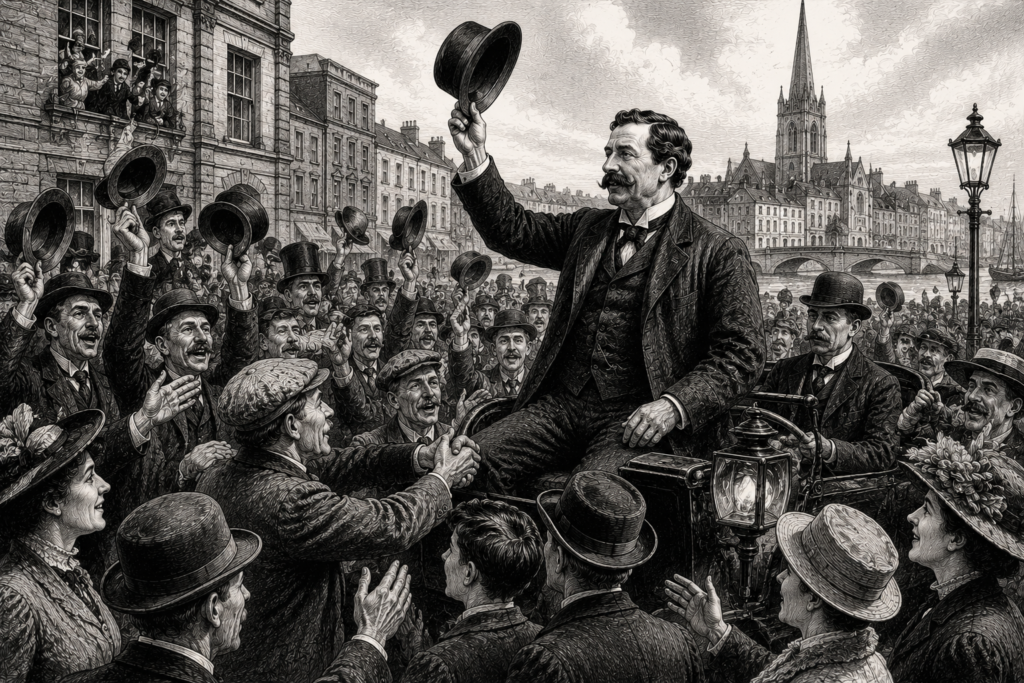
John Redmond has retained Waterford City in the general election, reinforcing his authority as chairman of the reunited Irish Parliamentary Party and strengthening his claim to speak for constitutional nationalism throughout Ireland. The result will be closely observed in Limerick, where nationalist supporters are judging whether reunion has truly ended the divisions that followed the fall of Charles Stewart Parnell. Redmond’s return from a strongly nationalist urban constituency gives him more than a Westminster seat. It provides a local electoral foundation from which he can direct a party attempting to restore discipline, confidence and influence after nearly a decade of internal conflict.
Waterford has supported Redmond since 1891, when he secured the constituency shortly after Parnell’s death. His continued representation of the city has allowed him to maintain a recognisable political base through years in which the nationalist movement was divided between Parnellites and anti-Parnellites. Waterford’s attachment to him rested partly upon loyalty to the Parnellite tradition, but it also reflected his close relationship with local organisations, workers and commercial interests. By retaining the seat in 1900, Redmond demonstrates that leadership of the reunited party has not separated him from the constituency that sustained him during the most difficult period of his political career.
Redmond was chosen chairman of the reunited Irish Parliamentary Party in February, placing a former leader of the smaller Parnellite faction at the head of men who had once opposed him bitterly. His selection surprised some observers and required cooperation from powerful figures including John Dillon, William O’Brien and Timothy Healy. The general election therefore serves as his first national test. A defeat or serious challenge in Waterford would have weakened his authority immediately. His return allows supporters to argue that he possesses both parliamentary experience and genuine popular backing, essential qualities for a leader expected to manage strong personalities and competing traditions within Irish nationalism.
The wider election remains shaped by the South African War, British imperial politics and the Conservatives’ appeal to military success. Irish nationalists have placed Home Rule, land reform and party unity at the centre of their campaign. Redmond’s criticism of the war has enabled him to express sympathy with the Boer republics while distinguishing opposition to imperial policy from hostility towards Irish soldiers. Advanced nationalists continue to question whether Westminster methods can deliver genuine independence. Nevertheless, Redmond’s position in Waterford confirms that constitutional politics still command considerable support among electors who want Irish self-government pursued through an organised parliamentary party.
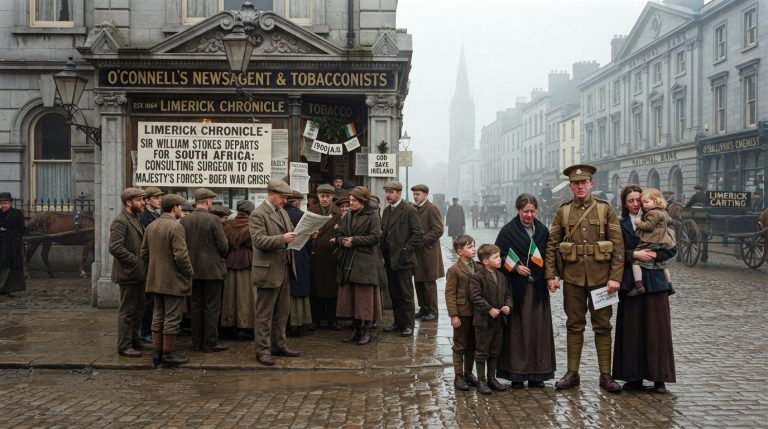
In Limerick, the result strengthens expectations that the reunited party will emerge from the election with a disciplined body of members capable of pressing Ireland’s demands at Westminster. Local nationalists will look to Redmond for leadership on Home Rule, tenant purchase, labourers’ housing and economic hardship. His Waterford victory does not remove old suspicions or guarantee obedience from every Irish member, but it gives him a secure personal mandate at a crucial moment. Constitutional nationalism now possesses a recognised chairman who has retained the confidence of his own constituency. Redmond must prove that this local endorsement can be converted into national unity and effective parliamentary action.
Primary Sources
- Parliamentary Election Returns, General Election of 1900, House of Commons Parliamentary Papers — official record confirming John Redmond’s return for Waterford City and identifying the members elected throughout Ireland. The exact command-paper number and Waterford page should be confirmed before formal citation.
- Waterford News, early October 1900 — contemporary local reporting on Redmond’s nomination or return, the political atmosphere in Waterford City and local support for his leadership. Exact issue, page and column should be confirmed before formal citation.
- Waterford Standard, early October 1900 — contemporary local coverage of the constituency, Redmond’s position and political reaction to the election. Exact issue, page and column should be confirmed before formal citation.
- Freeman’s Journal, 2 October 1900 — contemporary nationalist reporting on Redmond’s return for Waterford City and the progress of Irish Parliamentary Party candidates during the general election. Exact page and column should be confirmed before formal citation.
- John Redmond Papers, National Library of Ireland, 1878–1918 — correspondence and political papers concerning Waterford, party reunion, election organisation and Redmond’s leadership of the Irish Parliamentary Party. The precise manuscript item should be identified before formal citation.