
Archived: 13 October 2026
Abstract
In 1738, Ireland experienced a wet, delayed farming season, documented in Cathal Ó Conchubhair’s Irish-language diary through delayed harvests and turf work, exposing rural dependence on weather, fuel and mixed crops. Samuel Madden urged Protestant landlords to promote estate management, agriculture, flax, education and manufacture, though his improvement scheme preserved inequalities. Parliament remained prorogued while government addressed robbery through proclamations and rewards. The deaths of harper Turlough O’Carolan and Dublin educator Thomas Sheridan marked losses. Roxborough Castle’s construction and Richard Montgomery’s birth reflected investment and Protestant Atlantic opportunities. The year revealed social division, economic ambition and environmental vulnerability without famine.
Read Article
Archived: 13 October 2026
Abstract
In 1737, William Cavendish, third duke of Devonshire, became lord lieutenant, linking Dublin administration to Walpole’s London government as Parliament convened under Protestant landed dominance. Proclamations addressed gold, silver and copper currency, crime, riots, vagrancy and begging, revealing official dependence on magistrates, rewards and local knowledge. George Berkeley’s Querist advocated economic improvement while reflecting elite assumptions about poverty and labour. Francis Joy founded the Belfast News-Letter, creating a provincial news channel despite limited readership. Religious divisions persisted under penal laws, while trade, linen and agriculture connected Ireland unequally to British and Atlantic markets. The year exposed social vulnerability without crisis.
Read Article

Archived: 13 October 2026
Abstract
In 1736, Ireland’s Protestant ruling order was tested and displayed through disputes, legislation, commemoration and print. The Commons opposed tithe on agistment, favouring landed interests against Church of Ireland clergy; Jonathan Swift attacked legislators in The Legion Club. Cork’s new civic arrangements combined cathedral rebuilding with a workhouse providing relief, discipline and compulsory labour. Dorset founded the Boyne obelisk, affirming a Protestant interpretation of Williamite victory. Catholic bishop James Gallagher published Irish-language sermons in Dublin, demonstrating resilient Catholic culture under penal restrictions. James Hamilton’s Dublin Daily Advertiser, the city’s first daily newspaper, reflected expanding commercial communication under unequal Protestant rule.
Read Article
Archived: 13 October 2026
Abstract
In 1735, Ireland’s Protestant governing system addressed poverty, security and economic improvement through parliamentary proposals, proclamations and print. Dublin’s parliament, constrained by Poynings’ Law and dominated by property-owning Protestants, considered measures reinforcing Catholic exclusion from juries and restricting mixed marriages. Cork advanced plans for St Fin Barre’s reconstruction and a workhouse combining relief, labour discipline, foundling care and Protestant instruction; legislation passed in 1736. Road schemes and liquor-credit regulation reflected social concerns. Proclamations pursued robbers across counties. George Berkeley’s Querist promoted debate on employment, consumption and national resources, while Protestant schooling and Ulster Scots print illustrated confessional and cultural currents.
Read Article
Archived: 13 October 2026
Abstract
In 1733, Ireland experienced influenza, financial insecurity and institutional change centred on Dublin. Dr Steevens’ Hospital opened, providing treatment for workers while imposing rules of admission and patronage. Ben and Samuel Burton’s bank collapsed, exposing dependence on credit. Parliament returned, raised revenue duties and elected Henry Boyle Speaker, while proclamations targeted smuggling and disorder. George II chartered the Protestant charter-school society to educate and convert poor Catholic children. The Dublin Society promoted agriculture, minerals and manufactures. Cultural life included Samuel Madden’s fiction, the death of Irish-language poet Séamas Dall Mac Cuarta, Richard Kirwan’s birth, and architect Edward Lovett Pearce’s death.
Read Article
Archived: 13 October 2026
Abstract
In 1732, Irish institutions revealed tensions within a Protestant-governed, predominantly Catholic society. Hugh Boulter’s Lords’ inquiry counted extensive Catholic clergy, worship, schools and religious houses, prompting renewed enforcement of penal laws, while also exposing uneven local practice. Parliament reduced the maximum interest rate to six per cent, reflecting an expanding but unequal commercial economy. Trinity College Dublin’s Burgh-designed Library was completed, symbolising privileged Protestant learning. George Grierson became king’s printer, but Constantia Grierson’s death diminished Dublin letters. In Paris, Begley and MacCurtin published the first comprehensive English–Irish dictionary. Dublin also published Berkeley’s Christian defence, Alciphron, illustrating religious and intellectual debate.
Read Article

Archived: 13 October 2026
Abstract
In 1731, Dublin witnessed institutional developments that illuminated eighteenth-century Ireland’s unequal political and social order. Thomas Prior, Samuel Madden and fellow Protestant elites founded the Dublin Society to promote agriculture, manufactures and useful knowledge, creating a forum for economic improvement. In October, the Irish parliament first met in Edward Lovett Pearce’s Parliament House on College Green, a grand but constitutionally constrained home for a legislature representing Protestants alone. Its session considered regulation and transport, including roads. Meanwhile, the Lords’ hostile inquiry into popery documented enduring Catholic worship, clergy, schools and religious communities, exposing the narrow social base of Protestant rule.
Read Article
Archived: 13 October 2026
Abstract
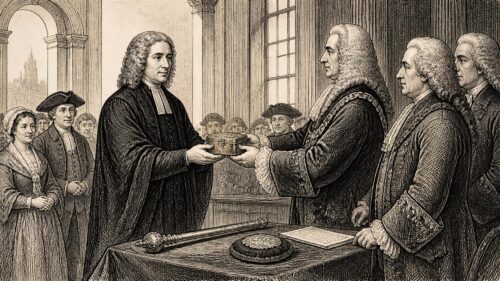
In 1730 Dublin Corporation granted Jonathan Swift the freedom of the city in a gold civic box, recognising the dean and author’s influence after the Drapier’s Letters. The ceremony illuminated Protestant-controlled municipal power, print culture and exclusion. During transition between viceroys, resident officials dominated administration; Ireland’s Parliament remained subordinate to Britain and restricted to propertied Protestants. Legislation against workers’ combinations exposed insecure urban labour and regulation of growing Dublin. Early toll roads signalled commercial development, while agriculture, linen production, markets and weather shaped livelihoods. Established Anglican authority contrasted with the restricted but enduring Catholic majority and disadvantaged Presbyterians, revealing inequality.
Read Article
Archived: 13 October 2026
Abstract
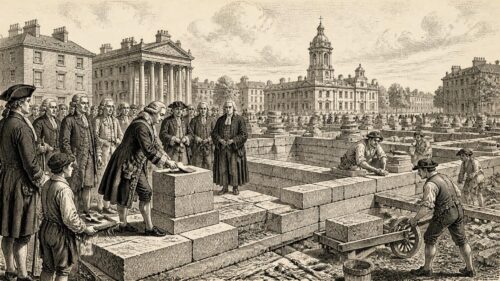
In 1729, Ireland displayed striking contrasts between elite ambition, commercial regulation and widespread hardship. Dublin’s new Parliament House began at College Green, while Castletown House was completed, both symbolising Protestant landed power despite Catholic exclusion from politics. Continuing scarcity after failed harvests left poorer households vulnerable to hunger, begging and displacement; Dublin expanded workhouse provision, combining relief with discipline. Jonathan Swift’s A Modest Proposal transformed these conditions into devastating satire. The Ballast Offices Act sought to improve provincial ports and maritime trade. Deaths of William Conolly, Archbishop William King and poet Aogán Ó Rathaille marked political, ecclesiastical and cultural transitions.
Read Article

Archived: 13 October 2026
Abstract
In 1728, Irish legislation disfranchised Roman Catholics, excluding the Catholic majority from parliamentary elections and legal employment while reinforcing Protestant Ascendancy within a constitutionally dependent kingdom. Parliament also contemplated replacing dilapidated Chichester House. A severe harvest failure intensified the 1727–29 subsistence crisis, raising grain prices and exposing tenants, labourers and smallholders to hunger despite local charitable relief. Efforts to promote tillage reflected tensions between grazing exports and food security. Emigration from Belfast to America signalled economic pressure. Brooking’s Dublin map portrayed civic confidence amid poverty. Esther Johnson’s death, Swift’s political writing, and Matthew Dubourg’s appointment marked cultural life that year.
Read Article
Archived: 13 October 2026
Abstract
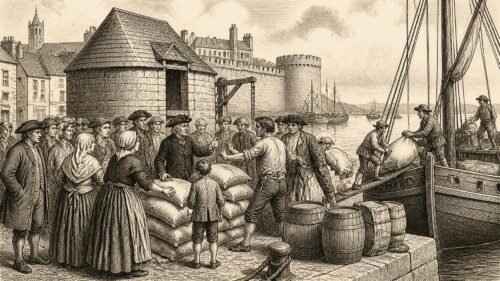
In 1727, Ireland experienced political continuity alongside acute social insecurity. George II succeeded George I, and a new Irish parliament assembled under a Protestant establishment managed through Dublin and London. Qualified Catholic freeholders still voted in the election, although legislation passed in 1728 subsequently disfranchised them. Harvest weakness and dear grain provoked resistance at Youghal and elsewhere to exports and interregional shipments, exposing conflict between commerce and subsistence. Linen exports did not ensure welfare. Swift criticised structural poverty, while Dublin’s workhouse expanded foundling provision amid uncertainty over dates. The year revealed unequal access to political rights, food, care and markets.
Read Article

Archived: 13 October 2026
Abstract
In 1726, Ireland’s constrained Protestant polity, governed within British authority, regulated religious and private life while excluding Catholics from power. Lord Lieutenant Carteret and Archbishop Boulter represented competing Dublin and London priorities. Jonathan Swift’s anonymously published Gulliver’s Travels, shaped by Irish political experience, achieved immediate success as wide-ranging satire. The previous day, Caleb Threlkeld published the first Irish flora, cataloguing Dublin-area plants in Latin, English and Irish and linking observation, medicine and vernacular knowledge. Linen exports demonstrated commercial integration, yet rural society remained vulnerable. A failed harvest and rising prices inaugurated late-1720s scarcity, revealing prosperity’s uneven distribution across the kingdom.
Read Article
Archived: 13 October 2026
Abstract
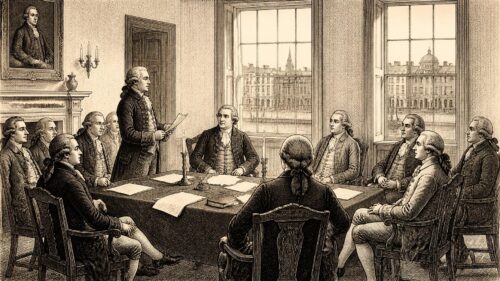
In 1725, Ireland’s significance lay in institutional and political tensions rather than a single decisive event. Lord Carteret suspended William Wood’s contested halfpence patent, demonstrating the force of opposition mobilised by Jonathan Swift while leaving Ireland subordinate to Westminster. His administration exposed a treasury deficit and renewed reliance on parliamentary patronage. The Synod of Ulster created the Presbytery of Antrim for non-subscribing ministers, deepening Presbyterian divisions over conscience and confessional authority. Dublin’s first surviving Grand Lodge meeting recorded freemasonry’s organisation. These developments unfolded within a rural, unequal Protestant state, where Catholics and Presbyterians faced disabilities and economic life remained vulnerable.
Read Article

Archived: 13 October 2026
Abstract
In 1724, opposition to William Wood’s London-authorised copper coinage transformed a dispute over halfpence into a national argument about economic trust, political consent and Irish interests. Jonathan Swift’s anonymous Drapier’s Letters, printed by John Harding, encouraged householders, merchants and bankers to refuse the coins, despite official assurances of their quality. Dublin declarations, grand jury support and Harding’s prosecution threats demonstrated print’s political power, while Lord Lieutenant Carteret confronted mounting resistance. The patent remained valid until 1725, but could not circulate effectively. The year also saw Hugh Boulter’s primacy, the Neal brothers’ landmark Irish tune collection, and a total solar eclipse.
Read Article

Archived: 13 October 2026
Abstract
In 1723, Avoca in County Wicklow established a co-operative weaving mill where farmers brought wool for spinning, dyeing and weaving, alongside corn-grinding. Powered by the river and serving local households and mining communities, it illustrates rural adaptation despite restrictions on Irish woollen exports. Prolonged hot, dry weather brought relative agricultural stability, though drought posed risks. Ireland’s restricted Protestant Parliament considered revenue, manufacture, policing and trade. Wood’s English-minted copper coinage provoked anxieties over consent and commerce. Catholic Archbishop Bernard O’Gara’s appointment demonstrated institutional resilience under penal laws. Claims that Dr Steevens’ Hospital opened that year are unsupported; it opened in 1733.
Read Article

Archived: 13 October 2026
Abstract
In 1721, Ireland’s proposed public bank collapsed amid post-South Sea Bubble distrust, disputes over credit, land, religious exclusion and dependence on Westminster, recently reinforced by the Declaratory Act. Although supporters sought cheaper loans and retained capital, the Commons rejected the scheme, first narrowly in October and decisively in December, preserving fragmented private finance. Land and influence remained central: Charles Butler regained Ormond estates under British sanction, William Ponsonby became Baron Bessborough, and Luke Gardiner acquired land developed as Henrietta Street. Linen exports linked rural households to imperial markets, while Catholic institutions endured restrictions. Government pursued disorder and imposed plague precautions.
Read Article
Archived: 13 October 2026
Abstract
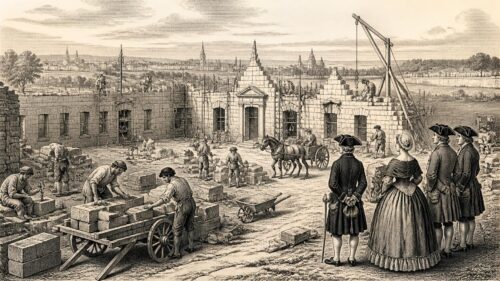
In 1720, Westminster's Sixth of George I asserted Britain's power to legislate for Ireland and made the British Lords Ireland's final appellate court, deepening dependency. Ireland's Anglican ascendancy governed a population restricted by penal laws; James Cotter's execution heightened sectarian tensions. Jonathan Swift's Irish Manufacture pamphlet urged consumers to reject English goods, articulating economic patriotism amid mercantilist constraints. A proposed national bank reflected commercial ambition, but the South Sea Bubble's collapse brought banking panic. Construction began on Dr Steevens' Hospital, promoted by Grizelda Steevens, while Cork Harbour's Water Club was founded. Together they exposed dependence, inequality, charity and elite sociability.
Read Article
Archived: 13 October 2026
Abstract
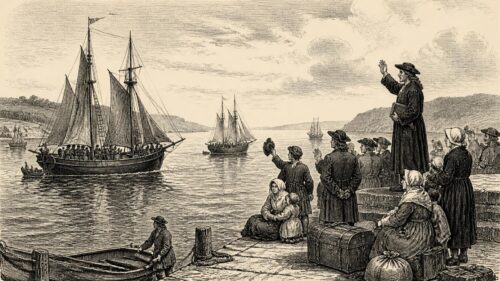
In 1718, Ireland’s significant developments centred on migration, religion and voluntary institutions rather than rebellion. Five vessels carried Presbyterian emigrants from Ulster to Boston, beginning a durable Atlantic movement driven by tenancy insecurity, economic pressures, religious disabilities and colonial opportunity. Ireland’s Protestant ruling order continued to disadvantage Catholics and dissenters, while Sherlock v Annesley highlighted contested Irish autonomy. Six surgeons founded Dublin’s Cook Street infirmary for injured poor, precursor to Jervis Street Hospital. A Ballybough cemetery lease recorded Jewish life. Church appointments and Catholic diocesan administration demonstrated competing authorities, while Thomas Parnell’s death connected Irish culture with British literary networks.
Read Article
Archived: 13 October 2026
Abstract
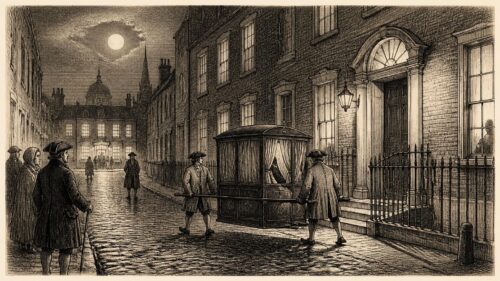
In 1717, Ireland remained a separate kingdom under Hanoverian rule, governed by a Protestant establishment that excluded most Catholics. Charles Paulet, Duke of Bolton, became lord lieutenant, while parliament renewed revenue and reinforced Protestant municipal control in Galway and Kilkenny. Colonel Henry Luttrell, a former Jacobite accused of betrayal, was murdered in Dublin; despite official rewards and proclamations, the crime remained unsolved. Authorities also pursued mutiny and armed disorder. Penal restrictions shaped Catholic and Presbyterian life. Hugh MacCurtin defended Irish antiquity in print. Rural society depended on vulnerable agricultural and export economies amid variable weather, reflecting an anxious political order.
Read Article
Archived: 13 October 2026
Abstract
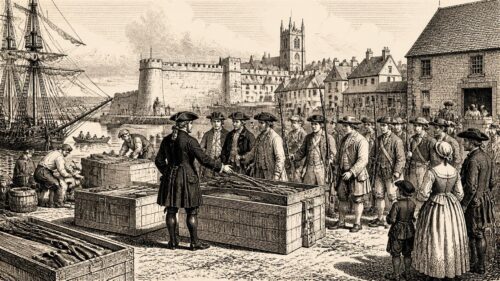
In 1715, Ireland avoided a Jacobite rising despite rebellion in Scotland and northern England, but Hanoverian authorities governed amid anxiety. Officials disarmed Catholics, enforced penal laws, monitored clergy, travellers and supplies, and reinforced ports and garrisons, although evidence of conspiracy was lacking. Troops were sent to Britain, prompting plans for a Protestant militia that lacked sufficient weapons and ammunition. The new Protestant parliament funded defence through renewed and additional taxes, while asserting control over public finance. Anti-Jacobite measures also targeted Ormond’s influence. Dublin’s theatre remained active. Ireland stayed peaceful, yet surveillance, sectarian exclusion and military expenditure deepened under imperial insecurity.
Read Article
Archived: 31 October 2026
Abstract
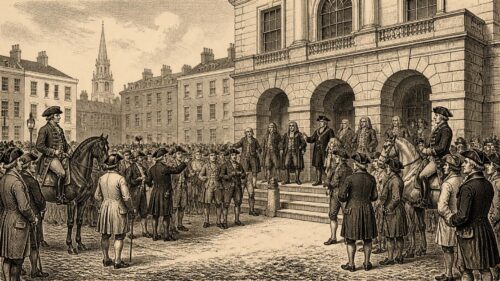
In 1713, Ireland marked the Peace of Utrecht with proclamations and thanksgiving, while remaining politically unstable. Queen Anne’s administration dissolved parliament, held elections and faced violent disorder during Dublin’s disputed Tholsel contest between Whigs and Tories. The new parliament, constrained by Poynings’ Law, passed only temporary supply legislation before prorogation. Authorities continued to fear Jacobite recruitment despite France’s withdrawal of support for the Pretender. Rural tensions appeared in Connacht through cattle houghing linked to land-use conflicts. The Church of Ireland reinforced political authority, Jonathan Swift became dean of St Patrick’s, and government addressed quarantine, mail security and post-war military retrenchment.
Read Article
Archived: 13 October 2026
Abstract
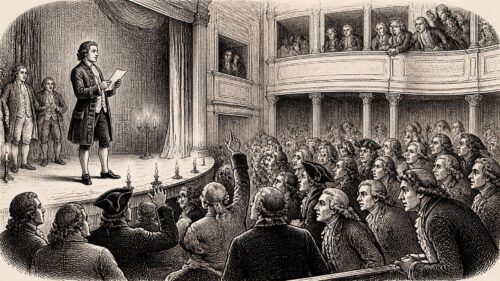
In 1712, Ireland remained tense following Williamite wars, with Tory administrators under Sir Constantine Phipps accused by Whigs of favouring Jacobitism and interests. Dublin’s conflict erupted when Dudley Moore delivered a banned Whig prologue on William III’s anniversary, provoking proceedings. Religious policy combined missionary outreach and exclusion: John Richardson published an Irish-English prayer book while penal laws constrained Catholics; Quaker pioneer William Edmundson died. Banbridge gained a bridge across the Bann, aiding communications. Livelihoods depended on agriculture and expanding linen exports, shaped by imperial restrictions, war and landholding. These events reveal authority contested through politics, religion, print, commerce and infrastructure.
Read Article
Archived: 13 October 2026
Abstract
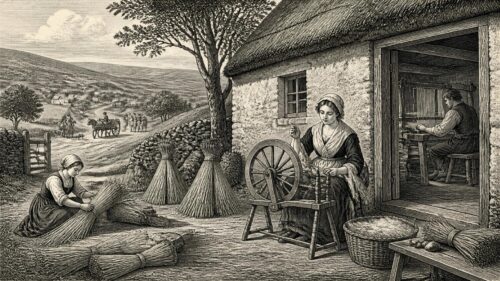
In 1711, Ireland experienced political division, legal persecution, economic initiative and insecurity. Under Queen Anne’s Tory administration, Lord Lieutenant Ormond and Lord Chancellor Phipps reshaped offices, while Dublin’s disputed mayoral succession exposed conflict between Castle authority and civic self-government. At Carrickfergus, eight Islandmagee women, and later William Sellor, were convicted of witchcraft, Ireland’s last known proceedings under the statute. Parliament appointed trustees for linen and hemp manufacture, formalising state support for an expanding export industry. Wartime proclamations addressed naval recruitment, privateers and quarantine. Late-year orders against cattle houghing, alongside Catholic disarmament, reflected rural conflict, property fears and confessional security policies.
Read Article
Archived: 13 October 2026
Abstract
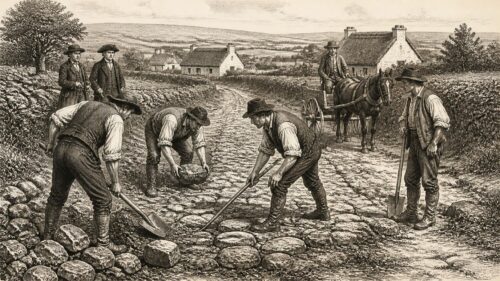
In 1710, Ireland’s Protestant parliament, operating under Queen Anne amid changing Whig and Tory influence, passed measures affecting revenue, property, trade and local administration. Its roads act required rural householders and tenants to provide up to six days’ unpaid labour, reflecting reliance on communal maintenance rather than modern infrastructure. Legislators promoted linen, regulated cattle, rents and timber, and imposed duties on consumer goods. Dublin Castle also suppressed Catholic assemblies in Meath, punished damage to William III’s statue, pursued tobacco thieves, and managed Palatine refugee settlement. Quarantine regulations for Baltic shipping showed Ireland’s exposure to continental war, migration, commerce and disease.
Read Article

Archived: 13 October 2026
Abstract
In 1709, wartime pressures, food regulation and fears of Jacobite loyalty shaped Irish government. Proclamations restricted grain exports, addressed market manipulation and crime, and linked public worship to British military fortunes, without proving a nationwide famine. Parliament reinforced the penal system through an abjuration oath, tighter controls on Catholic clergy, education, property and employment. Dublin received about 3,000 Protestant Palatine refugees, whose protection and settlement posed practical challenges. Samuel Molyneux’s Connacht journey recorded poor roads, domestic textiles, poverty, improvement and cultural division. By December, Hougher violence against cattle reflected resistance to pasture expansion and smallholders’ displacement, revealing sharper social contestation.
Read Article
Archived: 13 October 2026
Abstract
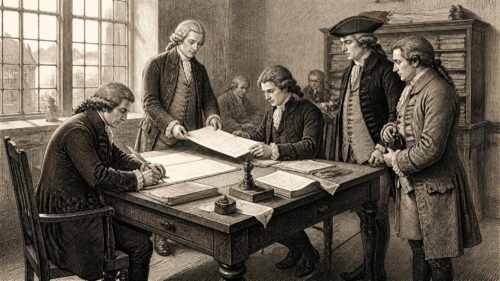
In 1708, Ireland’s new Registry of Deeds entered its first memorial, strengthening recorded property claims while serving a Protestant order shaped by confiscation and penal laws. During the French-backed Jacobite invasion scare, Dublin Castle issued anti-Catholic proclamations and detained clergy and gentlemen, though no rebellion followed. Parliament was prorogued under Lord Lieutenant Pembroke, while Thomas Wharton’s appointment foreshadowed change. Belfast Castle burned, killing three Donegall daughters and servants. Samuel Molyneux’s northern tour recorded contrasting landscapes, rebuilding, Belfast’s growth and Ulster’s developing linen trade. Thomas Milles became bishop of Waterford and Lismore in 1708, illustrating the Church of Ireland’s institutional authority.
Read Article
Archived: 31 October 2026
Abstract
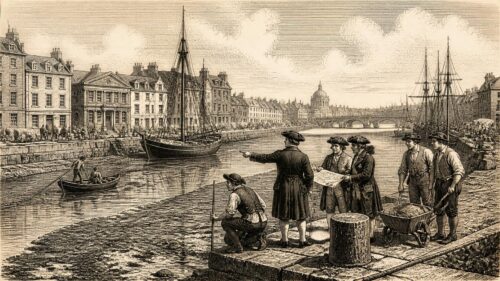
In 1707, Ireland’s brief Dublin parliamentary session exposed post-Williamite government: Protestant elites contested office and revenue, while efforts to admit Protestant Dissenters failed. Legislation created the framework for the Registry of Deeds, protecting property transactions while reinforcing Protestant possession. Margaret McNamara’s abduction prompted safeguards for heiresses and further controls on Catholic marriage. Penal measures restricted Catholic legal participation, religious observance and civic status, while anti-rapparee laws linked crime, vagrancy and suspected disloyalty. Dublin gained a Ballast Office, statutory security for Marsh’s Library, and St Anne’s parish. Measures promoted agriculture and manufacture. Britain’s Anglo-Scottish union excluded Ireland, leaving its parliament separate.
Read Article
Archived: 13 October 2026
Abstract
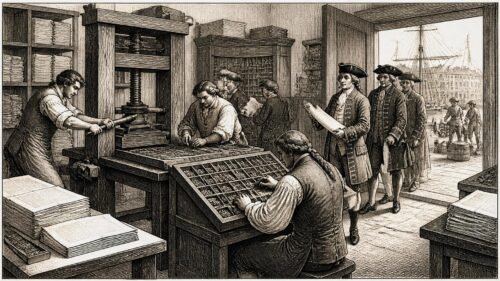
In 1705, Dublin Castle established the Dublin Gazette, printed by Edwin Sandys under official scrutiny, to circulate authorised news and restrain rumour. Ormond’s parliament, meeting from February to June under Queen Anne, imposed consumption duties and regulated tolls, measures, horse theft, debtors and mineral property amid wartime pressures. It strengthened penal supervision of Catholic clergy, restricting unregistered priests while the established Church of Ireland retained political privilege. Westminster permitted direct exports of specified Irish linen to English American plantations, encouraging linen while preserving English commercial control. Together, these measures expanded Protestant government through taxation, surveillance, economic regulation and controlled publicity.
Read Article
Archived: 13 October 2026
Abstract
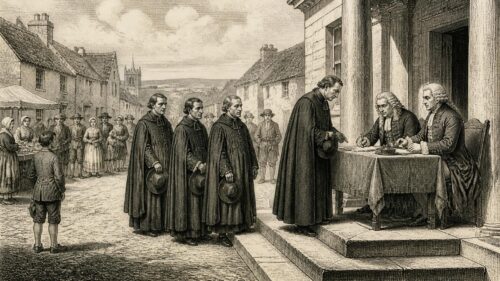
In 1704, Queen Anne’s Irish parliament enacted measures reinforcing Protestant political supremacy after the Williamite wars. The Popish Clergy Register required Catholic secular priests to register, provide sureties and remain locally confined, while excluding new clergy and threatening noncompliance with punishment. Its companion Popery Act restricted Catholic inheritance, education, conversion, office holding and family autonomy, though implementation varied. Parliament simultaneously encouraged Protestant immigrants, notably Huguenots, through selective naturalisation. Other statutes established Dublin’s coercive workhouse system and regulated credit, excise and livestock trade. These measures classified clergy, heirs, migrants and poor people, extending state supervision into worship, households, markets and streets.
Read Article
Archived: 13 October 2026
Abstract
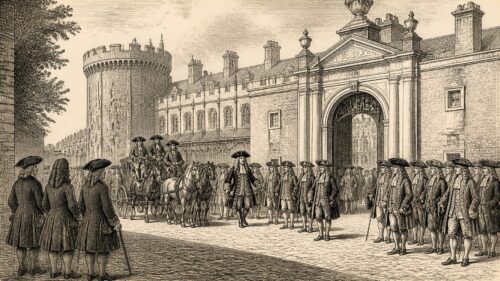
In 1703 Queen Anne appointed James Butler, duke of Ormond, as lord lieutenant, hoping his influence would manage Ireland’s Protestant parliament. Meeting in September, parliament approved liquor excise, trade-related imports, and legislation strengthening restrictions on arriving Catholic clergy, amid wartime fears of France, Spain and Jacobitism. MPs also petitioned for constitutional restoration or union with England, expressing resentment over trade and political subordination. Church and judicial appointments reinforced Protestant administration. Kinsale hosted Dampier’s privateering expedition to the South Seas. Parliament considered navigation improvements linking Lough Neagh, Newry, the Barrow and trade, revealing ambitions for development within an unequal, confessional kingdom.
Read Article





