
Archived: 14 October 2026
Abstract
In 1661, Restoration Ireland began translating conquest and upheaval into law, yet landownership, religion and authority remained unsettled. Charles II’s Irish parliament met in Dublin, advancing legislation that anticipated, but did not enact, the 1662 Act of Settlement. Proclamations regulated rents, protected occupiers and required Catholic innocence claims, while Crown revenue and cattle exports received attention. James Butler, duke of Ormond, was appointed lord lieutenant but arrived only in 1662. The Church of Ireland was reconstituted as Catholics faced pressure and debated loyalism. Events included Book of Kells’ transfer and Florence Newton’s witchcraft trial. Procedures, not peace, defined the year.
Read Article

Archived: 14 October 2026
Abstract
In 1660, Ireland’s Protestant leaders used the General Convention to support Charles II’s restoration, proclaiming him king before his return to England while seeking to preserve parliamentary influence, episcopacy and Cromwellian landholdings. Former Commonwealth figures, notably Charles Coote and Roger Boyle, became royal brokers and regional magnates, while commissioners governed amid uncertainty. Charles’s November Declaration addressed competing claims of Catholic former proprietors, Adventurers and soldiers, protecting many possessors while offering limited restoration through proof of innocence. The Church of Ireland revived under bishops, yet Catholics remained excluded. Restoration restored monarchical institutions but postponed conflict over land, religion, loyalty and power.
Read Article
Archived: 14 October 2026
Abstract
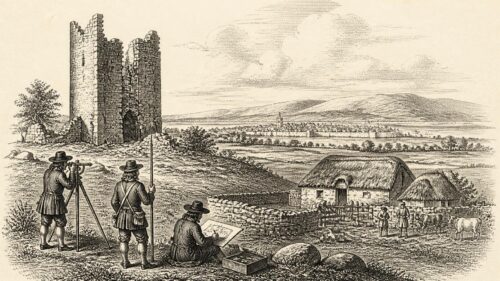
In 1659, the collapse of Richard Cromwell’s Protectorate transformed Irish government. Henry Cromwell resigned, and parliamentary commissioners assumed control in Dublin. Edmund Ludlow, a regicide and committed republican, reorganised the Irish army, tested officers’ loyalties and sent troops to England amid constitutional crisis. Meanwhile, completion of William Petty’s Down Survey provided maps and records enabling confiscated land to be redistributed among soldiers, adventurers and officials. The approximate 1659 census documented settlements and leading occupiers, though imperfectly. Political instability culminated in opponents seizing Dublin Castle in December. Despite changing regimes, the administrative framework for Protestant landholding and long-term social transformation endured.
Read Article
Archived: 14 October 2026
Abstract
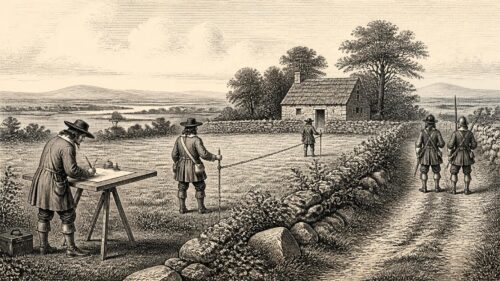
In 1658, completion of Sir William Petty’s Down Survey gave the Commonwealth its first national-scale detailed mapping of Ireland, enabling confiscated land to be valued and allocated to Adventurers and soldiers. Though not covering Connacht or resolving competing claims, it strengthened Protestant ownership and made Catholic dispossession more enforceable. Henry Cromwell governed from Dublin, balancing courts, revenue, army discipline and an unstable land settlement. Oliver Cromwell’s death on 3 September brought Richard’s succession and Henry’s promotion to lord lieutenant. Religious policy privileged Protestants but constrained dissent and excluded Catholics. Beneath order, military power, land claims and constitutional legitimacy remained precarious.
Read Article
Archived: 14 October 2026
Abstract
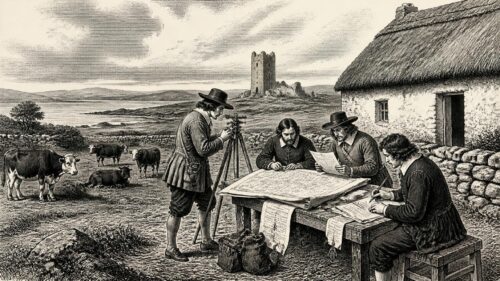
In 1657, Cromwellian Ireland consolidated conquest through law, taxation and institutions. Parliament’s June act confirmed land transfers to soldiers, adventurers and Protestant purchasers, strengthening dispossession while disputes and incomplete occupation persisted. Transplantation to Connacht and Clare continued unevenly, reshaping communities and livelihoods. A costly land assessment funded the army, prompting organised lobbying by Protestant proprietors but offering Catholics little influence. Henry Cromwell’s November appointment as lord deputy regularised government while preserving military control. Erasmus Smith’s foundation deed endowed Protestant education from settlement lands, whereas Luke Wadding’s death highlighted Irish Catholic learning sustained abroad. These measures entrenched division beneath administrative stability.
Read Article
Archived: 14 October 2026
Abstract
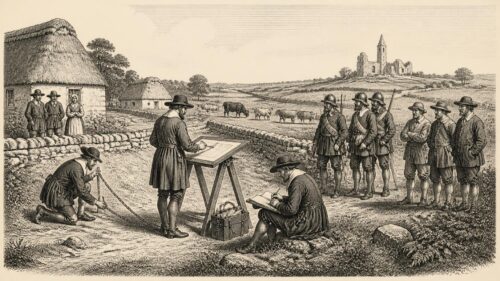
In 1656, Cromwellian Ireland was being reorganised through Sir William Petty’s Down Survey, which recorded land, boundaries and value to distribute forfeited estates among soldiers and adventurers. Field books enabled officials to assess claims while reserving specified public and ecclesiastical lands. This administrative project underpinned confiscation and the uneven, coercive transplantation of Catholic landholders to Connacht and Clare, affecting rural society beyond formal removals. Henry Cromwell sought firmer Protestant civil government amid army and religious divisions, while war with Spain heightened security concerns. Catholic communities endured repression; Quakers faced persecution. Ussher’s death, Ware’s Patrick edition, and Molyneux’s birth reflected continuity.
Read Article
Archived: 14 October 2026
Abstract
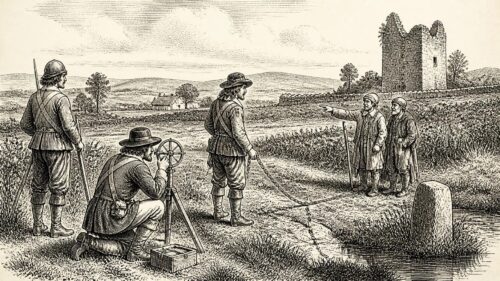
In 1655, Cromwellian rule in Ireland advanced from conquest to practical settlement through transplantation, social control, land measurement and changing leadership. Government orders extended deadlines for Catholic proprietors removed to Connacht and Clare, punished noncompliance, restricted Shannon crossings, and expelled Catholics from Dublin. Debate between Vincent Gookin and Richard Lawrence exposed disagreement over transplantation’s economic costs and security aims. Henry Cromwell’s arrival in July made him effective governor after Fleetwood’s departure, altering political balance. William Petty began the Down Survey, using former soldiers and local knowledge to map forfeited land for army arrears and adventurer claims, embedding dispossession in administration.
Read Article
Archived: 14 October 2026
Abstract
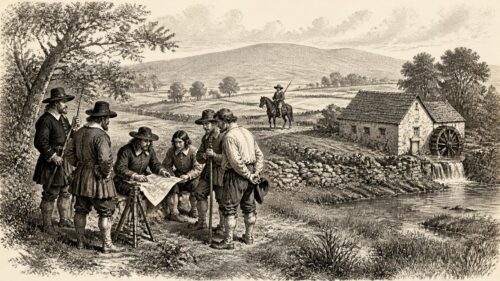
In 1654, the Commonwealth sought to consolidate Cromwellian conquest through transplantation, surveys and institutions. Catholics deemed liable to removal faced a 1 May deadline to move to Connacht or Clare, though enforcement proved uneven amid exemptions, shortages and local dependence on tenants. Courts of survey launched the Civil Survey, recording pre-war ownership, resources and boundaries to facilitate confiscation and redistribution. Charles Fleetwood, appointed Lord Deputy, pursued a hard settlement despite divisions among Protestants and intervention over exemptions. Ireland gained Westminster representation without an Irish parliament. In December, William Petty’s contract initiated preparations for the Down Survey, making dispossession administratively durable.
Read Article

Archived: 14 October 2026
Abstract
In 1653, the Commonwealth completed Ireland’s military conquest as Sir Phelim O’Neill was executed and Philip O’Reilly surrendered Cloughoughter Castle, the last formal Irish Catholic field-force stronghold. Catholic clergy faced expulsion, while Hugh O’Reilly’s death symbolised ecclesiastical disruption. Commonwealth plans shifted towards settlement: Connacht and Clare were designated for transplantation, and forfeited estates were prepared for soldiers and Merchant Adventurers through surveys and land allocation. These measures threatened Catholic proprietors and reshaped local society amid famine, disease, depopulation and insecurity. Cromwell’s Protectorate consolidated London-directed rule, inaugurating a Protestant military state whose post-war settlement rested on confiscation, displacement and administrative control.
Read Article
Archived: 14 October 2026
Abstract
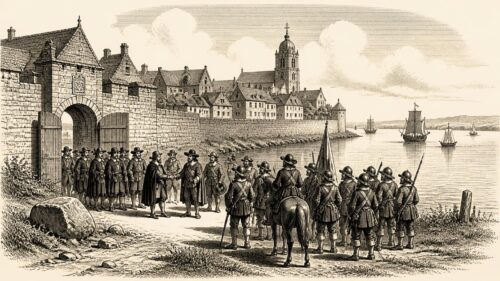
In 1652, Galway, the last major Confederate Atlantic port, surrendered to parliamentary forces after siege and blockade, ending its military significance but leaving Catholic inhabitants uncertain. Resistance persisted through irregular fighters, while agreements offered some soldiers foreign service. Charles Fleetwood’s appointment signalled army-backed civil rule. On 12 August, the Rump Parliament’s Act for the Settling of Ireland established punitive categories of guilt, enabling forfeiture, banishment and redistribution of land to soldiers and Adventurers, although later measures shaped transplantation. War, famine, disease and displacement devastated communities. Thus conquest evolved into a programme restructuring property, authority, religion and belonging under Commonwealth rule.
Read Article
Archived: 14 October 2026
Abstract
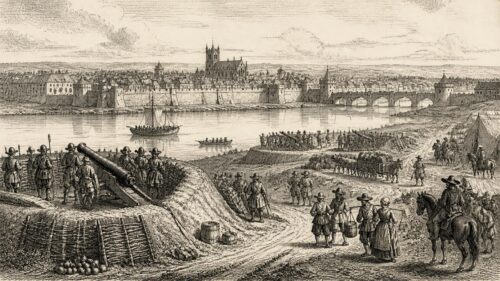
In 1651 Commonwealth forces tightened control of Ireland through campaigns in Munster and Connacht. Henry Ireton besieged Limerick, while Lord Broghill defeated Muskerry’s attempted relief army at Knocknaclashy, ending prospects of substantial support. Blockade, artillery, hunger and disease devastated Limerick’s inhabitants, provoking divisions between defenders, clergy and civilians seeking terms. The city surrendered on 27 October after internal betrayal opened key positions. Although many received quarter, leading military, civic and Catholic figures were excluded, imprisoned or executed. Ireton envisaged a more English, Protestant city. Meanwhile Galway came under blockade, becoming the remaining major centre of organised Catholic and royalist resistance.
Read Article
Archived: 14 October 2026
Abstract
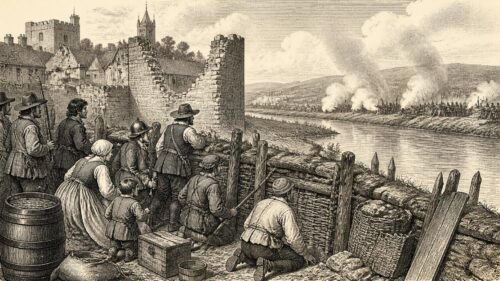
In 1650, the Cromwellian conquest advanced despite continuing resistance in Connacht, Limerick and Ulster. Cromwell’s agreement with Protestant royalists weakened Ormond’s Catholic–royalist coalition. At Clonmel, Hugh Dubh O’Neill’s improvised inner defence repelled a costly assault, although shortages enabled the garrison’s escape and the town’s surrender. Broghill defeated a relief force at Macroom, while Scarrifholis destroyed the Ulster Catholic army and led to Heber MacMahon’s execution. After Cromwell departed, Henry Ireton captured plague-stricken Waterford and Duncannon, pressured Athlone and failed before Limerick. Clergy repudiated Ormond; garrisons, blockade, disease and resource seizures established groundwork for further conquest and settlement in Ireland thereafter.
Read Article
Archived: 14 October 2026
Abstract
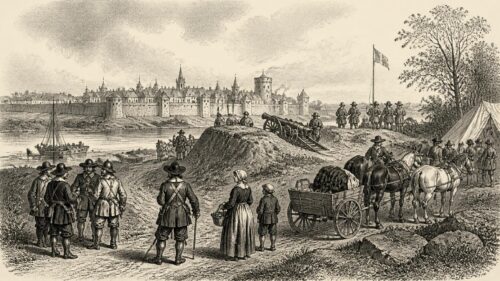
In 1649, the second Ormond peace united Confederate Catholics and royalists against the English Commonwealth, but exclusion of Owen Roe O’Neill exposed deep divisions. Ormond’s defeat by Michael Jones at Rathmines on 2 August secured Dublin for parliament, enabling Oliver Cromwell’s landing with the New Model Army and naval support. At Drogheda in September and Wexford in October, stormings produced exceptional killings, including civilians and clergy, and devastated resistance and trade. O’Neill’s death further weakened opposition. Cromwell failed to take Waterford before winter, but the year transformed the war, creating conditions for the later Cromwellian conquest and settlement in Ireland.
Read Article

Archived: 15 October 2026
Abstract
In 1648, the Catholic Confederation of Ireland fractured over the Dungarvan truce with Murrough O’Brien, Lord Inchiquin, newly aligned with Charles I. Exhaustion after 1647 defeats led moderates to seek a royalist coalition and negotiations with Ormond, despite Inchiquin’s destructive record. Papal nuncio Rinuccini condemned the truce, censuring supporters and joining Owen Roe O’Neill’s resistance. Rival Confederate armies campaigned without decisive battle, burdening civilians suffering requisition and scarcity. The Kilkenny assembly marginalised O’Neill, while Ormond’s return and Rome’s limited aid strengthened accommodation. O’Neill’s ceasefire with parliamentarian Michael Jones revealed division. Winter brought coalition, not peace, before the 1649 Ormond settlement.
Read Article
Archived: 15 October 2026
Abstract
In 1647, the Catholic Confederation’s position collapsed after political division, logistical weakness and military reverses. Parliament gained Dublin when Ormond transferred the city in June, providing a strategic base. Michael Jones destroyed Thomas Preston’s Leinster army at Dungan’s Hill in August, ending any prospect of taking Dublin. In Munster, Inchiquin’s forces devastated communities and stormed Cashel, killing defenders and civilians, plundering the religious complex and deepening Catholic fears. In November, Inchiquin defeated Taaffe’s army at Knocknanuss, killing Alasdair MacColla. Although Kilkenny and O’Neill’s Ulster army survived, these disasters encouraged royalist negotiation and transformed Confederate ambitions into a struggle for survival.
Read Article
Archived: 15 October 2026
Abstract
In 1646, the Catholic Confederation reached its military zenith but became divided over peace with Charles I. Owen Roe O’Neill’s victory over Scottish Covenanters at Benburb, Preston’s Connacht operations, and the capture of Bunratty strengthened hopes of securing Catholic religious and political guarantees. The First Ormond Peace, agreed secretly with the royalist lord lieutenant, offered insufficient protections and provoked clerical, military and popular resistance. Papal nuncio Giovanni Battista Rinuccini led opposition, overthrowing the agreement and remodelling Confederate government. A failed advance on Dublin exposed rivalries, weak supply and divided command. Kilkenny’s Catholic print culture also articulated suffering, rights and legitimacy.
Read Article

Archived: 15 October 2026
Abstract
In 1645, the Catholic Confederation strengthened its position by capturing Duncannon Fort after Thomas Preston’s siege, gaining control over an important Waterford Harbour defence but not coastal supremacy. Secret negotiations between Edward Somerset, earl of Glamorgan, and Confederate representatives promised religious concessions and troops for Charles I, but their disclosure damaged royalist prospects. Archbishop Malachy Ó Caollaidhe died amid Connacht fighting. Papal nuncio Giovanni Battista Rinuccini arrived with money, arms and authority, intensifying demands for enforceable Catholic guarantees. War imposed severe local burdens, while Jesuits founded a Galway school and John Colgan published a major saints’ collection at Leuven abroad.
Read Article

Archived: 15 October 2026
Abstract
In 1644, Confederate Ireland governed extensive territory from Kilkenny while negotiating with Charles I’s administration for Catholic worship, property, officeholding and parliamentary freedoms. Ormond pursued peace, but no settlement emerged. A major Confederate expedition under Castlehaven and Owen Roe O’Neill failed to dislodge Robert Monro’s Covenanter forces in Ulster, exposing divisions and supply weaknesses. Meanwhile, Alasdair MacColla’s troops crossed to Scotland to support royalists, prompting Westminster’s no-quarter ordinance. In Munster, Lord Inchiquin repudiated the cessation, joined Parliament, and expelled Catholics from Cork, Youghal and Kinsale. Trade continued amid war, but requisitioning, displacement and insecurity afflicted civilians deeply throughout the island.
Read Article

Archived: 15 October 2026
Abstract
In 1643, Ireland’s conflict within the Wars of the Three Kingdoms continued despite shifting military and political circumstances. Confederate forces captured Birr but suffered defeat at New Ross, while achieving a Munster success at Cloughleagh. Supply shortages, taxation, agricultural regulation, trade controls and anti-Catholic measures revealed wartime pressures around Dublin. On 15 September, Ormond and Confederate commissioners agreed the Sigginstown Cessation, a year-long armistice involving territorial arrangements, diplomacy and payments. It excluded Scottish Covenanting forces in Ulster and resolved neither religion nor landownership. The truce intensified Confederate debates, enabled northern planning, and coincided with Mícheál Ó Cléirigh’s work at Louvain.
Read Article

Archived: 15 October 2026
Abstract
In 1642, Ireland’s uprising became organised war amid the Wars of the Three Kingdoms. Catholic leaders united Gaelic and Old English interests around defence of worship, property and liberties, while professing loyalty to Charles I. Synods at Kells and Kilkenny promoted an oath of association. In October, the Kilkenny General Assembly established a Supreme Council, subordinate councils, military administration and taxation, creating a fragile Catholic government. Royalist, Protestant and Scottish forces retained key territories; defeats at Kilrush and Liscarroll checked Catholic arms. Owen Roe O’Neill’s return aided Ulster’s future resistance. War brought displacement, requisitioning and violence to all communities nationwide.
Read Article

Archived: 15 October 2026
Abstract
In October 1641, Catholic grievances over plantation, exclusion and religious constraints combined with Stuart political instability to trigger rebellion in Ireland. A planned seizure of Dublin Castle failed, but Sir Phelim O’Neill’s Ulster rising captured Dungannon and Charlemont. His proclamation professed loyalty to Charles I and protection for Protestants, while a later forged royal commission fuelled confusion. The conflict brought flight, plunder, killings, dispossession and winter hardship, alongside retaliatory violence. Testimony in the 1641 Depositions records crisis but requires critical reading. Fighting spread towards Dublin, Leinster and Munster, intensified English and Scottish political conflict, and left Ireland fractured without settlement.
Read Article

Archived: 15 October 2026
Abstract
In 1640, Ireland remained formally peaceful, but Charles I’s war against Scotland exposed mounting political divisions. Parliament granted four subsidies and discussed an enlarged army, then challenged the government’s methods of taxation and collection. Christopher Wandesford, succeeding Strafford as lord deputy, lacked his authority and repeatedly prorogued parliament. The Commons’ November remonstrance denounced Strafford’s arbitrary administration, monopolies, financial exactions and land policies, linking Irish grievances to his Westminster impeachment. Wandesford’s removal of parliamentary journal entries worsened distrust. His death in December, followed by Bishop John Atherton’s execution, weakened government further. Theatre and Gaelic scholarship continued amid crisis, foreshadowing 1641’s upheaval.
Read Article

Archived: 16 October 2026
Abstract
In 1639, Thomas Wentworth’s Dublin administration treated Ulster’s Scottish settlers as a security threat amid the Covenanters’ revolt. Commissioners imposed a compulsory loyalty oath, later called the Black Oath, requiring Scots to reject unauthorised covenants; 1,500 troops enforced compliance. Although no uprising occurred, departures, religious division and distrust deepened. Ireland also figured in Charles I’s abortive war plans against Scotland, including Randal MacDonnell’s ambitions, but no expedition sailed. Wentworth’s land policies faced resistance in Connacht, while Catholic grievances remained unresolved. Despite political strain, Dublin produced scholarly works by James Ussher and James Ware, revealing a brittle yet culturally active kingdom.
Read Article

Archived: 16 October 2026
Abstract
In 1638, Wentworth’s administration strengthened revenue, episcopal authority and executive power through monopolies, revenue farms, land investigations and prerogative courts. His suspension and imprisonment of Lord Chancellor Adam Loftus demonstrated the vulnerability of even senior opponents, while proposed Connacht plantations heightened landowners’ fears. Scottish resistance to Charles I’s religious policies brought anxiety to Ulster, where Scottish settlers maintained links with Covenanting communities. Troops moved north as a precaution. Bishop Henry Leslie’s Lisnagarvey sermon and Antrim communion records revealed pressure for conformity. Meanwhile, church revenues expanded and Dublin’s theatre flourished. Ireland remained peaceful, but coercive government and religious division presaged crisis.
Read Article
Archived: 16 October 2026
Abstract
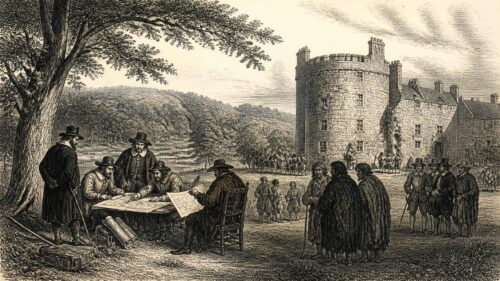
In 1637 Thomas Wentworth’s administration strengthened royal control in Ireland through ceremony, land investigations, economic regulation and institutional reform. His provincial progress projected authority, while the Commission for Defective Titles unsettled proprietors and enabled Christopher Wandesford’s crown-backed acquisition of Castlecomer, displacing the Brennan community. Proclamations regulated cloth, currency, land titles and licensed trade, supporting revenue and English commercial standards. Dublin gained building projects and a chartered Goldsmiths’ Company; Trinity received Laudian statutes. Church discipline pressured Presbyterians, despite William Bedell’s Irish-language work. Meanwhile, Mícheál Ó Cléirigh and Franciscan patrons sustained Gaelic Catholic scholarship through Leuven. Apparent order masked grievances and insecurity.
Read Article
Archived: 16 October 2026
Abstract
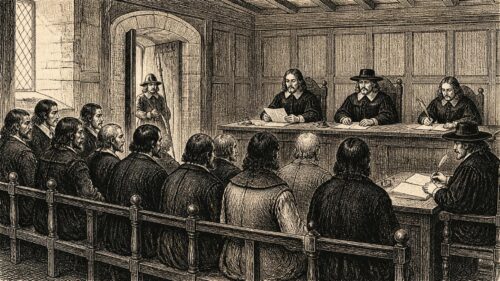
In 1636, Thomas Wentworth’s administration intensified royal control in Ireland through land, religion, economic regulation and culture. Galway jurors who rejected the Crown’s Connacht title were fined and imprisoned, demonstrating the coercive defence of plantation policy. Although Wentworth departed for England in July, trusted officials maintained his programme with royal support. Linen regulations sought to standardise rural spinning and promote exports. In Ulster, Bishop Henry Leslie silenced five ministers refusing Anglican canons, narrowing religious latitude. Meanwhile, the Four Masters completed their Irish annals, and Dublin’s Werburgh Street theatre flourished. These developments revealed an apparently peaceful kingdom under mounting centralised pressure.
Read Article
Archived: 16 October 2026
Abstract
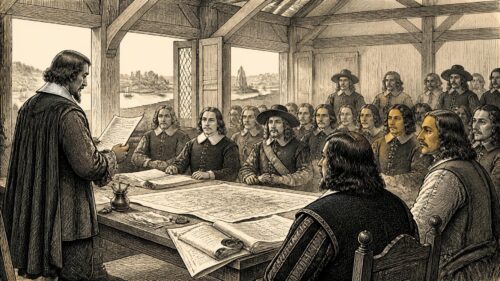
In 1635, Thomas Wentworth’s Dublin administration intensified efforts to reshape Ireland through parliamentary legislation, religious conformity, economic regulation and investigations of land title. Parliament passed measures on correction houses, alehouses, husbandry, clergy and Protestant schools, but failed to secure promised protections for established estates. Crown pressure reached Ulster when London plantation companies lost their charter, and peaked in Connacht, where Galway jurors at Portumna rejected the king’s claimed title and were fined and imprisoned. Wentworth also crushed Lord Mountnorris politically. Meanwhile, Hugh Ward’s death at Louvain marked a loss to Irish scholarship. The year revealed widening distrust of coercive government.
Read Article

Archived: 16 October 2026
Abstract
In 1634, Thomas Wentworth convened Charles I’s first Irish parliament, tightly managing elections, procedure and debate from Dublin Castle. Parliament unanimously granted six subsidies, expecting enactment of the Graces, concessions sought by Catholic and Old English elites, especially secure land titles. Wentworth subsequently refused the crucial land-security measure, confirming that revenue did not purchase limits on royal power. He also constrained parliamentary action over Sir Vincent Gookin’s inflammatory letter. Church convocation adopted the English Thirty-Nine Articles under pressure, advancing conformity despite resistance. Meanwhile, Geoffrey Keating completed Irish-language history; customs, trade and emigration to Spanish Flanders linked Ireland to Stuart Europe.
Read Article
Archived: 16 October 2026
Abstract
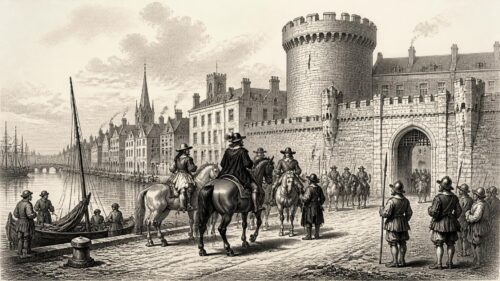
In 1633 Thomas Wentworth arrived as Charles I’s lord deputy, replacing interim rule by the lords justices and initiating a centralised Irish administration. Facing heavy debts and limited revenue, he prioritised customs, trade regulation, provincial accounts and a self-financing government, while cautiously managing Catholic and Protestant interests. He promoted allies, including Christopher Wandesford, John Bramhall and the earl of Ormond, and prepared for a future parliament. Church developments included St Columb’s Cathedral’s completion and inquiries into ecclesiastical resources. Meanwhile, the Four Masters continued preserving Gaelic history in Donegal. The year established stronger royal direction amid confessional, social and cultural divisions.
Read Article
Archived: 16 October 2026
Abstract
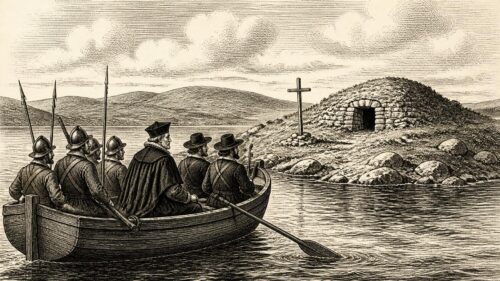
In 1632, Ireland experienced mounting political, fiscal and religious strain under Lords Justices Adam Loftus and Richard Boyle, while Charles I appointed Thomas Wentworth as future lord deputy. Government need for army revenue prompted Boyle’s proposed recusancy fines, but Loftus and Wentworth favoured negotiation, preserving fragile Catholic expectations surrounding the Graces. In October, Bishop James Spottiswood destroyed St Patrick’s Purgatory cave at Lough Derg, forcefully suppressing a major Catholic pilgrimage. Meanwhile Catholic synodical discipline, Ussher’s historical scholarship, plantations and planned towns reflected competing religious and colonial visions. The year exposed an uneasy peace, foreshadowing Wentworth’s more rigorous administration in Ireland.
Read Article




