Archived: 16 October 2026
Abstract
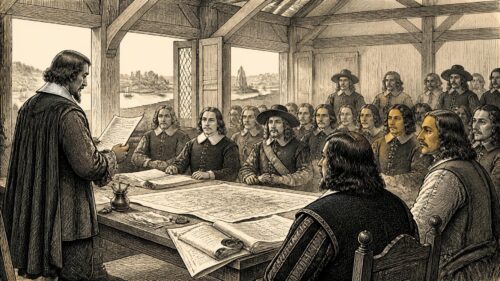
In 1635, Thomas Wentworth’s Dublin administration intensified efforts to reshape Ireland through parliamentary legislation, religious conformity, economic regulation and investigations of land title. Parliament passed measures on correction houses, alehouses, husbandry, clergy and Protestant schools, but failed to secure promised protections for established estates. Crown pressure reached Ulster when London plantation companies lost their charter, and peaked in Connacht, where Galway jurors at Portumna rejected the king’s claimed title and were fined and imprisoned. Wentworth also crushed Lord Mountnorris politically. Meanwhile, Hugh Ward’s death at Louvain marked a loss to Irish scholarship. The year revealed widening distrust of coercive government.
Read Article

Archived: 16 October 2026
Abstract
In 1634, Thomas Wentworth convened Charles I’s first Irish parliament, tightly managing elections, procedure and debate from Dublin Castle. Parliament unanimously granted six subsidies, expecting enactment of the Graces, concessions sought by Catholic and Old English elites, especially secure land titles. Wentworth subsequently refused the crucial land-security measure, confirming that revenue did not purchase limits on royal power. He also constrained parliamentary action over Sir Vincent Gookin’s inflammatory letter. Church convocation adopted the English Thirty-Nine Articles under pressure, advancing conformity despite resistance. Meanwhile, Geoffrey Keating completed Irish-language history; customs, trade and emigration to Spanish Flanders linked Ireland to Stuart Europe.
Read Article
Archived: 16 October 2026
Abstract
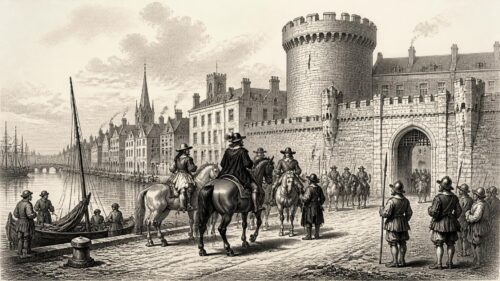
In 1633 Thomas Wentworth arrived as Charles I’s lord deputy, replacing interim rule by the lords justices and initiating a centralised Irish administration. Facing heavy debts and limited revenue, he prioritised customs, trade regulation, provincial accounts and a self-financing government, while cautiously managing Catholic and Protestant interests. He promoted allies, including Christopher Wandesford, John Bramhall and the earl of Ormond, and prepared for a future parliament. Church developments included St Columb’s Cathedral’s completion and inquiries into ecclesiastical resources. Meanwhile, the Four Masters continued preserving Gaelic history in Donegal. The year established stronger royal direction amid confessional, social and cultural divisions.
Read Article
Archived: 16 October 2026
Abstract
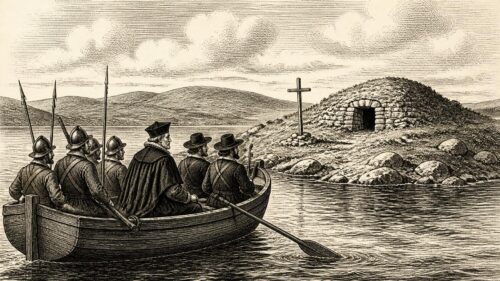
In 1632, Ireland experienced mounting political, fiscal and religious strain under Lords Justices Adam Loftus and Richard Boyle, while Charles I appointed Thomas Wentworth as future lord deputy. Government need for army revenue prompted Boyle’s proposed recusancy fines, but Loftus and Wentworth favoured negotiation, preserving fragile Catholic expectations surrounding the Graces. In October, Bishop James Spottiswood destroyed St Patrick’s Purgatory cave at Lough Derg, forcefully suppressing a major Catholic pilgrimage. Meanwhile Catholic synodical discipline, Ussher’s historical scholarship, plantations and planned towns reflected competing religious and colonial visions. The year exposed an uneasy peace, foreshadowing Wentworth’s more rigorous administration in Ireland.
Read Article
Archived: 16 October 2026
Abstract
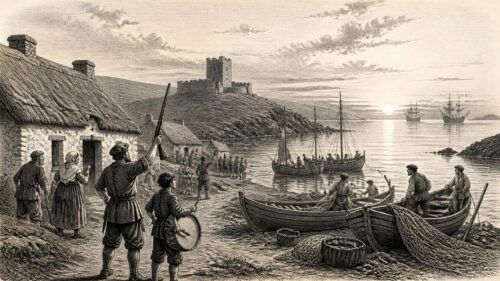
In 1631, Baltimore, a West Cork fishing settlement shaped by plantation, local rivalries and Atlantic commerce, suffered a corsair raid. Before dawn on 20 June, forces led by Murad Reis the Younger seized 107 inhabitants, chiefly women and children, after landing from vessels sailing from Algiers. The captives entered North African systems of sale, labour, ransom and household service; few are known to have returned. Suspicions of local collusion remain unproven. The raid exposed limited coastal protection. Elsewhere, royal honours reinforced hierarchy, Patrick Fleming founded a college in Prague and died in Bohemia, and Sir Henry Docwra died in Dublin.
Read Article

Archived: 16 October 2026
Abstract
In 1630, Ireland experienced contested government, religion and cultural memory rather than a single decisive event. Lords Justices Adam Loftus and Richard Boyle governed after Falkland’s departure, amid rivalries, plantation ambitions and uncertainty over Catholic concessions. Authorities suppressed visible Catholic houses in Dublin, although household networks sustained recusant worship. Malachy Ó Queely’s appointment as Tuam archbishop demonstrated continuing Catholic organisation. On 19 April, Franciscan scholar Mícheál Ó Cléirigh completed the Martyrology of Donegal, preserving Irish sacred learning and helping establish collaboration later associated with the Four Masters. Cork’s tomb commission highlighted elite Protestant power, Catholic insecurity, and uneven state authority.
Read Article
Archived: 16 October 2026
Abstract
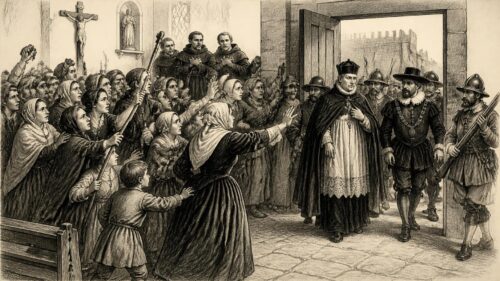
In 1629, Ireland experienced administrative change, religious tension and renewed Catholic confidence. Henry Cary’s recall left Richard Boyle and Adam Loftus as lords justices, committed to royal order and Protestant ascendancy. Despite pressure on recusancy, Dublin’s Catholic networks expanded, exemplified by Poor Clares returning from Flanders to found a convent. On St Stephen’s Day, officials led by Archbishop Lancelot Bulkeley raided the Franciscan chapel in Cook Street. Congregants, notably merchant widow Elinor Nugent and other women, rescued friars and drove raiders into hostile streets. The incident exposed Catholic urban solidarity, women’s agency, transnational links, and the limits of state coercion.
Read Article
Archived: 16 October 2026
Abstract
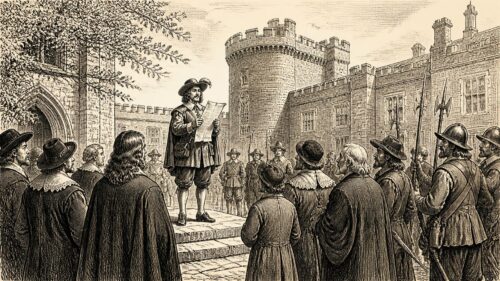
In 1628, Charles I’s government negotiated the Graces with Irish Catholic and Old English elites, exchanging reforms for £120,000 towards the army. The package sought security of land titles, limits on martial law, billeting, monopolies and administrative abuses, and relief from Catholic disabilities. Lord Deputy Falkland prepared an Irish parliament to ratify these measures, but procedural defects under Poynings’ Law caused its October deferral, leaving guarantees unconfirmed. Official proclamations revealed concern over grain supply, poverty and disorder. Catholic life gained an Irish College in Rome, while William Daniel died. The unresolved settlement deepened tensions over land, religion and Crown authority.
Read Article
Archived: 16 October 2026
Abstract
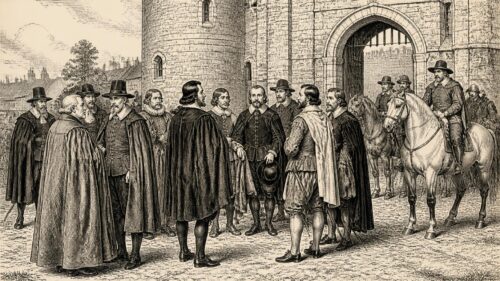
In 1627, Irish politics centred on negotiations over Crown funding, land security and Catholic disabilities. After failed discussions with Lord Deputy Falkland, a convention appointed eleven agents, mainly Old English Catholics but including Protestants, to negotiate in England. Their mission anticipated, but did not yet constitute, the Graces agreed in 1628. Spanish invasion rumours heightened security concerns without producing an expedition. Government business included Adam Loftus’s recall, creation of a Second Serjeant-at-Law, and William Brabazon’s elevation as earl of Meath. William Bedell became Trinity’s provost, encouraging Irish-language ministry. Robert Boyle was born at Lismore, within the prominent Protestant plantation elite.
Read Article
Archived: 16 October 2026
Abstract
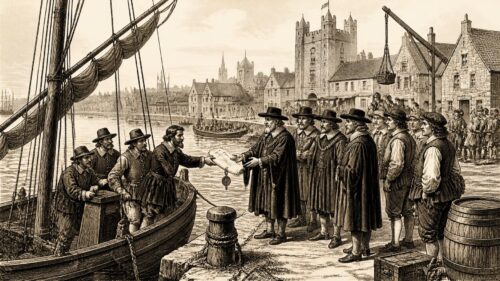
In 1626, Lord Deputy Falkland governed Ireland amid fiscal, religious and landholding tensions. Charles I restored Waterford’s charter, withdrawn after civic officers refused the oath of supremacy, enabling Catholic municipal leadership within Protestant legal constraints for an alleged £3,000. The Crown advanced plantation in Upper Ossory, reshaping contested Fitzpatrick lands. To fund 5,500 troops during war with Spain, Falkland offered proposed Graces, including land-title security, reduced recusancy penalties and officeholding opportunities for Catholics. Protestant bishops, led intellectually by James Ussher, opposed toleration. Aodh Mac Cathmhaoil became Catholic archbishop of Armagh, dying in Rome; Niall Garvach O’Donnell died imprisoned in Tower.
Read Article
Archived: 16 October 2026
Abstract
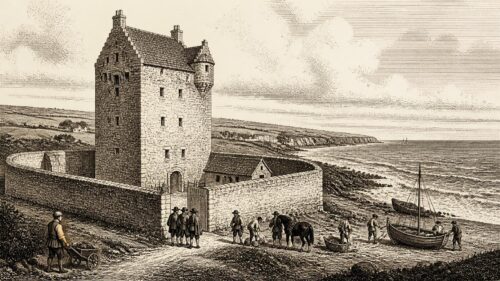
Charles I’s accession in 1625 retained Henry Cary, Viscount Falkland, as lord deputy of an Irish administration dependent on London yet weakened by faction, financial shortages and religious division. Fears of war with Spain exposed decayed coastal defences and unpaid troops; Falkland’s cess shifted military costs onto communities. James Ussher became archbishop of Armagh, strengthening the Protestant establishment despite enduring Catholic networks and no settlement on toleration. Oaths imposed on Connacht officeholders demonstrated administrative expansion. Land disputes after Robert Ponte’s killing in Wicklow illustrated plantation pressures. Ballygally Castle reflected continuing settlement in Ulster, while Moryson’s writing preserved conquest-era attitudes enduring.
Read Article

Archived: 16 October 2026
Abstract
In 1624, Lord Deputy Falkland’s government used proclamations to extend royal control over Irish religion, commerce, arms, dress and settlement, although enforcement proved uneven. A January order expelling Catholic clergy was soon suspended, revealing resilient networks sustained by patrons and continental links. Regulations on logwood, cattle markets, customs, weights and measures sought more governable trade and communities. Ulster policy balanced Protestant plantation ambitions with dependence on Irish tenants, while reforms targeted deficiencies in the Londonderry scheme. Elite succession and peerage reinforced crown connections. Ussher and Messingham mobilised Irish Christian history for Protestant and Catholic claims, amid continuing Gaelic cultural debate.
Read Article

Archived: 16 October 2026
Abstract
In 1623, Lord Deputy Viscount Falkland sought to reduce Irish administration’s costs while reinforcing royal control over revenue, land and religion. Correspondence recorded poverty and efforts to improve customs income. June orders promoted Protestant conformity through oaths, regulated school staff and action against recusants, though obedience remained uneven. Malcolm Hamilton’s consecration as Church of Ireland archbishop of Cashel demonstrated reliance on Protestant networks shaped by Ulster settlement; James Ussher’s republished scholarship supported confessional claims. In October, commissioners investigated timber waste in crown-claimed Ranelagh, linking woodland, survey, law and income. These measures reveal tensions beneath apparent peace, not a settled kingdom.
Read Article

Archived: 16 October 2026
Abstract
In 1622, James I’s Irish Commission investigated administration, revenue, courts, church provision, military costs, landholding and plantation policy during the replacement of Lord Deputy Oliver St John by Viscount Falkland. Commissioners documented Ulster’s plantation, where British settlement, construction and Protestant institutions often fell short, while Irish tenants remained important. Complaints revealed insecurity among Gaelic landholders and elites. Falkland arrived in September amid demands for economy and authority. At his inauguration, Bishop James Ussher urged enforcement against recusancy, provoking Catholic opposition and criticism within the Church of Ireland. The year exposed financial weakness, contested power, incomplete colonisation and persistent religious division.
Read Article
Archived: 16 October 2026
Abstract
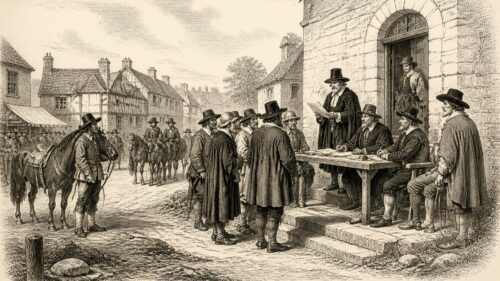
In 1621, Ireland remained unsettled despite the absence of war, as Crown policies on land, religion, revenue and loyalty generated grievances. Parliamentary criticism of Deputy Oliver St John, together with the Pale gentry’s petition, prompted investigations leading towards the Commission of 1622. Plantation patents and the Crown inquest asserting title to Upper Ossory, including Offerlane, extended ambitions beyond Ulster. Preparations to inspect the Ulster Plantation exposed doubts about settlement and administration. James Ussher’s advancement to Meath symbolised strengthened Protestant authority amid Catholicism. Galway’s detention of a privateering vessel revealed Atlantic diplomatic entanglements, while reports of starlings reflected contemporary providential anxieties.
Read Article

Archived: 16 October 2026
Abstract
In 1620, Longford’s April plantation lease conditions advanced Crown efforts to replace Gaelic landholding with surveyed estates, rents and accountable landlords, while allowing adaptation by established inhabitants. Under Sir Oliver St John and surveyor William Parsons, plantation policy extended beyond Ulster, with Leitrim approved for development. Royal patronage elevated Richard Boyle as earl of Cork and Catholic Gaelic-Scottish Randal MacDonnell as earl of Antrim, binding regional powers to the Stuart state. Bangor gained port status, strengthening Irish Sea links. Church appointments, Catholic continental networks, and Trinity College’s scholars revealed competing yet interconnected religious and intellectual worlds within the post-conquest order.
Read Article
Archived: 16 October 2026
Abstract
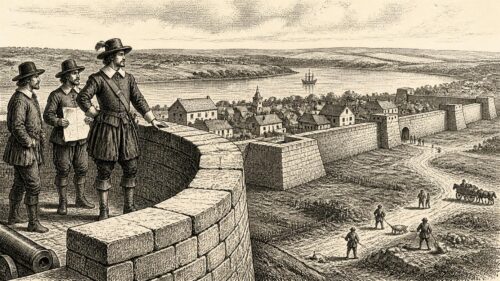
1619 was marked by surveys, construction and institutional change rather than a single national event. Captain Nicholas Pynnar’s inspection of Ulster Plantation estates assessed fortifications, settlers, farms, mills, arms and compliance, revealing uneven progress and persistent Irish presence. At Londonderry, newly completed walls demonstrated Crown authority, but sparse population, incomplete gates and inadequate watch shelter exposed vulnerability. A May deadline sought removal of Irish occupants from undertakers’ lands, though implementation proved limited. Estate houses, churches, schools and mills advanced colonial order. Dublin saw administrative government, episcopal succession and Ireland’s first medical book printed, foreshadowing enduring social and confessional tensions ahead.
Read Article
Archived: 16 October 2026
Abstract
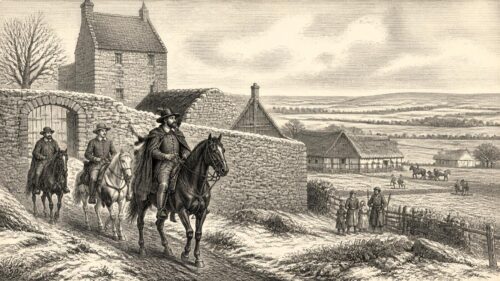
In 1618, Stuart government in Ireland used municipal law, land policy and inspection to reinforce royal authority, Protestant conformity and plantation. Waterford lost its charter after electing recusant civic officers, demonstrating that corporate liberties depended upon religious obedience. Commissioners examined plantation schemes in Longford and O’Carroll country, while an October order required native Irish occupiers to leave assigned Ulster plantation lands by May 1619. In November Captain Nicholas Pynnar was commissioned to inspect settlement, fortifications, tenants and arms in Ulster’s escheated counties. Aodh Mac Cathmhaoil’s Irish-language Catholic book, published at Louvain, and Richard Stanihurst’s death in Brussels highlighted Catholic connections.
Read Article
Archived: 16 October 2026
Abstract
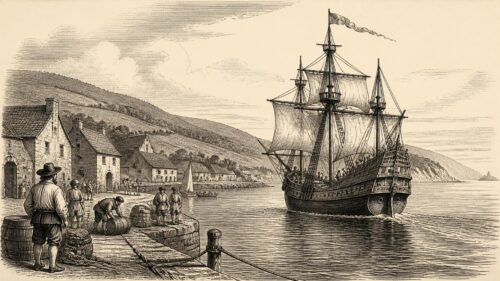
In 1617 Ireland was being reshaped by Atlantic commerce, plantation, religious pressure and cultural debate. Sir Walter Ralegh’s Guiana fleet provisioned at Cork before departing, demonstrating the port’s capacity. The Crown, under Lord Deputy Oliver St John, extended administration through land disputes, grants and titles, including Hamilton’s Strabane barony within the incomplete Ulster Plantation. In Munster, the Barrymore family shifted its seat to Castlelyons. An October proclamation renewed action against Catholic clergy, though Catholic practice endured. Gaelic poets contested regional honour and historical authority, while Barnabe Rich’s satire criticised colonial society. These developments reveal negotiated change rather than settled peace.
Read Article
Archived: 16 October 2026
Abstract
In 1616, Ireland remained shaped by the settlement following the Nine Years’ War despite the absence of nationwide warfare. Hugh O’Neill’s death in Rome on 20 July marked the passing of a figure in resistance and exile. A new royal governor and confrontation in Waterford illuminated continuing disputes over government, religion and civic authority. Ireland’s political life connected Dublin with Rome, London, Spain and Scotland, rather than operating within isolated borders. Conquest had altered the institutions through which allegiance and land were contested without settling those questions. The year demonstrates the persistence of uncertainty within an increasingly organised royal kingdom.
Read Article
Archived: 16 October 2026
Abstract
In 1615, Chichester’s government confronted the abortive Macosquin conspiracy amid Ulster Plantation’s insecure transformation. Alleged Gaelic plotters lacked arms, coordination and foreign support, yet officials feared renewed war and used torture, trials and executions; eleven of seventeen defendants were acquitted. Plantation surveys revealed incomplete settler obligations and continuing dependence on Irish tenants, while landholding and local life were nonetheless changing profoundly. The final 1613 parliament passed a highways measure before dissolution, as proclamations regulated markets and currency. Church convocation adopted 104 strongly Calvinist Irish Articles, probably shaped by James Ussher, while visitation exposed the established church’s weak reach. Coercion persisted.
Read Article
Archived: 16 October 2026
Abstract
In 1614, James I’s government consolidated authority in Ireland through parliamentary management, anti-Catholic proclamations, trade regulation and parish responsibility for roads. Catholic representatives were rebuffed over the 1613 parliament’s new boroughs and religious exclusions, while priests and Jesuits faced expulsion orders. Yet Catholic organisation persisted: the Kilkenny synod reinforced Tridentine discipline and pastoral provision. Ulster Plantation reached a financial milestone when undertakers’ rents became due, accelerating changes in landholding, settlement and power. Deaths of William Bathe, Bonaventure O’Hussey and Thomas Butler, tenth earl of Ormond, highlighted transnational Catholic culture, Gaelic learning and the importance of aristocratic inheritance amid deepening divisions.
Read Article
Archived: 16 October 2026
Abstract
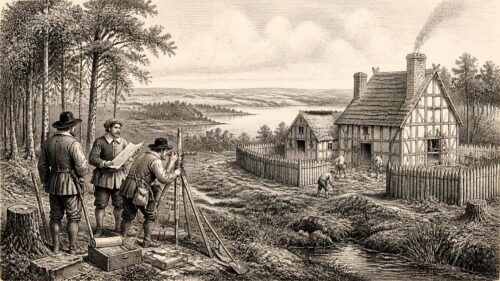
In 1613, the administration intensified its remaking of Ireland through Ulster plantation surveys, municipal charters and a contested parliament. Josias Bodley’s inspection exposed settlement, while London’s Irish Society incorporated Londonderry and developed its county; Belfast and Coleraine gained corporations and parliamentary representation. These boroughs promoted trade and security but supplied Protestant votes. When parliament met in Dublin, conflict over Sir John Davies’s election as Speaker revealed Catholic fears of engineered representation, religious coercion and dispossession. Petitions and a inquiry failed to secure accommodation. Henry Ussher’s death marked change amid conformity. New institutions reshaped land, faith and politics without achieving consent.
Read Article
Archived: 16 October 2026
Abstract
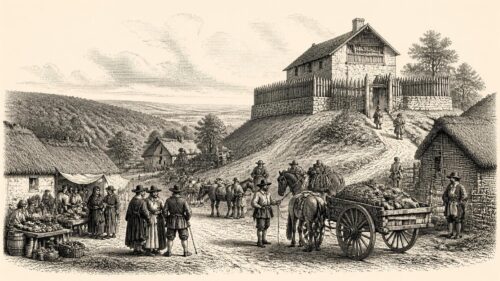
In 1612, Ireland’s post-conquest settlement advanced through coercion, plantation, incorporation and commerce. Catholic bishop Conor O’Devany and priest Patrick O’Loughran were executed in Dublin for treason, exposing official fears of Gaelic exile and foreign Catholic links, while Catholic practice endured. In Ulster, Arthur Chichester’s Plantation redistributed forfeited land, but inadequate building, settlement and defence prompted an inquiry. Dungannon’s charter began a drive creating boroughs to impose English institutions and secure Protestant parliamentary representation; Baltimore and Roscommon reflected its reach. New port books documented trade. John Davies defended conquest, law, property reform and Protestant governance as foundations of lasting English rule.
Read Article
Archived: 16 October 2026
Abstract
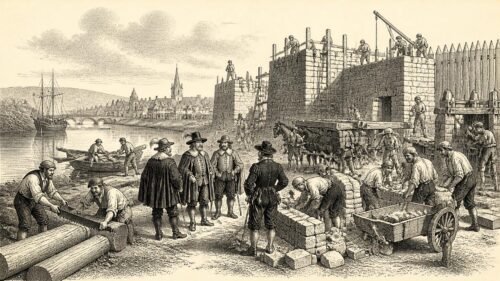
In 1611, Lord Carew’s tour of Ulster assessed the early Plantation, exposing uneven construction and the gulf between Crown plans and local realities. Commissioners inspected routes, settlements and estates, while Coleraine and Derry mobilised labour, timber and fortifications; Dunluce also attracted Scottish settlers. Plantation redistributed land, subordinating Irish proprietors through patents and conditional grants, yet native communities remained central to tenancy and labour. Religious tensions appeared in Bishop John Lynch’s conversion, Patrick O’Loughran’s arrest, and an Irish Catholic devotional book printed at Antwerp. Elsewhere, surrender-and-regrant extended Crown law, while preparations for Parliament revealed disputes over consultation, legislation and royal authority.
Read Article
Archived: 17 October 2026
Abstract
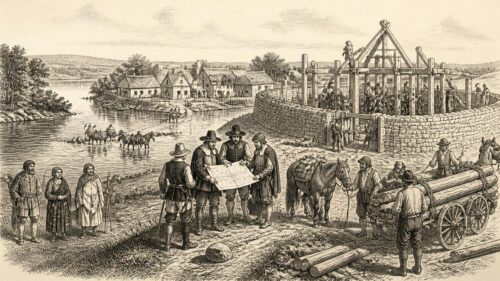
In 1610, James I’s government advanced the Plantation of Ulster, converting confiscated land into surveyed, conditional estates across Armagh, Cavan, Coleraine, Donegal, Fermanagh and Tyrone. English and Scottish undertakers, Crown servitors and selected Irish grantees received terms, while Gaelic communities endured dispossession, tenancy and presence. Building obligations required fortified houses and bawns, and new settlements depended upon labour, materials and commerce. In Cavan, William Bailie’s Tonergie grant and Belturbet’s plantation foundation illustrated emerging centres of authority and trade. Similar title-based policies reached Wexford. Protestant settlement expanded without rapid Catholic conversion, while writers Barnabe Rich and Geoffrey Keating represented contrasting voices.
Read Article
Archived: 17 October 2026
Abstract
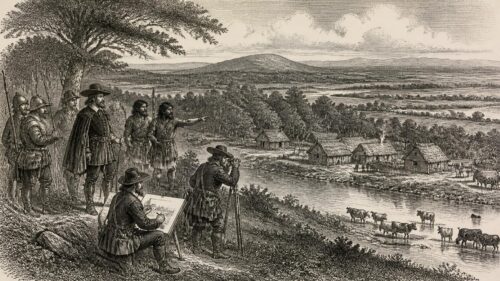
In 1609, following the Flight of the Earls and O’Doherty’s rising, James I’s government surveyed six Ulster counties to prepare their plantation. Sir Josias Bodley’s commissioners recorded townlands, resources, church lands and strategic sites, converting Gaelic territories into proposed estates. The scheme favoured English and Scottish undertakers, servitors and selected Irish proprietors, linking Protestant settlement, fortified building, common law and economic development to security. Most settlers and plantation towns arrived later, while native inhabitants remained but faced mounting insecurity. London was courted for north-western colonisation, Scottish migration encouraged, and soldiers removed. Kilkenny received a city charter, diocesan cathedrals gained status.
Read Article
Archived: 17 October 2026
Abstract
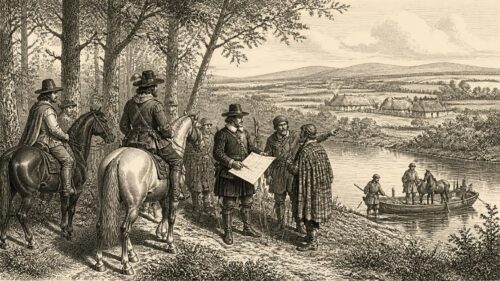
In 1608, Sir Cahir O’Doherty, formerly a Crown ally and lord of Inishowen, rebelled amid disputes over land, authority and Governor George Paulet’s conduct. His followers seized Culmore Fort, stormed, plundered and burned Derry, killing Paulet, but failed to create a wider Ulster coalition. Crown forces suppressed the rising after O’Doherty’s death near Kilmacrennan in July, followed by reprisals and executions. The revolt intensified official distrust of Gaelic landholders and expanded forfeitures. Surveys of six Ulster counties documented lands and resources for redistribution, while planning for plantation advanced. Deaths among exiled Gaelic leaders further weakened resistance, leaving Crown power strengthened.
Read Article
Archived: 17 October 2026
Abstract
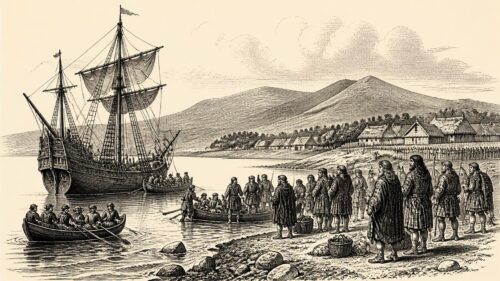
In September 1607, Hugh O’Neill, Ruaidhrí O’Donnell and Cúchonnacht Maguire left Rathmullan with families, followers and clerics, beginning the Flight of the Earls. Their departure reflected insecurity after the Nine Years’ War, as crown law, land investigations and rival Irish claimants undermined Gaelic lordship. Tadhg Ó Cianáin recorded the hazardous voyage: ninety-nine passengers sailed on a French ship, endured storms and shortages, and reached Normandy after twenty-one days. Continental Catholic communities welcomed them, but offered no assured military restoration. Their flight created an opening for stronger crown control in Ulster, preceding, rather than initiating, the later official Plantation of Ulster.
Read Article
Archived: 17 October 2026
Abstract
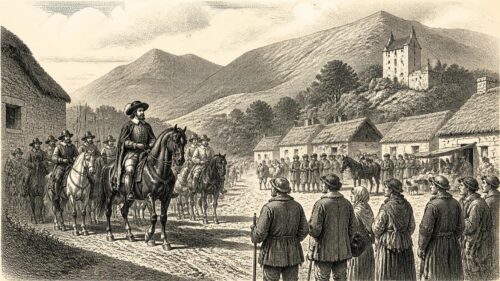
In 1606, administrative and legal interventions reshaped Ireland after the Nine Years’ War. Arthur Chichester’s government sought to establish authority through new territorial arrangements, courts and religious pressure. County Wicklow was created, Scots settled in north Down under private landlords, and judicial activity extended through Munster. Catholic townspeople faced demands for conformity, while Gaelic rulers confronted new interpretations of landholding. These developments connected local experiences to a broader programme of royal consolidation. Peace did not remove insecurity or competing jurisdictions. Instead, the year reveals efforts to translate military success into institutions, property arrangements and obligations across an unevenly governed kingdom.
Read Article





