Divided Loyalties
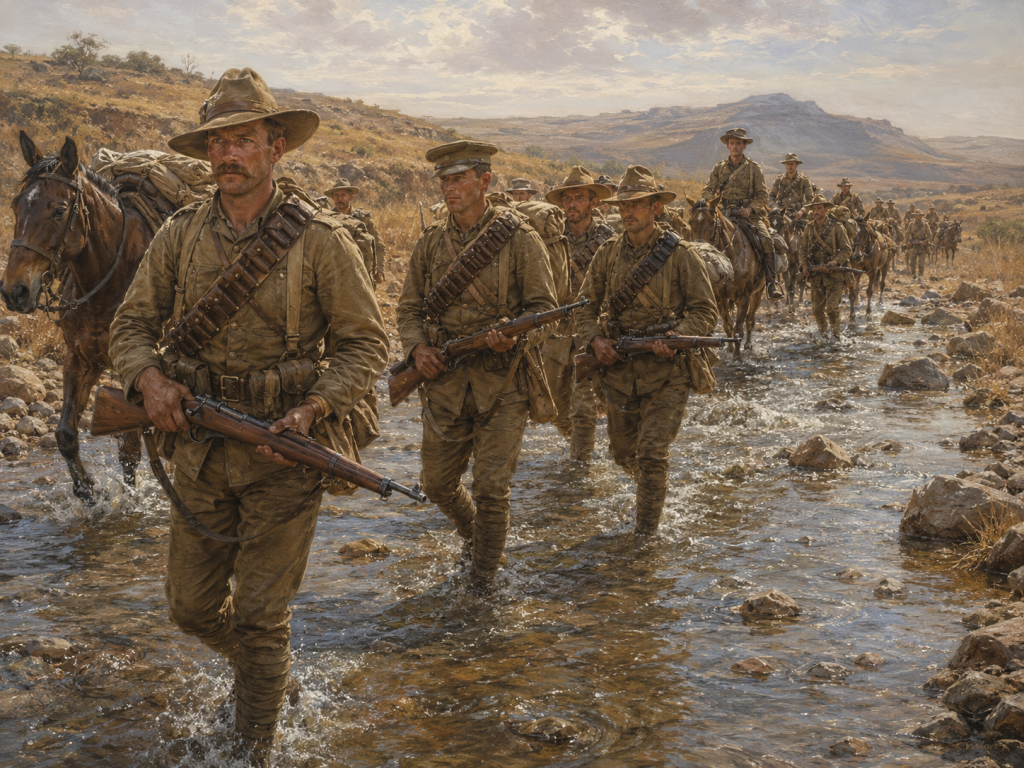
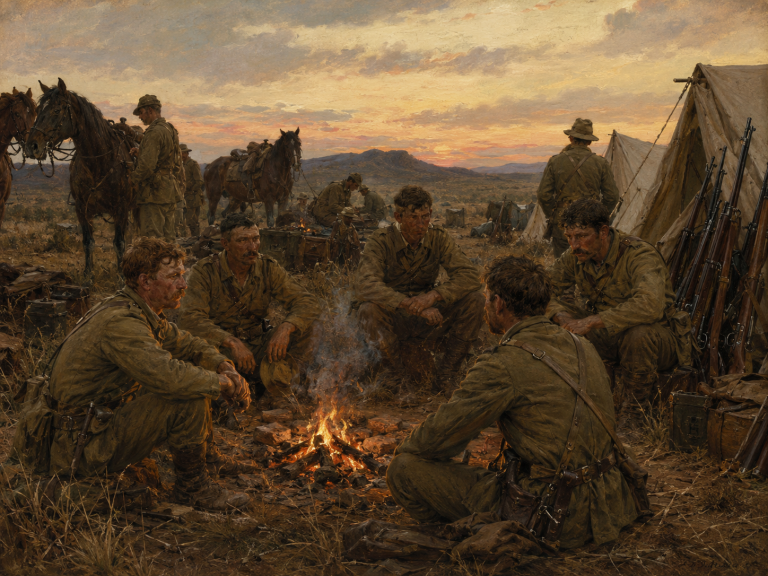
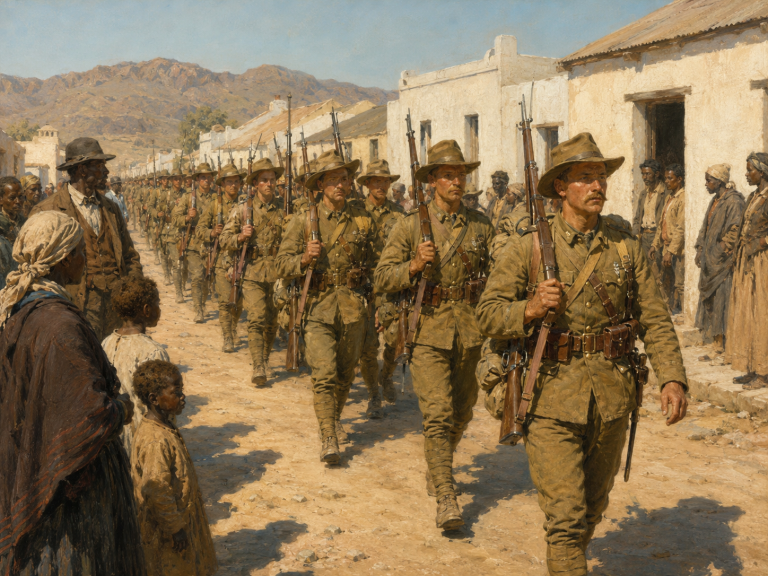
Irish soldiers continue to fight with British forces in South Africa while nationalist opposition to the war grows increasingly vocal at home. The conflict has produced divided feelings across Limerick city and county, where military service has long provided wages, regular employment and support for working-class families. Some residents regard the soldiers as courageous representatives of Ireland within the Empire, while others condemn the campaign against the Boer republics as an act of imperial aggression. Many households occupy a more painful position, opposing British policy while anxiously awaiting news from relatives serving in distant regiments under British command.
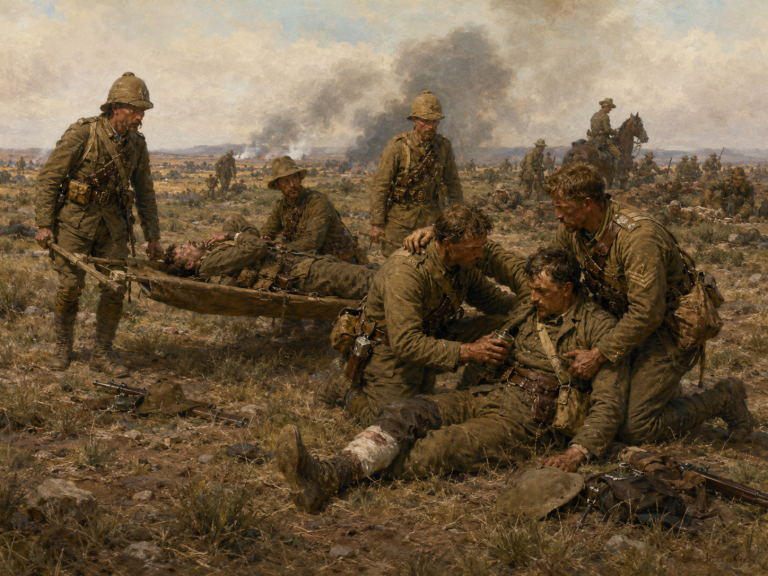
Military service offered opportunities unavailable to many Irish labourers at the close of the nineteenth century. Regular pay, food, clothing and the prospect of a pension could make enlistment attractive amid rural poverty, insecure employment and limited advancement. The Royal Munster Fusiliers recruited men from Limerick, Cork, Kerry and Clare, binding the British Army closely to communities that often supported Irish nationalism. Soldiers did not necessarily enlist from imperial conviction. Economic necessity, family tradition, adventure and the absence of secure civilian work could all influence the decision. Their presence in South Africa therefore cannot be understood simply as an expression of political loyalty.
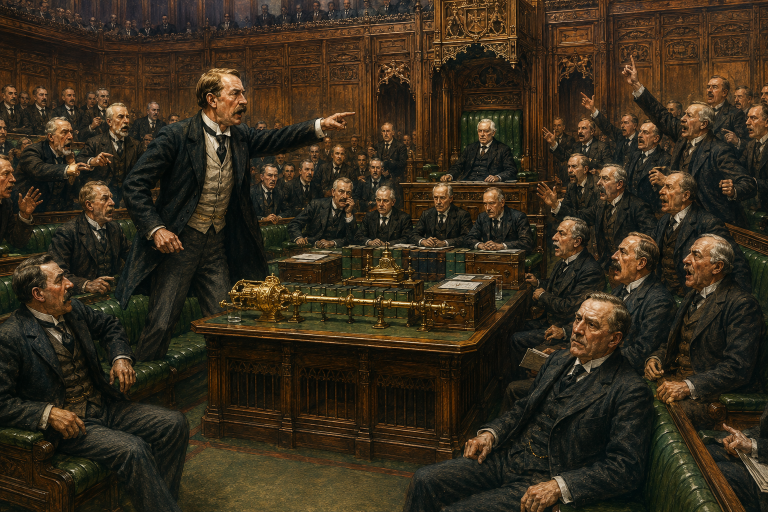
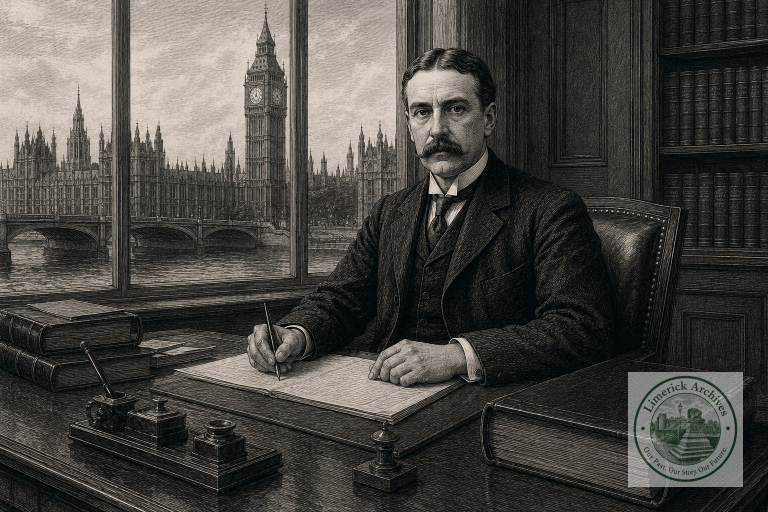
Unionists and imperial supporters have praised the contribution of Irish regiments, presenting their battlefield conduct as evidence that Ireland remains loyal to the Crown. Public reports of engagements, casualties and military honours encourage pride in Irish soldiers even among people who question the war itself. Nationalist representatives answer that respect for men performing their duty does not require approval of the Government that sent them overseas. John Redmond today acknowledged the bravery of Irish troops while condemning Britain’s attempt to destroy the independence of the Transvaal and Orange Free State. His distinction reflects the difficult position faced by numerous Irish families.
Advanced nationalists have adopted a more uncompromising attitude, urging Irishmen not to join an army being used against another small nation. Michael Davitt resigned from Parliament over the war, while pro-Boer campaigners have criticised recruitment and celebrated Irish volunteers fighting on the opposing side. Such arguments can cause resentment among soldiers’ relatives, especially when military wages support households at home. The Irishman in British uniform has consequently become a contested figure: honoured as a disciplined soldier, pitied as a victim of poverty or denounced as an instrument of empire. These interpretations reveal deep disagreements about service, survival, patriotism and national allegiance.
In Limerick, the South African campaign enters daily life through barracks, recruiting offices, newspaper casualty lists, soldiers’ letters and payments reaching dependent families. A political speech against the war may be applauded in the same neighbourhood where a mother waits for news of her enlisted son. Imperial loyalty, economic necessity and nationalist opposition are not always separated into different households; they may exist beneath one roof. The conflict has exposed the complicated place of Irish soldiers within British power. Their service does not settle Ireland’s political loyalties, but instead shows how poverty, employment, family duty and national conviction can pull ordinary people in opposing directions.
Primary Sources
- Hansard, House of Commons Debates, 7 February 1900, volume 78, “Seventh Day’s Debate” — records John Redmond’s opposition to the South African War, his support for the independence of the Boer republics and his acknowledgement of the courage displayed by Irish soldiers serving in British forces.
- Hansard, House of Commons Debates, 5 February 1900, volume 78, “Fifth Day’s Debate” — records parliamentary arguments defending the war and invoking the service and loyalty of Irish soldiers in South Africa.
- Limerick Chronicle, issues published during February 1900 — contemporary local reporting on the South African campaign, Irish regiments, recruitment, casualties and political reactions in Limerick. Exact issue, page and column should be confirmed before formal citation.
- Royal Irish Fusiliers Soldiers’ Letters, 1899–1907, National Library of Ireland — letters written from South Africa by Private Edward Byrne, Corporal Michael Byrne and other soldiers describing military life, campaigning and communication with families at home. The precise manuscript reference should be confirmed before formal citation.
- Papers concerning the band of the Royal Munster Fusiliers at Kimberley during the Boer War, National Library of Ireland, 1901 — contemporary regimental material connected with Munster soldiers serving in South Africa. The precise collection and manuscript reference should be confirmed before formal citation.