Archived: 26 September 2026
Abstract
Ireland faced financial collapse as bank rescues, NAMA loan transfers, austerity and unemployment eroded confidence. In November, the Government sought an €85 billion EU–IMF assistance programme, followed by Budget 2011 cuts and taxes. Emigration rose sharply amid household insecurity. Civil partnership legislation recognised same-sex couples, while clerical-abuse revelations sustained scrutiny of Church authority. In Northern Ireland, policing and justice powers devolved, and the Saville report found Bloody Sunday killings unjustified, prompting Britain’s apology. Improving Anglo-Irish relations included plans for a royal visit. Tipperary and Cork won All-Ireland titles, while severe December cold disrupted life nationwide and severely strained public services.
Read Article

Archived: 26 September 2026
Abstract
In 2001, Celtic Tiger prosperity exposed Ireland’s vulnerabilities and transformations. Foot-and-mouth disease at Proleek, County Louth, prompted cross-border controls, slaughter and trade restrictions. Voters rejected the Treaty of Nice in a low-turnout referendum. Northern Ireland’s devolved institutions repeatedly neared collapse over policing and IRA arms, requiring temporary suspensions, before verified IRA decommissioning in October. The RUC became the PSNI in November, while Holy Cross schoolchildren faced loyalist protest and the GAA abolished Rule 21. Census and employment figures recorded social change, euro starter packs anticipated currency conversion, and cultural commemoration and mourning marked national life across the island and abroad.
Read Article
Archived: 26 September 2026
Abstract
In 1986, Ireland faced economic hardship, social change and intensified Northern conflict. Garret FitzGerald’s coalition confronted debt, unemployment and emigration, while legislation addressed poverty, welfare and public archives. Voters decisively rejected a constitutional amendment permitting limited divorce, though separation and marital breakdown remained prominent realities. The census recorded 3,540,643 people; Self-Aid highlighted mass unemployment, and Knock airport symbolised regional aspiration. Chernobyl contamination fears and the Russborough art theft caused concern. The Anglo-Irish Agreement provoked unionist resistance, culminating in Peter Robinson’s loyalist incursion into Clontibret. Sinn Féin ended Dáil abstention, prompting a republican split, revealing deep enduring strains across Irish society.
Read Article
Archived: 9 October 2026
Abstract
In 1930, the Irish Free State combined consolidation with unresolved social and economic strains. Its election to the League of Nations Council asserted an independent diplomatic role, while John Dulanty’s London appointment strengthened relations with Britain. Cosgrave’s government and Fianna Fáil maintained parliamentary rivalry, passing measures on constitutional procedure, monuments, pensions and administration. Mayo’s rejection of Protestant librarian Letitia Dunbar-Harrison exposed religious prejudice, cultural nationalism and conflict between local and central authority. Falling agricultural export values revealed dependence on British markets as depression advanced. Northern industry suffered unemployment. Cultural developments included Beckett’s Whoroscope and film censorship, highlighting creativity and regulation.
Read Article
Archived: 9 October 2026
Abstract
In 1921, Ireland moved from intense War of Independence fighting towards truce and treaty, amid coercion, raids and executions. IRA engagements at Crossbarry and Tourmakeady maintained pressure, while the Custom House burning destroyed records but cost lives and arrests. May elections confirmed Sinn Féin’s southern mandate and established Northern Ireland’s unionist government. The 11 July truce ended principal IRA–Crown operations but not Belfast’s sectarian violence. London negotiations produced the December Anglo-Irish Treaty, creating a dominion Free State while retaining the Crown, partition and British naval facilities. Signed but unapproved, it deeply divided republicans, leaving border, constitutional and security questions unresolved.
Read Article
Archived: 9 October 2026
Abstract
In 1919, Sinn Féin MPs established Dáil Éireann at Dublin’s Mansion House, declaring independence, adopting a Democratic Programme and claiming authority denied by Britain. The same day, the Soloheadbeg ambush killed two policemen, signalling escalating conflict. De Valera’s escape, presidency and mission strengthened republican propaganda and fundraising. The Dáil developed ministries, a loan, publicity and courts, aided by Cumann na mBan, despite proscription. Limerick’s permit strike demonstrated labour resistance. British repression accompanied plans for separate parliaments, foreshadowing partition. By December, the attempted assassination of Lord French highlighted violence. Ireland ended with rival British and republican authorities, amid hardship and uncertainty.
Read Article

Archived: 9 October 2026
Abstract
In 1909, Ireland remained within the United Kingdom, yet social, political and cultural change accelerated. Old-age pensions, introduced in January, gave qualifying elderly people a statutory income. The Irish Land Act advanced tenant purchase and addressed western congestion, while the People’s Budget and the United Irish League’s baton convention exposed nationalist divisions, prompting William O’Brien’s All-for-Ireland League. James Larkin’s general union established an Irish labour base. University reform replaced the Royal University with national and Belfast institutions. Synge’s death, Irish-language opera and the Clare Island Survey reflected innovation. On 31 December, Harry Ferguson’s monoplane achieved Ireland’s first self-designed, self-built flight.
Read Article
Archived: 9 October 2026
Abstract
In 1898, Ireland saw agrarian, political and cultural change. William O’Brien founded the United Irish League at Westport, seeking land redistribution and linking western congestion to self-government. The Local Government (Ireland) Act replaced landlord-dominated grand juries with elected councils, although implementation followed in 1899 and franchise limits remained. Centenary commemorations of 1798 elevated Wolfe Tone while exposing competing nationalist, unionist and regional interpretations. Cultural revival advanced through Fáinne an Lae, the Gaelic League’s Oireachtas, Pearse’s Aran visit and Irish literature. Mary Immaculate College, Belfast City Hall and Killybegs carpet manufacture reflected educational, municipal and industrial development. They reshaped public life.
Read Article
Archived: 10 October 2026
Abstract
In 1883, Ireland remained divided by unresolved land ownership, coercive government and demands for Home Rule, while the aftermath of the Phoenix Park murders shaped prosecutions and political debate. The Labourers (Ireland) Act established a cautious framework for sanitary authorities to build rural cottages, foreshadowing later reforms. Nationalist organisation persisted through Parnell, the National League and transatlantic support. Catholic institutions expanded with Belfast’s Mater Hospital and a Jesuit University College in Dublin. Completed O’Connell monument figures, international rugby, emigration, a Tyrone tramway proposal and George Moore’s first novel reflected wider civic, economic and cultural change amid continuing uncertainty, national tensions.
Read Article

Archived: 10 October 2026
Abstract
In 1880, agricultural failure, falling prices and rent arrears intensified Irish rural distress, prompting relief measures, emigration and debate over tenants’ responsibilities. The general election and Charles Stewart Parnell’s American fundraising strengthened nationalist organisation; his victory over William Shaw established parliamentary leadership. The Lords’ rejection of the limited Compensation for Disturbance Bill deepened distrust of Westminster. Parnell promoted ostracism of those taking evicted farms, exemplified by Captain Boycott’s isolation at Lough Mask, which created the word boycott. Agrarian violence and prosecutions revealed mounting conflict. Meanwhile, the Royal University of Ireland expanded degree access, including for women, linking crisis with change.
Read Article
Archived: 10 October 2026
Abstract
In 1879, poor harvests, falling agricultural prices and insecure small tenancies caused distress in Connacht, reviving fears of hunger, debt and eviction. On 20 April, tenants meeting at Irishtown, County Mayo, transformed a local rent dispute into agitation. Further meetings led to the Mayo Land League at Castlebar in August and the Irish National Land League in Dublin in October, connecting rural protest with Parnell’s parliamentary nationalism. Isaac Butt died, while Home Rule leadership was contested. In August, Knock villagers reported a Marian apparition, investigated by church authorities. Relief efforts began, and university reform created the Royal University of Ireland.
Read Article
Archived: 10 October 2026
Abstract
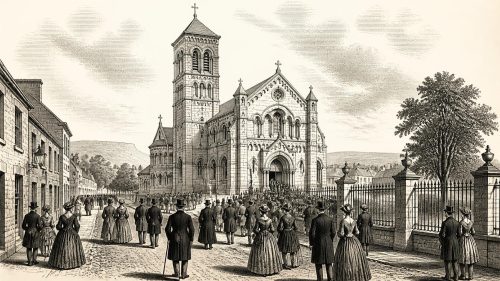
In 1874, Isaac Butt’s Home Rule League won about sixty of Ireland’s 103 Westminster seats, displacing Liberals and establishing a broad but undisciplined constitutional movement. Butt’s proposed Irish legislature, retaining imperial responsibilities at Westminster, received little British support, exposing the gap between electoral representation and influence. Parliament nevertheless handled Irish courts, loans, licensing and navigation. Cardinal Cullen opened Sligo’s Catholic cathedral, symbolising institutional confidence. Registration recorded 141,288 births and 91,961 deaths, while 73,184 people emigrated, chiefly young adults. Agriculture, weather and rural administration remained central to life. Births included Kathleen Lynn, Ernest Shackleton, Annie Moore and Cathal Brugha, among others.
Read Article
Archived: 11 October 2026
Abstract
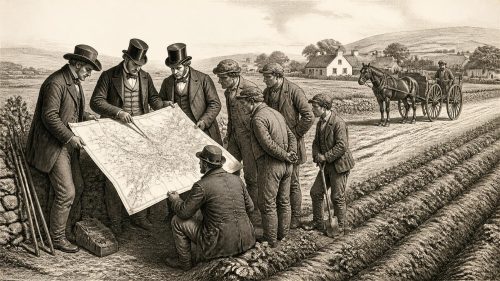
In 1838, Ireland was surveyed, classified and governed amid widespread rural insecurity. The Irish Railway Commissioners’ final report mapped population, trade and transport, advocated publicly directed railways, and warned of labourers’ heavy reliance on the nutritionally poor lumper potato, without predicting famine. The Poor Relief (Ireland) Act created poor-law unions, rates, guardians and a workhouse-centred system, reshaping local administration despite opposition. The Tithe Rentcharge Act replaced direct occupiers’ payments with a reduced landowners’ charge, easing but not ending religious grievance. Father Theobald Mathew’s Cork temperance campaign mobilised mass voluntary action. The Sirius voyage and surveys highlighted Atlantic and administrative links.
Read Article

Archived: 11 October 2026
Abstract
In 1835, Daniel O’Connell’s Repealers allied with Whigs and Radicals in the Lichfield House Compact, helping Lord Melbourne defeat Peel and return to office. The alliance increased Irish influence at Westminster but delivered neither repeal nor a tithe settlement; Lords blocked church reforms, although collection relief was granted. Mulgrave, Morpeth and under-secretary Thomas Drummond brought a more conciliatory Dublin Castle administration, while Michael O’Loghlen became attorney general, the first Catholic since James II. The Poor Inquiry exposed widespread rural insecurity. Public works included Limerick’s Wellesley Bridge and Eagle Island lights; Castleknock seminary opened, and Irish-language poet Antaine Ó Raiftearaí died.
Read Article

Archived: 11 October 2026
Abstract
In 1822, Ireland endured agrarian unrest, food scarcity and emergency government. Lord Lieutenant Richard Wellesley inherited Rockite violence, chiefly in Munster, where the Insurrection Act, habeas corpus suspension, troops and special commissions produced prosecutions, transportation and executions. Poor harvests caused severe regional distress, especially in the west and south-west. Government coordinated charity and funded public works, employing labourers on roads, piers and harbours under engineers including Alexander Nimmo and Richard Griffith. Political divisions persisted over Catholic exclusion and the established Church. A new constabulary law encouraged organised policing. December's Bottle Riot, when a jar was thrown at Wellesley, symbolised conflict.
Read Article

Archived: 11 October 2026
Abstract
Ireland in 1818 faced a contagious-fever epidemic, associated chiefly with typhus, intensified by poverty, overcrowding and post-war dislocation. Parliamentary inquiry and the Fever Hospitals Act established local bodies to provide hospitals, though funding, coverage and care remained uneven, and compulsory removal reflected social control. Dublin opened Francis Johnston’s General Post Office, symbolising communications, while pioneering steamships connected Dublin and Belfast with Scotland. Religious developments included the death of Archbishop Richard O’Reilly, an Irish-language Protestant educational society, and the Secession Synod. Official records revealed crime and distress; Anthony Gallagher was executed. Literary works by Lady Morgan and Patrick Brontë portrayed Ireland.
Read Article
Archived: 11 October 2026
Abstract
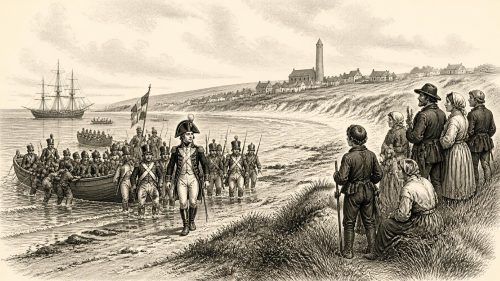
In 1798, the United Irishmen attempted a national revolution against British rule, seeking a representative Irish republic uniting Catholics, Presbyterians and reforming Anglicans with French support. Arrests, coercion and weak coordination fragmented the rising into regional conflicts. Wexford rebels captured Enniscorthy and Wexford town, but atrocities including Scullabogue accompanied fighting before defeat at Vinegar Hill. Ulster risings at Antrim and Ballynahinch failed. In August, General Humbert’s French force landed at Killala, won at Castlebar, then surrendered at Ballinamuck. Repression, executions and transportations followed. The rebellion’s violence and French intervention strengthened arguments for union, reshaping Irish politics and leaving divisive legacy.
Read Article
Archived: 12 October 2026
Abstract
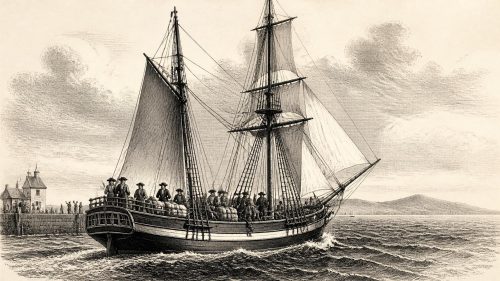
In 1758, Ireland’s administration relied on proclamations while parliament was repeatedly postponed, revealing tensions over property, livestock and authority. Dublin’s Wide Streets Commissioners became operational, and Grand Canal construction continued, signalling improvement schemes. War shaped fast days and maritime quarantine, while the Dublin Trader wreck killed the Earl of Drogheda, his son and actor Theophilus Cibber. Land reclamation at Ballyconneely and Lucan’s sulphurous spring reflected efforts to exploit landscape. Richard Pococke noted Killarney’s improving inns but Timoleague’s poverty. Mary Shackleton’s birth at Ballitore linked the year to a Quaker chronicler. Records show Ireland reshaped by movement, development, commerce and vulnerability.
Read Article

Archived: 20 October 2026
Abstract
Annals for 1440 depict regional political and social change rather than an island-wide event. Walter Burke, Mac William Íochtar of Lower Connacht, died of plague in early September and was promptly succeeded by his brother Edmund, illustrating Gaelicised kin-based succession. Neachtan O’Donnell and Owen O’Neill made peace, temporarily easing northern conflict. In Fermanagh, deaths and killings among Maguire kin revealed interconnected lordly households, while Matthew Mac Craith’s replacement as coarb of St Dabeoc showed hereditary ecclesiastical authority. The deaths of historian Duibhgenn Ua Duibhgennáin and lawyer Domnall Ua Breislen underscored learned orders’ political importance. Sources remain fragmentary and cautiously dated.
Read Article
Archived: 21 October 2026
Abstract
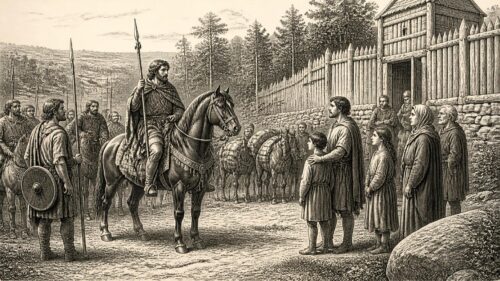
In 1416, Ireland remained divided among Gaelic rulers, Anglo-Irish magnates and the Dublin-centred English lordship. Art Mór MacMurrough defeated Wexford’s English settlers, securing booty and hostages in a peace settlement, while alliances involving Talbots and Butlers complicated ethnic divisions. Annals record his death in 1416, though conflicting evidence places it in 1417, creating uncertainty over succession. Raids, feuds and battles affected Connacht, Breifne and Fermanagh. Friar Brian Mac Donnchadha rebuilt Sligo’s Dominican monastery after fire. Another blaze on Church Island destroyed books, precious objects and instruments, illustrating losses to Gaelic learning. Church offices and legal expertise nevertheless endured amid violence.
Read Article
Archived: 24 October 2026
Abstract
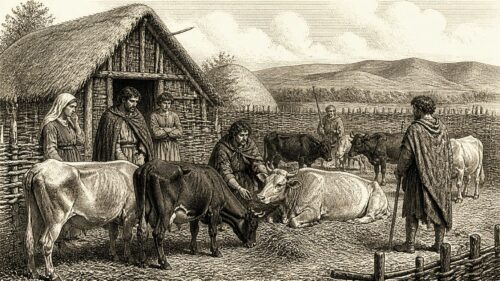
In 1302, Ireland experienced political change, conflict and widespread cattle mortality. Domnall Ruad Mac Carthaig, king of Desmond, died in February after a long reign and was succeeded by his son, Domnall Óc. His Franciscan burial at Cork reflected both dynastic status and penitential religious culture. Donn Carrach Mag Uidir of Fermanagh, several prospective heirs, and leading churchmen also died, creating important vacancies. Raids in Mag Céidne demonstrated continuing competition among Connacht elites. Annals described severe disease among cattle throughout Ireland, threatening rural wealth, food supplies, tribute and lordly power. Chronological differences between sources require caution over some associated events.
Read Article

Archived: 25 October 2026
Abstract
In 1266, Connacht experienced conflict among Gaelic rulers, settler communities and Walter de Burgh’s lordship. Tiaquin Castle was demolished and Conmaicne ravaged, while townships, castles and grain stores were burned. Áed Ó Conchobair, king of Connacht, pursued rivals and projected authority into Bréifne, deposing Art Ó Ruairc, installing Conchobar Buide and taking hostages. His regime also used blinding as political punishment. Raids, killings and a failed Burke hosting demonstrated an unsettled balance of power. Despite warfare, monasteries, dioceses and learned families remained active, recording deaths, appointments and consecrations. Ireland’s order endured through violent, local negotiation of resources, fortifications and succession.
Read Article

Archived: 25 October 2026
Abstract
In 1265, Connacht underwent rapid political and military change. King Fedlimid Ó Conchobair died and was buried at the Dominican priory in Roscommon, while his son Áed na nGall succeeded him, asserted authority through a destructive hosting into Uí Fhailge, and eliminated a dynastic rival by blinding. Áed also led the demolition of castles at Sligo, Bannada and Ráth Ard Craibe, challenging Anglo-Irish lordship, though Sligo was soon rebuilt. Ballintober Abbey burned, under unknown circumstances. Deaths and elections altered church leadership, and negotiations at Kilmaine ended in killings. Wider Anglo-Irish conflicts influenced Connacht’s unstable balance of power during this year.
Read Article

Archived: 26 September 2026
Abstract
In 1063, Tairdelbach Ua Briain, backed by his foster-father Diarmait of Leinster and Dublin, secured recognised kingship in Munster, although Donnchad mac Briain remained until 1064. Ardgar mac Lochlainn’s military progress through Connacht compelled regional rulers to acknowledge his temporary superiority, while an assault on a refuge at Cera caused heavy loss of life. Deaths among kings and churchmen altered local politics. Pilgrimage and ecclesiastical centres retained political importance. Later annals report sickness and scarcity, cautiously interpreted. Warfare, billeting, hostage-taking and raids, including Limerick’s burning, burdened rural communities, revealing Ireland’s fragmented, coercive kingship and interconnected trade, church and rural life.
Read Article
Archived: 27 October 2026
Abstract
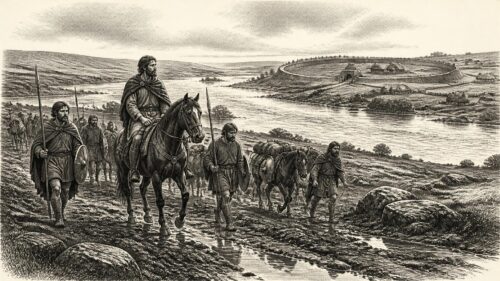
In the annalistic year conventionally called 913, Niall son of Áed, king of Ailech, campaigned in north Connacht, routing the Uí Amalgada and men of Umall, killing or capturing many. Elsewhere, Donnchad and Máel Mithig defeated forces from southern Brega and Leinster, while Congalach of Conaille Muirthemne was killed by his brother after attacking a church household. Vikings defeated a new Ulaid fleet off England, with Irish losses. Churchman Máel Brigte travelled to Munster to ransom a Welsh pilgrim. Death notices recorded clerics, nobles and a chief poet. Annals called the year dark and rainy, reflecting an interconnected, fractured island.
Read Article
Archived: 29 October 2026
Abstract
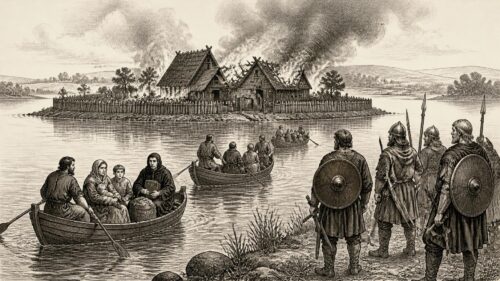
In 850, Irish annals record Cináed son of Conaing, king of Cianachta, rebelling against Máel Sechnaill, king of Tara, with overseas warriors described as foreigners. His forces devastated Uí Néill territories from the Shannon to the sea, attacking churches and secular lordships. They captured and destroyed Loch Gabair, identified with Lagore crannóg, a politically significant elite residence in southern Brega. Nearby oratories at Treóit and possibly Nuarrach were burned, causing casualties. Obituaries and local killings reveal ecclesiastical and regional politics. A notice of Loch Laig draining highlights environmental change. The year depicts rural Ireland under pressure, interconnected yet politically fragmented.
Read Article
Archived: 13 October 2026
Abstract
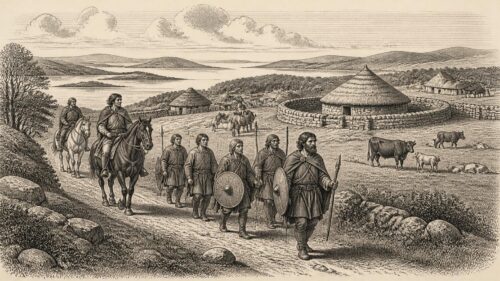
Annals for 707 record political, ecclesiastical and environmental developments in a divided, rural Ireland. Indrechtach mac Dúnchado, overking of Connacht, was killed by northern Uí Néill leaders and allies, demonstrating continuing rivalry without proving conquest. Congal Cennmagair, king of Tara, led a host against Leinster, though no outcome is known. Dúnchad became superior of Iona, reinforcing the monastery’s Irish Sea importance, while Bishop Coibdenach of Ardstraw died and Béc of Bairche undertook religious pilgrimage. Two northern tremors occurred in December. These sparse notices illuminate interconnected kingship, church networks, mobility and agrarian society, while leaving everyday conditions largely unrecorded to historians.
Read Article

Archived: 17 September 2026
Abstract
31,452 BCE is a modern label for a fluctuating Late Pleistocene environment, not a documented Irish year. Lower sea levels altered connections, but shifting ice, waterways and terrain restricted movement. Sediments at Fermanagh and marine evidence in the west show that some regions were ice-free or open before the Last Glacial Maximum. Treeless tundra-steppe, wetlands and severe seasonal cold supported cold-adapted fauna. Castlepook Cave in Cork preserves mammal remains, including reindeer. A possibly cut-marked reindeer femur suggests brief Upper Palaeolithic human contact, but cannot establish settlement. Ireland was a changing northern landscape, later glaciation having erased or buried much evidence.
Read Article
Archived: 16 September 2026
Abstract
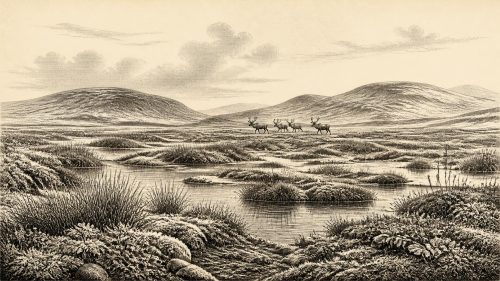
31,536 BCE is a modern label within the climatically unstable Late Pleistocene, rather than a recoverable Irish historical year. At Derryvree, County Fermanagh, organic freshwater sediments between glacial tills indicate an ice-free tundra interval, with pools, sedges, mosses, bogbean, water-milfoil and mountain avens. Supporting but regionally variable evidence records changing ice margins, marine conditions and episodic warming. Southern cave fauna, including mammoth and reindeer, demonstrates cold-adapted animal colonisation, though deposits are mixed. A cut-marked Castlepook reindeer bone may indicate brief Upper Palaeolithic human activity, not settlement. Subsequent ice expansion obscured this intermittently habitable glacial-edge landscape in exposed northern Irish regions.
Read Article

Archived: 16 September 2026
Abstract
About 31,615 BCE is best treated as a broad interval within Marine Isotope Stage 3, not a precise historical year. At Derryvree, County Fermanagh, organic silts between glacial tills indicate a locally ice-free freshwater wetland sometime around 34,950–29,750 BCE, amid fluctuating cold conditions and advancing ice. Fossils suggest open, tundra-like habitats, while cave deposits document varied fauna including reindeer, mammoth and predators. Ireland’s changing ice, sea levels and routes constrained movement. A marked Castlepook reindeer bone may indicate early human activity, but lacks secure context. No evidence establishes permanent settlement, society or cultural continuity; palaeoenvironmental records remain the principal evidence.
Read Article


