Contested Kingdoms(c.1080s)

The surviving Irish annals present 1087 as a year of battles, political killings and environmental hardship. Their entries are terse, sometimes disagree over details, and were preserved in manuscripts compiled at different dates. Nevertheless, several events are independently recorded and can confidently be assigned to the year. Together they reveal an island without a single acknowledged ruler, where provincial kings pursued wider authority through alliances, hostages and force. The death of Tairdelbach Ua Briain in 1086 had removed the strongest king of the previous generation. In 1087 his successors and rivals began testing what remained of his political settlement.
A New King in Munster
Muirchertach Ua Briain entered the year as king of Munster, but his position had not been secured peacefully. On Tairdelbach’s death, Munster had initially been divided among his sons Tadc, Muirchertach and Diarmait. Tadc died within a month, while Diarmait was expelled and Muirchertach claimed the kingship. This recent family rupture shaped the conflict of 1087. Muirchertach inherited considerable resources, links with the Hiberno-Norse towns and the prestige of the Dál Cais, yet his father’s authority over other provinces could not simply be inherited. Irish overkingship depended upon personal military success, negotiated submission and the continued cooperation of lesser kings.
Victory at Ráith Étair
Muirchertach’s most important recorded success came at Ráith Étair, generally identified with the Howth peninsula beside Dublin Bay. The Annals of Tigernach, Chronicon Scotorum and Annals of Inisfallen agree that the Munster king defeated the Leinstermen there. The fuller account in the Annals of the Four Masters names prominent casualties among the Leinster forces and describes a heavy slaughter. The opposing coalition included Donnchad mac Domnaill Remair, an Uí Chennselaig ruler associated with both Leinster and Dublin. Muirchertach’s exiled brother Diarmait Ua Briain and Diarmait’s son Énna also appear on the defeated side.
The battle was therefore more than a straightforward contest between two provinces. It joined a Leinster challenge to Muirchertach’s authority with an internal Ua Briain succession dispute. Its position near Dublin was strategically significant. Control of the approaches to the town offered access to shipping, tribute, skilled labour and commercial wealth, while Dublin could provide fleets and experienced warriors to ambitious Irish kings. Muirchertach’s victory demonstrated that he could bring a substantial Munster army into the eastern seaboard and defeat a coalition close to one of Ireland’s most valuable political prizes. It did not, however, end Leinster resistance, which continued during the following years.
The Battle in Corann
A second major battle was fought at Conachail, or Cunghill, in Corann, the territory represented by the later barony of Corran in County Sligo. Ruaidrí na Saide Buide Ua Conchobair, king of Connacht, faced Áed son of Art Ua Ruairc, ruler of the Conmaicne and an important member of the Bréifne dynasty. Ruaidrí won decisively. Áed Ua Ruairc was killed with Muiredach Ua Eolais, Sitriuc son of Cú Sléibe Ua Fergail, a son of Gofraid Ua Siridén and other leading men of the Conmaicne.
The engagement strengthened Ruaidrí’s hold over Connacht by removing a rival whose following extended across the province’s north-eastern borderlands. It also illustrates the uncertain meaning of royal titles. Some annals accord Áed a broad title connected with Connacht, although Ruaidrí is normally regarded as the provincial overking. Such overlapping claims were characteristic of Irish politics: a king’s effective rank depended upon lineage, alliances and the territories that would obey him. The later Four Masters preserve a short verse remembering the battle and its year, evidence that the victory entered historical tradition, though the surviving text cannot prove that the poem was composed immediately after the fighting.
Sacred Authority in War
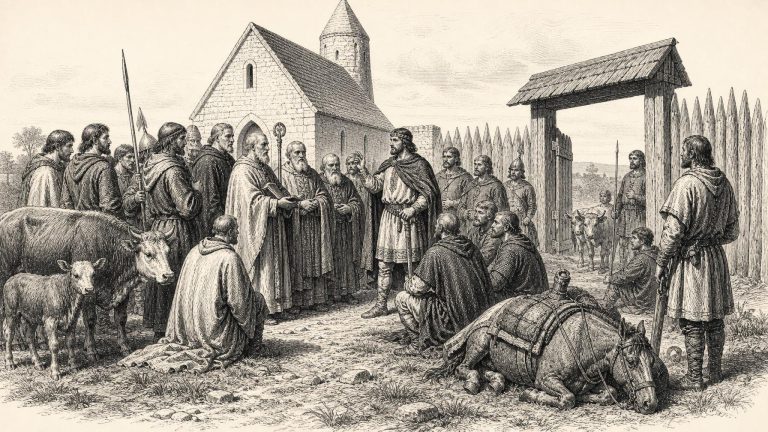
Chronicon Scotorum adds a revealing religious detail. Cormac Ua Cillín, a senior ecclesiastical officer of Síl Muiredaig, accompanied Ruaidrí’s side with the staff of St Ciarán in his hand. A saint’s staff was not merely ceremonial decoration. Relics and objects associated with founding saints embodied the authority of major churches and could be carried on circuits, used in oath-taking or brought before armies. Cormac’s presence linked the Connacht king’s cause with ecclesiastical protection and the prestige of Ciarán.
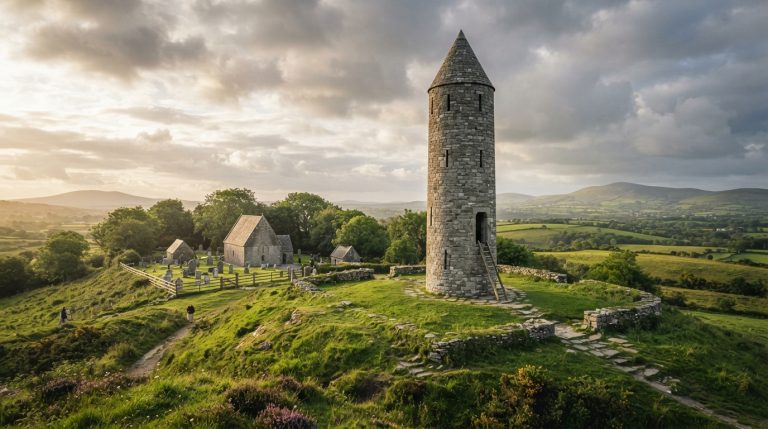
No major church council or institutional reform can be firmly placed in Ireland in 1087. The diocesan reorganisation associated with the twelfth-century reform movement still lay ahead. Churches remained closely connected to regional dynasties, landed communities and networks devoted to particular saints. They were centres of worship, learning and record-keeping, but also important holders of property. The annals themselves, with their calendrical notices, genealogical knowledge and compressed political reporting, testify to the scholarly labour maintained within those ecclesiastical networks.
Treachery in Mide
In Mide, Máel Sechlainn son of Conchobar, styled king of Tara, was killed treacherously by the men of Tethba at Ard Achadh, a place associated with Bishop Mel and usually connected with Ardagh. The Four Masters name Cathal Mac Muirigen and the men of Tethba as responsible. Máel Sechlainn had himself killed several Tethba leaders through treachery in 1086, so his death may have belonged to a cycle of retaliation, although the annals do not explicitly give a motive.
His title did not mean that he ruled a centralised Irish monarchy from Tara. It expressed the traditional status claimed by the Clann Cholmáin kings of Mide. His death opened the way for Domnall son of Flann Ua Máelshechlainn, whose rule in Mide is dated from 1087. The episode shows how quickly provincial arrangements could be overturned by local kindreds. Assemblies, hospitality and negotiations were essential to politics, but they also created opportunities for ambush and assassination.
Pressure from the North
Domnall Ua Lochlainn, king of Ailech and the rising leader of Cenél nEógain, also appears in the year’s record. The Annals of Ulster state that he killed Domnall Ua Laithein. The Four Masters additionally describe a northern hosting into Brega in which Tuaith Inbhir was burned, although Ua Lochlainn’s own followers then suffered a slaughter. These notices mark the gradual emergence of a northern challenger to Ua Briain ambitions. Domnall had not yet achieved the prominence he would display from 1088 onwards, but his ability to intervene south of his Cenél nEógain homeland was already evident.
Voyage to Man
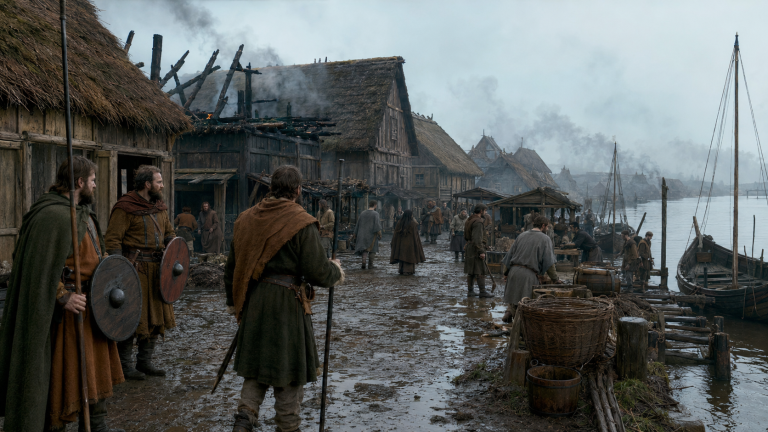
The Irish Sea remained another political arena. The Annals of Ulster record a naval expedition to the Isle of Man by two grandsons of a Ragnall and a son of the king of Ulaid. The grandsons of Ragnall were killed, but the annalist supplies neither their personal names nor the expedition’s precise purpose. They should not be confidently identified beyond what the source states. The entry nevertheless shows that Ulster rulers and Norse-Gaelic dynasties could organise seaborne campaigns beyond Ireland. Man stood amid routes linking Dublin, north-east Ireland, western Scotland, Wales and the Hebrides, making its possession valuable for commerce, raiding and control of fleets.
Deaths and Regional Change
Several lesser kingdoms experienced violent or natural succession. Domnall Mac Gilla Pátraic, king of Osraige, died; the Four Masters say after a long illness. Cathal Ua Cétfada was killed, with the sources variously associating his death with Leinster or Osraige. Cú Sléibe Ua Ciarda, king of Cairbre, was killed by his own people. Máel Ruanaid Ua Airt, king of Tethba, also died. Individually these notices are brief, but collectively they indicate widespread turnover among regional elites. Each death could alter tribute, fosterage, marriage alliances and control of local military followings.
Mast, Murrain and Wind
The year was remembered for strikingly mixed natural conditions. The Annals of Ulster report a great harvest of mast, the nuts and other woodland produce consumed by people and animals. The Four Masters likewise record abundant nuts and fruit, but add cattle murrain, dearth and a great wind that damaged houses and churches. These statements are not contradictory. A rich woodland harvest could coexist with disease among cattle or shortages of grain and dairy produce.
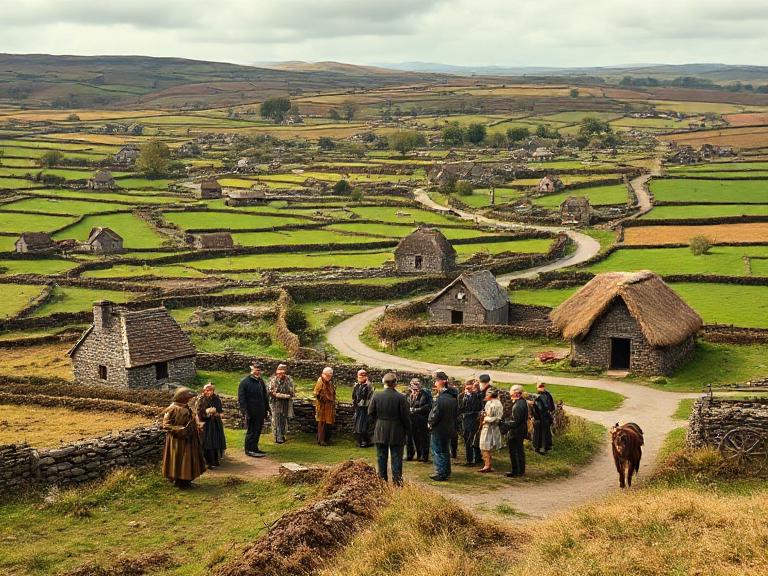
For most inhabitants, such conditions mattered more immediately than royal campaigns. Ireland remained overwhelmingly rural, with households dependent upon mixed farming, livestock and locally available woodland resources. Cattle represented food, movable wealth and political tribute; a widespread murrain therefore threatened both subsistence and status. Mast could support pigs turned into woodland pasture and supplement human diets, but it could not fully replace milk, meat or grain. Strong winds were especially destructive where ordinary houses and many ecclesiastical buildings used timber, wattle and thatch. The annalistic reference to damaged churches also suggests that the storm was exceptional enough to be remembered beyond a single district.
Town and Countryside
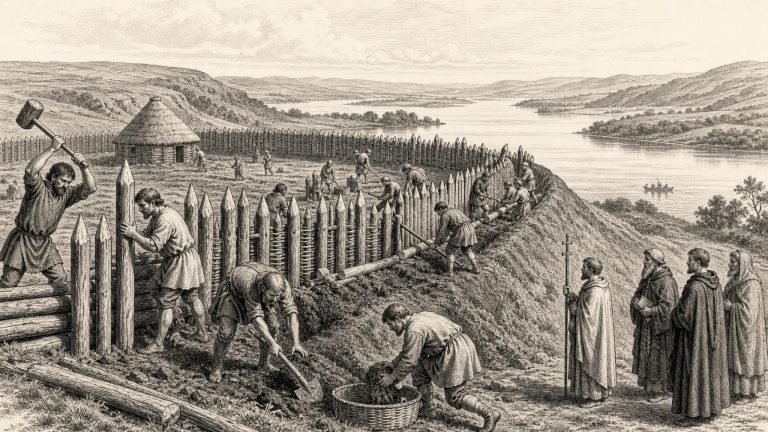
Broader archaeological context helps to reconstruct life around these dated events. Most people lived on rural farmsteads, including enclosed settlements and high-status crannogs, producing food, textiles, leatherwork and wooden or iron tools. Dublin, Waterford, Wexford, Cork and Limerick formed a different but interconnected world of Hiberno-Norse merchants and craftspeople. Dublin had issued silver pennies since the late tenth century, although coins circulated alongside weighed silver, livestock and other forms of exchange. Its workshops produced metal fittings, pins, combs, textiles and ship equipment, while imported amber, glass and silver reflected overseas connections.
Thus the battles near Howth and the expedition to Man belonged to the same economic geography as everyday trade. Ships could carry merchants, pilgrims and manufactured goods, but also warriors and raiding parties. Rural kings sought command of towns because urban wealth could sustain wider political ambitions; towns, in turn, depended upon countryside producers for food, timber, hides and fuel.
An Unsettled Balance
By the end of 1087, Muirchertach Ua Briain and Ruaidrí Ua Conchobair had won major battles, but neither had secured undisputed supremacy. Mide had lost its king, Domnall Ua Lochlainn was pressing southwards, and conflict extended into the Irish Sea. The year’s victories established important reputations, yet they also prepared the ground for renewed warfare in 1088. Ireland’s political balance remained mobile, personal and intensely competitive.
Primary Sources
- The Annals of Ulster: Year U1087
- The Annals of Tigernach: Annal T1087 (English Translation)
- Annals of Tigernach: Annal T1087 (Irish Text)
- Annals of Inisfallen: Annal AI1087 (English Translation)
- Annals of Inisfallen: Annal I1087 (Irish Text)
- Annals of the Four Masters: Annal M1087 (English Translation)
- Annals of the Four Masters: Annal M1087 (Irish Text)
- Chronicon Scotorum: Annal CS1087 (English Translation)
- Chronicon Scotorum: Annal CS1087 (Irish Text)
- CELT Project: Annals of Loch Cé
- Ua Briain, Muirchertach
- Ua Conchobair, Ruaidrí na Saide Buide
- Ua Lochlainn (Mac Lochlainn), Domnall
- Ua Briain, Tairdelbach
- Domnall Remur
- Ua Máelshechlainn, Conchobar
- Ua Máelshechlainn, Murchad
- The Viking Age in Ireland
- Early Medieval
- 950–1450: Vikings, Normans and Medieval Mints
- Wooden Plank with Viking Ship and Weathervane Graffiti
- Emerging from the Mist: Ireland and Man in the Eleventh Century
- Animals and the Economy of Medieval Ireland: A Zooarchaeological Analysis of Caherconnell Cashel, Co. Clare
- The Dublin Region in the Middle Ages: Settlement, Land-use and Economy
- The Archaeology of Medieval Rural Settlement in Ireland
- Congbháil/Cunghill
- The History and Provenance of Two Early Medieval Crosiers