

1000–1099 CE

Hostages And Kings
In 1000, Ireland's annalists marked the millennium through sophisticated calendrical scholarship, without evidence of apocalyptic anxiety. After Brian Bórama and high-king Máel Sechnaill defeated Leinster and Dublin at Glenn Máma in late 999, Brian burned Dublin but restored it after Sitriuc Silkbeard submitted hostages, preserving its strategic trade and military value. Their alliance soon collapsed: Brian's coalition advanced towards Tara, but Máel Sechnaill destroyed its advance force in Brega, forcing withdrawal. Elsewhere deaths, blinding and killings exposed dynastic instability. Rural farming, raiding, urban craft and trade, Christianity and learning continued, while Brian's growing coalition foreshadowed his eventual high-kingship over Ireland.

The Shannon Barrier
In 1001, rivalry between Brian Boru of Munster and Máel Sechnaill of Mide centred on control of the midlands and Shannon. Brian’s growing power, strengthened by Dublin’s submission, threatened the older Uí Néill order, though Munster raiders were defeated in southern Mide. Máel Sechnaill and Cathal of Connacht constructed a causeway at Athlone to obstruct Munster fleets and defend Leth Cuinn, demonstrating both alliance and anxiety. Deaths among northern rulers exposed unstable regional politics. Changes at Armagh and clerical deaths underscored churches’ political and economic importance. The year remained inconclusive, but marked a defensive attempt to contain Dál Cais expansion.

Hostages at Athlone
In 1002 Brian Bórama transformed Irish politics by bringing an army to Athlone and taking hostages from Connacht and Mide, publicly demonstrating Máel Sechnaill mac Domnaill’s submission. Annals differ slightly in dating and emphasis, but confirm the event. Brian’s earlier successes over Leinster and Dublin enabled wider mobilisation, including Norse-Gaelic allies. Yet his subsequent northern expedition to Dundalk failed to secure hostages from Áed of Ailech and Eochaid of Ulaid, ending in truce. Raids, captives and ecclesiastical deaths reveal regional conflict. Coastal towns, trade and church institutions underpinned power. Brian emerged as leading king, but his island-wide overlordship remained incomplete.

Brian’s New Order
In 1003, Brian Bórama sought to turn his newly acquired high-kingship into authority, relying on cooperation with Máel Sechnaill of Mide. Their northern Connacht expedition was checked by the Northern Uí Néill, demonstrating limits to Brian’s power. Brian deposed Leinster’s Donnchad and installed Máel Mórda, holding provincial hostages as guarantees. Across Ireland, raids, killings and disputed successions showed persistent instability. Ecclesiastical deaths and sanctuary violations emphasised churches’ political importance, while learned figures preserved claims and status. Uncertainly dated northern warfare further revealed regional fragmentation. Ireland was consolidating under Brian, yet rule remained dependent on force, alliances, tribute and religious legitimacy.

Brian’s Northern Test
In 1004, Brian Bórama’s claim to supremacy over Ireland remained ambitious but incomplete. Having subordinated Máel Sechnaill of Mide, he faced determined northern resistance from Cenél nEógain. The Annals of Ulster record that they obstructed his intended circuit of Ireland. At Cráeb Tulcha on 14 September, Cenél nEógain defeated Ulaid; Ulaid king Eochaid mac Ardgar and Ailech king Áed Ua Néill died, destabilising both powers. Traditions associate this period with Brian’s expedition to Armagh, demands for hostages, and gold offering, linking political display with ecclesiastical authority. Annals record clerical deaths, regional killings, Dublin’s burning, and Máel Sechnaill’s injury, revealing insecurity.

Brian At Armagh
Brian Boru’s northern campaign of 1005 demonstrated his contested claim to high-kingship over Ireland. After establishing dominance in the south and securing Máel Sechnaill’s submission, he led an army, including Gaelic and Norse-Irish forces, to Armagh and Ulaid. At Patrick’s altar he gave twenty ounces of gold, strengthening ties with Armagh’s primatial church; the Book of Armagh associated him with title imperator Scotorum. His expedition sought hostages from northern dynasties, but accounts differ over whether Cenél Conaill and Cenél nEógain submitted. Ulaid suffered dynastic killings, external attacks and scarcity that dispersed its population. The year showed kingship dependent on campaigns.
Circuit Of Power
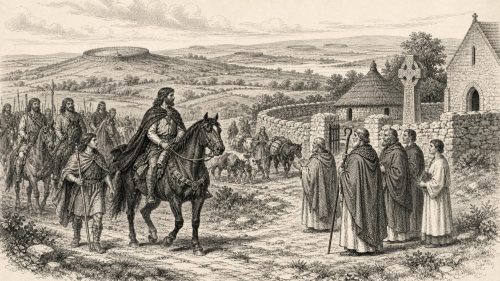
In 1006, Brian Bórama demonstrated the reach yet limits of his Irish overlordship by leading a broad coalition from Munster, Leinster, Mide, Connacht and Dublin through the north. His circuit secured Ulaid hostages and satisfied Armagh's claims, strengthening royal and ecclesiastical legitimacy, but Cenél Conaill and Cenél nEógain withheld submission. Provincial violence continued, including killings of regional kings, revealing unstable local rule. The deaths of Armagh churchmen underline clerical institutions' importance. A mild, food-rich winter offered relief after scarcity, while the army's passage burdened rural communities. Dublin's participation reflected its growing military, commercial and maritime value within Brian's negotiated supremacy.
Máel Sechnaill’s Tailtiu Revival
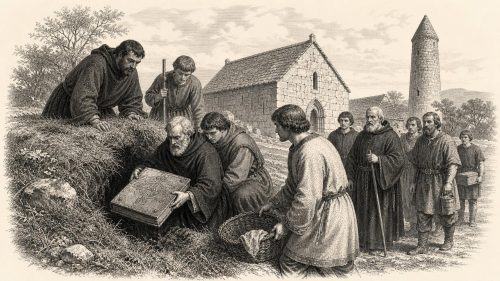
In 1007, Brian Bóruma reinforced his authority by campaigning towards Armagh, securing Ulaid hostages and involving Norse allies. Ulaid suffered rival killings, revenge and violations of church sanctuary, alongside intervention by Flaithbertach Ua Néill. In Mide, the displaced high king Máel Sechnaill revived Tailtiu’s assembly, installed a Columban successor and funded Clonmacnoise’s altar-front through local levies, asserting ceremonial kingship. At Kells, the Great Gospel of Colum Cille, probably the Book of Kells, was stolen for its precious cover but recovered. Ecclesiastical obits reveal religious networks. The annals depict Ireland as politically fragmented, wealthy, and shaped by power, sanctity and violence.

A Winter Of Succession
In 1008, Irish annals recorded no battle but revealed pressures shaping Brian Boru's overkingship. Chronological discrepancies require caution, yet Inisfallen and Ulster agree on a severe winter, ecclesiastical deaths and political violence. Muiredach son of Matudán, heir designate of Ulaid, was killed by his own people, exposing dynastic division amid northern rivalries. The deaths of abbots and coarbs, including Ferdomnach of Colum Cille's familia, prompted transitions in institutions controlling land, relics, learning and legitimacy. Frost and snow from January to Easter threatened livestock, farming and communications. Together, events illuminate a weather-vulnerable society governed through churches, dynasties, tribute, negotiation and force.

Cattle, Kings And Clergy
Annals for 1009 portray Ireland as a contested polity under Brian mac Cennétig’s formidable but limited overlordship. Máel Sechnaill raided Leinster, while Flaithbertach Ua Néill killed rivals, raided Brega and seized cattle tribute. Connacht and Bréifne fought reciprocal campaigns, alongside local dynastic killings. The death of Brian’s Connacht-born wife reflected the political importance of royal marriage. Armagh’s lead-roofed oratory demonstrated ecclesiastical wealth and ambition; deaths of church successors at Kells and Ros Cré marked institutional change. The chief poet Clothna also died. Cattle, warfare, hostages, alliances and religious centres shaped authority, revealing competing kingships rather than a unified Irish state.

Hostages of the North
In 1010 Brian Bóruma reinforced his contested supremacy by leading Munster forces north to Armagh and securing hostages from the northern Uí Néill, Ulaid and wider Leth Cuinn. The campaign demonstrated that overlordship required repeated negotiation, military display and guarantees. Connacht’s king Cathal mac Conchobair died penitently, while lesser rulers, an Ailech heir and other political figures also died or were killed. Church losses included Brian’s brother Marcán, senior cleric of Munster, Clonmacnoise bishop Conaing, and scholar-king Máel Suthain ua Cerbaill. An abbot suffered blinding. Annals also recorded a hot summer and fruitful autumn, underscoring rural resources sustaining political power.

Brian’s Northern Ascendancy
In 1011, Brian Bórama’s supremacy reached the north-west through a major campaign against Cenél Conaill. Forces led by Brian and his sons, allied with Flaithbertach Ua Néill and other rulers, raided, seized cattle and captives, and compelled Máel Ruanaid Ua Máel Doraid to submit at Cenn Corad. The events demonstrated both Brian’s wide influence and the negotiated, competitive character of Irish over-kingship. Máel Sechnaill remained within Brian’s political order, while Ulster’s dynastic conflicts continued. Deaths among royal heirs and prominent churchmen, illness near Armagh, and a plentiful nut harvest reveal a society shaped by warfare, ecclesiastical learning, disease, and resources.

Hostings And Harvests
In 1012, Brian Bórama’s high-kingship remained powerful yet required constant military, religious and material reinforcement. Northern rulers Flaithbertach Ua Néill and Máel Sechnaill raided rival territories, burning centres and seizing cattle, captives and plunder, while succession fighting continued in Ulaid. Brian campaigned in Mag Muirtheimne, granting immunity to Patrick’s churches, and fortified Cenn Corad and other strategic sites. Armagh suffered a prolonged sickness that killed clergy, students and others. Heavy rainfall damaged cereal crops, worsening pressures on communities already exposed to armies. The annals portray rivalry, fragile overlordship and hardship, anticipating the crises that culminated at Clontarf two years later.

War Before Clontarf
In 1013, Brian Bórama’s Irish overlordship faced coordinated resistance from Leinster and Hiberno-Norse Dublin under Máel Mórda and Sitriuc Silkbeard. Warfare spread across Mide, Brega, Leinster and Munster: Máel Sechnaill suffered losses near Dublin but countered raids, while northern rivals increased pressure. Brian and his son Murchad conducted prolonged campaigns, devastating Leinster, taking captives and advancing towards Dublin. Dublin’s fleet burned Cork, though Munster forces killed prominent Dubliners. Church relics, ecclesiastical authority, agriculture and fortifications featured in the conflict. Annals portray a Christian, literate yet violent society. No settlement emerged; 1013 established the conditions for Clontarf’s decisive battle in 1014.

Clontarf And Aftermath
In 1014, Ireland’s layered kingship faced conflict over Brian Boru’s overlordship of Dublin and Leinster. On Good Friday, 23 April, Brian’s coalition, including Máel Sechnaill, defeated Leinster, Dublin and overseas Scandinavian forces at Clontarf. The costly victory killed Brian, his son Murchad, grandson Tairdelbach, Máel Mórda of Leinster and Sigurðr of Orkney, but neither destroyed Dublin nor expelled Scandinavians. Armagh’s elaborate burial rites strengthened Brian’s Christian royal memory. Subsequent Munster rivalries, provincial raids and deaths exposed continuing instability after the battle. Máel Sechnaill resumed central political importance, while Dublin remained a vital Hiberno-Norse trading centre within the Irish Sea world.
Máel Sechnaill’s Leinster Hostages
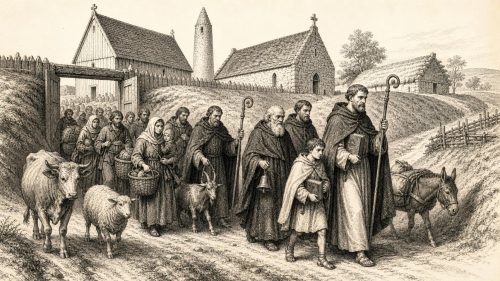
In 1015, Ireland remained unsettled after Clontarf, which had killed Brian Bóruma, Leinster’s Máel Mórda and key heirs. Máel Sechnaill mac Domnaill, aided by Flaithbertach Ua Néill, reasserted authority by plundering Leinster, taking cattle, tribute and hostages; later sources also associate campaigning with Dublin. In Munster, Donnchad mac Briain fought rivals while local kings suffered killings and deaths. Scarcity and dissension disrupted churches, with Emly vacated, Lorrha invaded and other sites plundered. Norse-Gaelic raiders seized 150 captives from western islands. Deaths, betrayals and interdynastic violence across Connacht, Bréifne and the north underscored a fragmented, dangerous political reconstruction after Brian's death.

A Fragile Peace
In 1016, two years after Clontarf, Máel Sechnaill mac Domnaill reasserted authority by taking Ulaid hostages, while Donnchad mac Briain raided Shannon islands, seized boats and consolidated Munster. Northern conflict between Ulaid and Dál Araide killed several rulers, and Osraige’s king slew Leinster and Uí Drona leaders at Leithglenn. Other regional dynastic deaths revealed fragmented power. Ecclesiastical life remained influential despite fires at Clonmacnoise, Clonfert, Kells and Downpatrick; church officers and the chief poet Mac Liag died. Raiding, hostage-taking and an autumn storm burdened communities. Annalistic peace meant relative stability after Clontarf, not an end to violence or political rivalry.
Fractured Peace
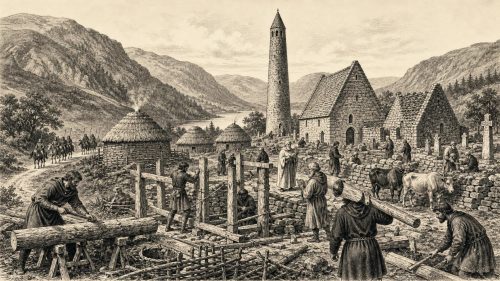
In 1017, three years after Clontarf, Ireland remained politically fragmented rather than settled under Máel Sechnaill mac Domnaill’s renewed overkingship. He defeated Dublin’s Hiberno-Scandinavian forces and Leinster men near Odhba, while dynastic killings eliminated several royal heirs and regional rulers in Ailech, Brega, Uí Méith and elsewhere. These internal conflicts reflected competitive succession among ruling kindreds. Church and learned communities also suffered: much of Glendalough burned, other ecclesiastical leaders died, and Inis Gaill Duib was destroyed as the scholar Anmchad drowned. Annals portray tense rebalancing, linking warfare, local lordship, monasteries, agriculture, and Dublin’s commercial power in post-Clontarf Ireland during 1017.
Sitriuc Blinds Braen
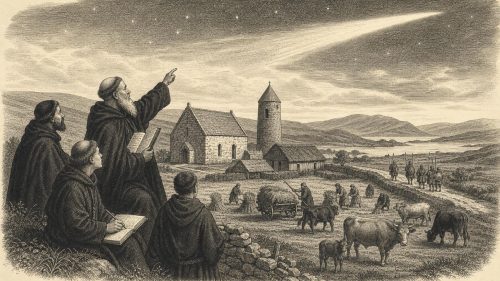
In 1018, four years after Clontarf, Ireland remained fragmented, as rival dynasties, Hiberno-Norse towns and local peoples pursued power through raiding, treachery and alliance. Máel Sechnaill’s authority in Mide was challenged when his steward and an allied king died during conflict in Fir Chell. Sitriuc Silkbeard of Dublin treacherously blinded Braen, son of Leinster’s Máel Mórda, ending his capacity to rule. Northern Uí Néill forces mobilised, while killings and plundering affected Gailenga, Tuatha Luigne and Óentreb. Ecclesiastical deaths reflected churches’ political and cultural importance; Waterford’s Norse king died. Annalists also recorded an autumn comet, revealing learned religious observation amid instability.

Raiders And Rivalries
In 1019, five years after Clontarf, Ireland remained politically fragmented despite Máel Sechnaill’s high-kingship. Donnchad mac Briain survived a sword attack that severed his right hand, while the death of Munster’s heir Mathgamain weakened Dál Cais networks. Sitriuc Silkbeard’s Dubliners raided Kells, killing inhabitants and carrying off captives and spoils. Lightning burned Kildare, and attackers violated Durrow’s stone church to seize and kill Mael Muad. Dynastic killings affected Ailech, Leinster and smaller kingdoms; northern raids, revenge killings and disease in Ára compounded insecurity. Annals portray churches as wealthy, vulnerable institutions and record interconnected sacred authority, warfare, succession and local life.

Fires and Hostages
In 1020, Ireland remained politically fragmented after Clontarf. Máel Sechnaill mac Domnaill led a coalition including Uí Néill, Donnchad mac Briain and Art Ua Ruairc to the Shannon, receiving Connacht hostages and asserting overkingship. Northern and eastern lesser kingdoms experienced blinding, killings and rapid succession disputes. Fires devastated Kildare, Glendalough, Clonard, Clonmacnoise, Swords and Armagh, damaging churches, treasures and settlement districts. Armagh’s blaze then preceded Máel Muire’s death and Amalgaid’s installation as Patrick’s successor; Patrick’s shrine and bell were also plundered. Annals additionally commemorate learned clerics, revealing churches as centres of wealth, scholarship, authority and vulnerability amid violent political competition.

A Fragile Overkingship
In 1021 Máel Sechnaill mac Domnaill’s restored overkingship remained active but fragile. He raided Dublin’s foreigners and Cenél nEógain, while Úgaire of Leinster defeated Sitriuc Silkbeard’s Dubliners near Delgany. Northern raids, killings and local conflicts exposed contested lordship around Airgialla. The murder of Áed, Máel Sechnaill’s heir, and other elite deaths weakened succession prospects in Mide. Amalgaid of Armagh made a politically significant visitation to Munster, asserting Patrician authority. Ecclesiastical deaths, Branacán’s drowning in Lough Ennell, and a reported shower of wheat in Osraige coloured annalistic memory. The year foreshadowed intensified struggle following Máel Sechnaill’s death in 1022 for Ireland.

After Máel Sechnaill
In 1022, the death of Máel Sechnaill mac Domnaill, king of Mide and foremost post-Clontarf claimant to Ireland’s high-kingship, exposed the weakness of island-wide authority. He died at Cró Inis on Lough Ennell, honoured by churches and remembered for royal generosity, though later accounts elaborate his final rites. His loss, following the death of his heir in 1021, intensified succession disputes. Warfare continued: Waterford’s Sitriuc was killed, Ulaid defeated Dublin at sea and attacked Airgialla, while regional rulers and heirs fell. Kildare was plundered, churchmen and poets died, and Irish kingship, trade, maritime power and ecclesiastical wealth remained closely intertwined.
The Killing of Tadc
In 1023, Ireland experienced political fragmentation after Máel Sechnaill’s death. Rivalries destabilised Mide, where Domnall Ua Máel Sechnaill was killed, while Dublin’s Hiberno-Scandinavian rulers raided South Brega, killed Ainbíth Ua Cathasaigh, and seized King Donnchad Ua Duinn. Tadc son of Brian Bórama, a Munster dynastic rival, was killed by the Éile, allegedly at his half-brother Donnchad’s instigation. Connacht and northern kings also died in factional conflict. Clonmacnoise’s church lands were plundered of cattle. Annalists recorded January lunar and solar eclipses, spring drought, ecclesiastical deaths, and foreign rulers, revealing monastic learning and Ireland’s links across the Irish Sea and Christian Europe.

A Shattered Kingship
In 1024, Ireland remained fragmented after Máel Sechnaill’s death, with authority contested among provincial dynasties, Norse-Gaelic towns and church interests. Leinster suffered upheaval when Úgaire, king of Leinster, and Máel Mórda of Uí Cheinnselaig were killed during Donn Sléibe’s seizure and burning of a house; Donn Sléibe was later slain. Fighting marked Corann, Ulster and the midlands, while Irish forces raided Foreigners for hostages and wealth. Ecclesiastical deaths, pilgrimages and attacks on Slane and Kildare demonstrated churches’ scholarly, economic and political importance. Cúán ua Lothcháin, Ireland’s chief poet-historian, was murdered, emphasising the learned class’s prestige amid endemic violence and instability.

Hostages And Sanctuaries
In 1025, Ireland lacked a universally recognised high king after Máel Sechnaill mac Domnaill’s death, and authority was contested through campaigns, hostages, raids and alliances. Flaithbertach Ua Néill entered Brega and Dublin, securing Irish hostages, before Domnall Got countered and recovered Brega’s hostages. Violence included the killing of Brega’s ruler Gerr Gaela, Connacht heir Niall Ua Conchobair, and a Uí Fiachrach Aidne leader, alongside raids between Fernmag and Fir Manach. Termonfeckin was plundered and burned. Annals also recorded Munster rulers, pilgrims and numerous senior churchmen’s deaths, demonstrating churches’ political, economic and cultural importance amid fragmented regional rivalries throughout the island.

Hostages And Pilgrims
In 1026, Ireland’s contested politics reflected the unsettled aftermath of Brian Bóruma and Máel Sechnaill’s deaths. Donnchadh mac Briain asserted Munster’s wider ambitions by taking hostages in Mide, Brega, Dublin, Leinster and Osraige, while hosting Patrick’s successor at Cenn Corad. Northern king Flaithbertach Ua Néill raided Mide, crossing ice to ravage Inis Mochta. Dublin remained a wealthy Hiberno-Norse power, alternately submitting and fighting. Leinster, Osraige and Mide saw killings, raids and shifting local leadership. Church offices, pilgrimages to Irish centres and Rome, and road building at Clonmacnoise demonstrate how religion, infrastructure and lordship sustained fragile regional power overall across Ireland.
Raids And Relics
In 1027, Irish annals recorded a politically fragmented island where regional rulers, Dublin and monasteries shaped events. Donnchad mac Briain of Munster invaded Osraige, taking booty and captives, but suffered a costly defeat against local resistance. In Mide, forces of Sitriuc Silkbeard’s Dublin and Brega fought Mide, killing both Ráen ua Máel Sechnaill and Donnchad ua Duinn. Northern cattle raids and local conflicts underscored persistent border warfare. Deaths, pilgrimages and ecclesiastical successions linked Ireland to Iona, Rome and Cologne. The reported desecration of the Staff of Jesus demonstrated relics’ public importance. Warfare, trade, lordship and Christian learning were deeply interconnected.

Pilgrims and Raids
In 1028, Ireland remained politically fragmented after Brian Bórama and Máel Sechnaill, with power contested through raids, killings, hostages and cattle wealth. Cenél nEógain plundered Tír Conaill, while the Conaille killed regional rulers. Sitriuc Silkbeard, Hiberno-Norse king of Dublin, and Flannacán of Brega made a prestigious pilgrimage to Rome, signalling wider Christian connections and developments associated with Dublin’s cathedral. Severe Lent snow disrupted people and livestock. Ecclesiastical deaths, Duleek’s plundering, and Slane’s collapsed oratory reveal churches’ institutional importance and vulnerability. Conflicting annals record violent regional succession, especially Connacht’s Brian Ua Conchobair, portraying a literate, agrarian, martial society linked to Europe.

Ransoms And Rivalries
In 1029, Ireland remained divided among competing Gaelic dynasties, church centres and Hiberno-Norse Dublin. Mathgamain Ua Riagáin of Brega captured Amlaíb, Dublin’s prince, whose release required an exceptional ransom of cattle, horses, silver, gold, hostages and a renowned sword, demonstrating links between rural and maritime economies. Killings of rulers in Uí Fhailgi, Fernmag, Conaille, Connacht and Cenél Conaill exposed persistent succession disputes and regional rivalries. At Inis na Lainne, a fire killed nobles and Drumcliff’s superior. Pilgrimage and church patronage connected elites to wider Christianity, while the death of master craftsman Máel Brigte Ua Brolcháin attests to skilled ecclesiastical culture.

Kings And Pilgrims
In 1030, Ireland remained divided among competing dynasties after Brian Bórama and Máel Sechnaill’s deaths. Annals record the killing of Tadc Ua Conchobair of Connacht, conflict and devastation in Mide, and northern rivalry culminating in Ruaidrí Ua Canannáin’s death. Flaithbertach Ua Néill travelled to Rome, while Tadc of Uí Cheinnselaig died on pilgrimage at Glendalough. Gormlaith’s death linked Leinster, Dublin and Munster dynasties. Ecclesiastical leaders, including successors of Ciarán, Tigernach and Comgall, died, alongside chief poet Cú Mara. Relic profanation, church attacks, maritime loss and a solar eclipse illustrate religion, learning, violence and observation shaping everyday political life across Ireland.
Raids and Pilgrims
In 1031 Ireland remained politically fragmented after Brian Bóruma, as northern, southern and Hiberno-Norse rulers pursued power through raids, booty and captives. Flaithbertach Ua Néill returned from Rome while Aed Ua Néill campaigned against Cenél Conaill. Dublin’s Sitriuc Silkbeard was linked to Ardbraccan’s devastating plunder, and Waterford’s king was killed in Dublin. Churches at Ardbraccan, Swords, Kildare, Cell Chomair and Clonfert suffered burning, robbery or violence. Donnchad mac Briain raided Osraige but lost men; conflict also afflicted the Déisi. Obituaries emphasised learning, hospitality, piety and ecclesiastical office, revealing society’s religious resilience amid warfare, trade and local rivalry throughout Ireland alike.

Fractured Lordships
In 1032, annalistic records portray Ireland as a patchwork of competing lordships after the decline of island-wide kingship. Domnall ua Maíl Doraid of Cenél Conaill and Mathgamain Ua Riacáin of Brega were killed, while Mathgamain’s killer was blinded. Sitriuc of Dublin defeated neighbouring groups at the Boyne estuary. In Munster, Donnchad mac Briain married Ragnall’s daughter, reinforcing Norse-Gaelic connections amid regional tensions. Deaths of local rulers, officials and prominent churchmen reveal dispersed authority. The killing of Étrú Ua Conaing after violation of Emly underscored ecclesiastical protection. These fragmentary notices vividly depict warfare, alliance, church power, and political instability throughout Ireland.

Carman And Contest
Irish annals portray 1033 as a fragmented year of regional rivalry, ecclesiastical authority and economic pressure. Donnchad mac Gilla Pátraic of Osraige asserted Leinster kingship by holding the Fair of Carman, a public demonstration of rule, clerical support, trade and legal order. In Mide, Ua Máel Sechnaill conflicts brought battlefield deaths, plundering and Murchad's assassination. Áed Ua Néill, heir designate to Ireland’s high-kingship, died, while killings destabilised Ciarraige, Éile, Munster and northern territories. Church obituaries and a reported bleeding shrine at Armagh underlined sacred authority. Cattle disease, farming and Hiberno-Norse maritime networks shaped everyday life amid political uncertainty across Ireland.
Kings, Pilgrims and Relics
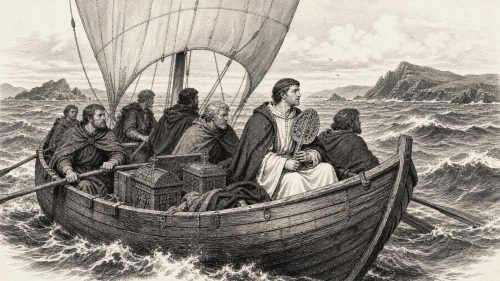
In 1034, Ireland lacked an uncontested high king, as regional dynasties, churches and maritime networks shaped a fragmented political landscape. Donnchad mac Briain of Munster ravaged Osraige, challenging its ruler’s expanding Leinster authority, while Flaithbertach Ua Néill resumed control of Ailech after his son’s death. Killings and treachery destabilised Connacht, Brega, Tethba and neighbouring regions. Ecclesiastical losses included leading figures at Cork, Mungret and Clonmacnoise, and Kells’s lector drowned returning from Scotland with companions and relics. Amlaíb, Dublin’s royal pilgrim, was killed en route to Rome. Annals reveal elite conflict and religious connections, while rural communities bore warfare’s economic burdens.
Raids Across Ireland
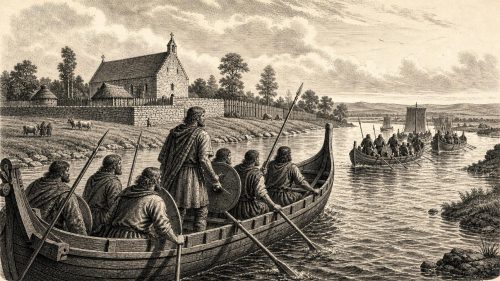
In 1035, Ireland comprised competing regional kingdoms, with no universally accepted high king since 1022. Annals record raids, killings and church plundering, though clerical priorities obscure ordinary life. Donnchad mac Briain defeated Bréifne raiders after their attack on Clonfert, demonstrating the Shannon’s military importance. In Dublin, Sitriuc Silkbeard killed Waterford’s Ragnall ua Ímair and raided Ardbraccan; Mide’s Conchobar retaliated against Swords. Other conflicts involved Leinster, Mide and Donegal, often for cattle, captives and prestige. Churches were political and economic targets, while farming, craftsmanship, learning and trade continued. Archaeology reveals interconnected Gaelic and Hiberno-Norse communities, and annalistic dating remains sometimes uncertain.
Kingship in Upheaval
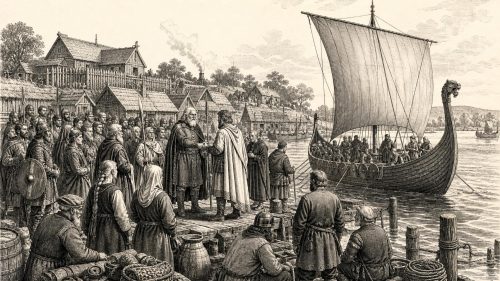
In 1036, Ireland experienced regional political upheaval rather than a single national conflict. Sitriuc Silkbeard left Dublin’s kingship after a long reign, and Echmarcach son of Ragnall succeeded him, weakening Sitriuc’s dynasty across the Irish Sea. In Leinster, Donnchad mac Gilla Pátraic blinded and fatally disabled a rival, while Diarmait mac Maíl na mBó blinded another, strengthening Osraige and Uí Chennselaig. Killings removed rulers and heirs in several regions, while Flaithbertach Ua Néill died after religious penitence. Church leaders also died, and fires affected Kildare, Kells and Lathrach. Rural society and Dublin’s trade continued amid instability, shaping later eleventh-century politics.
Storm and Rivalry
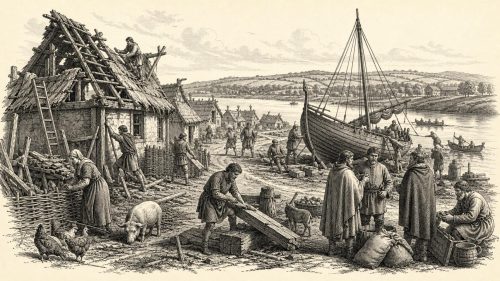
In 1037, Ireland remained a fragmented political landscape, where provincial kings, local dynasties and churches competed for power. Annals, despite differing dates and detail, record blinding, assassination, raiding and ecclesiastical violence across Leinster, Meath, Connacht and the north. Osraige’s Donnchad mac Gilla Pátraic displaced a Leinster rival, while Diarmait mac Máel na mBó strengthened his position and was linked to Waterford’s burning. Waterford’s ruler died amid internal and external conflict. Kings made pilgrimages, but churches were also plundered and sanctuary violated at Lorrha. Trade, farming and craft continued despite disorder. Exceptionally wet, stormy weather compounded an unstable year for communities.
Conflict at Sacred Centres
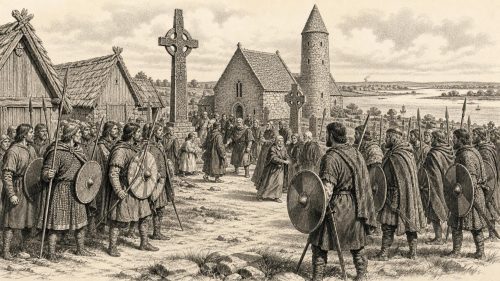
During 1038, Ireland remained fragmented, with rival dynasties contesting kingship, territory and influence. Local violence reached ecclesiastical centres: Orc Allaid Ua Ruadacáin was killed at Armagh by Clann Sínaig; Delbna defeated Uí Maine at Clonmacnoise during Ciarán’s feast; and Conchobar Ua Máelshechlainn’s Gailenga plundered Clonard. Killings, imprisonment and succession disputes affected Mide, Munster, Donegal and Dublin, where Ímar replaced Echmarcach. Rathlin was raided by Norse or Hiberno-Norse forces. Church obituaries reveal institutional networks and pilgrimage to Rome. Annals also note abundant fruit while stressing chronological uncertainty. Sacred settlements, central to worship, learning and economic life, proved vulnerable to regional feuds.

The Last Hosting
In 1039, Ireland remained divided among competing provincial and regional rulers after the collapse of broadly accepted high kingship. Donnchad mac Gilla Pátraic, overking of Leinster and Osraige, led a destructive hosting through Meath to Knowth and Drogheda before dying during or soon after it. His death weakened Osraige’s wider authority and aided conditions for Diarmait mac Máel na mBó’s later ascent. Annals also record killings, blinding and contested lordships across Leinster, the midlands, Ulster and Connacht. Church leaders died, Clonard’s bell tower reportedly collapsed, and a solar eclipse was observed. Rural production, monasteries and Hiberno-Norse trading towns sustained society.
Law, Fire and Rivalry
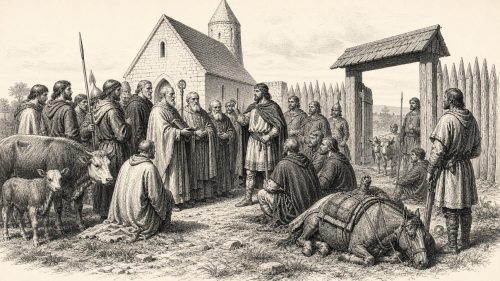
In 1040, Ireland remained politically divided after the decline of overarching high kingship. Donnchad mac Briain of Munster issued a Sunday law restricting theft, armed activity, labour and cattle movements, linking royal order with Christian observance. Rivalries continued through battle, assassination, imprisonment and raiding. Hiberno-Norse forces allied with a Mac Briain against Cerball mac Fáeláin, reflecting integrated Irish Sea politics. In Leinster, Diarmait mac Máel na mBó plundered churches and seized captives. Fires devastated Kildare, Kells, Downpatrick and other churches. Ecclesiastical leaders and scholars remained influential, while rural cattle wealth, ports, trade and warfare shaped society throughout this turbulent year.

Feuds and Sanctuaries
In 1041, Ireland remained politically fragmented despite Donnchad mac Briain’s claims to wider kingship. Leinster’s struggle between Murchad mac Dúnlainge and Uí Chennselaig brought raids, the death of Domnall Remur, Ferns’s burning, and Diarmait mac Maíl na mBó’s devastating retaliatory attack on Glenn Uisen. Rivalries also produced blinding, killings and sanctuary violations at Timahoe and Kildare, while assassinations, raids and battles disturbed Osraige, northern regions and Munster. Annals also record learned churchmen’s deaths, ecclesiastical organisation and church-building. Cattle raiding underpinned warfare and wealth, although farming, commerce and learning continued. The selective record portrays violence alongside resilient institutions, foreshadowing Diarmait’s dominance.

Leinster’s Turning Point
In 1042, Leinster underwent a decisive political upheaval when Murchad mac Dúnlainge, king of Leinster, was killed at Mag Muilchet. His defeat ended the Uí Dúnlainge dynasty’s effective provincial claim and enabled Diarmait mac Máel na mBó of Uí Chennselaig gradually to establish supremacy, supported by Osraige. Conflict included the burning of Ferns and destructive retaliation at Glenn Uissen, illustrating warfare’s assault on ecclesiastical centres. In Mide, Flann mac Máel-Sechnaill was murdered amid dynastic rivalry. Sitriuc Silkbeard died, symbolising Dublin’s changing Hiberno-Norse era. Church deaths, pilgrimage to Rome, and Ailill of Muckno’s death in Cologne demonstrate Ireland’s European religious connections.

Sanctuary and Strife
In 1043 Ireland remained politically fragmented, with Donnchad mac Briain’s prestige contested and Diarmait mac Máel na mBó consolidating Leinster. Annals record local warfare, killings and cattle raids, including violence at Glendalough, where sanctuary was breached, and fighting around the Suir. Northern conflicts involved Uí Méith, Ua Ruairc, and competing Uí Néill dynasties. Churches were both targets and political actors: Ciarán’s community ritually denounced Aed Ua Con Fhiacla, whose subsequent death was viewed as saintly vengeance. Cathal of Connacht died while pilgrim at Armagh. Despite insecurity, ecclesiastical centres sustained learning, wealth, pilgrimage and networks alongside rural farming and maritime trade.

Profanation of Patrick’s Bell
In 1044 Ireland remained politically fragmented, with provincial kings, local dynasties, Norse-Irish Dublin and influential churches competing through raids, tribute, hostages and violence. Northern rulers avenged the unexplained profanation of Patrick’s Bell by seizing cattle and captives, demonstrating how sacred legitimacy supported political gain. Dublin’s Ímar mac Arailt attacked Patrick’s shrine and campaigned in the north. Clonmacnoise suffered plundering, while later tradition reports restitution by Donnchad mac Briain. Dynastic killings, blinding and regional defeats reshaped alliances across Ireland. Annals also record religious deaths, learning and rural life, revealing cattle, captives and monasteries as central sources of wealth, authority and conflict.
Tides of Rivalry
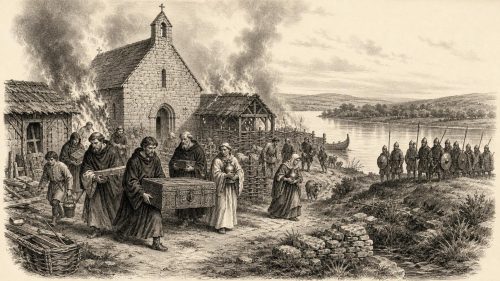
In 1045, Irish annals depict a politically fragmented island ruled by competing Gaelic dynasties and Hiberno-Norse Dublin. Deaths of regional kings destabilised succession, while Ímar of Dublin killed Ulaid forces and heir Ragnall Ua hEochada on Rathlin. Ulaid retaliated or pressured Dublin by burning Swords and Fingal. Muirchertach Ua Néill’s raid in Brega ended in tidal disaster at Casán Linne. Munster saw aristocratic killings and rivalry beneath Donnchad mac Briain. Churches at Clonfert and elsewhere suffered violence, fire and exactions, despite their influence. A crop failure compounded insecurity, although farming, Dublin trade, monastic institutions and scholarly annal-writing sustained durable networks.
Kingship in Flux
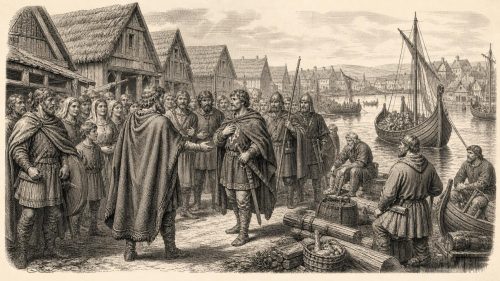
In 1046, Ireland remained politically fragmented, with regional rulers relying on alliances, military strength and lesser kings’ submission. Art Uallach Ua Ruairc, king of Connacht, was killed by Cenél Conaill, enabling Áed in Gaí Bernaig Ua Conchobair’s succession. Northern, midland and Munster elites also suffered killings, exposing conflict beneath provincial overkingship. Dublin’s inhabitants expelled Ímar mac Arailt and restored Echmarcach mac Ragnaill, linking Irish politics to the Irish Sea world. Ecclesiastical life continued through clerical successions, pilgrimage and Ardfert’s lightning damage. Annals preserve elite events, while farming, trade, churches and local communities sustained everyday life amid raids, obligations and insecurity.

The Great Snow
In 1047, Ireland endured exceptional winter weather, remembered as the Great Snow, which persisted into March and killed people, livestock and wildlife. Resulting scarcity devastated Ulster, prompting hungry Ulaid groups to seek refuge in Leinster. Political conflict continued: Áed Ua Conchobair killed Niall Ua Ruairc in Corann, strengthening his Connacht kingship amid a longer dynastic feud; northern forces raided Brega; and Muirchertach of Uí Bresail was treacherously slain at Armagh. Ecclesiastical obits recorded leaders, lectors and a Kildare female coarb, while a bishop died on pilgrimage at Iona. The year clearly reveals regional rule, warfare, religious networks and rural vulnerability.

Hostages and Holy Places
In 1048, Ireland’s fragmented politics linked provincial kings, church families and Hiberno-Norse towns through alliance, hostage-taking, raiding and feud. Donnchad mac Briain marched through Mide and Brega, securing hostages from Diarmait mac Máel na mBó and submission from Dublin, though neither proved permanent. Diarmait raided the Déisi and, with Niall mac Eochada, attacked Mide’s churches. Conchobar Ua Máelshechlainn raided Kildare lands and captured Brega’s ruler. Áed Ua Conchobair destroyed Inis Locha Cime, beginning western expansion. Deaths of rulers, churchmen and poet Cenn Fáelad altered local power. Raids exposed cattle-based rural economies, while Dublin’s trade connected Ireland to wider Irish Sea.

Hostages and Burned Churches
In 1049, Ireland lacked an uncontested ruler, as provincial kings pursued authority through alliances, hostages, warfare and submission. Ulaid, Leinster and perhaps Norse-Gaelic forces invaded Mide seeking Brega hostages; Conchobar Ua Maelsechlainn killed captives, prompting widespread burning of churches and fortresses. Donnchad mac Briain received Leinster and Osraige’s hostages, signalling temporary southern supremacy. Dynastic killings affected several regions. At Armagh, Amalgaid’s death brought an orderly Clann Sínaig succession, while other church leaders died. Bréifne burned Roscommon around this period. An Irish-based fleet raided Wales and England. Warfare burdened rural communities, despite continuing agriculture, trade, urban craft and monastic learning networks.

Law Amid Disorder
In 1050 Ireland remained politically fragmented, with Donnchad mac Briain of Munster pursuing overlordship through hostages, alliances and force, while rival rulers strengthened elsewhere. He proclaimed a law at Killaloe, intended to curb violence, protect agreements and demonstrate royal guardianship of Christian order amid scarcity. Clonmacnoise was repeatedly plundered by neighbouring Irish groups, while Kildare, Emly and Lann Léire suffered fires or attacks, revealing ecclesiastical centres’ wealth and vulnerability. Kings died violently, rivals were imprisoned, and churchmen continued teaching and collecting renders. Rural livelihoods depended on livestock and crops alongside trading towns. Muirchertach Ua Briain, a future king, was born.

Power and Pilgrimage
In 1051 Ireland remained politically fragmented, with regional kings dependent on kinship, warfare, tribute and control of inauguration sites. Áed Ua Conchobair expanded Connacht power by blinding a rival, defeating opponents, resisting Donnchad mac Briain and felling the Dál Cais inauguration tree at Mag Adhair. Munster, the Déisi, Uí Failge and Tulach Óg saw killings, expulsions and disputed succession. Raids demonstrated cattle’s economic and political value, while churches mediated aftermaths of violence. Laidcnén Ua Leocháin and his wife undertook pilgrimage to Rome, dying abroad. Ireland also sheltered Harold Godwinson, demonstrating aristocratic Christianity, maritime connections and involvement in Irish Sea politics.

Dublin Changes Hands
In 1052, Diarmait mac Máel na mBó, overking of Leinster, captured Dublin after raiding and burning Fine Gall, forcing its Hiberno-Norse ruler, Echmarcach mac Ragnaill, overseas. Control of the port gave Diarmait maritime, commercial and military resources, weakening the position of Munster’s Donnchad mac Briain. Elsewhere, Áed Ua Conchobair ravaged Conmaicne, while conflict claimed regional rulers and Domnall Bán Ua Briain was killed around 1051–52. Ecclesiastical rivalry brought murder at Armagh and a contested abbacy at Emly; prominent clergy and ex-king Bran died. A violent December storm damaged houses and woods. Dublin’s seizure reshaped southern Irish power for decades thereafter.

A Year of Raids
In 1053, Irish annals depict widespread warfare, raids and political murder rather than a decisive national conflict. Donnchad mac Briain of Munster faced his nephew Toirdelbach Ua Briain, supported by Connacht, while Diarmait mac Máel na mBó defended Dublin’s interests after yielding hostages to an opposing expedition. Diarmait retaliated in Brega and Mide, taking cattle and captives. Killings, betrayals and raids affected Fermanagh, Lurg, Airgialla and Ulster. Churchmen died and ecclesiastical sites suffered, yet churches sustained administration and learning. Rural cattle-based society and maritime towns endured insecurity. The year foreshadowed Donnchad’s eventual displacement from Munster amid continuing political fragmentation thereafter.

War on Two Fronts
In 1054, described by annalists as a year of warfare, Donnchad mac Briain’s Munster faced attacks from Leinster, Osraige, Dublin and Connacht, while his nephew Tairdelbach Ua Briain challenged him internally. Diarmait mac Máel na mBó’s forces burned strongholds near Emly, aided by Dublin’s Norse-Gaelic resources; Connacht raided Thomond. Northern Ireland also saw killings and local conflicts. Deaths of bishops, ecclesiastics, scholars and rulers underscored links between political and religious power. Cattle-raiding reflected economic and military authority. Annals recorded natural wonders and a Scots-English battle. Despite Donnchad’s survival, alliances around Diarmait and Tairdelbach shifted power decisively in Munster against him.

Rival Kings and Raids
In 1055, Ireland lacked an uncontested high king, as provincial dynasties, churches and alliances competed for power. Toirdelbach Ua Briain defeated his cousin Murchad in Corcu Modruad, weakening Munster’s ruler Donnchad; raids, casualties and Kilfenora’s burning marked the campaign. Allied with Toirdelbach, Áed Ua Conchobair raided western Mide, taking spoil and captives. Gilla Pátraic of Osraige died and was succeeded by Domnall. Church leaders fought over Martarthech, where Armagh prevailed. Ecclesiastical deaths illustrate influential religious networks. Farming, cattle wealth, raiding, and Dublin’s trade underpinned politics, while 1055 foreshadowed Toirdelbach’s eventual ascendancy. Annals differ on details but confirm broad nationwide developments.
Raids and Reckonings
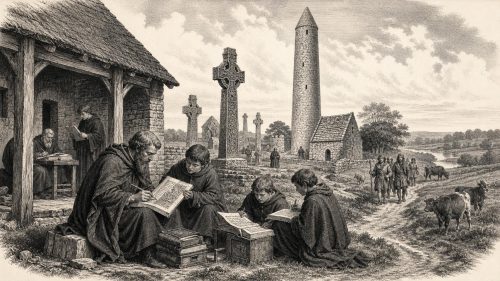
In 1056, Ireland remained divided among competing provincial rulers, as Diarmait of Leinster, Donnchad of Munster, Áed of Connacht and Conchobar of Mide pursued fragile power. Annals record dynastic killings, disputed raids and major cattle seizures, including captives, while a Christmas raid ended in drownings. Churches were influential communities, marked by deaths of prominent clergy, notably Armagh's Áed Ua Forréid. Scholar Flann Mainistrech of Monasterboice died, whereas Marianus Scotus joined Cologne's Irish monastery, illustrating international learned links. Rural farming supported cattle wealth, while Dublin's trade underpinned Leinster. Lightning deaths and storm-related disaster underscored life's vulnerability. Sources vary in reliability, dating.
Ireland Under Strain
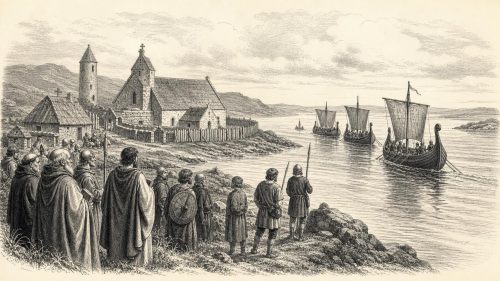
In 1057, Ireland remained divided among provincial dynasties, Norse-Irish towns and local rulers, with Donnchad mac Briain’s Munster supremacy increasingly challenged by Diarmait mac Maíl na mBó, Tairdelbach Ua Briain and other rivals. Killings of Munster claimants and neighbouring kings exposed unstable succession. Dublin-linked forces plundered Inis Cathaig but suffered heavy losses, while raids and conflicts occurred across Connacht, Leinster, the midlands and north. Church communities also suffered, notably the murder of Cork churchman Mugrón Ua Mútáin. Abundant woodland mast coincided with livestock disease, threatening rural livelihoods. These pressures foreshadowed Donnchad’s defeat in 1058 and wider political upheaval soon afterwards.

Battle of Sliabh gCrot
In 1058, Toirdelbach Ua Briain and Diarmait mac Máel na mBó led Leinster, Osraige and Hiberno-Norse forces against Munster’s Donnchad mac Briain. Limerick was burned, perhaps by its defenders, and Diarmait defeated Donnchad at Sliabh gCrot in the Galtees, accelerating his decline. Emly’s church and monastic settlement also burned, while churchmen, regional rulers, poets and ascetics figured in annalistic notices. In Mide, Gallbrat Ua Cerbaill was killed amid dynastic rivalry. Dublin crews joined Magnus Haraldsson’s unsuccessful English expedition, demonstrating Irish Sea connections. The fragmented records portray interconnected warfare, religion, commerce and politics across Ireland and neighbouring lands during the year.

Murchad’s Defeat at Durrow
In 1059, Irish annals record widespread warfare, raiding and dynastic upheaval amid a politically fragmented island. Diarmait mac Máel na mBó of Leinster campaigned in Mide and pressured Munster, while his son Murchad killed rival heirs but was defeated by Conchobar Ua Máelshechlainn at Durrow. Northern rulers seized cattle and captives in Airgíalla and Dál Araide. Connacht and neighbouring regions saw multiple killings and deaths among ruling lineages. Obituaries of church leaders underline ecclesiastical power and learning. Despite conflict, rural farming, herding, crafts, trade and Dublin’s Norse-Gaelic economy sustained society, supplying the wealth and resources contested by kings across Ireland.

Donnchad Submits to Diarmait
In 1060, Donnchad mac Briain, weakened by earlier defeats, apparently submitted to Diarmait mac Maíl na mBó of Leinster, transferring treasure and acknowledging his supremacy, though Ireland remained politically fragmented. Diarmait’s family projected power through Dublin and the Irish Sea. Ecclesiastical centres were contested and vulnerable: Armagh’s abbacy provoked armed conflict, Kells and Leighlin burned, and Clonmacnoise suffered a raid. Regional rulers died or were killed, while religious figures, notably Conn na mBocht, were remembered for charity and administration. A plentiful mast crop supported pig husbandry within a rural economy where cattle, churches and trading towns underpinned wealth and authority.

A Year of Upheaval
In 1061, Ireland lacked a supreme king and regional rivalries intensified. Connacht’s Áed Ua Conchobair raided Munster, destroying Kincora and damaging Killaloe, thereby exposing Donnchad mac Briain’s weakening authority. Áed was briefly displaced by the Ua Flaithbertaig of western Connacht, but defeated them and killed Ruaidrí. Elsewhere, battles, killings and deaths reshaped northern and eastern lordships, while Diarmait mac Maíl na mBó pressed Munster and projected power towards Man. Severe epidemic disease afflicted Leinster, and Glendalough was burned. Deaths of churchmen highlighted ecclesiastical institutions’ importance. Differing annal dates complicate chronology, but collectively portray fragile power, violence, hardship and political change.

Connacht Under Pressure
In 1062, Ireland remained divided among competing dynasties. In Connacht, Áed Ua Conchobair defeated western rivals but lost his son in retaliatory violence, before Ardgar Mac Lochlainn raided the province for cattle and captives. Killings destabilised successions in Mughdorna, Fernmag and Ulaid. In Munster, campaigns by Diarmait of Leinster and Toirdelbach Ua Briain further undermined Donnchad mac Briain. Deaths of leading Columban and northern churchmen marked ecclesiastical change. Annalistic dating varies, particularly for Connacht events. Warfare damaged households through livestock seizures, captivity, destruction and disrupted farming, while urban trade and church networks linked Ireland to Britain, Alba and maritime worlds.

Kingship Under Pressure
In 1063, Tairdelbach Ua Briain, backed by his foster-father Diarmait of Leinster and Dublin, secured recognised kingship in Munster, although Donnchad mac Briain remained until 1064. Ardgar mac Lochlainn’s military progress through Connacht compelled regional rulers to acknowledge his temporary superiority, while an assault on a refuge at Cera caused heavy loss of life. Deaths among kings and churchmen altered local politics. Pilgrimage and ecclesiastical centres retained political importance. Later annals report sickness and scarcity, cautiously interpreted. Warfare, billeting, hostage-taking and raids, including Limerick’s burning, burdened rural communities, revealing Ireland’s fragmented, coercive kingship and interconnected trade, church and rural life.

A Kingdom Changes Hands
In 1064, annalists recorded a redistribution of power in Ireland. Donnchad mac Briain, son of Brian Bóruma, was deposed from Munster, travelled penitentially to Rome and died there. His nephew Toirdelbach Ua Briain, backed by foster-father Diarmait mac Máel na mBó of Leinster, secured kingship through campaigns, hostage-taking and cattle raids against southern rivals. Diarmait’s authority embraced Dublin and Irish Sea connections following Echmarcach mac Ragnaill’s death. Northern dynastic deaths affected Telach Óc and Ailech, while Armagh lost its successor of Patrick, Dub dá Leithe. Clerical and scholarly deaths underline the year’s cultural change, while warfare inflicted hardship without unity.

Raiders on the Shannon
In 1065, Ireland’s fragmented kingdoms saw raids, succession struggles and reprisals. Forces led by Áed Ua Ruairc and Diarmait Ua Cellaig plundered Clonmacnoise and Clonfert, using vessels moved from the western sea to the Shannon. Áed Ua Conchobair of Connacht defeated them, recovered boats and pursued rival dynasties; church chroniclers presented this as saintly judgement. Killings in Ulster, including Donnchad Ua Mathgamna at Bangor, reflected internal conflict and contested sacred authority. In Mide and Munster, further deaths and Murchad Ua Briain’s attack at Kincora exposed political instability. Ecclesiastical obituaries, trade, farming and nut abundance reveal a connected society beyond warfare.

Comet Over Ireland
Irish annals portray 1066 as a year of fractured kingship, diplomacy, violence, religious authority and remarkable natural phenomena. Diarmait mac Maíl na mBó, Tairdelbach Ua Briain and Áed Ua Conchobair shaped high politics, with gold payments illustrating competitive alliances. Deaths and killings, particularly in Bréifne, exposed contested succession and conflict involving churches. Annals commemorated leading ecclesiastics, reflecting monasteries’ political, economic and spiritual roles. Observers recorded Halley’s Comet in late April and an exceptional hazelnut harvest. Dublin’s trade and coinage connected Ireland internationally. Irish writers also noted William’s English conquest, though it caused no immediate major transformation in domestic Irish politics.

Connacht Under Siege
In 1067, Leinster, Munster, Osraige and Hiberno-Norse Dublin invaded Connacht, reflecting volatile alliances among Irish rulers. Connacht’s king, Áed Ua Conchobair, initially ambushed the coalition, but was killed about a week later at Turloch Adhnach by Áed Ua Ruairc’s Bréifne army. Ua Ruairc seized Connacht’s kingship, though the Ua Conchobair dynasty later recovered. Annals differ in detail but confirm the campaign’s sequence and significance. Other violence included dynastic killings and blinding in Munster. Kildare’s church burned, while ecclesiastical leaders and poet Murchad Ua Carthaig died. The year exposed political rivalry, military burdens, and enduring religious, learned and economic institutions alike.

A Year of Ascendancy
In 1068, Irish annals portray Tairdelbach Ua Briain’s growing ascendancy amid fragmented regional kingship. His rival cousin Murchad Ua Briain was killed during a raid in Tethba, strengthening Tairdelbach’s control of Munster. An ordinance credited to him promised security sufficient for livestock to remain unprotected at night. Visiting Leinster, he acquired Brian Bóruma’s sword and a Saxon royal standard from Diarmait mac Maíl na mBó, reflecting dynastic and Irish Sea politics linked to English exiles. Northern rulers died violently, while Armagh’s successor successfully visited Munster. Church deaths, Clonfert’s disruption, trade, farming and manuscript culture reveal political, ecclesiastical and maritime networks.
Fire and Retribution
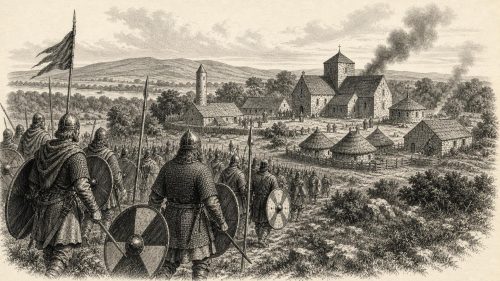
Annals for 1069 record fires, deaths and warfare, while offering only a partial view of Irish society. Diarmait mac Maíl na mBó dominated Leinster and Dublin, where his son Murchad commanded combined forces. Murchad invaded Mide, burning Granard, Fore and Ardbraccan, but suffered severe losses interpreted as saintly vengeance; he died in Dublin in 1070. Fires also damaged Downpatrick, Ardstraw, Lusk and Swords. Clerical and regional rulers died or were killed. Accounts of broken oaths stressed sacred sanctions. Behind annalistic moral judgement lay competing dynasties, vulnerable wealthy churches, rural economies, and Hiberno-Norse Dublin’s commercial, maritime and political power in Ireland.

A Year of Fracture
In 1070, Ireland’s fragmented political order was reshaped by dynastic losses, regional expansion and recurrent violence. Murchad, Diarmait mac Maíl na mBó’s heir and Dublin’s ruler, died, while Diarmait’s son Glún Iairn was killed, weakening Leinster’s succession. Tairdelbach Ua Briain of Munster secured hostages in Leinster and eastern Ireland, and Osraige’s king submitted to him. Killings, executions and blinding affected rulers and heirs across Ulster, the midlands and Connacht. Churches remained influential but vulnerable to conflict, notably at Termonn Da-Beóc. Clerical deaths and Clonmacnoise improvements reveal active religious networks. Despite warfare, farming, trade and urban life in Dublin continued there.

Tairdelbach’s Shannon Bridges
In 1071, Diarmait mac Máel na mBó’s southern Irish dominance weakened after dynastic losses, while his ally and foster-son, Tairdelbach Ua Briain of Munster, increasingly supplied the military force behind their authority. Tairdelbach took Leinster and Mide hostages for Diarmait, raided midland rivals, and mobilised Munster to build Shannon bridges at Áth Caille and Killaloe, improving strategic communications. Violence, depositions and killings affected Ulaid, Donegal and the midlands. Kildare, Glendalough and Clondalkin were burned amid Leinster instability. Despite warfare, farming, craft production, trade and ecclesiastical learning continued, as Tairdelbach’s infrastructure, diplomacy and campaigns foreshadowed his rising power in southern Ireland.

The Fall at Odba
In 1072 Diarmait mac Máel na mBó, dominant ruler of Leinster, Osraige and Dublin, was defeated and killed at Odba by Conchobar Ua Máelshechlainn of Mide, probably with Tairdelbach Ua Briain’s support. His death shattered a personal network of alliances rather than a unified kingdom. Tairdelbach swiftly raided and secured hostages in Leinster and Osraige, gained Dublin’s submission, and consolidated Munster authority. Annals also record killings among regional rulers and ecclesiastical leaders, illustrating pervasive conflict. Cattle-raiding, captives, hospitality obligations and Dublin’s trade reveal political power’s economic and social foundations. Odba initiated Tairdelbach’s contested pursuit of Irish overkingship in ensuing years.

Relics and Rival Kings
In 1073, Ireland’s contested kingship was marked by Conchobar Ua Máelshechlainn’s sacrilegious murder beside the Bachall Ísu, followed by conflict in Mide. His severed head was taken from Clonmacnoise to Toirdelbach Ua Briain’s Kincora, then returned with gold. Toirdelbach, expanding after Diarmait mac Máel na mBó’s death, raided Gailenga, killed Brega’s king and demonstrated authority without securing permanent control. Sitriuc son of Amlaíb and Brian Bóruma’s grandsons died on Man. Religious deaths, pilgrimage, and fires at Clonard and Kells highlighted ecclesiastical importance. Annals portray power as dependent on warfare, cattle, alliances, hostages, towns and sacred legitimacy across a divided island.

Fire and Reform
In 1074, Ireland’s annals emphasised ecclesiastical affairs, dynastic violence and unstable political authority rather than major warfare. Tairdelbach Ua Briain maintained an expanding, but negotiable, supremacy over Munster, Leinster, Dublin and other regions following earlier campaigns. Donnchad Ua Cellaig of Uí Maine and Ragnall Ua Madadáin, heir of Ailech, were killed amid succession struggles. On 6 May, fire devastated Armagh’s churches, bells and settlement divisions. After Bishop Dúnán’s death, Dublin sent Gilla Pátraic to Canterbury, where Lanfranc consecrated him and received his obedience. Clerical deaths across Ireland reveal interconnected churches whose religious, economic and social roles sustained wider local communities.
Defeat at Ard Monann
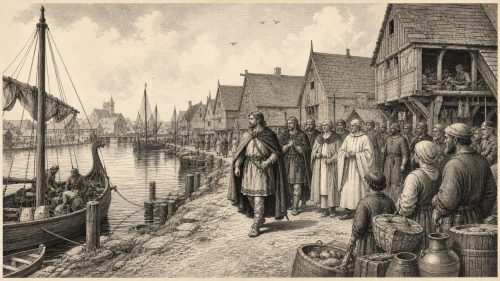
In 1075, Tairdelbach Ua Briain, king of Munster, led a broad coalition northwards seeking hostages from Airgíalla and Ulaid, but his heir Muirchertach was defeated at Ard Monann near Ardee, exposing limits to Ua Briain power. Nevertheless, Tairdelbach secured Dublin after Gofraid's exile and Domnall's brief reign, installing Muirchertach in the commercially and strategically vital Hiberno-Norse city. Annals also record deaths among northern rulers and churchmen, fires at Louth and Clonard, and Dublin's ecclesiastical links with Canterbury. Rural farming, woodland resources and urban craft and trade underpinned political and religious institutions; an abundant mast crop highlighted the economy sustaining them.

Murchad’s Three-Night Kingship
In 1076, Ireland experienced fragile kingship, regional warfare, religious losses and food scarcity. Murchad Ua Mael Sechlainn claimed Tara’s supremacy at Kells but was killed after three days and nights by Amlaíb of Gailenga; Amlaíb was subsequently slain, reportedly through Colum Cille’s justice. Tairdelbach Ua Briain invaded Connacht, imprisoned Ruaidrí Ua Conchobair, then released him as a dependent ruler, demonstrating Munster’s limited ascendancy. Northern and midland rulers were killed in conflicts, including at Devenish. Churchmen, Gormlaith, queen of Munster, and scholars died. Scarcity threatened farming communities, while Ua Briain control of Dublin strengthened their power. The annals portray unstable authority.

Power and Hardship
In 1077, Tairdelbach Ua Briain of Munster extended his influence through Leinster, Dublin and the midlands, capturing a rival ruler’s son and enforcing authority around his court. Nevertheless, Ireland remained politically fragmented, with killings, succession disputes and warfare occurring from Meath and Ulster to Fermanagh. Fire devastated much of Clonmacnoise, disrupting an important religious, economic and settlement centre. Cattle and people suffered from an unidentified disease, while autumn storms damaged grain crops and likely intensified scarcity. Ecclesiastical deaths and charitable offices reveal the Church’s social importance. The annals portray connected yet unequal communities facing power struggles, environmental damage and hardship.

A Northern Reckoning
In 1078, northern Ireland experienced interconnected but largely local political upheavals. Conchobar Ua Briain, a Munster prince ruling at Telach Óc, was treacherously killed with his wife, weakening Uí Briain influence in Cenél nÉogain. Airgialla's overking Lethlobar Ua Laidcnén also died violently, while conflicts involved Fernmag, Uí Chremthainn, Conaille, Uí Méith and other northern groups. Donn Sléibe Ua hEochada was deposed in Ulaid and sought Tairdelbach Ua Briain's protection. Tairdelbach's wide but limited supremacy rested on alliances, hostages and dependants. Ecclesiastical deaths and evidence of farming, trade and recent scarcity reveal the social foundations beneath dynastic violence and political rivalry.

Kings, Relics and Visitors
In 1079, Tairdelbach Ua Briain, king of Munster, demonstrated wide but negotiated power across Ireland. He campaigned through Dublin and Mide, where Máel Sechnaill submitted under the guarantee of Patrick’s successor and the Bachall Ísu, and intervened in Connacht, expelling Ruaidrí Ua Conchobair and plundering western districts. Regional warfare included cattle raiding and the assertion of authority at Carman’s assembly. Five Jewish visitors arrived by sea with gifts for Tairdelbach, the earliest recorded reference to Jews in Ireland, but were sent away. Deaths of church leaders and scholars highlighted Clonmacnoise, Armagh and learned networks linking a fragmented yet connected island.

Hostings and Hired Swords
Ireland in 1080 comprised competing overkingships, powerful churches and Hiberno-Norse towns rather than a unified state. Tairdelbach Ua Briain of Munster demonstrated negotiated supremacy through a hosting in Leinster and Mide, taking Máel Sechnaill to Limerick, while his son Diarmait raided Wales. Donn Sléibe Ua hEochada regained Ulaid and sought hire in Munster, illustrating mobile paid alliances. Warfare killed rulers around Sliab Fuait, Clogher and Uí Fhailge, where raiders were defeated near church land. Ua Cinn Fhaelad of Déisi undertook pilgrimage to Jerusalem; Cellach of Armagh was born. Annals reveal rural production, maritime exchange, ecclesiastical influence and uneven regional perspectives.

A Year of Strain
In 1081, Tairdelbach Ua Briain, Munster's dominant king, secured Ulaid's submission, though authority remained negotiated and unstable. Donn Sléibe Ua hEochada killed Ua Mathgamna, king of Ulaid, at Downpatrick, amid wider northern dynastic violence. In Mide, Máel Sechnaill killed a Calraige chief, later linked to alleged plunder of Clonmacnoise. Hiberno-Norse or Scandinavian-background raiders plundered Aran, while fires devastated Cork, Killaloe, Mungret and churches. Clerical obituaries illustrate ecclesiastical learning and saintly successions. Beyond annalistic elites, rural farming, craft production and Hiberno-Norse trade sustained interconnected communities despite political conflict, maritime raiding and local disasters throughout the island's diverse, layered social order overall.

Connacht in Crisis
In 1082, Connacht’s Ua Conchobair dynasty suffered a violent succession struggle: Cathal son of Áed treacherously killed heir-designate Domnall son of Tadc, before Ruaidrí, Cathal’s half-brother, defeated and killed him with a large force. Ruaidrí’s victory strengthened his claim but did not secure all Connacht, whose subordinate rulers remained autonomous. Annals also record several regional lords slain, illustrating political insecurity. Cinaed Ua Ruadáin, senior officer at Clonmacnoise, died, while Cenn Faelad Ua hÓcáin assumed Brendan’s coarbship. Later, less secure accounts describe fighting on Lough Ree and a fire at Clonmacnoise. Tairdelbach Ua Briain’s wider overlordship framed political conflict across Ireland.

Domnall Ua Lochlainn’s Accession
1083 saw political change and violence across Ireland, chiefly in the north. Domnall Ua Lochlainn became king of Cenél Eógain, beginning a long career, and reinforced his position through a cattle raid into Conaille Muirtheimhne, rewarding allies from its proceeds. Áed Ua Maíl Shechnaill and several regional rulers, heirs and churchmen died or were killed, revealing fragile dynastic authority. Tairdelbach Ua Briain remained the dominant southern king, although no campaign is securely dated. Ecclesiastical obituaries highlighted churches’ learned and economic roles. Dublin’s connected bishopric contrasted with saint-centred institutions. Rural pastoral obligations coexisted with trading towns. Later annalistic claims require caution.

War Across the Provinces
In 1084, Ireland remained a patchwork of kingdoms, where Tairdelbach Ua Briain of Munster maintained overlordship through alliances and warfare while northern rivals strengthened. Raids devastated Ulaid, Munster and church sites, reflecting cattle's economic and political importance. Donnchad Ua Ruairc led a multi-provincial force into Leinster but was defeated and killed by Muirchertach Ua Briain's coalition at Móin Cruinneoige, enhancing Ua Briain power. Churches at Glendalough and elsewhere suffered, though Rossory gained a foundation. Dublin's bishop Gilla Pátraic drowned, highlighting overseas connections. Reports of pestilence, urban commerce and rural disruption reveal a society shaped by conflict, religion and shifting authority.

A Kingdom Under Strain
In 1085, Ireland remained divided among provincial rulers, lordships, churches and Hiberno-Norse towns, despite Tairdelbach Ua Briain’s extensive but personal supremacy. His severe illness weakened a political system based on alliances, hostages and force, foreshadowing his death in 1086. Deaths among rulers and churchmen, including Murchad Ua Maeldoraid, altered regional leadership, while a Ua Ruairc prince was treacherously killed. Donngus Ua hAingliu was consecrated bishop of Dublin at Canterbury, demonstrating distinctive Irish Sea ecclesiastical links. Most of Cell Chainnigh burned, cause unknown. Rural production, monastic learning and maritime trade continued amid a precarious political balance during this apparently quiet year.

A Kingdom Divided
In 1086, Toirdelbach Ua Briain, Munster’s dominant ruler and effective overlord of much of Ireland, died at Cenn Corad after illness. Munster was briefly divided among his sons Tadc, Muirchertach and Diarmait; Tadc soon died and Muirchertach expelled Diarmait, but inherited no uncontested national supremacy. Warfare continued across Leinster, Dublin’s Norse-Gaelic sphere, the midlands, Ulster and south-west, demonstrating resilient local dynasties and shifting alliances. Notable deaths included kings, bishops and Máel Ísu Ua Brolcháin, Armagh scholar and bilingual poet. The annals chiefly record elites, while broader evidence depicts a rural, cattle-based economy linked through churches, towns, trade and military obligations.

Contested Kingdoms
In 1087, Ireland lacked an acknowledged high king after Tairdelbach Ua Briain’s death. His son Muirchertach, king of Munster, defeated a Leinster coalition at Ráith Étair near Dublin, including his exiled brother Diarmait. In Connacht, Ruaidrí Ua Conchobair killed Áed Ua Ruairc at Corann, aided by ecclesiastical authority symbolised by St Ciarán’s staff. Máel Sechlainn of Mide was assassinated, while Domnall Ua Lochlainn extended northern influence and an Ulster-led expedition reached Man. Regional rulers died or were killed. Despite abundant mast, cattle disease, dearth and destructive winds harmed communities. Warfare, urban maritime connections and rural dependence shaped unsettled competitive order.

The Destruction of Kincora
In 1088, Muirchertach Ua Briain’s Munster faced renewed rivals after his father’s death. While he campaigned in Leinster, Connacht forces defeated Munster fleets, and his brother Diarmait’s coastal raid ended disastrously after relics were seized. Leinster’s attack on Waterford failed, while southern townsmen suffered defeat near Cork. Domnall Ua Lochlainn secured Connacht’s submission from Ruaidrí Ua Conchobair, then led a northern-Connacht invasion deep into Munster, devastating settlements and destroying Kincora, the Ua Briain stronghold. Raiding damaged cattle-based rural livelihoods, while ports supplied maritime power. Scholarly and dynastic deaths reflected Ireland’s fractured kingship and interlinked political, ecclesiastical, commercial and agricultural worlds.
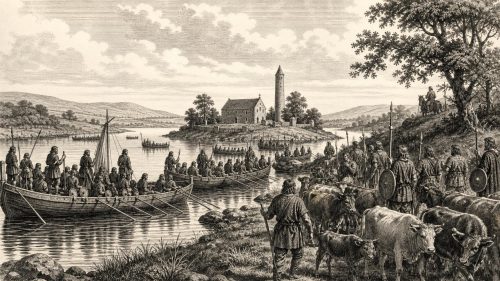
Rivers, Kings and Fire
In 1089, politics remained fragmented, as Muirchertach Ua Briain of Munster sought supremacy against Ruaidrí Ua Conchobair of Connacht, Domnall Ua Máelsechlainn of Meath and rivals. Muirchertach’s Shannon fleet plundered churches but was trapped near Athlone, surrendered, and prompted a raid into Munster. Donnchad of Leinster and Dublin and Donnchad Ua Gilla Pátraic of Osraige were killed amid conflict, destabilising eastern Ireland. Warfare, feud and raids affected lordships, churches and communities. Munstermen burned Lusk, killing 180 people sheltering in its church; Kildare and other centres suffered fires. Clerical deaths, land transactions, trade, livestock, captives and Easter’s wind also illuminate society.

Hostages and Holy Relics
In 1090 Domnall Ua Lochlainn of Ailech secured hostages from leading southern rulers, marking northern ascendancy without creating a unified Irish monarchy. Muirchertach Ua Briain of Cashel soon resumed warfare, raiding Connacht and the midlands, suffering defeat in Fir Cell, and campaigning with Dublin’s Hiberno-Norse forces. Regional kings pursued local conflicts while Domnall suppressed northern rivals. Ecclesiastical life remained influential: church leaders died, relics of Colum Cille travelled to Kells with silver, and Armagh’s church of Na Ferta and many houses burned. The annals reveal rural communities burdened by armies, alongside towns, trade, scholarship, and competing regional perspectives throughout Ireland.

A Year of Rival Kings
1091 Ireland remained divided among provincial dynasties, ecclesiastical centres and Hiberno-Norse towns, while Muirchertach Ua Briain of Munster and Domnall Ua Lochlainn of Ailech contested supremacy. Muirchertach raided Meath and the midlands, but Connacht attacked Munster and Dublin passed to Gofraid son of Mac Arailt, strengthening Irish Sea power. In Leinster, Énna killed rival Murchad. Domnall defeated and killed Donn Sléibe Ua hEochada of Ulaid, consolidating northern dominance. Armagh suffered a major fire, then Máel Ísu died and Domnall grandson of Amalgaid succeeded him. Treacherous killings reflected political insecurity, although favourable weather produced abundance, sustaining rural and urban communities alike.

The Blinding of Ruaidrí
In 1092, Ruaidrí na Saide Buide Ua Conchobair, overking of Connacht, was treacherously blinded by rivals, enabling Muirchertach Ua Briain of Munster to claim supremacy, take hostages and manipulate local contenders. Muirchertach also campaigned in Leinster, while his brother Diarmait was exiled to Ulaid. Regional instability included Énna of Uí Chennselaig’s killing and Éoganacht deaths. Armagh’s church and settlement burned, while a Munster fleet plundered Clonmacnoise. Dublin remained under Gofraid Méránach. Raids devastated Mag Aí’s cattle, and severe winter frost followed. Divergent annals nevertheless portray authority as dependent on alliances, violence, hostages, wealth and unreliable regional obedience throughout medieval Ireland.

Kings, Relics and Winter
In 1093, Muirchertach Ua Briain of Munster expanded his influence through Connacht, Mide and reconciliation with his brother Diarmait, but failed to secure lasting control over Connacht after Síl Muiredaig returned from exile. His northern rival, Domnall Ua Lochlainn of Ailech, allied with Ulaid against southern power and blinded a regional rival. Covenants at Lough Neagh, Cashel and Lismore, guaranteed by revered relics, underscored religion’s political role. Annals also record churchmen’s deaths, changing manuscript production, severe frost, wind damage, pestilence and abundant woodland mast. Cattle, agriculture, towns and Irish Sea links shaped society. Ireland remained politically divided despite ambitious overlordship.

Gofraid Expelled from Dublin
In 1094 Muirchertach Ua Briain, king of Munster, recovered influence across Ireland amid rivalry with Domnall Ua Lochlainn. After campaigning involving Dublin, Meath, Leinster and northern forces, he expelled Gofraid Méránach, probably Godred Crovan, from Dublin, securing its maritime wealth. Domnall Ua Máel Sechlainn of Meath was killed and Muirchertach divided Meath between dependent rivals. His authority nevertheless met limits: Connacht’s Síl Muiredaig defeated Munster-backed forces at Fidnach, and one expedition failed to obtain hostages. Armagh’s abbot visited Munster successfully, while violence, severe weather and scarcity compounded disruption. Dublin’s trade and crafts endured. The year redistributed power without unifying Ireland.

Snow, War and Mortality
In 1095 Ireland endured severe snow and frost, causing human, bird and livestock deaths, though later woodland mast offered limited relief. Muirchertach Ua Briain campaigned extensively in Connacht and Mide, using fleets, sieges, hostages, tribute and dependent rulers to extend Munster’s influence. Ulaid experienced deposition, raids and defeats, while local dynastic violence continued. From August, a devastating, unidentified epidemic killed innumerable people, including prominent secular and ecclesiastical figures such as Dublin’s bishop and Godred Crovan. Fires and plunder damaged churches, books and communities, notably Clonmacnoise. Despite continuing political activity, warfare, displacement, environmental hardship and mortality exposed the limits of over-kingship.

Fear, Fire and Reform
In 1096 Ireland remained politically fragmented despite Muirchertach Ua Briain’s southern overlordship, as Domnall Ua Lochlainn challenged him and regional rulers fought, raided and died in feuds. Muirchertach rebuilt Kincora, restoring Ua Briain prestige after its 1088 destruction, while Irish Sea links were marked by death of his nephew on Man. Fear of a calendrical omen, intensified by recent mortality, prompted island-wide fasting, almsgiving and church grants. Lightning burned Limerick. Waterford’s Malchus was consecrated by Anselm of Canterbury, establishing an urban bishopric connected to ecclesiastical reform. The year combined dynastic consolidation, insecurity, clerical authority and growing international religious maritime ties.

Peace at Fid Conaill
In 1097, Muirchertach Ua Briain led a southern coalition to Mag Muirtheimne, where Domnall Ua Lochlainn’s northern army confronted it at Fid Conaill. Abbot Domnall of Armagh brokered an uneasy peace, demonstrating ecclesiastical influence without ending royal rivalry. Connacht suffered renewed instability after Tadc Ua Conchobair’s killing and Flaithbertach Ua Flaithbertaig’s contested restoration. Regional rulers died or were killed, while notable churchmen also died. Fire destroyed books and treasures at Monasterboice. Exceptionally abundant nuts fattened swine, lowered prices and supported food supplies. The annals thus depict political conflict, cultural loss, church diplomacy and rural economic abundance across late eleventh-century Ireland.

A Realm in Contest
In 1098, Ireland remained divided among competing kings, with Muirchertach Ua Briain’s northern campaign checked by Domnall Ua Lochlainn, while succession disputes devastated Meath, Leinster, Connacht and other regions. Cenél nEógain defeated Cenél Conaill, and Ulaid captured three ships of unnamed Isles foreigners, probably linked to Magnus Barelegs’ western expedition. Deaths of reformer Domnall Ua hÉnna and numerous bishops, scholars and clerics highlighted active religious networks and emerging church reform. Rain, fertility and heavy snow shaped rural life; fires damaged Cork and Clonmacnoise. The chronicles depict political fragmentation, local violence, maritime connections, learning, pilgrimage and resilient ecclesiastical centres throughout Ireland.

Truce and Uprooting
In 1099, Ireland remained politically divided as Muirchertach Ua Briain and Domnall Ua Lochlainn confronted one another at Sliabh Fuaid. Armagh brokered a year-long truce, preventing battle without resolving their rivalry. Domnall then defeated Ulaid at Cráeb Telcha, took hostages, burned its camp and felled its inauguration tree. Midland warfare killed Tethba leaders, while Airthir’s king died. A nationwide epidemic and fires at Kells, Kildare and Ardstraw compounded disruption. Church institutions continued through episcopal appointment and clerical deaths. Ireland’s communities and Dublin’s trade sustained wider Irish Sea connections, including Norse activity and Welsh exiles. The year combined restraint with violence.