

1500–1599 CE

Dungannon Raid, Galway Fire
In 1500, Ireland experienced local conflicts, disasters and environmental hardship rather than a single national crisis. Aodh Ruadh Ó Domhnaill raided Tír Eógain, burning Dungannon and its strongholds, while Kildare’s intervention in Ó Néill territory proved temporary. Succession changed Breifne’s rulership, and killings, livestock raids and castle-building marked Fermanagh. Galway was largely destroyed by fire, threatening an important trading port. In Munster, the Barry family feud brought murder and posthumous punishment, while John Maguire executed a notorious horse thief. Prolonged wet weather damaged wheat. The death of Derry’s Franciscan bishop also reflected active religious networks across fragmented but connected lordships.

Ladders at Sligo
During 1501, Ireland’s political life remained intensely regional despite Gerald FitzGerald, eighth earl of Kildare, serving as lord deputy. In Oriel, rival Mac Mahon branches fought, displacing opponents and causing significant deaths, while Maguire forces suffered heavily at Slieve Beagh. Rival O’Conor kinsmen captured Sligo castle by ladders, killing leading combatants. Churchman John Maguire and poet Donnell O’Higgin were commemorated for learning and hospitality. Edmund Burke was seized returning from pilgrimage to Spain and held for ransom. Finally, Turlough O’Brien of Thomond burned parts of Limerick and the Maigue plain, demonstrating warfare’s continuing economic and human impact throughout the island.
Cavan’s Observant Turn
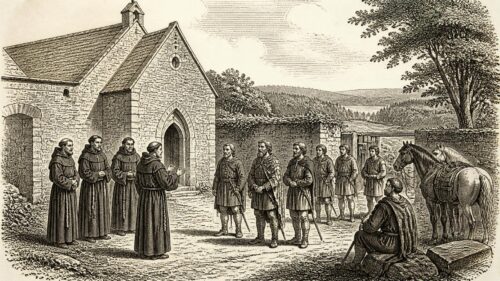
In 1502, Ireland was shaped by local lordship, dynastic violence, religious reform and environmental hardship. Raids and feuds across East Breifne, Fermanagh, Monaghan and Ulster killed warriors, professionals and kin, while alliances enabled armed retinues to cross boundaries. John O’Reilly secured Cavan’s Franciscan monastery for the Strict Observance through Rome, demonstrating both reforming connections and secular authority. Church offices remained contested and hereditary. Severe weather killed cattle and disrupted cultivation throughout Ireland, threatening subsistence and lordly resources. The deaths of poet Domnall Ó hUiginn and learned figures show scholarly networks. Munster experienced change, while English administration remained limited around Dublin.

Maguire’s Last Mass
Ireland in 1503 was shaped by overlapping lordships, kin groups, towns and church jurisdictions rather than a national government. The death of Seán Mag Uidhir, lord of Fermanagh, at Enniskillen on 26 March provides the year’s most precisely dated event. Annalistic accounts also record Kildare’s northern campaign, conflict among O’Neill and O’Donnell rulers, warfare in Connacht and important deaths elsewhere. Castles, marriages, fosterage, military followings and control of routes underpinned political authority. The evidence reveals a landscape of regional bargaining and rivalry, where changing leadership could disturb alliances and alter relations between Gaelic rulers and the English crown’s limited administration.
Knockdoe’s Nine Battalions
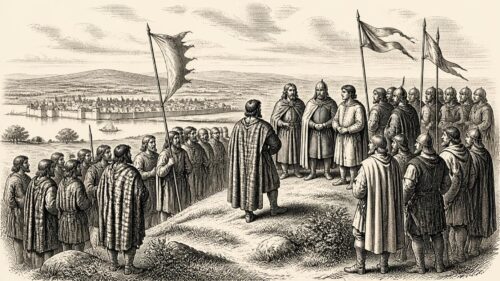
In 1504, Gerald FitzGerald, eighth earl of Kildare and king’s deputy, led a broad Gaelic and settler-descended coalition against Uilleag Fionn Burke of Clanricard and Turlough Donn O’Brien. The conflict arose from Burke’s attacks on O’Kelly territory and seizure of Galway, but reflected wider struggles for Connacht. At Knockdoe near Galway on 19 August, Kildare’s army won a devastating battle, with annals reporting nine gallowglass battalions almost destroyed. Burke surrendered hostages, restoring Kildare’s influence without securing lasting royal control. The year’s annals also commemorate clerics, scholars, physicians and patrons, revealing religious, learned and hospitable networks alongside warfare across medieval Ireland.
Aodh Dubh at Kilmacrenan
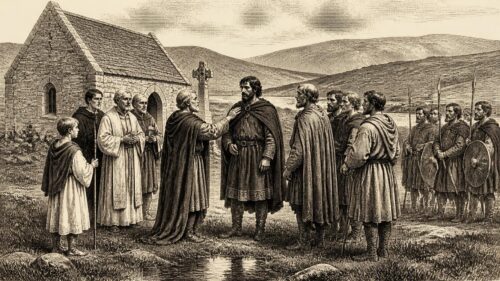
In 1505, Aodh Ruadh Ó Domhnaill died at Donegal after forty-four years as lord of Tír Chonaill and was buried in its Franciscan friary. His son, Aodh Dubh, secured succession through a campaign in Tír Eógain, taking Castlederg, before inauguration at Kilmacrenan. Feuds killed military and local leaders, while drowning claimed travellers on Finn Lough. Persistent rain ruined crops, particularly in Fermanagh, and plague affected Anglo-Irish nobles. Churchmen experienced both institutional continuity and violence. Meanwhile, Gerald FitzGerald received the Garter and Piers Butler became seneschal of Tipperary, illustrating Ireland’s plural, alliance-based political order during a year of contested regional authority.
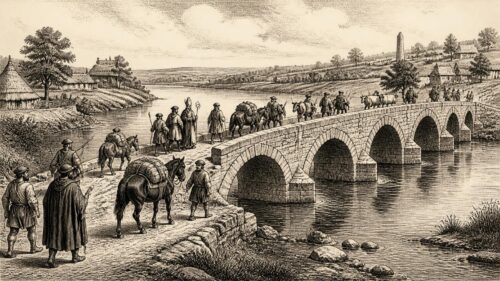
O’Brien’s Shannon Crossing
In 1506 Turlough O’Brien, his brother Donnell and the bishops of Killaloe and Kilfenora built a bridge at Port Croise across the Shannon, demonstrating Thomond’s resources, ecclesiastical partnerships and strategic influence near Limerick. Meanwhile, Gerald FitzGerald’s lord-deputyship remained powerful but limited, as Henry VII contemplated an unrealised expedition. Dublin civic authorities defended Dominican hay against Kilmainham’s prior. Northern Ireland saw cattle raids, succession struggles, killings and Scottish mercenary involvement, devastating communities. Annals also record church officials, merchants, nobles and scholar Páidín Ó Maol Chonaire alongside lightning damage at Trim. Together these events reveal medieval Ireland’s regional, interconnected and contested order.
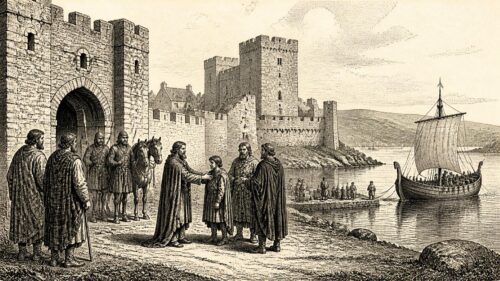
Carrickfergus’s Sixteen Hostages
In 1507, Ireland comprised overlapping systems of royal lordship, Gaelic dynasties, churches, learned families and corporate towns. The Annals of Ulster, strongest for the north, records Henry Ó Néill’s death, an Ó Domhnaill attack on Dungannon, and conflict at Carrickfergus, where Niall Ó Néill was captured, released after sixteen hostages were demanded, then seized the castle and mayor. Clogher monastery and Achadh Beithe church burned, while clerics, a brehon and several poets died. Kildare exercised limited deputy authority, and Galway maintained civic government. These events reveal power secured through kinship, pledges, warfare, learning, patronage and institutional resilience across the island.
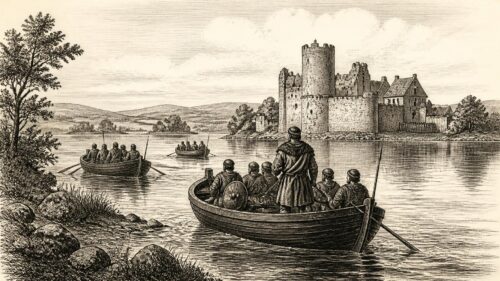
Enniskillen’s Lake Coup
In 1508 Aodh Óg Ó Domhnaill transformed power in Fermanagh by travelling across Lough Erne, capturing Enniskillen castle from Ruaidhrí Mag Uidhir, installing a rival Maguire and taking hostages. His expeditions also reached Lower Connacht, illustrating negotiated, military lordship. Elsewhere, feuds produced killings, raids, castle destruction, exile and attacks around churches, including a St Patrick’s Day defence at Domhnach Mhaighe Dá Chlaoine. Eoghan Ó Ruairc and Margaret O’Brien began the Franciscan friary at Creevelea, demonstrating aristocratic patronage. Annals also record clerical deaths, hospitality and learning. In the Pale, parliament authorised taxation, revealing overlapping Gaelic and English political systems within Ireland.
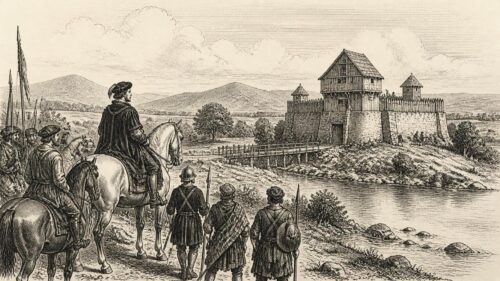
Kildare’s Omagh Campaign
Henry VIII’s accession in 1509 prompted Ireland’s council to retain Gerald FitzGerald, eighth earl of Kildare, as temporary governor, preserving authority in the Pale. Kildare intervened in a disputed O’Neill conflict in Tyrone, campaigning with regional allies, capturing Omagh castle, taking prisoners and demolishing the fortress. Domhnall O’Neill died, and Art O’Neill was inaugurated, illustrating contested Gaelic succession. Uilleag Fionn Burke of Clanricard also died, without ending Burke power. Obituaries for church officers, an erenagh and a learned poet reveal enduring ecclesiastical, hospitable and literary institutions. The year demonstrated that royal change affected Ireland through local alliances, lordships and rivalries.
Monabraher’s Broken Rearguard
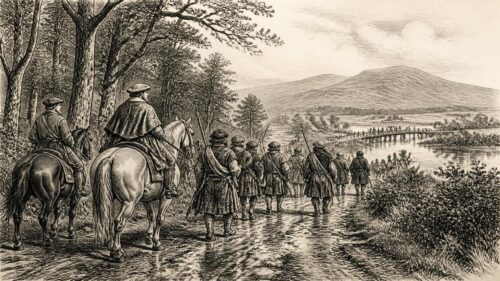
In 1510 Gerald FitzGerald, eighth earl of Kildare and justiciar of Ireland, led a expedition into Munster. His authority combined royal office with estates, personal connections and agreements among powerful lords. The campaign demonstrated that government from Dublin depended upon negotiated alliances as much as commands from Henry VIII. Resistance likewise emerged from a coalition of interests rather than a simple division between Gaelic and English communities. Annalistic evidence places the fighting within a wider landscape of overlapping lordships and shifting loyalties. Monabraher’s broken rearguard illustrates the military risks and political limits confronting the Great Earl’s ambitious exercise of power.

Cathair Killed at Mainistir-Feorais
In 1511, Cathair Ó Conchobair Fáilghe, lord of Offaly, was killed near Mainistir-Feorais by rival kinsmen, exposing the instability of Gaelic frontier lordship; his son Brian succeeded. Elsewhere, Manus Ó Domhnaill governed Tír Chonaill during his father’s pilgrimage, negotiated hostages, and resisted Ó Néill incursions marked by burning and plunder. Deaths of learned patrons and regional lords illustrated ties between authority, households and scholarship. Church affairs included Bishop Tomás Mac Brádaigh’s death, competing Bréifne episcopal claims, fire damage at Armagh, and Archbishop Walter FitzSimons’s death in Dublin. The year revealed Ireland as interconnected, contested lordships rather than a unified polity.
Omagh’s Rebuilt Castle
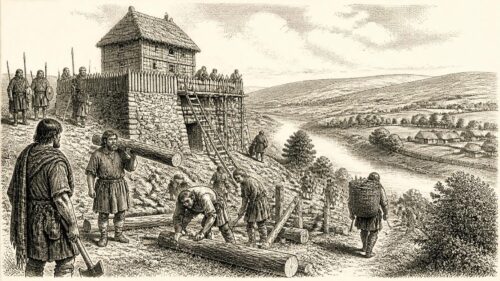
In 1512, Irish power rested on military mobility, castles, hostages, revenue and patronage amid overlapping crown, Gaelic and ecclesiastical jurisdictions. Returning from pilgrimage, Aodh Dubh O’Donnell raised hired troops, defeated Edmund Burke’s forces, destroyed Esker castle, secured hostages, and compelled Art O’Neill to terms before rebuilding Omagh castle, asserting authority in Tyrone. Meanwhile, Gerald FitzGerald, earl of Kildare and justiciar, campaigned through Connacht and Ulster, capturing and demolishing strongholds including Belfast. Annals also record church patronage, learned households, deaths and Dublin appointments, demonstrating that warfare, negotiation, religion and administration jointly reshaped Ireland’s unsettled political landscape during this exceptionally documented year.

Dunluce, Kildare and Flodden
In 1513, Ireland experienced interconnected struggles over lordship, succession and regional power. Gearóid Mór FitzGerald’s death weakened his extensive political system, although his son Gerald succeeded as earl and deputy governor. In Tír Eógain, Art Óg O’Neill secured inauguration with local and Kildare support amid contested succession. Aodh Dubh O’Donnell besieged Sligo, influenced control of Dunluce and visited James IV of Scotland before Flodden ended Scottish royal intervention. Raiding, burning and maritime violence affected coastal and rural communities. Meanwhile, Franciscan scholarship, ecclesiastical deaths and aristocratic patronage demonstrated enduring religious, learned and charitable networks across a politically fragmented yet connected Ireland.

Cavan Castle Broken
Ireland in 1514 remained a landscape of competing lordships and negotiated authority. Gerald FitzGerald, ninth earl of Kildare and the king’s deputy, sought to demonstrate that he had inherited his father’s influence. Campaigns recorded in Laois, Breifne, Munster and Ulster reveal the importance of castles, armed followings, hostages and compensation. Rival rulers could resist, bargain and rebuild their position despite destructive expeditions. A contemporary churchman described abundant food alongside insecurity on land and sea. Cavan Castle’s destruction belongs within this wider pattern of contested government, where royal office offered prestige but power still depended upon local alliances and military resources.
Tuath-Bhladhach’s Fatal November
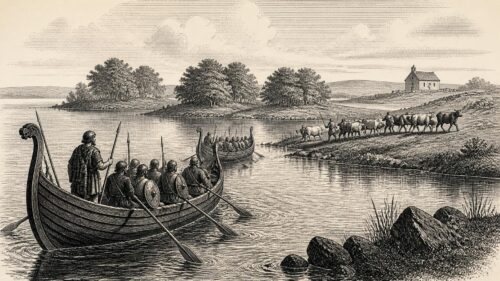
Annals for 1515 depict a politically fragmented Ireland shaped by cattle raiding, dynastic rivalry, fortified lordships and ecclesiastical life. Aodh Dubh Ó Domhnaill raided MacDermot territory, suffered a wound, and attacked Maguire lands by fleet on Lough Erne; Art Óg Ó Néill exploited his weakness in Clandeboye and campaigned in Oriel. On 25 November, Domnall Ó Domhnaill, tánaiste of Tír Chonaill, was fatally wounded by a kinsman, intensifying succession tensions. Desmond relatives contested castles in Munster, while bishops and clerics died or faced violence. Kildare retained royal favour, whereas Ormond’s death without a male heir sharpened future political rivalry thereafter.
Sligo’s French Siege Gun
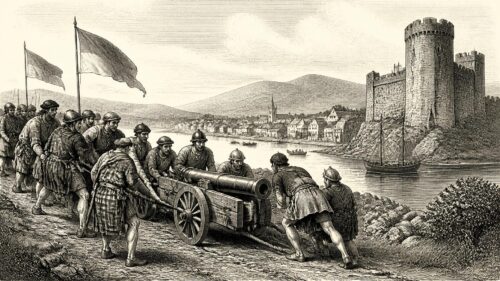
In 1516, Ireland was governed through overlapping royal, Gaelic and urban powers. As Henry VIII’s deputy, Kildare led a coalition that captured Leap Castle, secured hostages and imposed authority in the midlands. In the north-west, Manus O’Donnell obtained French-linked artillery after a pilgrim’s visit to Lough Derg, used it to take Sligo Castle, and later negotiated peace with O’Neill under Dublin’s mediation. Kildare’s Dublin parliament addressed markets, ports, taxation and defence. Religious life, travel and scholarship remained vital: friars drowned on Lough Erne, the Book of Fenagh was completed, and Desmond’s Gaelic lord died amid continuing regional warfare and connections.
Dundrum’s Captive Hostages
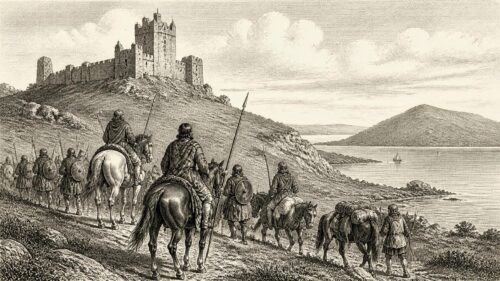
In 1517 Gerald FitzGerald, ninth earl of Kildare and lord deputy, demonstrated both the reach and limitations of Tudor authority in Ireland. After convening a Dublin parliament, he campaigned in Ulster, destroying Dundrum Castle, seizing Félim Magennis’s family and hostages, and burning Dungannon. Yet O’Donnell also raided Tír Eoghain and destroyed Dungannon amid O’Neill succession rivalries, showing regional politics remained autonomous. Elsewhere, inaugurations, killings, cattle raids and castle warfare reshaped local lordships. A severe frost disrupted travel, while a boat from Tory Island vanished at sea. The year reveals a connected but politically fragmented island, rather than unified crown rule.
Ferdinand’s Kinsale Harbour
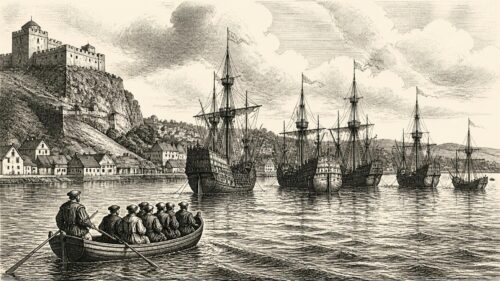
In June 1518, storms diverted Archduke Ferdinand’s Habsburg flotilla to Kinsale, where the fifteen-year-old brother of Charles of Habsburg received provisions, formal hospitality and civic discipline before sailing for Flanders. Laurent Vital’s account offers valuable, though prejudiced and linguistically mediated, observations of the port, worship, clothing and relations between townspeople and countryside. Elsewhere, Gerald FitzGerald’s Kildare rental documented lordship, revenues, learning and religious patronage, including Maynooth’s chantry college. Armagh’s Franciscans underwent Observant reform, while annals record northern raids, hostages, succession killings, and the deaths of esteemed clerics and poets, revealing plural, connected Irish societies within wider European and Atlantic networks.
Conn Bacach’s Rainy Accession
Ireland’s political landscape in 1519 changed through succession, departures, disease and agricultural hardship. In Ulster, Conn Bacach Ó Néill succeeded his half brother Art Óg as lord of Tír Eógain. Deaths among leading figures elsewhere altered regional balances, while Gerald FitzGerald’s departure for England exposed the uncertainty surrounding Dublin’s administration. Irish annals also record plague in Dublin and an wet summer and harvest associated with sickness and suffering. These accounts place elite political change beside the difficulties experienced by communities. The year reveals how dynastic authority, royal intervention, epidemic disease and weather together shaped an island of overlapping regional powers.
Surrey at Wood Quay
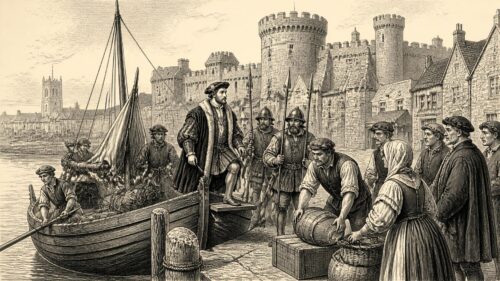
In 1520 Henry VIII appointed Thomas Howard, earl of Surrey, lieutenant of Ireland, replacing the influence of detained earl of Kildare. Landing at Wood Quay with English troops, Surrey repaired Dublin Castle, defended the Pale and pursued negotiated submissions from Gaelic and Anglo-Irish rulers. His campaigns, truces and oaths brought gains, but depended on allies, coercion and shifting interests. Disease disrupted government, while troop concentrations caused shortages and coign and livery burdened communities. Insufficient revenue, poor logistics and warfare restricted policy. Annalistic evidence reveals lordships, succession disputes and learned institutions. Surrey's expedition exposed the limits of crown authority beyond Dublin.
Surrey’s Costly Parliament
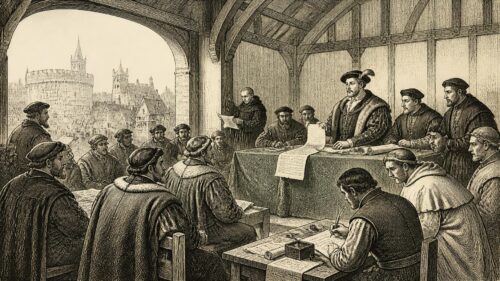
In 1521, Thomas Howard, earl of Surrey, sought to extend Henry VIII’s authority in Ireland, but inadequate money, troops and local support exposed the limits of Dublin government beyond the Pale. A June parliament regulated crop burning, wool exports and jury procedure, yet resisted the burdens of billeting and military finance. Surrey’s campaigns and negotiations in the midlands did not end shifting regional alliances. Annals recorded successions, killings, lordship disputes and ideals of hospitality across Ulster and Fermanagh. George Cromer received Armagh, while William Rokeby died. Surrey’s December recall confirmed that Tudor intervention remained costly, partial and showed dispersed power.
Knockavoe’s Night Assault
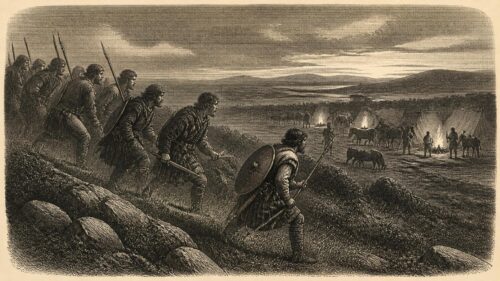
In 1522, Aodh Dubh Ó Domhnaill defeated Conn Bacach Ó Néill’s extensive coalition at a surprise night attack at Cnoc Buidhe, or Knockavoe, near Strabane. Conn’s allies included Ulster lords, Connacht and Munster contingents, men from Meath and Leinster, and Scottish mercenaries. Earlier raids captured Ballyshannon, burned settlements and seized livestock, damaging Tír Chonaill’s communities and resources. Ó Domhnaill’s victory disrupted the coalition’s planned advance from Sligo and preserved his lordship, though warfare continued into 1523. The campaign demonstrated Ireland’s interconnected political and maritime world, while annalistic notices also recorded churchmen, scholars and the wartime deaths of learned household members.
Kildare’s Return, Desmond’s Treaty
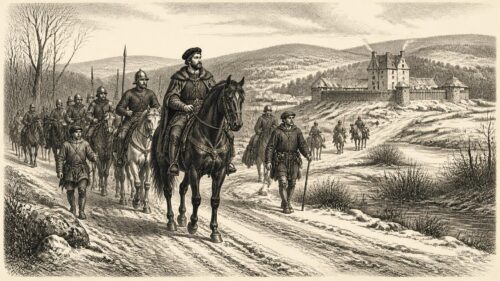
Ireland in 1523 was governed through competing authorities whose interests extended beyond Dublin. Henry VIII’s administration depended upon negotiation with magnates, towns and Gaelic rulers. Gerald FitzGerald, ninth earl of Kildare, returned from England, renewing his rivalry with the lord deputy, Piers Butler, earl of Ormond. James FitzGerald, earl of Desmond, pursued connections with France, while northern dynasties fought and bargained largely beyond government control. Kildare’s return was intended to strengthen the lordship’s exposed frontier, yet intensified political competition. The year illustrates how royal appointments, rivalries, foreign diplomacy and regional military power shaped the limits of English authority in Ireland.
Lifford’s Autumn Surety
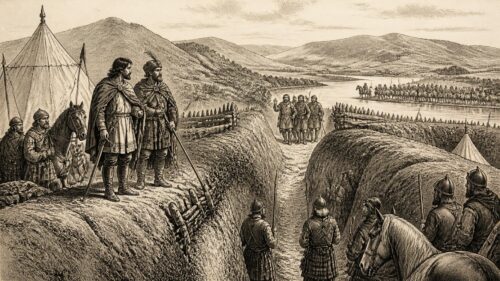
In 1524, severe weather and cattle losses heightened insecurity across Ireland, where raiding, dynastic conflict and magnate rivalry shaped political life. Henry VIII restored Gerald FitzGerald, ninth earl of Kildare, as lord deputy, ending Piers Butler’s tenure but not their feud. Allied with Conn Bacach O’Neill, Kildare campaigned in Tír Chonaill against Aodh Dubh O’Donnell. After night fighting, negotiation produced a peace guaranteed by Kildare and reinforced by spiritual kinship. Violence nevertheless continued in Ulster, Breifne and Munster. Annalistic obituaries stressed hospitality, patronage and charity as essential marks of lordship, while warfare’s costs fell upon rural communities throughout the island.
Dublin’s Failed Great Council
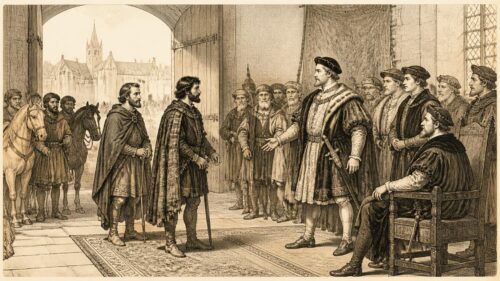
In 1525, Gerald FitzGerald, ninth earl of Kildare and lord deputy, convened a great Dublin council between Conn Bacach Ó Néill and Aodh Dubh Ó Domhnaill, but failed to resolve their Ulster rivalry over Inishowen. Ó Domhnaill subsequently raided Tír Eoghain, before autumn arbitration by Kildare and Manus Ó Domhnaill produced a temporary peace. Kildare also faced conflict with Piers Butler, while Waterford defended its privileges amid anticipated parliamentary action. The murder of Bishop Maurice Doran of Leighlin prompted brutal reprisals. Annals recorded deaths, hospitality, learning and religious observance, demonstrating that Dublin’s authority depended upon negotiation with powerful autonomous lordships.
Port na dTri Namhad
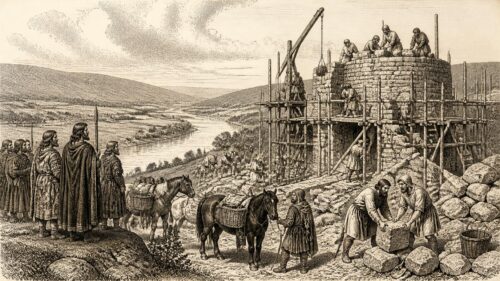
In 1526, Ireland’s fragmented political order was shaped by failed diplomacy, raiding, fortification and contested successions. Gerald FitzGerald, earl of Kildare, unsuccessfully mediated between Conn Bacach O’Neill and Manus O’Donnell, whose rivalry centred on the Tír Chonaill–Tír Eóghain frontier and O’Donnell’s castle at Port na dTri Namhad. O’Donnell forces raided Tír Eóghain and defeated opponents in Connacht, securing hostages and destroying castles while warfare devastated crops and communities. Succession disputes followed deaths among O’Reilly, O’Dochartaigh and O’Rourke kindreds; church office also provoked violence. Severe weather killed raiders. Kildare’s English summons weakened mediation, leaving conflicts unresolved across the island’s competing lordships.
Lifford’s Summer Castle
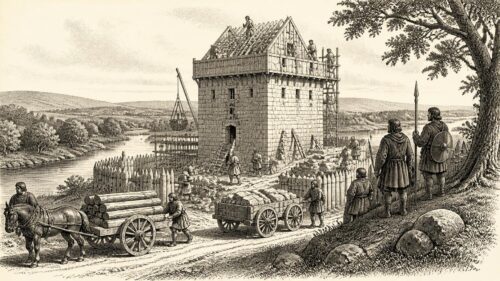
In 1527, Ireland remained divided among the Dublin administration, Anglo-Irish magnates and Gaelic lordships. Gerald FitzGerald, earl of Kildare, and James Butler travelled to England amid rivalry, while fighting continued between Desmond and Butler interests in Munster. Manus O’Donnell completed Lifford Castle during war with Con Bacach O’Neill, strengthening a contested Ulster frontier. O’Donnell’s coalition ravaged Moylurg and captured several castles; Castlereagh later surrendered after a prolonged siege and famine. Successions in Fermanagh and Tirerrill demonstrated contested lordship. Annals also commemorated scholars, physicians, charitable women and Edmund Butler’s consecration as archbishop of Cashel, revealing cultural and ecclesiastical institutions amid warfare.
Delvin’s May Captivity
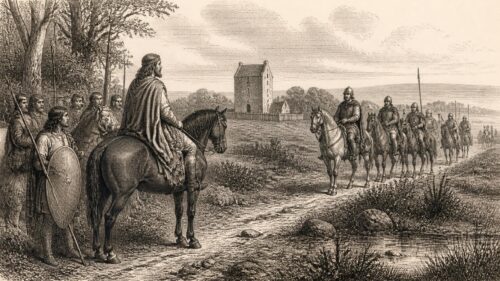
In 1528 Richard Nugent, Lord Delvin, vice-deputy during Kildare’s detention in England, was captured by Brian Ó Conchobhair Fáilghe after challenging the black rent paid by Meath communities. His imprisonment until February 1529 exposed Dublin government’s military weakness and dependence on magnates. Kildare’s continuing rivalry with Piers Butler, later earl of Ossory and deputy, deepened instability, while John Alen became chancellor after Hugh Inge’s death. Across Ireland, successions in Thomond, Bréifne and Moylurg, Uí Néill violence, Scottish-linked campaigning, learned and religious patronage, charitable hospitality, and a destructive pre-Christmas storm demonstrated resilient regional political, cultural and economic life beyond the Pale.
Castleforward’s Demolition
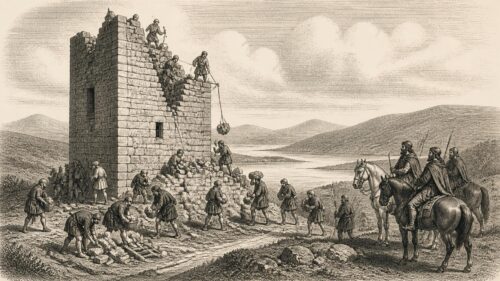
In 1529, local violence, succession and cautious royal intervention shaped Ireland. In Tír Chonaill, Manus Ó Domhnaill captured and demolished Castleforward after a Scottish MacDubhghaill was killed there, weakening a rival power centre amid family conflict. Annals recorded killings and feuds across Ulster, involving lords, clergy and ruling kindreds. James fitz Maurice FitzGerald, earl of Desmond, died without a legitimate son, succeeded by his elderly uncle Thomas, whose alliances helped secure Munster interests. Sir William Skeffington negotiated peace between Desmond and Ossory while assessing royal authority. Learned jurists and poets also died, demonstrating the continuing importance of Gaelic professional culture.
Donegal’s Franciscan Chapter
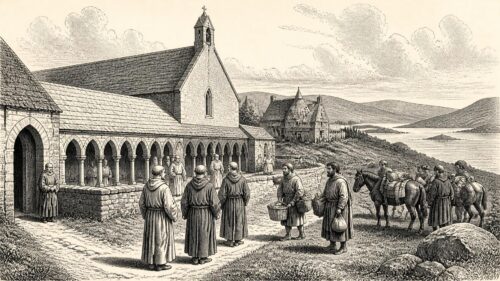
In 1530, Ireland remained divided among the Pale, Anglo-Irish magnates and Gaelic lordships. Gerald FitzGerald, ninth Earl of Kildare, returned from England alongside the new deputy, Sir William Skeffington, whose government relied uneasily on Kildare’s influence. Their forces compelled midland submissions from the O’Mores and O’Connors. Aodh Dubh O’Donnell raided Connacht and Breifne, extracting tribute, burning settlements and making temporary peace. Donegal hosted a Franciscan chapter lavishly supported by O’Donnell patronage. Annals also record deaths, dynastic killings and hospitality, illustrating authority founded on armed followings, negotiated settlements, religious patronage and household generosity rather than stable national rule throughout the island.
Kinard’s Unfinished Advance
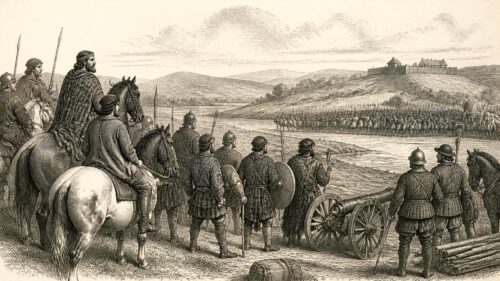
In 1531, Sir William Skeffington’s government, supported by the earl of Kildare and Aodh Dubh O’Donnell, campaigned in Tír Eoghain against Conn Bacach O’Neill after O’Donnell’s submission at Drogheda. The coalition devastated territory and halted at Kinard, but failed to secure O’Neill’s defeat or lasting royal control. Ulster remained divided: O’Donnell faced conflict with his son Manus, while lordship disputes, raids, captivity and fosterage shaped local power. Skeffington’s authority also weakened as relations with Kildare deteriorated and parliament rejected a subsidy. Annalistic obituaries nevertheless record medical learning, hospitality and patronage, underscoring a society sustained by networks of care alongside warfare.
Manus O’Donnell’s Columba
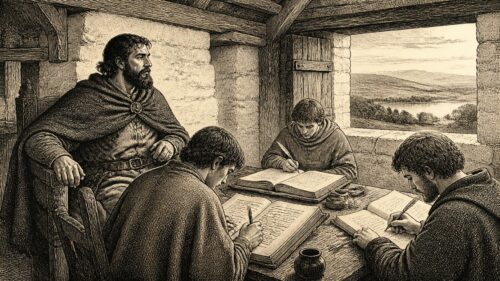
In 1532 Gerald FitzGerald, ninth earl of Kildare, regained the deputyship, yet royal authority remained dependent on alliances with Anglo-Irish and Gaelic lords. Campaigning in Ulster, disputed in date between 1531 and 1532, devastated Tír Eógain through burning, plunder and cattle seizure. In Ely, Kildare supported his son-in-law Ferganainm Ó Carroll during the Birr succession struggle, where he was seriously wounded by gunfire. Feuds continued across Ossory, Connacht and the north-west, occasionally violating sanctuary. Amid violence, Manus Ó Domhnaill compiled Betha Colaim Chille at Lifford, affirming Catholic learning, Irish vernacular culture, dynastic prestige and Colum Cille’s regional importance, lasting significance.
Shinrone’s Geraldine Siege
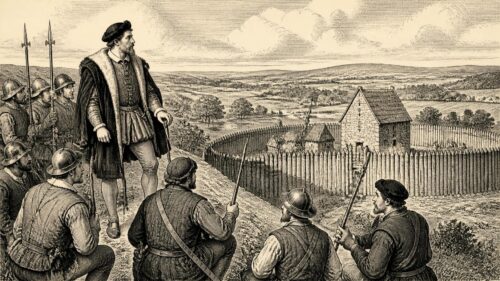
In 1533, Ireland was governed through competing crown, Gaelic and Anglo-Irish powers rather than uniform Dublin rule. Lord Deputy Gerald FitzGerald aided Ferganainm Ó Cearbhaill, capturing Shinrone Castle in Éile, yet a rival claimant soon emerged, exposing Geraldine dependence on alliances and rivalry with the Butlers. Annals record night seizures of Sligo and Ardnaree, punitive raids, executions and violent successions across Moylurg, Firceall and Clannaboy. These conflicts disrupted communities but lordship also rested on hospitality, learning, agriculture and church organisation. Kildare’s Dublin parliament regulated corn disputes within limited crown territory. Ireland remained Catholic, although Henry VIII’s changing position foreshadowed rupture.
St Mary’s Abbey Renunciation
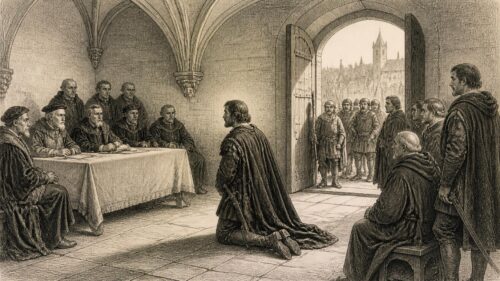
In 1534, Thomas FitzGerald, vice-deputy and heir to Kildare, renounced Henry VIII at Dublin’s St Mary’s Abbey after his father Gerald was recalled and imprisoned in London. Claiming papal loyalty, Thomas besieged Dublin Castle, mobilised Geraldine, Gaelic and Pale support, and sought foreign aid, but faced opposition from towns, Butlers and royal officials. War brought raiding and devastation across surrounding regions; Archbishop John Alen was murdered after capture near Clontarf. Gerald died in the Tower in September, making Thomas earl. Sir William Skeffington’s October arrival with a royal army shifted the balance, leaving Thomas entrenched at Maynooth under a truce.
Maynooth’s Broken Pardon
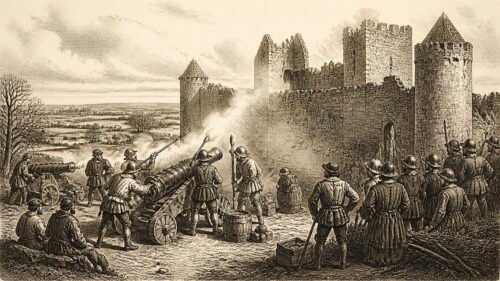
In 1535, the Kildare rebellion collapsed through military defeat, fractured alliances and Thomas FitzGerald’s surrender. Crown artillery captured Maynooth Castle in March, after which surrendered defenders were executed, creating the notorious memory of Maynooth’s pardon. Gaelic allies submitted or negotiated as royal pressure intensified. Leonard Grey received Thomas’s surrender in August and escorted him to England, where imprisonment preceded execution in 1537. Government forces also captured Dungarvan, while northern agreements revealed dependence on powerful local lords. Skeffington’s death closed a campaign. Victory dismantled Geraldine power without establishing secure government across Ireland, leaving authority contested through rivalries, coercion and fragile bargains.
Carrigogunnell’s Broken Bridge
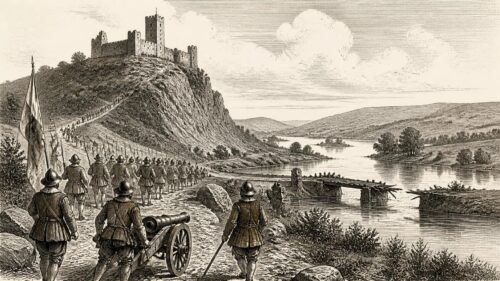
In 1536, Tudor authority in Ireland expanded after the Kildare revolt through Leonard Grey’s appointment as lord deputy, the Dublin parliament and military campaigning. Parliament asserted Henry VIII’s royal supremacy over the Irish church, attainted Kildare interests and initiated changes to religious property, though enforcement remained limited and monastic dissolution was incomplete. Grey captured Carrigogunnell Castle and destroyed its bridge, exploiting regional rivalries. Elsewhere, Connacht experienced succession disputes, raids, artillery warfare, sanctuary violations and the burning of Dromahair monastery. Plague, smallpox and illness compounded instability, while deaths of lords and poet Tomás Ó hUiginn marked cultural loss. Local lordship remained.
Daingean and Kilmacrennan
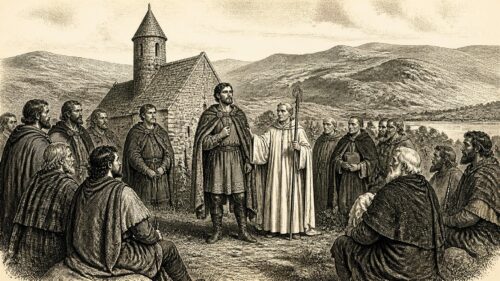
In 1537, Henry VIII’s government intensified its authority in Ireland, executing Silken Thomas FitzGerald and five uncles, investigating Lord Deputy Leonard Grey, and enacting Reformation statutes asserting royal supremacy, restricting Rome and enabling religious suppression. Their impact remained uneven beyond government-controlled districts. Grey’s expedition demolished Daingean castle in Offaly, yet O’Conor Faly recovered power. In Tír Chonaill, Aodh Dubh O’Donnell died and Manus O’Donnell was inaugurated at Kilmacrennan, though rivalry persisted; Manus subsequently campaigned in Lower Connacht. Conflict also disrupted Clandeboye and Fermanagh, where Cuconnacht Maguire was killed. Deaths, warfare and legislation reshaped lordships, but Gaelic structures proved resilient locally.
Grey’s Galway Progress
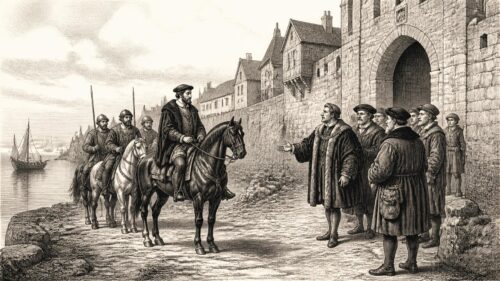
In 1538, Lord Leonard Grey extended Tudor influence through an armed western progress, securing submissions, attacking Claregalway Castle and visiting Galway, where civic hospitality reflected loyalty. Yet authority remained contingent: regional rulers used crown alliances for dynastic rivalries, while warfare continued in Connacht, Tyrone, Fermanagh and Wicklow. Grey’s support helped Ulick Burke dominate Clanricarde, and Thomond politics shifted around O’Brien competition. Religious reform advanced unevenly through Browne’s contested visitation and monastic suppressions, while Newry was remodelled rather than dissolved. Piers Butler regained Ormond’s earldom, and urban education and patronage persisted. Ireland remained politically fragmented, governed through force, negotiation and bargains.
Bellahoe and Holy Trinity
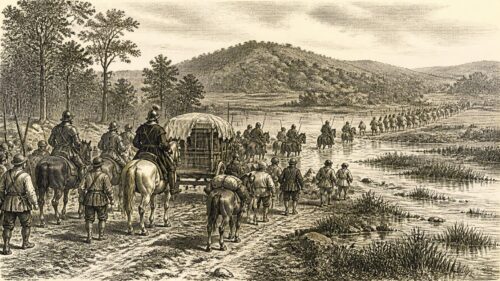
In 1539, Conn Bacach O’Neill and Manus O’Donnell allied, solemnising their pact at a Donegal friary, while Manus consolidated influence through tribute, hostages and agreements. Their raid through Meath reached Tara but ended in defeat when Lord Deputy Leonard Grey intercepted their returning force at Bellahoe. The battle demonstrated Dublin’s capacity to punish incursions, though northern lordships remained resilient. Meanwhile, Henrician commissioners advanced religious reform, suppressing houses, redistributing property and remodelling Holy Trinity, Christ Church, as a secular cathedral. Deaths, disputed successions and destructive June storms further exposed widespread persistent insecurity. Royal authority and reform remained uneven outside government-controlled districts.

Manus O’Donnell’s Bristol Letter
In 1540 Ireland remained divided between Tudor authority and powerful Gaelic lordships. Leonard Grey left office and was arrested, while Sir Anthony St Leger became Lord Deputy, pursuing cooperation rather than immediate universal warfare. Manus Ó Domhnaill sent Henry VIII an apologetic letter via Bristol, signalling negotiation without submission. Crown commissioners surveyed dissolved monasteries, redirecting wealth where English power reached, while Franciscan patronage survived in Thomond and violence accompanied suppression at Monaghan. Gaelic rulers built castles, conducted campaigns, took hostages and fought dynastic conflicts. Thus, administrative reform, religious change, Irish Sea diplomacy and regional warfare coexisted, leaving Tudor control incomplete.
St Leger’s Kingly Title
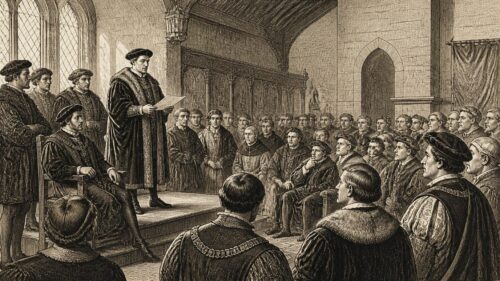
In 1541, Dublin parliament declared Henry VIII king, rejecting papal claims and linking Irish kingship to England’s crown. Sir Anthony St Leger pursued surrender and regrant, granting titles to Edmund Butler and Barnaby Fitzpatrick, securing pardons and agreements and seeking allegiance from Gaelic and Anglo-Irish rulers. Crown authority nevertheless remained concentrated around the Pale. An autumn Ulster campaign brought Conn Bacach O’Neill’s submission, while Manus O’Donnell sought recognition. Dissolution of religious houses transferred property, affecting communities and economies. Proclamations and safe conducts reveal governance. The act created a legal kingdom, but control still depended on negotiation, force and local power.
Conn Bacach at Greenwich
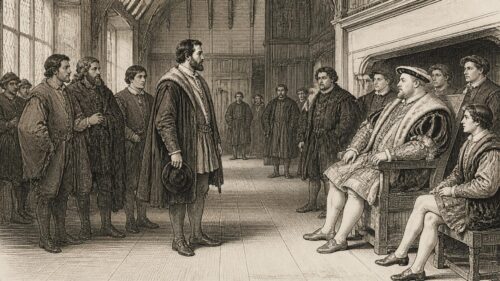
In 1542, Henry VIII’s Irish monarchy relied on negotiated submission rather than direct control. Conn Bacach O’Neill travelled to Greenwich, renounced his Gaelic title’s authority, and became earl of Tyrone; Matthew O’Neill’s recognition as heir intensified succession conflict. Parliament met at Limerick, while Murchadh O’Brien, Ulick Burke and the earl of Desmond engaged with royal policy, though promised earldoms for O’Brien and Burke followed in 1543. Campaigns and alliances demonstrated limited royal reach. Religious change included friary suppression, marriage legislation, and a Jesuit mission, yet Gaelic learning and worship endured. The kingdom remained diverse, contested, and dependent on local lordships.
Greenwich’s Thomond Bargain
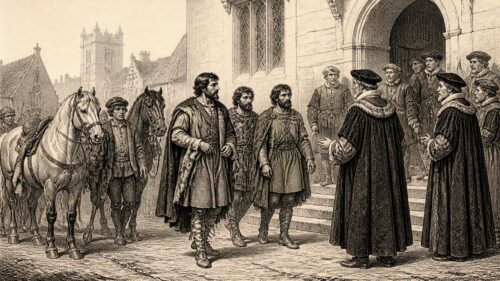
In 1543, Henry VIII’s government sought to reshape Irish lordship through negotiation, royal recognition and noble titles. Gaelic and Gaelicised magnates travelled to Greenwich, where political bargains connected local authority to the Tudor crown. Rival kinsmen negotiated settlements, while the vacancy at Armagh exposed disputes over religious jurisdiction. Anthony St Leger’s administration promoted incorporation by making rulers titled royal subjects. These arrangements did not establish uniform government, erase Gaelic institutions or remove dynastic competition. Instead, the year reveals a monarchy extending its claims through agreements that depended on local interests, personal allegiance and the uneven practical reach of Dublin’s administration.
Clanricarde’s Limerick Council
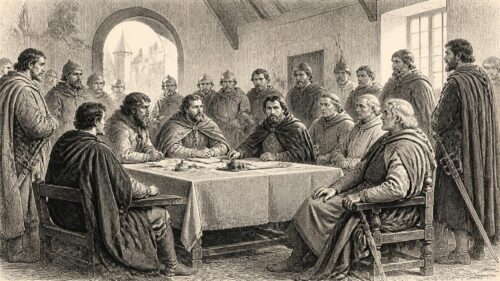
In 1544, Tudor authority in Ireland depended on negotiation rather than uniform control. During Sir Anthony St Leger’s absence, Lord Justice William Brabazon managed finance, military levies and invasion rumours, while Irish kern joined Henry VIII’s war against France and Scotland. Local conflicts persisted: English forces aided O’Donnell’s siege at Lifford, and warfare engulfed Ulster through raids, castles, hostages and Scottish mercenaries. At Limerick, a council addressed the Clanricarde succession after Ulick Burke’s death, recognising Richard Burke but empowering a rival custodian, leaving conflict unresolved. Former monastic property passed to crown servants, illustrating primarily economic, rather than immediate religious, transformation.
Hacketstown and White Pence
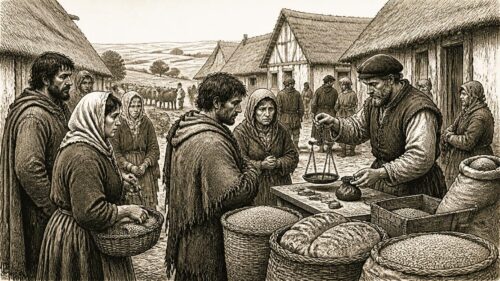
In 1545, Ireland experienced interconnected local conflicts, Tudor military demands, scarcity and religious complexity. Cathaoir MacMurrough Kavanagh defeated rivals near Hacketstown, while An Calbhach O’Donnell strengthened his position through dynastic violence in Tír Chonaill. Elsewhere, disputes involving Sligo, Moylurg and O’Rourke reflected fractured lordship. Henry VIII ordered Irish troops for Scotland under Ormond, exposing rivalry between Ormond and Lord Deputy St Leger. Annals recorded severe dearth and costly bread in Connacht and Meath amid debased currency. Papal appointment in Killala, changes at Christ Church, and the death of scholar Piers Ó Muirgheasa demonstrate enduring ecclesiastical and learned traditions across Ireland.
Inis Saimer and Base Coin
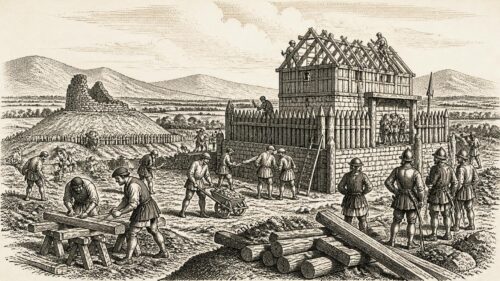
In 1546, Henry VIII's Irish government faced factional conflict and uneven authority. Sir Anthony St Leger defeated the Earl of Ormond in disputes over regional power, though Ormond's death soon exposed continued dependence on magnates. A fort at Daingean extended crown influence into the midlands, provoking annalistic accounts of destruction. In Ulster, Donnell O'Donnell's murder at Inis Saimer violated guarantees of protection and reflected enduring Gaelic politics. Debased copper coinage affected exchange, while episcopal appointments asserted royal control over the Church. The imprisonment of poet-teacher Teige O'Coffey highlighted pressures on bardic learning. These events reveal a kingdom undergoing contested transformation.
Brabazon’s Athlone Works
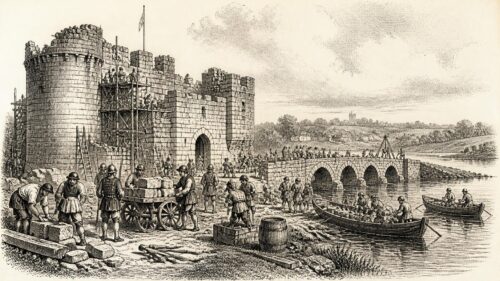
In 1547, Edward VI’s accession left Sir Anthony St Leger governing Ireland through system of negotiated loyalties. Dynastic conflict in Laois and Offaly sparked the Midland Rebellion, drawing in Ó Mórdha and Ó Conchobhair Fáilghe forces and exposing limits of conciliation. Reinforcements under Sir Edward Bellingham supported campaigns, while criticism of St Leger intensified. William Brabazon repaired Athlone Castle, strengthening a Shannon crossing. Dublin’s St Patrick’s Cathedral was suppressed and its assets redistributed, though religious reform remained uneven. A storm and cattle raiding illustrated vulnerability. By year’s end, warfare, financial scrutiny and division pushed Tudor government towards garrisons and force.
Fort Protector Rises
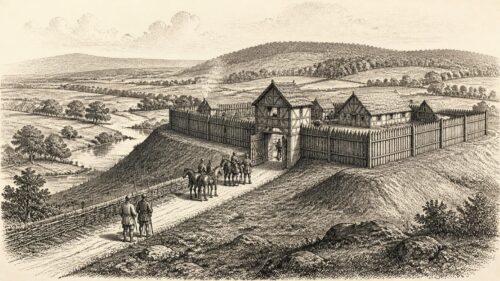
In 1548 Sir Edward Bellingham replaced Anthony St Leger as lord deputy, shifting Tudor policy from accommodation towards military occupation. Fort Protector, established in Leix on the future site of Portlaoise, provided a permanent garrison base against the O’Mores and O’Connors. Cahir Roe O’Connor was executed, while Brian O’Connor Faly and Giolla Pádraig O’More submitted, were taken to England, and the latter died there. Cess and the reopened Dublin mint supported government. Bellingham intervened in Wicklow, detained Desmond, while Ulster remained divided by conflict. Edwardian religious reforms advanced unevenly. Tudor power remained limited but relied on garrisons, coercion and confiscation.
Brabazon’s Limerick Court
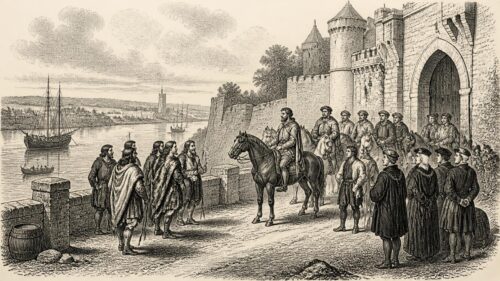
In 1549, Tudor authority in Ireland rested on negotiation, military pressure and limited resources. William Brabazon replaced Edward Bellingham as lord justice and held a major court at Limerick, where regional lords accepted a contingent peace secured by civic and aristocratic guarantees. Conflict continued across the midlands and west through castle seizures, raids, killings and disputed successions within Gaelic kindreds. Gunpowder caused Dermot O’Sullivan’s death, illustrating changing warfare. French envoys explored an Ulster alliance through Lough Foyle but found Gaelic divisions. Religious reform remained uneven, while local lordship, kinship and control of land shaped daily political realities beyond royal centres.
Powell’s July Patent
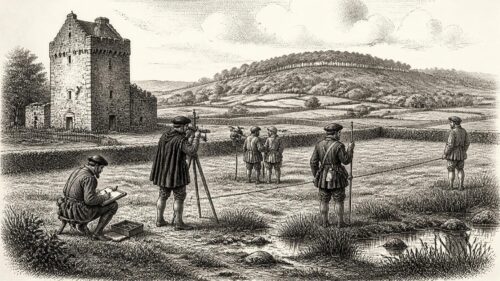
In 1550, Sir Anthony St Leger restored negotiation to Tudor Irish policy, promoting surrender and regrant despite disputes favouring military coercion. French approaches in Ulster exposed fragmented lordships and competing dynastic interests rather than a united anti-English alliance. The crown ordered surveys and proposed leasing in Leix and Offaly, beginning systematic plans for territorial intervention without securing control. A proposed Irish mint reflected fiscal ambitions. Humphrey Powell received funding for a Dublin printing press, linking Edwardian religious reform with state communication, though printing and the English liturgy began later. Language, local power and limited resources constrained government ambitions across Ireland.
Powell’s Dublin Prayer Book
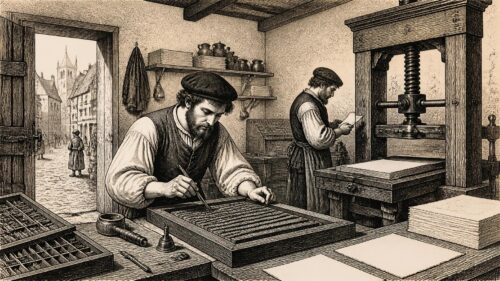
In 1551, Ireland’s overlapping jurisdictions exposed the limits of Edward VI’s government. Dublin and the Pale remained the strongest centres of royal authority, while Gaelic rulers and aristocratic lordships retained armed followers, local law and diplomatic connections. The printing of an English prayer book in Dublin gave religious reform a cultural landmark. A change of lord deputy altered government leadership, while intervention in Ulster contributed to an O’Neill succession conflict. Together, print, appointment and warfare revealed an administration seeking wider control without commanding a unified island. Religious policy and dynastic rivalry therefore developed within enduring regional divisions and negotiated authority.

Clonmacnoise and Belfast
In 1552 Tudor authority in Ireland expanded through military expeditions, administrative reforms, currency measures and ecclesiastical appointments, yet remained limited and contested. Soldiers from Athlone garrison plundered Clonmacnoise, stripping its churches of bells, books, images and valuables. In Ulster, Sir James Croft’s campaigns against O’Neill forces and Scottish allies reached Belfast, where a castle was fortified, but gained neither peace, hostages nor submission. Financial difficulties prompted currency reform and mining inquiries. Protestant nominees Hugh Goodacre and John Bale were selected for Armagh and Ossory, although religious change remained uneven. Croft’s departure brought joint rule by Thomas Cusack and Gerald Aylmer.

Donal O’Brien’s Thomond
In 1553, Donough O’Brien’s death provoked a violent Thomond succession dispute, as his brother Sir Donal displaced his teenage son Conor despite Tudor inheritance arrangements. Donal demonstrated regional power through campaigning and negotiations at Leix, amid wider conflicts in the midlands and Connacht. Mary Tudor’s accession redirected Irish government towards Catholic restoration, although change remained gradual and uneven. George Dowdall regained recognition as archbishop of Armagh, while Protestant bishop John Bale fled Ossory. Sir Anthony St Leger returned as lord deputy, charged with reconciling religious restoration, fiscal restraint, military reduction, plantation and expanded crown authority. Chronological uncertainties complicate annalistic claims.

Gerald FitzGerald’s Return
In 1554 Queen Mary restored Gerald FitzGerald, surviving Kildare heir, as earl of Kildare and baron of Offaly, symbolising Geraldine rehabilitation while retaining tighter Tudor supervision. His return accompanied military cooperation with Lord Delvin against Clandeboye amid O’Neill dynastic conflict. Elsewhere, O’Brien campaigns, Burke alliances and a MacSweeney battle demonstrated persistent local warfare, raiding and divided kindreds. Marian religious restoration deprived Edward Staples of Meath, advanced William Walsh, and promoted Catholic discipline under George Dowdall. Dublin’s legal administration continued through new judicial appointments. Deaths of Gaelic lords and poet Tadhg Ó Cobhthaigh underscored Gaelic power, cultural memory and learned traditions.

Gonna Cam at Rosreagh
In 1555 An Calbhach Ó Domhnaill, aided by Archibald Campbell’s Scottish troops and artillery, overthrew and imprisoned his father Manus, lord of Tír Chonaill, initiating prolonged conflict and devastation in Donegal. The coup demonstrated Gaelic rulers’ reliance on maritime alliances, mercenaries, castles and gunpowder. Elsewhere, Hugh Ó Néill of Upper Clandeboye was killed by Scottish gunfire, amid enduring MacDonnell expansion in Ulster. Dublin’s authority remained limited, while annalistic dating of official campaigns requires caution. Marian restoration included papal recognition of Philip and Mary and St Patrick’s cathedral’s revival. Notices from Thomond and Youghal reveal negotiated regional politics and overseas links.

Druim-dá-Mhaighe Hostages
In 1556, changes in government and regional conflicts revealed Tudor ambitions alongside continuing Irish political diversity. Thomas Radcliffe replaced Anthony St Leger as lord deputy, signalling a stronger emphasis on military intervention. Northern campaigning and the seizure and release of midland hostages demonstrated the importance of coercion and negotiation. A completed castle, an encounter in Thomond and a leading poet’s death illuminate developments beyond Dublin. Surviving evidence remains uneven, requiring caution about connections between events. The year nevertheless shows a government pursuing firmer control while Gaelic lords, Old English magnates, religious institutions and learned families retained authority in their communities.
Meelick Guns, New Shires
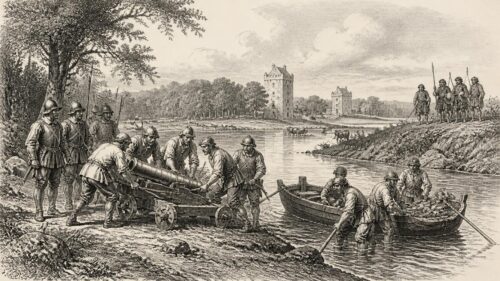
In 1557, Tudor policy combined legislation, plantation and military coercion to extend royal control across Ireland. Parliament created Queen's County and King's County from Laois and Offaly, planned Maryborough and Philipstown, restored Catholic arrangements, and adjusted Poynings' Law, while protecting former church lands. Sussex's campaigns against O'Connor Faly and neighbouring lords used artillery, garrisons, hostages and executions, devastating communities. Agreements such as William O'Carroll's bound Gaelic leaders to service and payments. In Ulster, Shane O'Neill's rivalry with Calvagh O'Donnell ended in defeat, while Sussex's sack of Armagh failed to secure Tyrone. New shires proclaimed authority, but resistance and violence persisted.
Conor O’Brien Restored
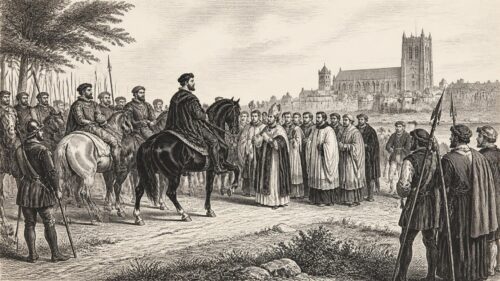
In 1558, Ireland’s politics were shaped by dynastic struggles, crown intervention and Mary I’s death. Thomas Radcliffe, earl of Sussex, installed Conor O’Brien as earl of Thomond, using military force against his uncle Sir Donal, while leaving local Gaelic authority intact. Gerald FitzGerald inherited Desmond after his father’s death, amid unresolved tensions with Ormond and the government. In Ulster, Shane O’Neill had his crown-backed half-brother Matthew killed, intensifying the Tyrone succession dispute. Sussex’s unsuccessful Kintyre expedition exposed Scottish-Irish connections. Elizabeth I’s accession opened a new era, but Ireland retained Mary’s religious settlement largely unchanged in practice until legislation in 1559.
Conn Bacach’s Succession
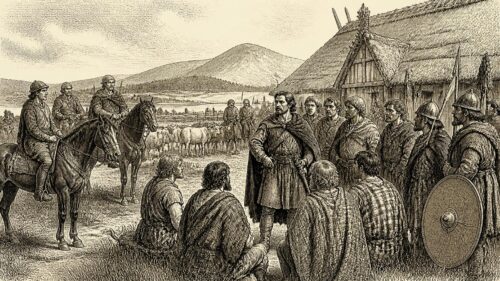
In 1559, Conn Bacach O’Neill’s death triggered a succession crisis between Shane, chosen The O’Neill under Gaelic custom, and his grandson Brian, heir under an English patent. Sir Henry Sidney negotiated a temporary peace, acknowledging Shane’s effective power while Elizabeth’s government postponed a decision. Crown administration expanded through appointments, monetary measures and urban defence, yet remained weak beyond the Pale. Religious change was initially confined largely to official circles before Irish legislation in 1560. In Thomond, rival noble alliances fought around Inchiquin, showing persistent regional instability. Trade, provisions and fortifications preoccupied towns. Ireland remained fragmented, neither rebellious nor securely governed.

Challoner’s Dublin Office
In 1560, Elizabeth I’s Irish government strengthened its Dublin machinery by appointing John Challoner secretary and signet keeper, while parliament enacted the Acts of Supremacy and Uniformity. These measures established ecclesiastical authority and prescribed reformed worship, although Latin remained permissible where English was unavailable. Their enforcement was limited by weak institutions, linguistic divisions and restricted Crown power beyond the Pale. Shane O’Neill’s Ulster progress frustrated plans to install Brian O’Neill, while Desmond and Ormond avoided battle in Munster. Raids, maritime disaster, grain controls, military hosting and base coinage revealed an island shaped by regional lordships, insecurity, negotiation and material constraints.
Armagh’s Besieged Cathedral
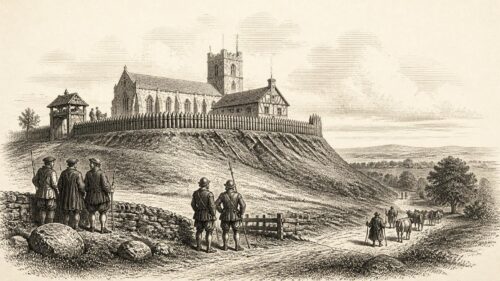
In 1561, Shane O’Neill’s contest with the Dublin administration over authority in Ulster became Ireland’s principal political crisis. After capturing An Calbhach O’Donnell in May, O’Neill disrupted a planned alliance of Ulster and Scottish opponents. Sussex proclaimed him traitor, marched north, and fortified St Patrick’s Cathedral, Armagh, as a royal garrison. O’Neill’s forces besieged the post and inflicted a reverse on crown troops during their July withdrawal. A September expedition to Lough Foyle also failed to establish control. Negotiations followed, leading to O’Neill’s safeguarded journey to England in December. Coinage proclamations and correspondence revealed wider governmental, economic and diplomatic pressures.
Whitehall’s O’Neill
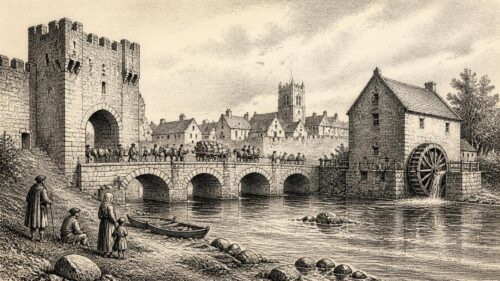
In 1562 Shane O’Neill travelled to Whitehall, submitting to Elizabeth I while contesting the crown’s control over the Tyrone succession. He asserted authority derived from Gaelic inauguration as the O’Neill; ministers delayed any settlement, fearing his power and the precedent. During negotiations, Brian O’Neill, rival Dungannon claimant, was killed by Turlough Luineach, leaving young Hugh heir in English eyes. Shane’s subsequent raids devastated neighbouring lordships, especially Fermanagh, exposing limits of crown protection. Elsewhere, Brian Ballach O’Rourke’s death prompted succession in West Breifne, while Galway’s new bridge, mill and gate displayed urban investment, trade and defence within Ireland’s varied political landscape.
The Drumcree Compact
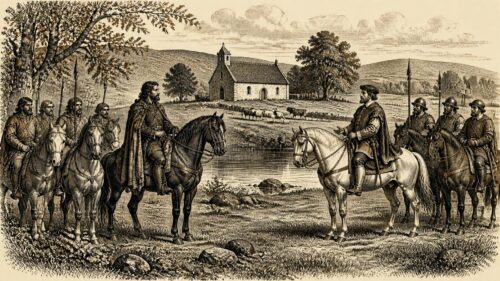
In 1563, Sussex’s Ulster campaign against Shane O’Neill faltered through inadequate supplies, difficult terrain and limited Pale support. His forces reached Armagh, crossed the Blackwater and seized cattle, but failed to force battle or diminish O’Neill’s authority. Negotiations led by Thomas Cusack produced September’s Drumcree Compact, recognising O’Neill as lord O’Neill, promising conditional confirmation of Tyrone, accepting customary leadership claims and removing Armagh’s garrison. Yet parliamentary obstacles and English reservations made it temporary. The settlement demonstrated Tudor dependence on accommodation with Gaelic power. Conflict, rural disruption and uncertainty over Ulster’s governance persisted, while Christopher Nugent’s Cambridge matriculation reflected cultural connections.
Bann Truce and Donegal Tower
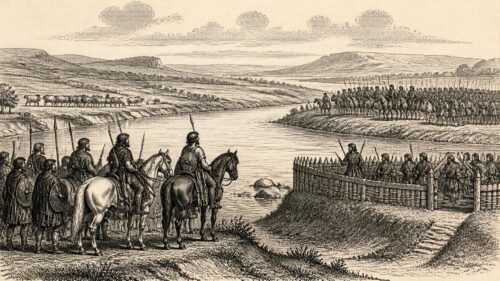
In 1564, Ireland experienced interconnected struggles over lordship, succession, tribute and fortified places rather than a unified war. Shane O’Neill, strengthened by Crown recognition but constrained by unresolved negotiations and Dublin’s weakness, raided Tír Chonaill, exploited O’Donnell divisions at Donegal, supported Hugh Boy O’Rourke in Breifne, and fought the MacDonnells near the Bann. His setback and ensuing truce demonstrated limits to his power; decisive MacDonnell defeats came later. In Thomond, rival O’Briens, mercenaries and raids devastated communities, cattle and church resources. Religious institutions remained politically important, while William Bathe’s birth reflected Dublin society. The year intensified conflicts without resolving them.
Glentaisie and Affane
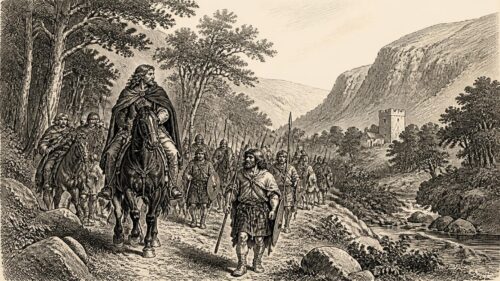
In 1565, Ireland remained divided among powerful Gaelic and Old English lordships despite Tudor claims. At Affane, Ormond defeated and captured Desmond during a dispute over Déise, prompting concern at magnates waging private war. In Ulster, Shane O’Neill crushed the MacDonnells at Glentaisie, extending influence through garrisons and settlement, and alarming Dublin and London. The Crown advanced surrender and regrant by creating Donal MacCarthy Mór earl of Clancare, while Henry Sidney’s confirmation signalled intervention. Catholic organisation persisted through Jesuit schooling and Miler Magrath’s appointment. The death of scholar Tadhg Cam Ó Cléirigh also demonstrated continuing learned patronage amid political conflict.
Randolph’s Foyle Garrison
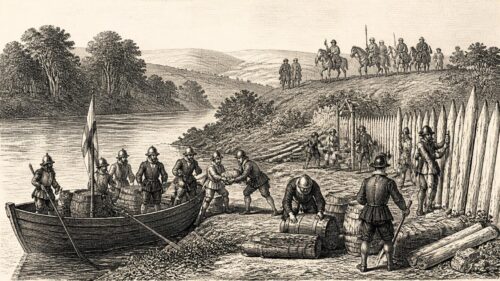
In 1566, conflict between Shane O’Neill and Elizabethan government made Ulster Ireland’s principal political and military crisis. O’Neill sought French aid, managed fraught relations with Scottish MacDonnells, was proclaimed traitor, and burned Armagh’s cathedral, a religious site also militarily contested. Lord Deputy Sir Henry Sidney campaigned through Ulster while Colonel Edward Randolph established a garrison at Derry to pressure O’Neill; Shane’s forces killed Randolph in November, exposing royal weakness. Deaths and successions among O’Donnells and Maguires reshaped regional alliances and prompted renewed raiding. The year demonstrated that crown expeditions, Gaelic lordship, local warfare, logistics, learning and landscape remained inseparably linked.
Farsetmore’s Broken Overlordship
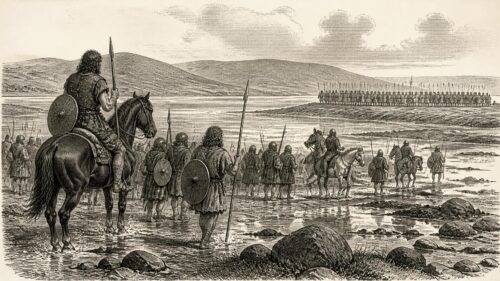
In 1567 Shane O’Neill’s Ulster overlordship collapsed after defeat by the O’Donnells at Farsetmore, where tidal conditions magnified his army’s losses. Seeking support from the MacDonnells, whom he had previously oppressed, Shane was killed during negotiations at Cushendun. His fall liberated rival lordships but did not secure English control: Turlough Luineach O’Neill faced disputed succession, while O’Donnell and MacDonnell power revived. Sir Henry Sidney’s government pursued influence through alliances, garrisons, progresses and infrastructure, yet exposed its limited reach. In Munster, Desmond’s arrest altered regional politics. Administrative and church appointments in Dublin reflected continuing Tudor reform amid uneven authority and instability.
Lixnaw’s Summer Defiance
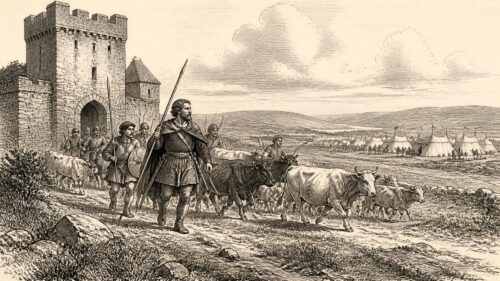
In 1568, Ireland experienced sharpening local conflicts as royal intervention, disputed land rights and absent lords weakened established authority. With the earl of Desmond imprisoned in England, James fitz Maurice unsuccessfully besieged Thomas Fitzmaurice at Lixnaw, where plunder, drought and shortages afflicted civilians and troops. Munster tensions grew through MacCarthy alliances and proposed English settlements. In Leinster, Sir Peter Carew’s successful Idrone claim and Edmund Butler’s estrangement foreshadowed revolt. Sir Henry Sidney pursued limited Ulster agreements, garrisons and transport schemes. Protestant church appointments likewise revealed the gap between crown ambition and practical control, anticipating conflicts in 1569 and subsequent upheavals.
Kerrycurrihy’s First Blow
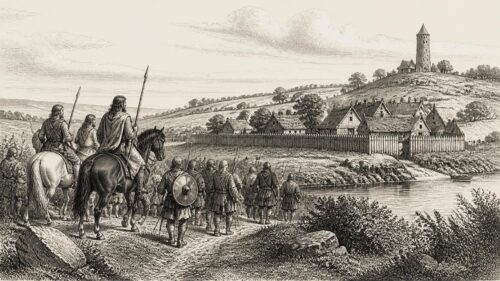
In 1569, Tudor government sought to extend Elizabeth I’s authority through parliament, military action, taxation reform and provincial administration. In Munster, James fitz Maurice Fitzgerald, Donal MacCarthy Mór and allies formed a Catholic confederacy, sought Spanish aid, and launched the first Desmond rebellion by attacking Kerrycurrihy. Religious aims overlapped with disputes over Desmond imprisonment, land, settlement and lordly power. Butler brothers raised south Leinster against government interference and Sir Peter Carew’s claims, but failed at Kilkenny. Sidney’s autumn campaign, supported by Ormond and Gilbert, broke the coalition’s momentum. Fitton’s Connacht presidency further expanded royal institutions amid widespread nationwide civilian disruption.
Shrule’s Contested Field
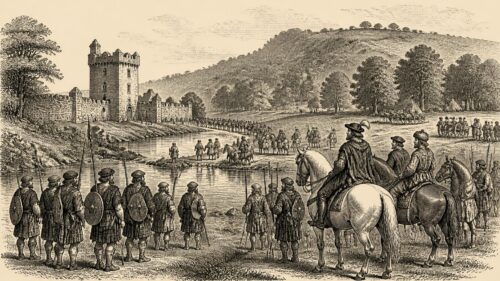
In 1570, Tudor efforts to extend authority in Ireland exposed the limits of provincial government. Sir Edward Fitton’s new Connacht presidency clashed with Conor O’Brien in Thomond, where negotiated submission followed resistance, and campaigned with Clanricarde against John Burke at Shrule. The battle involved English, Irish and Scottish troops, artillery and traditional forces; its outcome remained contested, though government troops held the field. Campaigns imposed demands through cess, supplies, hostages and destruction. In Munster, rebellion persisted despite expeditions and Desmond’s detention. Papal excommunication heightened international anxieties, yet allegiance remained shaped by kinship, territory, employment and rivalry as much as religion.

Kilmallock’s Predawn Sack
In 1571, conflict and cultural change exposed the limits of Elizabethan government in Ireland. The sack of Kilmallock, whose dating requires careful comparison of sources, revealed Munster’s vulnerability during rebellion. A battered fortress and contested lordships reflected instability, including divisions across Connacht. Meanwhile, a Dublin publication in Irish type connected religious reform with language and print. Crown appointments, prospective colonial grants and reforming commissions expressed claims, but their implementation relied on alliances, supplies and local obedience. The year therefore resists a single national narrative, showing military coercion, regional rivalry and cultural initiatives unfolding within a fragmented and contested political landscape.
Fitton’s Galway Summons
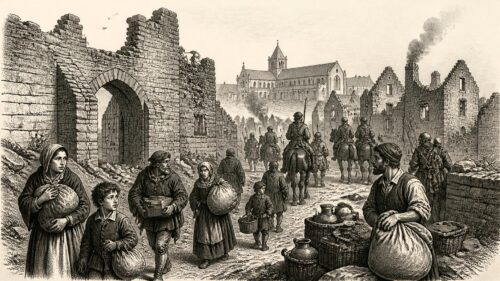
In 1572 Sir Edward Fitton’s Galway court and arrest of the earl of Clanricarde provoked Ulick and John Burke’s rebellion across Connacht. Supported by gallowglasses and Scottish mercenaries, they attacked castles, towns, trade routes and government allies, devastating Athenry and threatening Galway. The crown released Clanricarde to restore peace, but negotiation merely suspended disputes over succession and authority. Meanwhile, rebels unsuccessfully aided James fitz Maurice during the siege and eventual fall of Castlemaine Castle, a key stage in the first Desmond rebellion. Deaths of churchmen, learned men and civilians, alongside reported human and cattle mortality, reflected insecurity amid Tudor rule.

Kilmallock and Carrickfergus
In 1573, crown policy in Ireland combined pardons, restoration and colonisation, but failed to produce lasting stability. James fitz Maurice Fitzgerald’s theatrical submission to Sir John Perrot at Kilmallock temporarily checked the Desmond revolt, while Gerald Desmond’s return and escape to Munster revived Geraldine authority. Warfare continued to burden civilian communities. In Ulster, denization for Sorley Boy MacDonnell contrasted with Walter Devereux, earl of Essex’s grant to colonise Clandeboye. Resistance by Brian MacPhelim O’Neill, the burning of Carrickfergus, logistical weakness and Thomas Smith’s death exposed the venture’s fragility. These events made landholding, allegiance, religion and security contested within Elizabethan rule.
Derrinlaur’s August Reckoning
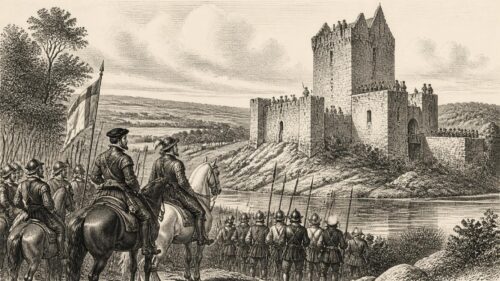
In 1574 Tudor authority faced pressures across Ireland. In Munster, Desmond’s restored influence, Geraldine Combination and his son’s seizure of Derrinlaur Castle challenged crown control; Fitzwilliam and Ormond captured the castle in August, and Desmond submitted at Cork on 2 September, though settlement remained fragile. In Ulster, Essex’s failing Clandeboye colony suffered plague, shortages and mutiny before his destructive campaigns and arrest of Sir Brian mac Phelim O’Neill, whose family and followers were killed or executed. Unpaid troops burdened Pale communities, while Catholic links endured through Edmund Tanner’s Roman appointment. The year revealed Tudor power’s coercive reach and governing limits.

Rathlin’s Empty Caves
In 1575, Walter Devereux, earl of Essex, failed to establish a durable English colony in north-east Ulster. His final campaign combined pressured diplomacy with Turlough Luineach O’Neill and brutal violence against the MacDonnells: English forces under John Norreys, supported by Francis Drake, killed hundreds of refugees on Rathlin Island. Sorley Boy MacDonnell nevertheless remained powerful, raiding Carrickfergus. Sir Henry Sidney returned as lord deputy, pursuing negotiation alongside garrisoning. Elsewhere, severe drought and disease disrupted communities around Dublin and Leinster. Meanwhile, Ó Maolconaire scribes copied an Irish manuscript at Ballycumin, demonstrating continued Gaelic learned culture amid political, environmental and military instability.
Athenry’s Unfinished Wall
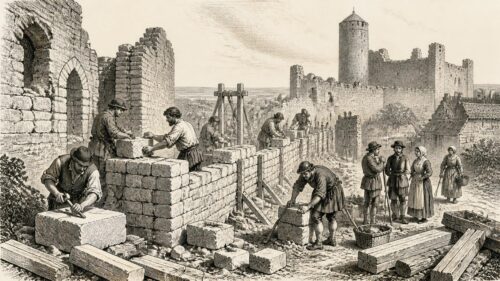
In 1576 Sir Henry Sidney extended Tudor authority through provincial journeys, submissions, hostages, county organisation and garrisons, but encountered persistent resistance. At Athenry, devastated during Burke conflict, he ordered a smaller defensible enclosure, yet reconciliation collapsed when Clanricarde’s sons defied restrictions, leaving rebuilding incomplete. Connacht’s new counties and Nicholas Malby’s command joined administration to coercive warfare. William Drury’s Munster presidency introduced courts, martial law and proposed composition, threatening lordly power. Rory Óg O’More’s resistance exposed instability in the midlands. Succession disputes, learned men’s deaths, fires and Essex’s death further marked a year in which expanding government failed to secure consent.
Naas in Flames
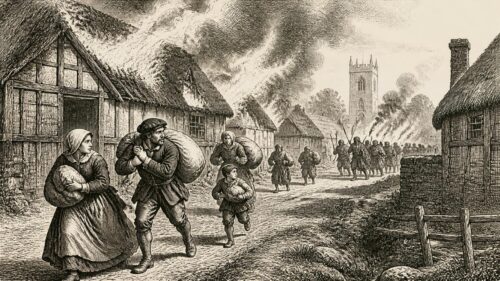
In 1577, Tudor authority in Ireland expanded through garrisons, agreements and coercion, yet faced resistance and disputes over the burdensome cess imposed on the Pale. In Leinster, Rory Óg O’More opposed plantation in Laois after Crown forces received authority to wage destructive war. His followers burned Naas in May and later captured Crown officers, while reprisals intensified. A recorded killing at Mullaghmast exposed mistrust, although claims of a larger massacre remain chronologically uncertain. Elsewhere, officials strengthened control in Thomond and negotiated revenue with Brian O’Rourke. Catholic resistance, overseas plans, religious division and comet marked continuing Leinster conflict at year's end.
Mullaghmast and Rory Óg
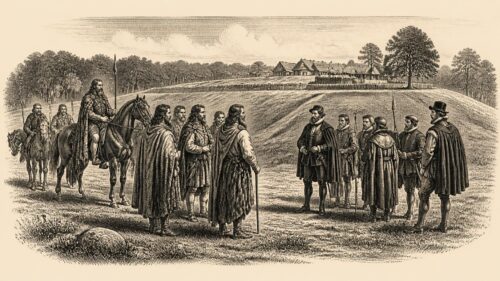
In 1578 Tudor efforts to impose plantation, taxation, courts and provincial authority provoked continuing conflict across Ireland. At Mullaghmast, Francis Cosby allegedly murdered about seventy unarmed O’Mores, deepening resistance to the Laois plantation. Rory Óg O’More raided neighbouring districts before crown-aligned forces killed him in summer; his displayed head symbolised coercion, not pacification. Fiach MacHugh O’Byrne made precarious submissions while surviving attempted ambushes. Lord Justice William Drury combined bargains, judicial tours and religious pressure, securing temporary agreements with Desmond and other lords. Conflict also touched Connacht, while learned Gaelic households endured and Smerwick Harbour received a wrecked Frobisher expedition vessel.

Smerwick’s Small Armada
In 1579, a small landing at Smerwick transformed Munster’s unrest into an international Catholic challenge to Elizabeth I’s government. James fitz Maurice FitzGerald returned from continental exile with Spanish and Italian soldiers, papal support and hopes of assistance. Their limited force mattered chiefly for the alliances and expectations it represented. Local grievances could now connect with European religious conflict. Gerald FitzGerald, earl of Desmond, hesitated before entering open rebellion, widening the crisis. The year marked the beginning of the Second Desmond Rebellion, linking regional lordship, exile politics and overseas intervention in a struggle with increasingly destructive consequences for Munster’s communities.
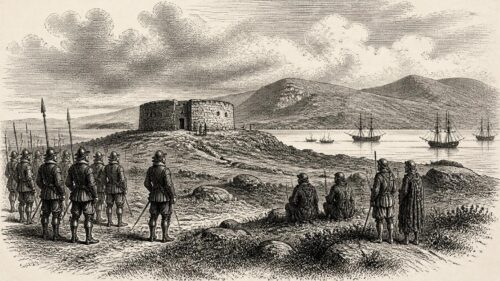
Dún an Óir’s Surrender
In 1580, the Second Desmond Rebellion widened into a multi-regional and international crisis. Pelham and Ormond's destructive Munster campaigns captured Carrigafoyle, using artillery, naval power and scorched-earth tactics that disrupted food supplies and rural life. In Leinster, Baltinglass joined Fiach MacHugh O'Byrne's revolt, and Grey's army suffered defeat at Glenmalure. A papal-backed Spanish and Italian force landed at Smerwick but surrendered after siege; 500–600 defenders were massacred. Arrests, executions and raids deepened fear. Although Crown forces demonstrated formidable reach, Desmond and Leinster rebels remained active, while warfare inflicted growing social devastation. The year left Ireland unpacified, divided and increasingly impoverished.

Ballinacor’s Costly Pardon
In 1581, Arthur Grey’s Tudor administration tightened control in Ireland through raids, garrisons, submissions, forfeiture and negotiation, but failed to secure peace. Stanley and Russell burned Fiach MacHugh O’Byrne’s Ballinacor stronghold; Fiach later submitted conditionally, while the excluded Baltinglass continued raids before fleeing abroad. Confiscated estates rewarded Crown servants, whereas cess burdened loyal communities. Munster’s Desmond rebellion endured amid scorched-earth warfare, famine, displacement and Nicholas Sander’s death. Grey negotiated rather than fought Turlough Luineach O’Neill in Ulster, while Malby pressed Connacht. Catholic links persisted through Dermot O’Hurley’s appointment; Derricke’s publication promoted conquest. War extended Tudor authority while creating enduring grievances.
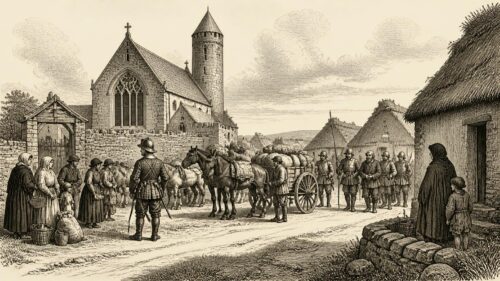
Ardfert’s Hostages
In 1582, the Second Desmond Rebellion persisted as a destructive Munster war despite John of Desmond’s death near Castlelyons. Raiding, military reprisals and disrupted cultivation produced famine and disease; contemporary reports described catastrophic mortality, affecting loyalists and rebels alike. At Ardfert, Captain Zouch’s garrison burdened local communities and took hostages; after a raid killed Captain Houghton, annals allege children hostages were hanged. Desmond remained militarily active, while reduced crown forces combined pardons with coercion. Political change followed Arthur Grey’s departure, Ormond’s enhanced Munster authority, and wider instability in Wicklow, Connacht and Ulster. Gaelic learned traditions nevertheless endured amid ongoing conflict.
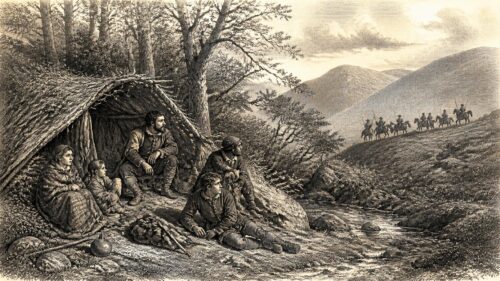
Glenageenty’s Last Earl
In 1583, the Second Desmond Rebellion ended as Gerald FitzGerald, earl of Desmond, was hunted through Kerry after royal forces, allied lords and negotiated surrenders destroyed his support. Following the death of his captain Godfrey MacSweeney, Desmond was captured and beheaded at Glenageenty on 11 November. War had devastated Munster’s food supplies, settlements, trade and population, leaving famine, displacement and disputed land rights. His death enabled future confiscation and plantation, though surveys and large-scale settlement followed later. Catholic clergy faced repression: Dermot O’Hurley arrived, sought toleration and was imprisoned, while Maurice MacKenraghty was captured. Refugees at Swords developed leather manufacture.
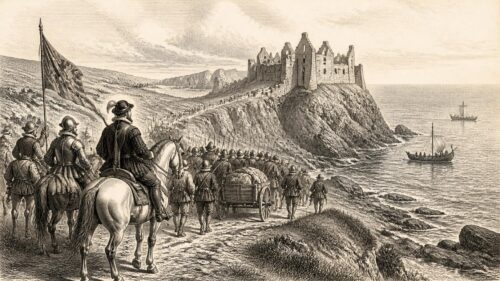
Dunluce and the Deputy
In 1584 Sir John Perrot became lord deputy, pursuing Elizabethan efforts to convert military victory into durable government. He appointed Richard Bingham in Connacht and John Norris in Munster, where the Peyton Survey prepared forfeited Desmond lands for plantation amid famine and displacement. Negotiations revived towards the Composition of Connacht, while O’Reilly territory was organised as County Cavan. Perrot captured Dunluce but failed to subdue Sorley Boy MacDonnell or secure Ulster. Dermot O’Hurley’s execution highlighted confessional repression. Galway extended harbour defences, and Stanihurst published Latin history. Crown authority expanded through surveys, counties and garrisons, yet remained contested, costly and insecure.
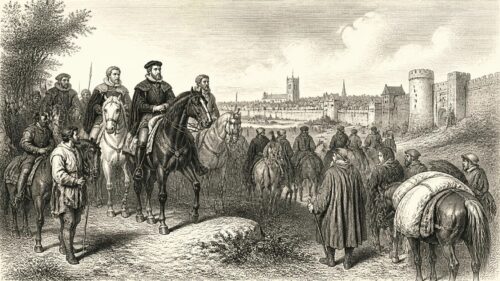
The Great Dublin Summons
In 1585 Sir John Perrot sought to extend Tudor government through parliament, negotiated revenues and regional settlements. Dublin’s parliament drew Gaelic, Old English and crown interests together, recognising Hugh O’Neill as earl of Tyrone, yet resistance to cess and limited attendance exposed fragile consent. The Composition of Connacht and Thomond converted traditional exactions into recorded cash payments, though coercion, abuses and refusals persisted. In Ulster, Perrot temporarily accommodated rival O’Neill claims while creating new counties, but MacDonnell power remained resilient. Religious repression, local violence, damaged crops and noble succession further revealed a kingdom governed through negotiation, insecurity and competing loyalties.
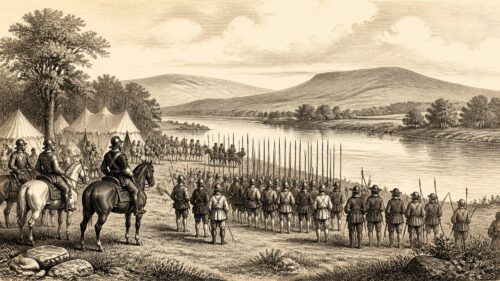
Ardnaree on the Moy
In 1586, the Battle of Ardnaree exposed the entanglement of Connacht rivalries, Scottish military migration and expanding Tudor authority. On 23 September, Richard Bingham surprised and defeated Scottish mercenaries and Irish allies beside the River Moy near modern Ballina. The encounter formed part of a wider campaign to enforce government through sheriffs, courts, rents and military pressure. Bingham’s position as provincial governor connected local conflict to Dublin’s claims of sovereignty. The victory weakened his opponents without resolving the underlying tensions. Ardnaree illustrates how Gaelic lordship, external armed support and crown administration shaped one another within an contested regional political order.

Rathmullan’s Captive Heir
In 1587, Hugh Roe O’Donnell, heir to Tír Chonaill, was lured aboard a trading vessel at Rathmullan and imprisoned in Dublin Castle, giving the Tudor government a valuable hostage amid Ulster’s unstable rivalries. Elsewhere, parliament confirmed the Desmond attainder, enabling redistribution and plantation of Munster lands, though implementation remained uneven. In Connacht, the composition system replaced traditional exactions with fixed revenues, provoking resistance and controversy over Sir Richard Bingham’s harsh rule. Wet weather and poor corn heightened rural insecurity. These measures extended Crown authority through captivity, law, land and revenue, but deepened grievances, exposed weak enforcement, and shaped later conflict.
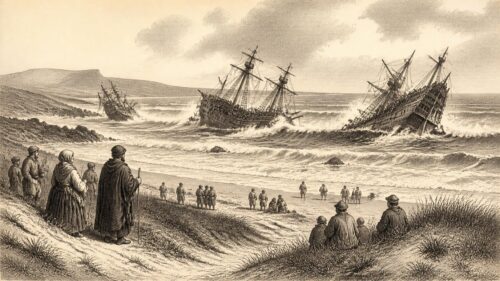
Streedagh’s Broken Fleet
In 1588, remnants of Philip II’s Spanish Armada, driven around Scotland after defeat, wrecked along Ireland’s Atlantic and northern coasts. Survivors encountered drowning, plunder, shelter, negotiation and execution, depending on locality and political interest. Accounts by Francisco de Cuéllar, English officials and Irish annalists reveal perspectives. Lord Deputy William Fitzwilliam and Connacht president Richard Bingham feared Spanish aid to Irish resistance and ordered reprisals. Lords including Brian O’Rourke aided survivors, while others manoeuvred between Crown and Spanish interests. Fitzwilliam’s Connacht campaign linked shipwrecks to repression. Despite a plentiful harvest, 1588 deepened distrust, exposed authority, and heightened fears of Spanish intervention.
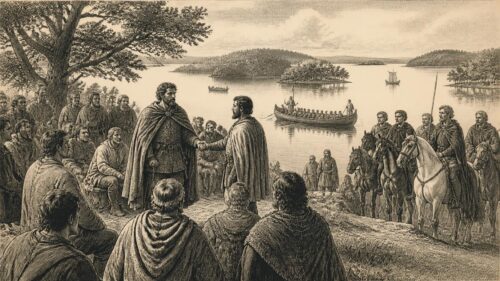
Sciath Ghabhra’s New Lord
In 1589, Cú Chonnacht Óg Maguire’s death triggered a Fermanagh succession contest, resolved at Sciath Ghabhra when Donnell O’Donnell backed his son Hugh, reinforcing north-western alliances. MacMahon succession rivalry in Monaghan invited intervention by Lord Deputy Sir William Fitzwilliam, while Hugh O’Neill consolidated his position. In Connacht, opposition to Sir Richard Bingham’s Composition produced raids, government defeat, reprisals, an inquiry, Bingham’s acquittal and renewed campaigning. Munster commissioners assessed the incomplete plantation of confiscated Desmond lands. Ecclesiastical appointments and annalistic obituaries reflected enduring Catholic, Gaelic learned and social traditions. Together, these events exposed conflicts over lordship, land, royal administration and authority.

Monaghan’s Fatal Sessions
In 1590, Hugh Roe MacMahon’s execution after a manipulated Monaghan trial signalled the Tudor government’s determination to replace Gaelic lordship with courts, garrisons and Crown-controlled landholding. Sir Richard Bingham’s campaigns in Connacht and Breifne secured hostages, devastated O’Rourke territory and established a strategic fort, though resistance revived. In Tyrconnell, Donnell O’Donnell’s death at Doire Leathan strengthened Hugh Roe’s eventual claim while he remained imprisoned. Sorley Boy MacDonnell died, prompting renewed territorial conflict, and Hugh O’Neill eliminated a dynastic rival. Despite warfare, learned culture and commercial development persisted. Ireland remained politically fragmented, as Crown expansion encountered resilient local powers across Ireland.

O’Rourke at Tyburn
In 1591, Tudor authority pressed unevenly upon Gaelic Ireland through military, legal and administrative measures. Brian na Múrtha O’Rourke, lord of West Bréifne, fled to Scotland after invasion, was surrendered to England, tried for treason and executed at Tyburn, demonstrating the crown’s expanding reach. Monaghan’s contested settlement and mass pardons revealed efforts to reorganise lordship and land. Hugh O’Neill’s marriage to Mabel Bagenal intensified Ulster rivalries. Catholic appointments and continental contacts sustained religious networks and official fears of foreign intervention. Annalistic deaths and praise for lords preserved Gaelic values. Although no rebellion began, distrust and dispossession sharpened conditions preceding war.

Red Hugh and All Hallows
In 1592 Hugh Roe O’Donnell escaped Dublin Castle, where he had been held to restrain Ulster alliances, and returned to Tír Chonaill. Supported by his mother Iníon Dubh, Scottish connections and Hugh O’Neill, he became The O’Donnell, resisted garrisons and negotiated a fragile submission at Dundalk. His revival intensified conflicts within Ulster and exposed limits of crown authority. In Dublin, Elizabeth I chartered the College of the Holy and Undivided Trinity on the former All Hallows priory, to educate Protestant clergy and officials. Meanwhile, Catholic diplomacy with Spain heightened anxieties. These developments foreshadowed wider political, religious and military confrontation ahead.

Maguire’s Erne Ford
In 1593, resistance to the English appointment of Captain Humphrey Willis as sheriff of Fermanagh brought Hugh Maguire into conflict with crown authority. Supported by Cormac MacBaron O’Neill, Hugh Roe O’Donnell and Brian Óg O’Rourke, Maguire’s rising spread through Ulster and Connacht amid disputes over rents, cattle and jurisdiction. Meanwhile, Hugh O’Neill assumed effective rule of Tír Eoghain while maintaining loyalty to Elizabeth I. Catholic hopes of Spanish intervention accompanied the unrest, although no force arrived. Sir Henry Bagenal’s October expedition defeated Maguire at Erne Ford and devastated Fermanagh, but failed to establish lasting control, foreshadowing the Nine Years’ War.
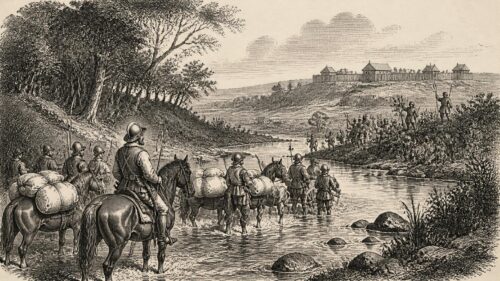
Enniskillen’s Biscuit Ford
In 1594, fighting around Enniskillen demonstrated the dangers of extending crown government into Fermanagh through garrisons and military supply. Hugh Maguire resisted threats to his lordship from sheriffs, fortified positions and prospective land settlement. Allies included Hugh Roe O’Donnell and men associated with Hugh O’Neill, linking local resistance to Ulster networks. Crown capture of Enniskillen created a vulnerable position that required reinforcement. Irish success at the Arney River exposed the weaknesses of that strategy. Often treated as the opening year of the Nine Years’ War, 1594 reveals a conflict whose immediate causes remained rooted in regional power and contested jurisdiction.
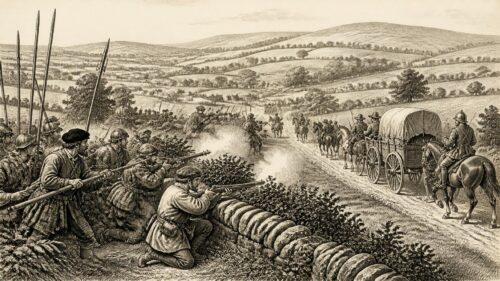
Clontibret’s Running Battle
In 1595, the Nine Years’ War became an open challenge to Elizabeth I’s rule as Hugh O’Neill and Hugh Roe O’Donnell expanded resistance across Ulster and beyond. After the Blackwater fort’s seizure, Crown attempts to sustain exposed garrisons faltered. At Clontibret, O’Neill’s forces badly mauled Sir Henry Bagenal’s returning convoy through disciplined firearms, fieldworks and mobile warfare, though they did not destroy it. O’Donnell’s campaigns destabilised Connacht, using raids, hostages and alliances to extend influence. Fighting also ravaged Wicklow and civilian communities. Despite negotiation and continued Crown control of towns, 1595 established a broader, organised and destructive conflict in Ireland.
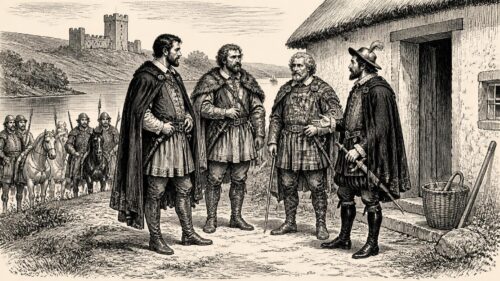
Lifford’s Spanish Envoy
In 1596, attempts to settle the Ulster conflict through pardons and limited autonomy failed as Hugh O’Neill and Hugh Roe O’Donnell linked territorial claims with Catholic liberty. Spanish envoy Alonso de Cobos met them at Lifford, prompting an appeal to Philip II for troops and a Habsburg ruler, and tying Irish resistance to European war. In Connacht, Norreys’s large expedition stalled beside the River Robe when provisions ran out, revealing the importance of supply and alliances. Succession disputes, raids, coercive administration and religious tensions widened disorder across Ireland. Changes in Connacht’s government and continued local rivalries failed to restore stability.
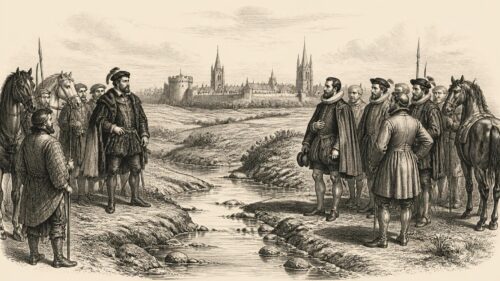
Dundalk’s Winter Cessation
In 1597, Ireland’s war exposed the Tudor administration’s logistical and military weakness while Hugh O’Neill’s confederacy extended its influence. A gunpowder explosion in Dublin killed 126 people, damaged the capital’s supply system, and highlighted insecure wartime labour and logistics. The Crown killed Fiach MacHugh O’Byrne in Glenmalure, weakening but not pacifying Leinster. Hugh Roe O’Donnell raided Connacht, reaching Athenry and Galway. Lord Burgh’s Ulster offensive failed to unite royal forces, although Blackwater Fort was re-established; his death worsened the crisis. Irish victories near Carrickfergus and Daingean compelled talks outside Dundalk. O’Neill accepted a two-month cessation, gaining recognition without surrendering authority.
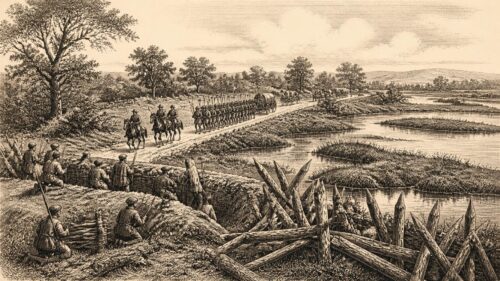
Yellow Ford’s Broken Column
In 1598, the Battle of the Yellow Ford transformed the Nine Years’ War into a crisis for English government in Ireland. On 14 August, a crown army suffered devastating defeat near the River Blackwater in County Armagh. Confederates associated with Hugh O’Neill and Hugh Roe O’Donnell gained confidence, while royal forward positions became harder to maintain. Revolt widened beyond Ulster into Leinster and Munster. The outcome emerged from a year combining warfare, negotiation and political manoeuvre, rather than inevitable rebel victory. Yellow Ford’s significance lay in its consequences: weakened royal strategy, strengthened resistance and an expanding challenge to crown authority.
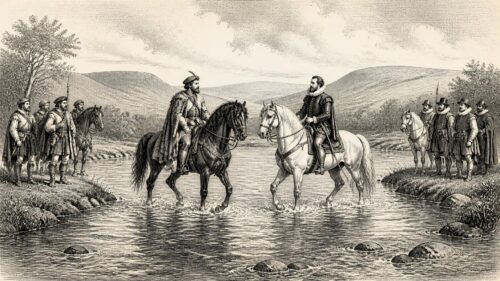
Bellaclinthe’s River Parley
In 1599, Elizabeth I sent the earl of Essex to Ireland with an unprecedented army to suppress the Nine Years’ War. Despite capturing Cahir Castle and campaigning through Munster, his forces were weakened by supply difficulties, resistance, sickness and garrison demands. Sir Conyers Clifford’s defeat and death at Curlew Pass strengthened Hugh Roe O’Donnell’s confederates. Essex’s September river meeting with Hugh O’Neill at Bellaclinthe produced only a temporary truce. Essex then left Ireland without permission, provoking a court crisis. O’Neill subsequently appealed to Pale Catholics, while the year demonstrated that Tudor authority faced intertwined military, religious, political and economic challenges.