Editorial — Irish Ice Sheet
Welcome to the Emerald Archives Gazette. In today’s issue we look back at the latest additions to the archive. Doubtful Toolmark — The label 30,312 BCE cannot describe a recorded Irish year. No community in Ireland left a calendar, a name, a settlement plan or a historical narrative that can be tied to that point with annual precision. It is a modern conversion, approximately 32,260 years before the conventional radiocarbon reference year of AD 1950. At this depth of time, even the best dating evidence is expressed as probability ranges rather than as a single calendar year.
Dateline
The Day in Irish History
Welcome to the Emerald Archives Gazette. In today’s issue we look back at the latest additions to the archive.
Doubtful Toolmark — The label 30,312 BCE cannot describe a recorded Irish year. No community in Ireland left a calendar, a name, a settlement plan or a historical narrative that can be tied to that point with annual precision. It is a modern conversion, approximately 32,260 years before the conventional radiocarbon reference year of AD 1950. At this depth of time, even the best dating evidence is expressed as probability ranges rather than as a single calendar year. The most responsible subject is therefore Ireland in the later part of Marine Isotope Stage 3: a cold, unstable phase of the Late Pleistocene, before…
Castlepook Horizon — The label “30,311 BCE” is a modern way of locating a very deep past, not a date that anyone in Ireland could have recognised or recorded. It corresponds roughly to 32,260 calendar years before AD 1950, but no evidence can identify an event, a person, a journey or a season in that particular year. At this depth of time, even the best scientific chronologies are ranges rather than annual records. The responsible subject is therefore Ireland in the later part of the Pleistocene, within Marine Isotope Stage 3: a country repeatedly reshaped by cold climate, fluctuating ice and sea level,…
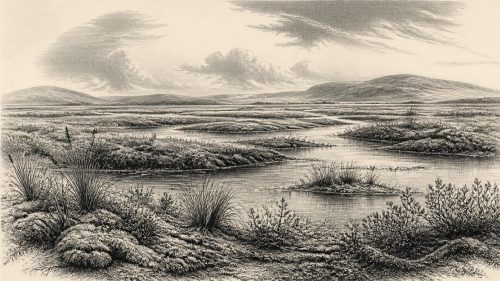
Silted Marsh — 30,310 BCE is not a recoverable historical year in Ireland. It is a modern calendar label, not a date used by people then, and no Irish deposit can be assigned to that particular year, season or generation. In simple arithmetic it lies roughly 32,259 years before AD 1950, the conventional ‘present’ of radiocarbon dating, but radiocarbon years and calendar years are not interchangeable. The responsible setting is the later part of the Late Pleistocene, within Marine Isotope Stage 3 (MIS 3), a climatically volatile interval of the last Ice Age before the Last Glacial Maximum. Ireland’s evidence is sparse, local…
Milfoil Mud — 30,309 BCE is a modern chronological label, not a recoverable year in Irish prehistory. No written record, calendar, named community or excavated settlement allows an event to be assigned to this particular year. The appropriate history is therefore a cautious reconstruction of a much wider Late Pleistocene interval, using sediments, fossil plants, animal remains, glacial landforms and scientific dates. Around this numerical horizon, Ireland belonged to the Middle Midlandian part of the last glacial cycle, within Marine Isotope Stage 3: a world of pronounced climatic instability, advancing and retreating ice, and open cold-country habitats. The nearest exceptionally important Irish evidence…
Glacial Recession — 30,308 BCE is a modern calendar label, not a year that can be recovered from Ireland’s archaeological record. No Irish community used this calendar; no written source, ruler, battle, settlement or individual can be assigned to this particular year. In terms used by Quaternary scientists, it falls roughly 32,257 years before the conventional radiocarbon “present” of 1950, during the later part of Marine Isotope Stage 3, a volatile phase of the last Ice Age. Calendar-year precision is not available at this depth of time. The responsible history of Ireland at this point must therefore be built from dated deposits and…
Wetland Burial — 30,307 BCE is a modern calendar label, not a recoverable Irish year. No calendar used in Ireland at this depth of time is known, and neither archaeology nor Quaternary science can identify an event in one particular year. In calendar terms the date falls about 32,250 years before the 1950 reference point used for “BP” dating. It belongs to the later part of the Pleistocene, within Marine Isotope Stage 3: a long, unstable cold phase before the fullest development of the Last Glacial Maximum. The responsible history of Ireland at this point is therefore a history of dated deposits, animal…
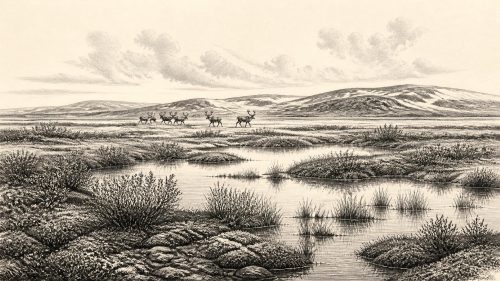
Arctic Wetland — Modern calendar-year precision is not available for Ireland at 30,306 BCE. The number is a useful point on a modern timeline, not a date for which archaeology can identify a particular season, generation, event or community. In the dating language used by Quaternary science, it falls roughly 32.3 thousand calendar years before AD 1950. The closest major Irish environmental sequence, from Derryvree near Maguiresbridge in County Fermanagh, produced a conventional radiocarbon age of 30,500 years BP, with a substantial uncertainty of about a millennium. When calibrated, that determination belongs within a broad late-ice-age range, approximately 36,900–31,700 calibrated years BP. The…
Frosted Tundra — 30,305 BCE is not a date at which Irish history can be reconstructed year by year. It is a modern calendar label for roughly 32,250 years before AD 1950, deep within the Late Pleistocene. No written record, settlement sequence or securely dated human event allows an exact correspondence between that numbered year and a particular occurrence in Ireland. The responsible approach is therefore to place it within broad calibrated ranges and ask what the surviving sediments, fossils and landforms can show about the island at approximately this point in the last Ice Age. The closest Irish chronological guide is a…
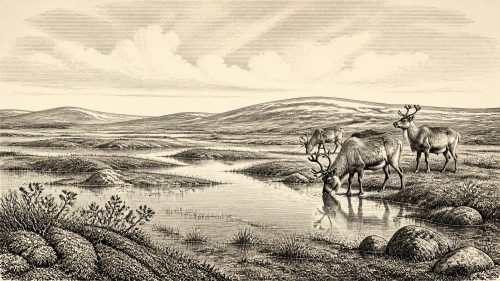
Waterford Antlers — 30,304 BCE is a modern chronological label, not a recoverable year in an Irish historical record. No inscription, settlement sequence or event allows Ireland at this depth of time to be dated with calendar-year precision. In archaeological practice, the meaningful evidence comes in calibrated radiocarbon ranges, sediment layers and broad climatic phases. This nominal year falls about 32,253 years before AD 1950, within the Late Pleistocene and Marine Isotope Stage 3: a cold, unstable part of the last Ice Age, before the fullest expansion of the last British–Irish Ice Sheet. The most direct evidence close to this point is not…
Tundra Evidence — 30,303 BCE is a modern chronological label, not a recoverable year in Ireland’s deep past. No Irish written record, settlement layer or dated human event can be assigned to that single year. The responsible way to approach it is through broad, calibrated ranges and the traces preserved by geology, palaeobotany and animal bone. This point falls in the Late Pleistocene, within Marine Isotope Stage 3, when climates across north-west Europe changed sharply and the British–Irish Ice Sheet was beginning a major phase of growth. Ireland was not yet the familiar green island of later prehistory: its environments were cold, open,…
Bogbean Record — 30,302 BCE is not a recoverable year in the ordinary historical sense. No Irish document, settlement layer, ruler, battle or human life can be fixed to it. At this depth of time, modern calendar notation is a convenience rather than a date known to the people—or animals—then alive. The responsible frame is a broad interval in the later Pleistocene, within Marine Isotope Stage 3, when climate in the North Atlantic region fluctuated sharply and the British–Irish Ice Sheet was developing towards its later maximum extent. The strongest evidence relevant to this nominal date comes not from an archaeological town or…
Derryvree Wildlife — The label 30,301 BCE gives a useful point on a modern timeline, but it cannot identify an Irish event, season, individual or community. This was deep in the Late Pleistocene, within Marine Isotope Stage 3, long before written records and far beyond the precision of ordinary calendar history. In terms of the radiocarbon convention whose ‘present’ is AD 1950, the nominal year is about 32,250 calendar years before present. The most relevant Irish evidence consists not of settlements but of deposits that accumulated over centuries or millennia. It therefore illuminates a broad environmental interval, rather than one particular year. A…
Cold Mosaic — “30,300 BCE” is a useful modern label, not a date that can be recovered from the evidence with calendar-year precision. In the archaeological timescale it corresponds roughly to 32,250 calibrated years before present (cal BP, where “present” is AD 1950), within the later part of Marine Isotope Stage 3. No written record, settlement sequence or annual environmental archive allows historians to say what occurred in Ireland in that particular year. What can responsibly be described is a changing Ice Age landscape, reconstructed from deposits that accumulated across spans of centuries or millennia. For Ireland, the most revealing evidence comes not…
Fossil Pools — 30,299 BCE is a modern chronological label, not a recoverable year in Ireland’s own past. No Irish calendar, written record, named community or securely dated human action can be assigned to it. In radiocarbon terms it falls about 32,248 years before AD 1950, the conventional “present” used in dating science, but that arithmetic is not a scientific date. The responsible frame is a much broader Late Pleistocene interval within Marine Isotope Stage 3, when climates, ice margins and habitats changed over centuries and millennia. Evidence relevant to this nominal year comes chiefly from calibrated ranges, stratified sediments and fossil assemblages—not…
Juniper Flora — 30,298 BCE is a modern label imposed on a time far beyond the reach of Irish written records, calendars or annual chronicles. In the archaeological convention of years before present, where “present” is 1950, it lies roughly 32,250 years ago. No evidence can identify an event, individual, season or community in Ireland in that exact year. The responsible subject is therefore not “what happened in 30,298 BCE”, but what securely dated deposits can tell us about Ireland during the broad interval into which that nominal date falls. That interval belongs to the Late Pleistocene, within Marine Isotope Stage 3: a…
Human Uncertainty — 30,297 BCE is a modern chronological label, not a recoverable year in Ireland’s past. There are no written records, annual layers that can be tied securely to that numbered year, or archaeological events precise enough to date it. In calendar terms it lies roughly 32,250 years before AD 1950, within the Late Pleistocene, Marine Isotope Stage 3 and the Irish Midlandian cold stage. The responsible history of this moment is therefore a history of ranges, deposits and probabilities: what the land, plants, animals, ice and a very small number of disputed human traces can reveal about an interval around it.…
Possible Contact — 30,296 BCE is not a year that can be recovered from Irish evidence in the manner of a later historical date. It corresponds approximately to 32,246 years before 1950, the conventional ‘present’ used in radiocarbon and palaeoclimate work. At such depth in time, calibration produces ranges rather than anniversaries, while deposits themselves accumulated over seasons, centuries or longer. No written sources, named communities, settlements, tools or securely dated human remains allow an event to be assigned to this particular calendar year. Ireland at this point belongs to the later part of the Pleistocene, within the Upper Palaeolithic era of Europe…
Dynamic Tundra — “30,295 BCE” is a modern chronological label, not a year for which Ireland has an annal, a ruler, a settlement plan or a dated human event. No calendar used on the island can be projected this far back, and archaeological dating cannot isolate a particular season or generation. In relation to the conventional radiocarbon reference year of AD 1950, the label falls roughly 32,244 calendar years ago, within the Late Pleistocene and broadly within Marine Isotope Stage 3 (MIS 3). The responsible history of this point in time must therefore be written in ranges: from sediments, fossils and glacial landforms…
Reindeer Hyaena — 30,294 BCE is a modern calendar label, not a year that can be recovered from Ireland’s prehistoric record. No contemporary people in Ireland left writing, an annual chronology, a named ruler or a datable settlement event. In radiocarbon convention, the label falls roughly 32,243 calendar years before AD 1950, but that conversion does not create year-by-year precision. The responsible frame is the Late Pleistocene, within Marine Isotope Stage 3 and the Irish Midlandian cold stage: a long, unstable Ice-Age interval in which temperatures, ice margins, vegetation and coastlines changed repeatedly. Evidence closest to this nominal date consists of geological layers,…
Freshwater Bryophytes — 30,293 BCE is not a date at which Irish archaeology can identify an event. No contemporary writing, ruler, settlement plan or annually dated deposit survives from this part of the Late Pleistocene. The number is a modern calendar label projected far beyond the resolution of the evidence. What can responsibly be said is that it falls within a broad, unstable interval of the last Ice Age, conventionally placed in Marine Isotope Stage 3, when climate, ice margins, vegetation and animal ranges altered repeatedly over centuries and millennia. The nearest especially valuable Irish chronological evidence comes from Derryvree, near Maguiresbridge in…
Periglacial Plantlife — 30,292 BCE is a modern label for a point deep in the Late Pleistocene, not a year that anyone in Ireland could have named, recorded or remembered. Calendar-year precision is not available at this depth of time. The most useful comparison is the radiocarbon-dated freshwater deposit at Derryvree, near Maguiresbridge in County Fermanagh: its conventional age of 30,500 +1,170/−1,030 radiocarbon years BP has been expressed in published calibrations as a broad range of roughly 36,900–31,700 calibrated years BP. The notional year 30,292 BCE lies within that wide interval, but cannot be tied to a particular season, animal, human action or…
Derryvree Landscape — A Date Beyond Annual History“30,291 BCE” is a modern calendar label, not a year that can be recovered from Ireland’s prehistoric record. No contemporary people in Ireland counted years in this way, and the available evidence cannot identify an event, a settlement episode or a particular season in that single year. At most, the label falls within a broad late-Pleistocene interval reconstructed from deposits, fossils and climate archives. It is therefore more responsible to describe the changing conditions that may illuminate this point than to manufacture an annual chronicle.The closest important chronological anchor is Derryvree, near Maguiresbridge in County Fermanagh.…
Overlying Tills — 30,290 BCE is a modern calendar label, not a date that can be matched to a recorded Irish event. No people in Ireland then left writing, a calendar, a named settlement or a sequence of acts that can be fixed to this single year. The responsible unit of history is therefore not one year but a broad Late Pleistocene interval: the later part of Marine Isotope Stage 3, within the last Ice Age. Scientific dating can narrow that interval, but cannot produce annal-like precision. Radiocarbon results are expressed in years before present, conventionally before AD 1950, and must be calibrated…
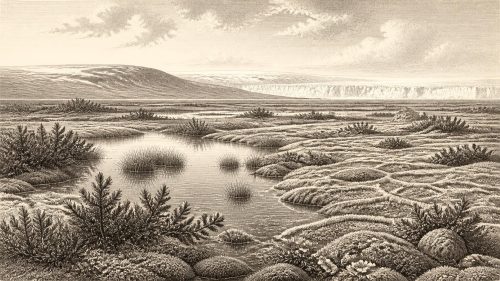
Sedge Ponds — The label 30,289 BCE gives a useful place in a modern chronological sequence, but it must not be mistaken for a recoverable Irish year. No calendar, written record, annual settlement layer or dated event allows historians to distinguish this particular year from those around it. At this depth in time, the responsible subject is a broad Late Pleistocene interval during the Middle Midlandian cold stage, part of Marine Isotope Stage 3. Ireland’s evidence consists chiefly of glacial sediments, fossil plants and insects, cave bones and laboratory dates. It can illuminate changing environments and animal movements; it cannot supply rulers, wars,…
Suspected Modification — Modern calendar-year precision is not available for Ireland in 30,288 BCE. The label is a convenient point on a modern timescale, roughly 32,238 years before AD 1950, not a date at which an Irish event can be assigned to a particular season or generation. The responsible frame is the later part of Marine Isotope Stage 3, a climatically unstable interval before the global Last Glacial Maximum. Ireland was not yet the uniformly ice-covered landscape often imagined for the height of the Ice Age, but neither was it a settled country in any historical sense. The strongest Irish evidence relevant to…
Frosted Clubmoss — 30,287 BCE is a modern chronological label, not a year that can be recovered from an Irish record of events. Nobody in Ireland then used a calendar, wrote an annal or left a securely dated settlement whose activity can be assigned to one particular year. The date corresponds to roughly 32,236 years before the conventional radiocarbon reference year of AD 1950. It belongs to the Late Pleistocene, within Marine Isotope Stage 3 and the Midlandian cold stage, long before the later maximum of the British–Irish Ice Sheet.Accordingly, the responsible history of Ireland at this point is not a narrative of…
Bogbean Horizon — The label 30,286 BCE is a modern point on a calendar projected far beyond the reach of Irish written history. No community in Ireland recorded a year, no settlement can be assigned to this date, and no archaeological deposit gives calendar-year precision at such depth of time. In radiocarbon terms the number is roughly 32,235 years before AD 1950, but that conversion is not itself an archaeological date. The responsible historical frame is a broad one: late Marine Isotope Stage 3, during the last Ice Age, when climate and ice margins could change markedly over centuries and millennia. The most…
Periglacial Shallows — “30,285 BCE” is a modern way of indexing deep time, not a date that can be recovered as a single Irish year. No calendar, written record, named community or event can be assigned to it. In archaeological terms it falls roughly 32,235 years before AD 1950, within the Late Pleistocene and Marine Isotope Stage 3, long before the Last Glacial Maximum. The responsible approach is therefore to use broad calibrated ranges and to distinguish the evidence for an Irish environment from interpretations about animals or people within it. The most illuminating Irish record for this horizon lies at Derryvree near…
Kerry Thaw — The label 30,284 BCE cannot describe a recoverable Irish ‘year’ in the modern sense. No written calendar existed, no event can be assigned to a particular season, and the archaeological evidence is dated in broad scientific ranges rather than to twelve-month precision. This point falls roughly 32,234 years before AD 1950, within the Late Pleistocene and Marine Isotope Stage 3, a period of abrupt climatic fluctuation before the fullest expansion of the last British–Irish Ice Sheet. The responsible history of Ireland at this depth of time is therefore environmental and archaeological: a story of sediment, plants, insects, animal bone and…
Marginal Wetland — The label 30,283 BCE is a modern way of marking a point deep in the Late Pleistocene, not a year for which Ireland possesses an annal, a dated settlement layer or a recoverable human biography. In conventional “before present” terms, it lies about 32,232 calendar years before AD 1950. That apparent precision is misleading. At this depth in time, radiocarbon results require calibration and commonly yield ranges of centuries or millennia; ice-sheet reconstructions are usually resolved in thousand-year steps. The responsible task is therefore to describe Ireland’s archaeological and environmental setting around this horizon, distinguishing what deposits demonstrate from what…
Suspected Handling — “30,282 BCE” is a modern chronological label, not a recoverable Irish date. No calendar, writing system, named community or historical record existed on the island at this depth of time. In simple calendar arithmetic the label lies about 32,231 years before the radiocarbon reference year of AD 1950, but archaeology cannot identify an event, season or generation in Ireland in that particular year. The responsible approach is therefore to place it within the late Middle Midlandian, or Marine Isotope Stage 3, and to use dated ranges, deposits and carefully qualified comparisons. This was an interval before the Last Glacial Maximum,…
Wetland Interval — The label 30,281 BCE is a modern way of locating a remote part of the Late Pleistocene, not a date that can identify an Irish event, ruler or generation. In the conventional archaeological system it falls roughly 32,230 years before AD 1950, within Marine Isotope Stage 3 (MIS 3), during the last glacial cycle. Calendar-year precision is not available for Ireland at this depth of time. The most responsible account is therefore built from dated ranges, layers of sediment, fossils and the physical traces of moving ice. These sources illuminate changing environments and possible human presence; they do not yield…
Calibrated Radiocarbon — The label 30,280 BCE is a modern point on a timescale far beyond any Irish calendar, chronicle or oral record that survives. It cannot identify a particular year, season, expedition or individual. Around this notional date Ireland lay in the Late Pleistocene, within Marine Isotope Stage 3, an unstable interval of the last Ice Age. The responsible evidence is geological and biological: layers of glacial sediment, fossil plants and insects, animal bones, and a small number of radiocarbon determinations. It provides calibrated ranges measured in centuries or millennia, not modern year-by-year precision. The closest exceptionally informative Irish record is the…
Tills Sequence — The label 30,279 BCE gives an appearance of precision that the evidence cannot sustain. No community in Ireland recorded years, names or events at this depth of time, and there is no archaeological deposit that can be assigned to this one calendar year. In radiocarbon practice, the date is about 32,228 years before AD 1950; it belongs to the later part of the Pleistocene, within Marine Isotope Stage 3. What can responsibly be described is a broad interval of centuries and millennia around it, using dated sediments, fossil plants, cave fauna and the changing record of ice. A Date Range,…
Silt Deposits — The label 30,278 BCE suggests a point on a calendar, but no evidence can identify a particular Irish year so remote in time. In modern chronological terms it is roughly 32,227 years before AD 1950, the conventional reference point for “cal BP”. Ireland then lay within the Late Pleistocene, in the long cold interval traditionally called the Midlandian in Irish geology. The responsible history of this moment is consequently not a sequence of rulers, battles or treaties. It is a reconstruction from sediments, fossil bones, landforms and laboratory dates, each of which records periods rather than individual years. The resulting…
Willow Habitat — The label “30,277 BCE” offers a useful point on a modern timeline, but it cannot describe a known year in Ireland’s remote past. No written record, settlement sequence or archaeological layer can be assigned to that calendar year. At this depth of time, evidence is dated in broad calibrated ranges, and the relevant Irish record belongs to the Late Pleistocene, within Marine Isotope Stage 3 and the Middle Midlandian cold stage. The most responsible account is therefore of an interval, not an event: a changing, cold Irish landscape in which ice, freshwater, tundra vegetation and large mammals left fragmentary traces.Two…
Femur Question — The label 30,276 BCE gives a useful point of reference, but it must not be mistaken for a recoverable year in Ireland’s past. No Irish community recorded a calendar at this depth of time, and neither archaeology nor climate science can isolate events to a particular modern year. Counting from the conventional radiocarbon baseline of 1950, it falls about 32,226 years before present. The responsible historical setting is therefore a broad one: later Marine Isotope Stage 3 (MIS 3), within the Midlandian, or last, glacial cycle. Evidence is sparse, discontinuous and often disturbed by later ice. It can illuminate an…
Fermanagh Habitat — “30,275 BCE” is a modern chronological label, not a year that can be recovered from an Irish event, ruler, settlement or seasonal diary. At this depth in time, calendar-year precision is unavailable. The evidence comes from deposits that accumulated over long periods, from animal bones whose dates carry substantial margins of error, and from reconstructed climatic sequences. In radiocarbon convention the year falls about 32,225 years before AD 1950, within the Late Pleistocene and broadly within Marine Isotope Stage 3 (MIS 3). It can therefore illuminate an interval in Ireland’s Ice Age history, but not a particular day, generation or…
Radiocarbon Range — Modern calendar-year precision is not available for Ireland in this remote period. The label 30,274 BCE is a modern chronological convenience, not a year recorded, named or experienced by anyone in prehistoric Ireland. In the conventional archaeological system that counts back from AD 1950, it falls about 32,223 years before present. The responsible evidence consists of radiocarbon measurements with sizeable margins of error, subsequently calibrated into broad calendar ranges, alongside sediments, fossils and landforms. Rather than an event in a single year, the subject is Ireland during the later Pleistocene, within Marine Isotope Stage 3: a climatically unstable phase of…
Glacial Complexity — The label 30,273 BCE offers a useful point on a modern timeline, but it cannot identify an Irish event in the manner of a later historical year. No calendar, named community, ruler, settlement or written tradition survives from this depth of time. In archaeological terms, the date lies roughly 32,200 years before the conventional radiocarbon present of AD 1950, during the Late Pleistocene and Marine Isotope Stage 3 (MIS 3). Calendar-year precision is not available. The evidence consists instead of deposits, animal bones and radiocarbon ranges that illuminate Ireland over centuries and millennia.The most directly relevant Irish archive is a…
Glacial Reshaping — The label 30,272 BCE gives a useful point of orientation, but it must not be mistaken for a date at which an Irish event can be placed. There was no written calendar in Ireland, no recorded population, and no archaeological sequence fine enough to distinguish one year from the next. In modern chronological terms, 30,272 BCE falls roughly 32,221 years before the radiocarbon convention’s reference year of AD 1950. That arithmetic does not produce a securely calibrated archaeological date. For this depth of time, evidence is expressed through broad calibrated ranges, stratigraphic order and environmental phases rather than annual history.…
Temporary Tundra — The label 30,271 BCE offers a useful point of orientation, but it cannot denote a recoverable Irish event in the way that a medieval annal or modern archive date can. No calendar used in Ireland then survives; indeed, there is no evidence for a resident community, named individuals, political institutions or year-specific actions. This was the Late Pleistocene, within the last Ice Age. The responsible account is therefore built from stratigraphy, radiocarbon determinations, plant and insect remains, animal bones, cave sediments and reconstructions of the British–Irish Ice Sheet. These sources yield broad ranges, not a day, season or generation. In…
Wetland Botany — “30,270 BCE” cannot be treated as a date in the modern historical sense. No written record, settlement sequence or event can be assigned to that individual calendar year in Ireland. At this depth of time, evidence is dated chiefly through radiocarbon measurements and geological relationships, then converted into broad calibrated ranges. The nominal year falls about 32,220 years before AD 1950, within the later part of the Late Pleistocene and Marine Isotope Stage 3. The responsible subject is therefore not an Irish year of kings, wars or migrations, but a changing Ice Age landscape whose surviving evidence is fragmentary, local…
Derryvree Watermilfoil — 30,269 BCE is not a recoverable Irish historical year. It is a modern calendar label imposed on a far older stretch of the Late Pleistocene. Nothing in Ireland can identify an event, person, journey or season in that particular year. The responsible approach is therefore to place the date within a wider archaeological and environmental horizon: Marine Isotope Stage 3, several millennia before the fullest expansion of the last British–Irish Ice Sheet. The evidence is sparse, unevenly preserved and often difficult to date, but it does offer a striking picture of an island of cold open country, wetlands, mobile animals…
Derryvree Lowland — “30,268 BCE” is a useful modern label, not a year that can be recovered from Ireland’s prehistoric record. No community on the island kept a calendar that can be correlated with it, and neither archaeology nor climate science can identify a particular Irish season, event or individual at this depth of time. The label falls roughly 32,200 calendar years before AD 1950, within the Late Pleistocene and Marine Isotope Stage 3, an unstable interval of the last Ice Age. The responsible account is therefore one of dated ranges, sediments, fossils and changing landscapes—not rulers, battles or annual happenings.The strongest evidence…
Fermanagh Macrophytes — “30,267 BCE” is a modern chronological label, not a year that can be recovered from Ireland’s Late Pleistocene record. No event, person, settlement or season can responsibly be assigned to that calendar year. The appropriate scale is a broad environmental interval during Marine Isotope Stage 3, before the fullest expansion of the last British–Irish Ice Sheet. The most informative Irish evidence comes from a buried freshwater deposit at Derryvree, near Maguiresbridge in County Fermanagh, and from cave-fauna collections in the south. Together they show that parts of Ireland could sustain cold-adapted plants and animals during an unstable Ice Age world,…
Red Deer — 30,266 BCE cannot responsibly be treated as a year in the historical sense. No written chronology, settlement sequence or event can be fixed to this point in Ireland’s past. In relation to the radiocarbon convention of AD 1950, it lies about 32,215 calendar years ago, within the Late Pleistocene and Marine Isotope Stage 3 (MIS 3), a climatically unstable portion of the last Ice Age. The appropriate evidence comes not from annals or monuments but from dated animal remains, buried sediments, fossil plants and insects, cave deposits, and the landforms later made or altered by ice. These materials offer calibrated…
Derryvree Lacustrine — Modern calendar-year precision is not available for Ireland in 30,265 BCE. The label is useful for arranging a long chronology, but no Irish person recorded a year, season or event at this depth in time, and no archaeological deposit can be assigned securely to that single calendar year. Roughly 32,200 calendar years before AD 1950, Ireland lay in the Late Pleistocene, within Marine Isotope Stage 3: a long, unstable part of the last Ice Age marked by abrupt climatic shifts and changing ice margins. The responsible history of this point is therefore a reconstruction from buried sediments, fossil plants and…
Thank you for reading today’s Gazette. Follow any of the links above to read the full article and explore its sources.