

1700–1799 CE
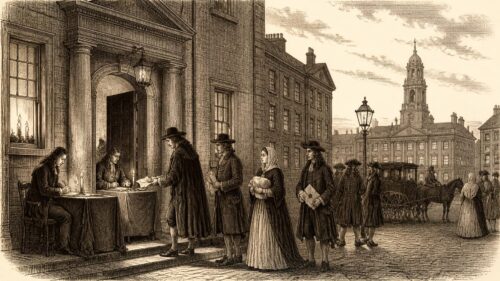
Chichester House Claims
In 1700, the Act of Resumption required claimants to register interests in forfeited Irish estates at Chichester House, Dublin, producing over 3,000 claims involving families, creditors, tenants and purchasers. The process consolidated a post-Williamite Protestant order while exposing Catholic insecurity over land and rights. Ireland remained a separate but subordinate kingdom, governed through London-linked institutions amid confessional restrictions and commercial controls, notably woollen export limits. Agricultural life, regional trade and Dublin's growth continued under unequal conditions. Intellectual activity included Edward Lhuyd's antiquarian work, Ulster printing and George Berkeley's Trinity admission. Paperwork, property, religion and allegiance defined this unsettled post-war society.
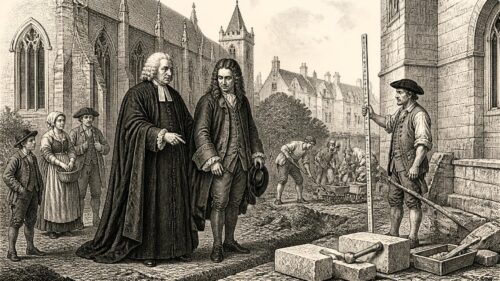
St Sepulchre’s Library Grant
On 9 July 1701, St Patrick’s Cathedral granted Archbishop Narcissus Marsh ground to build a library beside St Sepulchre’s Palace, initiating Ireland’s first purpose-built public library, later known as Marsh’s Library. Its learned but socially restricted vision joined Protestant ecclesiastical power with Huguenot scholar Élie Bouhéreau. Meanwhile, Lord Lieutenant Rochester’s arrival reinforced English control over Irish administration, military recruitment and post-Williamite security. Catholic clergy faced uneven enforcement of banishment laws, while dissenters remained disadvantaged. Woollen export restrictions and Irish Sea trade shaped economic pressures. The Act of Settlement and James II’s death heightened Protestant fears of Jacobite and French threats.
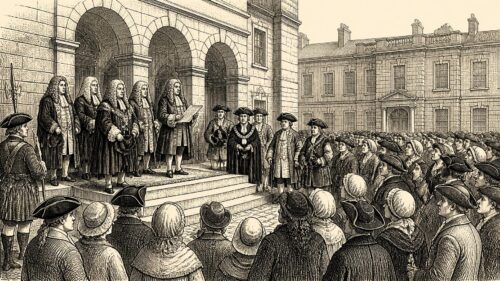
Dublin Castle’s December Reckoning
William III’s death brought Queen Anne to the thrones of England, Scotland and Ireland, proclaimed in Dublin on 18 March. Her accession preserved a Protestant administration founded after Williamite war, while Catholics remained politically excluded and Jacobite legitimacy persisted. Ireland was governed by lords justices after Rochester’s departure, with Thomas Erle combining military and civil responsibilities amid War of Spanish Succession. Protestant elites resented Westminster’s resumption of forfeited estates and restrictions on woollen exports. December consultations at Dublin Castle addressed parliament, taxation and war costs without resolution. Michael Boyle died; Portarlington Huguenots gained lease security; Swift received his Trinity doctorate.
Ormond’s October Parliament
In 1703 Queen Anne appointed James Butler, duke of Ormond, as lord lieutenant, hoping his influence would manage Ireland’s Protestant parliament. Meeting in September, parliament approved liquor excise, trade-related imports, and legislation strengthening restrictions on arriving Catholic clergy, amid wartime fears of France, Spain and Jacobitism. MPs also petitioned for constitutional restoration or union with England, expressing resentment over trade and political subordination. Church and judicial appointments reinforced Protestant administration. Kinsale hosted Dampier’s privateering expedition to the South Seas. Parliament considered navigation improvements linking Lough Neagh, Newry, the Barrow and trade, revealing ambitions for development within an unequal, confessional kingdom.
The Popish Clergy Register
In 1704, Queen Anne’s Irish parliament enacted measures reinforcing Protestant political supremacy after the Williamite wars. The Popish Clergy Register required Catholic secular priests to register, provide sureties and remain locally confined, while excluding new clergy and threatening noncompliance with punishment. Its companion Popery Act restricted Catholic inheritance, education, conversion, office holding and family autonomy, though implementation varied. Parliament simultaneously encouraged Protestant immigrants, notably Huguenots, through selective naturalisation. Other statutes established Dublin’s coercive workhouse system and regulated credit, excise and livestock trade. These measures classified clergy, heirs, migrants and poor people, extending state supervision into worship, households, markets and streets.
Sandys’s Authorised Gazette
In 1705, Dublin Castle established the Dublin Gazette, printed by Edwin Sandys under official scrutiny, to circulate authorised news and restrain rumour. Ormond’s parliament, meeting from February to June under Queen Anne, imposed consumption duties and regulated tolls, measures, horse theft, debtors and mineral property amid wartime pressures. It strengthened penal supervision of Catholic clergy, restricting unregistered priests while the established Church of Ireland retained political privilege. Westminster permitted direct exports of specified Irish linen to English American plantations, encouraging linen while preserving English commercial control. Together, these measures expanded Protestant government through taxation, surveillance, economic regulation and controlled publicity.
Memorial Number One
In 1708, Ireland’s new Registry of Deeds entered its first memorial, strengthening recorded property claims while serving a Protestant order shaped by confiscation and penal laws. During the French-backed Jacobite invasion scare, Dublin Castle issued anti-Catholic proclamations and detained clergy and gentlemen, though no rebellion followed. Parliament was prorogued under Lord Lieutenant Pembroke, while Thomas Wharton’s appointment foreshadowed change. Belfast Castle burned, killing three Donegall daughters and servants. Samuel Molyneux’s northern tour recorded contrasting landscapes, rebuilding, Belfast’s growth and Ulster’s developing linen trade. Thomas Milles became bishop of Waterford and Lismore in 1708, illustrating the Church of Ireland’s institutional authority.

Palatines at Dublin Quay
In 1709, wartime pressures, food regulation and fears of Jacobite loyalty shaped Irish government. Proclamations restricted grain exports, addressed market manipulation and crime, and linked public worship to British military fortunes, without proving a nationwide famine. Parliament reinforced the penal system through an abjuration oath, tighter controls on Catholic clergy, education, property and employment. Dublin received about 3,000 Protestant Palatine refugees, whose protection and settlement posed practical challenges. Samuel Molyneux’s Connacht journey recorded poor roads, domestic textiles, poverty, improvement and cultural division. By December, Hougher violence against cattle reflected resistance to pasture expansion and smallholders’ displacement, revealing sharper social contestation.
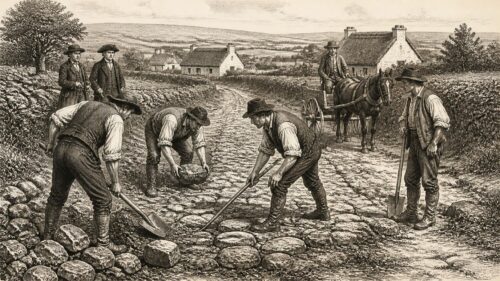
Six Days on Ireland’s Roads
In 1710, Ireland’s Protestant parliament, operating under Queen Anne amid changing Whig and Tory influence, passed measures affecting revenue, property, trade and local administration. Its roads act required rural householders and tenants to provide up to six days’ unpaid labour, reflecting reliance on communal maintenance rather than modern infrastructure. Legislators promoted linen, regulated cattle, rents and timber, and imposed duties on consumer goods. Dublin Castle also suppressed Catholic assemblies in Meath, punished damage to William III’s statue, pursued tobacco thieves, and managed Palatine refugee settlement. Quarantine regulations for Baltic shipping showed Ireland’s exposure to continental war, migration, commerce and disease.
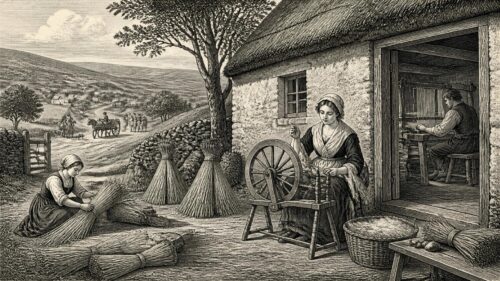
Islandmagee and the Linen Board
In 1711, Ireland experienced political division, legal persecution, economic initiative and insecurity. Under Queen Anne’s Tory administration, Lord Lieutenant Ormond and Lord Chancellor Phipps reshaped offices, while Dublin’s disputed mayoral succession exposed conflict between Castle authority and civic self-government. At Carrickfergus, eight Islandmagee women, and later William Sellor, were convicted of witchcraft, Ireland’s last known proceedings under the statute. Parliament appointed trustees for linen and hemp manufacture, formalising state support for an expanding export industry. Wartime proclamations addressed naval recruitment, privateers and quarantine. Late-year orders against cattle houghing, alongside Catholic disarmament, reflected rural conflict, property fears and confessional security policies.
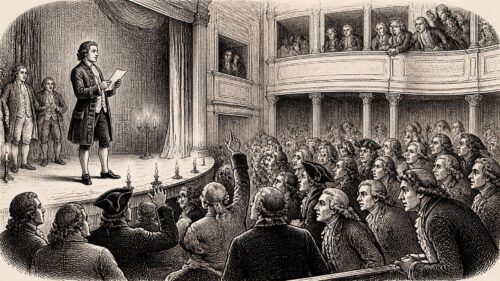
Dudley Moore’s Prologue
In 1712, Ireland remained tense following Williamite wars, with Tory administrators under Sir Constantine Phipps accused by Whigs of favouring Jacobitism and interests. Dublin’s conflict erupted when Dudley Moore delivered a banned Whig prologue on William III’s anniversary, provoking proceedings. Religious policy combined missionary outreach and exclusion: John Richardson published an Irish-English prayer book while penal laws constrained Catholics; Quaker pioneer William Edmundson died. Banbridge gained a bridge across the Bann, aiding communications. Livelihoods depended on agriculture and expanding linen exports, shaped by imperial restrictions, war and landholding. These events reveal authority contested through politics, religion, print, commerce and infrastructure.
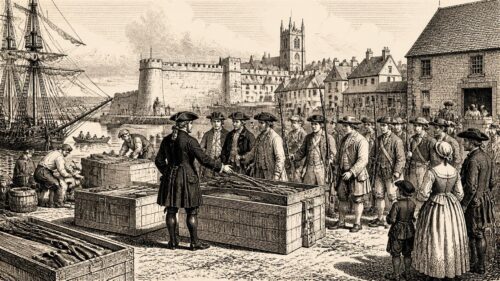
Muskets for the Militia
In 1715, Ireland avoided a Jacobite rising despite rebellion in Scotland and northern England, but Hanoverian authorities governed amid anxiety. Officials disarmed Catholics, enforced penal laws, monitored clergy, travellers and supplies, and reinforced ports and garrisons, although evidence of conspiracy was lacking. Troops were sent to Britain, prompting plans for a Protestant militia that lacked sufficient weapons and ammunition. The new Protestant parliament funded defence through renewed and additional taxes, while asserting control over public finance. Anti-Jacobite measures also targeted Ormond’s influence. Dublin’s theatre remained active. Ireland stayed peaceful, yet surveillance, sectarian exclusion and military expenditure deepened under imperial insecurity.
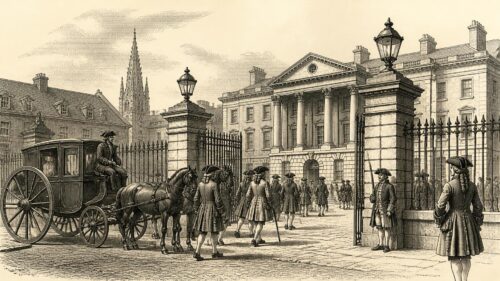
Ormond’s Forfeit
In 1716, Ireland’s Hanoverian administration responded to the Jacobite rising’s aftermath through security measures, religious enforcement, ceremony and legislation. Proclamations targeted Ormond, restricted Catholic enlistment, recruited soldiers, pursued alleged rural outlaws and renewed penalties against Catholic clergy. Public thanksgiving proclaimed loyalty to George I and the established church. Parliament abolished the Duke of Ormond’s palatine jurisdiction in Tipperary and vested his estates in the Crown, while later recovery remained possible for his family. It also promoted drainage, linen, commodity standards and labour dispute settlement. Church finances and appointments reinforced Protestant institutions, while Dublin’s music and print culture retained Jacobite connections.
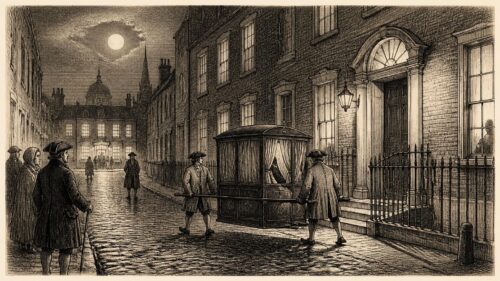
Luttrell’s Last Journey
In 1717, Ireland remained a separate kingdom under Hanoverian rule, governed by a Protestant establishment that excluded most Catholics. Charles Paulet, Duke of Bolton, became lord lieutenant, while parliament renewed revenue and reinforced Protestant municipal control in Galway and Kilkenny. Colonel Henry Luttrell, a former Jacobite accused of betrayal, was murdered in Dublin; despite official rewards and proclamations, the crime remained unsolved. Authorities also pursued mutiny and armed disorder. Penal restrictions shaped Catholic and Presbyterian life. Hugh MacCurtin defended Irish antiquity in print. Rural society depended on vulnerable agricultural and export economies amid variable weather, reflecting an anxious political order.
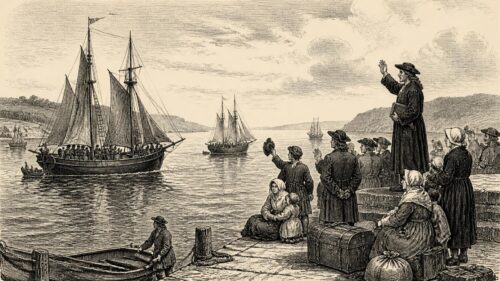
Five Ships for Boston
In 1718, Ireland’s significant developments centred on migration, religion and voluntary institutions rather than rebellion. Five vessels carried Presbyterian emigrants from Ulster to Boston, beginning a durable Atlantic movement driven by tenancy insecurity, economic pressures, religious disabilities and colonial opportunity. Ireland’s Protestant ruling order continued to disadvantage Catholics and dissenters, while Sherlock v Annesley highlighted contested Irish autonomy. Six surgeons founded Dublin’s Cook Street infirmary for injured poor, precursor to Jervis Street Hospital. A Ballybough cemetery lease recorded Jewish life. Church appointments and Catholic diocesan administration demonstrated competing authorities, while Thomas Parnell’s death connected Irish culture with British literary networks.
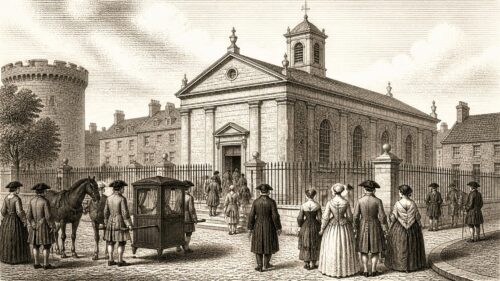
Sherlock’s Contested Appeal
In 1719, the Sherlock v Annesley inheritance dispute escalated into a constitutional conflict between the Irish and British Houses of Lords over appellate jurisdiction. Although Westminster’s Declaratory Act followed in 1720, the controversy exposed Irish Protestant elites’ defence of judicial dignity within constrained government. Dublin’s parliament managed revenue, regulation and militia security, while granting Protestant dissenters, especially Presbyterians, limited worship protections; Catholics and non-Trinitarians remained excluded. Rebuilt St Werburgh’s Church symbolised Anglican confidence, while a 1719 issue of Cornelius Nary’s New Testament evidenced Catholic learning. Expanding linen exports linked rural households to markets, yet prosperity remained uneven and livelihoods precarious.
The Sixth of George I
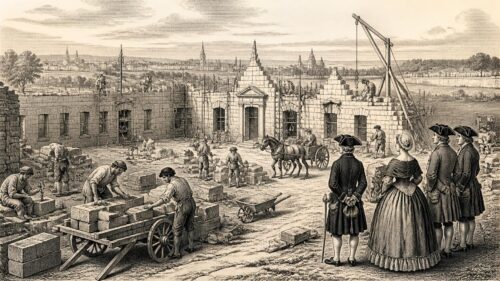
In 1720, Westminster's Sixth of George I asserted Britain's power to legislate for Ireland and made the British Lords Ireland's final appellate court, deepening dependency. Ireland's Anglican ascendancy governed a population restricted by penal laws; James Cotter's execution heightened sectarian tensions. Jonathan Swift's Irish Manufacture pamphlet urged consumers to reject English goods, articulating economic patriotism amid mercantilist constraints. A proposed national bank reflected commercial ambition, but the South Sea Bubble's collapse brought banking panic. Construction began on Dr Steevens' Hospital, promoted by Grizelda Steevens, while Cork Harbour's Water Club was founded. Together they exposed dependence, inequality, charity and elite sociability.

The Bank’s First Clause
In 1721, Ireland’s proposed public bank collapsed amid post-South Sea Bubble distrust, disputes over credit, land, religious exclusion and dependence on Westminster, recently reinforced by the Declaratory Act. Although supporters sought cheaper loans and retained capital, the Commons rejected the scheme, first narrowly in October and decisively in December, preserving fragmented private finance. Land and influence remained central: Charles Butler regained Ormond estates under British sanction, William Ponsonby became Baron Bessborough, and Luke Gardiner acquired land developed as Henrietta Street. Linen exports linked rural households to imperial markets, while Catholic institutions endured restrictions. Government pursued disorder and imposed plague precautions.
Wood’s Copper Patent
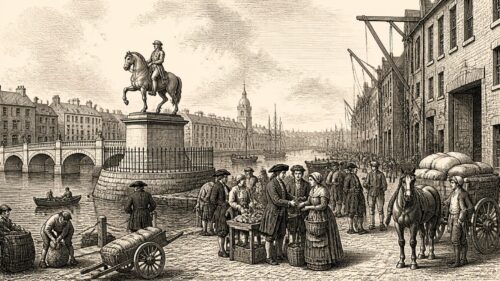
In 1722 George I authorised English ironmaster William Wood to mint up to 360 tons of copper halfpence and farthings for Ireland, initiating a controversy over currency, trade and political authority. Issued in London without Irish parliamentary consultation, the fourteen-year patent alarmed critics amid Ireland’s restricted autonomy following the 1720 Declaratory Act, although Swift’s attacks and parliamentary condemnation came later. Ireland’s rural economy, unequal imperial trade and unreliable small change formed its background. Executive government, policing proclamations and penal restrictions demonstrated state power. Dublin simultaneously celebrated Hanoverian rule with George I’s statue, while print culture widened constitutional unease more widely.

Avoca River Co-operative
In 1723, Avoca in County Wicklow established a co-operative weaving mill where farmers brought wool for spinning, dyeing and weaving, alongside corn-grinding. Powered by the river and serving local households and mining communities, it illustrates rural adaptation despite restrictions on Irish woollen exports. Prolonged hot, dry weather brought relative agricultural stability, though drought posed risks. Ireland’s restricted Protestant Parliament considered revenue, manufacture, policing and trade. Wood’s English-minted copper coinage provoked anxieties over consent and commerce. Catholic Archbishop Bernard O’Gara’s appointment demonstrated institutional resilience under penal laws. Claims that Dr Steevens’ Hospital opened that year are unsupported; it opened in 1733.

Harding’s Brass Defiance
In 1724, opposition to William Wood’s London-authorised copper coinage transformed a dispute over halfpence into a national argument about economic trust, political consent and Irish interests. Jonathan Swift’s anonymous Drapier’s Letters, printed by John Harding, encouraged householders, merchants and bankers to refuse the coins, despite official assurances of their quality. Dublin declarations, grand jury support and Harding’s prosecution threats demonstrated print’s political power, while Lord Lieutenant Carteret confronted mounting resistance. The patent remained valid until 1725, but could not circulate effectively. The year also saw Hugh Boulter’s primacy, the Neal brothers’ landmark Irish tune collection, and a total solar eclipse.
Antrim and the Grand Lodge
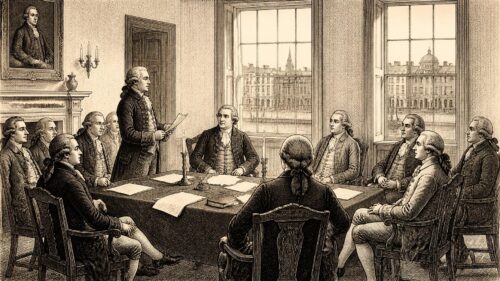
In 1725, Ireland’s significance lay in institutional and political tensions rather than a single decisive event. Lord Carteret suspended William Wood’s contested halfpence patent, demonstrating the force of opposition mobilised by Jonathan Swift while leaving Ireland subordinate to Westminster. His administration exposed a treasury deficit and renewed reliance on parliamentary patronage. The Synod of Ulster created the Presbytery of Antrim for non-subscribing ministers, deepening Presbyterian divisions over conscience and confessional authority. Dublin’s first surviving Grand Lodge meeting recorded freemasonry’s organisation. These developments unfolded within a rural, unequal Protestant state, where Catholics and Presbyterians faced disabilities and economic life remained vulnerable.

Gulliver and Dublin’s Flora
In 1726, Ireland’s constrained Protestant polity, governed within British authority, regulated religious and private life while excluding Catholics from power. Lord Lieutenant Carteret and Archbishop Boulter represented competing Dublin and London priorities. Jonathan Swift’s anonymously published Gulliver’s Travels, shaped by Irish political experience, achieved immediate success as wide-ranging satire. The previous day, Caleb Threlkeld published the first Irish flora, cataloguing Dublin-area plants in Latin, English and Irish and linking observation, medicine and vernacular knowledge. Linen exports demonstrated commercial integration, yet rural society remained vulnerable. A failed harvest and rising prices inaugurated late-1720s scarcity, revealing prosperity’s uneven distribution across the kingdom.
Youghal’s Grain Barrier
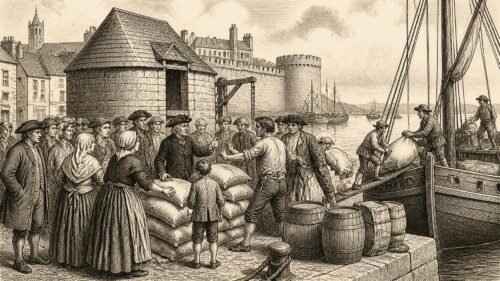
In 1727, Ireland experienced political continuity alongside acute social insecurity. George II succeeded George I, and a new Irish parliament assembled under a Protestant establishment managed through Dublin and London. Qualified Catholic freeholders still voted in the election, although legislation passed in 1728 subsequently disfranchised them. Harvest weakness and dear grain provoked resistance at Youghal and elsewhere to exports and interregional shipments, exposing conflict between commerce and subsistence. Linen exports did not ensure welfare. Swift criticised structural poverty, while Dublin’s workhouse expanded foundling provision amid uncertainty over dates. The year revealed unequal access to political rights, food, care and markets.

The Catholic Franchise Ends
In 1728, Irish legislation disfranchised Roman Catholics, excluding the Catholic majority from parliamentary elections and legal employment while reinforcing Protestant Ascendancy within a constitutionally dependent kingdom. Parliament also contemplated replacing dilapidated Chichester House. A severe harvest failure intensified the 1727–29 subsistence crisis, raising grain prices and exposing tenants, labourers and smallholders to hunger despite local charitable relief. Efforts to promote tillage reflected tensions between grazing exports and food security. Emigration from Belfast to America signalled economic pressure. Brooking’s Dublin map portrayed civic confidence amid poverty. Esther Johnson’s death, Swift’s political writing, and Matthew Dubourg’s appointment marked cultural life that year.
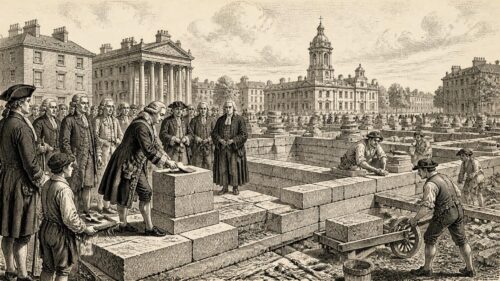
College Green’s First Stone
In 1729, Ireland displayed striking contrasts between elite ambition, commercial regulation and widespread hardship. Dublin’s new Parliament House began at College Green, while Castletown House was completed, both symbolising Protestant landed power despite Catholic exclusion from politics. Continuing scarcity after failed harvests left poorer households vulnerable to hunger, begging and displacement; Dublin expanded workhouse provision, combining relief with discipline. Jonathan Swift’s A Modest Proposal transformed these conditions into devastating satire. The Ballast Offices Act sought to improve provincial ports and maritime trade. Deaths of William Conolly, Archbishop William King and poet Aogán Ó Rathaille marked political, ecclesiastical and cultural transitions.
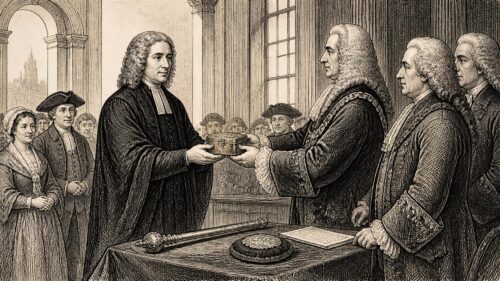
Swift’s Gold Freedom Box
In 1730 Dublin Corporation granted Jonathan Swift the freedom of the city in a gold civic box, recognising the dean and author’s influence after the Drapier’s Letters. The ceremony illuminated Protestant-controlled municipal power, print culture and exclusion. During transition between viceroys, resident officials dominated administration; Ireland’s Parliament remained subordinate to Britain and restricted to propertied Protestants. Legislation against workers’ combinations exposed insecure urban labour and regulation of growing Dublin. Early toll roads signalled commercial development, while agriculture, linen production, markets and weather shaped livelihoods. Established Anglican authority contrasted with the restricted but enduring Catholic majority and disadvantaged Presbyterians, revealing inequality.

College Green’s First Session
In 1731, Dublin witnessed institutional developments that illuminated eighteenth-century Ireland’s unequal political and social order. Thomas Prior, Samuel Madden and fellow Protestant elites founded the Dublin Society to promote agriculture, manufactures and useful knowledge, creating a forum for economic improvement. In October, the Irish parliament first met in Edward Lovett Pearce’s Parliament House on College Green, a grand but constitutionally constrained home for a legislature representing Protestants alone. Its session considered regulation and transport, including roads. Meanwhile, the Lords’ hostile inquiry into popery documented enduring Catholic worship, clergy, schools and religious communities, exposing the narrow social base of Protestant rule.
Boulter’s Return and Burgh’s Library
In 1732, Irish institutions revealed tensions within a Protestant-governed, predominantly Catholic society. Hugh Boulter’s Lords’ inquiry counted extensive Catholic clergy, worship, schools and religious houses, prompting renewed enforcement of penal laws, while also exposing uneven local practice. Parliament reduced the maximum interest rate to six per cent, reflecting an expanding but unequal commercial economy. Trinity College Dublin’s Burgh-designed Library was completed, symbolising privileged Protestant learning. George Grierson became king’s printer, but Constantia Grierson’s death diminished Dublin letters. In Paris, Begley and MacCurtin published the first comprehensive English–Irish dictionary. Dublin also published Berkeley’s Christian defence, Alciphron, illustrating religious and intellectual debate.
Burton’s Bank and Steevens’ Doors
In 1733, Ireland experienced influenza, financial insecurity and institutional change centred on Dublin. Dr Steevens’ Hospital opened, providing treatment for workers while imposing rules of admission and patronage. Ben and Samuel Burton’s bank collapsed, exposing dependence on credit. Parliament returned, raised revenue duties and elected Henry Boyle Speaker, while proclamations targeted smuggling and disorder. George II chartered the Protestant charter-school society to educate and convert poor Catholic children. The Dublin Society promoted agriculture, minerals and manufactures. Cultural life included Samuel Madden’s fiction, the death of Irish-language poet Séamas Dall Mac Cuarta, Richard Kirwan’s birth, and architect Edward Lovett Pearce’s death.

Mercer’s Ten Beds
In 1734, Ireland’s Protestant governing order reinforced religious exclusion while managing finance, charity and urban growth. Parliament, restricted by property, Protestant franchise and Poynings’ Law, aided creditors after the failure of Burton’s banking partnerships and barred Catholic-connected converts from magistracy. George Berkeley became bishop of Cloyne, beginning an episcopate later associated with social concerns. Dublin’s Mercer’s Hospital opened ten beds for sick poor people, supported by voluntary philanthropy and unpaid medical service. Cultural life expanded through Faulkner’s Swift edition, newspapers and the Aungier Street theatre, after damage at Smock Alley. Official proclamations against crime indicated anxieties over security and disorder.
Cork’s Workhouse Blueprint
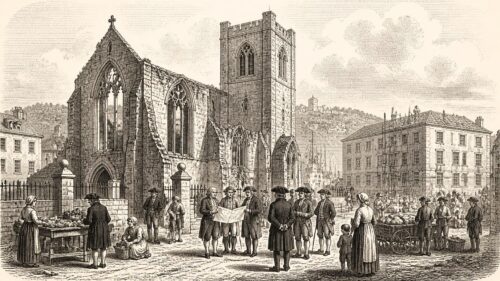
In 1735, Ireland’s Protestant governing system addressed poverty, security and economic improvement through parliamentary proposals, proclamations and print. Dublin’s parliament, constrained by Poynings’ Law and dominated by property-owning Protestants, considered measures reinforcing Catholic exclusion from juries and restricting mixed marriages. Cork advanced plans for St Fin Barre’s reconstruction and a workhouse combining relief, labour discipline, foundling care and Protestant instruction; legislation passed in 1736. Road schemes and liquor-credit regulation reflected social concerns. Proclamations pursued robbers across counties. George Berkeley’s Querist promoted debate on employment, consumption and national resources, while Protestant schooling and Ulster Scots print illustrated confessional and cultural currents.

Agistment and the Legion Club
In 1736, Ireland’s Protestant ruling order was tested and displayed through disputes, legislation, commemoration and print. The Commons opposed tithe on agistment, favouring landed interests against Church of Ireland clergy; Jonathan Swift attacked legislators in The Legion Club. Cork’s new civic arrangements combined cathedral rebuilding with a workhouse providing relief, discipline and compulsory labour. Dorset founded the Boyne obelisk, affirming a Protestant interpretation of Williamite victory. Catholic bishop James Gallagher published Irish-language sermons in Dublin, demonstrating resilient Catholic culture under penal restrictions. James Hamilton’s Dublin Daily Advertiser, the city’s first daily newspaper, reflected expanding commercial communication under unequal Protestant rule.
Joy’s First News-Letter
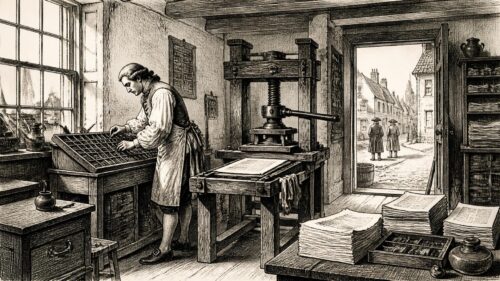
In 1737, William Cavendish, third duke of Devonshire, became lord lieutenant, linking Dublin administration to Walpole’s London government as Parliament convened under Protestant landed dominance. Proclamations addressed gold, silver and copper currency, crime, riots, vagrancy and begging, revealing official dependence on magistrates, rewards and local knowledge. George Berkeley’s Querist advocated economic improvement while reflecting elite assumptions about poverty and labour. Francis Joy founded the Belfast News-Letter, creating a provincial news channel despite limited readership. Religious divisions persisted under penal laws, while trade, linen and agriculture connected Ireland unequally to British and Atlantic markets. The year exposed social vulnerability without crisis.

Madden’s Rain-Soaked Harvest
In 1738, Ireland experienced a wet, delayed farming season, documented in Cathal Ó Conchubhair’s Irish-language diary through delayed harvests and turf work, exposing rural dependence on weather, fuel and mixed crops. Samuel Madden urged Protestant landlords to promote estate management, agriculture, flax, education and manufacture, though his improvement scheme preserved inequalities. Parliament remained prorogued while government addressed robbery through proclamations and rewards. The deaths of harper Turlough O’Carolan and Dublin educator Thomas Sheridan marked losses. Roxborough Castle’s construction and Richard Montgomery’s birth reflected investment and Protestant Atlantic opportunities. The year revealed social division, economic ambition and environmental vulnerability without famine.
Santry’s Verdict and Frost
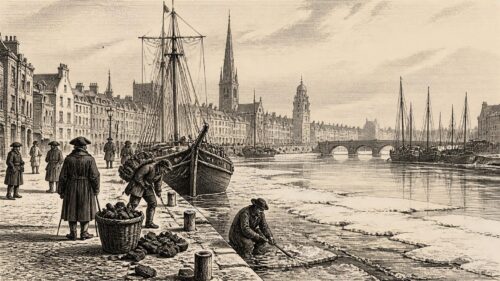
In 1739, Ireland’s unequal political and social order faced mounting pressures from justice, taxation, war, religious discrimination, infrastructure and weather. Lord Santry’s conviction for murdering Laughlin Murphy demonstrated aristocratic accountability but also privilege, as petitions later secured his pardon. Parliament raised duties to support imperial needs, while Britain’s war with Spain affected trade and prompted renewed Catholic disarmament; Catholic petitioners sought secure leases. The Dublin Society promoted flax, linen and road improvements, though storms revealed vulnerable bridges, mills and transport. After a wet summer disrupted harvests and turf cutting, severe frost soon arrived in late December, foreshadowing 1740–41’s catastrophic famine.
Dublin’s Bread Rising
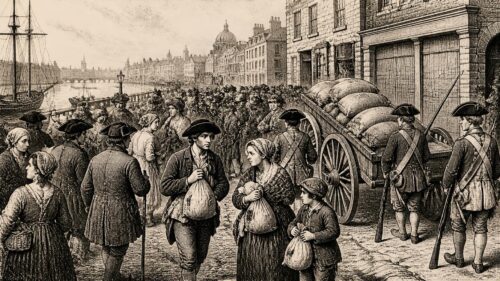
In 1740, severe frost followed by drought disrupted Ireland’s potatoes, grain, livestock and food distribution, initiating the famine 1741. Rising prices made provisions inaccessible to labourers and cottiers, while Dublin crowds rioted from 31 May to 2 June, seizing and redistributing bread, meal and beef at lower prices. Authorities banned food exports, pursued alleged market manipulators, imposed port restrictions and offered rewards, but parliament did not organise comprehensive relief. Archbishop Boulter and charities provided fragmented assistance. The crisis exposed inequalities in landholding, markets and welfare, while autumn brought no recovery before renewed winter, fever and dysentery worsened famine in 1741.
Fishamble Street Amid Famine
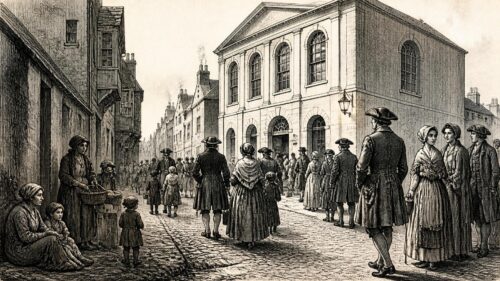
In 1741, Ireland endured the deadliest phase of the 1740–41 Great Frost famine, or Bliain an Áir. Freeze, drought, crop and livestock failures, lost employment and soaring prices caused widespread hunger, while fever and dysentery devastated weakened populations. Estimated deaths across the crisis reached 310,000–480,000, though records remain incomplete. Relief was fragmented, relying on local charity, imports, employment schemes and municipal action. An improved harvest and falling prices eased scarcity late in the year, but disease and hardship persisted. Amid extreme inequality, Dublin opened Fishamble Street’s Music Hall and welcomed Handel, while Killiney Hill relief works commemorated suffering and employment.
Fishamble Street’s Charity Messiah
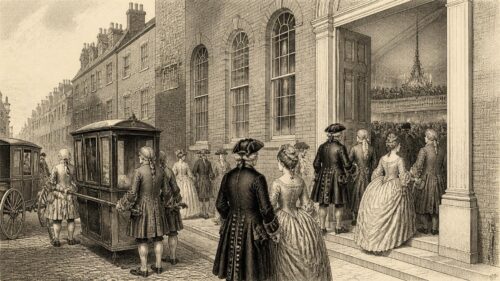
In 1742, Ireland remained weakened by the Great Frost famine, with hunger, disease and poverty continuing despite improving conditions. Recovery efforts included the Cope’s voyage carrying Tyrone coal to Dublin via the new Newry navigation, demonstrating improved transport and trade potential. Dublin’s cultural life produced Handel’s Messiah, first performed in Fishamble Street on 13 April for hospitals and imprisoned debtors. Government operated without a parliamentary session through Dublin Castle proclamations, while religious inequalities persisted. Jonathan Swift’s incapacity and Archbishop Hugh Boulter’s death marked losses within the established order. The year combined charitable action, infrastructure, cultural achievement and lingering social crisis.

Lucas and Dublin’s Aldermen
In 1743, Charles Lucas challenged Dublin aldermen's control over elections, accounts and patronage, arguing that the Corporation's wider body should choose aldermen. His April Remonstrance and demands to print accounts widened the dispute through print and legal argument, although recorder Eaton Stannard ruled for the aldermen in October. The conflict promoted civic accountability but remained confined to Protestant corporate citizens, excluding Catholics and Dissenters. Arthur Jones Nevill became Surveyor General, linking public works to Castle patronage. Proclamations addressed crime, ports and quarantine, while a linen bounty integrated Irish production into British Atlantic trade. Recovery from the Great Frost remained precarious.

Pill Lane and the Rot Year
Ireland in 1744 combined political control, social vulnerability and tentative institutional improvement. With the Anglican parliament prorogued, Dublin Castle governed through proclamations addressing foreign military recruitment, disorder, crime, war with France and maritime quarantine. In February, a house collapsed during Catholic Mass in Dublin’s Pill Lane, killing priest and nine worshippers, exposing hazards intensified by penal restrictions. Dublin also founded the Physico-Historical Society and Hospital for Incurables, while cultural life included Spranger Barry’s theatre debut and developing drawing instruction. Arthur Price became archbishop of Cashel. A wet, cold autumn damaged northern oats and potatoes, reviving fears after the 1740–41 famine.
Swift’s Last Autumn
In 1745, Ireland remained peaceful during the Jacobite rising, yet was deeply implicated in the wider Stuart crisis. Lord Lieutenant Chesterfield combined surveillance and preparedness with relative restraint towards Catholics, while restricting provisions exports and proclaiming rewards, fasts and grain controls. Irish expatriates advised Charles Edward Stuart, and the French Irish Brigade distinguished itself at Fontenoy, though no Irish rebellion materialised. Food regulation, markets and linen petitions reflected wartime economic anxieties after scarcity. Dublin retained vitality: Thomas Sheridan managed Smock Alley Theatre, while Jonathan Swift died, leaving funds for St Patrick’s Hospital. Ireland’s calm concealed penal inequality and international entanglements.

Culloden and the Salt-Meat Embargo
In 1746, Ireland experienced the repercussions of Culloden rather than battle, as Irish exiles in French service fought for the Jacobites while Dublin Castle guarded against recruitment and disorder. Chesterfield’s administration ended amid continuing Catholic exclusion and official caution. Poor harvests, wartime demand and trade disruption prompted embargoes on provisions and salted meat, alongside grain imports and quarantine changes. Government proclamations targeted outlaws, organised fasts, and extended authority through local institutions. Westminster restricted Irish glass exports, while linen remained encouraged. John Cennick began Moravian work in Dublin, and Jonathan Swift’s bequest secured St Patrick’s Hospital’s legal foundation, illustrating charitable change.

Stone’s Primacy, Wesley’s Landing
In 1747, Ireland saw no single decisive event, but political, religious, cultural and social tensions were visible. George Stone became Church of Ireland archbishop of Armagh and a lord justice, strengthening Protestant administrative power under a restricted constitution. Catholic leadership changed through episcopal deaths and appointments, sustained by clerical and continental networks despite penal laws. John and Charles Wesley made their first Irish visits, while Edmund Burke helped found a Trinity debating club. Dublin’s Kelly riots exposed disputes over privilege and theatre authority. Proclamations addressed quarantine, rural crime, weavers’ unrest and rioting, reflecting hardship, trade and fragile order after famine.

Burgesses and Kildare House
In 1748, Ireland’s restricted Protestant political order was highlighted by the Newtown Act, which regularised non-resident burgesses and potentially strengthened borough patronage, while excluding Catholics and dissenters from power. Completion of James FitzGerald’s Palladian Kildare House demonstrated aristocratic wealth, influence and Dublin’s southward expansion. Wartime fasts and embargoes gave way to ceasefires and the Treaty of Aix-la-Chapelle, though rural households remained economically insecure within imperial trading constraints. Proclamations against robbery, intimidation and arson reflected official anxieties over order. Catholic organisation persisted despite Penal Laws, marked by Archbishop Ross Roe MacMahon’s death, while early Methodist preaching added to Ireland’s religious landscape.

Lucas’s Censor and Cork’s Swadlers
In 1749, Irish tensions appeared in political print, official measures, economic debate and religious conflict. Dublin apothecary Charles Lucas used The Censor and civic addresses to challenge municipal corruption, defend Protestant constitutional rights and question Dublin Castle’s authority. Parliament denounced his publications as seditious, ordered his arrest, and forced his flight. Government proclamations addressed quarantine, coin clipping and rural crime, reflecting administrative reliance on local institutions and military power. Thomas Waite’s account emphasised linen, restricted woollen trade and military spending, while improvement schemes favoured elite direction. In Cork, Charles Wesley’s Methodism provoked unrest, exposing intersecting confessional, civic and social rivalries.

The Dublin Society Charter
In 1750, George II chartered the Dublin Society for Promoting Husbandry and Other Useful Arts, formalising an elite-led body that encouraged agricultural, industrial and artistic improvement through premiums, advice and practical education. Its drawing-school association, though imprecisely dated, reflected efforts to train craftsmen. In December, the Duke of Dorset returned as lord lieutenant, reshaping political expectations before later conflicts over revenue and executive authority. Charles Lucas, writing from London, advanced civic arguments in print. Beneath these institutional developments lay restricted representation, Anglican privilege, penal disabilities, unequal commerce and rural insecurity, despite population growth, agricultural adaptation, and Ulster’s expanding linen economy.

Clements’s Phoenix Lodge
In 1751, Nathaniel Clements became ranger of Phoenix Park and began the lodge later transformed into Áras an Uachtaráin, embodying the Palladian authority of Ireland’s Protestant elite. The shortened legal year, preceding Gregorian reform, altered timekeeping. Architect Richard Castle died, while actor Peg Woffington returned to Dublin’s Theatre Royal, illustrating cultural connections. Debate over Burton’s Bank’s 1733 collapse exposed insecurity. Parliament, dominated by Protestant interests and excluding Catholics, considered revenue, commerce, law, roads and charitable medicine, including Cork Infirmary. These developments reveal a connected Georgian Ireland whose growth, administration and institutions rested upon inequalities of religious, property and political power.
The Missing September
In 1752 Ireland adopted the Gregorian calendar, so Wednesday 2 September was followed by Thursday 14 September, while the civil year now began on 1 January. The reform affected administration, commerce, courts and worship, though no evidence supports later tales of calendar riots. Commissioners for inland navigation were incorporated, signalling ambitions to improve trade despite difficult travel. Dublin gained Ireland’s first purpose-built Methodist chapel; Killaloe and Kilfenora bishoprics were united. Belfast merchants founded the Charitable Society to address poverty amid commercial expansion tied to Atlantic slavery. Under Protestant political dominance, Catholics remained excluded and inequalities persisted deeply across Irish society.

Boyle’s Surplus and Essex Bridge
In 1753, Ireland’s exchequer surplus provoked a constitutional crisis when the Dublin Commons, led by Speaker Henry Boyle, rejected a debt bill returned from Britain with Crown control over expenditure. The dispute affirmed Commons resistance to executive interference but exposed the limits of parliament under Poynings’ Law, Protestant ascendancy and Westminster’s claimed supremacy; bargaining continued for years. In Dublin, the failing Essex Bridge was dismantled and replacement foundations begun, disrupting traffic while signalling Georgian engineering ambition. Authorities also addressed coal prices, begging, street cleaning and Kildare unrest. George Berkeley died in Oxford, ending an episcopate marked by practical improvement schemes.
Mahomet, Money and Navan
In 1754, Ireland’s unresolved dispute over public revenue sharpened conflict between the Irish Commons, Dublin Castle and Britain, despite Parliament’s restricted Protestant character. At Dublin’s Smock Alley Theatre, a performance of Mahomet provoked a political riot, damaging the theatre and forcing manager Thomas Sheridan’s departure. Days later, Dillon, Ferrall and Company failed, exposing the fragility of private banking and commercial credit. At Navan, the County of Meath Infirmary, supported by subscription, began providing modest organised care for poor patients. The year also saw notable improvement projects, historical and commercial print, and the death of Irish-language poet Seán Clárach Mac Domhnaill.
Essex Bridge and Atlantic Waves
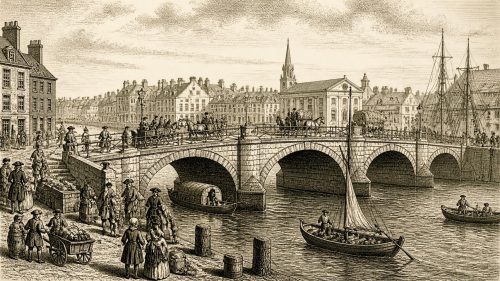
In 1755, Ireland remained a Protestant-controlled kingdom constrained by Britain, with Catholics and Presbyterians excluded from political rights. William Cavendish became lord lieutenant as parliament resumed under a narrow electorate. Dublin’s Essex Bridge opened, improving movement across the Liffey, while Luke Gardiner’s death marked his influence on planned urban development. Banking failures exposed fragile commercial credit, despite linen’s importance. Thomas Omer began Shannon navigation works, seeking inland connectivity. Russborough House displayed landed wealth; Moravian activity illustrated religious diversity; and the Irish Artillery Company reflected tensions. Lisbon’s earthquake and tsunami disturbed Irish coasts, damaging Galway’s Spanish Arch and demonstrating Atlantic connections.

Rocque’s Four Sheets
John Rocque’s four-sheet Exact Survey of Dublin, completed in September 1756, provided an exceptionally detailed record of the capital’s streets, buildings, yards and commercial spaces. Prepared after his 1754 arrival and presented to the Lords Justices, it demonstrated Dublin’s growing administrative and economic importance. The map did not encompass Ireland or alter its entrenched inequalities. Daily life remained shaped by small-scale agriculture, unequal landholding, an expanding linen trade, Catholic disabilities and Protestant landlord power. Nevertheless, 1756 also saw political control shift in Dublin and war with France proclaimed in Ireland, exposing inherited structures to international pressure and closer governmental scrutiny.

Swift’s Patients, Mosse’s Rotunda
In 1757, Protestant-ruled Ireland remained politically restricted under Poynings’ Law and the penal code, while Dublin witnessed significant institutional beginnings. Lord Lieutenant Bedford’s dispute with John Ponsonby exposed rivalries within the governing Protestant elite, against the background of the Seven Years’ War. Charles O’Conor, John Curry and Thomas Wyse initiated cautious Catholic political organisation, later associated with the Catholic Committee. St Patrick’s Hospital, funded through Jonathan Swift’s bequest, admitted its first patients, while Bartholomew Mosse opened his purpose-built lying-in hospital at Rutland Square. Parliament also authorised the Wide Streets project, initiating statutory urban redevelopment and reshaping access to Dublin Castle.
Dublin Trader, Killarney Inns
In 1758, Ireland’s administration relied on proclamations while parliament was repeatedly postponed, revealing tensions over property, livestock and authority. Dublin’s Wide Streets Commissioners became operational, and Grand Canal construction continued, signalling improvement schemes. War shaped fast days and maritime quarantine, while the Dublin Trader wreck killed the Earl of Drogheda, his son and actor Theophilus Cibber. Land reclamation at Ballyconneely and Lucan’s sulphurous spring reflected efforts to exploit landscape. Richard Pococke noted Killarney’s improving inns but Timoleague’s poverty. Mary Shackleton’s birth at Ballitore linked the year to a Quaker chronicler. Records show Ireland reshaped by movement, development, commerce and vulnerability.
Ponsonby’s Riot, Guinness’s Lease
In 1759, Ireland, a separate but constitutionally restricted kingdom under George II, experienced political unrest and urban change. On 3 December, Dublin crowds invaded Parliament House over a false union rumour, demonstrating Protestant civic patriotism, economic anxiety and expanding popular political engagement. Speaker John Ponsonby helped restore calm, while Henry Flood entered Parliament. Catholics, still excluded from political power, promoted a loyal address to the Crown. Dublin's economy depended on agriculture, linen, trade and regulated industries. Arthur Guinness leased St James's Gate brewery for 9,000 years. Trinity's West Front was completed, and Bartholomew Mosse's maternity hospital survived its founder's death.
Thurot at Carrickfergus
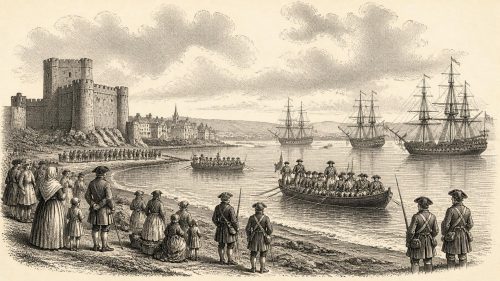
In February 1760, François Thurot’s French force of about 600 men captured Carrickfergus, requisitioned supplies and threatened Belfast, prompting local defences, negotiations and widespread mobilisation. The raiders departed on 26 February and were defeated two days later off the Isle of Man, where Thurot was killed. The episode exposed Ireland’s coastal vulnerability during the Seven Years’ War. In Dublin, Catholics established a committee to seek cautious relief from penal laws, supported by public debate. George II’s death brought George III’s accession, dissolution of parliament and electoral agitation. Rural insecurity, religious inequality and surviving Gaelic musical traditions also shaped Irish life.
Ballyporeen’s White Shirts
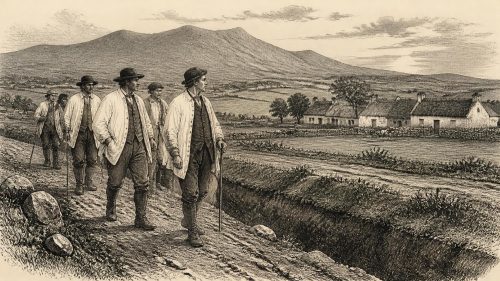
In 1761, George III’s accession prompted Ireland’s first general election since 1727 and a new parliament, where Charles Lucas and other patriots challenged restrictions on legislative control of revenue. Yet the year’s most significant development began in southern Tipperary, where Whiteboys around Ballyporeen resisted enclosures, tithe demands and local exactions through nocturnal, disguised collective action. Initially called Levellers, they established methods later rural movements adopted. Galway’s Protestant corporation sought to restrict Catholic commercial activity through the Black Petition. Meanwhile, the Seven Years’ War brought naval impressment. The year exposed constitutional weakness, confessional exclusion and rural insecurity without producing national rebellion.
Halifax’s Whiteboy Spring
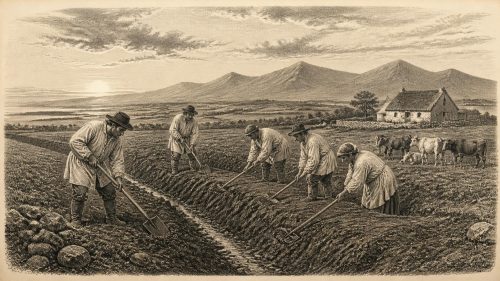
In 1762, Spain’s entry into the Seven Years’ War heightened fears of invasion, prompting Lord Lieutenant Halifax to review Irish defences amid privateering and controls on provisioning. Dublin’s Protestant parliament considered, but London rejected, septennial parliaments; legislation reinforced Protestant land titles while regulating commerce, roads and urban services. In Munster, Whiteboy protest spread against enclosure, rents, tithes and exactions, provoking troops and arrests but reflecting agrarian distress rather than a sectarian conspiracy. Dublin also saw church building, civic regulations and Macklin’s comedy. Halifax left in May; a December Anglo-Spanish armistice reduced danger without resolving Ireland’s religious, constitutional or rural inequalities.
Oakboys and the Lord Hertford
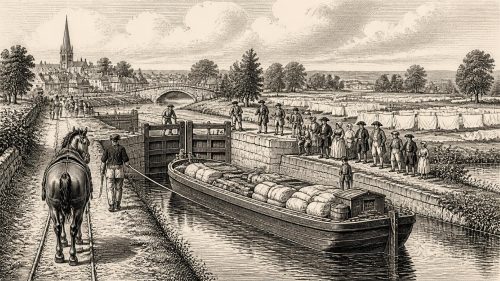
In 1763, Ireland’s expanding economy exposed social and religious inequalities. The Treaty of Paris ended the Seven Years’ War, reshaping imperial trade while restrictions continued to limit Irish commerce, except the linen industry. In Ulster, the Hearts of Oak protested county cess, compulsory road labour, tithes and established-church charges; troops and local concessions contained them. Conversely, the Lagan Navigation opened between Belfast and Lisburn, improving transport for linen and bulk goods while highlighting unequal costs of development. Hugh Percy became lord lieutenant, and the Freeman’s Journal began publishing. Catholic and Presbyterian institutions also developed despite penal laws and Protestant privilege.
Linen, Salmon and Turnpikes
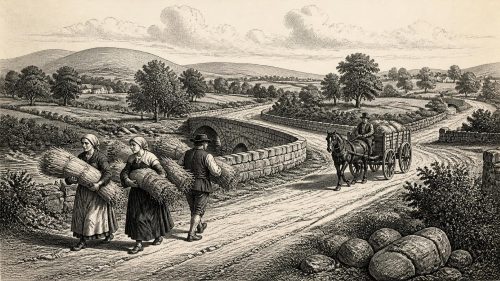
In 1764, Ireland's Protestant-led parliament enacted wide-ranging legislation on linen, fisheries, roads, urban regulation, prisons, trade and public order. Measures promoted manufacture, navigation and turnpikes while regulating coal, food, markets, charitable gifts and civic administration. Linen exports demonstrated economic importance but also dependence on imperial constraints. Acts concerning land burning, salmon, tithes, Protestant property and riots reflected rural conflict, environmental pressures and the continuing Whiteboy movement. Government operated through Dublin Castle, Lord Lieutenant Northumberland and powerful undertakers, as George Stone and Henry Boyle died. Cultural developments included Old Moore's Almanac, William Ashford's arrival, and births of Emmet, O'Conor and Hope.
Denny’s Leeson Street Refuge
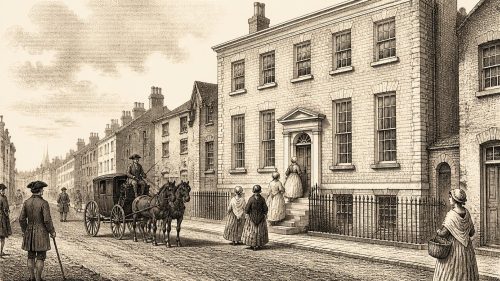
In 1765, Ireland’s contrasting institutions exposed mid-Georgian inequalities and efforts at control. Francis Seymour-Conway, earl of Hertford, became lord lieutenant as ministers sought resident rule, while parliamentary debates over septennial parliaments and grain exports revealed Ireland’s restricted autonomy under Poynings’ Law. The Whiteboy movement’s aftermath prompted coercive legislation, though the Whiteboy Act received assent only in 1766, reflecting conflicts over land, tithes and subsistence. In Dublin, Lady Arabella Denny founded the Magdalen Asylum for unmarried mothers and other stigmatised women, combining relief with discipline. In County Antrim, Gracehill’s Moravian church and Sisters’ House embodied ordered, transnational religious community in Ireland.
Sheehy and the Household Roll
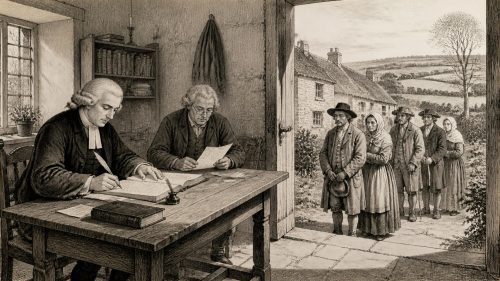
In 1766, Ireland’s Protestant authorities ordered a religious return distinguishing Protestant and Catholic householders and listing Catholic clergy. Conducted unevenly by Church of Ireland ministers, it revealed confessional inequality but survives only fragmentarily. In south Tipperary, Father Nicholas Sheehy, sympathetic to agrarian grievances associated with the Whiteboys, became a target of anxious magistrates and gentry. Acquitted of rebellion charges, he was convicted of murder despite disputed evidence and executed at Clonmel. Further executions followed. These events exposed a state classifying an excluded Catholic majority while repressing rural resistance amid commercialising agriculture, constitutional constraints, Protestant dominance, and fears of Catholic disloyalty.
Townshend at Dublin Castle
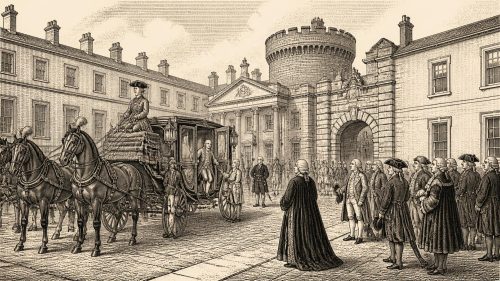
In 1767 George Townshend became resident lord lieutenant, strengthening Dublin Castle’s presence and preparing conflict with parliamentary undertakers led by John Ponsonby. Parliament debated increased Irish funding for imperial troops alongside proposals for regular parliaments and secure judicial tenure, though settlement came later. In Belfast, Lord Donegall’s extensive leases reshaped property, encouraged development and served estate income within the expanding linen economy. Dublin’s Magdalen Asylum, founded by Lady Arabella Denny, provided Protestant women relief, work and strict moral supervision. John O’Keeffe’s theatrical debut reflected cultural vitality. Together, these developments exposed Ireland’s commercial and institutional change amid narrow Protestant political control.
Lucas’s Eight-Year Parliament
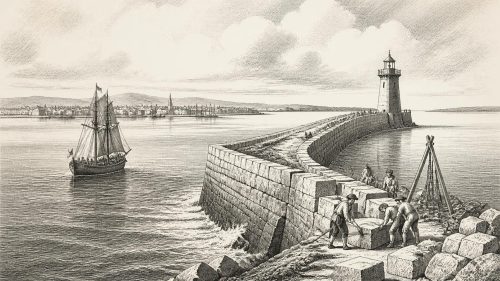
In 1768, Ireland’s Octennial Act received royal assent, limiting parliaments to eight years and prompting dissolution of the 1761 parliament and summer elections. Championed by Charles Lucas, it established regular electoral expectations but preserved Poynings’ Law, Protestant dominance and Catholic exclusion. Lord Lieutenant George Townshend’s proposed expansion of the Irish army was narrowly rejected, exposing conflict between Dublin Castle and parliamentary undertakers and encouraging his later patronage strategy. The new parliament did not sit until 1769. Elsewhere, Frederick Hervey became bishop of Derry, John O’Brien’s Irish-English dictionary appeared in Paris, and Poolbeg’s maritime works advanced Dublin’s commercial access and navigation.
The Commons’ Rejected Supply
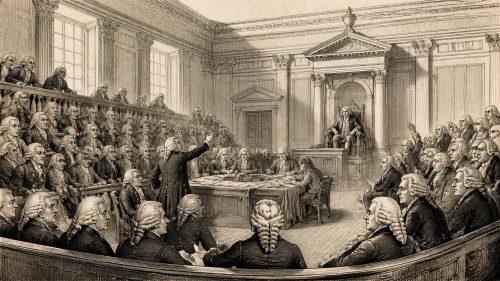
In 1769, Ireland’s octennial parliament confronted Dublin Castle when the Commons rejected a supply bill, 94–71, insisting that money measures must originate in the House rather than under Poynings’ Law. The dispute reflected Townshend’s effort to end dependence on undertakers Ponsonby and Shannon, while securing an enlarged army, approved in December. Catholic exclusion and borough franchises framed this Protestant contest. Elsewhere, James Agar was killed by Henry Flood in a Callan patronage feud; authorities suppressed labour combinations; Shannon navigation improvements culminated; and the Hibernian Society gained its charter. The supply vote exposed limits and prompted Castle plans to reshape administration.
Townshend’s Provision Embargo
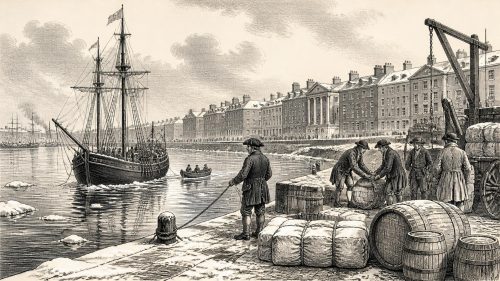
In 1770, Ireland was governed during Parliament’s prorogation as Lord Townshend used patronage to weaken parliamentary undertakers and strengthen Dublin Castle. Westminster sustained bounties supporting Irish linen, while the Dublin Society promoted economic improvement. Quarantine regulations monitored shipping routes and goods amid fears of plague. In December, authorities embargoed provision-laden vessels, reflecting concern over supplies without proving famine; butter received exemption in 1771. Catholic and Presbyterian exclusion, landlord power and dependence on agriculture and exports persisted. Trinity’s College Historical Society began meeting, while Burke and Goldsmith published works. The year reveals an unequal kingdom managed through law, commerce and patronage.

Robinson’s Library, Pery’s Chair
In 1771, Edmund Sexten Pery’s election as Speaker signalled Dublin Castle’s growing ability under Lord Lieutenant George Townshend to organise parliamentary support, though alliances remained fragile. The session beginning that autumn introduced improvement measures, including limited Catholic leases of reclaimed bog, later enacted in 1772. Belfast began building its poor-house and infirmary, later Clifton House, reflecting commercial growth, charitable discipline and medical provision. Archbishop Richard Robinson founded Armagh Public Library, extending learning beyond Dublin while expressing Church of Ireland authority. Grain imports and proposals for canals, navigation, streets, hospitals and reclamation revealed an economy dependent on trade, labour, uneven improvement.

Harcourt at Dublin Castle
In 1772, George Townshend’s departure and Simon Harcourt’s arrival as Lord Lieutenant altered Dublin Castle’s leadership without changing Ireland’s dependence on British imperial authority or its patronage-based, unrepresentative parliament. Ulster’s Hearts of Steel protest exposed rural insecurity over rents, leases, taxes and evictions; government answered with troops, targeted legislation and a later pardon, rather than structural reform. Parliament granted Catholics restricted long-term leases of bog land, a limited economic concession preserving wider penal disabilities. The London-Derry Journal’s foundation and revived siege commemoration illustrated print’s growing civic role. Meanwhile, linen, improvement and institutions coexisted with inequalities in land, religion and power.

Carriganima’s Lament
In 1773, the killing of Art Ó Laoghaire near Carriganima exposed the unequal legal position of Catholics in Ireland. His feud with magistrate Abraham Morris, involving a horse and penal legislation, inspired Eibhlín Dubh Ní Chonaill’s enduring Irish-language lament. Morris’s acquittal and the disputed burial reinforced perceptions of unequal justice. Nationally, Lord Lieutenant Harcourt’s unsuccessful absentee-tax proposal revealed financial strain, landlord influence and limits on Dublin’s parliament. Linen, woollen promotion and trade sustained a diverse but dependent economy, while volunteer corps reflected Protestant local society. Goldsmith’s success and Leland’s contested history illustrated Ireland’s contribution to, and disputes within, British culture.
Clifton House Opens
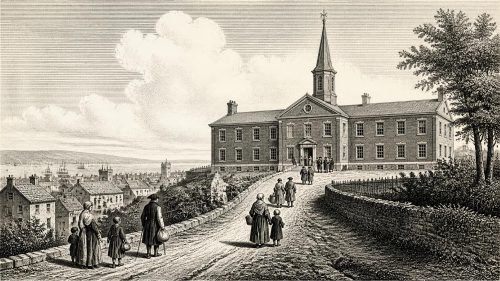
In 1774, Ireland saw developments reflecting urban growth, religious inequality and economic ambition. Belfast’s Charitable Society was incorporated, opened its Poor House and Infirmary, later Clifton House, and began admitting residents, providing elite-supervised relief amid poverty generated by commercial expansion. Parliament allowed Catholics to swear allegiance instead of supremacy, but preserved penal restrictions on property, education and political participation. In Armagh, Archbishop Richard Robinson’s infirmary and Royal School extended an Anglican institutional landscape. Legislation promoted Lagan navigation to link Belfast with inland trade, despite difficulties. Cultural landmarks included Thomas Leland’s History of Ireland, Oliver Goldsmith’s death, and Francis Beaufort’s birth.
Flood’s Office, Grattan’s Entrance
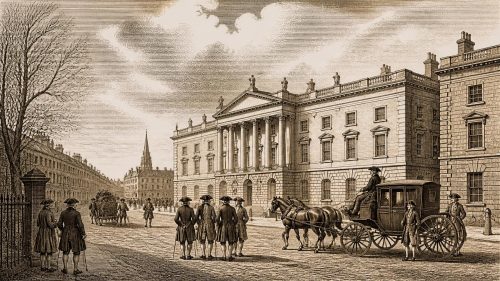
In 1775, the American war exposed tensions within Ireland’s restricted Protestant political order. Troop departures depleted the garrison, while authorities pragmatically tolerated Catholic recruitment despite penal disabilities. Atlantic links encouraged both loyalism and sympathy for the colonists, expressed in Dublin and Edmund Burke’s conciliation arguments. Henry Flood accepted office, weakening the Patriot interest, while Henry Grattan entered parliament through Charlemont patronage. Parliament managed supply and revenue under strong British influence. Catholics and Presbyterians remained disadvantaged, and debate connected religion, trade and constitutional constraints. War threatened linen markets and sharpened commercial grievances. Cultural life and tower damage reflected wider uncertainty locally.
Finn’s Leinster Declaration
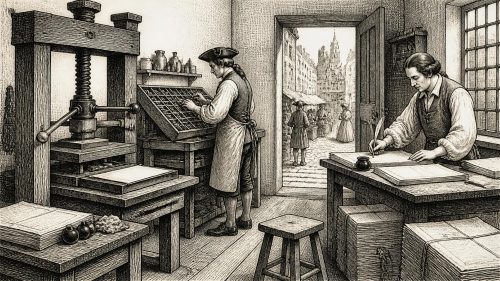
In 1776, Ireland, though a separate kingdom, was deeply affected by Britain’s war with the American colonies. An embargo on provisions exposed dependence on imperial trade, while the Tumultuous Risings Act targeted Whiteboy rural unrest rooted in land, tithe and tenancy grievances. Newspapers expanded political debate: Finn’s Leinster Journal printed the Declaration of Independence in August, and the Hibernian Magazine cautiously reproduced Paine’s Common Sense. Arthur Young’s travels recorded ports, linen districts and farms alongside poor roads, insecure smallholders and poverty. The year intensified awareness of inequality, constitutional constraint and economic vulnerability, foreshadowing campaigns for free trade and legislative independence.
Campbell’s Southern Survey
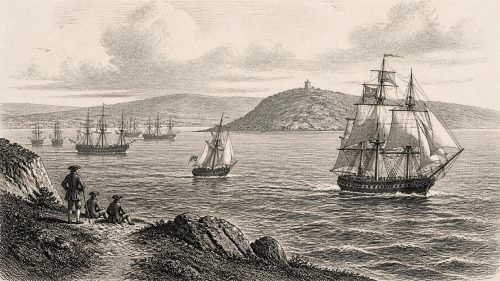
In 1777, Ireland felt the American war through disrupted markets, privateering and insecurity in the Irish Sea. Lord Buckinghamshire’s new Dublin Castle administration sought to preserve a system constrained by Westminster, franchises and Catholic exclusion. American privateers near Howth delayed linen shipping, threatening credit, employment and trade. Loss of colonial markets and provision embargoes exposed Ireland’s narrow, regulated economy. Thomas Campbell’s published survey criticised uneven development, inadequate institutions and penal exclusions, while advocating union rather than separation. Dublin’s theatre and print culture remained active. The year foreshadowed later Volunteer and free-trade crises, but did not deliver constitutional or commercial reform.
Ranger Off Carrickfergus
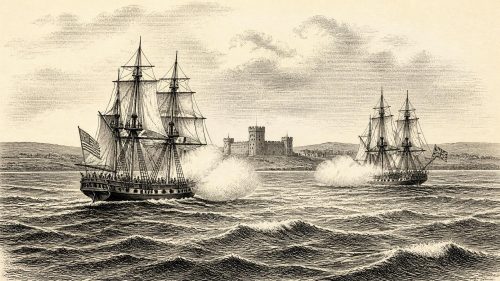
In 1778, Captain John Paul Jones’s Ranger captured HMS Drake off Carrickfergus, exposing Ireland’s weak coastal defences amid imperial war. Fear of attack encouraged Belfast’s first Volunteer company and similar locally organised Protestant corps, which later strengthened demands for political and commercial influence. Wartime disruption prompted limited trade concessions, though these fell far short of free trade and intensified Patriot dissatisfaction. Gardiner’s Catholic Relief Act improved property rights for qualifying Catholics but preserved political exclusion and most penal restrictions. Road building, cultivation, mapping and Dublin’s changing streetscape also reflected gradual improvement. Together, these developments revealed mounting pressures for Irish change.
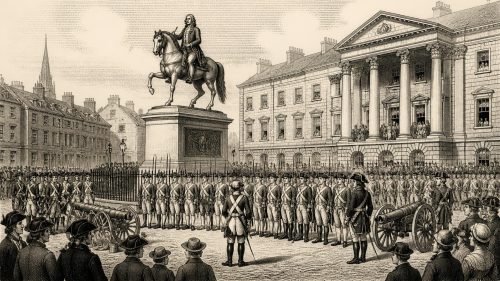
College Green’s Free-Trade Guns
During 1779, war with France and Spain exposed Ireland’s defences, encouraging the growth of locally organised, predominantly Protestant Volunteers. Their armed presence strengthened a campaign for freer trade, prompted by imperial restrictions, falling agricultural prices and impaired credit. Merchants, producers and Patriot MPs, notably Henry Grattan, pressed the Irish Commons to seek commercial relief and use control of supply against government. On 4 November, Dublin Volunteers paraded artillery outside Parliament House, demanding free trade. Crowds added disorderly pressure. Britain promised concessions, although legislation followed later. The agitation linked popular mobilisation with parliamentary action and anticipated demands for Irish legislative independence.

Belfast’s July Address
In 1780, Irish commercial concessions eased some restrictions on trade, but their dependence on Westminster reinforced Patriot demands for legislative authority. Henry Grattan’s April motion declaring that only Ireland’s King, Lords and Commons could legislate for the kingdom was defeated. On 13 July, 2,700 Ulster Volunteers assembled at Belfast and publicly endorsed the principle, transforming a defence force into a political movement. Volunteers connected civic organisation, commerce and constitutional agitation, although they were Protestant and excluded most Catholics. War, economic uncertainty and reform shaped the year. Administrative change brought Carlisle as lord lieutenant, but Ireland entered 1781 without legislative independence.

Gandon’s First Stone
In 1781, wartime pressures, commercial controls and constitutional unrest shaped Ireland. James Gandon began Dublin's Custom House, a decade-long project intended to strengthen revenue collection and redirect trade eastwards along the Liffey. Embargoes, quarantine measures and maritime crime exposed ports to imperial conflict. The Protestant-led Volunteers, initially raised for defence, increasingly demanded commercial freedom and Irish legislative autonomy, while parliament acknowledged influence without granting settlement. An Armagh meeting prepared the 1782 Dungannon convention. Meanwhile, Granard founded its harp festival, supporting endangered traditional musicians. Measures associated with the parliamentary session did not establish the Bank of Ireland, which opened in 1783.
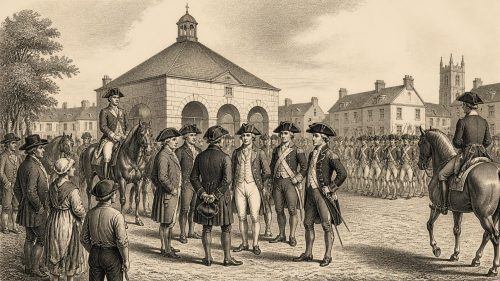
Dungannon’s Constitutional Summer
In 1782, Irish Patriots, supported by the predominantly Protestant Volunteer movement, secured major constitutional concessions during Britain’s wartime weakness. Dungannon resolutions, Henry Grattan’s parliamentary campaign and public mobilisation helped win repeal of the Declaratory Act, weakening British legislative supremacy, while Yelverton’s Act reformed Poynings’ Law and expanded Irish parliamentary initiative. The Catholic Relief Act eased property, educational and worship restrictions but withheld political equality. The settlement, later termed Grattan’s Parliament, preserved crown, empire, patronage and a narrow Protestant electorate. Meanwhile, poor harvests, rising prices and an export embargo revealed widespread insecurity. Ireland gained qualified legislative autonomy, not fully democratic self-government.

The Rotunda’s Volunteer Parliament
In 1783, Ireland secured confirmation of legislative and judicial autonomy through the Renunciation Act, ending British appellate jurisdiction. Yet its parliament remained Protestant, property-based and controlled by patronage. Volunteers pressed for reform, convening in Dublin at the Rotunda under Lord Charlemont. Their Protestant-focused programme excluded Catholic enfranchisement and sought electoral reform, curbs on office-holders, regular parliaments and anti-corruption measures. Henry Flood’s Volunteer-backed bill was rejected by the Commons, while Grattan resisted armed pressure. The convention adjourned peacefully, exposing constitutional limits. Harvest failures caused scarcity and food prices, while the Bank of Ireland opened and Dublin’s commercial and ceremonial life continued.

Ballymacnab’s First Defenders
In 1784, Rutland’s new administration resisted Irish parliamentary reform, and Henry Flood’s measure was defeated, exposing the limits of legislative independence under Anglican patronage. Reform meetings and Volunteer delegates continued to demand broader representation, while Catholic leaders debated whether further relief risked existing gains. In County Armagh, raids by Peep o’ Day Boys amid competition for land, linen work and security prompted the first organised Defenders near Ballymacnab. Expanding linen exports and the Grand Canal service to Robertstown indicated commercial growth, yet insecurity and inequality persisted. The year ended without settlement, revealing divisions of power, religion, property and livelihood throughout.

Orde’s Unfinished Bargain
In 1785, proposed commercial reforms exposed the limits of Ireland’s post-1782 legislative independence. Thomas Orde’s initial trade bargain, approved in modified form by the Irish Commons, was altered in Britain to require Irish conformity with British navigation and colonial legislation. Opposition led by Henry Grattan and Henry Flood defeated the revised scheme, leaving trade relations unresolved. Debate also highlighted restricted parliamentary representation, while William Drennan’s pamphlet urged Catholic-Protestant reform. Dublin’s Irish Academy was founded, reflecting learned and civic institutions. Richard Crosbie’s balloon flight thrilled Dublin, whereas a balloon-linked fire devastated Tullamore, demonstrating urban vulnerability and contrasting scientific excitement and disaster.
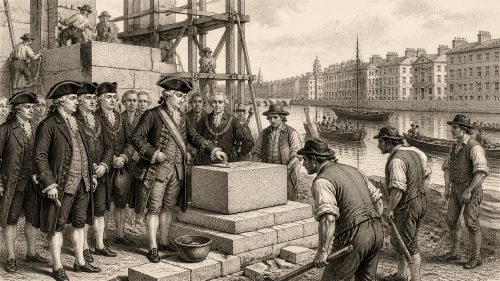
Liffey Works and Rightboys
In 1786, Ireland combined constitutional autonomy with entrenched exclusion. The Dublin parliament, dominated by Protestant elites under Lord Lieutenant Rutland, operated after Pitt’s failed commercial proposals. In Dublin, Rutland laid the Four Courts foundation stone, while the Dublin Port Act created the Ballast Board to improve harbour administration and trade. These projects symbolised state infrastructure and employment. Meanwhile, Munster Rightboys protested tithes, rents and religious charges through intimidation and violence, exposing rural insecurity despite Catholic relief. The execution of George Robert FitzGerald demonstrated limits upon landed privilege. Declining Volunteers and restricted political participation underscored Ireland’s deep confessional and economic tensions.
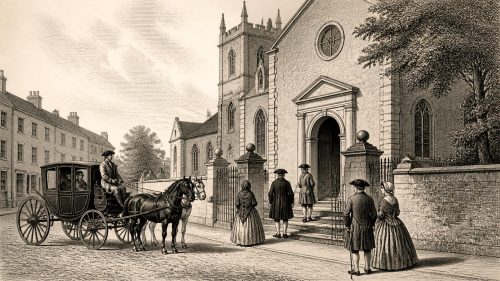
Dunboyne’s Oath, Rutland’s Death
In 1787, Ireland’s Dublin parliament responded to agrarian unrest by passing the general Riot Act, amid Rightboy disturbances and attacks on property, tolls and officials. It also promoted manufactures, linen, trade and maritime regulation, while fiscal measures extended state oversight. Thomas Orde’s proposed nationwide school system, including free parish education, failed amid confessional distrust. John Butler, Catholic bishop of Cork and heir to Dunboyne, conformed to the Church of Ireland, an exceptional conversion reflecting Protestant privilege. Lord Lieutenant Rutland died in October, disrupting Castle politics. Cultural life saw Dublin theatre reorganisation and Prince William Henry’s visit to Curraghmore in December.

Belfast Readers, Cork Stalls
In 1788, Ireland’s post-1782 settlement revealed both reforming ambition and entrenched exclusion. Parliament, dominated by Protestant property and patronage, rejected Henry Grattan’s proposal to regularise tithes, while considering compensation for clergy whose payments had been withheld amid agrarian unrest. It also supported linen, hemp, transport, courts, gaols and urban works, reflecting practical governmental intervention. Cork Corporation opened the English Market, improving organised food provisioning. Belfast tradesmen founded the subscription-based Reading Society, later Linen Hall Library, promoting shared learning. George III’s illness created a regency crisis, foreshadowing constitutional conflict between Ireland and Britain in 1789 and exposing limits of parliamentary representation.
Brooke’s Reliques and Regency
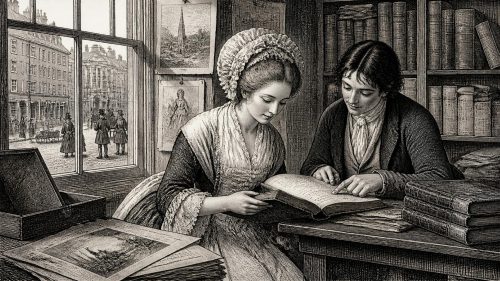
In 1789, George III’s incapacity prompted Ireland’s parliament to invite the Prince of Wales to govern as unrestricted regent, asserting constitutional judgement distinct from Westminster before the king’s recovery ended the crisis. The episode exposed parliament’s Protestant, elite and unrepresentative character, while the Irish Whig Club reflected growing reform organisation. Rural proclamations recorded conflicts over land, tithes and authority amid an unequal agricultural economy. Charlotte Brooke’s Reliques of Irish Poetry made Irish-language literature accessible through English paraphrases and Irish texts, demonstrating scholarly networks despite women’s exclusion from institutions. News from France widened debate, foreshadowing 1790s upheavals without determining Irish politics.

Cross Guns and College Hill
In 1790, Ireland combined institutional development with deep political and social exclusion. Parliament was dissolved and elections returned 300 MPs, yet power remained Protestant, propertied and shaped by patronage. John Keogh’s Catholic Committee revived constitutional campaigning for relief. Commercial improvement advanced through Royal Canal construction, Boyne navigation legislation and substantial linen exports, while Dublin’s Roomkeepers’ Society exposed severe urban poverty. Armagh Observatory opened under Archbishop Robinson, and work began on Emo Court. Although no national rebellion occurred, official concern over disorder reflected persistent agrarian and economic tensions. The year’s canals, charitable initiatives and learned institutions coexisted with inequality, foreshadowing turmoil.
The Belfast Declaration
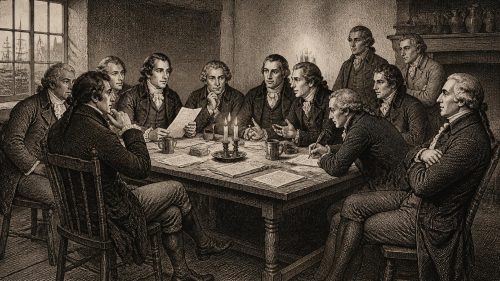
In 1791, Irish politics became organised without delivering constitutional change or Catholic emancipation. Belfast’s Bastille commemoration and the founding of the Society of United Irishmen linked parliamentary reform, Catholic inclusion and civic unity across religious divisions, influenced by Theobald Wolfe Tone. Dublin radicals, including John Keogh, Edward Byrne, James Napper Tandy and William Drennan, strengthened Catholic and reform movements, provoking divisions with conservative Catholic elites. The Dublin Custom House symbolised both commercial ambition and state authority, while the Grand Canal’s Barrow link improved transport to Waterford. Amid rural inequality, print, association and infrastructure widened horizons, marking transition towards popular politics.
Back Lane and Belfast Harps
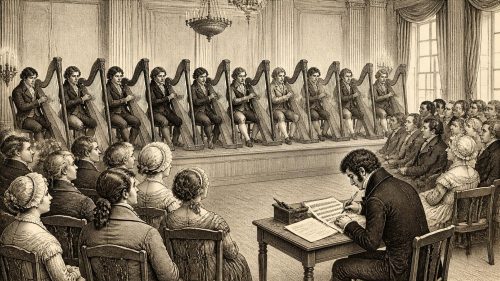
In 1792, Irish politics was shaped by Catholic relief, reform agitation and anxiety after the French Revolution. The Catholic Relief Act eased restrictions on education, law and mixed marriage but withheld voting and parliamentary rights. December’s Back Lane Convention demonstrated Catholic national organisation and petitioned for constitutional participation. In Belfast, United Irishmen and Volunteers promoted reform, religious unity and sympathy with France, prompting repression. The Belfast Harp Festival preserved a musical tradition through Edward Bunting’s transcription. Economic measures supported linen, fisheries, navigation, roads and enterprise while export embargoes revealed insecurity. Together these developments enlarged Ireland’s public sphere without producing revolution.
Keogh, Franchise and Ballot
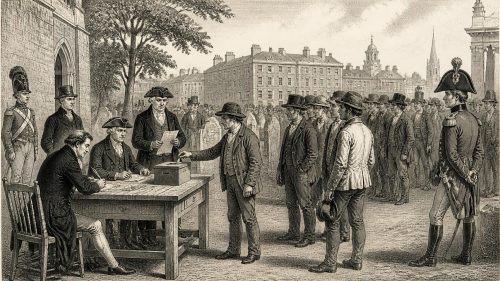
In 1793, Ireland combined Catholic relief with intensified state control amid war with revolutionary France. Following John Keogh’s Catholic Convention petition, the Roman Catholic Relief Act enfranchised qualified Catholic forty-shilling freeholders and opened certain employment and educational opportunities, while retaining exclusion from parliament, senior offices and Trinity fellowships. The Gunpowder Act regulated weapons, while the Irish Militia Act introduced parish enrolment and ballots, incorporating Catholics and Presbyterians into government service. The Convention Act restricted representative political assemblies, constraining reformers and United Irishmen. Economic pressures, militia obligations and print culture shaped daily life. The year broadened participation whilst strengthening coercive administration.
Lagan Waterway and Dublin Trials
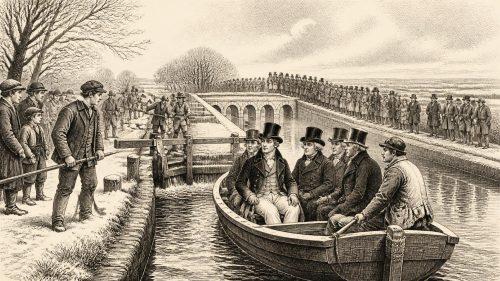
In 1794, Ireland combined commercial development with intensifying political repression. The Lagan Canal’s completion linked Belfast to Lough Neagh, improving Ulster’s transport connections, while a gunpowder enterprise at Ballincollig reflected wartime industrial demand. Dublin’s United Irishmen publicly advocated parliamentary reform, but official alarm over French links led to raids and suppression; William Drennan’s acquittal for seditious libel nevertheless encouraged reformers. Rural violence involving Defenders, militia and local grievances demonstrated wider insecurity, though Defenders remained distinct from United Irishmen. Fitzwilliam’s appointment as Lord Lieutenant raised hopes of Catholic concessions. Mary Leadbeater’s educational publication also testified to continuing cultural and moral debate.
Maynooth, Diamond and Recall
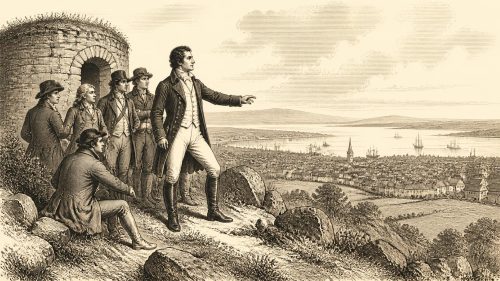
In 1795, wartime Ireland experienced reform, concession and sectarian conflict within its subordinate relationship to Britain. Lord Fitzwilliam’s arrival encouraged Catholic hopes of parliamentary admission, but London recalled him and defeated Grattan’s bill, undermining constitutional reform. United Irish leaders consequently moved further towards clandestine republicanism; Wolfe Tone departed for America seeking French support. Parliament nevertheless founded St Patrick’s College, Maynooth, to train Catholic clergy domestically. In County Armagh, the Battle of the Diamond confirmed Protestant dominance and prompted the formation of the Orange Order, followed by expulsions of Catholics. Routine infrastructure, legal and trade measures continued amid insecurity and polarisation.
Bantry Bay’s Unlanded Army
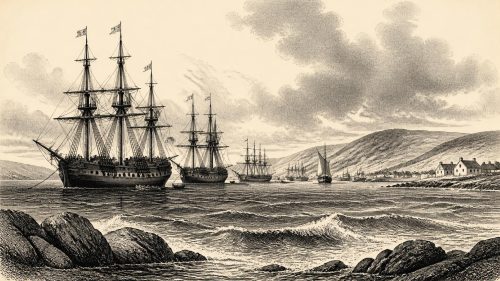
In 1796, Ireland faced an attempted French invasion that exposed the convergence of revolutionary politics, sectarian tension and wartime insecurity. Theobald Wolfe Tone helped secure French support for an expedition under General Hoche, but storms, dispersal and confused command prevented its 14,000 troops from landing at Bantry Bay. Dublin Castle answered unrest with the Insurrection Act and newly established yeomanry, while Orange organisation strengthened Protestant loyalism. Catholic responses varied, exemplified by Bishop Francis Moylan’s anti-revolutionary pastoral. Meanwhile, the Royal Canal reached Kilcock and Edward Bunting published Irish harp music. The failed invasion intensified repression, mobilisation and republican hopes before 1798.
Orr and the Northern Star
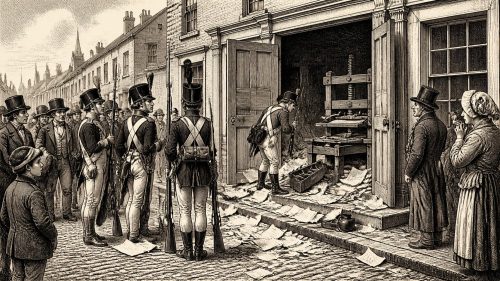
In 1797, Ireland faced mounting tension between the clandestine United Irishmen and a government anticipating rebellion and French invasion. General Gerard Lake’s Ulster disarmament campaign seized weapons, intimidated communities and weakened northern radical networks. After Monaghan militiamen implicated in United Irish activity were executed at Blaris, fellow soldiers destroyed Belfast’s Northern Star, silencing a major radical newspaper. Arrests also disrupted Cork organisers, while calls for constitutional conciliation gained little ground. William Orr’s contested conviction and hanging made him a powerful martyr. Meanwhile, parliamentary limitations and bank restrictions exposed wider political and economic insecurity, foreshadowing the 1798 rebellion in Ireland itself.
Vinegar Hill and Killala
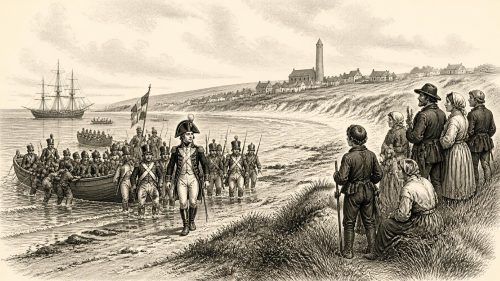
In 1798, the United Irishmen attempted a national revolution against British rule, seeking a representative Irish republic uniting Catholics, Presbyterians and reforming Anglicans with French support. Arrests, coercion and weak coordination fragmented the rising into regional conflicts. Wexford rebels captured Enniscorthy and Wexford town, but atrocities including Scullabogue accompanied fighting before defeat at Vinegar Hill. Ulster risings at Antrim and Ballynahinch failed. In August, General Humbert’s French force landed at Killala, won at Castlebar, then surrendered at Ballinamuck. Repression, executions and transportations followed. The rebellion’s violence and French intervention strengthened arguments for union, reshaping Irish politics and leaving divisive legacy.
Foster’s Defiant Majority
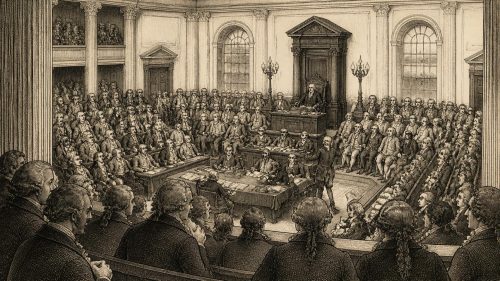
In 1799, post-rebellion Ireland remained militarised and insecure as Cornwallis and Castlereagh sought legislative union with Great Britain. Their proposal was defeated in the Commons, where Speaker John Foster led a narrow anti-union majority, although the Lords approved it. Public celebrations reflected resistance, but the unrepresentative Dublin parliament excluded Catholics. During the pause, government prepared to rebuild support through patronage. Courts martial, disturbed-district proclamations, prosecutions and transportation continued, tempered by Cornwallis’s commutations. Catholic bishops considered state oversight of appointments, while lay Catholics opposed union. Autumn rains damaged potatoes, raising subsistence fears amid wartime financial disruption. Ireland nevertheless faced constitutional change.