

1600–1699 CE
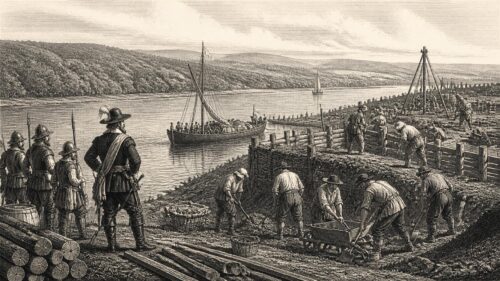
Docwra’s Foyle Bridgehead
In 1600, the Nine Years’ War shifted strategically without decisive resolution. Lord Mountjoy and Sir George Carew restored English military organisation and recovered much of Munster through garrisons, raiding and coercion, while Ormond’s capture exposed continuing instability. Hugh O’Neill’s southern expedition demonstrated confederate reach but cost him Hugh Maguire and intensified internal disputes. Sir Henry Docwra’s landing at Lough Foyle created a vulnerable but enduring northern bridgehead, strengthened by Niall Garbh O’Donnell’s defection. At Moyry Pass, O’Neill blocked Mountjoy’s advance into Ulster. By year’s end, pressure on the confederacy had grown, making Spanish intervention at Kinsale increasingly urgent in 1601.

Rinncorran’s Winter Siege
In 1601, Spain’s landing at Kinsale internationalised the Nine Years’ War, offering Hugh O’Neill and Hugh Roe O’Donnell support but far from their Ulster bases. Don Juan del Águila’s 3,300 troops fortified Kinsale and Rinncorran, while Mountjoy and Carew imposed a land and naval siege. Elsewhere, crown garrisons, allied Irish lords, arrests and campaigning weakened resistance, while civilians endured plunder, requisitioning and famine. O’Donnell and O’Neill marched south to relieve the town, threatening besiegers’ supplies. A poorly coordinated Christmas Eve attack collapsed in disorder on 24 December, routing the confederates. O’Donnell sailed for Spain; Mountjoy regained initiative, although war continued.
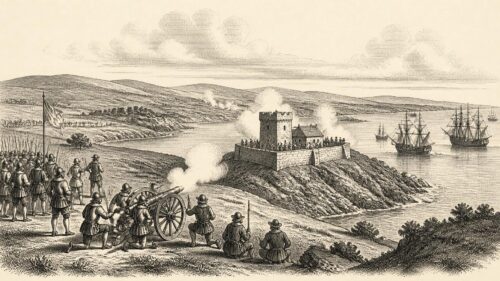
Dunboy’s Last Guns
In 1602, the Nine Years’ War moved towards crown victory after Kinsale’s surrender removed Spain’s main force, though resistance persisted. Hugh Roe O’Donnell sailed to Spain seeking aid, but died there in August, weakening the Irish confederacy. In Munster, Sir George Carew besieged, captured and demolished Dunboy Castle, ending its role as a potential Spanish foothold and O’Sullivan Beare stronghold. In Ulster, Mountjoy used garrisons, allied forces and systematic destruction of crops and livestock to impose famine. Royal advances shattered Gaelic lordships; Ruaidhrí O’Donnell submitted in December, while Hugh O’Neill continued fighting until 1603. The conflict remained unresolved that winter.
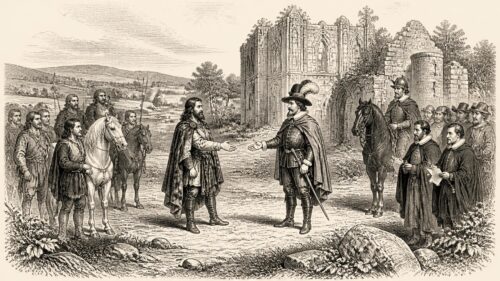
Mellifont and the Towns
In 1603, Hugh O’Neill’s submission at Mellifont formally ended the Nine Years’ War, as James I succeeded Elizabeth I. O’Neill retained lands and title but surrendered key Gaelic powers, while Ulster faced recovery from severe military devastation and local rivalries. Southern and western Catholic towns, expecting religious toleration, resisted Protestant worship and delayed James’s proclamation; Crown forces compelled their submission without renewed general war. Royal patents in Ulster strengthened selected local lords directly under the Crown, weakening traditional overlordship. Trinity College’s expanding library reflected developing Protestant institutions. Peace ended major warfare but left land, religion, authority and political allegiance unresolved.
Derry’s First Jacobean Charter
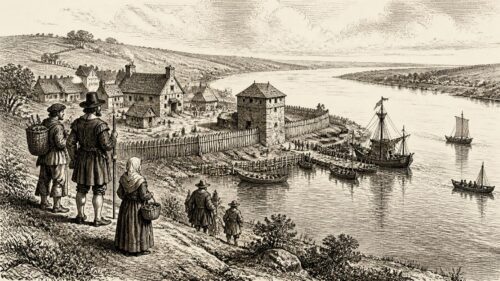
In 1604, after the Nine Years’ War, the crown sought to convert military victory in Ireland into durable administration. James I’s 11 July charter for Derry envisaged a fortified commercial town on the Foyle, combining garrison, trade, law and settlement, though it preceded the later Ulster Plantation. Recovery remained painful amid famine, displacement and contested land rights; Brian Óg O’Rourke’s death symbolised defeated resistance. Knighthoods, patents and territorial grants rewarded cooperative elites while reshaping Gaelic lordship and provoking rivalries. Anglo-Spanish peace reduced prospects of intervention. Arthur Chichester’s appointment and John Davies’s policies foreshadowed stronger crown government, surveys and planned settlement.
Chichester’s July Proclamation
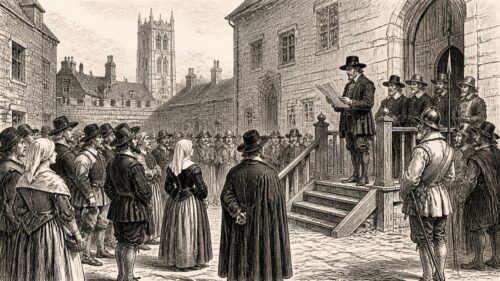
In 1605, Sir Arthur Chichester became lord deputy, seeking to convert victory in the Nine Years’ War into durable royal control through law, land reform, revenue and Protestant conformity. March’s proclamation declared Irish people direct subjects of James I, challenging Gaelic lordship and encouraging fixed rents and tenures. Hamilton’s November grant in County Down foreshadowed Scottish settlement, without constituting the later Ulster Plantation. July’s proclamation expelled Catholic clergy and demanded Church of Ireland attendance, while mandates targeted Dublin Catholics. Administrative changes strengthened Protestant authority. Continental Catholic education and military service across Europe also underscored an uneasy post-war settlement in Ireland.
Wicklow’s New Shire
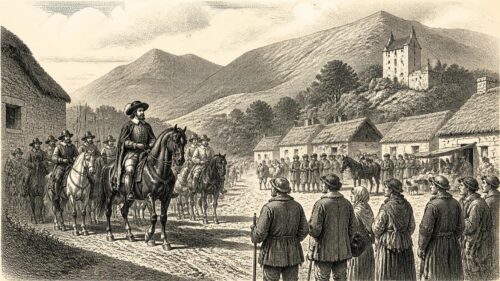
In 1606, administrative and legal interventions reshaped Ireland after the Nine Years’ War. Arthur Chichester’s government sought to establish authority through new territorial arrangements, courts and religious pressure. County Wicklow was created, Scots settled in north Down under private landlords, and judicial activity extended through Munster. Catholic townspeople faced demands for conformity, while Gaelic rulers confronted new interpretations of landholding. These developments connected local experiences to a broader programme of royal consolidation. Peace did not remove insecurity or competing jurisdictions. Instead, the year reveals efforts to translate military success into institutions, property arrangements and obligations across an unevenly governed kingdom.
Rathmullan’s Loaded Ship
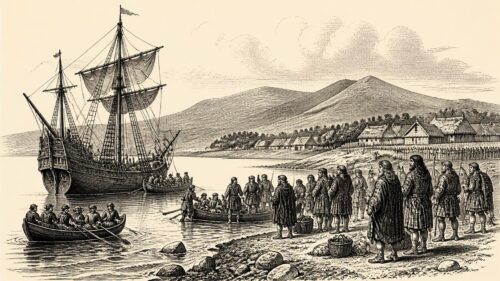
In September 1607, Hugh O’Neill, Ruaidhrí O’Donnell and Cúchonnacht Maguire left Rathmullan with families, followers and clerics, beginning the Flight of the Earls. Their departure reflected insecurity after the Nine Years’ War, as crown law, land investigations and rival Irish claimants undermined Gaelic lordship. Tadhg Ó Cianáin recorded the hazardous voyage: ninety-nine passengers sailed on a French ship, endured storms and shortages, and reached Normandy after twenty-one days. Continental Catholic communities welcomed them, but offered no assured military restoration. Their flight created an opening for stronger crown control in Ulster, preceding, rather than initiating, the later official Plantation of Ulster.
Cahir’s Derry Rising
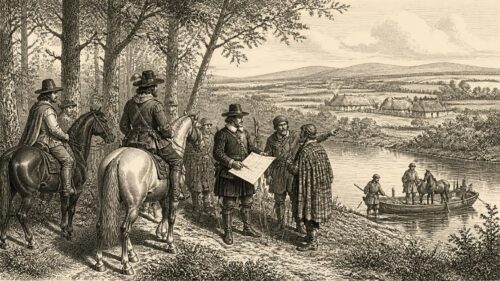
In 1608, Sir Cahir O’Doherty, formerly a Crown ally and lord of Inishowen, rebelled amid disputes over land, authority and Governor George Paulet’s conduct. His followers seized Culmore Fort, stormed, plundered and burned Derry, killing Paulet, but failed to create a wider Ulster coalition. Crown forces suppressed the rising after O’Doherty’s death near Kilmacrennan in July, followed by reprisals and executions. The revolt intensified official distrust of Gaelic landholders and expanded forfeitures. Surveys of six Ulster counties documented lands and resources for redistribution, while planning for plantation advanced. Deaths among exiled Gaelic leaders further weakened resistance, leaving Crown power strengthened.
Bodley’s Measured Ulster
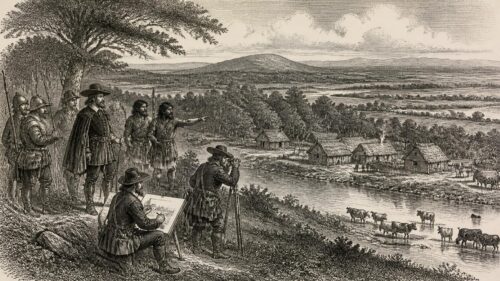
In 1609, following the Flight of the Earls and O’Doherty’s rising, James I’s government surveyed six Ulster counties to prepare their plantation. Sir Josias Bodley’s commissioners recorded townlands, resources, church lands and strategic sites, converting Gaelic territories into proposed estates. The scheme favoured English and Scottish undertakers, servitors and selected Irish proprietors, linking Protestant settlement, fortified building, common law and economic development to security. Most settlers and plantation towns arrived later, while native inhabitants remained but faced mounting insecurity. London was courted for north-western colonisation, Scottish migration encouraged, and soldiers removed. Kilkenny received a city charter, diocesan cathedrals gained status.
Belturbet’s Plantation Groundwork
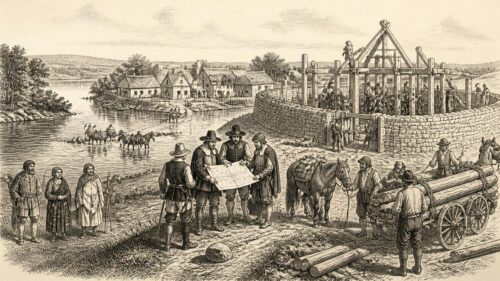
In 1610, James I’s government advanced the Plantation of Ulster, converting confiscated land into surveyed, conditional estates across Armagh, Cavan, Coleraine, Donegal, Fermanagh and Tyrone. English and Scottish undertakers, Crown servitors and selected Irish grantees received terms, while Gaelic communities endured dispossession, tenancy and presence. Building obligations required fortified houses and bawns, and new settlements depended upon labour, materials and commerce. In Cavan, William Bailie’s Tonergie grant and Belturbet’s plantation foundation illustrated emerging centres of authority and trade. Similar title-based policies reached Wexford. Protestant settlement expanded without rapid Catholic conversion, while writers Barnabe Rich and Geoffrey Keating represented contrasting voices.
Carew’s Ulster Perambulation
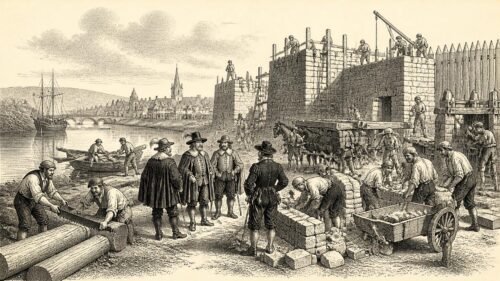
In 1611, Lord Carew’s tour of Ulster assessed the early Plantation, exposing uneven construction and the gulf between Crown plans and local realities. Commissioners inspected routes, settlements and estates, while Coleraine and Derry mobilised labour, timber and fortifications; Dunluce also attracted Scottish settlers. Plantation redistributed land, subordinating Irish proprietors through patents and conditional grants, yet native communities remained central to tenancy and labour. Religious tensions appeared in Bishop John Lynch’s conversion, Patrick O’Loughran’s arrest, and an Irish Catholic devotional book printed at Antwerp. Elsewhere, surrender-and-regrant extended Crown law, while preparations for Parliament revealed disputes over consultation, legislation and royal authority.
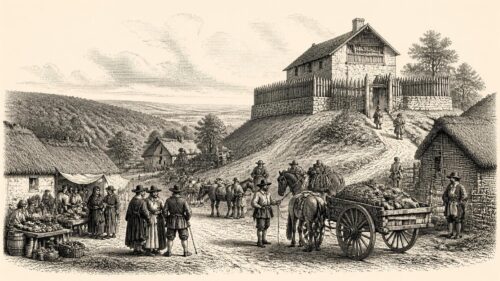
George’s Hill and Boroughs
In 1612, Ireland’s post-conquest settlement advanced through coercion, plantation, incorporation and commerce. Catholic bishop Conor O’Devany and priest Patrick O’Loughran were executed in Dublin for treason, exposing official fears of Gaelic exile and foreign Catholic links, while Catholic practice endured. In Ulster, Arthur Chichester’s Plantation redistributed forfeited land, but inadequate building, settlement and defence prompted an inquiry. Dungannon’s charter began a drive creating boroughs to impose English institutions and secure Protestant parliamentary representation; Baltimore and Roscommon reflected its reach. New port books documented trade. John Davies defended conquest, law, property reform and Protestant governance as foundations of lasting English rule.
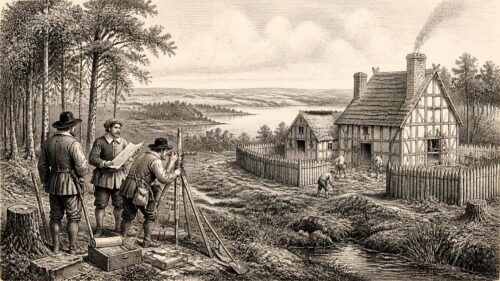
Davies’s New Boroughs
In 1613, the administration intensified its remaking of Ireland through Ulster plantation surveys, municipal charters and a contested parliament. Josias Bodley’s inspection exposed settlement, while London’s Irish Society incorporated Londonderry and developed its county; Belfast and Coleraine gained corporations and parliamentary representation. These boroughs promoted trade and security but supplied Protestant votes. When parliament met in Dublin, conflict over Sir John Davies’s election as Speaker revealed Catholic fears of engineered representation, religious coercion and dispossession. Petitions and a inquiry failed to secure accommodation. Henry Ussher’s death marked change amid conformity. New institutions reshaped land, faith and politics without achieving consent.
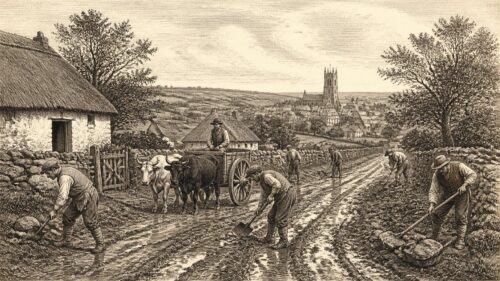
Ormond’s Last Earl
In 1614, James I’s government consolidated authority in Ireland through parliamentary management, anti-Catholic proclamations, trade regulation and parish responsibility for roads. Catholic representatives were rebuffed over the 1613 parliament’s new boroughs and religious exclusions, while priests and Jesuits faced expulsion orders. Yet Catholic organisation persisted: the Kilkenny synod reinforced Tridentine discipline and pastoral provision. Ulster Plantation reached a financial milestone when undertakers’ rents became due, accelerating changes in landholding, settlement and power. Deaths of William Bathe, Bonaventure O’Hussey and Thomas Butler, tenth earl of Ormond, highlighted transnational Catholic culture, Gaelic learning and the importance of aristocratic inheritance amid deepening divisions.
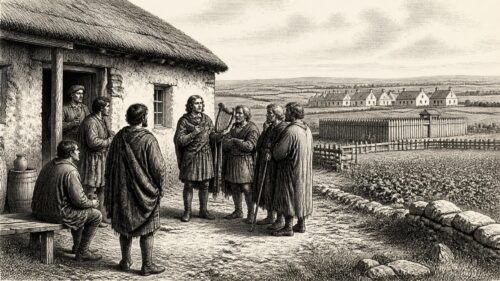
Macosquin’s Unmade Rising
In 1615, Chichester’s government confronted the abortive Macosquin conspiracy amid Ulster Plantation’s insecure transformation. Alleged Gaelic plotters lacked arms, coordination and foreign support, yet officials feared renewed war and used torture, trials and executions; eleven of seventeen defendants were acquitted. Plantation surveys revealed incomplete settler obligations and continuing dependence on Irish tenants, while landholding and local life were nonetheless changing profoundly. The final 1613 parliament passed a highways measure before dissolution, as proclamations regulated markets and currency. Church convocation adopted 104 strongly Calvinist Irish Articles, probably shaped by James Ussher, while visitation exposed the established church’s weak reach. Coercion persisted.
O’Neill’s Roman Grave
In 1616, Ireland remained shaped by the settlement following the Nine Years’ War despite the absence of nationwide warfare. Hugh O’Neill’s death in Rome on 20 July marked the passing of a figure in resistance and exile. A new royal governor and confrontation in Waterford illuminated continuing disputes over government, religion and civic authority. Ireland’s political life connected Dublin with Rome, London, Spain and Scotland, rather than operating within isolated borders. Conquest had altered the institutions through which allegiance and land were contested without settling those questions. The year demonstrates the persistence of uncertainty within an increasingly organised royal kingdom.
Ralegh’s Cork Departure
In 1617 Ireland was being reshaped by Atlantic commerce, plantation, religious pressure and cultural debate. Sir Walter Ralegh’s Guiana fleet provisioned at Cork before departing, demonstrating the port’s capacity. The Crown, under Lord Deputy Oliver St John, extended administration through land disputes, grants and titles, including Hamilton’s Strabane barony within the incomplete Ulster Plantation. In Munster, the Barrymore family shifted its seat to Castlelyons. An October proclamation renewed action against Catholic clergy, though Catholic practice endured. Gaelic poets contested regional honour and historical authority, while Barnabe Rich’s satire criticised colonial society. These developments reveal negotiated change rather than settled peace.
Pynnar’s Winter Commission
In 1618, Stuart government in Ireland used municipal law, land policy and inspection to reinforce royal authority, Protestant conformity and plantation. Waterford lost its charter after electing recusant civic officers, demonstrating that corporate liberties depended upon religious obedience. Commissioners examined plantation schemes in Longford and O’Carroll country, while an October order required native Irish occupiers to leave assigned Ulster plantation lands by May 1619. In November Captain Nicholas Pynnar was commissioned to inspect settlement, fortifications, tenants and arms in Ulster’s escheated counties. Aodh Mac Cathmhaoil’s Irish-language Catholic book, published at Louvain, and Richard Stanihurst’s death in Brussels highlighted Catholic connections.
Pynnar’s Walled Derry
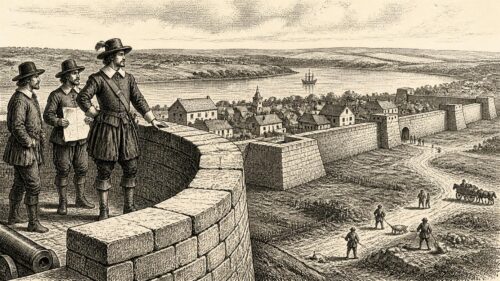
1619 was marked by surveys, construction and institutional change rather than a single national event. Captain Nicholas Pynnar’s inspection of Ulster Plantation estates assessed fortifications, settlers, farms, mills, arms and compliance, revealing uneven progress and persistent Irish presence. At Londonderry, newly completed walls demonstrated Crown authority, but sparse population, incomplete gates and inadequate watch shelter exposed vulnerability. A May deadline sought removal of Irish occupants from undertakers’ lands, though implementation proved limited. Estate houses, churches, schools and mills advanced colonial order. Dublin saw administrative government, episcopal succession and Ireland’s first medical book printed, foreshadowing enduring social and confessional tensions ahead.

Longford’s Plantation Leases
In 1620, Longford’s April plantation lease conditions advanced Crown efforts to replace Gaelic landholding with surveyed estates, rents and accountable landlords, while allowing adaptation by established inhabitants. Under Sir Oliver St John and surveyor William Parsons, plantation policy extended beyond Ulster, with Leitrim approved for development. Royal patronage elevated Richard Boyle as earl of Cork and Catholic Gaelic-Scottish Randal MacDonnell as earl of Antrim, binding regional powers to the Stuart state. Bangor gained port status, strengthening Irish Sea links. Church appointments, Catholic continental networks, and Trinity College’s scholars revealed competing yet interconnected religious and intellectual worlds within the post-conquest order.
Offerlane’s Crown Inquest
In 1621, Ireland remained unsettled despite the absence of war, as Crown policies on land, religion, revenue and loyalty generated grievances. Parliamentary criticism of Deputy Oliver St John, together with the Pale gentry’s petition, prompted investigations leading towards the Commission of 1622. Plantation patents and the Crown inquest asserting title to Upper Ossory, including Offerlane, extended ambitions beyond Ulster. Preparations to inspect the Ulster Plantation exposed doubts about settlement and administration. James Ussher’s advancement to Meath symbolised strengthened Protestant authority amid Catholicism. Galway’s detention of a privateering vessel revealed Atlantic diplomatic entanglements, while reports of starlings reflected contemporary providential anxieties.

Ussher’s Falkland Sermon
In 1622, James I’s Irish Commission investigated administration, revenue, courts, church provision, military costs, landholding and plantation policy during the replacement of Lord Deputy Oliver St John by Viscount Falkland. Commissioners documented Ulster’s plantation, where British settlement, construction and Protestant institutions often fell short, while Irish tenants remained important. Complaints revealed insecurity among Gaelic landholders and elites. Falkland arrived in September amid demands for economy and authority. At his inauguration, Bishop James Ussher urged enforcement against recusancy, provoking Catholic opposition and criticism within the Church of Ireland. The year exposed financial weakness, contested power, incomplete colonisation and persistent religious division.

Hamilton’s Cashel and Ranelagh
In 1623, Lord Deputy Viscount Falkland sought to reduce Irish administration’s costs while reinforcing royal control over revenue, land and religion. Correspondence recorded poverty and efforts to improve customs income. June orders promoted Protestant conformity through oaths, regulated school staff and action against recusants, though obedience remained uneven. Malcolm Hamilton’s consecration as Church of Ireland archbishop of Cashel demonstrated reliance on Protestant networks shaped by Ulster settlement; James Ussher’s republished scholarship supported confessional claims. In October, commissioners investigated timber waste in crown-claimed Ranelagh, linking woodland, survey, law and income. These measures reveal tensions beneath apparent peace, not a settled kingdom.

Falkland’s January Proclamations
In 1624, Lord Deputy Falkland’s government used proclamations to extend royal control over Irish religion, commerce, arms, dress and settlement, although enforcement proved uneven. A January order expelling Catholic clergy was soon suspended, revealing resilient networks sustained by patrons and continental links. Regulations on logwood, cattle markets, customs, weights and measures sought more governable trade and communities. Ulster policy balanced Protestant plantation ambitions with dependence on Irish tenants, while reforms targeted deficiencies in the Londonderry scheme. Elite succession and peerage reinforced crown connections. Ussher and Messingham mobilised Irish Christian history for Protestant and Catholic claims, amid continuing Gaelic cultural debate.
Falkland’s Cess, Ussher’s Primacy
Charles I’s accession in 1625 retained Henry Cary, Viscount Falkland, as lord deputy of an Irish administration dependent on London yet weakened by faction, financial shortages and religious division. Fears of war with Spain exposed decayed coastal defences and unpaid troops; Falkland’s cess shifted military costs onto communities. James Ussher became archbishop of Armagh, strengthening the Protestant establishment despite enduring Catholic networks and no settlement on toleration. Oaths imposed on Connacht officeholders demonstrated administrative expansion. Land disputes after Robert Ponte’s killing in Wicklow illustrated plantation pressures. Ballygally Castle reflected continuing settlement in Ulster, while Moryson’s writing preserved conquest-era attitudes enduring.
Waterford’s Restored Charter
In 1626, Lord Deputy Falkland governed Ireland amid fiscal, religious and landholding tensions. Charles I restored Waterford’s charter, withdrawn after civic officers refused the oath of supremacy, enabling Catholic municipal leadership within Protestant legal constraints for an alleged £3,000. The Crown advanced plantation in Upper Ossory, reshaping contested Fitzpatrick lands. To fund 5,500 troops during war with Spain, Falkland offered proposed Graces, including land-title security, reduced recusancy penalties and officeholding opportunities for Catholics. Protestant bishops, led intellectually by James Ussher, opposed toleration. Aodh Mac Cathmhaoil became Catholic archbishop of Armagh, dying in Rome; Niall Garvach O’Donnell died imprisoned in Tower.
Eleven Agents at Dublin
In 1627, Irish politics centred on negotiations over Crown funding, land security and Catholic disabilities. After failed discussions with Lord Deputy Falkland, a convention appointed eleven agents, mainly Old English Catholics but including Protestants, to negotiate in England. Their mission anticipated, but did not yet constitute, the Graces agreed in 1628. Spanish invasion rumours heightened security concerns without producing an expedition. Government business included Adam Loftus’s recall, creation of a Second Serjeant-at-Law, and William Brabazon’s elevation as earl of Meath. William Bedell became Trinity’s provost, encouraging Irish-language ministry. Robert Boyle was born at Lismore, within the prominent Protestant plantation elite.
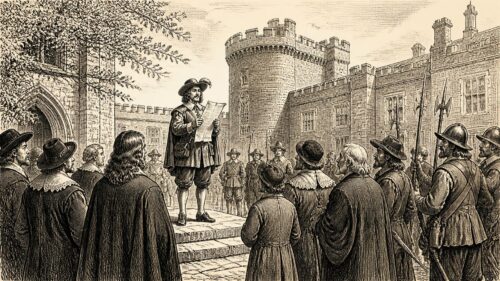
Falkland’s Deferred Parliament
In 1628, Charles I’s government negotiated the Graces with Irish Catholic and Old English elites, exchanging reforms for £120,000 towards the army. The package sought security of land titles, limits on martial law, billeting, monopolies and administrative abuses, and relief from Catholic disabilities. Lord Deputy Falkland prepared an Irish parliament to ratify these measures, but procedural defects under Poynings’ Law caused its October deferral, leaving guarantees unconfirmed. Official proclamations revealed concern over grain supply, poverty and disorder. Catholic life gained an Irish College in Rome, while William Daniel died. The unresolved settlement deepened tensions over land, religion and Crown authority.
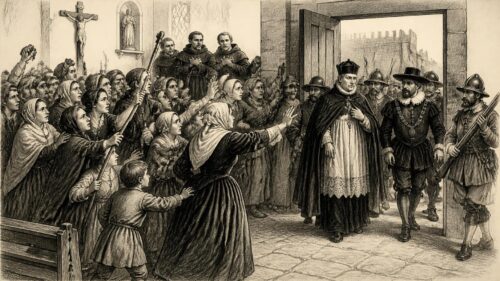
Elinor Nugent’s Cook Street
In 1629, Ireland experienced administrative change, religious tension and renewed Catholic confidence. Henry Cary’s recall left Richard Boyle and Adam Loftus as lords justices, committed to royal order and Protestant ascendancy. Despite pressure on recusancy, Dublin’s Catholic networks expanded, exemplified by Poor Clares returning from Flanders to found a convent. On St Stephen’s Day, officials led by Archbishop Lancelot Bulkeley raided the Franciscan chapel in Cook Street. Congregants, notably merchant widow Elinor Nugent and other women, rescued friars and drove raiders into hostile streets. The incident exposed Catholic urban solidarity, women’s agency, transnational links, and the limits of state coercion.

Donegal’s April Martyrology
In 1630, Ireland experienced contested government, religion and cultural memory rather than a single decisive event. Lords Justices Adam Loftus and Richard Boyle governed after Falkland’s departure, amid rivalries, plantation ambitions and uncertainty over Catholic concessions. Authorities suppressed visible Catholic houses in Dublin, although household networks sustained recusant worship. Malachy Ó Queely’s appointment as Tuam archbishop demonstrated continuing Catholic organisation. On 19 April, Franciscan scholar Mícheál Ó Cléirigh completed the Martyrology of Donegal, preserving Irish sacred learning and helping establish collaboration later associated with the Four Masters. Cork’s tomb commission highlighted elite Protestant power, Catholic insecurity, and uneven state authority.
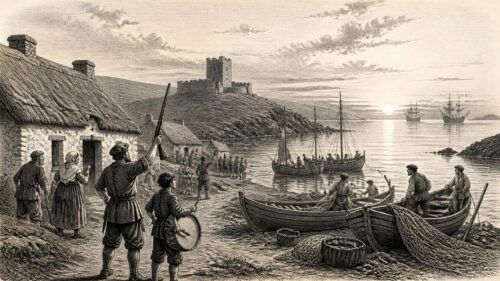
Baltimore’s Stolen Households
In 1631, Baltimore, a West Cork fishing settlement shaped by plantation, local rivalries and Atlantic commerce, suffered a corsair raid. Before dawn on 20 June, forces led by Murad Reis the Younger seized 107 inhabitants, chiefly women and children, after landing from vessels sailing from Algiers. The captives entered North African systems of sale, labour, ransom and household service; few are known to have returned. Suspicions of local collusion remain unproven. The raid exposed limited coastal protection. Elsewhere, royal honours reinforced hierarchy, Patrick Fleming founded a college in Prague and died in Bohemia, and Sir Henry Docwra died in Dublin.
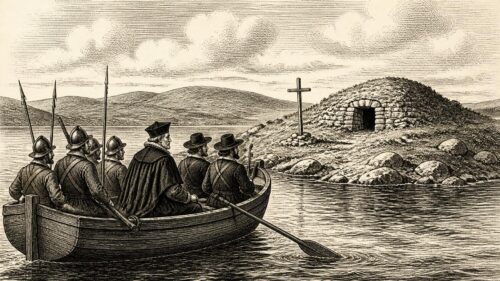
Lough Derg’s Sealed Cave
In 1632, Ireland experienced mounting political, fiscal and religious strain under Lords Justices Adam Loftus and Richard Boyle, while Charles I appointed Thomas Wentworth as future lord deputy. Government need for army revenue prompted Boyle’s proposed recusancy fines, but Loftus and Wentworth favoured negotiation, preserving fragile Catholic expectations surrounding the Graces. In October, Bishop James Spottiswood destroyed St Patrick’s Purgatory cave at Lough Derg, forcefully suppressing a major Catholic pilgrimage. Meanwhile Catholic synodical discipline, Ussher’s historical scholarship, plantations and planned towns reflected competing religious and colonial visions. The year exposed an uneasy peace, foreshadowing Wentworth’s more rigorous administration in Ireland.
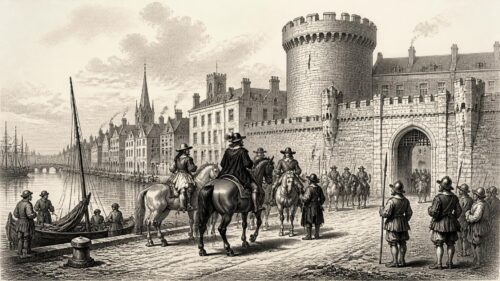
Wentworth Takes Dublin Castle
In 1633 Thomas Wentworth arrived as Charles I’s lord deputy, replacing interim rule by the lords justices and initiating a centralised Irish administration. Facing heavy debts and limited revenue, he prioritised customs, trade regulation, provincial accounts and a self-financing government, while cautiously managing Catholic and Protestant interests. He promoted allies, including Christopher Wandesford, John Bramhall and the earl of Ormond, and prepared for a future parliament. Church developments included St Columb’s Cathedral’s completion and inquiries into ecclesiastical resources. Meanwhile, the Four Masters continued preserving Gaelic history in Donegal. The year established stronger royal direction amid confessional, social and cultural divisions.

The Graces Withheld
In 1634, Thomas Wentworth convened Charles I’s first Irish parliament, tightly managing elections, procedure and debate from Dublin Castle. Parliament unanimously granted six subsidies, expecting enactment of the Graces, concessions sought by Catholic and Old English elites, especially secure land titles. Wentworth subsequently refused the crucial land-security measure, confirming that revenue did not purchase limits on royal power. He also constrained parliamentary action over Sir Vincent Gookin’s inflammatory letter. Church convocation adopted the English Thirty-Nine Articles under pressure, advancing conformity despite resistance. Meanwhile, Geoffrey Keating completed Irish-language history; customs, trade and emigration to Spanish Flanders linked Ireland to Stuart Europe.
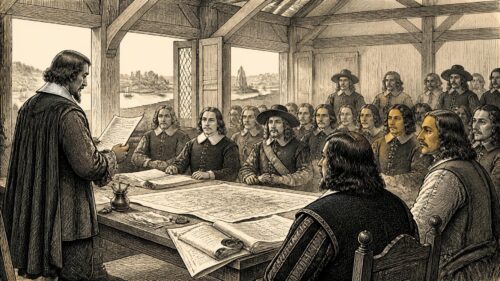
Portumna’s Refusal
In 1635, Thomas Wentworth’s Dublin administration intensified efforts to reshape Ireland through parliamentary legislation, religious conformity, economic regulation and investigations of land title. Parliament passed measures on correction houses, alehouses, husbandry, clergy and Protestant schools, but failed to secure promised protections for established estates. Crown pressure reached Ulster when London plantation companies lost their charter, and peaked in Connacht, where Galway jurors at Portumna rejected the king’s claimed title and were fined and imprisoned. Wentworth also crushed Lord Mountnorris politically. Meanwhile, Hugh Ward’s death at Louvain marked a loss to Irish scholarship. The year revealed widening distrust of coercive government.
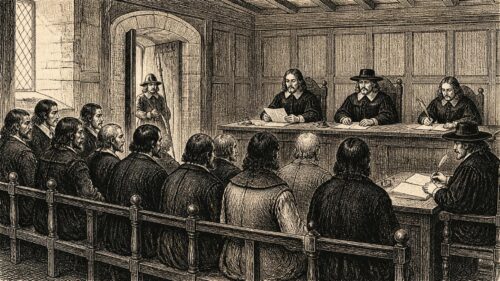
Galway’s Punished Jury
In 1636, Thomas Wentworth’s administration intensified royal control in Ireland through land, religion, economic regulation and culture. Galway jurors who rejected the Crown’s Connacht title were fined and imprisoned, demonstrating the coercive defence of plantation policy. Although Wentworth departed for England in July, trusted officials maintained his programme with royal support. Linen regulations sought to standardise rural spinning and promote exports. In Ulster, Bishop Henry Leslie silenced five ministers refusing Anglican canons, narrowing religious latitude. Meanwhile, the Four Masters completed their Irish annals, and Dublin’s Werburgh Street theatre flourished. These developments revealed an apparently peaceful kingdom under mounting centralised pressure.
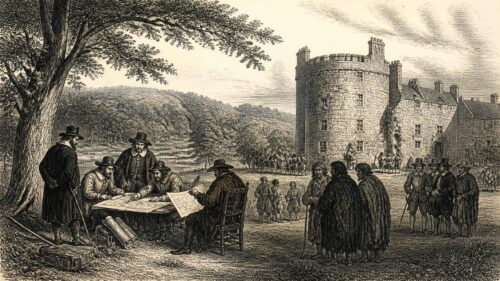
Castlecomer’s Crown Title
In 1637 Thomas Wentworth’s administration strengthened royal control in Ireland through ceremony, land investigations, economic regulation and institutional reform. His provincial progress projected authority, while the Commission for Defective Titles unsettled proprietors and enabled Christopher Wandesford’s crown-backed acquisition of Castlecomer, displacing the Brennan community. Proclamations regulated cloth, currency, land titles and licensed trade, supporting revenue and English commercial standards. Dublin gained building projects and a chartered Goldsmiths’ Company; Trinity received Laudian statutes. Church discipline pressured Presbyterians, despite William Bedell’s Irish-language work. Meanwhile, Mícheál Ó Cléirigh and Franciscan patrons sustained Gaelic Catholic scholarship through Leuven. Apparent order masked grievances and insecurity.

Lisnagarvey’s Covenant Warning
In 1638, Wentworth’s administration strengthened revenue, episcopal authority and executive power through monopolies, revenue farms, land investigations and prerogative courts. His suspension and imprisonment of Lord Chancellor Adam Loftus demonstrated the vulnerability of even senior opponents, while proposed Connacht plantations heightened landowners’ fears. Scottish resistance to Charles I’s religious policies brought anxiety to Ulster, where Scottish settlers maintained links with Covenanting communities. Troops moved north as a precaution. Bishop Henry Leslie’s Lisnagarvey sermon and Antrim communion records revealed pressure for conformity. Meanwhile, church revenues expanded and Dublin’s theatre flourished. Ireland remained peaceful, but coercive government and religious division presaged crisis.

Ulster’s Black Oath
In 1639, Thomas Wentworth’s Dublin administration treated Ulster’s Scottish settlers as a security threat amid the Covenanters’ revolt. Commissioners imposed a compulsory loyalty oath, later called the Black Oath, requiring Scots to reject unauthorised covenants; 1,500 troops enforced compliance. Although no uprising occurred, departures, religious division and distrust deepened. Ireland also figured in Charles I’s abortive war plans against Scotland, including Randal MacDonnell’s ambitions, but no expedition sailed. Wentworth’s land policies faced resistance in Connacht, while Catholic grievances remained unresolved. Despite political strain, Dublin produced scholarly works by James Ussher and James Ware, revealing a brittle yet culturally active kingdom.

Wandesford’s Fractured Parliament
In 1640, Ireland remained formally peaceful, but Charles I’s war against Scotland exposed mounting political divisions. Parliament granted four subsidies and discussed an enlarged army, then challenged the government’s methods of taxation and collection. Christopher Wandesford, succeeding Strafford as lord deputy, lacked his authority and repeatedly prorogued parliament. The Commons’ November remonstrance denounced Strafford’s arbitrary administration, monopolies, financial exactions and land policies, linking Irish grievances to his Westminster impeachment. Wandesford’s removal of parliamentary journal entries worsened distrust. His death in December, followed by Bishop John Atherton’s execution, weakened government further. Theatre and Gaelic scholarship continued amid crisis, foreshadowing 1641’s upheaval.

O’Neill’s Dungannon Proclamation
In October 1641, Catholic grievances over plantation, exclusion and religious constraints combined with Stuart political instability to trigger rebellion in Ireland. A planned seizure of Dublin Castle failed, but Sir Phelim O’Neill’s Ulster rising captured Dungannon and Charlemont. His proclamation professed loyalty to Charles I and protection for Protestants, while a later forged royal commission fuelled confusion. The conflict brought flight, plunder, killings, dispossession and winter hardship, alongside retaliatory violence. Testimony in the 1641 Depositions records crisis but requires critical reading. Fighting spread towards Dublin, Leinster and Munster, intensified English and Scottish political conflict, and left Ireland fractured without settlement.

Kilkenny’s Confederate Model
In 1642, Ireland’s uprising became organised war amid the Wars of the Three Kingdoms. Catholic leaders united Gaelic and Old English interests around defence of worship, property and liberties, while professing loyalty to Charles I. Synods at Kells and Kilkenny promoted an oath of association. In October, the Kilkenny General Assembly established a Supreme Council, subordinate councils, military administration and taxation, creating a fragile Catholic government. Royalist, Protestant and Scottish forces retained key territories; defeats at Kilrush and Liscarroll checked Catholic arms. Owen Roe O’Neill’s return aided Ulster’s future resistance. War brought displacement, requisitioning and violence to all communities nationwide.

Sigginstown’s Uneasy Cessation
In 1643, Ireland’s conflict within the Wars of the Three Kingdoms continued despite shifting military and political circumstances. Confederate forces captured Birr but suffered defeat at New Ross, while achieving a Munster success at Cloughleagh. Supply shortages, taxation, agricultural regulation, trade controls and anti-Catholic measures revealed wartime pressures around Dublin. On 15 September, Ormond and Confederate commissioners agreed the Sigginstown Cessation, a year-long armistice involving territorial arrangements, diplomacy and payments. It excluded Scottish Covenanting forces in Ulster and resolved neither religion nor landownership. The truce intensified Confederate debates, enabled northern planning, and coincided with Mícheál Ó Cléirigh’s work at Louvain.

Inchiquin’s Cork Coup
In 1644, Confederate Ireland governed extensive territory from Kilkenny while negotiating with Charles I’s administration for Catholic worship, property, officeholding and parliamentary freedoms. Ormond pursued peace, but no settlement emerged. A major Confederate expedition under Castlehaven and Owen Roe O’Neill failed to dislodge Robert Monro’s Covenanter forces in Ulster, exposing divisions and supply weaknesses. Meanwhile, Alasdair MacColla’s troops crossed to Scotland to support royalists, prompting Westminster’s no-quarter ordinance. In Munster, Lord Inchiquin repudiated the cessation, joined Parliament, and expelled Catholics from Cork, Youghal and Kinsale. Trade continued amid war, but requisitioning, displacement and insecurity afflicted civilians deeply throughout the island.

Duncannon and the Nuncio
In 1645, the Catholic Confederation strengthened its position by capturing Duncannon Fort after Thomas Preston’s siege, gaining control over an important Waterford Harbour defence but not coastal supremacy. Secret negotiations between Edward Somerset, earl of Glamorgan, and Confederate representatives promised religious concessions and troops for Charles I, but their disclosure damaged royalist prospects. Archbishop Malachy Ó Caollaidhe died amid Connacht fighting. Papal nuncio Giovanni Battista Rinuccini arrived with money, arms and authority, intensifying demands for enforceable Catholic guarantees. War imposed severe local burdens, while Jesuits founded a Galway school and John Colgan published a major saints’ collection at Leuven abroad.
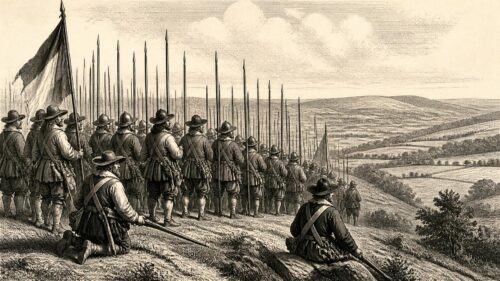
Benburb and the Broken Peace
In 1646, the Catholic Confederation reached its military zenith but became divided over peace with Charles I. Owen Roe O’Neill’s victory over Scottish Covenanters at Benburb, Preston’s Connacht operations, and the capture of Bunratty strengthened hopes of securing Catholic religious and political guarantees. The First Ormond Peace, agreed secretly with the royalist lord lieutenant, offered insufficient protections and provoked clerical, military and popular resistance. Papal nuncio Giovanni Battista Rinuccini led opposition, overthrowing the agreement and remodelling Confederate government. A failed advance on Dublin exposed rivalries, weak supply and divided command. Kilkenny’s Catholic print culture also articulated suffering, rights and legitimacy.
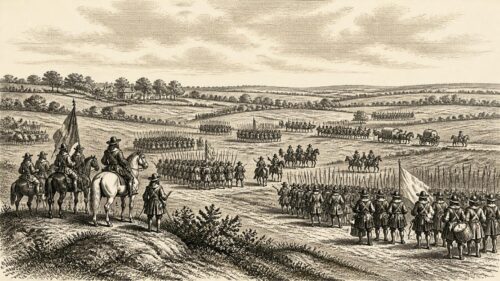
Dungan’s Hill and Cashel
In 1647, the Catholic Confederation’s position collapsed after political division, logistical weakness and military reverses. Parliament gained Dublin when Ormond transferred the city in June, providing a strategic base. Michael Jones destroyed Thomas Preston’s Leinster army at Dungan’s Hill in August, ending any prospect of taking Dublin. In Munster, Inchiquin’s forces devastated communities and stormed Cashel, killing defenders and civilians, plundering the religious complex and deepening Catholic fears. In November, Inchiquin defeated Taaffe’s army at Knocknanuss, killing Alasdair MacColla. Although Kilkenny and O’Neill’s Ulster army survived, these disasters encouraged royalist negotiation and transformed Confederate ambitions into a struggle for survival.

Dungarvan’s Fractured Truce
In 1648, the Catholic Confederation of Ireland fractured over the Dungarvan truce with Murrough O’Brien, Lord Inchiquin, newly aligned with Charles I. Exhaustion after 1647 defeats led moderates to seek a royalist coalition and negotiations with Ormond, despite Inchiquin’s destructive record. Papal nuncio Rinuccini condemned the truce, censuring supporters and joining Owen Roe O’Neill’s resistance. Rival Confederate armies campaigned without decisive battle, burdening civilians suffering requisition and scarcity. The Kilkenny assembly marginalised O’Neill, while Ormond’s return and Rome’s limited aid strengthened accommodation. O’Neill’s ceasefire with parliamentarian Michael Jones revealed division. Winter brought coalition, not peace, before the 1649 Ormond settlement.
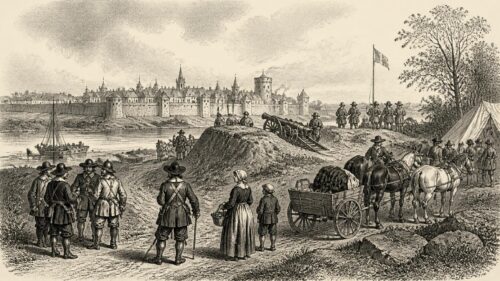
Rathmines, Drogheda And Wexford
In 1649, the second Ormond peace united Confederate Catholics and royalists against the English Commonwealth, but exclusion of Owen Roe O’Neill exposed deep divisions. Ormond’s defeat by Michael Jones at Rathmines on 2 August secured Dublin for parliament, enabling Oliver Cromwell’s landing with the New Model Army and naval support. At Drogheda in September and Wexford in October, stormings produced exceptional killings, including civilians and clergy, and devastated resistance and trade. O’Neill’s death further weakened opposition. Cromwell failed to take Waterford before winter, but the year transformed the war, creating conditions for the later Cromwellian conquest and settlement in Ireland.
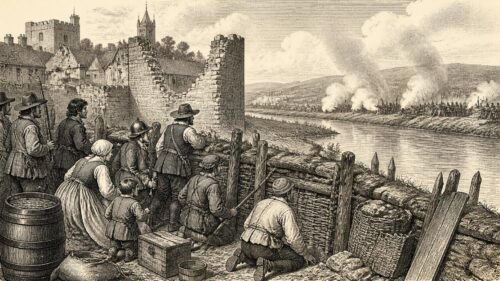
Clonmel’s Empty Breach
In 1650, the Cromwellian conquest advanced despite continuing resistance in Connacht, Limerick and Ulster. Cromwell’s agreement with Protestant royalists weakened Ormond’s Catholic–royalist coalition. At Clonmel, Hugh Dubh O’Neill’s improvised inner defence repelled a costly assault, although shortages enabled the garrison’s escape and the town’s surrender. Broghill defeated a relief force at Macroom, while Scarrifholis destroyed the Ulster Catholic army and led to Heber MacMahon’s execution. After Cromwell departed, Henry Ireton captured plague-stricken Waterford and Duncannon, pressured Athlone and failed before Limerick. Clergy repudiated Ormond; garrisons, blockade, disease and resource seizures established groundwork for further conquest and settlement in Ireland thereafter.
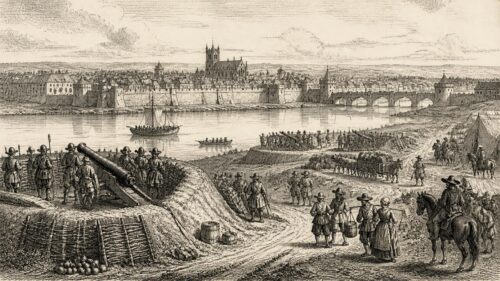
Limerick’s Starving Siege
In 1651 Commonwealth forces tightened control of Ireland through campaigns in Munster and Connacht. Henry Ireton besieged Limerick, while Lord Broghill defeated Muskerry’s attempted relief army at Knocknaclashy, ending prospects of substantial support. Blockade, artillery, hunger and disease devastated Limerick’s inhabitants, provoking divisions between defenders, clergy and civilians seeking terms. The city surrendered on 27 October after internal betrayal opened key positions. Although many received quarter, leading military, civic and Catholic figures were excluded, imprisoned or executed. Ireton envisaged a more English, Protestant city. Meanwhile Galway came under blockade, becoming the remaining major centre of organised Catholic and royalist resistance.
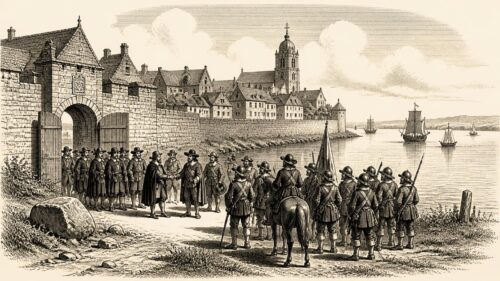
Galway’s Surrender Articles
In 1652, Galway, the last major Confederate Atlantic port, surrendered to parliamentary forces after siege and blockade, ending its military significance but leaving Catholic inhabitants uncertain. Resistance persisted through irregular fighters, while agreements offered some soldiers foreign service. Charles Fleetwood’s appointment signalled army-backed civil rule. On 12 August, the Rump Parliament’s Act for the Settling of Ireland established punitive categories of guilt, enabling forfeiture, banishment and redistribution of land to soldiers and Adventurers, although later measures shaped transplantation. War, famine, disease and displacement devastated communities. Thus conquest evolved into a programme restructuring property, authority, religion and belonging under Commonwealth rule.

Cloughoughter’s Last Articles
In 1653, the Commonwealth completed Ireland’s military conquest as Sir Phelim O’Neill was executed and Philip O’Reilly surrendered Cloughoughter Castle, the last formal Irish Catholic field-force stronghold. Catholic clergy faced expulsion, while Hugh O’Reilly’s death symbolised ecclesiastical disruption. Commonwealth plans shifted towards settlement: Connacht and Clare were designated for transplantation, and forfeited estates were prepared for soldiers and Merchant Adventurers through surveys and land allocation. These measures threatened Catholic proprietors and reshaped local society amid famine, disease, depopulation and insecurity. Cromwell’s Protectorate consolidated London-directed rule, inaugurating a Protestant military state whose post-war settlement rested on confiscation, displacement and administrative control.
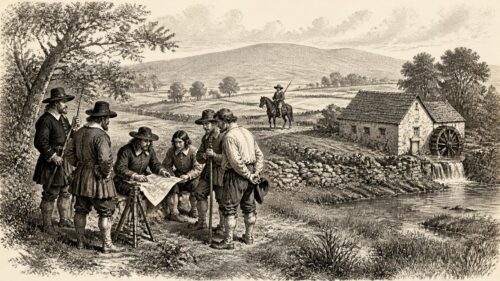
The Connacht Deadline
In 1654, the Commonwealth sought to consolidate Cromwellian conquest through transplantation, surveys and institutions. Catholics deemed liable to removal faced a 1 May deadline to move to Connacht or Clare, though enforcement proved uneven amid exemptions, shortages and local dependence on tenants. Courts of survey launched the Civil Survey, recording pre-war ownership, resources and boundaries to facilitate confiscation and redistribution. Charles Fleetwood, appointed Lord Deputy, pursued a hard settlement despite divisions among Protestants and intervention over exemptions. Ireland gained Westminster representation without an Irish parliament. In December, William Petty’s contract initiated preparations for the Down Survey, making dispossession administratively durable.
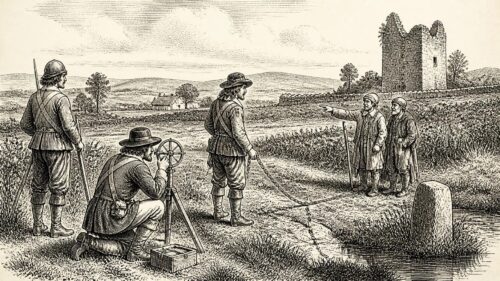
Petty’s Surveying Army
In 1655, Cromwellian rule in Ireland advanced from conquest to practical settlement through transplantation, social control, land measurement and changing leadership. Government orders extended deadlines for Catholic proprietors removed to Connacht and Clare, punished noncompliance, restricted Shannon crossings, and expelled Catholics from Dublin. Debate between Vincent Gookin and Richard Lawrence exposed disagreement over transplantation’s economic costs and security aims. Henry Cromwell’s arrival in July made him effective governor after Fleetwood’s departure, altering political balance. William Petty began the Down Survey, using former soldiers and local knowledge to map forfeited land for army arrears and adventurer claims, embedding dispossession in administration.
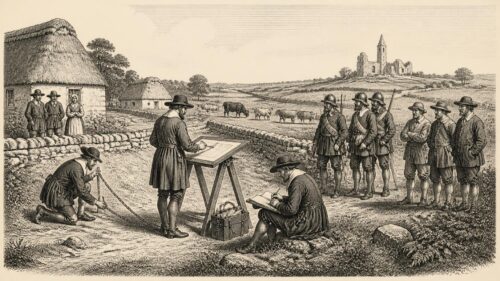
Petty’s Field Books
In 1656, Cromwellian Ireland was being reorganised through Sir William Petty’s Down Survey, which recorded land, boundaries and value to distribute forfeited estates among soldiers and adventurers. Field books enabled officials to assess claims while reserving specified public and ecclesiastical lands. This administrative project underpinned confiscation and the uneven, coercive transplantation of Catholic landholders to Connacht and Clare, affecting rural society beyond formal removals. Henry Cromwell sought firmer Protestant civil government amid army and religious divisions, while war with Spain heightened security concerns. Catholic communities endured repression; Quakers faced persecution. Ussher’s death, Ware’s Patrick edition, and Molyneux’s birth reflected continuity.
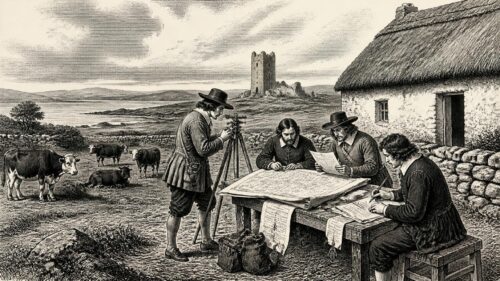
Erasmus Smith’s Foundation Deed
In 1657, Cromwellian Ireland consolidated conquest through law, taxation and institutions. Parliament’s June act confirmed land transfers to soldiers, adventurers and Protestant purchasers, strengthening dispossession while disputes and incomplete occupation persisted. Transplantation to Connacht and Clare continued unevenly, reshaping communities and livelihoods. A costly land assessment funded the army, prompting organised lobbying by Protestant proprietors but offering Catholics little influence. Henry Cromwell’s November appointment as lord deputy regularised government while preserving military control. Erasmus Smith’s foundation deed endowed Protestant education from settlement lands, whereas Luke Wadding’s death highlighted Irish Catholic learning sustained abroad. These measures entrenched division beneath administrative stability.
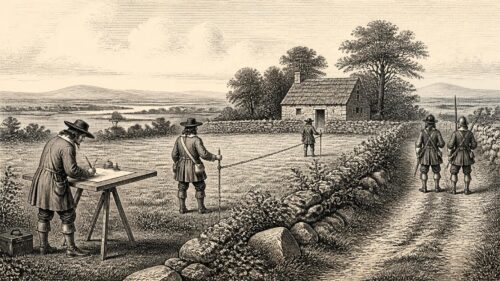
Petty’s Measured Conquest
In 1658, completion of Sir William Petty’s Down Survey gave the Commonwealth its first national-scale detailed mapping of Ireland, enabling confiscated land to be valued and allocated to Adventurers and soldiers. Though not covering Connacht or resolving competing claims, it strengthened Protestant ownership and made Catholic dispossession more enforceable. Henry Cromwell governed from Dublin, balancing courts, revenue, army discipline and an unstable land settlement. Oliver Cromwell’s death on 3 September brought Richard’s succession and Henry’s promotion to lord lieutenant. Religious policy privileged Protestants but constrained dissent and excluded Catholics. Beneath order, military power, land claims and constitutional legitimacy remained precarious.
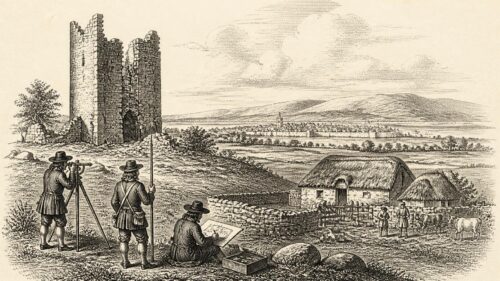
Ludlow’s Dublin Command
In 1659, the collapse of Richard Cromwell’s Protectorate transformed Irish government. Henry Cromwell resigned, and parliamentary commissioners assumed control in Dublin. Edmund Ludlow, a regicide and committed republican, reorganised the Irish army, tested officers’ loyalties and sent troops to England amid constitutional crisis. Meanwhile, completion of William Petty’s Down Survey provided maps and records enabling confiscated land to be redistributed among soldiers, adventurers and officials. The approximate 1659 census documented settlements and leading occupiers, though imperfectly. Political instability culminated in opponents seizing Dublin Castle in December. Despite changing regimes, the administrative framework for Protestant landholding and long-term social transformation endured.

The November Land Declaration
In 1660, Ireland’s Protestant leaders used the General Convention to support Charles II’s restoration, proclaiming him king before his return to England while seeking to preserve parliamentary influence, episcopacy and Cromwellian landholdings. Former Commonwealth figures, notably Charles Coote and Roger Boyle, became royal brokers and regional magnates, while commissioners governed amid uncertainty. Charles’s November Declaration addressed competing claims of Catholic former proprietors, Adventurers and soldiers, protecting many possessors while offering limited restoration through proof of innocence. The Church of Ireland revived under bishops, yet Catholics remained excluded. Restoration restored monarchical institutions but postponed conflict over land, religion, loyalty and power.

Claims at Dublin Castle
In 1661, Restoration Ireland began translating conquest and upheaval into law, yet landownership, religion and authority remained unsettled. Charles II’s Irish parliament met in Dublin, advancing legislation that anticipated, but did not enact, the 1662 Act of Settlement. Proclamations regulated rents, protected occupiers and required Catholic innocence claims, while Crown revenue and cattle exports received attention. James Butler, duke of Ormond, was appointed lord lieutenant but arrived only in 1662. The Church of Ireland was reconstituted as Catholics faced pressure and debated loyalism. Events included Book of Kells’ transfer and Florence Newton’s witchcraft trial. Procedures, not peace, defined the year.

Smock Alley and the Claims
In 1662, the Irish Act of Settlement established a Restoration framework for resolving land disputes arising from rebellion, conquest and Cromwellian redistribution. It protected Protestant interests while offering limited restitution to Catholics deemed innocent, subject to reprisal and political tests. The lord lieutenant, Duke of Ormond, oversaw preparations for claims procedures, amid paperwork, proclamations and titles. Government reinforced Anglican conformity, regulated Catholic and dissenting assemblies, reorganised parishes, customs and trade, and improved postal links with Scotland. Dublin’s Theatre Royal at Smock Alley opened as a symbol of Restoration authority. The year converted conquest into an unequal landed and confessional order.
Blood’s Unmade Coup
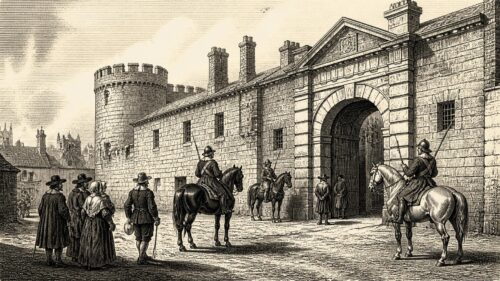
In 1663, Ireland’s Restoration settlement remained unstable amid competing land claims, religious divisions and memories of war. Ormond’s administration faced Thomas Blood’s failed Protestant radical conspiracy to seize Dublin Castle and abduct the lord lieutenant, exposing divisions within Protestant interests. The Court of Claims issued 829 decrees, including 714 innocence declarations, but lacked land to reconcile restored Catholic proprietors with Cromwellian soldiers and adventurers. Government reinforced authority through registration rules, proclamations and Church of Ireland office requirements, while Margetson became primate. Dublin’s cultural life expanded with Katherine Philips’s Pompey. Trade continued amid imperial uncertainty, while property insecurity constrained uneven recovery.

St Stephen’s Green Lots
In 1664, Restoration Ireland was reshaped through administrative and cultural initiatives rather than decisive events. Dublin Corporation divided the marshy St Stephen’s Green common into ninety-six building plots, retaining a reduced central green to generate revenue. Land settlement negotiations continued without resolution, as Ormond and rival claimants sought to reconcile confiscated estates; legislation followed in 1665. Londonderry Corporation gained responsibility for its Foyle port, while Portmore Castle symbolised elite estate improvement in Antrim. Sir James Ware published Latin annals of Ireland, and Roger Boyle’s plays reached London. These developments strengthened corporate and proprietary control amid Protestant ascendancy and Catholic exclusion.
Reading’s Six Coastal Lights
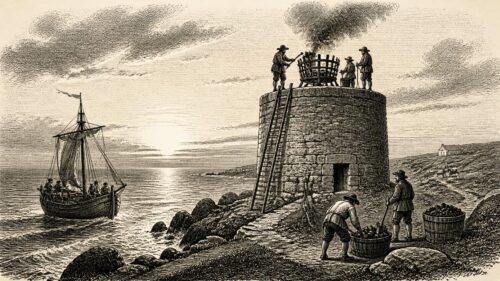
In 1665, Ireland’s Restoration government strengthened its political, economic and institutional framework. The Act of Explanation addressed competing land claims after conquest, requiring many Cromwellian grantees to surrender interests while restricting Catholic restitution. Ormond supervised this fraught settlement, while Michael Boyle’s appointment as lord chancellor reinforced Protestant authority. Dublin’s mayor became lord mayor, reflecting the capital’s growing administrative importance. Charles II authorised Sir Robert Reading’s six coastal lighthouses, linking navigation, commerce and royal privilege during the Second Anglo-Dutch War. Land insecurity affected wider society, investment and local life. These measures established enduring structures while leaving conflict, inequality and uncertainty unresolved.
O’Reilly’s Dublin Synod
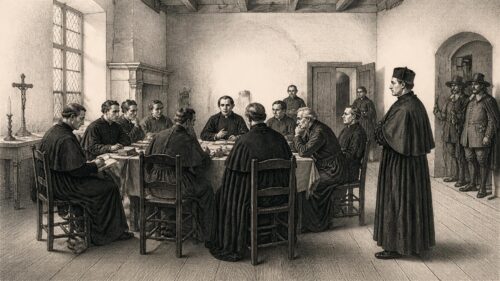
In 1666, Ormond’s Restoration administration sought to consolidate authority in Ireland through land settlement, military discipline, taxation and regulation. Proclamations advanced implementation of the Acts of Settlement and Explanation, while the dissolution of parliament ended legislative sessions until 1689. A pay mutiny at Carrickfergus was suppressed, with nine leaders executed. Dublin’s Catholic synod debated Peter Walsh’s loyalist Remonstrance but failed to secure agreement, exposing clerical organisation and state dependence. War, naval concerns and London’s fire prompted official fasts and thanksgiving. Hearth money, fisheries policy and impending English cattle restrictions affected livelihoods. Sir James Ware’s death marked a loss to scholarship.
Penn’s Cork Arrest
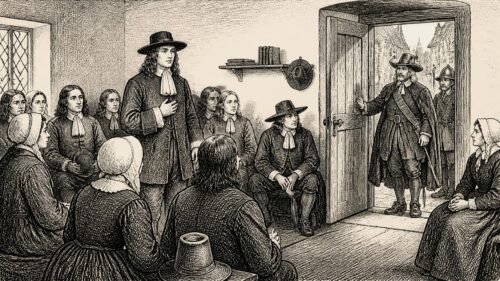
In 1667, Restoration Ireland experienced postwar settlement as courts and officials resolved contested land claims under the Acts of Settlement and Explanation. Ormond’s administration stressed legal procedure, military discipline and strained finances, while English restrictions on Irish cattle threatened trade and exposed Ireland’s dependence on Westminster. Dutch naval successes prompted defensive preparations at Kinsale before the Treaty of Breda ended the war. Protestant institutions strengthened, yet religious conformity was enforced: William Penn was arrested with Friends at a Cork meeting. Jeremy Taylor died, Jonathan Swift was born, and Alice Barry’s death marked elite change. The year revealed a fragile order.
Taaffe’s Counterfeit Commission
In 1668, Restoration Ireland was shaped by contested landownership, religious insecurity and English trade restrictions. Franciscan James Taaffe, claiming forged papal authority, convened clergy, appointed visitors and sought to discipline Catholic divisions over the Remonstrance. Rome repudiated him by October, while alarm over unauthorised papal jurisdiction hastened his collapse. Lord Lieutenant Ormond faced vulnerability and rivalry with the Earl of Orrery, who resigned the Munster presidency. Debt, estate rebuilding and inheritance reflected post-war recovery and unresolved confiscation. English cattle-import prohibitions constrained livestock producers, prompting commercial adaptation. Deaths of George Hamilton and Patrick D'Arcy highlighted property succession and the Catholic generation.

Robartes at Howth
In 1669, John, Lord Robartes replaced the duke of Ormond as lord lieutenant, reflecting English court politics and concern over Irish revenue and military administration. Arriving quietly at Howth, Robartes inherited a Protestant-led settlement founded on confiscation, unequal landholding and Catholic exclusion. Catholic leadership revived through appointments of Peter Talbot, James Lynch and Oliver Plunkett, consecrated abroad under continuing constraints. Protestant charitable education expanded through Erasmus Smith’s schools and Dublin’s proposed King’s Hospital. George Fox and William Penn documented active Quaker networks, persecution and petitioning. These developments revealed a pacified but unreconciled Ireland, divided by property, religion, power and taxation.

Plunkett’s Return and Synods
In 1670, under Lord Lieutenant John Berkeley, Ireland remained dominated by the Protestant land settlement and military power established after Cromwellian conquest, yet experienced limited religious latitude. Oliver Plunkett returned as Catholic archbishop of Armagh, rebuilding clerical discipline and hierarchy. Bishops met in Dublin, issued pastoral statutes and declared civil loyalty, despite rivalries between Plunkett and Dublin’s Peter Talbot. Plunkett’s Clones council extended reform and he mediated pardons for Tyrone tories. William Penn defended Quakers while managing Cork estates. Trade adapted to English livestock restrictions, Dublin gained Barrack Bridge, and rebuilding, estate consolidation and constrained negotiation reshaped society across Ireland.

Ranelagh’s Revenue Bargain
In 1671, Ireland’s unresolved Restoration settlement shaped politics, finance, trade and religion. Sir Richard Talbot’s petition for Catholic landowners prompted a commission under Prince Rupert, yet threatened no immediate reversal of confiscations. Viscount Ranelagh’s revenue-farming contract transferred collection and government payments to private financiers, provoking army officers’ complaints over arrears. Navigation legislation further constrained Irish colonial commerce, while Sir George Hamilton recruited 1,500 men for French service. Catholic bishops Peter Talbot and Oliver Plunkett maintained precarious church administration amid internal disputes. Scholar Dubhaltach Mac Fhirbhisigh died, while Dublin’s Hospital and Free School received a royal charter, strengthening organised urban charity.

Essex’s August Arrival
In 1672 Arthur Capel, earl of Essex, became lord lieutenant, seeking to centralise Restoration government by curbing provincial power, notably suppressing Munster’s presidency. Ireland supported the Third Anglo-Dutch War through transport, harbour defence, fortification surveys, customs regulation and garrison discipline. Charles II’s Declaration of Indulgence enabled limited, uncertain Catholic activity: bishops and clergy organised synods, appointments and disputes, while Protestant authority remained entrenched. Corporate officeholders faced the Oath of Supremacy, restricting Catholic civic participation. William Petty’s Political Anatomy assessed land, population and resources, reflecting a country still shaped by conquest, redistribution, taxation and religious division. Government combined flexibility with ascendancy.

Essex’s Trade Reckoning
In 1673, Lord Lieutenant Essex’s proposed trade report portrayed Restoration Ireland through estimates of land, rents, livestock, housing, goods and scarce circulating coin, privileging taxable wealth over poorer households and local life. English restrictions on cattle imports encouraged exports of processed provisions, wool and fish through Dublin, Cork and Atlantic markets, although benefits were uneven. Essex governed within Protestant political dominance amid English anti-Catholic pressures. Investigation and hostility prompted Archbishop Peter Talbot’s departure for France, while October proclamations targeted Catholic arms, offices, clergy and institutions. Enforcement varied, but Catholic worship became more precarious. Presbyterians retained favour, illustrating selective confessional policy.

Oxmantown’s Blue-Coat Opening
On 5 May 1674, the Hospital and Free School of King Charles II opened at Oxmantown, Dublin, admitting sixty poor children, including three girls, and combining education, clothing, food and Protestant instruction. Its civic charity symbolised Restoration order amid poverty and uneven urban recovery. Lord Lieutenant Essex sought administration despite disputed land settlements, financial arrears, unpaid troops and Dublin Castle, where he built lodgings. Government reinforced Protestant authority by expelling Catholic clergy, though worship persisted covertly. Grain restrictions revealed concern over supplies and prices, especially in Ulster, despite peace with the Dutch. Proclamations against robbers and Redmond O’Hanlon exposed insecurity.
Connacht’s Unfinished Transplantation
In 1675, Ireland remained shaped by unresolved consequences of Cromwellian conquest and Restoration land legislation. On 22 September, Charles II appointed commissioners to decide individual Connacht transplanters’ claims, addressing disputed assignments without reversing Protestant property gains. Lord Lieutenant Essex left for England amid conflict over revenue farming, military finance and Dublin’s dependence on Whitehall; Boyle and Forbes governed as lords justices. Catholic clergy faced continuing, uneven pressure under banishment policy, while parallel Protestant and Catholic hierarchies endured. English restrictions on Irish cattle trade encouraged commercial redirection towards continental and Atlantic markets. Together, these issues exposed an incomplete post-conquest settlement still.
Katherine’s Dublin Cargo
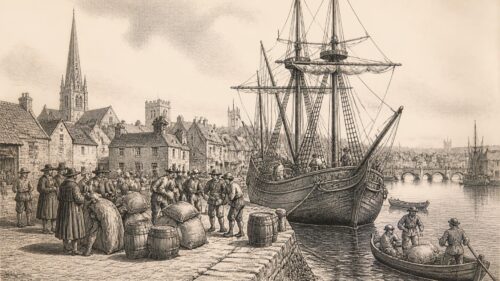
In 1676, under Lord Lieutenant Essex, Ireland’s administration addressed fragile revenue, quit rents, transplantees’ land claims in Connacht and Clare, and unlawful county charges, reflecting unresolved consequences of Cromwellian confiscation. Patronage shaped officeholding, while rewards for Patrick Fleming and Redmond O’Hanlon exposed limited control in Ulster. Dublin changed through Humphrey Jervis’s Essex Bridge, promoting north-side development and commerce. The ship Katherine carried Irish Protestant-organised relief to war-stricken New England, including allied Indigenous recipients. Meanwhile, Francis O’Molloy’s Irish-language Catholic catechism, printed in Rome, demonstrated continental religious networks. These events reveal Ireland as contested, rebuilt and connected across Atlantic and European worlds.
Ormond’s August Return
In 1677 James Butler, duke of Ormond, resumed the lord lieutenancy, succeeding Essex amid consequences of war, conquest and Restoration land settlement. His authority was constrained by control of revenue through Ranelagh’s undertaking, while his hoped-for parliament did not meet. Government addressed claims of 1649 royalist officers, currency regulation, night watches, local crime, fortifications and property disputes. Honours and ecclesiastical appointments reinforced Protestant authority, while Catholics remained restricted but not yet subject to later repression. Francis O’Molloy published the printed Irish grammar in Rome, exemplifying Catholic scholarship abroad. The deaths of Bellings, Lynch and Taaffe marked a passing political generation.

Talbot’s October Arrest
In 1678, the English Popish Plot panic transformed Irish government despite no rebellion or parliament. Lord Lieutenant Ormond pursued revenue collection, army support and land titles, but proposed legislation failed to resolve Restoration property disputes. Catholic structures remained active: Oliver Plunkett held a synod, while Nicholas French died in exile. Peter Talbot, archbishop of Dublin, returned conditionally in May but was arrested in October and imprisoned without evidence. Thereafter proclamations expelled clergy, suppressed religious institutions, disarmed Catholics, restricted access to garrisons and demanded enforcement by officials. These measures intensified sectarian insecurity, while trade, civic regulation and unresolved political tensions continued.
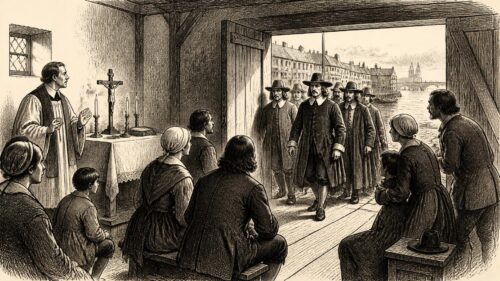
Merchant’s Quay Masshouse
In 1679, amid the Popish Plot scare, Ormond's Irish administration intensified measures against Catholic worship, clergy and suspected disorder. Proclamations targeted bishops, Jesuits, masshouses and tories, linking religious nonconformity with threats to royal authority. Officers entering the Merchants' Quay masshouse met resistance, demonstrating both continuing Catholic worship and contested enforcement. A public Protestant fast nationalised fears of conspiracy. Catholic leaders, including Peter Talbot and Oliver Plunkett, faced confinement; Plunkett's December arrest made him the scare's principal Irish target. Authorities also guarded against Scottish unrest, pursued outlaws, regulated revenue and tobacco, and sponsored rebuilding projects, combining coercion, administration and Restoration display.
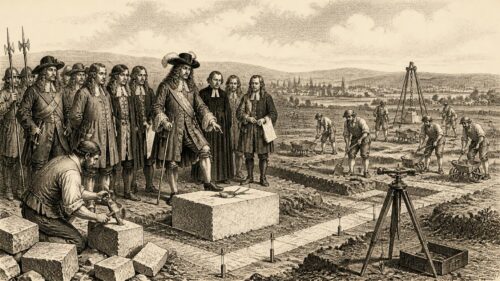
Dundalk’s Broken Indictment
In 1680, Popish Plot fears shaped Irish government despite no rebellion. Ormond sought English approval for proposed legislation, including measures against Catholic clergy, but no parliament met. He laid the foundation stone of the Royal Hospital at Kilmainham, a home for retired soldiers. At Dundalk, the prosecution of Archbishop Oliver Plunkett collapsed when witnesses failed to appear; he was nevertheless sent to London, while Archbishop Peter Talbot died untried in Dublin prison. Gaelic learning endured through the copying of Leabhar Cloinne Aodha Buidhe in Antrim. Borlase’s history of 1641 reinforced Protestant fears, demonstrating how memory, coercion and institutions governed Ireland.

Plunkett’s Tyburn Summer
In 1681, Ireland’s most memorable event was the London execution of Oliver Plunkett, Catholic archbishop of Armagh, after a flawed Popish Plot treason trial. His death exposed Catholic insecurity under Restoration rule. Governed by the duke of Ormond, Ireland lacked a parliament and relied on proclamations, courts and armed institutions. A November order required militia and army officers to receive Church of Ireland communion, affirming confessional loyalty. A July ban on grain exports reflected concern over provisioning, without proving famine. In September, Quakers led by William Bates sailed from Dublin for West Jersey, demonstrating Ireland’s Atlantic religious and migratory connections.
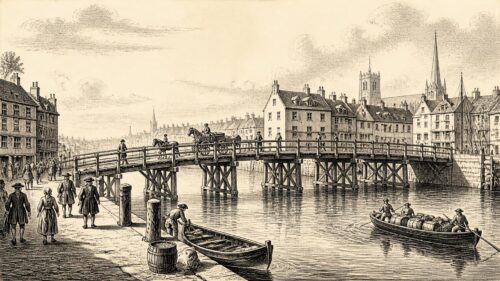
Ormond Bridge, Arran’s Deputyship
In 1682, James Butler, duke of Ormond, retained the lord lieutenancy while his son Richard, earl of Arran, governed from Dublin Castle as lord deputy, maintaining Butler influence under Whitehall’s authority. No parliament met, leaving administration to council, courts, revenue and patronage. Dublin expanded with timber Ormond and Arran Bridges across the Liffey, improving commerce and commemorating the family. Appointments included William Sheridan as bishop of Kilmore and Ardagh, John Lyndon as Third Serjeant-at-Law, and baronetcies. Beneath stability lay Protestant dominance, Catholic exclusion, land settlements, debt disputes and confessional tensions. Ormond’s dukedom affirmed favour but emphasised Ireland’s dependence on court.
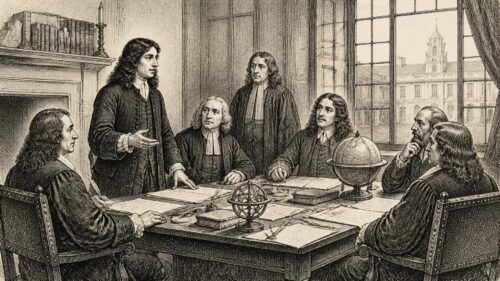
Molyneux’s Dublin Experiment
In 1683, Restoration Ireland reflected vigilant government, Protestant consolidation, Catholic resilience and emerging scientific enquiry. Following England’s Rye House Plot, Lord Deputy Arran and Ormond monitored suspected dissenters, linking officeholding to Church of Ireland conformity; Richard Talbot’s return also signalled Catholic court influence. Randal MacDonnell’s death ended the Antrim marquessate amid indebted estate arrangements. William Molyneux convened Dublin’s first philosophical society, promoting observation and practical knowledge. Archbishop Boyle’s new Blessington church embodied Anglican landlord power, while Dominic Maguire’s selection as Catholic primate demonstrated ecclesiastical continuity. Trade remained pastoral, Greatrakes died, and the severe winter threatened livelihoods across the island’s communities.
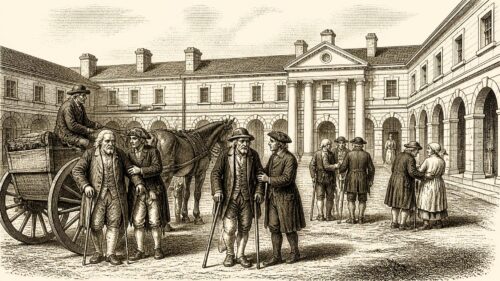
Kilmainham’s Soldier Hospital
In 1684, Restoration Ireland combined outward peace with unresolved political, military and property tensions. King Charles II chartered the Royal Hospital at Kilmainham for aged and disabled soldiers, linking welfare to the permanent army. A fire damaged Dublin Castle, threatening records and prompting later rebuilding. The Duke of Ormond returned as lord lieutenant but received notice of dismissal, reflecting shifting court influence. The Commission and Court of Grace sought to regularise defective land titles without overturning Protestant dominance. Granard’s regiment improved military organisation. Dublin’s scientific society and Ruaidhrí Ó Flaithbheartaigh’s regional study fostered inquiry, while winter damage exposed material vulnerability.

Bedell’s Irish Old Testament
In 1685 James II’s accession raised Catholic hopes and Protestant fears in Ireland, although laws and land settlements remained unchanged. Richard Talbot, created earl of Tyrconnell, gained authority to reshape the army, admitting Catholic officers and weakening the exclusively Protestant military establishment. Security measures in Ulster coincided with tensions over religion, land and memories of 1641. Henry Hyde, earl of Clarendon, was appointed lord lieutenant, signalling divided governance. Economic life continued amid political uncertainty. Cultural developments included publication of Bedell’s Irish Old Testament, the first Irish newspaper, and Ó Flaithbheartaigh’s Ogygia. Francis Harold’s death in Rome reflected continental Catholic networks.

Nagle’s Coventry Letter
In 1686, James II’s government rapidly reshaped Ireland’s confessional political order. Lord Lieutenant Clarendon’s administration was increasingly challenged by Richard Talbot, earl of Tyrconnell, whose influence advanced Catholic participation in government and the army. Royal payments to Catholic bishops, appointments of Catholic judges and officials, and military recruitment signalled a reversal of longstanding exclusion. These changes alarmed Protestant proprietors, whose security depended on Restoration land settlements. Richard Nagle’s Coventry Letter linked Catholic political advancement to restitution of confiscated estates, intensifying fears of property redistribution. Despite revenue and commerce, uncertainty affected confidence. Swift’s Trinity degree marked the year’s life amid tensions.

Tyrconnell’s New Charters
In 1687 Richard Talbot, earl of Tyrconnell, became Ireland’s lord deputy and reshaped government under James II. Although instructed not to remove Protestants solely for religion or overturn land settlements, he promoted Catholics to judicial, administrative, military and local offices. New sheriffs and judges challenged Protestant dominance and intensified fears over legal security. Through charter surrenders and renewals, municipal corporations were reorganised to expand Catholic influence and prepare a favourable parliament. James’s Declaration of Liberty of Conscience widened religious freedoms, though Anglican suspicion persisted. Trade continued, while army recruitment increased. By year’s end, Catholic hopes and Protestant anxieties transformed politics.

Ferryquay Gate Closes
In 1688, James II’s Irish government under Tyrconnell expanded Catholic influence in administration and the army, intensifying Protestant fears over religion, land and political security. William of Orange’s invasion of England destabilised royal authority, while troop movements heightened anxiety in Ireland. On 7 December, Derry’s apprentice boys shut Ferryquay Gate against Antrim’s Catholic regiment, defying James’s government without yet declaring for William. Negotiations temporarily admitted Protestant troops and excluded Antrim’s men. Enniskillen also resisted a Jacobite garrison. These Ulster actions exposed weakening government control, encouraged Protestant defence, and established strategic, sectarian and political divisions that developed into the Williamite–Jacobite war.

Dundalk’s Fevered Camp
In 1689, deposed James II made Ireland the central theatre of his struggle against William of Orange, supported by Tyrconnell, Catholics and French aid. While Jacobite forces advanced, Protestant resistance at Derry and Enniskillen endured. James’s Dublin parliament funded war, asserted Irish legislative independence, repealed land settlements and passed an extensive Act of Attainder, alongside liberty of conscience. Naval relief ended Derry’s 105-day siege, while Enniskillen’s victory at Newtownbutler weakened Jacobite control in Ulster. Schomberg’s multinational Williamite army landed in August, but its autumn camp at Dundalk suffered devastating disease, exposure and supply failures, leaving the war unresolved that winter.
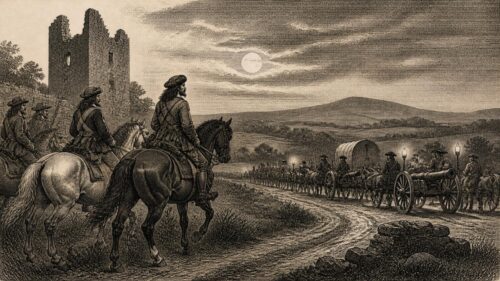
Ballyneety and the Broken Siege
In 1690 Ireland became central to the war between James II and William III, linked to the wider European struggle against France. William’s multinational army defeated the Jacobites at the Boyne, prompting James’s flight to France and William’s occupation of Dublin. Administrative measures followed, affecting coinage, property and allegiance. However, Jacobite forces withdrew towards the Shannon, where Limerick resisted William’s siege. Patrick Sarsfield’s Ballyneety raid disrupted the Williamite artillery train, while a later assault failed amid worsening conditions. William lifted the siege. Williamite victories at Cork and Kinsale secured southern ports, but Limerick’s survival ensured the conflict continued into 1691.
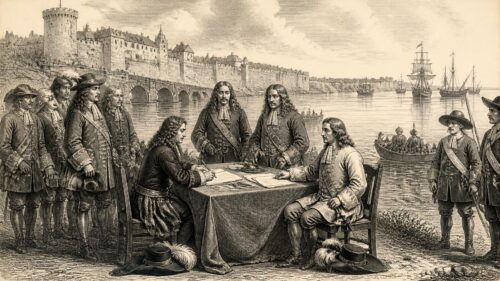
Limerick’s October Articles
In 1691, Williamite forces broke Jacobite power in Ireland, ending the war begun after James II’s overthrow. Ginkel captured Athlone, then defeated Saint-Ruth’s army at Aughrim, where the French commander’s death precipitated rout and Galway’s surrender. Limerick, divided after Tyrconnell’s death and deprived of resources, endured siege, bombardment and a Williamite crossing of the Shannon. Articles signed on 3 October ended organised resistance, offering protections for Catholic property, trade and worship, though their wording and enforcement remained disputed. Military terms enabled departure, Williamite service or homecoming. Thousands entered French service, while William and Mary secured sovereignty amid unsettled political consequences.
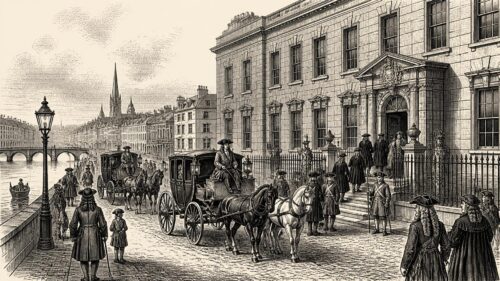
Sydney’s Recognition Parliament
In 1692, post-war Ireland remained unsettled despite Williamite victory. Authorities ratified and administered the Treaty of Limerick, processed claims, organised Jacobite departures, restored taxation, regulated currency, disarmed Catholics and addressed billeting, crime and militia security. Lord Sydney summoned the first Williamite parliament, whose Protestant members recognised William and Mary, defined Ireland’s attachment to England, and portrayed victory as deliverance from Catholicism and French influence. Commons nevertheless contested control of money bills under Poynings’ Law. Treaty protections coexisted with tightening restrictions on Catholics. Ruvigny’s advancement foreshadowed forfeiture and Protestant settlement, while Charles O’Kelly’s Jacobite history recorded a competing memory of defeat.

Sarsfield at Landen
In 1693, Ireland, though no longer a battlefield after the Treaty of Limerick, remained unsettled under Williamite rule. Lord Lieutenant Henry Sydney was recalled, parliament dissolved, and lords justices governed amid English pressure. Protestant military recruitment reinforced the new settlement, while treaty claims and forfeiture investigations determined former Jacobites’ property rights. Authorities pursued suspected tories, rapparees, priests and their families. Ireland remained involved in the Nine Years’ War: Patrick Sarsfield and John Barrett died after Landen, and trade with France was banned. Dublin gained a Huguenot congregation, while Vertue Rewarded transformed war into fiction. Official thanksgiving proclaimed restoration, despite division.

Portarlington’s French Register
In 1694, Ireland’s post-Williamite settlement advanced through administration rather than warfare. Commissioners began hearing claims under the Articles of Limerick, determining Jacobites’ rights to property, livelihoods and legal protection. Dublin’s Lords Justices managed revenue, including hearth-money exemptions, while debating a parliament whose supply might secure Protestant interests; no parliament met. Government fasts, Trinity College’s centenary celebration and Jonathan Swift’s diaconal ordination reflected Protestant public culture. Portarlington’s French Reformed register documented an emerging Huguenot community. Rewards for robbers and alleged rebels showed continuing insecurity. Queen Mary II’s death made William III sole monarch, leaving Ireland’s constitutional, religious and property settlement unfinished.

Capell’s Disarming Parliament
In 1695 Lord Capell’s Dublin parliament, under Poynings’ Law, consolidated Williamite rule after the Treaty of Limerick, reconciling Crown revenue needs with Protestant demands for fiscal influence. Amid fears of France, Jacobite exile and Catholic rebellion, it initiated religious exclusion. The Disarming Act required Catholics to surrender weapons and restricted ownership of horses, extending officials’ powers of search and control. The Foreign Education Act curbed Catholic teaching, overseas study and support, attaching severe civil and property penalties. Parliament also regulated property, trade, coinage and worship. Its legislation strengthened administration while making Catholic disability a durable foundation of the post-war settlement.

Clonmel’s Billeted Houses
In 1696, Williamite Ireland consolidated its post-war authority through military, fiscal and municipal controls rather than major conflict. Alarm over French-backed Jacobitism prompted proclamations against fugitives, alleged tories and absent officers, while Catholic disarmament authorised searches and deepened inequality. At Clonmel, the corporation ordered soldiers quartered in Catholic homes to prevent meetings, illustrating domestic surveillance despite continued Catholic trading. Poll and hearth taxes, regulated measures and proclamations sustained administration. Investigations into forfeited estates exposed continuing uncertainty over Catholic property rights. State-appointed fasts and thanksgivings reinforced Protestant political culture, while action against pirate Henry Every reflected Ireland’s place in imperial policing.

Athlone’s Thunder and Banishment
In 1697, post-war Ireland faced food scarcity, political consolidation and social disruption. Grain exports were restricted amid fears of shortages, while parliament reinforced Protestant ascendancy through property, security and religious legislation. It confirmed limited treaty protections for qualifying Jacobites but secured wartime forfeitures. The Banishment Act ordered Catholic bishops and regular clergy to leave, while restrictions targeted Protestant-Catholic marriages. Peace with France ended the Nine Years’ War, yet fears of Jacobitism persisted. Lightning destroyed Athlone Castle’s powder magazine, causing major damage. Scottish migration strengthened Ulster Presbyterian communities, while commercial tensions over Irish woollens and modest rebuilding reflected an uneven recovery.

Molyneux and the May Deadline
In 1698, enforcement of the Bishops’ Banishment Act required Catholic bishops, regular clergy and religious superiors to leave Ireland by 1 May, weakening Catholic leadership while secular priests often continued clandestine ministry. Hundreds of regular clergy were transported, though enforcement varied. The policy entrenched Protestant rule after the Williamite war without creating religious equality. In April, Protestant lawyer and parliamentarian William Molyneux published The Case of Ireland, challenging Westminster’s authority to bind Ireland and linking constitutional autonomy to disputes over appeals and trade. English concern over Irish woollens foreshadowed restrictions. Thomas Molyneux’s Giant’s Causeway observations connected Ireland to scientific inquiry.

Wool, Woods and Forfeitures
In 1699, post-war Ireland remained shaped by land redistribution, Protestant security and contested trade. The Irish parliament concluded legislation imposing woollen export duties, supporting Church of Ireland clerical residences, protecting timber and regulating butter casks. Westminster's Woollen Act then barred most Irish wool and woollen exports to foreign markets, restricting a vital, widespread industry and encouraging, but not immediately replacing it with, linen. A parliamentary commission investigated Williamite forfeitures, reporting thousands attainted and over one million plantation acres affected, deepening uncertainty over titles. Anti-Catholic laws and proclamations restricted solicitors, arms and clerical jurisdiction. Dublin's print trade nevertheless demonstrated wider connections.