


31100–31001 BCE
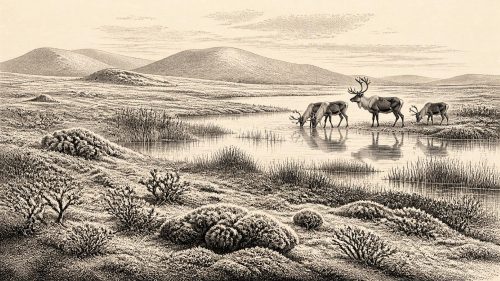
Maguirebridge’s Buried Sedgebed
At roughly 31,100 BCE, Ireland lay within the unstable cold conditions of Marine Isotope Stage 3, not a precisely datable historical year. At Derryvree near Maguiresbridge, organic freshwater sediments sealed between glacial tills record an ice-free interval, calibrated broadly to 36,900–31,700 BP. Sedges, mosses, herbs and aquatic plants indicate cold, open wetlands amid changing ice cover. Comparable Fermanagh deposits and Kerry cave calcite confirm intermittent milder conditions. Cave fauna shows that reindeer, deer, mammoth and predators reached Ireland episodically. A possibly tool-marked reindeer bone from Castlepook may indicate human presence, but neither permanent settlement nor travel routes can be demonstrated.

Reindeer Bone, Drumlin Silt
At the notional date of 31,099 BCE, Ireland was a cold, unstable Late Pleistocene landscape, not a settled country. Sediments beneath the Derryvree drumlin in County Fermanagh, dated broadly to 34,700–32,300 cal BP, show an ice-free freshwater wetland with tundra vegetation, insects and shallow water between glacial advances. Lower sea levels altered coasts, although no proven route into Ireland exists. Cave remains indicate reindeer and other cold-adapted fauna. A marked reindeer femur from Castlepook Cave may record human butchery, but cannot demonstrate residence. No settlements, artefacts, trade networks or polities are known; later ice probably destroyed much surviving archaeological evidence.
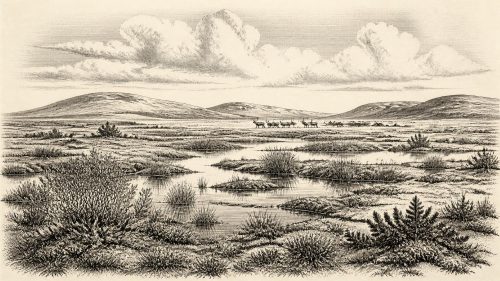
Derryvree’s Dwarf-Willow Wetland
Around 31,098 BCE, a modern approximation within Marine Isotope Stage 3, Ireland experienced unstable Late Pleistocene conditions before the Last Glacial Maximum. At Derryvree, County Fermanagh, organic sediments between glacial tills preserve evidence of an ice-free, treeless wetland with sedges, grasses, dwarf willow, mosses, pools and cold-adapted insects. Castlepook Cave, County Cork, records reindeer, mammoth, giant deer, bears, wolves, hyaenas and other fauna, though its mixed deposits cannot represent one community. These sites show varied open habitats amid growing glacial influence. Human presence remains unproven: a possible butchered bone is inconclusive, while secure evidence dates much later in caves there.

Cork’s Marked Reindeer Bone
Around 31,097 BCE, Ireland lay within the unstable Middle Midlandian phase of Marine Isotope Stage 3, not a recoverable historical year. Derryvree deposits in Fermanagh indicate ice-free, treeless tundra wetlands between glacial advances, while Crag Cave speleothems show milder conditions. Castlepook Cave, Cork, yielded a Late Pleistocene fauna including reindeer, mammoth and predators, though its disturbed deposits cannot reconstruct one contemporary ecosystem. A reindeer femur, possibly cut by a stone tool, may indicate human presence around 33,000 years ago, but proves neither settlement nor continuity. Glaciation and sea-level change erased evidence, leaving environmental traces rather than political or social history.
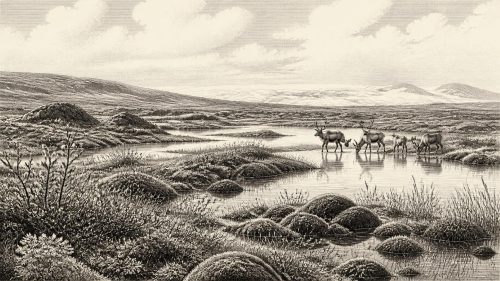
Maguiresbridge’s Frozen Reedland
Labelled 31,096 BCE, this period cannot be reconstructed as a single Irish year, but through fragmentary environmental evidence. At Derryvree near Maguiresbridge, freshwater silts between glacial tills, radiocarbon dated broadly to 36,900–31,700 years ago, preserve tundra wetland plants and animals, indicating cold, ice-margin conditions before renewed glaciation. Ireland's ice cover was dynamic, not uniformly continuous. Castlepook Cave fossils show reindeer, mammoth and other cold-country mammals reached Ireland when lower sea levels enhanced connectivity. A marked reindeer bone may indicate an early human visit, but lacks contextual proof. No evidence establishes permanent settlement, polities, trade, or institutions; the record remains ecological.
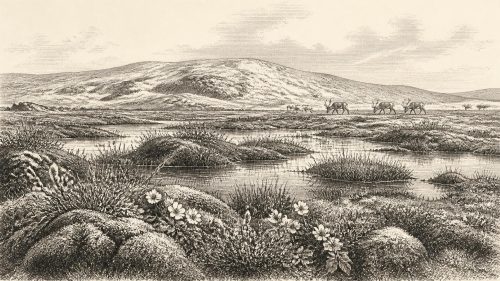
Derryvree’s Mountain-Avens Basin
Around 31,095 BCE, Ireland was in the climatically unstable Late Pleistocene, not an era of documented events or settled communities. Derryvree, County Fermanagh, preserves freshwater sediments between glacial tills, dated broadly to 36,900–31,700 calibrated years BP. Its plants, pollen and insects reveal a treeless periglacial wetland with mountain-avens, sedges, aquatic vegetation and severe seasonal conditions. Castlepook Cave, County Cork, contains Ice Age fauna including mammoth, reindeer, giant deer, hyaena and lemmings, indicating ecological links with north-west Europe. A possibly cut-marked reindeer bone suggests, but cannot prove, brief human activity. Subsequent ice expansion across Ireland reshaped landscapes, habitats and surviving evidence.
Maguirebridge’s Water-Milfoil Silt
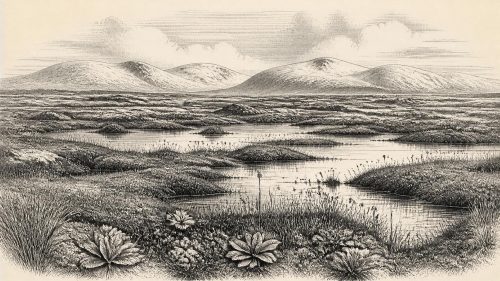
Around 31,094 BCE, Ireland has no identifiable events or communities, but Derryvree deposits near Maguiresbridge provide a broad environmental guide. Freshwater silts, dated approximately 34,950–29,750 BCE, formed during an ice-free interval between glacial advances. They indicate a cold, treeless periglacial wetland of sedges, mosses, herbs, pools and aquatic water-milfoil. Castlepook Cave's long, disturbed faunal sequence records cold-adapted mammals, including reindeer, across a wider period. A reindeer bone dated about 33,000 years ago bears a possible butchery mark, suggesting brief human activity, not settlement. Approaching ice-sheet expansion, shifting access routes and fragmentary evidence define Ireland's unstable Late Pleistocene environment and history.

The Derryvree Bogbean Lens
31,093 BCE is a modern point within a broad Late Pleistocene range, not a date with recorded events. At Derryvree, County Fermanagh, freshwater sediments between tills demonstrate a local ice-free interval, probably 34,950–29,750 BCE. Plants, pollen and insects reveal cold, wet, treeless tundra with pools and periglacial conditions. Castlepook Cave, County Cork, preserves a mixed, time-depth fauna including mammoth, reindeer, giant deer, hyaena and Arctic fox, but its deposits require caution. A marked reindeer bone may indicate brief human carcass processing around 33,000 years ago, not settlement. Evidence supports environments and animal access, while social and political history remains unknown.
Derryvree’s Interstadial Muskeg
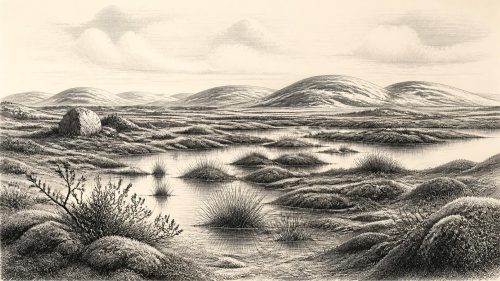
Around 31,092 BCE, Ireland’s environment can be reconstructed only broadly, not as a dated historical event. At Derryvree, County Fermanagh, freshwater organic sediments between glacial tills show that a locally ice-free wetland developed during Marine Isotope Stage 3. Pollen, plants and insects indicate cold, open periglacial terrain with sedges, mosses, pools and sparse shrubs. Climate and ice cover varied regionally. Cave fauna, especially at Castlepook, demonstrates intermittent presence of reindeer, mammoth, giant deer, hyaena and other mammals. A marked reindeer bone may indicate early humans, but settlement remains absent. Later glaciation destroyed much evidence, leaving human visits possible but unproven.
The Castlepook Butchery Claim
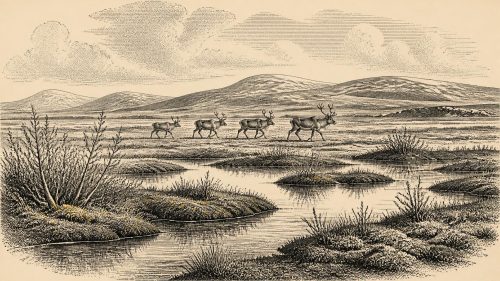
Around 31,091 BCE, Ireland lay within fluctuating Marine Isotope Stage 3 conditions, not a precisely identifiable year. Derryvree, County Fermanagh, preserves freshwater sediments between glacial tills, dated broadly to 36,900–31,700 calibrated years before present. Their pollen, plants and insects indicate a treeless, cold, wet tundra landscape. Castlepook Cave, County Cork, contains diverse cold-stage fauna, including mammoth, reindeer, giant deer and hyaena, although cave deposits mix ages and origins. A marked reindeer femur may record stone-tool butchery, suggesting a brief human visit, but remains unconfirmed. Later advancing ice transformed or destroyed these landscapes, preceding the Last Glacial Maximum in subsequent millennia.

The Fermanagh Pool Mosaic
The label 31,090 BCE cannot identify a specific Irish event, but indicates a changing late-Pleistocene environment during Marine Isotope Stage 3. At Derryvree, County Fermanagh, organic deposits between glacial tills preserve evidence of an ice-free wetland with cold, treeless vegetation, freshwater pools and seasonal freezing. Castlepook Cave, County Cork, contains time-averaged remains of mammoth, reindeer, giant deer, hyaena and other animals, demonstrating diverse cold-open habitats. A possibly cut-marked reindeer bone suggests transient human activity, but not settlement. Ireland was not uniformly ice-covered, yet conditions were increasingly severe before the later ice-sheet maximum; evidence remains fragmentary, chronologically imprecise, limited in scope.

Mammoth Cave’s Unsettled Reindeer
Around 31,089 BCE, Ireland lay within a fluctuating cold-stage environment before the Last Glacial Maximum. Lower sea levels altered coasts, but no definite route from Britain or evidence of permanent human settlement exists. Derryvree, County Fermanagh, preserves a wetland sequence between glacial tills, indicating open, treeless tundra-like conditions. Castlepook Cave, County Cork, contains remains of mammoth, reindeer, giant deer and predators, accumulated over long periods. A cut-marked reindeer femur may indicate human carcass processing, but cannot prove occupation. Later ice-sheet advances reshaped Ireland and destroyed much earlier evidence, leaving a fragmentary record of changing ecosystems, animals and possible transient visitors.
Derryvree’s Buried Tundra
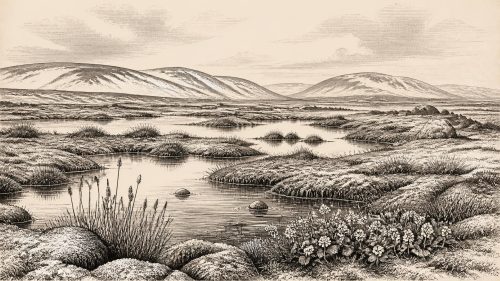
Around 31,088 BCE, Ireland cannot be described through annual events or historical communities, but through Late Pleistocene environmental evidence. At Derryvree, County Fermanagh, freshwater sediments between glacial tills record an ice-free MIS 3 interval, dated broadly between 34,950 and 29,750 BCE. Mosses, sedges, bogbean and cold-adapted insects indicate open, wet tundra-like terrain. Castlepook Cave, County Cork, preserves a mixed, cautiously interpreted fauna including mammoth, reindeer and hyaena. Possible human activity rests on an uncertain cut-marked bone, not settlement evidence. Later ice expansion erased much evidence, leaving a dynamic, harsh landscape rather than identifiable societies or events at any precise date.
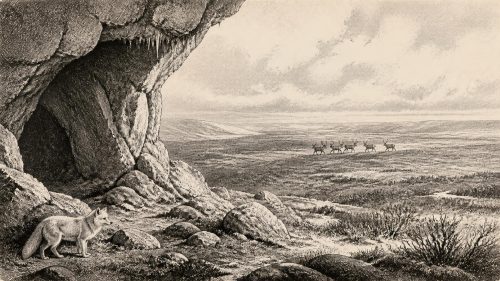
Hyaena Hall’s Last Passage
31,087 BCE is an imprecise label for a period near the onset of Ireland’s Last Glacial Maximum. Evidence, centred on Castlepook Cave in County Cork, depicts a cold, open tundra-steppe environment inhabited intermittently by mammoth, reindeer, giant deer, wolves, Arctic foxes and spotted hyaenas. Cave bones, coprolites and feeding damage demonstrate carnivore activity within a wider Eurasian-connected fauna. A marked reindeer femur may indicate human stone-tool use around 33,000 years ago, but disturbed deposits and uncertain taphonomy prevent conclusions. No settlements or cultural evidence are securely known. Subsequent ice expansion transformed Ireland, leaving Castlepook as evidence of early human passage.
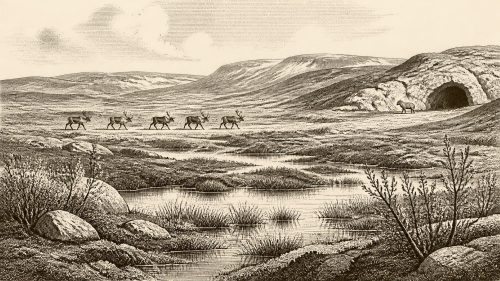
Castlepook’s Narrow Window
Around 33,000 calendar years before present, Ireland experienced increasingly severe, unstable conditions as the British-Irish Ice Sheet expanded towards its later maximum. Low sea levels allowed intermittent ecological connections, though routes remained uncertain. Derryvree, County Fermanagh, preserves freshwater evidence of treeless tundra wetlands supporting plants and insects. Castlepook Cave, County Cork, contains a disturbed assemblage including reindeer, mammoth, giant deer, hyaena, lemmings and Arctic fox, demonstrating repeated cold-adapted faunas. A possibly cut-marked reindeer femur may indicate brief Upper Palaeolithic human activity, but lacks secure context. No settlements, tools, institutions or continuous occupation can be established; erosion and glaciation obscured evidence.
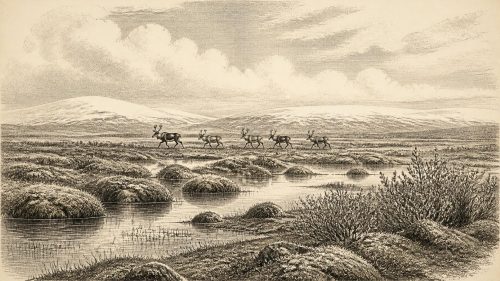
Maguirebridge’s Sedge Clock
About 31,085 BCE, Ireland lay within the unstable Marine Isotope Stage 3, not a precisely datable historical year. At Derryvree, County Fermanagh, freshwater silts between glacial tills record an ice-free interval of wet, treeless tundra, supporting sedges, mosses, herbs and cold-adapted plants. Ice conditions elsewhere remain uncertain. Castlepook Cave, County Cork, preserves mixed faunal remains, including mammoth, reindeer, giant deer and predators, from several episodes. A marked reindeer femur may indicate stone-tool butchery, suggesting brief human visits, but this remains unproven. No settlements, polities, beliefs or exchange networks can be identified. Ireland was an environmentally dynamic, intermittently habitable cold-stage landscape.

The Castlepook Reindeer Femur
Around 31,084 BCE, Ireland experienced unstable Marine Isotope Stage 3 conditions, with advancing ice, lower sea levels and varied periglacial habitats rather than uniform frozen terrain. Derryvree, County Fermanagh, preserves wetland sediments between glacial tills, indicating cold, treeless freshwater environments during an ice-free interval. Castlepook Cave, County Cork, yielded diverse cold-stage fauna, including reindeer, mammoth, giant deer, predators and lemmings, although its deposits span multiple periods. A cut-marked reindeer femur may indicate Upper Palaeolithic butchery and a brief human visit, not proven settlement. Evidence reveals ecological complexity but cannot securely establish precise dates, communities, politics, culture or permanent occupation there.
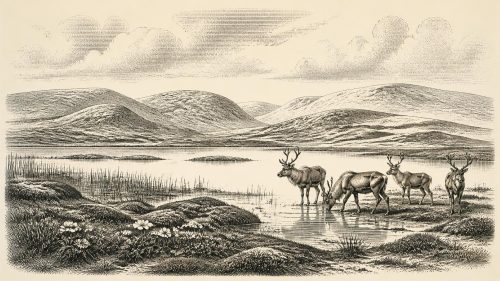
Maguirebridge’s Intertill Flora
The modern label 31,083 BCE denotes a broad Late Pleistocene interval, not a recoverable year. Ireland experienced unstable cold conditions, with changing ice, low sea levels and largely treeless grassland, wetland and tundra mosaics. Derryvree, County Fermanagh, preserves freshwater sediments dated broadly to the mid-to-late 30,000s calibrated years before present, containing cold-adapted plants and insects that disprove permanent island-wide ice cover. Castlepook Cave, County Cork, records diverse cold-stage fauna, although mixed deposits prevent a single contemporaneous reconstruction. A possibly tool-marked reindeer femur suggests, but cannot prove, brief human carcass processing. No settlements, institutions or sustained population are securely documented locally.

Castlepook’s Reindeer Crossing
Labelled 31,082 BCE, this period cannot be treated as a precisely recorded Irish year, but belongs broadly to climatically unstable Marine Isotope Stage 3. Freshwater deposits at Derryvree, Hollymount and Greenagho show intermittent cold, open wetland environments between glacial advances, while Crag Cave calcite indicates milder episodes with flowing water. Castlepook Cave preserves fauna, including mammoth, reindeer, giant deer, hyaena, wolves and Arctic foxes, accumulated over complex deposits rather than one moment. An incised reindeer femur may indicate human butchery, but proves neither settlement nor continuous occupation. Evidence instead depicts fragmentary Ice Age environments, shifting ice and possible human presence.

Derryvree’s Living Silt
Modern dating places the Derryvree evidence within Marine Isotope Stage 3, not at a precisely knowable annual moment. Organic silts between glacial tills at County Fermanagh record a locally ice-free, periglacial freshwater tundra, with sedges, mosses, herbs, insects and shallow pools, before renewed glaciation. Ireland’s conditions varied regionally as ice expanded towards the Last Glacial Maximum. Castlepook Cave, County Cork, preserves remains of reindeer, mammoth, giant deer and predators, demonstrating wider faunal connectivity, though not a single contemporaneous community. A possibly tool-marked reindeer bone suggests, but cannot confirm, early human activity. No evidence supports settlement, society, economy or political history.
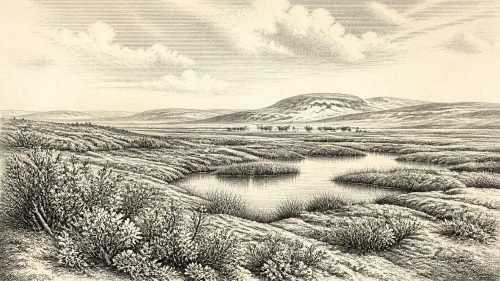
BIRM-166’s Reindeer Question
Labelled 31,080 BCE only retrospectively, this period in Ireland is reconstructed from uncertain environmental evidence rather than dated events. At Derryvree, County Fermanagh, organic deposits between glacial tills indicate an ice-free freshwater wetland during part of Marine Isotope Stage 3, supporting treeless tundra vegetation in severe conditions. Castlepook Cave, County Cork, contains Late Pleistocene fauna including reindeer, mammoth and predators, accumulated across long intervals. A cut-like mark on a reindeer femur may indicate human butchery, but cannot establish settlement, culture or continuity. As ice expanded towards the Last Glacial Maximum, shifting landscapes and uncertain routes constrained animal and human movement.

Derryvree’s Interrupted Waters
Around 31,079 BCE, Ireland cannot be reconstructed as a year-specific historical setting. Derryvree, County Fermanagh, preserves freshwater sediments between glacial tills, indicating a locally ice-free, cold wetland landscape during late MIS 3, although its broad dates cannot define island-wide conditions. Vegetation suggests open tundra-like terrain with pools, sedges and hardy plants. Castlepook Cave, County Cork, contains a long, mixed faunal record including mammoth, reindeer, predators and lemmings. A possibly stone-cut reindeer femur raises, but cannot confirm, brief Upper Palaeolithic human presence. Later glacial expansion repeatedly buried or destroyed evidence across the island, requiring cautious interpretation of Ireland’s shifting ecological frontier.
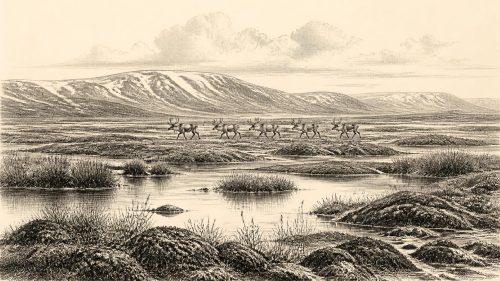
Castlepook’s Pre-Maximum Fauna
Around 31,078 BCE, Ireland lay within the volatile Midlandian cold stage, before the Last Glacial Maximum, rather than a datable historical year. Changing ice, sea levels and land connections created an environmentally varied, intermittently accessible landscape. Derryvree sediments in Fermanagh preserve evidence of treeless tundra wetland, including mosses, sedges and cold-adapted insects, during an ice-free interval. Castlepook Cave in Cork contains mammoth, reindeer, giant deer, predators and smaller mammals, documenting a diverse cold-stage fauna. A possibly cut-marked reindeer bone suggests fleeting Upper Palaeolithic human activity, but lacks secure context. No evidence supports permanent settlement, institutions or society; uncertainty remains essential.
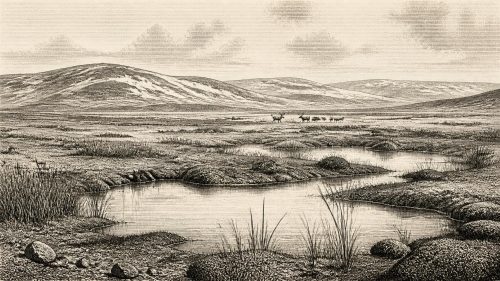
BIRM-166 Under Ice
Labelled 31,077 BCE, this notional date cannot yield a conventional Irish history, because evidence consists of stratified deposits, fossils and calibrated ranges rather than records. At Derryvree, County Fermanagh, BIRM-166 dates organic freshwater sediments from an ice-free interval between tills, indicating cold, treeless wetland with mosses, sedges and northern insects. Castlepook Cave, County Cork, preserves MIS 3 fauna including reindeer, mammoth and predators, though mixed cave contexts prevent a single-date reconstruction. A marked reindeer femur may indicate human butchery, but proves neither settlement nor population. Environmental change dominated, as later ice-sheet expansion transformed Ireland's physical landscapes, habitats and drainage systems.
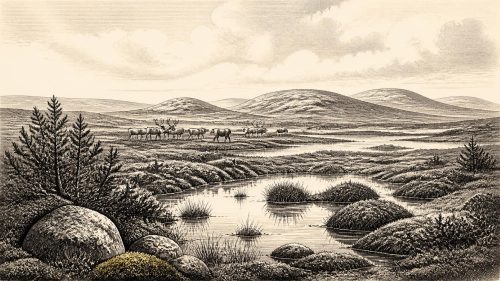
Derryvree Roadcut Archive
Labelled 31,076 BCE, this period cannot be tied to a specific Irish event, as dating relies on broad calibrated ranges. During Marine Isotope Stage 3, Ireland experienced changing ice margins, sea levels and intermittent ice-free terrain. Derryvree, County Fermanagh, preserves freshwater sediments between tills, indicating cold tundra wetlands during a non-glacial interval. Crag Cave records episodic wetter phases linked to climatic fluctuations. Castlepook Cave yielded diverse cold-adapted fauna and a reindeer femur possibly cut with a stone tool, suggesting brief human presence. However, no secure settlement evidence exists. These fragmentary archives reveal dynamic environments, not a dated historical narrative alone.

Derryvree’s Trifoliate Pool
31,075 BCE is a modern label within a broad Late Pleistocene range, not a recoverable Irish year. Derryvree, County Fermanagh, preserves freshwater silts and organic remains between glacial tills, showing that locally ice-free, treeless wetland existed during part of MIS 3 before renewed glaciation. Fossils of sedges, mosses, bogbean and aquatic plants indicate cold, open, fluctuating conditions. Castlepook Cave, County Cork, records diverse cold-climate mammals, though its accumulated bones cannot establish simultaneous fauna or annual events. A possibly cut-marked reindeer bone suggests human carcass handling, but no secure settlement exists. The evidence reveals habitats, not communities, politics, culture or economies.
Maguirebridge’s Vanished Fen
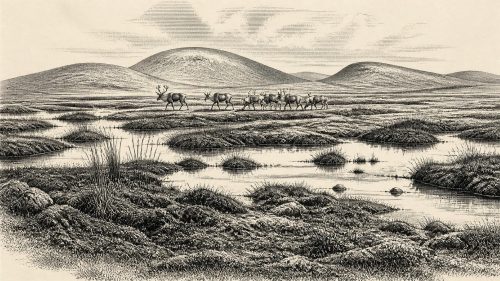
Although 31,074 BCE is a modern notional date, evidence from Derryvree near Maguiresbridge illuminates a Late Pleistocene interval when Fermanagh was temporarily ice-free. Freshwater sediments between tills, dated broadly to 36,900–31,700 calibrated years ago, record treeless, cold wetlands supporting local vegetation and insects. Lower sea levels linked Ireland to Britain and continental Europe, enabling animal movement across an unstable tundra-steppe landscape. Cave remains show reindeer, mammoths, giant deer and predators, though their coexistence is uncertain. A cut-marked reindeer bone from Castlepook may indicate human butchery, but cannot prove settlement. Later glaciation reshaped Ireland and erased much evidence of this period.
Derryvree’s Moss-Rich Mud
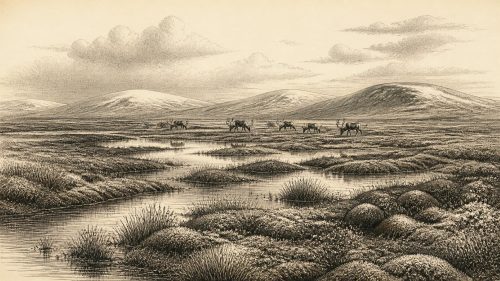
Labelled 31,073 BCE, this horizon cannot be reconstructed as a single observed year, but belongs broadly to unstable MIS 3 before Ireland’s glacial maximum. Derryvree, County Fermanagh, preserves moss-rich freshwater sediments between tills, indicating an ice-free, treeless tundra wetland during an earlier cold-stage interval. Castlepook Cave, County Cork, documents MIS 3 fauna including reindeer, giant deer and spotted hyaena, though mixed deposits complicate interpretation. A possibly cut-marked reindeer bone suggests only tentative human activity. Ireland was cold, open and ecologically active, yet evidence supports no known population, polity, culture, settlement or economy; later ice obscured much of its surviving record.

Castlepook Femur Under Scrutiny
31,072 BCE is a modern chronological label, not a precisely narratable Irish year. During Marine Isotope Stage 3, Ireland experienced cold, unstable conditions as the British-Irish Ice Sheet expanded, though some terrain remained ice-free. Derryvree, County Fermanagh, preserves a freshwater wetland sequence indicating treeless periglacial habitats, pools and varied plant life. Castlepook Cave, County Cork, contains mixed late Pleistocene animal remains, demonstrating repeated faunal presence rather than a single community. A marked reindeer femur may indicate very early human activity, but requires scrutiny. No settlement or culture is established. Later glaciation erased evidence, leaving fragmentary environmental and archaeological records today.

Derryvree’s Clubmoss Silt
31,071 BCE is best understood as a broad Late Pleistocene interval, not a datable Irish event. At Derryvree, County Fermanagh, organic silts beneath glacial till preserve evidence of cold, open, locally wet tundra vegetation, including clubmoss, sedges, mosses and insects. Comparable deposits confirm intermittent ice-free conditions between glacial advances. Castlepook Cave, County Cork, yielded remains of reindeer, mammoth, predators and other cold-adapted animals, though these need not represent one community or time. A marked reindeer bone may indicate human activity, but remains unconfirmed. No settlements or institutions are known. Growing ice sheets later repeatedly transformed and buried these changing landscapes.

Castlepook’s Faunal Borderland
31,070 BCE is a modern label for a Late Pleistocene, climatically unstable Ireland approaching glaciation. Evidence indicates varied local conditions rather than uniform ice cover. Derryvree silts in Fermanagh preserve treeless tundra wetland plants, showing that cold, productive habitats existed between glacial episodes. Castlepook Cave in Cork yielded reindeer, mammoth, giant deer, predators and other cold-stage fauna, though mixed deposits complicate interpretation. A marked reindeer bone may indicate human butchery around 33,000 radiocarbon years ago, but remains unconfirmed without associated tools or settlements. Changing sea levels affected possible movement routes. The period’s secure history is environmental, not political or cultural.

Derryvree’s Fossil Plant Census
Thirty-one thousand and sixty-nine BCE cannot be resolved as a distinct Irish historical year, but evidence overlapping it illuminates MIS 3 conditions. At Derryvree, County Fermanagh, an organic freshwater bed between glacial tills preserves mosses, sedges and plant macrofossils, indicating cold, open, tundra-like wetland during an ice-free interval. Castlepook Cave, County Cork, contains remains of varied Late Pleistocene mammals, accumulated across separate episodes, showing changing ecological connections with north-west Europe. A cut-marked reindeer femur may indicate brief human activity, although not settlement. Subsequent glaciation erased and buried much evidence, leaving a fragmented record of dynamic climates, habitats and Irish fauna.

BIRM-166’s Tundra Ledger
Around 31,068 BCE, Ireland lay within the unstable MIS 3 phase of the Late Pleistocene, not a documented historical year. Derryvree, County Fermanagh, preserves freshwater sediments between glacial tills, dated broadly enough to include this period. These indicate cold, open tundra wetlands with mosses, sedges, aquatic plants and sparse arctic-alpine vegetation. Ireland was neither wholly ice-covered nor uniformly ice-free before the later glacial maximum. Castlepook Cave fauna show that reindeer, mammoth, giant deer and predators reached southern Ireland during MIS 3. A possibly cut-marked reindeer bone suggests, but does not prove, brief human visitation. Evidence remains environmental, fragmentary and local.

Derryvree Intertill Sequence
Around 31,067 BCE, Ireland lay within the climatically unstable Late Pleistocene. Derryvree, County Fermanagh, preserves freshwater silts between glacial tills, dated broadly to 36,900–31,700 calibrated years BP. These reveal locally ice-free, treeless tundra wetlands with mosses, sedges, insects and shallow pools before renewed glaciation. Castlepook Cave, County Cork, contains accumulated remains of mammoth, reindeer, giant deer, bear and hyaena, but does not represent a single moment. A possibly cut-marked reindeer bone suggests, without proving, human activity. No securely dated settlements or political, cultural or economic institutions are known. The evidence instead records changing habitats, mobile fauna and uncertain human presence.

The Maguiresbridge Interlude
31,066 BCE is a modern label within a broad Late Pleistocene range, not a recoverable Irish year. Derryvree, County Fermanagh, preserves freshwater organic deposits between tills, indicating a locally ice-free, treeless, waterlogged tundra interval, though not conditions across Ireland. Crag Cave speleothems record alternating milder and colder MIS 3 phases as ice generally expanded. Castlepook Cave’s mixed, imperfectly recorded fauna, including reindeer, mammoth, giant deer and hyena, confirms episodic animal access. Lower seas altered connections with Britain and Europe. No securely dated human remains, artefacts, settlements or political history exist; Ireland’s evidence instead reveals climate, wetlands, fauna and advancing ice.

Awbeg’s Cold Steppe
Around 31,065 BCE, Ireland experienced unstable Late Pleistocene conditions before full expansion of the last Irish Ice Sheet. Derryvree sediments in Fermanagh indicate treeless, waterlogged tundra vegetation, while lower sea levels enlarged the landmass but left migration routes uncertain. Castlepook Cave in County Cork preserves remains of reindeer, mammoth, giant deer, lemmings, wolves, bears, foxes and hyaenas, demonstrating diverse cold-steppe food webs. A possibly cut-marked reindeer bone may indicate brief Upper Palaeolithic human activity, but cannot prove settlement. No evidence supports societies, politics, ritual or trade. Subsequent ice advance destroyed or buried much earlier evidence, leaving a limited environmental record.
Doneraile’s Marked Femur
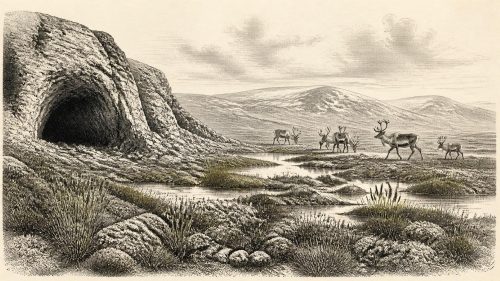
31,064 BCE is a modern label for a late Upper Palaeolithic interval, not a documented Irish year. During Marine Isotope Stage 3, Ireland experienced cold, fluctuating conditions as the British–Irish Ice Sheet expanded towards its later maximum. Derryvree, County Fermanagh, preserves a freshwater tundra wetland with cold-adapted plants, insects and sediments between tills. Castlepook Cave, County Cork, yielded mammoth, reindeer and hyaena remains, including a reindeer femur possibly cut with a stone tool. This may indicate brief human carcass processing, but cannot prove settlement. No secure tools, hearths, structures, burials or evidence of society, culture, routes or permanent occupation survives.

The Last Drips at Crag Cave
Around 31,063 BCE, Ireland lay within the climatically unstable Marine Isotope Stage 3. No evidence identifies events in that precise year, and dates require broad calibrated ranges. Inter-till sediments at Derryvree, County Fermanagh, show episodic ice-free conditions, freshwater pools and treeless tundra vegetation. Crag Cave, County Kerry, preserves speleothem growth indicating intermittent liquid water and unfrozen ground. Castlepook Cave, County Cork, yielded diverse cold-climate fauna, although its bones do not prove human settlement. A possible cut-marked reindeer bone remains uncertain evidence of human activity. Expanding ice increasingly constrained habitats, while Ireland’s record survives chiefly in sediments, calcite and animal remains.
Fermanagh Beneath the Drumlins
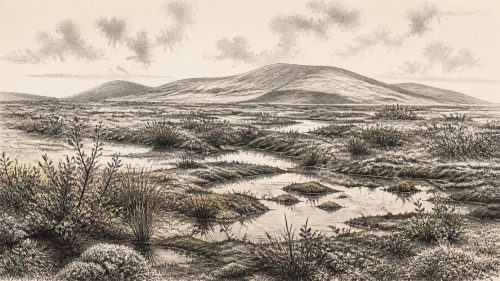
About 31,062 BCE, Ireland lay within the climatically unstable Late Pleistocene, rather than a precisely datable historical year. At Derryvree, County Fermanagh, freshwater sediments between glacial tills preserve evidence of an ice-free interval, broadly 36,900–31,700 calibrated years BP. Plant remains indicate an open, periglacial tundra wetland of pools, mosses, sedges, dwarf willow, mountain-avens and bogbean. Later ice buried the deposit as the British-Irish Ice Sheet expanded. Castlepook Cave, County Cork, records diverse cold-stage mammals, including reindeer, mammoth and hyaena. A marked reindeer bone may suggest brief human butchery, but cannot demonstrate settlement. Evidence reveals dynamic habitats rather than recorded societies.

Fermanagh’s Intertill Tundra
31,061 BCE is best understood as part of Marine Isotope Stage 3, not a recoverable Irish calendar year. At Derryvree, County Fermanagh, freshwater sediments and organic remains sealed between tills record a local ice-free interval, supporting treeless, tundra-like wetlands. Ireland’s landscapes varied sharply as the British–Irish Ice Sheet advanced and retreated; low sea levels did not guarantee a land bridge to Britain. Castlepook Cave, County Cork, preserves remains of mammoth, reindeer, giant deer and predators, demonstrating intermittent cold-climate fauna. A possibly stone-cut reindeer bone suggests early visitors, but no secure evidence establishes human settlement, society or island-wide conditions at once.

BIRM-166 Before Glaciation
31,060 BCE is an approximate modern label for late Marine Isotope Stage 3, not a datable Irish year. Ireland faced increasingly cold, unstable conditions before the Last Glacial Maximum, with expanding ice, low sea levels and open, treeless periglacial landscapes. Derryvree, County Fermanagh, preserves wetland sediments indicating an ice-free tundra ecosystem of sedges, mosses and arctic-alpine plants. Castlepook Cave, County Cork, yielded cold-stage fauna, including reindeer, mammoth and hyaena, evidencing intermittent regional connectivity. A possibly cut-marked reindeer femur suggests brief human visitation, but cannot prove settlement. Subsequent glaciation destroyed evidence, leaving environmental change central to this deeply uncertain Irish period.

The Maguiresbridge Waterline
31,059 BCE is a modern label rather than a date resolvable in Irish archaeology. Derryvree, near Maguiresbridge, preserves freshwater silts and organic remains between two tills, indicating a locally ice-free interval within unstable Marine Isotope Stage 3. Radiocarbon dating places the deposit broadly around 34,950–29,750 BCE, not in a specific year. Plant and insect evidence depicts treeless, frost-worked tundra wetland with pools, sedges and cold-adapted vegetation. Castlepook Cave records Ice Age fauna, though not simultaneous occupation. Later ice expansion reshaped Ireland. No reliable evidence identifies humans, settlements or societies; these fragmentary archives instead reveal changing climates, waters and animal communities.

Derryvree’s Sedge Country
Around 31,058 BCE, Ireland was experiencing a cold, unstable Late Pleistocene climate, not a uniformly ice-covered landscape. At Derryvree, County Fermanagh, freshwater silts preserved between glacial tills record a locally ice-free interval before later ice advance. Radiocarbon calibration places these deposits within a broad range encompassing the notional date, rather than a precise year. Fossils indicate wet tundra of sedges, mosses, grasses, shallow pools and cold-adapted invertebrates. Cave fauna demonstrate intermittent connections with wider Europe but cannot establish contemporaneous species lists. No securely dated human occupation exists. Evidence supports environmental change, not institutions, settlement, economy or named events in Ireland.

Hyaena Hall’s Mammoth Bones
31,057 BCE is not a precisely recoverable Irish year but falls within the unstable Late Pleistocene MIS 3. Derryvree, County Fermanagh, preserves freshwater sediments between glacial tills, indicating locally ice-free, treeless tundra wetlands during a broad period encompassing this date. Castlepook Cave, County Cork, contains a disturbed but significant pre-Last Glacial Maximum fauna, including mammoth, reindeer, giant deer and spotted hyaena. A cut-marked reindeer femur may indicate brief human butchery around 31,000 BCE, yet no settlement is proven. Evidence supports a cold, changing landscape intermittently used by mammals and perhaps people, not political, social or chronological narratives at this scale.
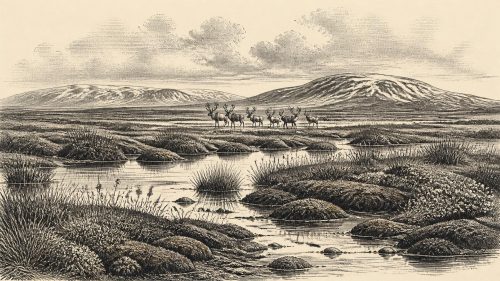
The Doneraile Limb Mark
Around 31,056 BCE, Ireland was a cold, changing Late Pleistocene landscape rather than a historically dated society. Derryvree deposits in Fermanagh preserve tundra vegetation between glacial advances, although their radiocarbon chronology is broad and uncertain. Castlepook Cave, County Cork, contains diverse Marine Isotope Stage 3 fauna, including reindeer, mammoth and hyaena, accumulated through varied natural processes. A reindeer femur bearing a possible stone-tool cut mark may indicate human carcass processing, but lacks secure archaeological context. No camp, tools, hearths or human remains confirm settlement. Later ice expansion disrupted habitats and erased evidence, leaving only cautious evidence of possible brief visits.

Derryvree’s Enclosed Wetland
31,055 BCE is a modern label rather than a recoverable Irish year. Derryvree, County Fermanagh, preserves freshwater sediments between glacial tills, dated broadly to 36,900–31,700 cal BP, showing a cold, wet, locally ice-free tundra landscape with plants and small animals. Ireland was entering greater glaciation, which later reworked or buried evidence. Castlepook Cave, County Cork, contains diverse cold-stage fauna, including reindeer, mammoth and hyaena. A marked reindeer femur may indicate Upper Palaeolithic butchery about 33,000 years ago, but lacks associated tools or occupation evidence. Thus Ireland supported animals and perhaps brief human visits, not securely demonstrable settlement, societies or ritual.

Fermanagh’s Tundra Pool
At the modern equivalent of 31,054 BCE, Ireland lay in the Late Pleistocene and cannot be described with annual precision. Derryvree, County Fermanagh, preserves wetland sediments between glacial tills, showing an ice-free interval with treeless tundra vegetation, shallow pools and cold-adapted insects. Castlepook Cave, County Cork, yielded mammoth, reindeer, giant deer, predators and other fauna, demonstrating intermittent ecological connections beyond Ireland. A marked reindeer bone may indicate human handling, but provides no proof of permanent settlement. There is no evidence for societies, polities or institutions. The evidence instead depicts a climatically deteriorating, locally varied landscape before the Last Glacial Maximum.
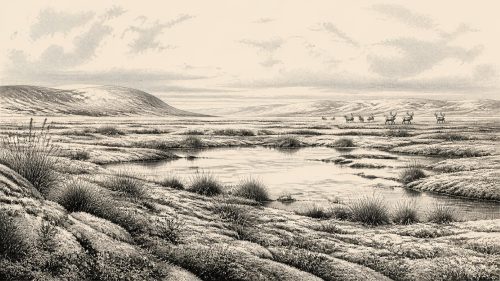
Mammoth Cave’s Reindeer Question
31,053 BCE is a modern chronological point within Marine Isotope Stage 3, not a datable Irish historical year. Evidence from Derryvree, County Fermanagh, records a cold, treeless freshwater wetland between glacial advances, with mosses, sedges and northern insects. Castlepook Cave, County Cork, preserves a long-accumulated fauna including mammoth, reindeer, giant deer, predators and lemmings, demonstrating changing habitats supporting cold-adapted life. A marked reindeer femur may indicate early human butchery, but remains unconfirmed because cave deposits and bone histories are complex. No settlements, tools or institutions establish human occupation. Ireland was an ecological frontier of shifting ice, exposed land and uncertainty.
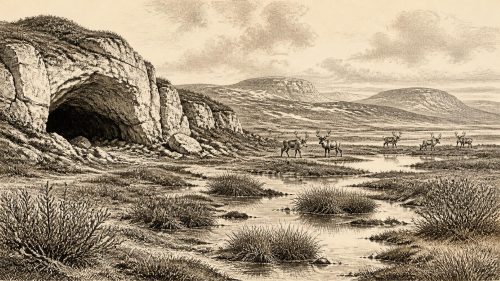
Cork’s Reindeer Hinterland
Around 31,052 BCE, a modern label rather than a precisely datable Irish year, Ireland lay in Marine Isotope Stage 3 before the Last Glacial Maximum. Evidence from Castlepook Cave in north Cork records cold-climate fauna, including reindeer, mammoth, giant deer and hyena, accumulated over long periods. A possibly stone-cut reindeer femur suggests human activity, but cannot prove settlement. At Derryvree, Fermanagh, interglacial sediments indicate treeless, wet tundra with sedges, herbs, mosses and cold-adapted species. Falling temperatures and advancing ice increasingly threatened these habitats. No evidence supports contemporary societies, institutions or permanent communities; environmental change and mobile fauna define prehistoric Ireland.

Bogbean at Derryvree
31,051 BCE is a retrospective date, not an identifiable Irish event. Derryvree, County Fermanagh, preserves freshwater organic deposits between glacial tills, dated within Marine Isotope Stage 3. Its mosses, sedges, aquatic plants, bogbean and cold-adapted insects indicate an open, treeless tundra wetland shaped by frost, short growing seasons and ice margins. Castlepook Cave, County Cork, contains Pleistocene fauna including reindeer, mammoth, giant deer, predators and animals, though deposits span uncertain periods. A cut-marked reindeer bone may indicate human butchery about 33,000 years ago, but cannot prove settlement or continuity. Evidence reveals shifting ecological opportunities, not island-wide conditions, polities or trade.

Fermanagh’s Silt Window
At roughly 31,050 BCE, Ireland lay within the unstable cold conditions of Marine Isotope Stage 3. Freshwater silts at Derryvree, County Fermanagh, preserved between glacial tills, record a temporary ice-free landscape of tundra wetlands, mosses, sedges, grasses and sparse dwarf shrubs. The deposits demonstrate habitable freshwater environments, not a mild interglacial climate. Cave faunas from southern Ireland show that reindeer, mammoths, giant deer and predators intermittently reached the island as sea levels changed. A marked reindeer bone may indicate human butchery, but remains unconfirmed. No settlements or sustained occupation are known. Advancing ice later reshaped and buried these landscapes again.

Castlepook’s Reindeer Enquiry
31,049 BCE cannot be treated as a precisely dated Irish event, but falls within late Marine Isotope Stage 3, before maximum glaciation. At Derryvree, Fermanagh, freshwater deposits between tills reveal a cold, treeless wetland of sedges, mosses, dwarf willow, insects and shallow pools, demonstrating regional environmental variation. Castlepook Cave, Cork, preserves reindeer, mammoth, hyaena and other fauna, though disturbed deposits represent different periods rather than one community. Lower sea levels permitted intermittent animal crossings, while expanding ice increasingly restricted habitats and access. A possibly cut reindeer bone suggests early human visits, but no secure settlement, artefacts or social history exists.
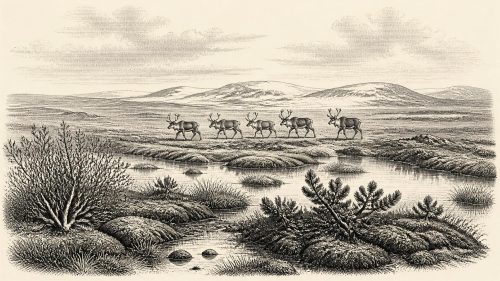
Derryvree’s Moss Ledger
Although 31,048 BCE cannot be resolved as a specific Irish year, evidence places it within a fluctuating MIS 3 glacial environment. At Derryvree, County Fermanagh, organic deposits between tills indicate an ice-free interval with treeless freshwater wetland, mosses and cold-adapted plants. Crag Cave speleothems demonstrate climatic variability, while Castlepook Cave preserves MIS 3 remains of mammoth, reindeer, giant deer, predators and cold-country fauna. A possibly modified reindeer bone suggests early human activity, but does not prove settlement or continuous occupation. No political, cultural or economic history is recoverable. The period is understood through dates, sediments, fossils, deposits and ice margins.

Reindeer, Hyenas and Cave Mud
Around 31,047 BCE, Ireland experienced unstable Late Pleistocene conditions before maximum glaciation. Derryvree, County Fermanagh, preserves freshwater sediments between glacial tills, indicating cold, open wetlands with sedges, mosses, dwarf shrubs and Arctic-alpine plants during an ice-free interval. Castlepook Cave, County Cork, yielded reindeer, mammoth, giant deer, hyaena and other fauna, reflecting intermittent connections with continental populations. A possibly cut-marked reindeer femur may indicate brief human carcass processing around 33,000 years ago, but remains unconfirmed. No settlement, tools, hearths, burials or evidence for society, trade, religion or language survives. The evidence describes environmental change, animal presence and possible fleeting human activity.
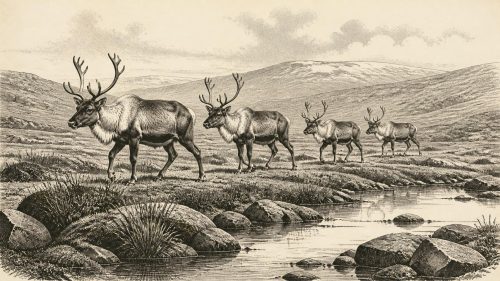
Doneraile’s Reindeer Evidence
Around 31,046 BCE, Ireland was a changing late-Pleistocene landscape rather than a place with recorded history. Radiocarbon dates provide broad calibrated ranges, not precise years. Derryvree, County Fermanagh, preserves sediments between glacial tills showing a cold, tundra-like freshwater environment during an ice-free interval. Castlepook Cave near Doneraile, County Cork, contains reindeer, giant deer and hyaena remains, demonstrating intermittent ecological links with north-west Europe. A marked reindeer femur may indicate human butchery, but its complex context prevents certainty. No secure evidence confirms settlement, tools, dwellings or social organisation. Later ice and coastal change destroyed or buried much of Ireland’s archaeological record.
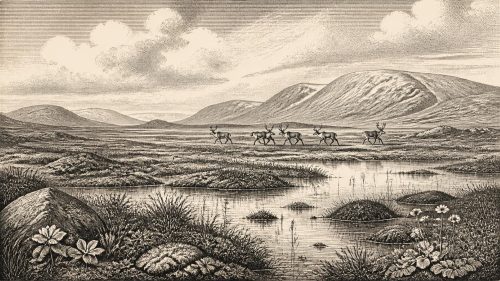
Castlepook’s Faunal Archive
31,045 BCE is a modern label within unstable MIS 3, not a precisely documented Irish year. Derryvree, County Fermanagh, preserves freshwater sediments between glacial tills, demonstrating a temporary, cold, treeless wetland during an ice-free local interval. Castlepook Cave, County Cork, contains mixed pre-Last Glacial Maximum remains of reindeer, mammoth, giant deer, bears, wolves, lemmings and hyaenas, evidencing intermittently habitable cold-country environments. A marked reindeer bone may indicate human carcass processing, but remains inconclusive and proves neither settlement nor community. Later ice transformed these landscapes. The evidence supports an environmental and zoological history, demanding caution over dates, deposits and human presence.

Elephant Hall’s Bone Mosaic
Around 33,000 years ago, Ireland experienced severe, changing Late Pleistocene conditions as ice expanded towards the last glacial maximum. Castlepook Cave, County Cork, preserves Ireland’s richest pre-glacial-maximum vertebrate archive, although disturbed, mixed deposits prevent precise reconstruction. Its fauna includes mammoth, giant deer, reindeer, brown bear and spotted hyaena, indicating open, cold grassland or tundra-like environments supporting grazers, predators and scavengers. Reassessed radiocarbon dates place important remains in Marine Isotope Stage 3. A possibly cut-marked reindeer bone may suggest human activity, but remains unconfirmed. No secure evidence demonstrates resident humans, settlement, farming, trade or organised society in Ireland at this time.

Derryvree Pools and Castlepook Reindeer
31,043 BCE is a modern label within Marine Isotope Stage 3, not a date tied to an Irish event. Derryvree, County Fermanagh, preserves freshwater sediments between glacial tills, indicating a cold, treeless tundra wetland with grasses, sedges, juniper, aquatic plants and insects during an ice-free interval. Castlepook Cave, County Cork, contains Pleistocene fauna including mammoth, reindeer, giant deer, hyena, Arctic fox and lemmings, accumulated over extended periods. A marked reindeer femur, dated about 33,000 years ago, may indicate human butchery, but cannot prove settlement. Evidence instead depicts environmentally unstable Ireland, intermittently accessible to cold-adapted animals and possibly mobile people alike.
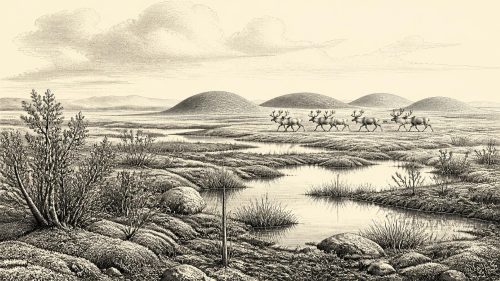
Crag Cave’s Broken Stalagmites
Around 31,042 BCE, Ireland lay within a fluctuating late Ice Age environment rather than a fixed ice sheet. Derryvree sediments in Fermanagh record treeless, waterlogged tundra wetlands between glacial advances, while Crag Cave stalagmites in Kerry indicate episodically milder conditions allowing calcite growth. Castlepook Cave, Cork, preserves diverse cold-stage fauna, including reindeer, mammoth, hyaena and lemmings, though cave deposits mix material from different times. A marked reindeer femur may indicate human butchery about 33,000 years ago, but cannot prove settlement. Later ice, sea-level change and early excavations obscured much evidence, leaving environmental possibility rather than documented society. Certainty remains limited.

Derryvree’s Intertill Freshwater Series
At 31,041 BCE, Ireland’s history is reconstructed from environmental archives rather than human records. Derryvree, County Fermanagh, preserves freshwater silts and deposits between glacial tills, indicating a local ice-free interval with open tundra, wetlands, mosses, pools and cold-adapted insects before renewed ice advance. Its broad dating range encompasses the year but cannot identify conditions. Cave evidence from Crag Cave indicates climatic oscillations, while Castlepook Cave documents diverse cold-stage mammals, though accumulated remains were not necessarily contemporary. No secure human settlement or tools date to this period; a possible modified bone remains uncertain. Ireland was a variably glaciated Late Pleistocene landscape.
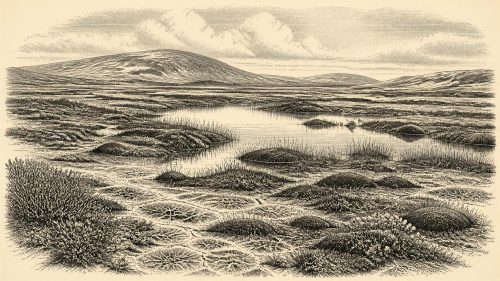
Derryvree’s Mosses and Midges
31,040 BCE is a modern label within a broad radiocarbon range, not a dateable Irish year. At Derryvree, County Fermanagh, freshwater silts between glacial tills record an ice-free interval during Marine Isotope Stage 3. Fossils reveal a cold, treeless wetland mosaic of mosses, sedges, herbs, pools and damp ground, demonstrating environmental variation before the last ice sheet’s maximum. Castlepook Cave, County Cork, preserves cold-stage fauna; a cut-marked reindeer bone may indicate early human carcass processing, but remains inconclusive. No secure evidence supports settlement, institutions, trade or culture. The sparse record chiefly documents changing ice, habitats, animals, and possible human visits.

Cork’s Reindeer Before Maximum
Around 31,039 BCE, Ireland’s past can only be reconstructed broadly within the unstable Late Pleistocene Marine Isotope Stage 3, not assigned to a precise year. Derryvree, County Fermanagh, preserves a freshwater interval between glacial advances, dated broadly to 36,900–31,700 calibrated years BP, indicating cold, open tundra-like wetlands. Castlepook Cave, County Cork, contains reindeer, mammoth, giant deer and carnivore remains accumulated over multiple episodes, demonstrating changing ecological links with Britain and Europe. A possibly cut-marked reindeer femur suggests, but cannot prove, early human activity. No secure evidence exists for settlement, society, economy or ritual; later ice destroyed or obscured much evidence.
Derryvree’s Ice-Age Fen
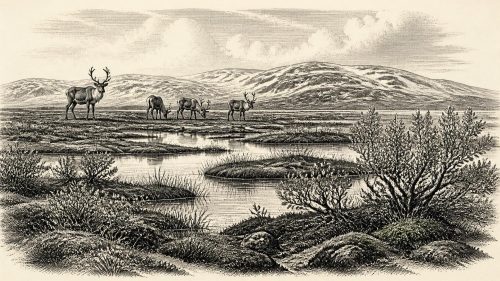
Around 31,038 BCE, Ireland lay within the unstable cold conditions of Marine Isotope Stage 3, not a documented historical year. At Derryvree, County Fermanagh, freshwater silts between glacial tills, dated broadly to 36,900–31,700 calibrated years ago, preserve evidence of tundra-like wetland: mosses, sedges, aquatic plants and low shrubs. Castlepook Cave, County Cork, yielded fauna including mammoth, reindeer, giant deer, hyena and Arctic fox, indicating productive open habitats. A marked reindeer femur may record stone-tool butchery, but cannot prove settlement. Advancing ice later reshaped Ireland, leaving fragmentary environmental archives rather than evidence of society or politics before the Last Glacial Maximum.

Awbeg’s Deep Cave Record
Labelled 31,037 BCE, this period was a Late Pleistocene threshold as the British–Irish Ice Sheet expanded. Derryvree sediments in County Fermanagh record a cold, treeless freshwater tundra-steppe environment between ice advances, showing local ecological refuges rather than uniform glaciation. Castlepook Cave in County Cork yielded reindeer, mammoth, giant deer and predators, demonstrating open habitats supporting Ice Age fauna. A reindeer bone dated approximately 33,000 years ago bears a possible stone-tool mark, offering tentative evidence of human activity. However, no associated tools, settlements or human remains confirm occupation. Glaciation erased much evidence; consequently, surviving records remain fragmentary, reworked and cautiously interpreted.

Castlepook’s One Deep Mark
31,036 BCE is a modern notional date within Marine Isotope Stage 3, not a datable Irish event. Derryvree, County Fermanagh, preserves freshwater sediments between glacial tills, indicating an ice-free, treeless tundra wetland during a broad interval around 36,900–31,700 calibrated years ago. Castlepook Cave, County Cork, contains disturbed, long-accumulated remains of cold-stage mammals, including reindeer, mammoth, giant deer and predators. A deeply marked reindeer femur may record stone-tool butchery and a brief Upper Palaeolithic visit around 31,000 BC. However, it proves neither settlement nor continuity. These sparse archives document fluctuating ice, open habitats, animal movements and a cautiously inferred human action.
Reindeer Femur, No Hearth
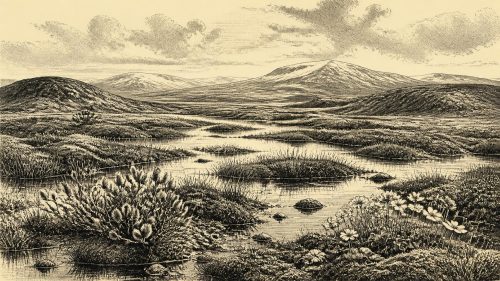
31,035 BCE is a modern label for a broad Late Pleistocene interval, not a recorded Irish year. During MIS 3, before the Last Glacial Maximum, Ireland contained varied conditions as ice expanded. At Derryvree, Fermanagh, freshwater sediments between glacial tills preserve evidence of treeless periglacial wetland, with sedges, mosses, aquatic plants and Arctic-alpine vegetation. Castlepook Cave, Cork, preserves a complex, mixed-age fauna including reindeer, mammoth and predators, indicating cold open habitats. A marked reindeer femur may indicate human carcass processing, but lacks associated tools or settlement evidence. Ireland's record chiefly documents changing environments, animal movements, advancing ice, and unresolved visitation.

Derryvree’s Trifoliate Fen
31,034 BCE is a modern label for a variable late Ice Age interval, rather than a recoverable Irish year. At Derryvree, County Fermanagh, sediments between tills document an ice-free episode, dated broadly to 36,900–31,700 calibrated years BP. Pollen, plants, mosses and insects indicate cold, open wetland with shallow freshwater, sedges, grasses, bogbean and mountain avens. Ireland was approaching, but had not reached, the Last Glacial Maximum; ice, sea levels and access routes remained changeable. Cave fauna confirms mammal presence, but chronology is fragmentary. A marked Castlepook reindeer bone may indicate human activity, yet cannot establish settlement. Environmental history remains strongest.

BIRM-166’s Moss Register
Around 31,033 BCE, Ireland lay within the unstable later Pleistocene, approaching renewed extensive glaciation. Derryvree, County Fermanagh, preserves wetland sediments between ice deposits, dated broadly to 35,000–37,000 calibrated years BP. Its plant remains indicate treeless, cold, mossy tundra and freshwater habitats. Castlepook Cave, County Cork, contains varied Ice Age fauna, including reindeer, mammoth and predators. A cut-like mark on a reindeer bone may indicate early human carcass processing, but remains disputed because context is poor and no camp, tools or hearth accompany it. Later ice erased much evidence, leaving only fragmentary records of changing environments, animals and possible human visits.

Maguirebridge Between Tills
Around 31,032 BCE, Ireland’s history is environmental rather than documentary. Derryvree, near Maguiresbridge, preserves freshwater silts between glacial tills, indicating a temporarily ice-free, treeless wetland during a broadly dated MIS 3 interval. Mosses, sedges, aquatic plants and insects occupied shallow pools amid severe, variable cold. Comparable deposits confirm shifting conditions between glacial advances. Ireland’s ice extent, coastlines and access routes remained uncertain as the British–Irish Ice Sheet fluctuated and sea levels fell. Cave faunas included reindeer, mammoth, deer, bear and hyaena, but were accumulated over different episodes. No secure evidence establishes human settlement, society, trade or political organisation at all.

Derryvree’s Sub-Drumlin Waters
Around 31,031 BCE, Ireland’s history is reconstructed from uncertain geological and biological evidence rather than recorded events. Derryvree, County Fermanagh, preserves freshwater silts between glacial tills, indicating locally ice-free, cold tundra wetlands during part of MIS 3. Pollen, insects and sediments suggest treeless, waterlogged terrain shaped by severe seasonal conditions. Crag Cave confirms wider climatic instability. Castlepook Cave, County Cork, contains Late Pleistocene fauna, including reindeer, mammoth and predators, although its deposits are time-mixed. A possibly cut-marked reindeer bone may signal early human activity, but cannot prove settlement. Ice expansion destroyed evidence, leaving no basis for societies, trade or polities.

BIRM-166’s Buried Freshwater
Labelled 31,030 BCE, this period is known only through broad archaeological and environmental evidence, not annual events. Derryvree, County Fermanagh, preserves freshwater deposits between glacier tills, indicating an ice-free interval within a fluctuating Midlandian glacial landscape. Fossils reconstruct wet, treeless tundra with cold-adapted plants, pools and seasonal thaw. Elsewhere, deposits and cave formations demonstrate changing regional climates. Castlepook Cave, County Cork, contains remains of mammoths, reindeer, predators and other cold-stage fauna, though its assemblage is chronologically complex. A possibly tool-cut reindeer bone suggests transient human contact, but no settlement is proven. Ireland’s record chiefly documents ice, ecosystems and human possibilities.

Castlepook’s Reindeer Frontier
Around 31,029 BCE, Ireland experienced unstable Late Pleistocene conditions before the Last Glacial Maximum. Derryvree, County Fermanagh, preserves evidence of an ice-free interval containing cold freshwater wetlands, tundra vegetation and periglacial environments, later buried by renewed glaciation. Castlepook Cave, County Cork, contains a long, mixed fauna record including reindeer, mammoth, giant deer, hyaena and bear, demonstrating connections with wider north-west European cold-climate ecosystems. A marked reindeer bone, dated near 33,000 years ago, may indicate human handling, but cannot prove settlement or organised hunting. Lower sea levels altered surrounding landscapes, although access routes remain uncertain. Evidence remains local, fragmentary and provisional.

Derryvree’s Two-Till Freshwater
31,028 BCE is not a recoverable Irish historical year but a broad Late Pleistocene interval within Marine Isotope Stage 3. Derryvree, County Fermanagh, preserves freshwater sediments between two tills, demonstrating locally ice-free, cold wetland conditions between glacial advances. Its plants, insects and sediments indicate treeless muskeg, pools and short growing seasons. Castlepook Cave, County Cork, records varied fauna, including mammoth, reindeer and hyaena, showing intermittent animal migration during favourable phases. Cave remains need not be contemporaneous. A possibly tool-marked reindeer bone suggests, but cannot confirm, early human activity. No evidence supports settlement, politics or later prehistoric practices; archives reconstruct environments.
The Fermanagh Bogbean Record
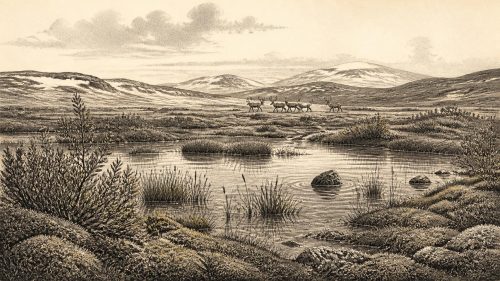
Around 31,027 BCE, Ireland’s evidence records broad Late Pleistocene conditions rather than a particular year. At Derryvree, County Fermanagh, freshwater silts between glacial tills preserve bogbean, dwarf willow, mosses, insects and other remains from an open, treeless, tundra-like wetland during MIS 3. Southern caves, especially Castlepook in County Cork, demonstrate the presence of animals including reindeer, mammoth, giant deer and hyaena across extended, uncertain periods. A marked reindeer bone may indicate human butchery, yet no secure Palaeolithic settlement is known. Advancing ice, altered coasts and later erosion restricted habitats and destroyed evidence, leaving a fragmented record of intermittently habitable landscapes.
Castlepook’s Lone Reindeer Mark
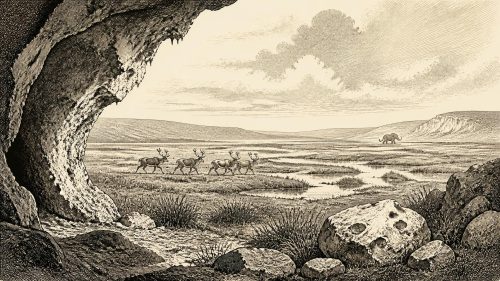
Around 31,026 BCE, Ireland was a cold, environmentally unstable Upper Palaeolithic landscape, not a documented human society. Before the Last Glacial Maximum, shifting ice, low sea levels and changing terrain shaped access and preservation. Castlepook Cave, County Cork, contains remains of reindeer, mammoth, giant deer and predators, indicating open, treeless habitats. A marked reindeer femur may record early human butchery, but its interpretation cannot prove permanent settlement. Derryvree, County Fermanagh, preserves freshwater deposits between glacial tills, showing tundra-like wetlands during an ice-free interval. Together, sites demonstrate changing ecosystems and possible transient human visits, leaving political and cultural history largely unknown.
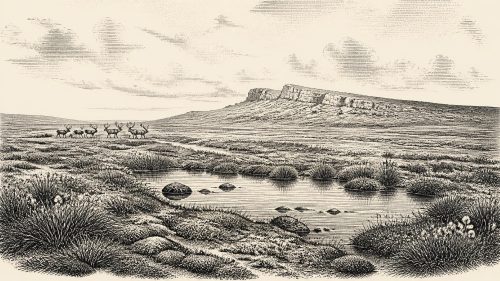
Cork Femur Beyond Fermanagh Drumlins
Around 31,025 BCE, Ireland cannot be described through annual events, but evidence from Marine Isotope Stage 3 reveals a cold, changing environment before maximum glaciation. Freshwater sediments at Derryvree, County Fermanagh, preserve pollen and plants from open, treeless wetlands supporting mosses, sedges and aquatic species. Castlepook Cave, County Cork, contains remains of reindeer, mammoth, giant deer, hyaena and other animals accumulated over extended periods. A reindeer femur, broadly dated to this time, bears a possible stone-tool incision, suggesting a brief Upper Palaeolithic human visit. However, no settlement, route, culture or continuous population can be established; later ice destroyed much evidence.
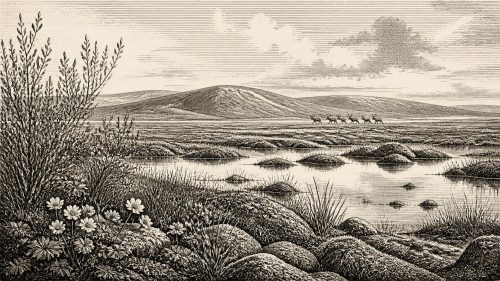
Derryvree’s Muskeg Corridor
Around 31,024 BCE, Ireland lacked written history and preserves fragmentary Late Pleistocene evidence. During climatically unstable Marine Isotope Stage 3, ice, periglacial conditions and low sea levels repeatedly reshaped landscapes and access routes. At Derryvree, County Fermanagh, organic sediments between glacial tills record an ice-free freshwater wetland, dated broadly to this period, supporting tundra vegetation. Castlepook Cave, County Cork, preserves mixed remains of reindeer, mammoth, lemmings, carnivores and other cold-stage fauna, demonstrating animal presence. A marked reindeer bone may indicate human butchery, but lacks secure context. No settlements, tools, burials, institutions or human occupation are established; later ice erased evidence.

Mammoth Cave’s Bone Archive
Around 31,023 BCE, Ireland lay within the Midlandian glacial cycle, and evidence describes environments rather than datable events. Derryvree, County Fermanagh, preserves freshwater sediments between till layers, indicating a local ice-free interval with treeless, waterlogged tundra, mosses, insects and short growing seasons. Castlepook Cave, County Cork, contains a long-accumulated, disturbed assemblage of mammoth, reindeer, giant deer, bear, hyena and other cold-stage fauna, demonstrating intermittent links with Britain and Europe. A possible stone-tool mark on a reindeer bone suggests brief human presence, but remains unconfirmed. No evidence supports permanent settlement, society or culture. Changing ice, sea levels and routes governed access.

Bogbean, Hyena and Reindeer
Approximately 31,022 BCE, Ireland lay within the unstable Late Pleistocene climate of Marine Isotope Stage 3, not a precisely datable historical moment. Derryvree, County Fermanagh, preserves wetland sediments between glacial tills, revealing treeless tundra, mosses, sedges, bogbean and other cold-adapted plants amid freshwater pools. Castlepook Cave, County Cork, records diverse fauna, including reindeer, mammoth, giant deer, hyena, wolves and lemmings, although deposits span long periods. A marked reindeer bone may indicate brief human butchery, yet remains inconclusive. No settled population, institutions or culture can be established. Subsequent ice-sheet expansion destroyed much evidence, leaving exceptional environmental and faunal archives in Ireland.

Castlepook’s Unsettled Femur
31,021 BCE is not a recoverable Irish year but falls within the fluctuating Marine Isotope Stage 3 of the last ice age. Ireland contained ice-free, periglacial and freshwater environments before the later Last Glacial Maximum. Derryvree, County Fermanagh, preserves organic sediments dated broadly across this period, indicating cold open wetland vegetation, insects and water between glacial advances. Castlepook Cave, County Cork, records diverse fauna, including reindeer, mammoth and predators. A marked reindeer femur may indicate human butchery, but remains unconfirmed. No dated settlement, tools or social evidence exists. Glacial erosion has left a selective record, requiring cautious interpretation and research.
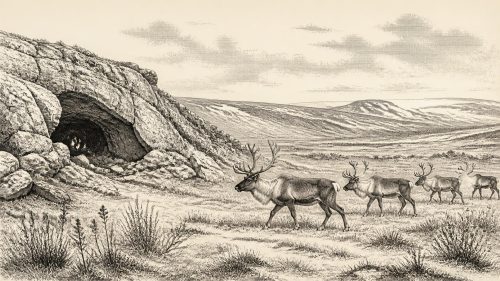
Castlepook’s Provisional Encounter
Around 31,020 BCE, a projected rather than recorded date, Ireland lay within the cold, fluctuating landscapes of Marine Isotope Stage 3, before the Last Glacial Maximum. Expanding ice, exposed tundra-like habitats and lower sea levels created a variable environment supporting reindeer and large mammals, particularly in the south. Castlepook Cave, County Cork, preserves bones of reindeer, mammoth, giant deer and hyaena, though accumulated deposits cannot form a single scene. A cut-like mark on a reindeer femur may indicate Ireland’s earliest human animal processing, but lacks associated tools, hearths or settlement evidence. It suggests possible Upper Palaeolithic visits, not permanent settlement.

Hyena Hall’s Shifting Ground
Thirty-one thousand and nineteen BCE is a modern label for a poorly dated phase of Marine Isotope Stage 3, before Ireland's last major glaciation. Lower sea levels and fluctuating ice margins created changing, locally varied landscapes. Castlepook Cave in County Cork preserves fauna including hyena, reindeer, mammoth, giant deer, wolves and lemmings, indicating cold open habitats, although its deposits accumulated over time. Derryvree, County Fermanagh, records an ice-free freshwater wetland between glacial episodes. A cut-marked reindeer bone from Castlepook may indicate human butchery, but cannot prove settlement. Evidence supports a diverse pre-glacial ecology, while political and economic history remains unknowable.
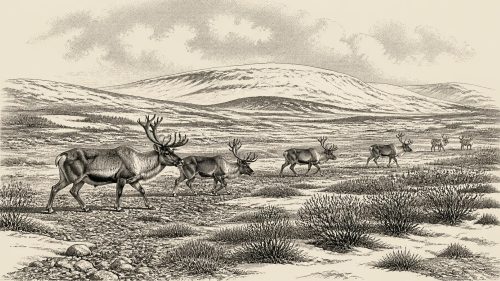
Castlepook’s Growing Ice Margin
31,018 BCE marks a poorly dated Late Pleistocene interval, not a recorded Irish event. Ireland was experiencing unstable cold conditions as the British–Irish Ice Sheet expanded towards its later maximum, though coverage remained uneven. Castlepook Cave in County Cork preserves diverse pre-maximum fauna, including mammoth, reindeer, giant deer, bear, wolves, foxes, lemmings and hyena, indicating open tundra-steppe habitats and continental connections. Buried Fermanagh deposits demonstrate cold but biologically active wetlands during less glaciated phases. A possibly tool-marked reindeer bone raises an unconfirmed possibility of human presence, but no secure settlement evidence exists. Bones, sediments and landforms instead reveal fragmentary environments.

Derryvree’s Arctic Herbarium
Around 31,017 BCE, Ireland cannot be reconstructed as a precise historical year, but environmental evidence illuminates a broad Middle Midlandian interval. At Derryvree, County Fermanagh, freshwater silts between glacial tills preserve tundra-like wetland plants and animals, demonstrating a locally ice-free phase before renewed glaciation. Castlepook Cave, County Cork, contains time-averaged remains of reindeer, mammoth, giant deer, predators and other cold-stage fauna, indicating intermittent connections with north-west Europe. Shifting coastlines and expanding ice shaped habitats and movement. No secure human settlement is known; a possible butchered reindeer bone remains disputed. Later glaciation erased much evidence, leaving a fragmentary ecological archive today.

BIRM-166’s Reindeer World
Labelled 31,016 BCE, this period cannot be reconstructed as a single year, but falls within a late Marine Isotope Stage 3 interval of the Midlandian glaciation. Derryvree, County Fermanagh, records an ice-free freshwater tundra episode between glacial advances, with mosses, sedges, cold-tolerant plants and northern insects indicating wet, treeless, strongly seasonal conditions. Castlepook Cave, County Cork, preserves a mixed cold-stage fauna including mammoth, reindeer, giant deer, hyaena and lemmings, though its deposits are cumulative. A marked reindeer femur may indicate brief human activity, not settlement. Ireland’s changing ice, sea and land conditions supported no known polity, agriculture or permanent occupation.

Derryvree’s Brief Green Interval
Around 31,015 BCE, Ireland has no recoverable calendar-year history, only uncertain environmental evidence from Marine Isotope Stage 3. At Derryvree, County Fermanagh, freshwater organic deposits between glacial tills indicate a temporary ice-free, cold wetland episode, dated broadly to 36,900–31,700 cal BP. Vegetation suggests marshes and sparse Arctic-alpine plant communities within a harsh, seasonal periglacial landscape. Castlepook Cave, County Cork, records diverse cold-adapted fauna, including reindeer, mammoth and hyaena, but from mixed periods. No secure human settlement is known. A possibly cut-marked reindeer bone may indicate brief human activity, yet remains unproven. Later ice altered and erased evidence across the island.

Derryvree’s Sedgebound Drumlin
Around 31,014 BCE, Ireland cannot be described through annual events or known communities, but through fragmentary Late Pleistocene evidence. Derryvree, County Fermanagh, preserves freshwater organic layers between glacial tills, indicating cold, open, sedgy wetland during an ice-free interval. Comparable northern deposits suggest fluctuating local glaciation. Castlepook Cave, County Cork, contains mammals including mammoth, reindeer, giant deer and predators, demonstrating varied cold-climate habitats, though not contemporaneity. A possibly cut-marked reindeer bone may indicate a brief human visit, but no settlement is proven. Later ice expansion eroded much evidence, leaving environmental records and substantial uncertainty about human presence there at that time.

Derryvree’s Periglacial Poolscape
Around 31,013 BCE, Ireland’s condition cannot be reconstructed year by year, but evidence indicates a cold, unstable Late Pleistocene landscape. Derryvree, County Fermanagh, preserves freshwater sediments beneath till, showing ice-free wetlands with sedges, grasses, mosses and sparse tundra vegetation during a broad interval. Castlepook Cave, County Cork, yielded varied fauna, including reindeer, mammoth and hyaena, though its deposits are time-averaged and disturbed. A marked reindeer femur may indicate butchery by humans, but proves neither settlement nor continuous occupation. Later ice expansion reshaped and erased evidence. Thus environmental change, rather than political or cultural history, dominates this currently available fragmentary record.

Maguirebridge Beneath Advancing Ice
31,012 BCE is a modern label, not a recorded Irish year, lying within a broad Late Pleistocene radiocarbon range. At Derryvree, County Fermanagh, organic sediments between glacial tills preserve evidence of temporary freshwater tundra: grasses, sedges, herbs, juniper, mosses, insects and shallow pools. The sequence shows that ice advanced, retreated and returned unevenly across Ireland. Castlepook Cave, County Cork, indicates an Ice Age fauna including reindeer and mammoth, though old assemblages require caution. A marked reindeer bone may suggest brief human butchery, but proves neither settlement nor permanent occupation. Evidence reveals changing environments and visitation, not polities or uniform climate.

A Reindeer Bone at Castlepook
31,011 BCE is a modern label within the fluctuating late Marine Isotope Stage 3, not a precisely datable Irish event. Ireland was approaching major British-Irish Ice Sheet expansion, yet some areas retained open, cold ecosystems. Derryvree, County Fermanagh, preserves evidence of treeless wetlands, tundra plants and freshwater habitats before glacial overriding. Castlepook Cave, County Cork, yielded diverse fauna, including reindeer, mammoth, hyaena and Arctic fox, indicating periodically viable habitats. A reindeer femur, dated about 33,000 years ago, may bear butchery marks, suggesting possible human presence. However, it proves neither settlement nor continuous occupation; ice later destroyed or buried much evidence.

Derryvree’s Moss and Meltwater
Around 31,010 BCE, Ireland’s history is reconstructed from environmental and archaeological evidence, not dated events. Derryvree, County Fermanagh, preserves freshwater wetland sediments between glacial tills, indicating cold, treeless, locally ice-free terrain with mosses, sedges, herbs and shallow pools during MIS 3. Crag Cave records episodic climatic improvement. Castlepook Cave, County Cork, contains a long-accumulated Ice Age fauna including mammoth, giant deer, reindeer, bear and hyaena, although species were not necessarily contemporary. Possible tool damage on one bone is inconclusive. No secure evidence exists for settlements, polities or sustained human occupation. Later ice buried or erased much of this fragmented record.

Maguirebridge’s Bogbean Waters
At the notional date of 31,009 BCE, Ireland cannot be described year by year, but evidence places it within a volatile Late Pleistocene cold stage. Derryvree, County Fermanagh, preserves wetland sediments between glacial tills, dated broadly to 36,900–31,700 calibrated years ago. Plant, pollen and insect remains indicate treeless tundra, freshwater pools and marsh vegetation. Castlepook Cave, County Cork, records diverse mammals, including reindeer, mammoth and hyaena, demonstrating intermittent connections with Europe. A marked reindeer bone may indicate Upper Palaeolithic butchery, yet cannot prove settlement. Growing ice later buried much evidence, leaving human presence uncertain and environmental reconstruction necessarily appropriately cautious.

Derryvree’s Bogbean Basin
Circa 31,008 BCE, Ireland lay within the unstable MIS 3 phase of the last Ice Age, rather than the later glacial maximum. At Derryvree, County Fermanagh, freshwater sediments, plants and insects preserved between tills demonstrate a cold, largely treeless wetland existing between local ice advances. Lower sea levels altered coastlines, although routes to Britain or Europe remain uncertain. Southern caves preserve remains of reindeer, mammoth, giant deer and predators, indicating changing ecological connections. A possibly cut-marked Castlepook reindeer bone suggests, but cannot prove, fleeting human presence. No evidence supports permanent settlement, agriculture, politics, or named communities in Ireland at all.

Castlepook’s Carnivore Passage
Around 31,007 BCE, Ireland lay in the unstable later phase of the last Ice Age, not necessarily beneath maximum ice cover. Fragmentary geological and cave evidence indicates cold, open environments and changing connections with north-west European fauna. Castlepook Cave in County Cork preserves remains of hyenas, reindeer, mammoths and other mammals, accumulated largely through carnivore activity. A marked reindeer femur may indicate human butchery, but its old excavation context and uncertain taphonomy prevent firm conclusions. No settlements or society can be reconstructed. Later glaciation destroyed evidence, leaving Castlepook as a crucial yet provisional record of ecological change and possible visitation.

Castlepook’s Reindeer Dilemma
About 31,006 BCE, Ireland lay within the fluctuating cold conditions of Marine Isotope Stage 3, not a datable historical year. Organic deposits at Derryvree, Fermanagh, preserved between glacial tills, indicate treeless freshwater wetlands during an ice-free interval, while related northern sites confirm episodic, uneven glaciation. Castlepook Cave, Cork, contains reindeer, mammoth, giant deer and predators, demonstrating access for large mammals across changing landscapes. A marked reindeer femur, possibly cut by a stone tool, may indicate brief Upper Palaeolithic human activity, but lacks secure archaeological context. No settlement, community or culture is established. Subsequent ice, erosion and rising seas obscured evidence.

Maguiresbridge’s Road-Cut Tundra
Around 31,005 BCE, Ireland has no recoverable human history, but geological and biological evidence illuminates a changing Late Pleistocene environment. At Derryvree, County Fermanagh, freshwater sediments between glacial tills record an ice-free interval, broadly dated to encompass this nominal year. Pollen, plants, mosses and insects indicate a cold, treeless tundra wetland of pools, sedges, herbs and damp ground. Castlepook Cave, County Cork, preserves wider Marine Isotope Stage 3 fauna, including mammoth, reindeer, hyaena and bear, though not necessarily contemporaneously. No secure evidence proves human settlement; later ice advances buried or destroyed much of the earlier record across the island's landscapes.
Derryvree’s Mosses and Mammoths
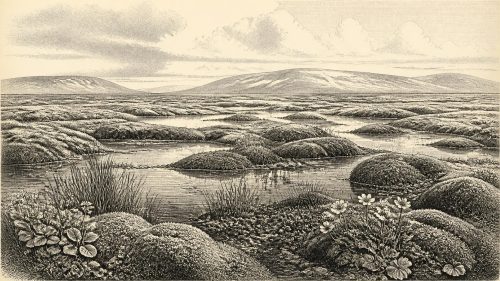
31,004 BCE is a modern label within a broad, uncertain Ice Age interval, not a recoverable historical year. At Derryvree, County Fermanagh, freshwater silts between glacial tills indicate a locally ice-free episode, preserving mosses, sedges, aquatic plants and tundra vegetation in wet, treeless conditions. Castlepook Cave, County Cork, contains a long, mixed fauna including mammoth, reindeer, giant deer, hyena and other cold-adapted animals, demonstrating intermittent ecological connections with north-west Europe. A cut-marked reindeer bone may indicate early human butchery, but proves neither settlement nor continuous occupation. Subsequent ice expansion buried or destroyed many landscapes, leaving fragmentary regional evidence for historians.
Castlepook’s Thirty-Three-Millennia Fauna
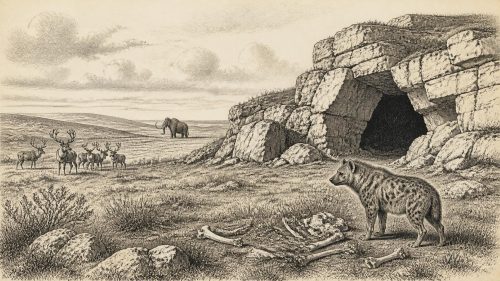
Around 33,000 radiocarbon years before present, Ireland was a cold, open, low-sea-level landscape within wider north-west Europe, not a modern island. Castlepook Cave, County Cork, preserves over 2,000 Late Pleistocene bones deposited across millennia, including mammoth, giant deer, reindeer, brown bear and spotted hyaena. These remains demonstrate a diverse but fluctuating fauna, shaped by climate, predators, water and cave processes. A marked reindeer femur may indicate stone-tool butchery and Ireland’s earliest human presence, but remains unconfirmed and cannot prove settlement. No evidence supports permanent communities, institutions or occupation. Castlepook chiefly records an environmentally changing Ice Age frontier before maximum glaciation.

Hyena Hall’s Open Country
Around 31,002 BCE, Ireland was a climatically unstable Late Pleistocene landscape, not a documented historical society. Derryvree, County Fermanagh, records an ice-free periglacial interval between glacial deposits, with treeless tundra vegetation, wetlands and freshwater habitats, though its radiocarbon evidence permits only broad dating. Castlepook Cave, County Cork, preserves diverse fauna, including mammoth, reindeer, giant deer and hyena, demonstrating ecological connections with Europe and abundant open-country wildlife. A marked reindeer bone may indicate human activity, but cannot establish settlement or hunting. As the British–Irish Ice Sheet expanded, habitats and possible travel corridors shifted, leaving fragmentary evidence of a dynamic, diverse island.

Derryvree’s Intertill Garden
Labelled 31,001 BCE only conventionally, this period cannot be reconstructed to a single calendar year. Derryvree, County Fermanagh, preserves freshwater silts between glacial tills, documenting a cold, largely treeless periglacial mosaic of wetlands, aquatic plants, sedges, mosses and sparse open vegetation during an interval between ice advances. Lower sea levels altered surrounding landscapes, while growing ice sheets created variable barriers. Cave fauna, especially at Castlepook, indicates reindeer, mammoth, giant deer and predators in broader cold-stage Ireland. A possibly cut-marked reindeer bone suggests fleeting human presence, but proves neither settlement nor culture. Evidence reveals a changing landscape vulnerable to renewed glaciation.