


900–999 CE
Tadc’s Dun Cow Penance
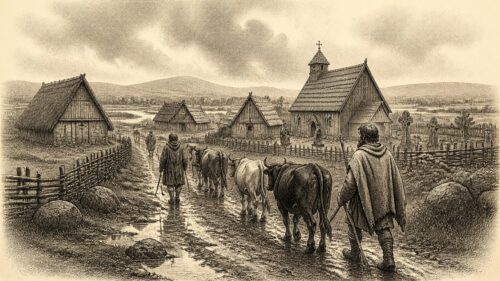
In 900, Irish annals recorded environmental strain, political deaths, ecclesiastical life and raiding across a fragmented island. A rainy year and scarcity among cattle, with related references to bread shortage, exposed dependence on pastoral and arable production, though they do not prove famine. Tadc son of Conchobor, overking of the three Connachta, died after penitential renunciation associated with Ciarán’s Dun Cow; Mac Étig of Dál Araidi also died. Scandinavian raiders plundered Kildare, a wealthy sacred centre. Deaths of prominent churchmen and an Alban king further reveal Irish Sea connections, while Clonmacnoise’s prestige linked lordship, learning and religious authority in Ireland.
Máel Ruanaid’s Burning
In 901, Máel Ruanaid, designated heir of Ireland and son of high king Flann Sinna, was burned to death with companions by the Luigne, exposing the insecurity of succession and the reach of local rivalries. Among the victims were a neighbouring king and an ecclesiastical superior, illustrating intertwined secular and religious power. Annalistic dating remains uncertain, particularly for Cormac son of Cuilennán's accession as bishop-king of Cashel, generally placed in 901–902. Notices of abbots' deaths show monasteries' regional importance. The article cautions against assigning Dublin's Viking expulsion, famine, or other undocumented events securely to 901, despite gaps in surviving evidence.
Dublin’s Forsaken Longphort
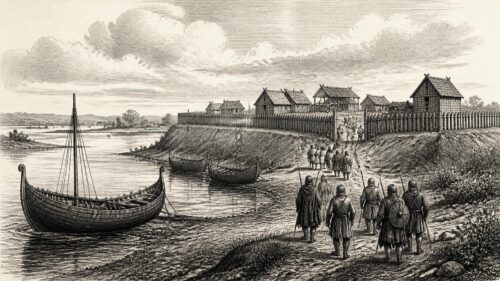
In 902, forces led by Cerball of Leinster and Máel Finnia of Brega expelled Dublin’s Scandinavian rulers from Áth Cliath, ending the city’s phase as a fortified naval and commercial base. Annals describe abandoned ships and wounded fugitives, but do not permit reconstruction of battle details or prove every Scandinavian inhabitant left Ireland. Archaeology indicates a diverse settlement of warriors, traders, craftspeople and families, while residual occupation complicates claims of complete abandonment. Elsewhere, Finnguine of Cashel was killed, enabling Cormac’s accession, and ecclesiastical leadership changed at Lathrach Briúin. The expulsion transformed regional power without ending Scandinavian influence or Dublin’s restoration.
Treóit’s Unnamed Killing
In 903, Irish annals recorded political and ecclesiastical transitions rather than a major campaign. Máel Finnia of Brega, recently associated with Dublin’s Scandinavian expulsion, died and received praise emphasising piety, generosity and martial authority. At Treóit near Tara, Máel Mithig and Áengus committed an unnamed killing at Flann Sinna’s instigation, showing royal influence exercised through kinship and local allies. Deaths among rulers in Laíges, Tuirbe and Uí Cheinnselaig indicated regional succession pressures. Senior churchmen also died, underlining monasteries’ administrative and political importance. Divergent annals require chronological caution. The year reveals power resting on fragile relationships between dynasties, churches and communities.
Kells’s Violated Sanctuary
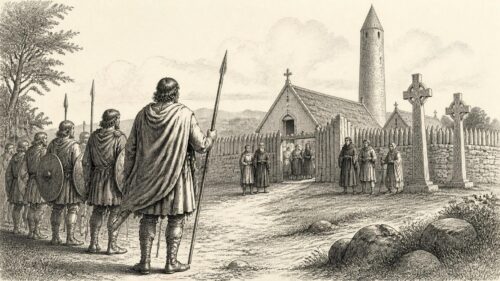
In 904, Flann Sinna, king of Tara, violently confronted his adult son Donnchad at Kells, where the Annals of Ulster record the profanation of the sacred site and the beheading of many men near its oratory. The episode, imperfectly dated, reveals dynastic conflict overriding sanctuary. Deaths of the leaders of Clonmacnoise, Glendalough and Emly marked transitions within influential ecclesiastical centres. Beyond Ireland, Ímar, grandson of Ímar, was killed by men of Foirtriu, reflecting instability after Dublin’s 902 expulsion of Scandinavian rulers. Later attribution of Clonmacnoise’s stone church to 904 is unreliable; evidence dates it to 909 rather than that year.
Flann’s Osraige March
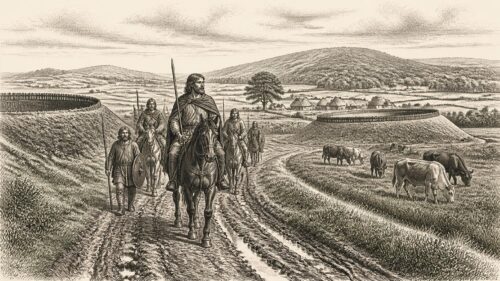
In 905, the Annals of Ulster record Flann Sinna, king of Tara, leading an expedition into strategically important Osraige, amid rivalry with Munster and instability within its ruling dynasty. The source does not specify fighting or outcomes, but the march demonstrated royal pressure in a region linking Leinster and Munster. Máel Ciaráin, bishop of Lann Léire, and Lachtnán, abbot of Ferna, died, highlighting ecclesiastical succession and local power. In the north, Cenél nÉogain prevented battle between Domnall and Niall, sons of Áed Findliath. These sparse notices reveal interconnected kingship, church institutions, rural resources, diplomacy, and tensions preceding wider conflict soon.
Flann’s Gabrán Ravaging
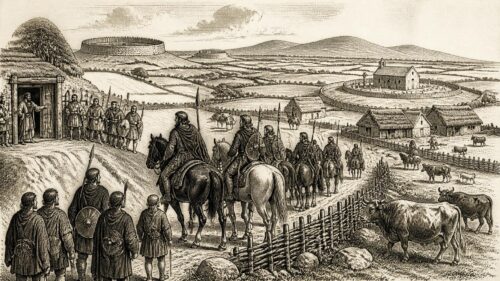
In 906 Flann Sinna, king of Tara, led a major campaign into Munster, apparently with Cerball of Leinster, ravaging territory described as stretching from Gabrán to Limerick. Annalistic evidence confirms the expedition but provides no precise route, battles, captures or settlement. The raid demonstrated Tara’s capacity to project force, while exposing the contested nature of Irish overlordship. Munster, led by Cormac of Cashel, remained powerful and retaliated in 907; conflict culminated in Cormac’s defeat and death in 908. Deaths of northern rulers, Ciarmac of Uí Fhidgeinte, and Bangor’s abbot Indrechtach also marked the year, illustrating intertwined political and ecclesiastical change.
Cormac’s Eighty Ferryings
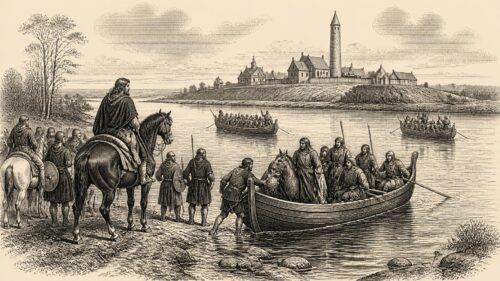
In 907, Cormac mac Cuilennáin, king-bishop of Cashel, and Flaithbertach mac Inmainén led Munster forces through the midlands, challenging Flann Sinna and Uí Néill influence. Annals record fighting at Mag Léna, the death of Máel Craíbe of Cenél Fiachrach, Connacht hostages, and fleet-borne plundering around Lough Ree. Their Christmas campaign reached Uí Néill territories, Mag Aí and Clonmacnoise, requiring eighty ferryings, an uncertain phrase indicating arduous transport. These expeditions demonstrated Munster’s mobile, alliance-based power without creating unified rule. Cét became king of Corcu Modruad locally. Mortality is noted cautiously in Ulster’s annals; Cormac’s defeat came the following year in 908.
Cormac’s Fall at Belach Mugna
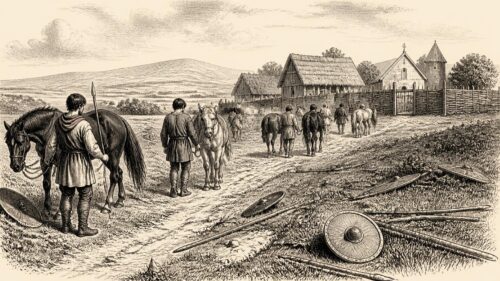
On 13 September 908, Munster’s king-bishop Cormac mac Cuilennáin was defeated and killed at Belach Mugna, or Mag Ailbe, by forces led by Flann Sinna of Tara, Cerball of Leinster and Cathal of Connacht. The battle ended Munster’s expansion, killing allied rulers and ecclesiastical leaders, including Cellach of Osraige, and strengthened Flann’s influence without unifying Ireland. Cormac’s reputation as scholar, scribe, bishop and anchorite illustrates overlapping royal and clerical authority. Annals record northern aggression, church deaths and uncertain reports, revealing rivalry, institutional Christianity and Irish Sea connections. Sources caution against treating later narratives, casualty totals or Viking involvement as certain.
Clonmacnoise’s Stone Church
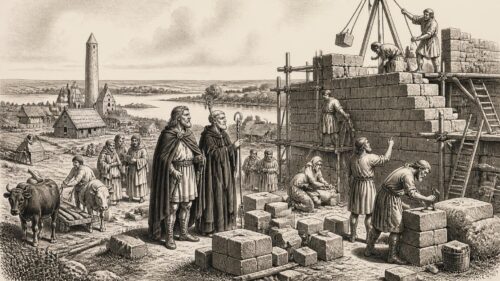
In 909, Flann Sinna, king of Tara, and Colmán Conaillech sponsored a stone church and sacristy at Clonmacnoise, whose surviving north wall attests early Irish monumental masonry. Situated beside the Shannon, the foundation served a populous religious and lay settlement while displaying royal power, ecclesiastical wealth and political connections. The nearby Cross of the Scriptures similarly linked Christian teaching with patronal commemoration. Following Flann’s victory at Belach Mugna in 908, his ally and son-in-law Cerball of Leinster died, prompting dynastic change. Annals also note regional rulers’ and churchmen’s deaths, cattle disease, and killings in Brega. Some battles remain insecurely dated.
Flann’s Bréifne Rout
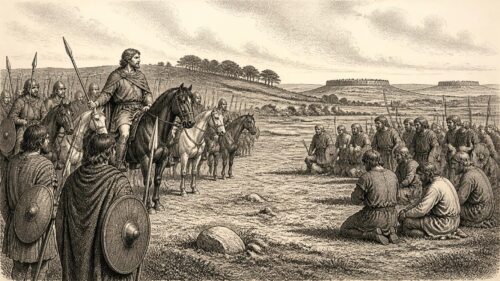
The securely dated core of 910 is not a Viking landing or a famous royal death, but a hard-fought assertion of power in Ireland’s central and western midlands. Flann Sinna, king of Tara and leading ruler of the southern Uí Néill, defeated the men of Bréifne with the help of his sons. The encounter, recorded in the Annals of Ulster and more fully in Chronicon Scotorum, cost the life of Flann son of Tigernán, king of Bréifne, as well as other nobles. It was a severe reverse for a kingdom situated on Mide’s north-western approaches, and a reminder that Flann’s authority rested not on a unified Irish state but on military success, kinship alliances and the ability to make neighbouring rulers acknowledge his superiority.
Domnall’s Pilgrim Staff
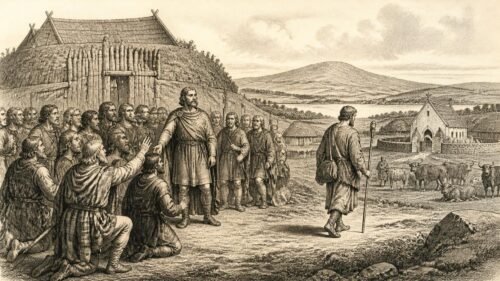
In 911 Domnall, son of Áed Findliath, relinquished the kingship of Ailech by adopting the pilgrim’s staff, a religious renunciation, and his brother Niall succeeded him. Annals of Inisfallen, Chronicon Scotorum and Ulster support the succession, although dating conventions preclude fuller detail. The transfer preserved Cenél nÉogain control of a major northern power, whose authority relied on clientage, tribute, military service and ecclesiastical connections. Domnall died in penitence in 915. Ireland remained politically fragmented under Flann Sinna of Tara; Niall was commander. Records also note a Leinster heir’s death and a phenomenon, while communities sustained networks through agriculture and obligations.
Loch Cerr’s Reckoning
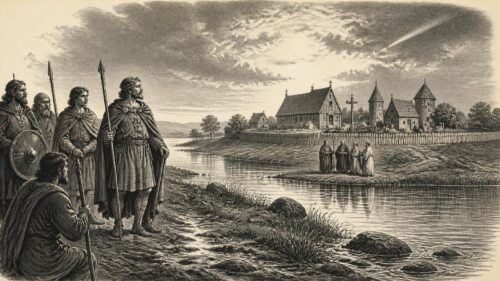
In 912, Irish annals centre on Cernachán son of Duiligén, who removed a captive from Armagh’s sanctuary and who was then killed at Loch Cerr. Niall son of Áed, king of Ailech, drowned Cernachán there, asserting Patrick’s church protection and northern Uí Néill authority. The episode reveals sanctuary, kinship and violence within fragmented kingship. Nearby notices record Niall’s campaigning, conflict between Brega and Leinster, clerical deaths and an accidental fire at Armagh. Annals also describe wet, dark weather and an appearance of Halley’s Comet. Maritime entries show Ulaid fleets, Welsh captives, ransom networks and Scandinavian activity across the Irish Sea.
Niall’s Connacht Rout
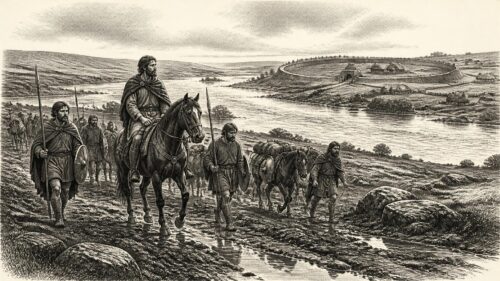
In the annalistic year conventionally called 913, Niall son of Áed, king of Ailech, campaigned in north Connacht, routing the Uí Amalgada and men of Umall, killing or capturing many. Elsewhere, Donnchad and Máel Mithig defeated forces from southern Brega and Leinster, while Congalach of Conaille Muirthemne was killed by his brother after attacking a church household. Vikings defeated a new Ulaid fleet off England, with Irish losses. Churchman Máel Brigte travelled to Munster to ransom a Welsh pilgrim. Death notices recorded clerics, nobles and a chief poet. Annals called the year dark and rainy, reflecting an interconnected, fractured island.
Port Láirge’s New Fleet
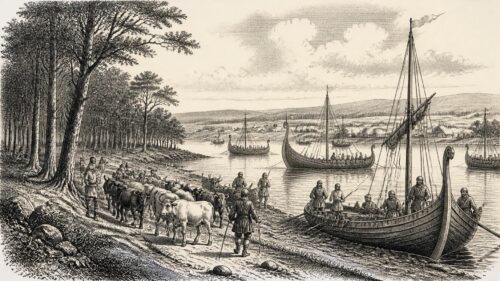
In 914, a great Scandinavian fleet entered Waterford harbour, raided northern Osraige, and inaugurated a renewed phase of Viking power in Ireland. The sheltered waterways offered access to south-eastern resources, while wider Irish Sea rivalries linked the newcomers to maritime politics. Meanwhile, Niall of Ailech defeated Ulaid forces, made peace with Áed of Ulaid, then suffered heavy losses when Mide men ambushed his foragers. Flann Sinna campaigned amid accusations of church profanation. Flaithbertach became king of Cashel and Eochu abbot of Emly. These events showed enduring Irish rivalries, institutions, and negotiated authority alongside Waterford's growing strategic importance in subsequent decades.
Niall’s Meath Settlement
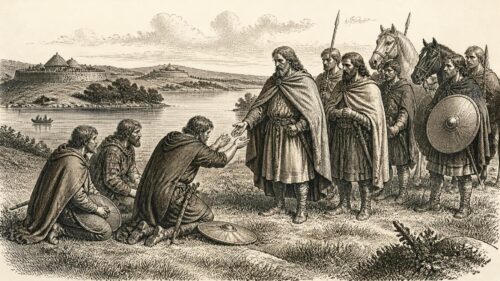
In 915, Ireland experienced interconnected political, religious and military pressures rather than a decisive battle. Óengus, Flann Sinna’s designated heir, died, weakening the ageing king of Tara, while Domnall of Ailech died in penitence, confirming his half-brother Niall Glúndub’s northern prominence. Flann’s sons Donnchad and Conchobor rebelled in Mide, but Niall’s army secured their submission and a truce with Brega, enhancing his influence. Scandinavian forces based at Waterford Harbour plundered Munster churches and settlements. Deaths of leading clerics and the treacherous wounding of a local king reveal institutional and regional instability. The year foreshadowed later succession conflicts and Viking warfare.
Tailtiu Renewed
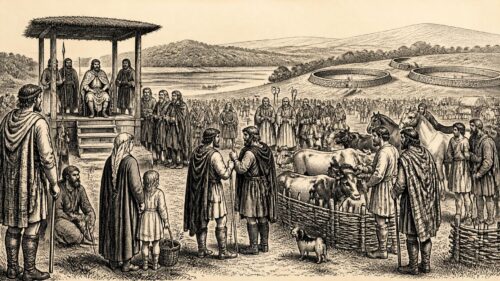
In 916, Flann Sinna died on 25 May after ruling Tara since 879, ending a long southern Uí Néill ascendancy. His son Conchobar succeeded in Mide, while Niall Glúndub of Cenél nÉogain became king of Tara, reflecting dynastic alternation rather than unified monarchy. Niall renewed the neglected Fair of Tailtiu, publicly asserting royal authority and the capacity to organise exchange, obligations and assembly. Elsewhere, raiders from Loch Dá Chae harried Munster and Leinster, killing Ainnle of Uaithne. Deaths among leading ecclesiastics and a lightning fire at Armagh exposed institutional vulnerability amid ceremony, rivalry and Scandinavian pressure throughout much of Ireland.
Cenn Fuait and Dublin
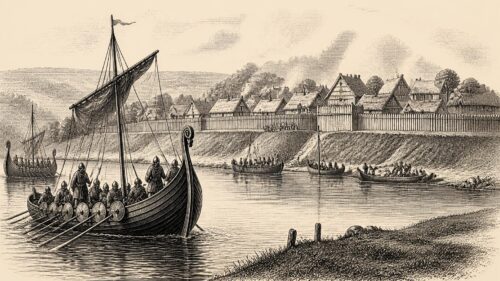
In 917, amid severe frost, animal mortality and portents recorded by annalists, related Scandinavian fleets led by Sitriuc and Ragnall ua Ímair returned to Ireland. Munster forces inflicted notable defeats, while high king Niall Glúndub campaigned in Mag Femen, fighting the invaders on 22 August without destroying them. Niall sought Leinster’s aid, but Sitriuc routed its army at Cenn Fuait, killing King Ugaire, lesser rulers and a leading bishop. The victory shattered Leinster’s leadership; Kildare was subsequently plundered. Sitriuc then forcibly seized Dublin, restoring Uí Ímair power and establishing a durable maritime, military and economic centre on Ireland’s eastern seaboard.
Ragnall Leaves Loch Dá Chae
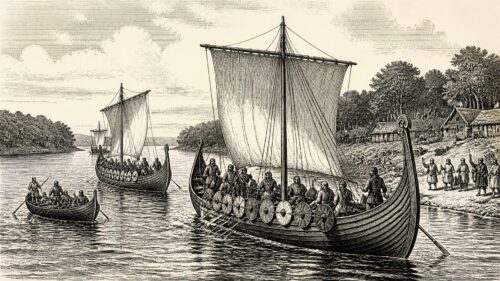
In 918, Ragnall ua Ímair, king of the dark foreigners, left Waterford Harbour with jarls Oitir and Gragabai, joining an Irish-Sea campaign that culminated in the inconclusive battle of Corbridge on the Tyne. Their force showed the Uí Ímair dynasty’s links between Ireland and Britain. In Ireland, Niall Glúndub of Tara continued warfare with Dublin’s Sitriuc Cáech, while Máel Mithig of Brega unsuccessfully sought Scandinavian assistance. Annals also recorded deaths of church leaders, scholar Dainél and Kildare’s abbess Muirenn. Evidence reveals political instability, maritime connections and ecclesiastical continuity, but records no harvest, famine or everyday events. Annalistic dating remains uncertain.
Áth Cliath’s Fallen Kings
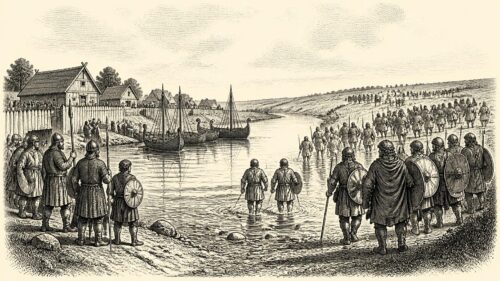
In 919, the struggle for Dublin produced one of the most consequential defeats of early medieval Irish politics. Niall Glúndub, king of Tara and leading figure of the northern Uí Néill, was killed when an Irish coalition attacked the Scandinavian rulers of the reoccupied settlement at Áth Cliath. The annals’ stark notice of a battle conceals a disaster of unusual scale: regional kings, royal heirs and noblemen from several northern dynasties died alongside him. Dublin’s rulers, led by Sitriuc Cáech, survived the assault. Their success did not make Ireland a Scandinavian kingdom, but it secured a major coastal power at the mouth of the Liffey and exposed the limits of any single Irish king’s authority.
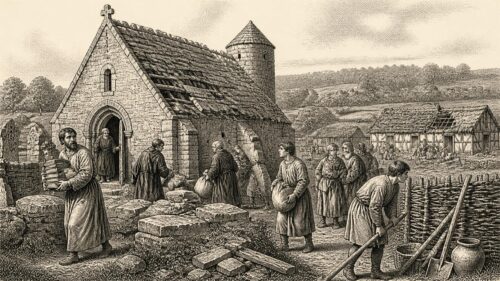
Cormac of Lismore’s Martyrdom
Accounts conventionally dated to 920 depict Ireland under political, military and ecclesiastical pressure. Donnchad Donn, newly king of Tara, won a notable but imprecisely located victory over Scandinavian-associated forces, strengthening a contested claim to overlordship. Sitriuc Cáech left Dublin, signalling a change in leadership rather than the settlement’s collapse. Foreigners attacked Cenannas (Kells), damaging its stone church, killing many people and burning Tuilén’s church. In Munster, Cormac son of Cuilennán, bishop, abbot, king of the Déisi and counsellor, was killed by Uí Fhothaid Aiched. The notices, chronologically uncertain in detail, reveal intertwined warfare, regional kingship, church wealth and maritime power.
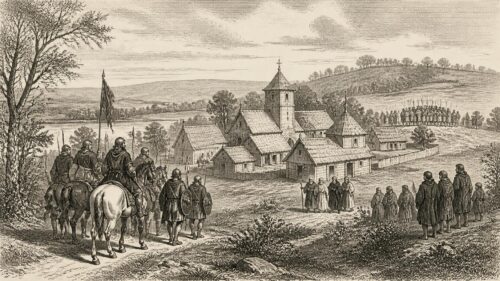
Gofraid’s Armagh Foray
In 921, amid uncertain annalistic dating, Ragnall grandson of Ímar died and Gofraid assumed control of Dublin, reshaping Irish Sea politics alongside Sitriuc’s succession in York. Donnchad Donn strengthened his precarious position through the deceitful killing of his brother Domnall, while another heir died. Scandinavian fleets operated in the north-west, but Fergal’s forces destroyed one vessel. On 10 November Gofraid raided Armagh’s hinterland, sparing its principal religious community yet inflicting serious disruption; Muirchertach later defeated part of his force. Ecclesiastical leaders died, one source recorded plague, and warfare threatened rural livelihoods across politically fragmented Ireland and its interconnected maritime world.
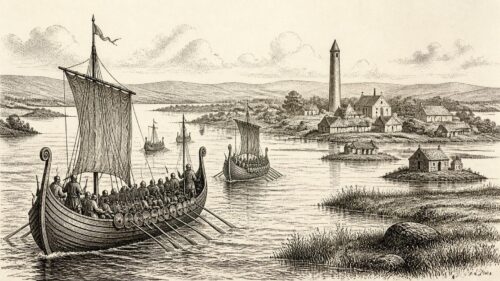
Tomrair’s Shannon Offensive
In 922, despite differing annalistic dates, Tomrair son of Elgi led a Limerick-based Scandinavian fleet up the Shannon. The force plundered Inis Cealtra, Muicinis, Clonmacnoise and Lough Ree’s islands, burned Clonmacnoise, and ravaged Mide, carrying away gold, silver and other wealth. The campaign demonstrated the Shannon’s strategic importance and exposed the vulnerability of major ecclesiastical and political networks. Clonmacnoise was a populous, wealthy religious and economic centre, not an isolated monastery. The expedition indicates Limerick’s capacity as a naval base, though not proven urban foundation. Meanwhile, Donnchadh of Tara suffered defeat near Athlone, highlighting Ireland’s fragmented authority and raiders’ opportunities.
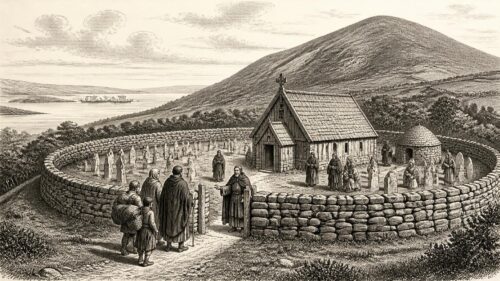
Duiblitir at Cell Shléibe
In the annalistic year conventionally associated with 923, Scandinavian raiders from Carlingford Lough plundered Cell Shléibe, modern Killeavy, and killed Duiblitir, a priest of Armagh. Other plundering struck ecclesiastical districts in Louth, while obituaries of clergy and church officers reveal institutions linking learning, estates and regional authority. Political insecurity appeared in the treacherous killings of rulers and designated heirs in Conaille, Connacht and Leinster. The death of Lígach, queen of Brega, highlighted dynastic marriage and memory. Sources offer no full social or economic picture, but depict interconnected churches and kindreds vulnerable to maritime raiding and internal rivalry throughout the island.
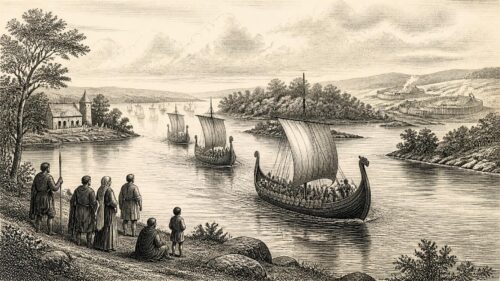
Lough Erne’s Long Season
In 924, Ireland’s waterways became theatres of prolonged violence. The most securely associated annalistic record, the Annals of Ulster entry conventionally cited as U924, describes a foreign naval force operating on Lough Erne, raiding its islands and the districts around the lake before withdrawing only in the following summer. Other entries place raiders in Strangford Lough, report a catastrophic wreck at the entrance to Dundrum Bay, and record an unsuccessful expedition sent from Dublin towards Limerick. Taken together, these notices show an island in which ships could bring danger far inland, but also one in which Viking leaders competed sharply with one another rather than acting as a single force.
Cathal’s Penitent Death
In 925, Connacht underwent a decisive dynastic change after Cathal son of Conchobar, king since about 900, died in penitence. His son Domnall and other leading men were treacherously killed by their kinsman Tadc, who assumed the kingship and founded a durable ruling line. Annalistic chronology requires caution, but modern scholarship dates these events to 925. Elsewhere, Dubgall, king of Ulaid, was killed by his own people, while Lorcán, king of Brega, died in old age. These events exposed fragile regional kingship beneath Tara’s limited overlordship, amid church influence, rural continuity, Dublin’s maritime power, and competing dynastic interests across Ireland.
Alpthann’s Winter Rout
In 926, annalistic sources record Scandinavian raids and Irish responses across a politically fragmented Ireland. Foreigners from Strangford Lough sacked Dún Sobairche, while southern traditions report attacks on Kildare. Muirchertach son of Niall defeated raiders at Snám Aignech and later routed Alpthann son of Gofraid’s fleet-derived force near Dundalk, killing Alpthann and besieging survivors until Dublin’s king Gofraid intervened. These successes enhanced Muirchertach’s northern standing but did not end Scandinavian power or establish national unity. Elsewhere, Fergus of Lurg was killed by Bréifne, Colmán of Clonmacnoise and Clonard died, and Waterford’s fleet moved to Loch Gair in a notable redeployment.
Cell Mo-Chellóc’s Viking Battle
In 927, the Annals of Inisfallen record a Munster and Limerick Scandinavian victory over Waterford’s foreigners at Cell Mo-Chellóc, probably Kilmallock, demonstrating shifting alliances among Irish kingdoms and Viking settlements. They also note the death of Máel Brigte, abbot of Armagh and Iona, whose dual leadership united ecclesiastical federations. Other annals, chronologically offset, describe Dublin’s instability under Gofraid, Sitriuc’s death, and a bloodless confrontation at Tailtiu, reflecting contested Uí Néill authority. Later sources report churchmen, pilgrimage and raids, but their dating is uncertain. Together, the evidence depicts interconnected warfare, religious prestige, travel and political rivalry across Ireland and Irish Sea.
Ailche’s Fleet on Lough Neagh
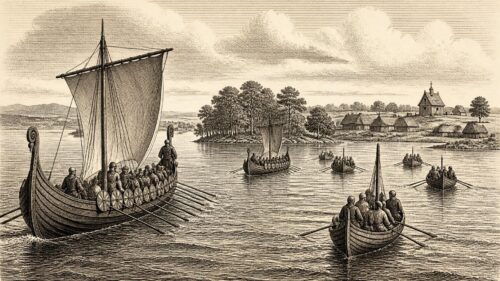
Annals conventionally assigned to 928 describe Ailche’s son leading Scandinavian or Hiberno-Scandinavian forces across Lough Neagh, ravaging islands and adjacent territories, demonstrating inland waterways’ strategic importance. Chronological uncertainties complicate the dating of related notices. Norsemen killed Donnchad, northern heir-designate, while Donnchad Donn of Mide killed his nephew Máel Ruanaid; rivalry with Muirchertach also limited Tara’s authority. Diarmait of Osraige died. Ecclesiastical leaders at Birr, Aghaboe and Cork died, and Bangor’s Céile began a Roman pilgrimage. Records also note elite women’s deaths and a disputedly dated raid on Kildare, revealing interconnected dynastic, church and Scandinavian power networks across Ireland and Europe.
Céile’s Last Pilgrimage
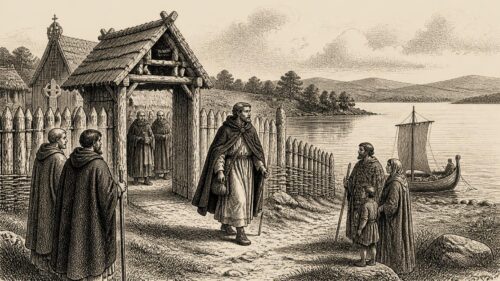
In 929, sparse annalistic evidence illuminates Ireland’s political, ecclesiastical and maritime connections. Céile, successor of Comgall of Bangor, died on pilgrimage in Rome on 14 September, demonstrating Irish links with Latin Christendom. Donnchad Donn, king of Tara, led an armed expedition against Muirchertach mac Néill at Liathdruim, apparently without a recorded battle. A fleet appeared on Lough Corrib, reflecting the strategic significance of inland waterways. Death notices for Tuathal, bishop and scribe, and Fínnechta, Ciarraige Luachra king, anchorite and counsellor, reveal intertwined religious learning, institutional authority and regional lordship. Differing annalistic dates require interpretation across competing manuscripts and chronological systems.
Derc Ferna Under Siege
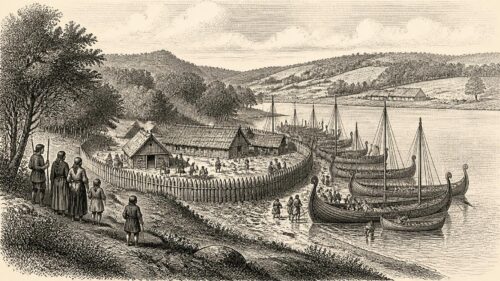
The surviving record for 930 is unusually revealing not because it describes one island-wide war, but because several annals catch armed Scandinavian groups operating at three inland waters: Loch Bethrach in Osraige, Lough Neagh in the north, and the routes connected with the Shannon and Limerick. The sharpest event was the assault on Derc Ferna in Osraige. The Annals of Ulster say that Gofraid, grandson of Ímar, came with the foreigners of Dublin and ‘razed’ the place, an act presented as extraordinary even by the standards of earlier devastation. Chronicon Scotorum calls it a siege and capture, adding a grave, but uncorroborated, figure of one thousand deaths. The Annals of Inisfallen, written from a Munster perspective, associate the attack with a naval encampment of the foreigners of Limerick at Loch Bethrach.
Ciarán’s Recovered Crozier
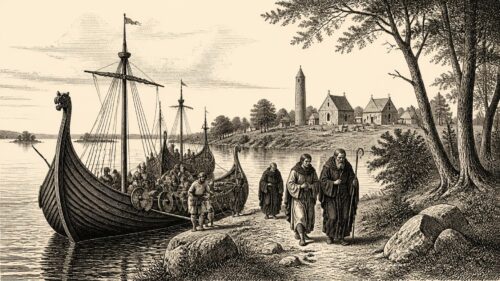
In 931, Irish annals record interconnected political, ecclesiastical and Scandinavian developments, although dating varies between sources. Tipraite son of Ainnsine, head of Clonmacnoise, died, with rulers and churchmen including Cernachán of Bréifne, Derbail of Tara, and clerics of Clones, Armagh, Trim and Kildare. Foreigners from Limerick entered Lough Ree, highlighting the Shannon corridor’s importance near Clonmacnoise. Chronicon Scotorum reports that Ciarán’s crozier sank in Loch Techet, drowning twelve men, but was recovered. The relic represented saintly and institutional authority, though it cannot be identified with the surviving Clonmacnoise crozier. These events reveal power rooted in waterways, succession and sacred possessions.
Aengus, Poet of Ireland
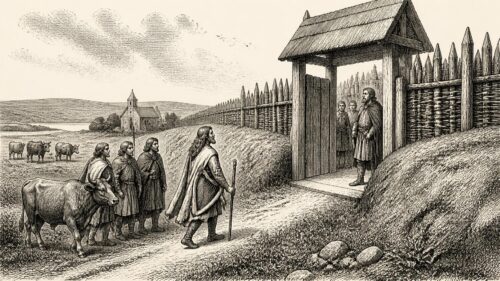
In 932, Irish annals recorded the death of Aengus son of Aengus, probably chief poet of Ireland, indicating the public importance of learned culture and its links with churches and aristocratic patrons. They also note Flann son of Máel Sinna, king of Brega, killed by the Uí Echach, alongside the deaths of Loingsech of Dál Araide and Colla of Norse-Gaelic Limerick. These notices reveal competing regional powers, unstable succession and maritime connections. Differing annalistic chronologies prevent precise dating of related events. Beyond elite records, political changes could directly affect farming, obligations, travel and security, though no nationwide catastrophe is evidenced.
Armagh After Martinmas
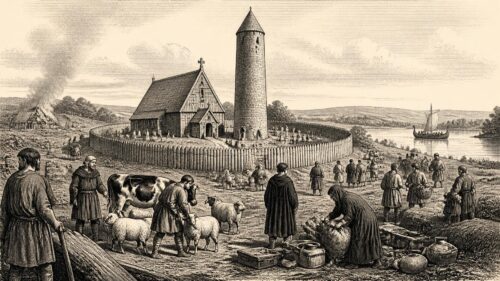
In 933, annalistic sources record interconnected conflicts across northern Ireland, while differing chronologies and casualty figures require caution. Muirchertach and Conaing, sons of Niall Glúndub, suffered defeat at Mag Uatha, but Conaing later defeated Ulaid forces and Muirchertach overcame raiders led by Matudán of Ulaid and Amlaíb son of Gothfrith, recovering plunder. Scandinavian groups based on inland and coastal waters participated in local alliances and warfare. Around Martinmas, Amlaíb plundered Armagh, a wealthy religious and political centre. Death notices for rulers and Bard Bóinne, chief poet, demonstrate the political and cultural consequences of contested authority, strategic waterways and regional violence.
Gofraid’s Painful Death
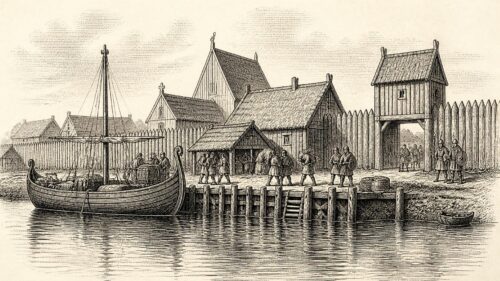
In 934, Gofraid, grandson of Ímar and Hiberno-Scandinavian king of Dublin, died painfully from illness, ending a rule connected with Dublin, York and the Irish Sea. The annals offer no details of his disease or succession, but his son Amlaíb succeeded him, inheriting a strategic trading and military centre. Elsewhere, Dubgilla son of Robacán, chief of Uí Chormaic, was killed in unexplained circumstances. Limerick’s foreigners raided deeply into Connacht, reaching Mag Luirg and Badhgna. Ireland remained politically fragmented: Dublin and Limerick pursued separate interests, while Irish dynasties, regional rulers and church institutions managed competing power, violence and succession across society.
Amlaíb’s Week of Raids
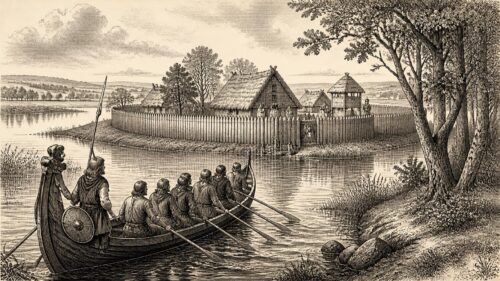
In 935, Amlaíb mac Gofraid, king of Dublin, demonstrated Scandinavian power by sacking Lagore and Knowth in Brega during one week, threatening inland centres. He sought dominance among Irish Scandinavian settlements, reportedly capturing a Limerick rival and installing Haraldr there. Norsemen killed Cinaed mac Cairpre, chief of Uí Chennselaig, with many followers in Leinster. Annals record deaths of abbots and church leaders, underlining monasteries’ political and economic roles, while a notice of abundant oak mast reflects dependence on woodland resources and pig forage. Differing annalistic chronologies complicate dating, but collectively these events reveal interconnected violence, lordship, ecclesiastical succession, and subsistence.
Two Nights at Clonmacnoise
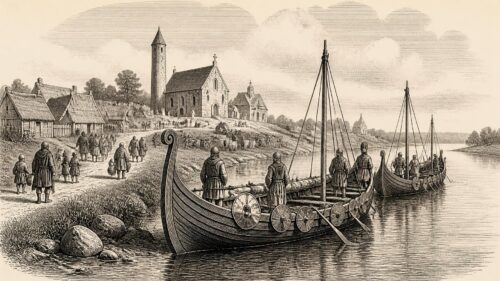
In 936, Dublin-based foreigners plundered Clonmacnoise and occupied it for two nights, an exceptional affront to the major Shannon ecclesiastical and trading settlement. Chronicon Scotorum also records a further plundering by Cellachán of Cashel and Munster men. Foreign crews from Lough Erne reached Lough Ree, demonstrating waterways’ strategic value and exposing central Ireland to prolonged raiding. Donnchad Donn, king of Temair, burned Dublin, illustrating contested rather than centralised power. Armagh lost two successive senior church leaders, Ioseph and Máel Pátraic, while Aniudán, king of Corcu Modruad, died. These events reveal competing regional powers, vulnerable churches, and insecure communications throughout Ireland.
Conaing’s Empty Heirship
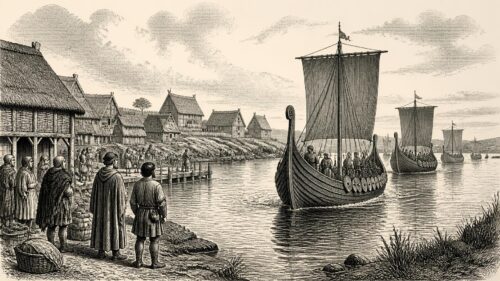
For Ireland, 937 is best understood through a small but unusually revealing cluster of annalistic notices. The record does not offer a single national narrative: it reports deaths, killings and a storm in several provinces, while also preserving Ireland’s connection to one of the most consequential battles of tenth-century Britain. Its most striking Irish political notice is the death of Conaing son of Niall, described in the Annals of Ulster as rígdamna Érenn, ‘heir designate of Ireland’. The phrase did not mean that a settled succession would automatically follow. Rather, it signalled that Conaing stood within the narrow, competitive circle from which an overking might plausibly emerge. His death removed a significant claimant at a moment when power was divided among strong regional dynasties, the rulers of Dublin and Limerick, and the king of Mide, Donnchad son of Flann.
Cell Cuilinn’s Captives
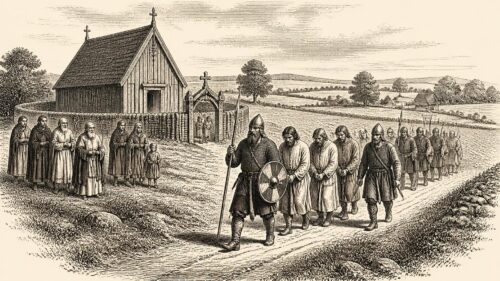
In the annal-year conventionally dated 938, Ireland saw political upheaval around Dublin and Leinster. Amlaíb son of Gothfrith returned to the Norse kingdom after Brunanburh, while its power extended towards Áth Truisten. He raided Cell Cuilinn, probably Kilcullen, plundering the church and carrying off many captives, a thousand in later accounts. Donnchad Donn and Muirchertach son of Niall prepared for battle but made peace, then besieged Dublin and ravaged its hinterland without evident conquest. Fergal of Ailech died, enabling Muirchertach to succeed, while regional rulers and church leaders died. The sources reveal contested authority, warfare, captivity, ecclesiastical vulnerability, and destruction.
Ailech’s Ransom
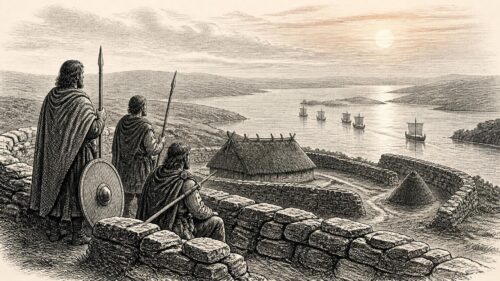
In 939, Irish annals record intense conflict linking kings, churches and Scandinavian seaborne power. Foreigners plundered Ailech, captured its ruler Muirchertach son of Niall, and released him for ransom. Dublin raided Cell Chuilinn in Leinster, while Munster forces with Scandinavian allies attacked Mide’s ecclesiastical sites, challenging Donnchad Donn. Donnchad campaigned in Brega, where a priest died during church violence, and Congalach defeated the Gailenga. Obits marked political and ecclesiastical succession. Donnchad commissioned a cover for Patrick’s Canon, probably the Book of Armagh. Annalists noted a blood-coloured sun, plausibly volcanic haze, and Æthelstan’s death in England on 27 October that year.
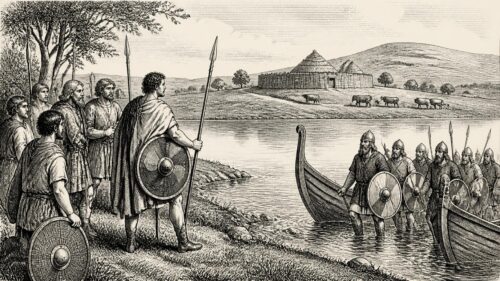
Aralt’s Connacht Death
In 940, annalistic records depict Ireland as a politically fragmented but connected island. Donnchad mac Flainn, king of Ireland, and Muirchertach mac Néill led forces through Leinster and Munster, taking hostages to enforce overlordship, while Donnchad also raided Brega and Lann Léire. Connacht forces killed Aralt, grandson of Ímar and a Limerick Scandinavian leader, demonstrating resistance to maritime power. Muirchertach was implicated in the death of Niall, heir of Ailech, amid dynastic rivalry. Deaths included Ailech’s queen and senior churchmen. Rural farming, monasteries, coastal travel and growing Scandinavian towns underpinned society beyond the annals’ focus on rulers and warfare alone.
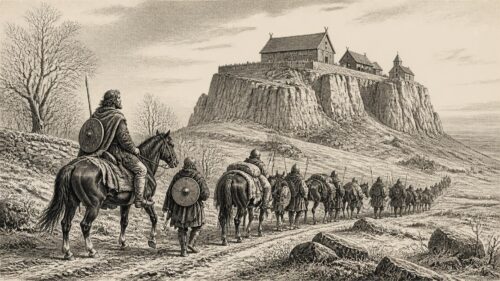
Cashel in the Great Frost
In 941, exceptional frost froze waterways, allowing raiders to plunder Inis Mochta and disrupting ordinary travel and supplies. Muirchertach mac Néill, king of Ailech, campaigned through Mide, Uí Fhailge, Osraige and the Déisi, securing Cellachán of Cashel’s submission to Donnchad Donn of Tara. The campaign demonstrated northern power but did not establish lasting conquest. Cellachán had fought the Déisi, while Muirchertach also raided the Hebrides by fleet. Amlaíb mac Gofraid, Dublin-linked ruler of York and Mercia, died in Lothian. Brian Bóruma was notably also born. Later poetry magnified Muirchertach’s circuit, but contemporary annals depict a politically fragmented Irish Sea world.
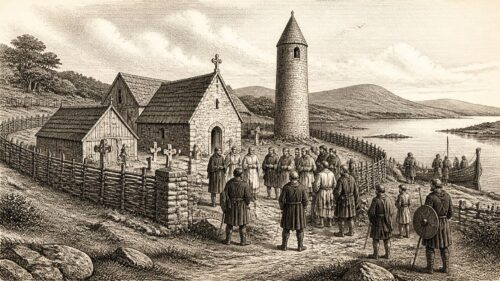
Ragnall’s Son at Dún Lethglaise
In 942, Dublin Norse forces under Blacair son of Gothfrith ravaged the wealthy ecclesiastical centres of Clonmacnoise and Kildare, demonstrating their reach beyond the coast amid fractured Irish and Scandinavian politics. In Ulaid, a son of Ragnall plundered Dún Lethglaise, but Matudán, king of Ulaid, swiftly killed him after pursuing the raiders from their island refuge. The year also brought the death of Faelán, long-serving king of Leinster, and killings linked to Congalach of Brega’s rising power. Deaths of senior churchmen at Clonmacnoise and Clonard underscored churches’ political and economic importance, resilience, and vulnerability to warfare across the island alike.
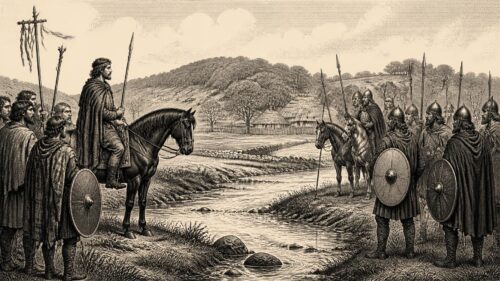
Glas Liatháin’s Orphaned Land
In 943, a sudden northern catastrophe altered the balance of Irish politics. Muirchertach mac Néill, king of Ailech and one of the foremost members of the Northern Uí Néill, was killed by a force from Viking Dublin. The loss was more than that of a successful war leader. Contemporary annalists styled him rígdamna Érenn, a man eligible for the kingship of Ireland, and the Annals of Ulster mourned him in a short verse as though the land of the Irish had been left bereft.
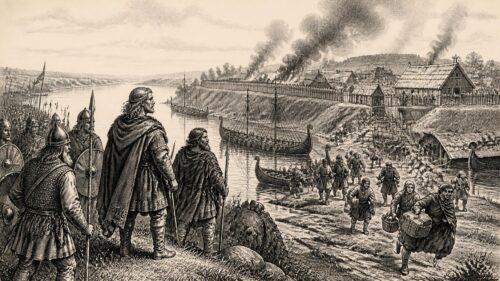
Congalach at Áth Cliath
In 944, Donnchad Donn’s death after twenty-five years as king of Tara opened a contested struggle for Uí Néill supremacy. His nephew, Congalach of Brega, allied with Braen of Leinster to plunder Dublin, taking treasure, booty and possibly captives; one annal also alleges burning and four hundred deaths. The raid demonstrated Dublin’s vulnerability but did not establish conquest or end its political importance. Its wealth reflected its role as a Hiberno-Norse port within Irish Sea trade. Elsewhere, Cellachán of Cashel defeated northern Munster rivals, while local killings and ecclesiastical deaths then reveal persistent regional conflict and institutional continuity across Ireland.
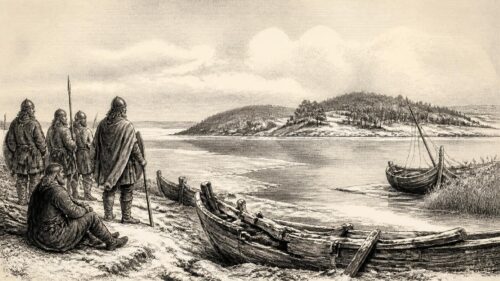
Lough Neagh’s Broken Fleet
In 945, annals recorded an exceptional frost that froze lakes and rivers, altering travel without proving famine. Domnall son of Muirchertach and Flaithbertach killed the Scandinavian-associated force on Lough Neagh and destroyed its fleet, ending the last clear record of such lake-based power. In Dublin, Blacair yielded rule to Amlaíb Cuarán, whose alliance with Congalach of Brega defeated followers of Ruaidrí Ua Canannáin in Conaille. Deaths included ecclesiastics Máel Tuile and Máel Dúin, prior of Armagh, and Aurchad, king of western Connacht. These notices reveal interconnected regional dynasties, churches, waterways and maritime centres amid shifting power across the Irish island.
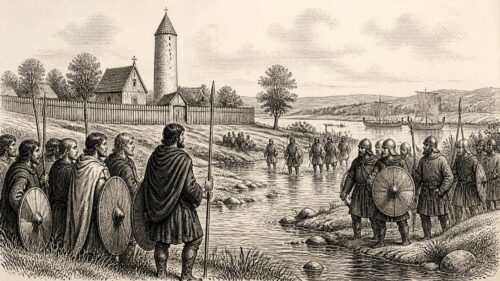
Ruaidrí at Sláine
The year 946 sits in a difficult but revealing stretch of Irish history. It was a time when the claim to be king of Ireland was real enough to inspire campaigns, alliances and tribute, but not strong enough to make the island a single kingdom. Power rested in regional dynasties, church federations and the new Hiberno-Scandinavian town of Dublin. In the midlands and north-east, two Uí Néill contenders, Congalach Cnogba of Brega and Ruaidrí ua Canannáin of Cenél Conaill, were testing one another’s strength. Dublin’s ruler, Amlaíb Cuarán, was not an outsider to that contest: his forces could be allies, enemies or both, according to the political calculation of the moment.
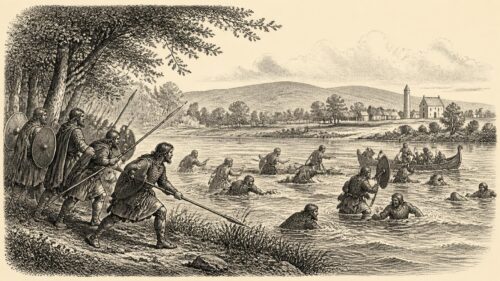
Sláine’s Drowned Foreigners
In 947, Ruaidrí ua Canannáin of Cenél Conaill defeated Congalach of Brega and Dublin's Amlaíb Cuarán at Sláine near the Boyne, killing or drowning many Dublin warriors. The encounter formed part of competing claims to Tara, not a national war, and highlighted Dublin's role in Irish politics. Elsewhere, Osraige routed Leinster, killing King Braen and other leaders, while northern nobles also died in obscure conflict. Cenél nÉogain made a notable silver gift to Armagh, affirming political and religious ties. Annals recorded ecclesiastical deaths, a travelling preacher, and marvels, revealing intertwined warfare, patronage, Christianity, and Irish Sea connections during the year.
Blacair’s Last Battle
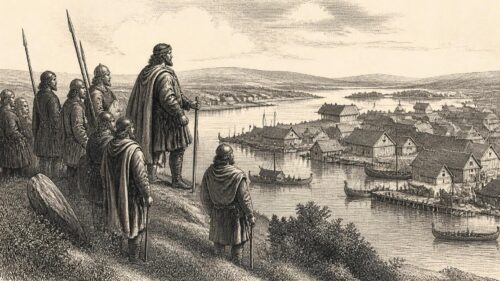
In 948, Congalach mac Máel Mithig, king of Brega and claimant to Tara, defeated and killed Blacair, ruler of Dublin’s Scandinavian dynasty. Annals differ over casualties and date, but agree that Blacair’s following suffered a defeat, perhaps through stratagem. The encounter reflected shifting alliances, dynastic rivalry and competition between Dublin’s prosperous port and neighbouring Irish kingdoms, rather than a simple ethnic conflict. Dublin survived under new rulers, while Congalach remained challenged by rivals. Conflict also affected churches: Colmán of Sláine died in captivity, and Clonmacnoise mourned Ainmire. Notices of Máel Sechnaill’s birth and Gormlaith’s death preserve dynastic and religious memory.
Flaithbertach at Fir Lí
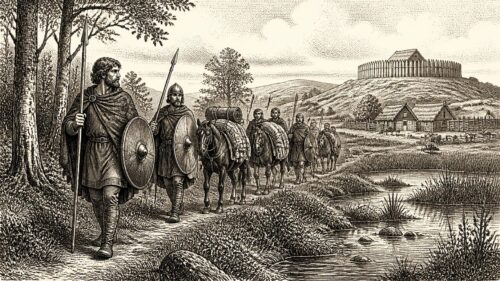
Records conventionally associated with 949 illuminate violence and chronological uncertainty in tenth-century Ireland. Annals differ over the date of Ruaidrí Ua Canannáin’s raid into Fir Lí, during which Flaithbertach, son of Muirchertach and grandson of Niall Glúndub, was killed. The episode marked Cenél Conaill’s success against rival Cenél nEógain. Elsewhere, Matudán of Ulaid and Niall grandson of Erulb plundered Conaille and districts, while Congalach of Brega ravaged Uí Méith and Fernmag, demonstrating authority. Obits for Aedán of Tuaim Dá Ghualann and Fogartach of Airgialla reflect ecclesiastical importance and Christian commemoration. Sparse sources reveal local warfare, not a national turning point.
Muine Brócáin’s Counterstroke
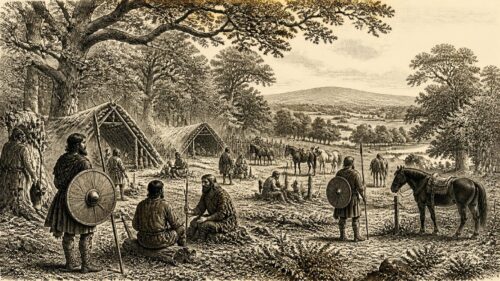
In 950, Ruaidrí ua Canannáin of Cenél Conaill pursued a serious claim to Tara, maintaining pressure on Mide and Brega for six months. His campaign ended at Muine Brócáin, where Dublin’s foreigners killed him and his kinsman Niall, preserving Congalach Cnogba’s position. Annalistic dates and battle figures vary, but the principal events are secure. Dublin’s forces also burned Sláine’s bell-house, killing clergy and destroying sacred objects. Elsewhere, Donnchad of Mide and Matudán of Ulaid died in kin-based conflicts. The year exposed fragmented kingship, politically engaged churches, Dublin’s inland influence, rural warfare, and seasonal environmental conditions, including an exceptional mast crop.
Cennétig and Clonmacnoise
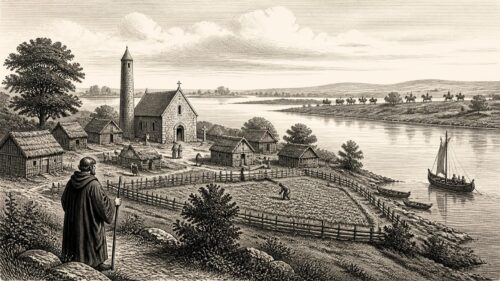
Annals for 951 record a Munster foray by Cellachán and Donnchadh against Clonfert and Clonmacnoise, illustrating monasteries’ religious and political importance. They also note the death of Cennétig son of Lorcán, Dál Cais ruler and Cashel claimant, whose loss altered north Munster’s balance without ensuring his descendants’ ascendancy. Differently aligned annals associate the period with Dublin-led raids in Meath, captivity, disease among Dublin’s foreigners and bee mortality, but chronology remains uncertain. Congalach remained high king amid fragmented authority. The records portray Ireland as a contested network of dynasties, churches and Scandinavian forces, where violence, wealth, belief and environmental disruption intersected.
Amlaíb’s Dublin Return
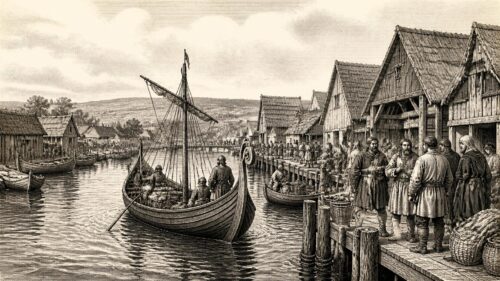
In 952, Amlaíb Cuarán was expelled from York and, according to Irish tradition and modern scholarship, returned to Dublin, redirecting his ambitions towards Ireland. His arrival followed Dublin’s recent raids, disease and political disruption, and unsettled his alliance with Congalach Cnogba, king of Tara. Domnall son of Donnchad, Clann Cholmáin heir to Tara, died, weakening a rival midlands dynasty; Flann ua Cléirig of southern Connacht also died. Ferdomnach of Clonmacnoise and Glendalough, alongside other ecclesiastical leaders, died. Dublin remained a thriving maritime trading centre using mixed forms of wealth, not yet its own coinage. No securely dated Irish battle occurred.
Clonmacnoise and Limerick Raiders
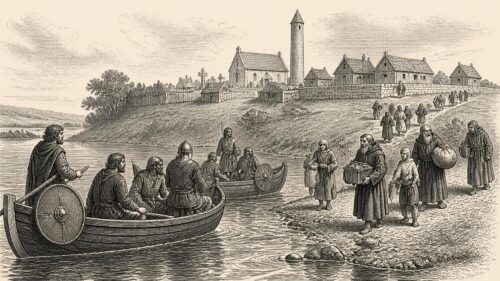
In 953, Clonmacnoise, a wealthy ecclesiastical settlement and strategic Shannon crossroads, was plundered by Munstermen accompanied by foreigners from Limerick. Although annals differ in dating and identify no commander, the raid demonstrates cooperation between Gaelic rulers and Norse-Gaelic urban forces, rather than a simple Irish-Viking division. It exposed the vulnerability of churches whose wealth, communications and prestige made them political targets. Congalach mac Máel Mithig’s high kingship provided precedence but limited practical control, while local conflict continued elsewhere. Annals also note dynastic and ecclesiastical deaths, including Congalach’s wife Eithne, illustrating interconnected political, religious and regional networks in tenth-century Ireland then.
Ua Ruairc and the Murrain
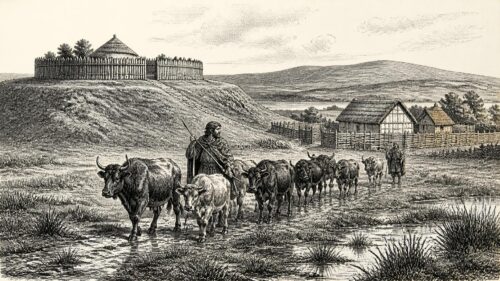
In 954, Irish annals record a great cattle murrain throughout Ireland, threatening wealth, food supplies, tribute and political power. Ua Ruairc inflicted a major defeat on Cairpre and Tethba, killing their king, amid wider instability in the midlands and north-west. Congalach of Tara faced growing pressure from Domnall ua Néill, supported by Dublin, while violence also affected Brega. Cellachán, king of Cashel, died, weakening Éoganacht prominence as Dál Cais influence grew. Numerous bishops, abbots and ecclesiastical successors also died, demonstrating church networks’ importance. Differing annalistic accounts require caution, particularly because Congalach’s death belongs to 956, not 954, in reliable records.
Domnall’s Lough Oughter Armada
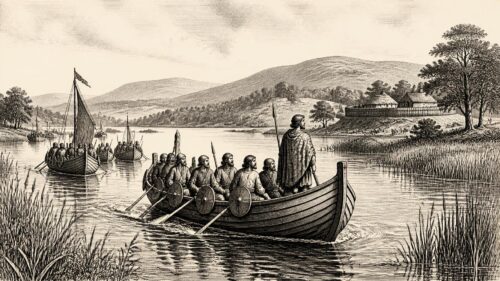
In 955, according to annalistic chronology, Domnall son of Muirchertach led ships from northern waters through Lough Neagh, Airgialla, Lough Erne and Lough Oughter into Bréifne, where he plundered and took hostages from Ua Ruairc. The expedition demonstrated the political importance of waterways and coercive overlordship. Dates and claims to high kingship remain disputed: Congalach Cnogba was still campaigning before his recorded death in the following annalistic year. Other notices record Leinster fighting and Domnall’s raid, Fearghal’s fleet on Loch Cé, and deaths among secular and ecclesiastical leaders. Together, they depict Ireland where forces, lordship, monasteries and networks shaped power.
Tech Giurann Ambush
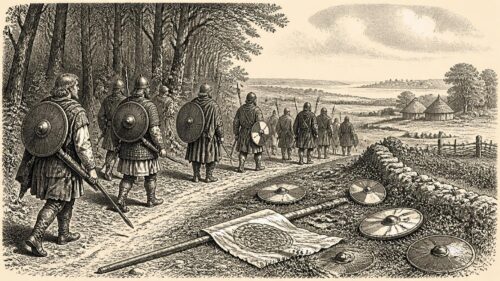
The decisive Irish event conventionally placed in 956 was the killing of Congalach Cnogba, king of Ireland, at Tech Giurann in Leinster. The Annals of Ulster name his attackers as the foreigners of Áth Cliath—Dublin—and the Laigin, or Leinstermen; they also record the death of Áed son of Aichid, king of Tethbae, and “many others”. Chronicon Scotorum makes the disaster still more explicit: Congalach fell with his royal household, and names Matudán son of Áed son of Máel-mithig and Cormac son of Cathalán, king of Fir Arda, among the dead. This was not a routine raid or a minor dynastic killing. A king styled rí Érenn, king of Ireland, had been destroyed with leading followers in a combined Leinster–Dublin attack.
Cathasach of Druimthorraid
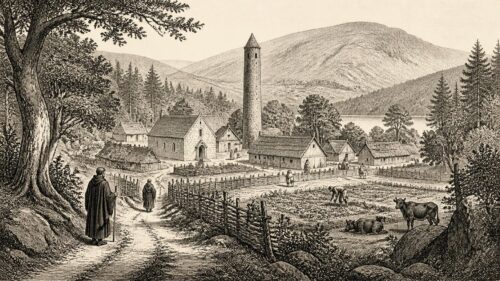
In 957, Irish annals chiefly record deaths of important royal and ecclesiastical office-holders rather than warfare or major events. During Domnall ua Néill’s early reign, following Congalach’s violent death, Máel Fothartaig, king of Caisel, and Máel Coluim ua Canannáin, king of Cenél Conaill, died, opening significant regional successions. Cathasach of Druimthorraid, successor of Patrick and learned bishop, also died, leaving Armagh’s influential Patrician institution without its head. Flann ua hAedacáin, superior of Glendalough, Colmán, successor of Mo-Laise, and other figures were likewise commemorated. The sparse record reveals interconnected political, religious and local authority, while obscuring ordinary lives and succession processes.
Tuathal of Uí Muiredaig
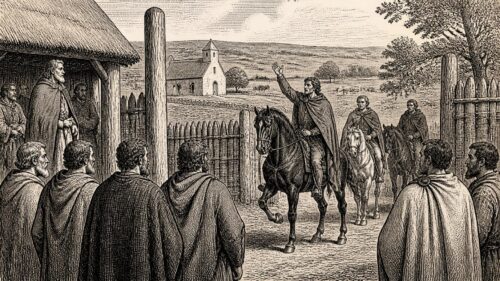
In 958, Ireland’s annalists recorded no single battle that reordered the island, no spectacular raid on a famous monastery, and no weather disaster on the scale sometimes preserved in their terse notices. Yet the year mattered. It marked the death of Tuathal son of Augaire, overking of Leinster, at a moment when authority in the province was being contested between rival Irish dynasties and negotiated under the shadow of Viking Dublin. It also brought a cluster of deaths among abbots, bishops and church administrators. Taken together, these entries reveal an Ireland in which political succession, ecclesiastical office and regional power were closely entwined.
Clonmacnoise Under Munster
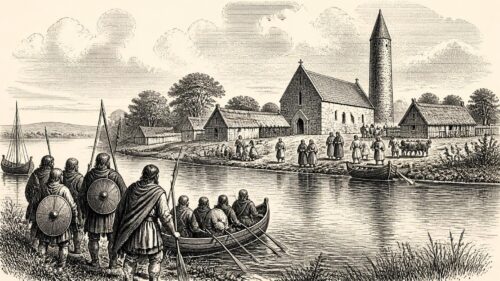
In 959, Irish annals record Munster men plundering Clonmacnoise, a wealthy ecclesiastical settlement strategically placed on the Shannon. The sources provide no commander, destruction or link to the killing of Dub dá Bairenn, king of Cashel, by his own people, but together indicate instability within Munster. In the north, Domnall son of Muirchertach led an expedition into Dál nAraidi and took hostages, demonstrating lordship through coercion. Deaths of senior churchmen, including successors of Caemgen and Colum Cille and Lismore's superior Maenach, marked important ecclesiastical successions. Differing annalistic dates require caution, although the evidence supports securely assigning these events to 959.
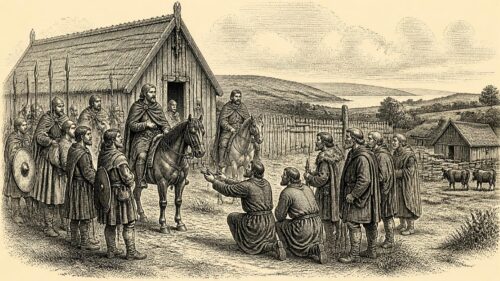
Domnall’s Dál Araide Pledges
For Ireland in 960, the surviving record is brief but unusually revealing. It does not offer a single decisive battle, a royal inauguration or a named treaty. Instead, the nearest contemporary annalistic sequence preserves a cluster of movements: a northern ruler took pledges in Dál Araide; a man of the Dublin dynasty suffered defeat at an otherwise uncertain place; a figure called Muiredach made a wide circuit of Connacht; and Cathmug, associated with the great church of Lismore, died. Read carefully, these notices illuminate the practical business of power in a country of many kings, river routes and ecclesiastical communities.
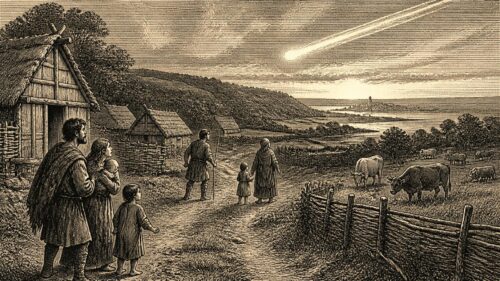
Leinster’s Fiery Arrow
Conventionally assigned to 961, though annalistic chronologies differ, the year is chiefly marked by a reported fiery arrow travelling across Leinster from the south-west towards Áth Cliath, killing people and livestock. Its nature and stated thousand deaths remain unverifiable, but the notice records an exceptional environmental shock affecting agrarian communities and Dublin’s hinterland. The annals also note deaths of rulers in Uí Briúin Seóla, Dartraige and Cashel, the latter two killed by their own people, revealing unstable regional lordship. Ecclesiastical leaders at Clogher, Cork and Lismore died, underscoring churches’ institutional importance. Together, the entries depict politically fragmented, interconnected tenth-century Ireland.
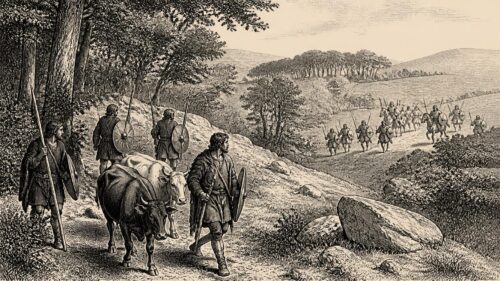
Condaire’s Fatal Raid
For Ireland, 962 is a year best approached through a small cluster of annalistic notices rather than a single commanding narrative. Those notices are unusually revealing. They record a failed northern raid, the killing or death of several rulers across the island, and a parallel change in Alba. Together they show a political world made up not of a unitary state but of overlapping kingships, kin-groups, ecclesiastical interests and strategic routes. The clearest event was the death of Flaithbertach son of Conchobar, king of Ailech, after an expedition into Dál nAraide. It was a sharp reminder that even a ruler connected with the dominant Northern Uí Néill could be destroyed in a local war.
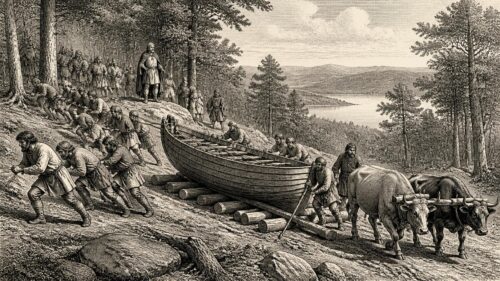
Ships Across Sliabh Fuait
In 963, Ireland’s annals record local crises rather than a single national event. Domnall ua Néill, king of Tara, remarkably hauled ships across Sliabh Fuait, demonstrating logistical strength and political ambition. In Airgialla, Éicnech and his son were murdered by Murchad, who was himself swiftly killed, exposing dynastic instability. Donnchadh of Caisel died, Congal of Ciarraige Luachra was slain, and Tuadmumu suffered disaster on the Shannon. Ecclesiastical change included Máel Muire’s birth within Armagh’s succession and Cáenchomrac’s death at Clones. Gothfrith son of Amlaíb died. Despite uncertain annalistic chronology, these events reveal plural lordships linked by kinship, churches and waterways.
Niall’s Silver at Kildare
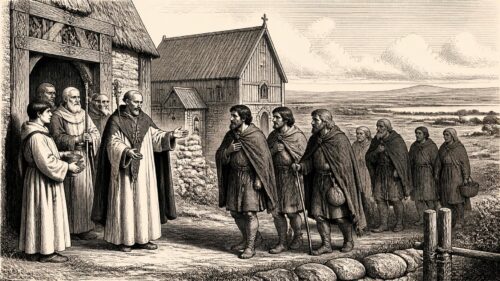
In 964, Dublin’s foreigners, led by Amlaíb Cuarán, plundered the wealthy ecclesiastical settlement of Kildare, demonstrating Dublin’s ability to project power into Leinster. Annals report that many captured clerics were ransomed by Niall ua Eruilb, whose silver-funded intervention restored people and enhanced his standing as protector of Brigit’s community. Muirenn, Kildare’s abbess or related female church officer, also died, though no source links her death directly to the raid. Chronicon Scotorum records cold, scarcity and grain dearth, while killings among northern kings and heirs reveal wider political instability. The selective record portrays a year of violence, hardship, patronage and survival.
Cormac’s Tomgraney Cloigtheach
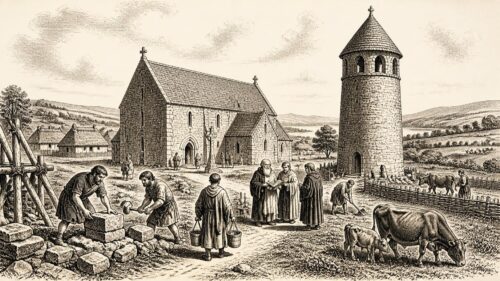
In 965 Ireland suffered a great famine, recorded by the Annals of Ulster as so severe that families reportedly sold children for food. Its causes and regional effects remain unknown, but scarcity threatened households, churches and political communities dependent on crops, cattle and stored resources. Domnall ua Néill, king of Tara, raided Connacht and took hostages from Ua Ruairc, while the Uí Channannáin won a battle killing Domnall. Ecclesiastical successions and deaths occurred at Tír dá Glas, Lismore and Armagh. Chronicon Scotorum associates bishop Cormac Ua Cillín with Tomgraney's church and bell-house, though its construction date and form remain uncertain.
Boirenn and the Uí Ruairc
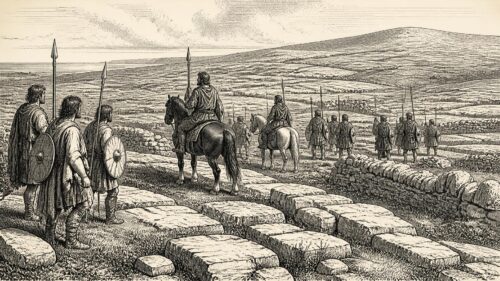
Annals for 966 record a major defeat of the Uí Ruairc alliance at Boirenn in north Clare by Comaltán Ua Cléirigh and Máel Sechnaill son of Arcda, with Taichlech Ua Gadhra among the dead. Fergal Ua Ruairc, king of Connacht, was killed by Domnall of Brega, exposing unstable regional kingship. Leinster also suffered disputed royal losses, while Armagh lost both Patrick’s successor Muiredach and its bishop, Cathasach. Conflicting chronicles complicate dating of Domnall Ua Néill’s campaigns against Leinster and Dublin. The records portray fragmented Ireland, where dynastic warfare, church offices, cattle wealth, famine’s shadow, and Dublin’s trade shaped political power.
Sulcoit and Limerick
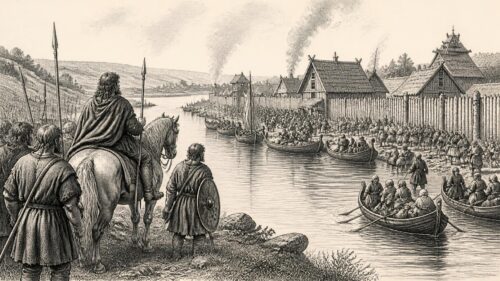
In 967, Mathgamain son of Cennétig, leader of the rising Dál Cais, defeated Limerick’s Norse forces at Sulchuait and burned the port the following morning. Recorded by Inisfallen, the episode weakened but did not end Norse power: Limerick and its ruler Ímar remained significant, requiring further action in 972. The victory strengthened Mathgamain’s claim to Munster kingship, though later tradition disproportionately associated it with his brother Brian Boru. Limerick was a commercially and strategically vital Norse-Gaelic settlement, not merely a raiders’ base. The year saw Connacht king Ferga Ua Ruairc die and Mungret abbot Conn son of Corcrán pass away.
Domnall’s Two-Month Siege
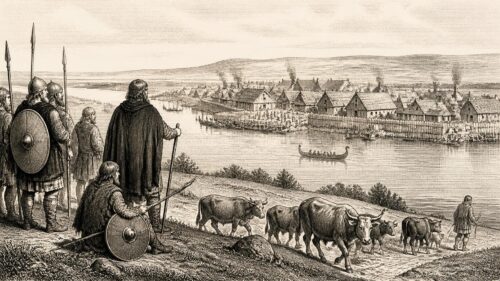
In 968, Domnall ua Néill, king of Tara, campaigned in Leinster, ravaged territory between the Barrow and the sea, exacted cattle tribute, and blockaded the Leinstermen and Dublin’s Scandinavian rulers for two months. The annals do not record Dublin’s capture. In Munster, Mathgamain son of Cennétig raided Uí Énna Áine, where Cathal son of Fogartach died, continuing Dál Cais expansion after successes against Limerick. Imlech Ibuir, or Emly, was plundered by unnamed forces. Deaths of prominent ecclesiastical successors and King Flaithbertach highlighted political and religious change. The records depict fragmented authority exercised through warfare, tribute, mobility and control of resources.
Mathgamain’s Hostage Raid
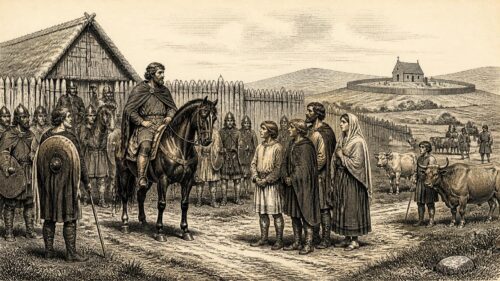
In 969, Ireland remained a fragmented political landscape of competing kingships, churches and Scandinavian towns. Mathgamain son of Cennétig demonstrated Dál Cais ambitions in Munster by leading a hosting against the son of Bran and taking hostages, converting military pressure into overlordship. Despite Limerick’s burning in 967, its ruler Ímar retained power, killing Beólán Litil and his son. Elsewhere, rulers were killed, while Ardgal of Ulaid and Donnocán of Airgialla died in conflict involving Dublin allies. Disputed dates complicate events around Domnall ua Néill’s struggle with Clann Cholmáin. Deaths and campaigning reveal power’s dependence on communities, resources, alliances and coercion.
Cell Móna’s Broken Alliance
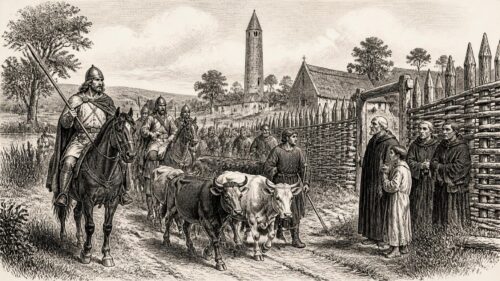
In 970, annalistic evidence records conflict across northern and midland Ireland. Amlaíb Cuarán of Dublin and Domnall mac Congalaig of Brega defeated Domnall ua Néill, king of Tara, at Cell Móna, where several regional kings died. Amlaíb had earlier raided Kells with foreigners and Leinster allies, seizing cattle and defeating Uí Néill forces. Campaigning also brought atrocities: Ardgar of Ulaid sacked Conaire, while Domnall ua Néill retaliated by attacking Louth monasteries, including Lann Léire, where hundreds were burned. The sources reveal shifting alliances, Dublin’s political influence, ecclesiastical wealth’s strategic importance, and warfare’s devastating effects on communities amid uncertain annalistic dating.
Domnall Beyond Sliabh Fuaid
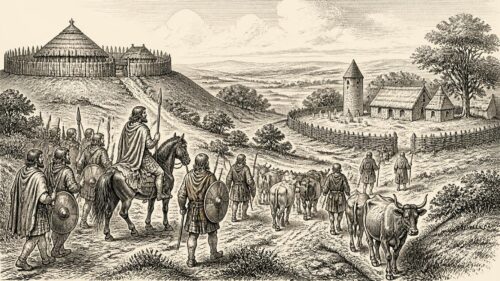
In 971, Domnall ua Néill, Northern Uí Néill king of Tara, was expelled from Mide by Clann Cholmáin, exposing the fragility of his claimed supremacy. He swiftly returned with an army, plundering churches, forts and communities in Mide and raiding Uí Fhailgi and Fotharta to punish resistance and display power. The year also saw the death of Niall son of Áed, king of Ulaid, amid eastern Ulster instability; ecclesiastical succession changes at Ciarán’s and Cainnech’s communities; and Cellach ua Nuadat’s killing by foreigners at a refectory. These entries reveal conflict affecting rural society, churches, dynastic politics and Irish Sea connections.
Limerick’s Three Ordinances
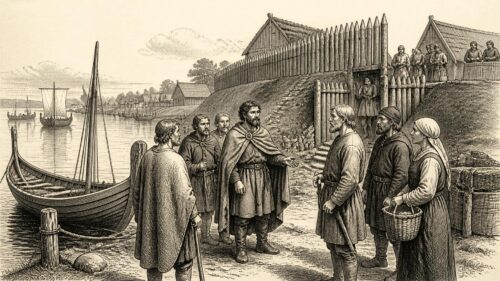
In 972, Mathgamain son of Cennétig led a Munster coalition that imposed three ordinances on Limerick: expelling Norse officials, driving foreigners from the town, and burning their fortress. The action transferred control of a strategic commercial centre without ending Scandinavian influence. Elsewhere, Domnall Claen treacherously killed Murchad, overking of Leinster; Áed of Ulaid died in battle against Dál nAraide; and Domnall Ua Néill burned and plundered major churches. Tuathal, abbot of Clonmacnoise, died. These events demonstrate Ireland’s fragmented politics, where dynastic rivalry, alliances, military force, resources, routes and ecclesiastical institutions shaped contested regional power, although annalistic dating requires careful interpretation.
Cathal at Céis Chorainn
In 973, Conchobar son of Tadc, king of Connacht, died, and his kinsman Cathal was killed almost immediately after succeeding him at Céis Chorainn. Murchad ua Flaithbertaig of Ailech defeated Connacht forces, killing Géibennach of Uí Maine and others, then plundering the province. The chronology varies among annals, but Inisfallen assigns events to 973. In Munster, Dub dá Leithe of Armagh secured Patrick’s church’s levy after Mathgamain mediated with Emly’s coarb. Ecclesiastical deaths included leaders of Durrow, Clonard and Glendalough, and the anchorite Cinaed of Clonfert, demonstrating Ireland’s interconnected political and religious communities, while records leave ordinary people’s experiences unreported.
Inis Cathaig Seized
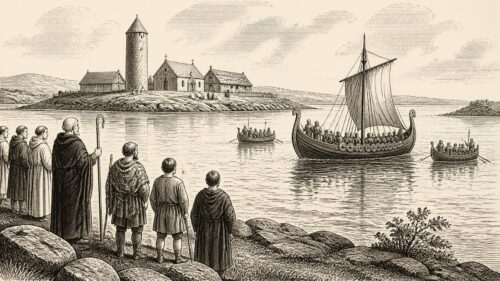
In 974, the son of Aralt led a large seaborne force to plunder Inis Cathaig in the Shannon estuary and capture Ímar, probably a Limerick Scandinavian leader. The island’s bishop and abbot, the learned Scandlán Ua hEirc, also died, though no link to the raid is recorded. The episode demonstrated the vulnerability and political importance of ecclesiastical centres. Meanwhile, Máel Muad challenged Mathgamain’s Munster authority through hostage-taking. Annals also report killings, expulsions and warfare in Ailech, Mide, Leinster and Osraige, revealing a politically fragmented Ireland where dynastic conflict, maritime power, churches and local communities were closely intertwined in this year.
Cináed and the Ruined Fruit
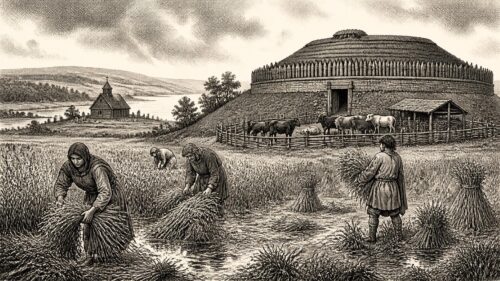
In 975, uneven annalistic evidence records a pressured Ireland where political, maritime, ecclesiastical, cultural and environmental concerns intersected. In Munster, Mathgamain mac Cennétig’s army killed Cormac son of Faelán, demonstrating his contested authority. Ímar escaped overseas while an island stronghold, possibly near Limerick, was retaken, confirming continuing Irish Sea rivalry. Cináed ua hArtacáin, renowned chief poet, died, depriving learned culture of an influential custodian of history and place-lore. Fogartach, abbot of Daire, died, and Ferdal of Rechru was killed by heathens. Exceptionally wet weather damaged crops, worsening vulnerability amid conflict, mobility and competition for resources across the island's linked communities.
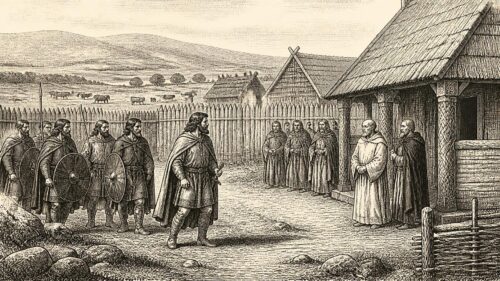
Mathgamain’s Broken Guarantee
In 976, Ireland experienced political upheaval marked by Mathgamain son of Cennétig’s treacherous killing after Donnubán of Uí Fidgente surrendered him to Máel Muad despite guarantees. His death disrupted Dál Cais ascendancy in Munster, leaving Brian’s future leadership uncertain. Donnchad of Osraige and Domnall of Brega also died, while Tadc of Cianachta and Máel Sechnaill of Gabair were killed. Ecclesiastical authority remained influential yet vulnerable: Conaing died, Colum Cille’s shrine was plundered, and Nendrum’s superior was burned. Annals depict fragmented, negotiated power, linking kingship, churches, warfare and Norse-Gaelic involvement across Ireland while stressing continuity in ordinary life beyond recorded events.
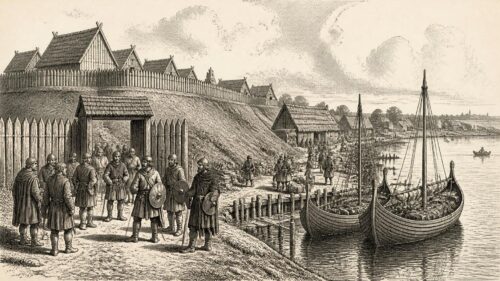
Amlaíb’s Two Royal Killings
In 977, Amlaíb Cuarán, Scandinavian-Gaelic ruler of Dublin, killed Muirchertach son of Domnall ua Néill and Congalach son of Domnall, both designated royal heirs of Ireland. Their deaths weakened Domnall, king of Tara, amid contested Uí Néill succession, illustrating Dublin’s influence within intertwined Irish and Viking dynasties. Domnall also killed Gilla Coluim ua Canannáin, lord of Cenél Conaill. Annals record Conaing, successor of Moedóc, dying, while Chronicon Scotorum chronologically associates Domnall’s plundering of Adomnán’s shrine with 977. Irish sources also noted a Scottish royal killing, reflecting Irish Sea connections. Misdated records exclude Leinster and Kildare events from this calendar year.
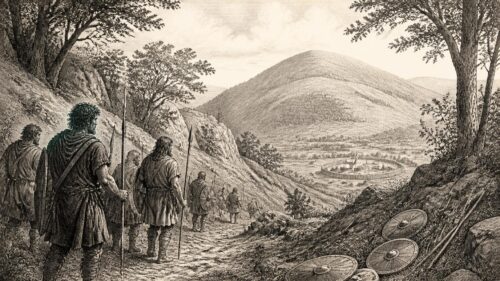
Belach Lechta’s Turning Point
In 978, Ireland’s annals record conflict, illustrating fragmented authority among regional kings, churches and maritime powers. At Belach Lechta, Brian son of Cennétig defeated and killed Máel Muad of Cashel, securing leadership in Munster after his brother Mathgamain’s death and establishing the basis for his later ascendancy. Cork and Lismore were plundered and burned, though attackers and circumstances remain unknown. Dublin defeated Leinster at Bithlann, killing King Úgaire, while Airgialla routed Cenél Conaill in the north. Fiachra, superior of Iona, died. These events disrupted communities dependent on farming, cattle, church wealth and lordship, redistributing power without creating a unified Ireland.
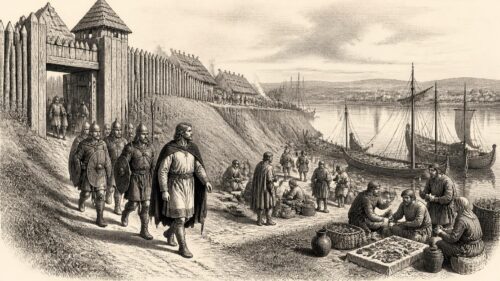
Domnall Claen’s Captivity
For Ireland, 979 is a year best approached through a small but unusually revealing cluster of annalistic notices. No surviving source supplies a continuous narrative, and none explains every motive or consequence. Yet the recorded capture of Domnall Claen, king of Leinster, by the foreigners of Dublin exposes the political weight of the Hiberno-Norse town at the mouth of the Liffey. Deaths and killings among rulers in Offaly, Dál Araide and Cenél Conaill show, at the same time, that power remained fragmented across many regional kingdoms. Notices of a Kildare church leader, a Clonmacnoise scholar-cleric and a foremost man of learning reveal another Ireland: one sustained by religious institutions, literacy and remembered expertise.
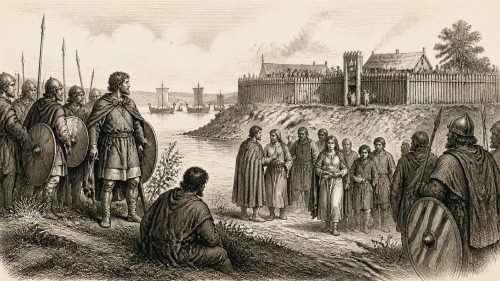
Tara’s Three-Night Reckoning
In 980, amid succession following Domnall ua Néill’s death, Máel Sechnaill mac Domnaill of Clann Cholmáin defeated Dublin and Isles forces at Tara. The victory, although not an expulsion of Norse power or unification of Ireland, enhanced his claim to wider supremacy. With Eochaid of Ulaid, he besieged Dublin for three days, securing hostages, tribute, release from Dublin’s exactions, and freedom for some Irish people held in bondage. Ragnall, Dublin’s heir, died in battle, while Amlaíb Cuarán retired penitently to Iona. Dublin’s commerce endured, but its political influence declined. Church deaths and regional killings exposed Ireland’s continuing fragmented, unstable kingship.

Anmchad and the Mast
In 981, Irish annals recorded local political, ecclesiastical and environmental developments rather than a unified national story. Domnall ua hAitid, king of Uí Echach, and Loingsech son of Fogartach of Uí Nialláin killed one another, exposing fragility of regional lordship. Anmchad, elderly bishop of Kildare, died, confirming that church’s wide authority. Deaths also included successors of saints Feichín, Brendan and Comgall, whose communities sustained property, ritual and learning across Ireland. Although Máel Sechnaill’s previous victory had strengthened midland overkingship, regional rivalries endured. An unusual mast-crop highlighted woodland’s economic importance for pigs, provisioning and seasonal resources throughout early medieval Irish society.
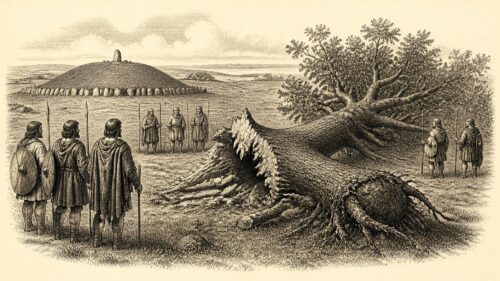
Mag Adair’s Uprooted Tree
In 982, Máel Sechnaill mac Domnaill, king of Tara, raided Dál Cais territory and uprooted the Tree of Mag Adair, an inauguration symbol challenging Brian’s growing Munster power. Annalistic dating varies, but several sources connect these events with 982. Munster forces raided Osraige, gaining booty but suffering losses, while Ímar of Waterford plundered or destroyed Kildare, exposing the wealth and vulnerability of major churches. Deaths and killings among rulers in Leinster, Ulster, Connacht and smaller kingdoms highlighted unstable successions. The year reveals Ireland as interconnected competing lordships, where raids, sacred sites, ecclesiastical wealth and dynastic authority shaped political power throughout.
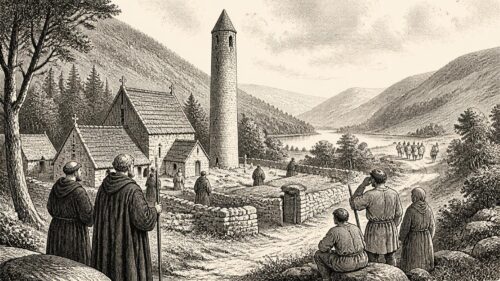
Glendalough and Glún Iairn
In 983, amid disputed annalistic dating, Ireland experienced overlapping conflicts rather than a unified war. Máel Sechnaill of Mide and his Dublin half-brother Glún Iairn routed Domnall Claen of Leinster and Ímar of Waterford, then ravaged Leinster. Dubliners plundered the wealthy monastic centre of Glendalough, illustrating the town’s complex political role. Brian mac Cennétig launched a fleet expedition into Connacht, suffered losses, and extended pressure through Osraige and Leinster by plunder and hostage-taking. Annals note ecclesiastical deaths at Lismore and Armagh, revealing institutions enduring amid warfare. The year demonstrates interconnected yet fragmented powers competing through kinship, raiding, waterways and coercion.
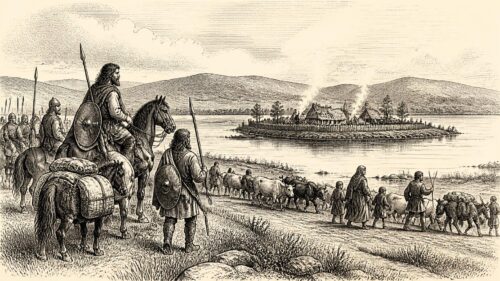
Mag Aí in Ashes
In 984 Máel Sechnaill mac Domnaill, king of Mide and Tara, campaigned into Connacht, burning Mag Aí, killing leading men and attacking island settlements, probably crannogs. Connacht retaliated eastwards at Loch Aininn, or Lough Ennell, burning land and killing the king of Fir Chell. Annalistic dating varies between 984 and 985, reflecting chronological differences rather than separate campaigns. Deaths of ecclesiastical leaders, including Fogartach Ua Congaile of Daiminis, highlighted churches’ political and learned importance. Domnall Claen of Leinster was killed by Uí Cheinnselaig rivals. Together, these events reveal interconnected lordships, warfare, ecclesiastical authority and unstable regional kingship in tenth-century Ireland.
Brian’s Déisi Reprisal
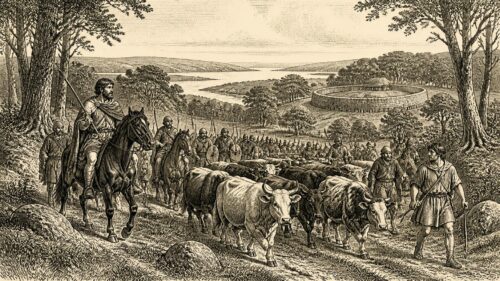
In 985, Ireland remained divided among competing regional kingships rather than united under a single state. Máel Sechnaill of Mide raided Connacht, destroying crannógs and killing chieftains, while internal conflict included the death of Fearghal of the Fiachra kindred. In Munster, Brian son of Cennétig retaliated after Déisi men stole three hundred cattle from his mercenaries, devastating the territory and pursuing Domnall son of Faelán to Waterford. An abundant mast crop aided rural livestock husbandry. Leinster’s king, Diarmait son of Uathmarán, died. Annals securely date these events to 985, illustrating warfare, resources, local authority and unstable political relationships across Ireland.
Patrick’s Shrine at Áth Sige
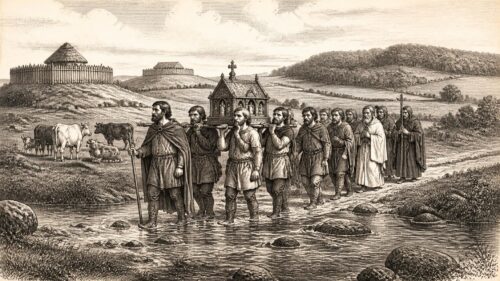
In 986, an episode involving the shrine of St Patrick brought royal authority, local conflict and ecclesiastical privilege into unusually sharp focus. The surviving annals are brief, and their differing chronologies require care, but the central record is clear enough: Máel Sechnaill mac Domnaill, king of Tara and ruler of Mide, removed Patrick’s shrine from Áth Firdiad, modern Ardee, to Áth Sige during a war involving the sons of Cairellán. A settlement followed. The king then rendered what the annalist calls Patrick’s due: a visitation involving the men of Mide, clergy and laity alike, hospitality or a feast from every fortress, seven cumala, and further payments in full.
Louth’s Broken Oratory
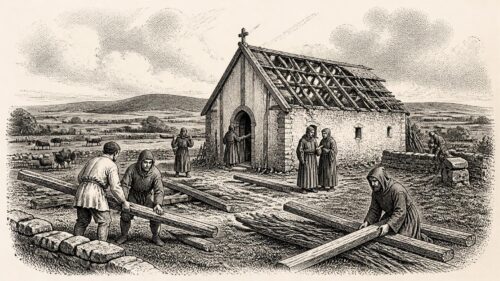
In the annalistic sequence around 987, Ireland experienced severe insecurity from disease, livestock mortality and storm damage. The Annals of Tigernach describes a deadly eastern illness interpreted through demonic imagery, alongside the onset of máelgarb, an unusual cattle murrain whose precise nature remains uncertain. A great wind destroyed many buildings, including Louth’s oratory, disrupting a significant ecclesiastical centre. Differing annal dates prevent precise modern chronology. These reports illuminate vulnerabilities affecting households, churches and political economies dependent on cattle, labour and resources. They occurred amid Máel Sechnaill’s overkingship and Brian Bóruma’s rise, but do not establish an event for that year.
Brian’s Lough Ree Armada
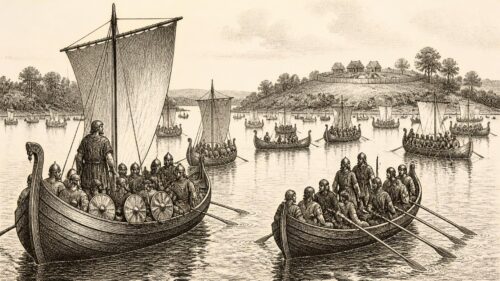
In 988, Brian son of Cennétig, Munster’s dominant ruler, launched a fleet of 300 vessels onto Lough Ree, using the Shannon waterways to raid Mide and reach Uisneach. The expedition demonstrated mobilisation and challenged the political landscape dominated by Máel Sechnaill of Tara, but did not establish Brian’s rule over Ireland. A detachment of twenty-five boats entering Connacht suffered heavy losses, although it killed Muirgius, a Connacht royal heir; Dúnlang, a prominent ally, also died. Differing annalistic year systems complicate dating. The campaign formed part of Brian’s wider waterborne strategy, revealing ambition, logistical capacity, and the resilience of rival kingdoms.
Glún Iairn’s Fatal Cup
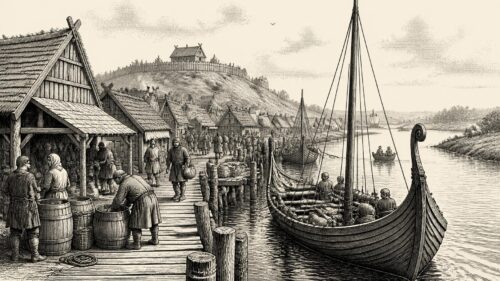
The annals for 989 preserve a year of abrupt reversals. Ireland was not a single kingdom, nor was its political life divided neatly between ‘Irish’ and ‘Viking’. Kingship was exercised through shifting local alliances, hostage-taking, tribute, raiding and control of major churches. The most striking entry is the death of Glún Iairn, king of the foreigners of Dublin, killed while drunk by his own slave. Yet 989 mattered just as much in the north: Dún Lethglaise, modern Downpatrick, was plundered and burned; a ruler of the Isles was killed in Dál Riata; and the successor of St Patrick at Armagh acquired the successorship of Colum Cille with assent recorded from Ireland and Alba.
Airbertach’s Scattery Ransom
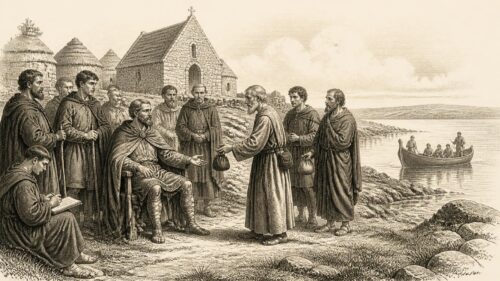
In 990, Irish annals recorded dispersed connected conflicts involving kings, churches and maritime raiders. Máel Sechnaill of Mide defeated north Munster forces at Fordroma, where Domnall of Uí Fhorga died, demonstrating contested regional power rather than national unity. A son of Ímar left Waterford, while foreigners raided Ross Carbery and captured its lector, Airbertach mac Cos Dobráin. Brian son of Cennétig ransomed him at Scattery, displaying authority and resources. Brian’s brother Marcán became abbot of Emly, strengthening dynastic church links. Derry was plundered, and notices of a poet’s and a king’s deaths underline learning, ecclesiastical wealth, violence and political fragmentation.
Cerrán Cnámchaille’s Vengeance
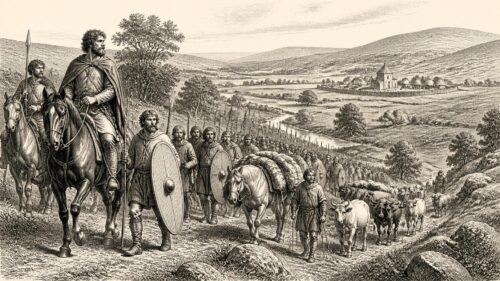
In 991, Brian son of Cennétig led an armed hosting from Munster into Leinster, where Tadc son of Donnchadh died and Cerrán Cnámchaille was killed in vengeance. The campaign demonstrated Brian’s expanding reach, although no conquest or settlement is recorded. Annals also report the treacherous killing of a prominent Tara-centred heir, but differ over his identity and the perpetrators, reflecting contested midland politics. Domnall Ua Dúngalaig died, as did Scandlán son of Tadc, erenagh of Cell Dá Lua, or Killaloe. These notices reveal power exercised through warfare, kinship, tribute, ecclesiastical offices and regional rivalries, rather than a unified Irish state.
St Stephen’s Red Sky
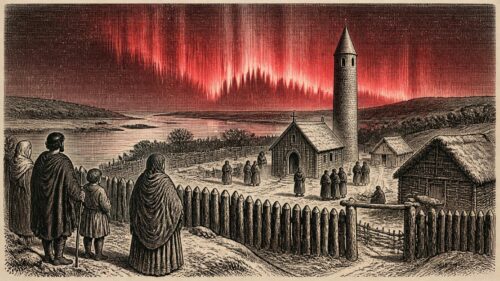
In 992, Irish annals record Máel Sechnaill mac Domnaill’s cattle-taking expedition into Connacht, demonstrating Mide’s military reach and the central value of livestock. Brian son of Cennétig subsequently led Munster and Connacht forces into Mide, apparently as a restrained but purposeful show of strength. Regional politics were further marked by deaths and probable violence among rulers in Tethba, Uí Diarmata and Corcu Baiscinn. Ecclesiastical succession affected Clonfert, Clonmacnoise and Inis Cathaig, institutions entwined with wealth and power. The records also illuminate rural dependence on livestock, Ireland’s trade connections, and a blood-red sky observed on St Stephen’s night, possibly an aurora.
Bees, Cattle and Kings
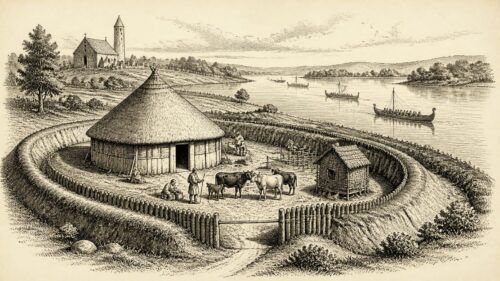
Annals conventionally place 993 amid a major mortality of people, cattle and bees, though its cause, scale and chronology remain uncertain. This crisis threatened subsistence, wealth and ecclesiastical resources. Political violence killed several local rulers in the midlands, Connacht and west, revealing fragmented lordship and Máel Sechnaill’s interventions. Brian of Munster led a naval expedition from Lough Ree towards Bréifne, while Mide suffered devastation and Dublin’s Norse-Gaelic politics remained unsettled. Meanwhile, Muirecán, Patrick’s successor, visited Cenél nÉogain and publicly affirmed Áed’s royal standing. The notices portray interconnected warfare, church authority, riverine mobility and vulnerable rural life throughout Ireland in 993.
Swords, Silkbeard and Ímar
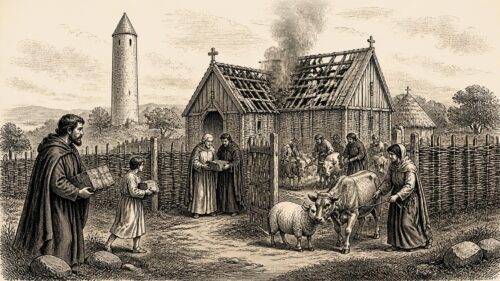
In 994, Ireland’s annals recorded political and ecclesiastical change. Sitriuc Silkbeard was expelled from Dublin during a brief Hiberno-Scandinavian dynastic takeover linked to Ímar of Waterford and his son Ragnall, whose rule soon collapsed. Máel Sechnaill, king of Tara, burned Swords, demonstrating his coercive influence near unstable Dublin. Elsewhere, regional rulers including Fogartach of Corcu Trí, Áed, heir of Ailech, and Conn of Uí Fhailgi were killed. The deaths of Armagh’s bishop Máel Muire and Scattery’s vice-abbot Fínnechta underline church institutions’ central public role. These scattered notices reveal local violence, competitive kingship, vulnerable ecclesiastical settlements, and interconnected Irish Sea politics.
Brian’s Cashel Fortifications
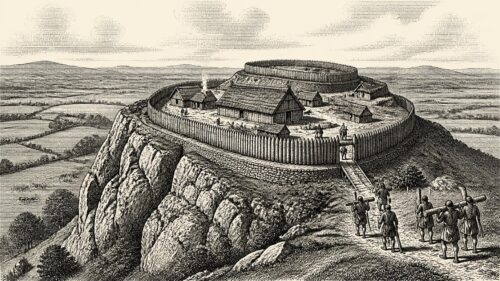
In 995 the Annals of Inisfallen record Brian son of Cennétig strengthening Cashel, Inis Locha Gair, Inis Locha Sainglenn and numerous other structures. This programme demonstrated Dál Cais control of Munster’s traditional royal centre while securing resources and refuges against raiding. Annalistic dating varies for connected events, including killings among Leinster, Osraige and Déisi rulers and Armagh’s destruction by lightning-fire. The year also saw ecclesiastical succession at Emly, the death of the scribe and coarb Colla, and deaths of rulers linked to Dublin and Alba. Together, these events reveal Brian’s rising, yet contested, authority amid political violence and institutional vulnerability.
Hostages at Mag Ailbe
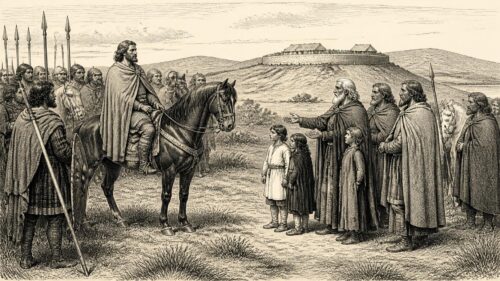
In 996, Brian Boru, king of Munster, took hostages from Uí Cheinnselaig and territories west of the Liffey at Mag Ailbe, demonstrating expanding influence in Leinster without establishing uncontested national rule. Annalistic chronology differs, requiring caution over dates and causal links. Deaths of rulers in Uí Cheinnselaig and Osraige accompanied regional instability and succession. Armagh suffered a major fire attributed to lightning, although other chronicles report plundering and burning by Airgialla. In the north, Áed of Ailech defeated raiders at Glenn Rige. These events reveal competing lordships, vulnerable churches, military power, and Brian’s growing leverage before the 997 division agreement.
Port Dá Chaineóc Accord
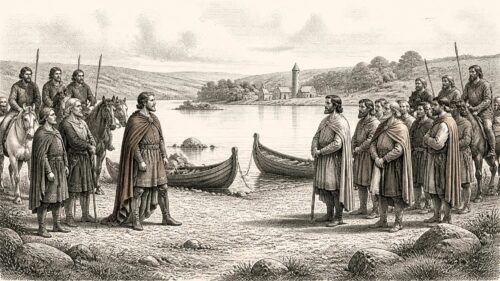
In 997, Brian Bóruma of Munster and Máel Sechnaill mac Domnaill of Tara met at Port Dá Chaineóc, probably near Lough Ree, and divided Ireland symbolically into Leth Moga and Leth Cuinn. The accord recognised Brian’s southern authority and Máel Sechnaill’s northern and midland pre-eminence without creating fixed states or peace. Transfer of Leinster and Dublin hostages gave Brian crucial leverage. Dublin remained an influential, diverse trading port, beginning coinage around this time. Elsewhere, warfare, plundering and political mutilation continued, while ecclesiastical successions mattered publicly. The settlement marked Brian’s rise, but later conflict determined his eventual wider dominance across Ireland.
Athlone’s Week of Hostages
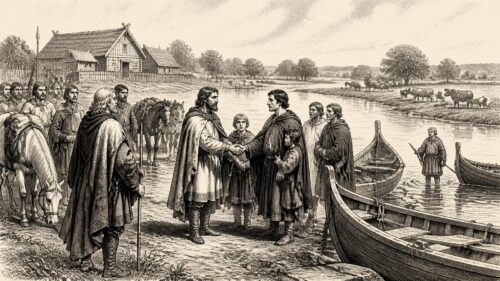
In 998, Brian of Munster and Máel Sechnaill of Tara jointly asserted authority across Ireland. At Athlone, Brian secured Connacht’s hostages within a week and transferred them to Máel Sechnaill, recognising Tara’s overlordship while displaying his own military reach. The kings also obtained guarantees from Dublin’s Hiberno-Scandinavian rulers. Athlone’s Shannon ford enabled movement between Mide and Connacht, making it a strategic political meeting point. Hostage-taking signified submission rather than territorial conquest. The year also saw the deaths of leading churchmen at Armagh and Clonmacnoise. Though later conflict approached, 998 demonstrated Brian’s growing power within an uneasy partnership with Máel Sechnaill.
Glenn Máma’s Winter Battle
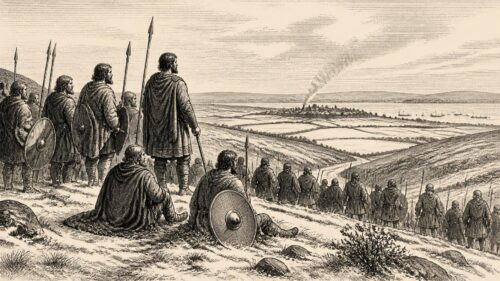
In 999, Ireland’s political order was strained as Sitriuc of Dublin and Máel Mórda seized Leinster’s kingship, imprisoning Donnchad mac Domnaill. Raids on Kildare, Leinster and Uí Echach demonstrated warfare’s dependence on cattle, captives and plunder. On Thursday 30 December, Brian mac Cennétig’s coalition, including Máel Sechnaill’s forces, defeated the Dublin–Leinster army at Glenn Máma, killing Dublin nobles and opening the route to the port. Dublin’s sack occurred at the year’s turn, not within 999. Máel Sechnaill’s conversion of the fallen Lia Ailbi into millstones linked authority, memory and subsistence. The year altered power without creating unity or millennium expectations.