

31600–31501 BCE

Derryvree’s Mountain Avens
Around 31,600 BCE, a modern label within later Marine Isotope Stage 3, Ireland experienced fluctuating glacial conditions before the Last Glacial Maximum. Derryvree, County Fermanagh, preserves freshwater sediments between tills, showing cold, treeless wetlands with arctic-alpine plants including mountain avens during an ice-free interval. Castlepook Cave, County Cork, contains remains of mammoth, reindeer, giant deer, predators and other cold-adapted fauna, though complex deposits limit certainty. A cut-marked reindeer femur may indicate Upper Palaeolithic butchery, but provides no proof of settlement. Ireland’s evidence chiefly records changing ice, habitats and animals; human presence at this remote date remains possible, contested and uncorroborated.

Willow Beneath the Drumlin
Around 31,599 BCE, Ireland lay within the unstable Late Pleistocene climate of Marine Isotope Stage 3, approaching but preceding maximum glaciation. Derryvree, County Fermanagh, preserves freshwater sediments indicating cold, open tundra wetlands temporarily free from overriding ice. Ice-sheet advances later buried such deposits, leaving a fragmentary record. Castlepook Cave, County Cork, contains remains of reindeer, mammoth, giant deer, bears, wolves, foxes, lemmings and hyaenas, reflecting varied cold-stage ecosystems. A cut-marked reindeer bone may indicate human activity, but remains inconclusive. Lower sea levels altered regional geography and access. Evidence supports environmental reconstruction, not claims of permanent settlement, society or political history.

Castlepook’s Hyaena Den
About 31,598 BCE, Ireland lay within the climatically unstable Middle Midlandian of the last Ice Age, not a precisely datable historical year. Derryvree, County Fermanagh, preserves freshwater sediments between glacial tills, revealing treeless periglacial wetlands with sedges, mosses, insects and open tundra-like ground. Castlepook Cave, County Cork, yielded reindeer, mammoth, hyaena and other cold-stage fauna, although disturbed deposits prevent assuming a single community. Possible stone-tool cuts on reindeer bones may signal brief Upper Palaeolithic visits, but remain unconfirmed. No secure evidence demonstrates settlement, tools, camps or continuity of population. Environmental change, ice advance and poor preservation define this Irish past.

Awbeg Limestone Corridor
Around 31,597 BCE, present-day Ireland formed part of a low-sea-level, climatically volatile north-west European landmass during Marine Isotope Stage 3. It was not yet fully glaciated, although worsening conditions preceded later ice-sheet expansion. Fermanagh sub-till sediments indicate cold, open, treeless terrain with wetlands, freshwater and hardy vegetation. Castlepook Cave’s mixed faunal deposits document mammoth, reindeer, giant deer, bears, hyaenas and other cold-adapted animals, but cannot reconstruct one moment or locality. Cut marks on a reindeer bone may indicate a brief Upper Palaeolithic human visit, though this remains disputed. No settlements, institutions or ritual life are known; glaciation erased much evidence.

Derryvree’s Plant Bed
Although 31,596 BCE cannot be treated as a precise Irish historical year, Derryvree, County Fermanagh, preserves evidence from a broad Late Pleistocene interval encompassing it. Organic deposits between glacial tills reveal an ice-free freshwater basin with cold, treeless, varied tundra-like wetlands, before later ice advance. Castlepook Cave, County Cork, records a changing MIS 3 fauna including reindeer, mammoth, giant deer, predators and scavengers, though deposits are disturbed and dates vary. A cut-marked reindeer bone may indicate early human activity, but no occupation is proven. Together, these archives depict Ireland as environmentally unstable, periodically habitable, and connected to wider north-western Europe.
Reindeer at Castlepook
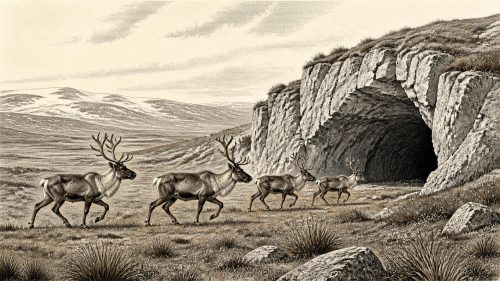
About 31,595 BCE is an imprecise modern label for late Marine Isotope Stage 3, roughly 33,500 calibrated years before present. Ireland experienced unstable cold conditions before the British–Irish Ice Sheet’s maximum expansion. Freshwater deposits at Derryvree indicate locally ice-free wetlands, while Crag Cave speleothems record milder phases. Castlepook Cave in County Cork preserved reindeer, mammoth, giant deer, predators and tundra fauna, though cave contexts and earlier dates require caution. A marked reindeer femur may indicate human butchery, but cannot establish settlement or occupation. Lower sea levels may have aided dispersal, yet routes remain uncertain. Evidence depicts environmental change, not history.

Derryvree’s Moss Flora
At the nominal date of 31,594 BCE, Ireland’s evidence is environmental and archaeological, not historical in the political sense. Derryvree, County Fermanagh, preserves wetland sediments between glacial tills, indicating a locally ice-free MIS 3 interval with cold, open, treeless vegetation of mosses, sedges, grasses and shrubs. Castlepook Cave, County Cork, records a time-mixed cold-stage fauna including mammoth, reindeer, giant deer, predators and smaller mammals. Possible cut marks on reindeer bone suggest fleeting human activity, but cannot establish settlement. Changing sea levels and advancing ice shaped access and survival of evidence before extensive later glaciation erased much of Ireland’s earlier landscape.

The Fermanagh Sedge Basin
31,593 BCE is a notional point within the climatically unstable Late Pleistocene, when Ireland’s ice cover and environments varied regionally and remain uncertain. Organic deposits at Derryvree, County Fermanagh, preserved between tills, indicate cold, open wetlands containing sedges, mosses, aquatic plants and northern insects during a non-glacial interval. Castlepook Cave, County Cork, preserves fauna including reindeer, mammoth, hyaena and other open-country animals, demonstrating ecological connections with north-west Europe. A cut-marked reindeer bone may indicate early human activity, but lacks secure archaeological context. Evidence supports no settlements, politics, ritual or trade, only a landscape shaped by ice, water and animal movement.

Cork’s Reindeer Threshold
Around 31,592 BCE, Ireland lay within the climatically unstable Late Pleistocene, before maximum glaciation, when some areas remained ice-free. Subsequent ice sheets destroyed much evidence. Derryvree in Fermanagh preserves a tundra-like freshwater wetland, demonstrating productive open habitats. Castlepook Cave in Cork produced mammoth, reindeer, horse, giant deer and carnivore remains, showing that large animals reached Ireland during favourable intervals. A marked reindeer femur, possibly cut by a stone tool, suggests Upper Palaeolithic visitors, but cannot prove permanent settlement or continuous occupation. No contemporary Irish evidence identifies society, culture, politics or daily life; human presence remains tentative amid later encroaching glaciation.
A Femur From Castlepook
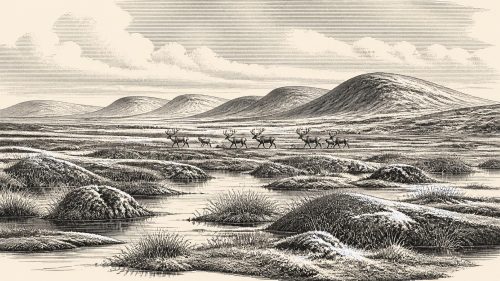
“31,591 BCE” is a modern chronological label, not a year that can be recovered from an Irish Ice Age archive. It corresponds approximately to 33,540 calendar years before AD 1950, the conventional “present” used in radiocarbon reporting, but archaeology cannot resolve events in Ireland to that individual year. The responsible frame is the later part of the Late Pleistocene, within Marine Isotope Stage 3, a long, climatically volatile interval before the Last Glacial Maximum. What survives is not an annual chronicle: it is a patchwork of cave bones, buried wetland sediments, pollen, seeds, mosses, insects, glacial deposits and laboratory dates, each with limits.
Castlepook’s Reindeer Puzzle
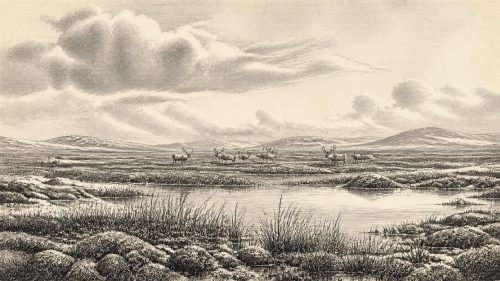
31,590 BCE is a modern filing date within late Marine Isotope Stage 3, not a recoverable Irish calendar year. Ireland contained varied cold environments, including tundra wetlands at Derryvree and changing regional ice cover. Castlepook Cave’s fauna, re-dated using improved methods, includes reindeer, mammoth, giant deer, hyaena and other cold-adapted animals, though its poorly recorded bones do not represent a single moment or community. A cut-marked reindeer femur may indicate Upper Palaeolithic carcass processing, but lacks associated tools, hearths or human remains. Evidence supports possible fleeting human visits, not settlement, polities or culture. Further excavation and secure dating remain essential.

The Derryvree Silt Lens
Labelled 31,589 BCE, this Late Pleistocene interval cannot be reconstructed as a recorded year but through environmental archaeology. Organic silts at Derryvree, County Fermanagh, lying between glacial tills, indicate a temporary ice-free freshwater tundra of sedges, mosses, herbs and cold-adapted plants, dated broadly to 36,900–31,700 calibrated years BP. Greenagho provides comparable regional evidence. Expanding ice sheets nevertheless made conditions transitional and increasingly glacial. Cave remains at Castlepook demonstrate wider Ice Age fauna, including reindeer and mammoth. A possibly cut-marked reindeer bone may indicate fleeting human activity there, but disturbed contexts and absent occupation evidence preclude claims of settled Palaeolithic society.
Mammoth Cave’s Uncertain Visitors
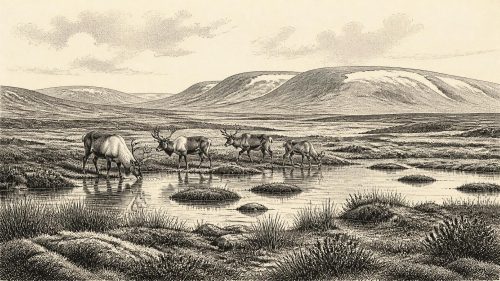
Around 33,500 cal BP, Ireland was a climatically unstable Late Pleistocene landscape, not a defined historical society or consistently frozen island. Derryvree, County Fermanagh, preserves an ice-free wetland interval beneath later glacial deposits, indicating cold, treeless tundra-like environments supporting plants, insects and freshwater habitats. Castlepook Cave in County Cork yielded mammoth, reindeer, giant deer, predators and other cold-stage fauna, although its deposits represent accumulated, disturbed evidence rather than one moment. A cut-marked reindeer femur may indicate early Upper Palaeolithic human butchery, but cannot prove permanent settlement. No secure contemporary tools, communities, institutions, beliefs, trade, farming or political structures are known.

Derryvree’s Menyanthes Marsh
Around 31,587 BCE, Ireland lay in Marine Isotope Stage 3, a climatically variable Late Pleistocene period rather than a uniformly frozen landscape. Derryvree, County Fermanagh, preserves freshwater sediments between tills, indicating an ice-free wetland with open, treeless vegetation, including bogbean. Greenagho and Kerry speleothems similarly show intermittent milder, ice-free conditions. Lower sea levels enlarged surrounding land, though routes remain uncertain. Castlepook Cave fauna include reindeer and mammoth; a possibly cut-marked reindeer bone may indicate brief human activity, not settlement. Later ice-sheet advance erased much evidence. No reliable evidence supports contemporary politics, religion, economy, communities or sustained Palaeolithic occupation in Ireland.
Elephant Hall’s Mixed Ages
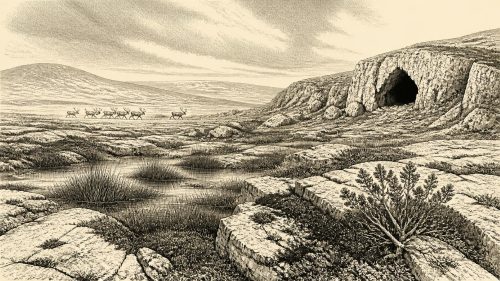
31,586 BCE is only a filing label for a broad, uncertain interval during Marine Isotope Stage 3, when Ireland was cold, treeless and approaching glaciation. Wetlands at Derryvree indicate sedge-rich, muskeg-like habitats amid open ground, ponds and seasonal freezing. Castlepook Cave in County Cork preserves mixed animal remains accumulated over many episodes, including reindeer, mammoth, giant deer, bear, hyaena, wolf, Arctic fox and lemmings. A marked reindeer femur may indicate human butchery, but cannot prove settlement or continuity. No evidence supports farming, institutions or culture. The record instead reveals a changing tundra-like landscape, rich in mammals and possible human visits.
Reindeer Beside the Awbeg
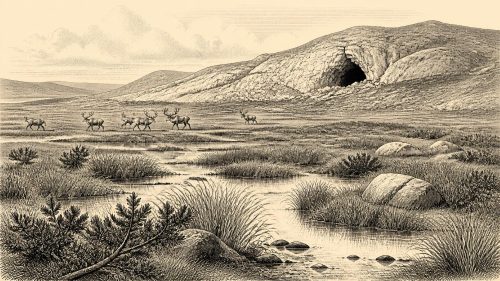
Around 31,585 BCE, Ireland was a cold, open Ice Age landscape during Marine Isotope Stage 3. Radiocarbon evidence cannot identify this calendar year precisely, but Derryvree’s sub-till sediments indicate treeless tundra wetlands, grasses, sedges and freshwater habitats during a broadly relevant interval. Castlepook Cave preserves a diverse fauna, including reindeer, mammoth, giant deer, bear, wolf, Arctic fox, lemmings and hyaena, though dates and deposits require caution. A reported cut-marked reindeer bone suggests possible early human activity, but no secure evidence establishes settlement or a defined culture. Growing ice would later transform these landscapes. The period is understood through environmental evidence.

Derryvree’s Open Tundra
Around 31,584 BCE, an imprecise date within Marine Isotope Stage 3, Ireland experienced last-glacial conditions rather than uniform ice cover. Organic deposits beneath Derryvree drumlin in County Fermanagh preserve evidence of an ice-free freshwater wetland, with sedges, mosses and arctic-alpine plants amid open periglacial tundra. Castlepook Cave in County Cork records diverse fauna, including mammoth, giant deer, reindeer, predators and cold-adapted animals, although deposits span periods. A cut-marked reindeer bone may indicate fleeting human activity, not settlement. Lower sea levels altered routes and coastlines, while ice and erosion destroyed or buried much evidence. Ireland remained an unstable dynamic ecological frontier.

The Maguiresbridge Freshwater Clock
Thirty-one thousand five hundred and eighty-three BCE is a label within Marine Isotope Stage 3, not a recoverable Irish year. At Derryvree, Maguiresbridge, freshwater silts between glacial tills, radiocarbon dated to 36,900–31,700 calibrated BP, show that north-central Ireland intermittently supported cold tundra wetlands, vegetation and animals before ice advance. Comparable deposits demonstrate fluctuating climates. Castlepook Cave preserves remains of mammoth, reindeer, giant deer, predators and cold-adapted fauna, although its mixed deposits cannot represent one moment. A marked reindeer femur may indicate early human butchery, but lacks context. Evidence confirms a dynamic glacial-edge landscape, not permanent settlement or a land bridge.
Maguirebridge’s Fossil Wetland
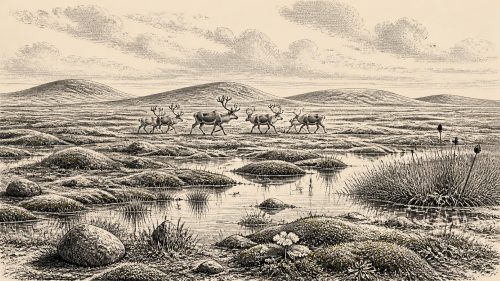
31,582 BCE is a modern label within an MIS 3 chronological range, not a datable Irish event. At Derryvree, County Fermanagh, freshwater sediments beneath glacial tills record an ice-free, periglacial tundra of wetlands, mosses, grasses and herbs, later overridden by advancing ice. Castlepook Cave, County Cork, preserves a mixed, long-accumulated fauna including mammoth, reindeer, giant deer, predators and cold-adapted small mammals, demonstrating Ice Age habitats. A marked reindeer femur may indicate stone-tool processing by people, but cannot prove settlement or sustained occupation. No evidence establishes later-style institutions. These sites reveal a dynamic, cold landscape before extensive Last Glacial Maximum ice.
Castlepook’s Reindeer Question
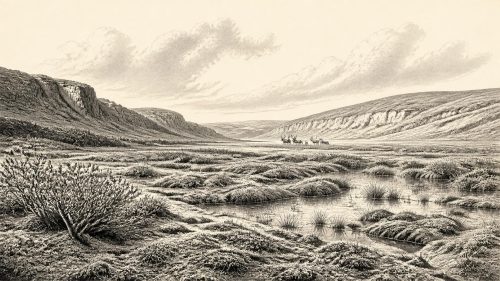
Around 31,581 BCE, Ireland lay in Marine Isotope Stage 3, an unstable Last Ice Age interval known only through environmental evidence rather than annual history. Derryvree sediments in Fermanagh indicate an ice-free freshwater tundra landscape, with sedges, mosses, aquatic plants and sparse cold-adapted vegetation. Elsewhere, glaciers and ice centres were expanding, while lowered sea levels altered coasts and routes. Castlepook Cave in Cork preserves diverse fauna, including reindeer, mammoth, giant deer, predators and lemmings, although deposits span time and processes. A possibly tool-made reindeer-bone incision suggests brief human activity, but remains contested and proves neither permanent settlement nor continuous occupation.

Maguirebridge’s Winter Wetland
At the notional date of 31,580 BCE, Ireland lay within the climatically unstable Marine Isotope Stage 3. At Derryvree near Maguiresbridge, freshwater silts and organic deposits between glacial tills record an ice-free interval around 33,500 calibrated years BP. Mosses, sedges and insects indicate a cold, open tundra wetland with shallow pools and peat-rich ground. Other Fermanagh deposits suggest local non-glacial phases, while cave evidence shows climatic fluctuation and cold-adapted mammals, including reindeer and mammoth. No secure human occupation is known; a marked reindeer bone from Castlepook Cave only raises the possibility of a brief human visit. Later ice buried it.

Castlepook’s Reindeer Trace
Labelled 31,579 BCE, this period in Ireland belongs broadly to Marine Isotope Stage 3, not a datable calendar year. Before the Last Glacial Maximum, fluctuating cold conditions, low sea levels and changing routes linked Ireland intermittently with wider Europe. Derryvree sediments in Fermanagh record ice-free, waterlogged tundra vegetation and insects. Castlepook Cave in Cork preserves a disturbed important fauna, including reindeer, mammoth, giant deer, horse, predators and mammals. A marked reindeer femur, 33,000 years old, may indicate stone-tool butchery and Ireland’s earliest human visit. However, it proves neither hunting nor settlement; evidence remains fragmentary, and future study may revise conclusions.

Fermanagh’s Sealed Tundra
Around 31,578 BCE, Ireland lay within the climatically unstable Late Pleistocene, not a datable historical year. At Derryvree, County Fermanagh, freshwater silts between glacial tills, broadly dated to 36,900–31,700 calibrated years BP, preserve tundra-like wetlands, sparse vegetation and insect life during an ice-free interval. Other deposits confirm repeated advances and retreats of ice. Castlepook Cave records mammoth, giant deer, reindeer and carnivores, but its bones reflect complex accumulation processes. A cut-marked reindeer femur may indicate human butchery, yet cannot prove settlement or population. Evidence supports a harsh, ecologically active, repeatedly transformed island, while human presence remains unconfirmed. Routes remain uncertain.

The Castlepook Butchery Debate
At the modern filing date of 31,577 BCE, Ireland was a climatically unstable Ice-Age landscape, not a documented society. Derryvree, County Fermanagh, preserves evidence of a treeless, cold wetland existing between glacial advances, though its dated range cannot describe a single year. Castlepook Cave, County Cork, contains MIS 3 animal remains, including mammoth, reindeer, giant deer, hyaena and wolf, but its mixed cave deposits do not represent one community. A cut-marked reindeer femur, dated around 33,000 years ago, may indicate human butchery. It supports possible brief visits by hunter-gatherers, not continuous settlement, institutions or cultural traditions with certainty in Ireland.

Birm-166’s Wetland World
The label 31,576 BCE cannot describe a year in Ireland in the ordinary historical sense. No people then used a calendar that can be correlated with ours, and neither archaeological deposits nor environmental records resolve events to a single year. The number is best treated as a modern point within a much broader Late Pleistocene time-window, approximately 33,500 calendar years before present. The relevant evidence is dated in calibrated ranges that may extend across centuries or millennia. What it can illuminate is an episode in the last Ice Age when parts of the landmass now called Ireland were cold, largely treeless and environmentally unstable, but not necessarily everywhere overwhelmed by ice.

Doneraile’s Palaeolithic Femur
31,575 BCE is a label for a late-Pleistocene interval, not a datable Irish event. Derryvree, County Fermanagh, preserves wetland deposits dated broadly to 36,900–31,700 cal BP, indicating treeless, cold, plant-rich terrain between glacial advances. Castlepook Cave, County Cork, contains MIS 3 remains of mammoth, reindeer, giant deer, predators and Arctic fauna, accumulated over time rather than contemporaneously. A cut-marked reindeer femur may indicate human butchery, but cannot establish settlement, chronology or continuous occupation. Lower seas may have aided movement, yet routes remain unknown. Ice expansion reshaped Ireland and destroyed sites, leaving evidence of habitats, animal movement and possible human presence.

Derryvree’s Tundra Lake
Around 31,574 BCE, Ireland was entering an increasingly cold, unstable phase before the Last Glacial Maximum, not yet entirely ice-covered. Organic deposits beneath later glacial tills at Derryvree, County Fermanagh, preserve evidence of an ice-free freshwater tundra landscape, with sedges, mosses, Arctic-alpine plants and shallow pools. Greenagho provides comparable pre-glacial evidence. Southern caves, notably Castlepook in County Cork, contain remains of cold-stage mammals including reindeer, mammoth and hyaena, though their dates are not necessarily contemporary. A possibly cut-marked reindeer bone suggests an unconfirmed early human visit. Glacial erosion has severely limited surviving evidence, preventing detailed accounts of society or events.

Hyaena Hall’s Mammoth Sands
Around 31,573 BCE, Ireland lay within the climatically unstable Late Pleistocene, but no evidence permits events to be dated to a single year. Derryvree, County Fermanagh, preserves an ice-free interval of treeless, wet tundra between glacial advances, while Crag Cave records changing conditions during interstadials. Castlepook Cave, County Cork, yielded mammoth, reindeer, giant deer, hyaena and cold-adapted fauna, demonstrating links with wider north-west Europe, though mixed cave deposits complicate interpretation. A marked reindeer bone may indicate human activity, but no Palaeolithic settlement is known. Later ice expansion erased or buried evidence, leaving dynamic ecological history rather than recoverable human narrative.

The Derryvree Freshwater Archive
Around 31,572 BCE, Ireland lay within the climatically unstable Marine Isotope Stage 3, before maximum expansion of the British–Irish Ice Sheet. At Derryvree, County Fermanagh, freshwater sediments sealed between tills record an ice-free, treeless periglacial wetland of mosses, sedges, insects and shallow water, dated broadly rather than to a single year. Other deposits indicate intermittent milder conditions and regional environmental variation. Castlepook Cave fauna demonstrate cold-adapted animals, while a possibly tool-marked reindeer bone may suggest brief Upper Palaeolithic human contact, though this remains uncertain. No evidence establishes permanent settlement, society or polity. Only ecology survives: ice, habitats and chance preservation.

Crag Cave Calcite Pulses
About 31,571 BCE is a modern approximation, not a recorded Irish date, indicating a fluctuating MIS 3 glacial environment. Derryvree sediments in Fermanagh demonstrate an ice-free freshwater interval between glacial advances, supporting cold, open wetland vegetation. Crag Cave calcite records milder interstadials, when groundwater circulated, amid temperature swings exceeding 10°C. Castlepook Cave's mixed fauna, including reindeer, mammoth and hyaena, confirms intermittent animal occupation of exposed grazing landscapes. A possibly tool-marked reindeer bone may indicate brief human presence, but lacks secure context. Later ice destroyed evidence; no settlements, polity, economy, ritual or culture can be established with confidence from present evidence.

Castlepook’s Hyena-Worked Fauna
Although 31,570 BCE cannot be treated as a recoverable Irish year, evidence from Marine Isotope Stage 3 reveals intermittent ice-free environments. At Derryvree, County Fermanagh, freshwater silts between glacial tills preserve plants and insects indicating cold, open, waterlogged terrain. Castlepook Cave, County Cork, yielded mammoth, reindeer, giant deer, bear, hyaena and other fauna, accumulated over time largely through natural and carnivore processes. A possible cut-marked reindeer bone may suggest human butchery, but proves neither settlement nor culture. Changing sea levels and ice affected animal dispersal. Renewed glaciation later erased much evidence, leaving a dynamic, fragmentary prehistoric landscape across the island.
Derryvree’s Freshwater Witnesses
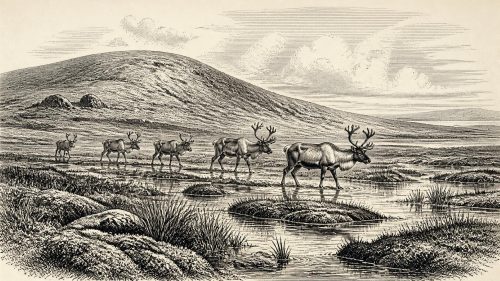
At 31,569 BCE, Ireland’s evidence belongs to a broad, climatically unstable Late Pleistocene interval, not a single year. Derryvree, County Fermanagh, preserves freshwater sediments between glacial tills, indicating an ice-free tundra-like wetland during later MIS 3. Castlepook Cave, County Cork, contains mammoth, reindeer, giant deer, bear and hyena remains, showing a diverse open-country fauna. A cut-like mark on a reindeer bone may indicate early human activity, but cannot demonstrate settlement. Approaching glacial maximum conditions, lower sea levels and uncertain routes shaped a changing landscape. Surviving sediments, bones and landforms reveal ecology and climate, but no political, cultural or social history.

Moss-Rich Mud at Derryvree
About 31,568 BCE, Ireland lay within the unstable Late Pleistocene, although evidence permits only broad chronological ranges. At Derryvree, Fermanagh, moss-rich freshwater deposits beneath later till record treeless, cold periglacial terrain, with sedges, shallow water and open vegetation. Southern caves, notably Castlepook, preserve Marine Isotope Stage 3 fauna including mammoth, giant deer, reindeer, hyaena and Arctic species, indicating intermittent connections beyond Ireland. Changing sea levels and ice margins shaped access routes. A cut-marked reindeer bone may indicate brief human activity, but no secure settlement evidence exists. Subsequent ice expansion likely destroyed earlier archaeology, leaving an environmental rather than social history.
BIRM-166 at Maguiresbridge
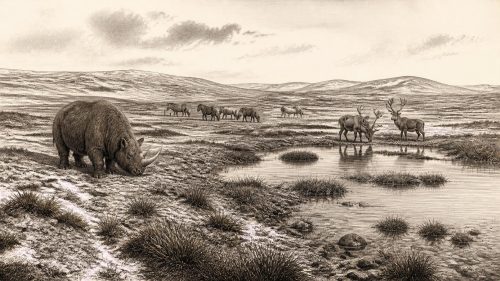
Around 31,567 BCE, Ireland cannot be described through yearly events, but through fragmentary environmental evidence. Derryvree, near Maguiresbridge, Fermanagh, preserves freshwater sediments dating broadly to this period, indicating ice-free, open, wet tundra with severe periglacial conditions. Ireland’s ice cover and coastlines were changing regionally as the British–Irish Ice Sheet developed and low sea levels altered connections with Britain. Castlepook Cave in Cork documents varied Pleistocene fauna, though its remains span long intervals and cannot form a single scene. No secure contemporary human settlement exists. A possibly butchered reindeer bone offers only provisional evidence of brief human activity during this era.
The Derryvree–Castlepook Interval
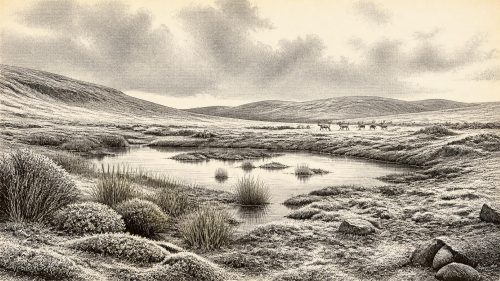
31,566 BCE is best understood as a broad late Pleistocene interval rather than a dated Irish event. Freshwater sediments at Derryvree, Fermanagh, show episodically ice-free, cold, treeless wetlands between glacial advances, while Castlepook Cave, Cork, preserves fauna including reindeer, mammoth, giant deer, bear, wolf, Arctic fox and hyaena. These records indicate a changing Atlantic landscape, with intermittent milder conditions and uncertain animal routes. A possibly cut-marked reindeer bone hints at Upper Palaeolithic human activity, but proves neither settlement nor society. Subsequently, the British–Irish Ice Sheet expanded, covering much of Ireland and obscuring this fragile Ice Age world over later millennia.
A Reindeer Bone at Doneraile
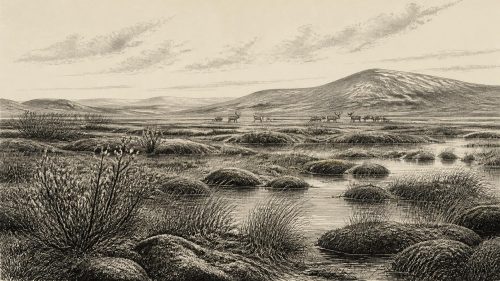
Around 31,565 BCE, Ireland’s record is environmental rather than historical, and cannot support calendar precision or claims of settlement. Derryvree, County Fermanagh, preserves a broadly dated MIS 3 interstadial deposit, indicating locally ice-free, periglacial tundra with freshwater wetlands, open vegetation and severe seasonal conditions. Castlepook Cave near Doneraile contains cold-stage fauna including reindeer, mammoth, giant deer, predators and lemmings, although deposits may combine separate episodes. A scored reindeer femur, perhaps 33,000 years old, may show stone-tool butchery and Ireland’s earliest human trace. It cannot establish a kill site, continuous occupation, settlement, society, travel routes or a single specific dated event.

Crocuta at Mammoth Cave
Around 31,564 BCE, Ireland lay in a cold, unstable Late Pleistocene interval of Marine Isotope Stage 3, before the Last Glacial Maximum. Dating is necessarily approximate: evidence indicates ice-free patches, not conditions across the entire island. Organic sediments beneath tills at Derryvree, County Fermanagh, preserve wet tundra vegetation, including sedges, mosses and dwarf willow. Castlepook Cave, County Cork, produced MIS 3 remains of mammoth, reindeer, giant deer, bears, wolves, Arctic foxes, lemmings and spotted hyaenas. Changing sea levels and ice permitted intermittent animal movement. A cut-marked reindeer femur may indicate human butchery, but cannot establish settlement or a permanent population.
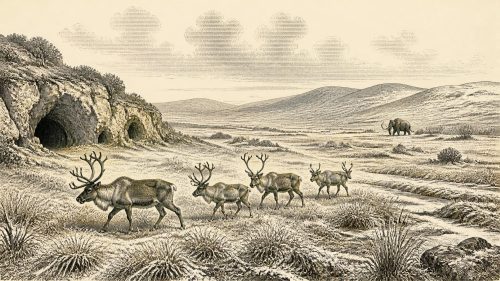
Cave Hyenas of Doneraile
Around 33,500 calibrated years before present, later Marine Isotope Stage 3 Ireland was a cold, changing, largely treeless landscape, not an unbroken glacier. Castlepook Cave near Doneraile, County Cork, preserves important but mixed animal deposits, including mammoth, giant deer, reindeer, brown bear and spotted hyena. These animals indicate productive open steppe-tundra and complex predator-scavenger activity. Revised radiocarbon dates place some fauna well before the Last Glacial Maximum. A marked reindeer femur may record stone-tool butchery about 31,000 BC, suggesting fleeting Upper Palaeolithic visitors. However, no associated settlement, hearth, tools or other proof establishes permanent human occupation, institutions or continuous habitation.
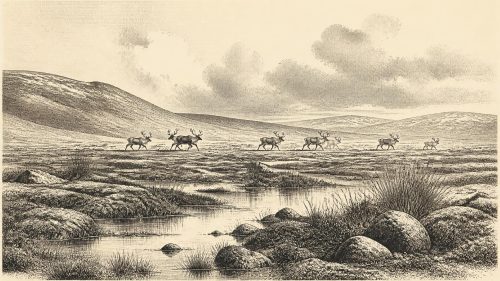
Crag Cave’s Interstadial Water
Around 31,562 BCE, Ireland was part of a climatically unstable Late Pleistocene landscape, not a documented historical year. Derryvree sediments in Fermanagh indicate cold, open tundra and freshwater wetlands during an ice-free or less-glaciated interval. Crag Cave speleothems in Kerry record episodic liquid water, showing warmer interstadials amid severe conditions. Southern cave faunas included reindeer, horse, mammoth, giant deer and hyaena, demonstrating habitats for herbivores and predators. A marked Castlepook reindeer bone may indicate human butchery, but lacks secure archaeological context and cannot prove settlement. Subsequent ice-sheet growth reshaped and buried landscapes, leaving a fragmentary record requiring cautious interpretation today.

Mammoth Cave’s Open Country
Around 31,561 BCE, Ireland was a cold, environmentally unstable Pleistocene landscape, increasingly affected by expanding ice but not wholly glaciated. Lower sea levels exposed or altered surrounding seas, allowing intermittent animal and potentially human movement. Fermanagh’s Derryvree deposits indicate open tundra-steppe with freshwater habitats and seasonal vegetation. Castlepook Cave in Cork preserves cold-adapted fauna, including mammoth, reindeer, bear, wolf and hyaena, demonstrating links with wider Ice Age Europe. A possibly butchered, approximately 33,000-year-old reindeer femur may represent Ireland’s earliest human activity, but lacks secure archaeological context. Later glaciation and rising seas destroyed evidence, precluding claims for permanent settlement or society.

Maguirebridge’s Ice-Sealed Pools
At the notional date of 31,560 BCE, Ireland lay within the climatically unstable MIS 3 phase of the Late Pleistocene, not a recoverable historical year. Derryvree, County Fermanagh, preserves freshwater silts between glacial tills, revealing tundra wetland vegetation during an ice-free interval. Crag Cave records intermittent milder conditions, while southern caves, especially Castlepook, contain MIS 3 fauna including reindeer, mammoth, giant deer and predators. A possible cut-marked reindeer bone suggests, but does not prove, early human activity. No settlement evidence exists. Expanding ice later erased much evidence, leaving fragmentary records of shifting habitats, fauna and climate during this broad period.

Castlepook’s Ancient Femur
Although 31,559 BCE cannot identify an Irish event, it falls within volatile Marine Isotope Stage 3, before the Last Glacial Maximum. Derryvree, County Fermanagh, preserves an ice-free interval dated broadly 36,900–31,700 calibrated years BP, revealing cold, treeless wetlands with mosses, sedges, herbs and pools. Castlepook Cave, County Cork, contains a mixed fauna including mammoth, reindeer, giant deer, predators and Arctic-adapted species, demonstrating intermittent ecological links with north-west Europe. A marked, dated reindeer femur may indicate stone-tool butchery and a brief human visit. However, no undisturbed settlement, hearth, tools or cultural evidence proves permanent occupation, migration routes, or an Irish society.
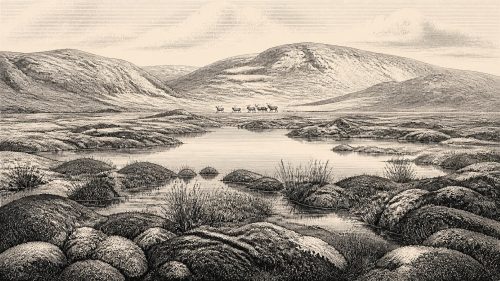
Derryvree’s Buried Poolscape
The modern label 31,558 BCE cannot identify a precise Irish event, but falls within a climatically variable late Ice Age interval. Sediments beneath Derryvree drumlin in County Fermanagh preserve freshwater silts between glacial tills, showing a locally ice-free, treeless tundra wetland later overridden by ice. Pollen, plants and insects indicate cold, open, waterlogged ground. Ireland’s ice sheet changed regionally before its later maximum, while cave fossils confirm large mammals, including reindeer and mammoth. A cut-marked Castlepook reindeer femur may indicate human carcass processing, but lacks secure context or associated occupation evidence. No evidence supports settlement, society, culture or migration routes.

Derryvree’s Treeless Muskeg
Around 31,557 BCE, Ireland lay within the unstable later Pleistocene climate of Marine Isotope Stage 3, not a documented historical era. At Derryvree, County Fermanagh, freshwater sediments between tills reveal a locally ice-free, treeless muskeg of mosses, sedges and cold-adapted plants during an interval between glacier advances. Castlepook Cave, County Cork, preserves evidence of diverse fauna, including mammoth, reindeer, giant deer, predators and scavengers, indicating open steppe-tundra habitats at different times. A possibly tool-marked reindeer femur may suggest brief human activity, but lacks associated archaeology. Environmental change, animal movements and uncertain human presence define this remote period in Irish prehistory.
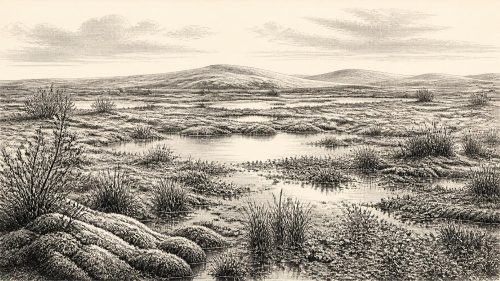
Water-Milfoil Beneath Maguiresbridge
31,556 BCE is best understood as part of Ireland’s climatically unstable Middle Midlandian, not a recorded year. At Derryvree, County Fermanagh, organic sediments dated broadly to this period preserve evidence of a cold, treeless tundra wetland between glacial advances, containing aquatic plants, mosses, insects and hardy herbs. Castlepook Cave, County Cork, preserves a complex, long-accumulated fauna including reindeer, mammoth, giant deer, bears and hyenas. A marked reindeer bone may indicate human butchery, but remains disputed and cannot prove settlement. Ireland’s surviving evidence reveals changing ice, water, vegetation and animal communities, while offering no secure account of peoples, institutions or events.

Bogbean Pools of Fermanagh
31,555 BCE is a modern label within a broad Late Pleistocene range, not a recoverable Irish historical year. At Derryvree, County Fermanagh, freshwater silts between glacial tills indicate a MIS 3 ice-free interval followed by renewed glaciation. Mosses, sedges, bogbean, mountain avens and insects reveal a cold, treeless wetland-tundra mosaic. Castlepook Cave, County Cork, preserves time-mixed remains of mammoth, reindeer, hyaena and other fauna, demonstrating harsh but habitable environments. A possibly cut-marked reindeer bone suggests brief Upper Palaeolithic human activity, though not settlement. Sparse, uncertain evidence excludes claims about communities, politics or economy, while showing dynamic connections with north-west Europe.
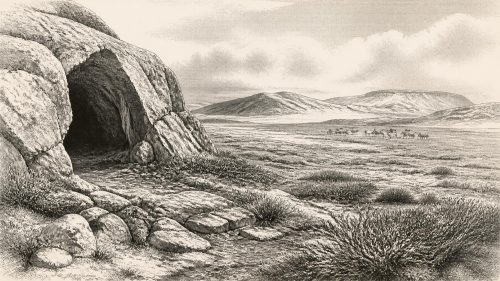
Castlepook’s Reindeer Femur
Around 31,554 BCE, Ireland lay within the unstable cold conditions of Marine Isotope Stage 3, before the Last Glacial Maximum. Dates from this period are calibrated scientific ranges, not recoverable calendar years. Derryvree’s organic silts, between glacial tills, preserve evidence of treeless, freshwater wetlands supporting cold-adapted plants, insects and mosses. Castlepook Cave contains fauna including reindeer, mammoth, giant deer, hyaena, Arctic fox and lemmings, although its mixed deposits cannot represent one moment. A marked reindeer femur may indicate human butchery and a brief Upper Palaeolithic visit, but cannot prove settlement. Later ice damaged evidence, leaving an environmental history of Ireland.
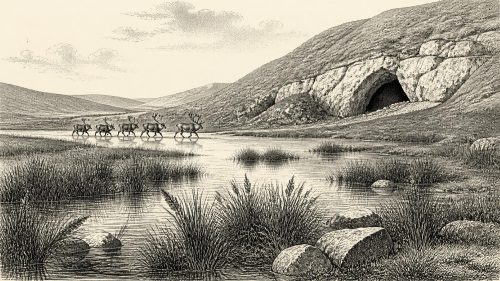
Awbeg’s Vanishing Herds
Around 33,500 years before present, Ireland lay within climatically unstable Marine Isotope Stage 3, before maximum glaciation. Evidence from Fermanagh indicates locally ice-free, treeless wetlands, while southern caves record cold-stage fauna including reindeer, mammoth, giant deer, bears, wolves and hyaenas. Castlepook Cave in north Cork preserves important but poorly contextualised bones. A marked reindeer femur may indicate Upper Palaeolithic human handling, but cannot prove hunting, settlement or repeated occupation. No securely identified Irish camps, tools, burials or social institutions date to this period. Advancing ice later transformed habitats, eliminated fauna and obscured evidence, leaving environmental history firmer than human history.

Derryvree’s Moss-and-Sedge Flora
Around 31,552 BCE, Ireland has no recoverable yearly history; evidence instead describes a fluctuating Late Pleistocene environment. At Derryvree, County Fermanagh, freshwater sediments between glacial tills preserve a treeless tundra wetland of sedges, grasses, mosses, bogbean, juniper and sparse herbs, formed during an interval between ice advances. Castlepook Cave, County Cork, contains MIS 3 remains of mammoth, reindeer and other open-country, cold-adapted animals, although its deposits are mixed. A marked reindeer femur may indicate Upper Palaeolithic butchery, but cannot prove occupation. The evidence shows changing ice, wetlands and fauna, not settled communities, politics, farming or identifiable peoples for this date.

Juniper Below the Drumlin
31,551 BCE represents a broad later Middle Midlandian, Marine Isotope Stage 3 interval, rather than a dateable Irish year. At Derryvree, County Fermanagh, freshwater organic sediments between glacial tills indicate a locally ice-free cold phase, broadly dated 36,900–31,700 calibrated years BP. Pollen and plant remains describe treeless, wet, frost-affected terrain with grasses, sedges, juniper and arctic-alpine flora. Southern cave faunas include reindeer, mammoth, giant deer, bear, fox and hyaena, but their associations remain uncertain. A possibly cut-marked reindeer femur from Castlepook suggests a provisional early human visit, not settlement. Glacial erosion, inundation and poor preservation limit reconstruction of Ice-Age Ireland.

Derryvree Intertill Wetland
Around 33,500 years before AD 1950, Derryvree in County Fermanagh preserved evidence of a locally ice-free, cold periglacial wetland between glacial advances. Pollen, plants and invertebrates indicate open tundra-like vegetation, shallow freshwater and severe seasonal conditions during unstable Marine Isotope Stage 3. Castlepook Cave in County Cork records diverse Pleistocene mammals, including reindeer, mammoth, giant deer and predators, although its deposits are chronologically mixed. A debated cut-marked reindeer bone may indicate transient Upper Palaeolithic visitors, but no secure settlement or population is known. These sites reveal mobile fauna and fragile ecosystems before later ice-sheet expansion, not a documented Irish society.
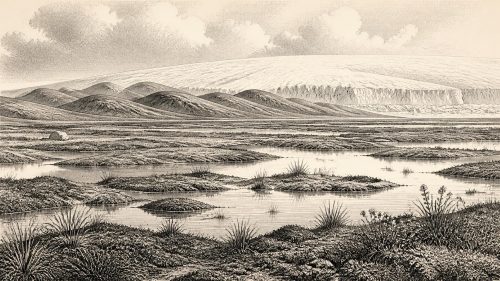
The North Channel Advance
At 31,549 BCE, Ireland had no recorded human history and no secure evidence of occupation. The island formed part of a changing Late Pleistocene glacial environment, preceding the Last Glacial Maximum. Ice within the growing British–Irish Ice Sheet advanced unevenly, with Scottish and Irish centres interacting around the North Channel. At Derryvree, County Fermanagh, freshwater sediments between till layers preserve a temporary ice-free or marginal landscape of wet, treeless tundra, sedges, mosses and cold-adapted plants. Cave remains suggest reindeer, mammoth and hyena occurred during broadly comparable intervals. Glacial processes reshaped drainage, soils, coasts and landforms, establishing conditions inherited by settlers.

Castlepook’s Mammoth Country
31,548 BCE is a modern label within a broad, uncertain Late Ice Age horizon, not a recoverable Irish year. Derryvree, County Fermanagh, preserves freshwater sediments between glacial tills, indicating a temporary ice-free, treeless tundra wetland during Marine Isotope Stage 3. Castlepook Cave, County Cork, contains rich but disturbed animal remains, including mammoth, reindeer, giant deer, bear and hyaena, showing intermittent connections with north-western European fauna. A marked reindeer bone may indicate Upper Palaeolithic butchery, but cannot prove settlement. Ireland remained cold, environmentally variable and sparsely evidenced before major ice expansion later reshaped its landscapes and obscured earlier traces from view.

The Derryvree Drumlin Cut
31,547 BCE is a modern chronological label, not a recoverable Irish event. Derryvree, County Fermanagh, preserves freshwater sediments between glacial tills, dated broadly to late Marine Isotope Stage 3, indicating locally ice-free, cold, open wetland with tundra vegetation, insects and seasonal hardship. Ireland’s changing coasts and ice margins allowed cold-adapted mammals to reach the region, though routes remain uncertain. Castlepook Cave, County Cork, records diverse fauna, including mammoth, reindeer, giant deer and predators, accumulated over extended periods. A cut-marked, dated reindeer femur may indicate brief human carcass processing, but lacks supporting occupation evidence. Renewed glaciation increasingly constrained habitats and movement.

Beneath Fermanagh’s Drumlin
Around 31,546 BCE, a modern label rather than a recoverable year, Ireland experienced the variable cold conditions of Marine Isotope Stage 3. At Derryvree, County Fermanagh, freshwater silts between glacial tills preserve evidence of treeless, wet tundra-like habitats, demonstrating intervals of life between ice advances. Lower sea levels connected Ireland more closely to wider European landscapes, though routes remained unstable. Castlepook Cave, County Cork, contains cold-stage fauna including mammoth, reindeer, predators and small mammals. A possibly stone-cut reindeer bone may indicate Upper Palaeolithic visitors, but lacks corroborating settlement evidence. Ireland’s record remains chiefly ecological, geological and profoundly uncertain in character.

Maguiresbridge’s Tundra Pools
Around the interval containing 31,545 BCE, Ireland experienced unstable Late Pleistocene conditions during Marine Isotope Stage 3. At Derryvree near Maguiresbridge, inter-till freshwater sediments dated broadly to 36,900–31,700 calibrated years BP preserve evidence of treeless, tundra-like wetlands with sedges, mosses, herbs and shallow pools. Castlepook Cave in Cork records changing cold-adapted fauna, including reindeer, mammoth, lemmings and hyaenas. A possibly cut-marked reindeer femur suggests, but does not prove, human activity. No secure settlements, tools, hearths or social evidence survive. Glacial expansion, erosion and sea-level change obscured earlier landscapes, leaving fragments that demonstrate environmental possibilities rather than a recoverable annual history.

Castlepook’s MIS 3 Menagerie
Around 31,544 BCE, Ireland was in Marine Isotope Stage 3, entering a colder, increasingly glaciated Pleistocene environment rather than experiencing a datable historical event. Derryvree, County Fermanagh, preserves evidence of tundra wetland vegetation, pools, mosses and cold-adapted plants beneath later glacial deposits. Castlepook Cave, County Cork, yielded mammoth, reindeer, giant deer, hyena and other cold-climate fauna, although mixed deposits prevent assumptions that species coexisted. A cut-marked reindeer bone may indicate early human carcass processing, but no secure settlement evidence exists. Ice, changing seas and erosion have obscured much evidence, requiring cautious distinction between demonstrated facts and inference about its past.

The Doneraile Reindeer Femur
31,543 BCE is a modern chronological marker, not a recorded Irish year; evidence consists of uncertain radiocarbon ranges, deposits and animal bones. Before the Last Glacial Maximum, parts of Ireland supported wetlands, sparse treeless vegetation and cold-adapted fauna, although landscapes changed rapidly and later ice erased much evidence. Derryvree deposits demonstrate freshwater conditions, while Castlepook Cave near Doneraile preserves remains of reindeer, mammoth, giant deer and carnivores from different periods. A reindeer femur bearing a possible butchery cut mark suggests brief Upper Palaeolithic human presence around 33,000 years ago. It proves neither settlement nor society; dating and excavation are required.

Birm-166’s Wide Horizon
About 31,542 BCE, Ireland lay within the fluctuating later Marine Isotope Stage 3, not a recordable historical year. Derryvree, County Fermanagh, provides key evidence: organic freshwater sediments dated broadly to 36,900–31,700 calibrated years BP lie between glacial tills, showing a locally ice-free, cold, treeless wetland with sedges, mosses and hardy plants. Southern cave remains demonstrate intermittent access by fauna including reindeer, mammoth, giant deer and predators, although assemblages are not single communities. A possibly cut-marked reindeer bone suggests transient human activity, but settlement remains unproven. Lower sea levels aided movement before later glaciation buried or destroyed much earlier physical evidence.

Crag Cave’s Liquid Water
Around 31,541 BCE, Ireland cannot be described through a precise historical year, but archaeological evidence indicates fluctuating Late Pleistocene conditions. Derryvree, County Fermanagh, preserves an ice-free freshwater wetland beneath tills, with treeless tundra vegetation. Castlepook Cave, County Cork, yielded cold-adapted fauna including mammoth, reindeer and hyaena, demonstrating intermittent ecological links with Europe, though its dating and deposition are complex. A possibly cut-marked reindeer bone suggests transient human contact but not settlement. Crag Cave calcite shows episodes of liquid water and unfrozen ground. Expanding ice later transformed and obscured these varied, vulnerable landscapes during the approach to the Last Glacial Maximum.
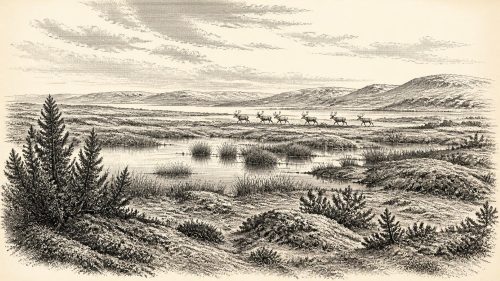
Derryvree’s Periglacial Ledger
31,540 BCE denotes a broad late Pleistocene interval, rather than a date recoverable in Irish archaeology. During Marine Isotope Stage 3, Ireland experienced unstable climatic oscillations, with changing ice margins, sea levels and habitats. Derryvree, County Fermanagh, preserves freshwater deposits dated broadly to 36,900–31,700 cal BP, showing locally ice-free, wet, treeless periglacial tundra. Castlepook Cave, County Cork, contains diverse fauna, including mammoth, reindeer, horse, giant deer and spotted hyena, demonstrating episodic animal dispersal. Human presence remains unproven: a possibly cut-marked reindeer bone suggests butchery, not settlement. Evidence reveals environmental history, while political, cultural and religious claims remain unsupported by evidence.

Derryvree’s Waterlogged Tundra
Although 31,539 BCE is a modern conversion rather than a precise Irish date, Derryvree, County Fermanagh, illuminates later Marine Isotope Stage 3. Organic freshwater sediments, dated broadly to 36,900–31,700 calibrated BP, formed between glacial advances, demonstrating local ice-free conditions. Their plants, pollen and insects depict a cold, treeless, waterlogged tundra of sedges, grasses, mosses, juniper and herbs. Ireland's environments and ice margins varied regionally before the Last Glacial Maximum. Castlepook Cave preserves diverse cold-stage fauna, including mammoth, reindeer and hyena, plus a possible butchery-marked reindeer bone. This suggests brief human visits, not established settlement, amid later glacial destruction of evidence.
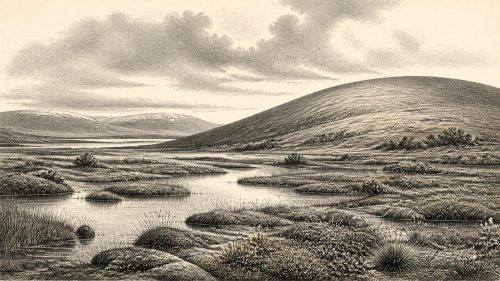
Derryvree’s Sedge Archive
The retrospective date 31,538 BCE denotes a broad Marine Isotope Stage 3 interval, not a documented Irish year. At Derryvree, County Fermanagh, freshwater organic silts between glacial tills, dated roughly 36,900–31,700 cal BP, preserve a treeless periglacial mosaic of sedges, mosses, herbs and shallow water during an ice-free episode. Castlepook Cave, County Cork, contains Pleistocene fauna, including mammoth, reindeer, giant deer and predators, accumulated over long periods. A marked reindeer femur may indicate stone-tool butchery by people, but cannot prove settlement. Ireland was volatile and intermittently habitable before later extensive British–Irish Ice Sheet expansion, while evidence remains fragmentary and uncertain.

Castlepook’s Stone Scar
At 31,537 BCE, Ireland had no recorded history; evidence instead concerns fluctuating Upper Palaeolithic climates, landscapes and fauna. Derryvree sediments indicate an ice-free northern wetland with tundra vegetation and cold freshwater pools, although regional ice likely expanded unevenly. Lower sea levels did not guarantee a land bridge from Britain. Castlepook Cave preserves time-averaged remains of mammoth, reindeer, hyaena and other cold-adapted animals, whose dates require cautious interpretation. A deeply incised reindeer femur may record stone-tool butchery and Ireland’s earliest human activity, but lacks secure context. It suggests transient foragers, not settlement, amid an ecologically active landscape increasingly threatened by glaciation.
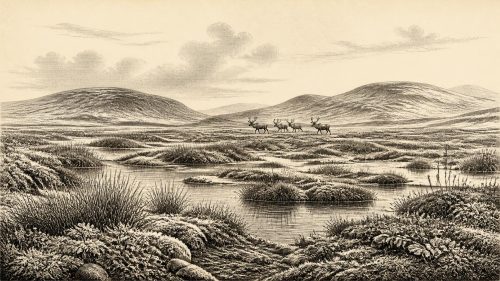
Fermanagh’s Interstadial Pool
31,536 BCE is a modern label within the climatically unstable Late Pleistocene, rather than a recoverable Irish historical year. At Derryvree, County Fermanagh, organic freshwater sediments between glacial tills indicate an ice-free tundra interval, with pools, sedges, mosses, bogbean, water-milfoil and mountain avens. Supporting but regionally variable evidence records changing ice margins, marine conditions and episodic warming. Southern cave fauna, including mammoth and reindeer, demonstrates cold-adapted animal colonisation, though deposits are mixed. A cut-marked Castlepook reindeer bone may indicate brief Upper Palaeolithic human activity, not settlement. Subsequent ice expansion obscured this intermittently habitable glacial-edge landscape in exposed northern Irish regions.

Maguirebridge’s Buried Waters
Around 31,535 BCE, Ireland cannot be described through a precise event or recognised calendar date, but environmental evidence illuminates Late Pleistocene conditions. At Derryvree near Maguiresbridge, freshwater organic sediments between glacial tills show an ice-free interval, dated broadly to 36,900–31,700 calibrated years BP. They indicate cold, treeless, wet tundra with grasses, sedges, mosses, mountain avens and bogbean. Ice-sheet advance and retreat created varied regional environments. Castlepook Cave preserves remains of mammoth, reindeer and other cold-adapted fauna. A possibly cut-marked reindeer femur suggests, but cannot prove, an early human visit. No secure evidence supports settlement, culture, politics or routes into Ireland.
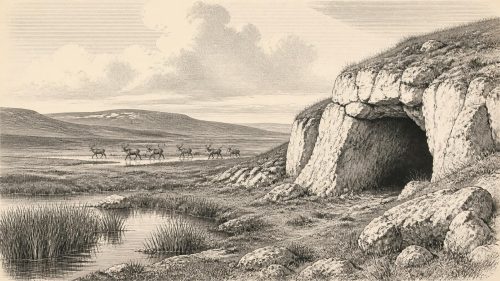
Castlepook’s Cutmark
31,534 BCE is not a recoverable Irish calendar year, but lies within Marine Isotope Stage 3, an unstable Pleistocene period. Lower sea levels altered connections with Britain and Europe, while ice-free areas supported open steppe-tundra, wetlands and cold-adapted plants. Derryvree deposits demonstrate such environments. Castlepook Cave preserves mixed animal remains, including mammoth, reindeer, giant deer and hyena, accumulated over millennia rather than as one community. A cutmarked reindeer femur c. 31,000 BCE may provide Ireland’s earliest evidence of human carcass processing. It cannot prove hunting, settlement or colonisation. Glaciation, flooding and early excavation left fragmentary evidence of potential visits there.
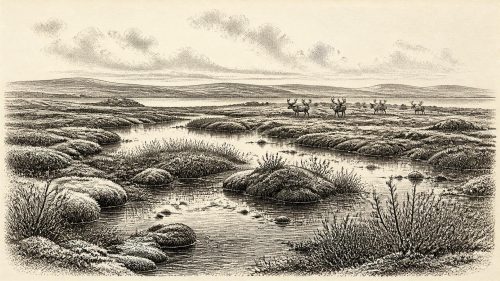
Maguirebridge’s Arctic Reedbed
31,533 BCE is a notional date within a broad, uncertain Late Pleistocene range rather than an identifiable Irish event. At Derryvree near Maguiresbridge, Fermanagh, organic freshwater sediments between glacial tills indicate a temporary ice-free, treeless wetland of sedges, mosses, pools and periglacial ground. Castlepook Cave, Cork, preserves evidence of mammoth, reindeer, giant deer, predators and other cold-stage fauna. A possibly butchered reindeer bone suggests early human visits, but remains unconfirmed and cannot establish settlement or society. No evidence supports agriculture, villages, polities or continuous population. Climatic instability and approaching ice-sheet expansion shaped and later erased much of Ireland’s landscape record.

Derryvree’s Arctic Pondlife
Modern dating cannot identify an Irish year in 31,532 BCE; the period belongs broadly to climatically unstable Marine Isotope Stage 3. At Derryvree, Fermanagh, freshwater organic sediments between glacial tills reveal temporary, open periglacial wetlands supporting mosses, sedges, pollen and cold-adapted insects. Other sites confirm changing conditions. Castlepook Cave preserves mammals accumulated over millennia, including mammoth, reindeer, giant deer, bears, hyaenas and later cold-stage fauna, but not a contemporaneous community. A marked reindeer bone may suggest Upper Palaeolithic butchery, yet cannot prove settlement. No politics, culture or continuous occupation is evidenced; Ireland was a shifting, intermittently habitable Ice Age landscape.
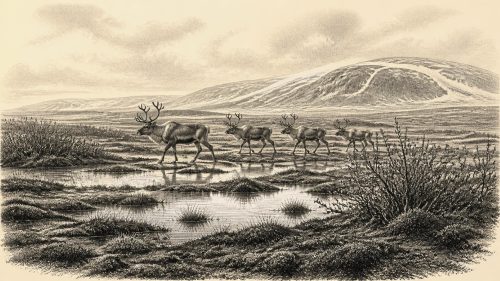
A Cutmark in North Cork
Thirty-one-thousand five-hundred-and-thirty-one BCE is a modern label within MIS 3, not a date for a recorded Irish event. Derryvree sediments in Fermanagh indicate a treeless, cold, wetland environment during a broad ice-free interval before later glaciation, while other deposits demonstrate regional climatic variation. Cave fauna, especially at Castlepook, shows that reindeer, mammoth, giant deer, hyaena and other mammals occupied Ireland before the Last Glacial Maximum. A reindeer femur possibly bearing a stone-tool cut mark may indicate human contact around 31,000 BC, but lacks context. No evidence supports settlement, institutions or continuous population; future research may clarify this Ice Age landscape.
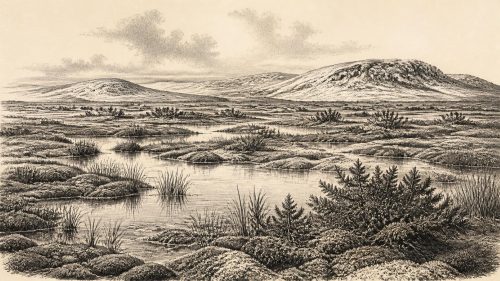
Menyanthes Under Derryvree
Approximately 31,530 BCE falls within Ireland’s climatically unstable Late Pleistocene, before the Last Glacial Maximum. Derryvree in Fermanagh preserves freshwater sediments between glacial tills, revealing a locally ice-free, periglacial wetland of sedges, mosses, bogbean and open tundra vegetation. Castlepook Cave in Cork contains disturbed remains of mammoth, reindeer, giant deer, bears, wolves and other cold-adapted animals, demonstrating intermittent connections with Eurasia. A possibly cut-marked reindeer bone may indicate human handling, but no confirmed occupation exists. Fragmentary evidence instead records changing environments, seasonal ecosystems and uncertain human presence across an unstable Atlantic frontier prior to more extensive ice-sheet growth in Ireland.

A Reindeer Bone from Doneraile
Around 31,529 BCE, Ireland was a cold Late Pleistocene landscape rather than a recognisable historical society. Calibrated dating places Derryvree’s freshwater deposits, preserved beneath glacial tills in County Fermanagh, within the broader period; their remains indicate open, mostly treeless wetlands with pools, sedges and cold-adapted plants. Castlepook Cave in County Cork yielded mammoth, reindeer, giant deer, predators and lemmings, showing episodic habitable open country before maximum glaciation. An incised reindeer femur may record butchery by Upper Palaeolithic people, but cannot prove settlement. No evidence supports claims of communities, institutions, farming, ritual, or human occupation. Later ice expansion transformed the island.

A Line on Reindeer Bone
Around 31,528 BCE, Ireland lay within the unstable cold conditions of Marine Isotope Stage 3, not a datable historical year. Castlepook Cave, County Cork, yielded diverse Pleistocene fauna, including reindeer, mammoth, giant deer, hyena and lemmings. A reindeer femur, radiocarbon dated to about 33,000 years ago, bears a mark interpreted as stone-tool butchery, potentially Ireland’s earliest human evidence. This does not establish settlement, as cave deposits are disturbed and the cut’s origin remains debated. Open tundra-steppe, wetlands and changing ice margins supported intermittent animal and possible human movement. Advancing glaciation later obscured evidence, leaving fragile traces of Upper Palaeolithic visits.
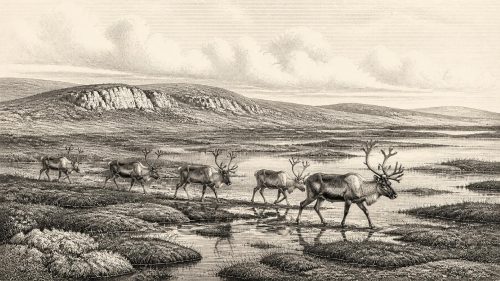
Awbeg Valley Bone Trail
About 31,527 BCE, Ireland lay within the climatically unstable later Marine Isotope Stage 3, not a precisely datable historical year. Organic silts at Derryvree, County Fermanagh, indicate locally habitable, treeless tundra wetlands between glacial advances. Castlepook Cave in County Cork preserves remains of reindeer, mammoth, bears, hyaenas, wolves, Arctic foxes and other cold-adapted fauna, although its mixed bone deposits require caution. A marked reindeer femur may record stone-tool butchery and thus an exceptionally early human visit, but lacks corroborating tools or occupation evidence. Later ice expansion obscured landscapes. Ireland was intermittently environmentally viable, while any contemporary human presence remains unproven.
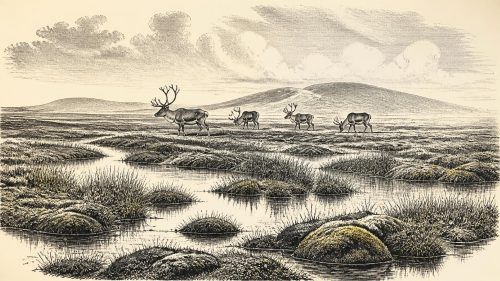
Derryvree Beneath Two Tills
31,526 BCE is an imprecise modern label for a Late Glacial interval in Marine Isotope Stage 3. At Derryvree, County Fermanagh, freshwater sediments between two tills, dated broadly to 36,900–31,700 calibrated BP, preserve evidence of cold, treeless tundra wetlands during an ice-free episode. Comparable Castlepook Cave remains in County Cork indicate diverse fauna, including mammoth, reindeer and predators. A marked reindeer bone may suggest brief Upper Palaeolithic human activity, but does not prove settlement. No polities, culture, trade or permanent occupation can be identified. Lower sea levels altered routes, while later ice-sheet expansion buried or destroyed much evidence across Ireland.
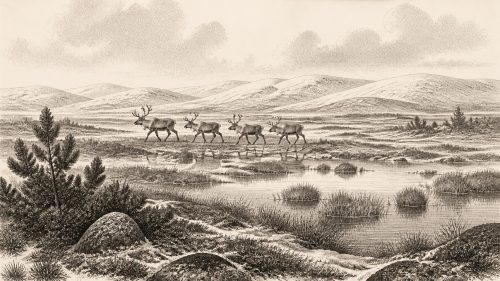
Mammoth Cave’s Tundra Fauna
Although 31,525 BCE is only a modern chronological label, evidence from Ireland’s later Marine Isotope Stage 3 illuminates conditions around this broad period. Derryvree, County Fermanagh, preserves a freshwater tundra wetland between glacial tills, demonstrating temporarily ice-free terrain before later ice advance. Plant and insect remains indicate cold, open, waterlogged landscapes. Castlepook Cave, County Cork, yielded mammoth, reindeer, giant deer, bears, wolves, arctic foxes, lemmings and hyenas, reflecting changing tundra-like habitats. A cut-marked reindeer femur may indicate Upper Palaeolithic human activity, but cannot prove settlement. Evidence supports episodic ecological opportunity, not established communities, institutions or precise events within the island.
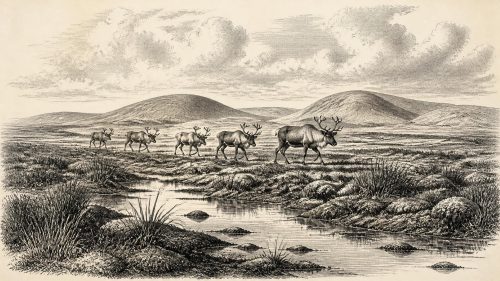
Derryvree’s Freshwater Interlude
31,524 BCE is an imprecise modern label for a Late Pleistocene MIS 3 interval, not a recoverable Irish event. Ireland’s sparse evidence, often disturbed by later glaciation, nevertheless indicates fluctuating cold environments before the Last Glacial Maximum. At Derryvree, Fermanagh, freshwater sediments between tills preserve wetland plants, including mountain avens and bogbean, showing locally ice-free, open ground. Castlepook Cave, Cork, contains remains of reindeer, mammoth, predators and other cold-adapted fauna, accumulated across lengthy periods. A cut-marked reindeer bone may indicate fleeting Upper Palaeolithic human activity, but cannot prove settlement. The period is chiefly reconstructed through fragmented environmental and faunal evidence.

BIRM-166’s Frozen Marsh
Labelled 31,523 BCE, this poorly dateable interval belongs to Late Pleistocene Ireland, before maximum expansion of the British–Irish Ice Sheet. BIRM-166, from freshwater deposits buried beneath a Fermanagh drumlin, records a treeless periglacial mosaic of marshes, sedges, mosses, aquatic plants and limited dwarf shrubs. It demonstrates locally varied, seasonally productive habitats rather than uniform ice or grassland. Castlepook Cave in Cork preserves MIS 3 fauna including reindeer, mammoth, giant deer, bear and hyaena, though its mixed deposits cannot date coexisting animals. A possibly butchered reindeer bone suggests human visitation, but no secure Palaeolithic settlement evidence exists. Later ice concealed evidence.

Maguiresbridge Plant Bed
31,522 BCE is a modern label within the climatically unstable Late Pleistocene, not a datable Irish event. At Derryvree near Maguiresbridge, Fermanagh, organic sediments between glacial tills indicate a cold, ice-free interval, dated broadly to 34,950–29,750 BCE. Pollen and insects reveal treeless, wet tundra or muskeg. Castlepook Cave in Cork preserves MIS 3 fauna, including reindeer, mammoth, giant deer, bears and hyenas, although its mixed deposits cannot prove coexistence. A scored reindeer femur may record stone-tool butchery, suggesting fleeting Upper Palaeolithic human presence. No associated settlement evidence exists; Ireland remained a fragmented, changing landscape before the later major ice-sheet expansion.
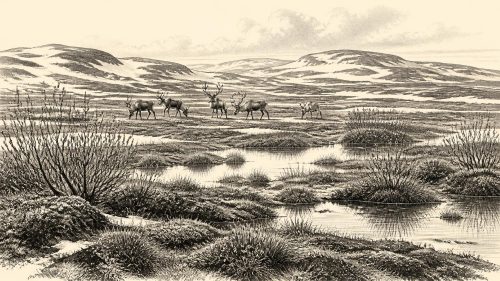
Derryvree Organic Horizon
31,521 BCE is an imprecise modern label within Marine Isotope Stage 3, not a datable Irish event. At Derryvree, County Fermanagh, freshwater organic silts between glacial tills, dated broadly to 36,900–31,700 calibrated years BP, show an earlier ice-free interval before renewed glaciation. Plants indicate a cold, treeless wetland of mosses, sedges, dwarf shrubs and freshwater pools. Cave fauna demonstrate that parts of Ireland supported diverse cold-adapted animals, though records are uneven. No secure human settlement exists. A possibly cut-marked reindeer bone suggests transient Upper Palaeolithic visitors, but remains inconclusive. Ireland experienced shifting ice margins, open habitats and changing land connections.

Derryvree’s Rosy Saxifrage
About 31,520 BCE, Ireland cannot be described through dated events, but through the volatile Late Pleistocene environment of Marine Isotope Stage 3. At Derryvree, County Fermanagh, freshwater sediments between glacial tills record an ice-free interval, broadly dated to 34,950–29,750 BCE. Mosses, sedges, aquatic plants, mountain avens, bogbean and rosy saxifrage indicate cold, wet tundra-like ground, not temperate forest. Climate fluctuated sharply, with ice advances later sealing the deposits. Southern cave fauna confirms intermittent habitats for cold-adapted animals. A marked reindeer bone may suggest human carcass processing, but no secure evidence establishes settlement, society or sustained occupation during this glacial interval.
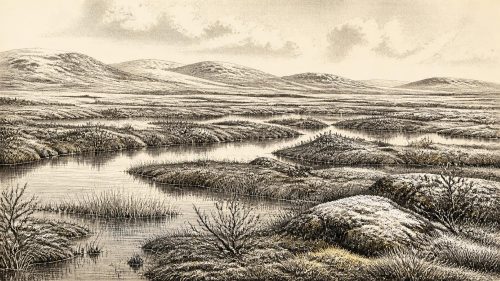
Derryvree’s Frozen Waterline
At the notional date of 31,519 BCE, Ireland’s history can be reconstructed only through environmental ranges, not annual events. Freshwater sediments at Derryvree, County Fermanagh, dated roughly 36,900–31,700 calibrated BP, show that this locality was temporarily ice-free, supporting tundra vegetation, shallow water and severe periglacial conditions. Greenagho and Crag Cave confirm regional climatic variability before the Last Glacial Maximum. Cave remains indicate a diverse cold-adapted fauna, but dating and depositional uncertainties prevent a precise contemporary census. No secure evidence establishes human residence, society or activity. Surviving evidence records shifting ice, wetlands, plants and animals rather than political or cultural history.

Derryvree’s Wind-Scoured Pools
Around 31,518 BCE, Ireland cannot be described through annual historical events, but environmental evidence illuminates a broad Late Pleistocene interval. The Derryvree deposit in County Fermanagh, preserved beneath later glacial till, records cold, open periglacial wetlands with pools, sedges, mosses, grasses and sparse low vegetation. Castlepook Cave in County Cork yielded mammals including mammoth, reindeer, giant deer, hyaena, wolves and lemmings, indicating shifting cold-stage habitats. A marked reindeer bone may represent Ireland’s earliest human activity, though evidence remains inconclusive. No political or social history is recoverable. Increasing glaciation later buried and disturbed these fragile traces across the island's varied landscapes.
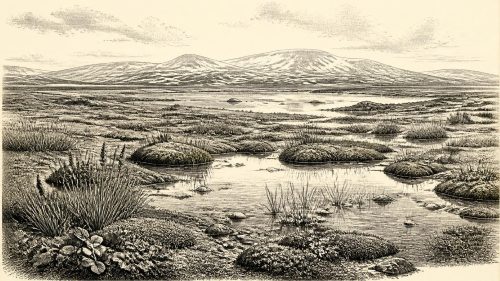
Derryvree’s Tundra Mosses
At the notional date of 31,517 BCE, Ireland cannot be described through annual events or societies, but through uncertain environmental evidence. Derryvree, County Fermanagh, preserves freshwater organic sediments dated broadly to 36,900–31,700 cal BP, showing an ice-free, periglacial tundra of mosses, wet ground and shallow water before later glaciation. MIS 3 climates fluctuated sharply, with ice conditions uncertain; Crag Cave confirms milder conditions. Castlepook Cave records cold-stage animals, though its mixed deposits require caution. A cut-marked reindeer bone may indicate human activity, not settlement. No institutions or securely dated habitation are known; plants, ice and fauna provide the firmest record.

Doneraile’s Cutmarked Femur
Around 31,516 BCE, Ireland was an unstable Late Pleistocene landscape, shaped by fluctuating ice, low sea levels and changing ecological connections. Derryvree sediments in Fermanagh record an ice-free interval with freshwater wetlands, tundra vegetation and insects, later buried beneath glacier deposits. Castlepook Cave in County Cork produced remains of reindeer, mammoth, giant deer, predators and other cold-adapted animals, though bones represent episodes spanning millennia. A cutmarked reindeer femur may indicate Upper Palaeolithic butchery, but disturbed context and absent associated artefacts make human presence provisional. Evidence supports temporary habitable environments, not settled communities, political history or continuous occupation on the island.

Castlepook’s Reindeer Notch
31,515 BCE is a modern, misleadingly precise label for a fluctuating Marine Isotope Stage 3 environment rather than a recordable Irish year. Castlepook Cave, north County Cork, preserves disturbed deposits containing mammoth, reindeer, giant deer, hyaena, bear, wolf and cold-adapted species, demonstrating a diverse Pleistocene fauna amid shifting open habitats and variable ice. Radiocarbon results require cautious calibration, and revised dating places elements of the fauna before the Last Glacial Maximum. A notched reindeer femur may indicate stone-tool butchery and a human visit, but cannot prove settlement. The evidence supports ecological history, not claims of communities, routes, culture or events.
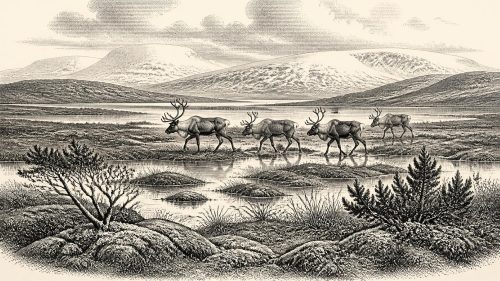
Doneraile’s Ice-Age Corridor
31,514 BCE is a modern label within Ireland’s unstable MIS 3 Late Pleistocene, not a recoverable historical year. Derryvree, County Fermanagh, preserves freshwater sediments dated broadly to this period, showing cold, open, locally ice-free wetlands with tundra vegetation. The major British–Irish Ice Sheet expansion followed later, subsequently erasing much evidence. Castlepook Cave, County Cork, contains time-mixed remains of mammoth, reindeer, giant deer, hyaena and other cold-stage fauna, demonstrating ecological connections. A marked reindeer femur may indicate Upper Palaeolithic butchery, but cannot establish settlement. Ireland was a changing glacial-edge environment; early human presence remains possible yet unproven at the notional date.

Derryvree’s Mountain-Avens Wetland
Around 31,513 BCE, Ireland has no recoverable annual history, only sparse Late Pleistocene evidence from climatically unstable Marine Isotope Stage 3. At Derryvree, County Fermanagh, organic sediments trapped between glacial tills show an ice-free, cold freshwater wetland supporting tundra vegetation, insects and seasonal pools before renewed glaciation. Castlepook Cave, County Cork, preserves mixed remains of mammoth, giant deer, reindeer, bears and hyenas, demonstrating connections with wider European fauna. A cut-marked reindeer femur may indicate early human butchery, but proves neither settlement nor population. Later glaciation destroyed much evidence, leaving a complex, changing landscape and major uncertainties about people and environments.

Cork’s Reindeer Butchery
The label 31,512 BCE gives a useful point of orientation, but it cannot describe a recoverable Irish calendar year. For this depth of time, archaeologists work with radiocarbon determinations, stratigraphic sequences and calibrated ranges, each carrying margins of error. In conventional conversion, this numbered year falls roughly 33,462 years before AD 1950, within the later part of Marine Isotope Stage 3 (MIS 3), a fluctuating cold interval before the Last Glacial Maximum. The responsible question is therefore not what happened in Ireland in that exact year, but what the surviving evidence can tell us about the island during the broader period around 35,000–30,000 calibrated years ago.

Derryvree’s Trifoliate Pools
Thirty-one thousand five hundred and eleven BCE is not a recoverable Irish year but falls within a later Pleistocene interval of unstable climate. At Derryvree, Fermanagh, freshwater silts enclosed between tills record an ice-free or locally ice-free tundra landscape of pools, mosses, sedges, plants and insects, later sealed by renewed glaciation. Radiocarbon dating provides only a broad calibrated range, not a precise moment. Castlepook Cave, Cork, preserves cold-climate animal remains, including reindeer and mammoth. A cut-marked reindeer femur may indicate early human carcass processing, but cannot prove settlement. Glacial destruction and evidence preclude conclusions about Irish society, culture or occupation.

Castlepook’s Solitary Incision
31,510 BCE is a modern label for an imprecisely dated Late Pleistocene interval, rather than a recoverable Irish event. During Marine Isotope Stage 3, Ireland experienced severe, fluctuating cold before the later maximum of the Irish Ice Sheet; glaciers and postglacial seas destroyed or concealed much evidence. Derryvree, County Fermanagh, preserves a cold, treeless wetland ecosystem dating broadly to this period. Castlepook Cave, County Cork, yielded fauna including reindeer and a femur with a possible stone-tool incision. This may indicate Upper Palaeolithic human activity, but cannot prove settlement, hunting, or population continuity. No political, cultural or religious history is recoverable.

Bogbean Below the Drumlin
About 31,509 BCE is an archaeological horizon, not a recorded Irish date. At Derryvree, County Fermanagh, organic silts beneath glacial till, broadly dated to 36,900–31,700 calibrated BP, preserve an ice-free periglacial wetland of sedges, grasses, mosses, juniper, dwarf willow and bogbean. Castlepook Cave, County Cork, documents a diverse Marine Isotope Stage 3 fauna, including reindeer, mammoth, giant deer, predators and lemmings. A possible stone-tool mark on a reindeer bone may indicate exceptionally early human butchery, but proves neither settlement nor sustained occupation. Subsequent ice-sheet expansion transformed habitats, while changing seas and terrain complicated animal and potential human movement across Ireland.

Rangifer at the Ballyhouras
Although 31,508 BCE falls within a broad calibrated MIS 3 range, it is not a precisely dated Irish event. Geological and palaeoenvironmental evidence, rather than written or archaeological records, describes a cold, variable landscape reshaped by later glaciation. Derryvree, County Fermanagh, preserves freshwater wetland deposits indicating treeless tundra vegetation between ice advances. Southern caves, notably Castlepook, contain reindeer, mammoth, giant deer and predators, demonstrating recurring cold-adapted fauna. Human presence remains unproven: no secure occupation dates to this period, while a possibly cut-marked reindeer bone is inconclusive. Ireland was changing open landscape, certainly used by animals and potentially visited by people.
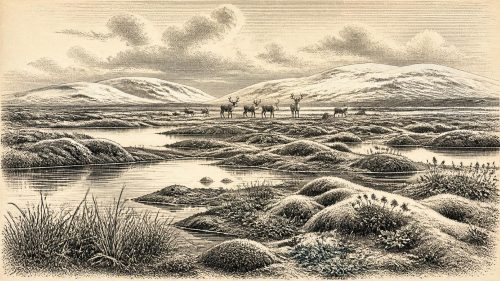
Maguirebridge Under Two Tills
Around 31,507 BCE, Ireland was a climatically unstable Late Pleistocene landscape, not a documented historical year. At Derryvree near Maguiresbridge, freshwater organic sediments between glacial tills preserve pollen, plants and insects indicating treeless, cold wetland with pools, sedges, herbs, mosses and juniper during an ice-free interval. Castlepook Cave in Cork records diverse MIS 3 fauna, including mammoth, reindeer, hyaena and predators, although dates and deposits remain chronologically complex. The British–Irish Ice Sheet expanded unevenly, reshaping habitats and routes. A possibly cut-marked reindeer bone may suggest human visitation, but no settlement evidence exists. Surviving evidence instead documents an uncertain ecological frontier.

Castlepook’s Deep-Time Femur
At roughly 33,455 calibrated years BP, Ireland lay within the climatically unstable Marine Isotope Stage 3, when shifting ice, lower seas and altered coastlines created a cold, changing landscape. Later glaciation and submergence have erased much evidence, but Castlepook Cave in County Cork preserves Pleistocene fauna, including reindeer, mammoth, horse, giant deer and predators, demonstrating that parts of Ireland supported open-country ecosystems. A deeply incised reindeer femur may record fresh-bone processing with a stone tool and thus a brief Upper Palaeolithic human visit. However, uncertain dating and disturbed deposits preclude claims for settlement, hunting, identity or political and social institutions.

Mammoth Cave’s Reindeer Signal
Around 31,505 BCE, Ireland lay within a cold, unstable Middle Upper Palaeolithic landscape, before the Last Glacial Maximum. Evidence from Derryvree, County Fermanagh, records freshwater wetlands amid open, treeless tundra-like terrain, with grasses, sedges, juniper, mosses and cold-adapted insects. Castlepook Cave in County Cork preserves a mixed fauna including mammoth, giant deer, reindeer, horse, wolves and hyaenas, indicating a diverse cold-stage ecology. A marked reindeer femur, dated approximately 33,000 years ago, may show stone-tool processing by humans. However, its interpretation remains uncertain, and no settlement, tools, burials or other unequivocal evidence establishes human occupation. This evidence indicates possibility, not habitation.

Derryvree’s Glacial Interlude
Around 31,504 BCE, Ireland lay within the climatically unstable Late Pleistocene MIS 3 phase, before the Last Glacial Maximum. Derryvree, County Fermanagh, preserves freshwater sediments between glacial tills, demonstrating a local ice-free interval with treeless tundra, wetland plants and shallow pools. Cave finds in southern Ireland indicate cold-adapted fauna, including reindeer, mammoth, giant deer and hyaena, although deposits span long periods and dating remains uncertain. A marked reindeer bone from Castlepook may suggest human activity, but cannot prove settlement or permanent occupation. Evidence records changing environments and occasional animal access, not calendar-year events, political communities, trade or established human societies.
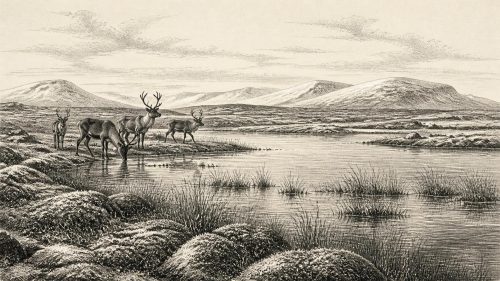
The BIRM-166 Silt Bed
31,503 BCE is a useful modern label, not a year that can be identified in Ireland’s archaeological record. No community on the island counted time by a calendar resembling ours, and the surviving evidence cannot distinguish one year from the next. In radiocarbon practice, the date falls roughly 33,450 calendar years before AD 1950, within the later part of Marine Isotope Stage 3 (MIS 3), a fluctuating cold interval of the last glacial cycle. The responsible way to approach this point is therefore through dated ranges, sediments and fossils rather than a supposed event of 31,503 BCE. Ireland was approaching, but had not yet reached, the most extensive phase of the last British–Irish Ice Sheet, which occurred substantially later.

Reindeer, Sedges and BIRM-166
Approximately 31,502 BCE, Ireland lay within the unstable Late Pleistocene MIS 3, not a precisely recoverable historical year. Derryvree sediments in County Fermanagh, dated by BIRM-166, show an ice-free, open tundra wetland with sedges, grasses, mosses and cold-adapted plants. Castlepook Cave in County Cork preserves a mixed, long-lived fauna including mammoth, reindeer, giant deer, hyena and Arctic fox, rather than one contemporary community. A cut-marked reindeer femur may indicate brief Upper Palaeolithic butchery, but cannot prove settlement or permanent occupation. Climatic oscillations preceded major ice-sheet expansion, whose erosion and deposits later obscured much earlier landscape and human evidence in Ireland.

An Incision at Castlepook
Although 31,501 BCE cannot be dated precisely in Ireland, it falls within climatically unstable Marine Isotope Stage 3. Derryvree sediments in Fermanagh indicate a local ice-free interval with cold, treeless freshwater wetlands between glacial advances, not conditions across the island. Castlepook Cave, Cork, preserves fauna including mammoth, reindeer, giant deer, predators and cold-adapted mammals, demonstrating suitable open habitats. A reindeer femur, possibly cut with a stone tool around 31,000 BCE, may indicate human butchery. However, its disturbed provenance and lack of occupation evidence preclude claims for permanent settlement. Ireland remained a changing Ice Age landscape, perhaps visited by mobile hunter-gatherers.