

31800–31701 BCE

Trifoliate Seed Beneath a Drumlin
Circa 31,800 BCE, Ireland lay within the climatically unstable Marine Isotope Stage 3, not a precisely datable historical year. Calibrated evidence from Derryvree, County Fermanagh, records freshwater tundra sediments, including bogbean, between glacial tills, showing locally ice-free, periglacial conditions before later ice expansion. Cave and speleothem records indicate shifting cold environments and intermittent habitats for mammoth, reindeer, giant deer, carnivores and other fauna. A cut-marked Castlepook reindeer bone may suggest a brief Upper Palaeolithic visit, but disturbed context prevents confirmation. No secure evidence supports permanent human settlement, society, culture or political life. Ireland remained an ecologically demanding Ice Age fringe.

Maguirebridge’s Buried Wetland
Although 31,799 BCE is an artificial precise label, it denotes later Marine Isotope Stage 3, when parts of Ireland were ice-free before the Last Glacial Maximum. At Derryvree near Maguiresbridge, freshwater silts sealed between glacial tills, radiocarbon dated broadly to 36,900–31,700 calibrated years BP, reveal cold open tundra, wetlands and periglacial conditions. Southern caves preserve remains of mammoth, reindeer, giant deer and predators, though mixed deposits cannot provide a single-time census. A possibly tool-marked Castlepook reindeer bone suggests an early human visit, not settlement. Subsequent British–Irish Ice Sheet expansion transformed and obscured these fragile prehistoric landscapes over the following millennia.

Castlepook’s Reindeer Trail
Around 31,798 BCE, Ireland formed part of a changing Late Pleistocene landscape, with fluctuating ice, lower seas and intermittently exposed cold, open terrain. Evidence is regional and uncertain, since later glaciation destroyed or disturbed much of the record. Castlepook Cave in County Cork yielded reindeer, hyaena, bear, fox, hare, lemming and mammoth remains, accumulated at different times through natural and animal processes. A reindeer leg bone, dated roughly 33,000 years ago, bears a possible stone-tool cut mark, suggesting human activity. It cannot prove settlement, population continuity or social life. Castlepook instead highlights Ireland’s Ice-Age fauna and evidence for Palaeolithic visitors.

Castlepook’s Faunal Crossroads
Around 31,797 BCE, Ireland lay within the climatically unstable Late Pleistocene, before the Last Glacial Maximum, rather than a date permitting year-specific history. Castlepook Cave in north Cork preserves Ireland’s principal pre-maximum faunal archive, with mammoth, reindeer, giant deer, predators and lemmings indicating cold, open habitats connected to wider north-west Europe. Northern Irish organic deposits similarly reveal fluctuating treeless wetlands and occasional milder woodland. Growing ice sheets and lower sea levels reshaped environments and dispersal routes. A possibly tool-marked Castlepook reindeer femur may indicate early human butchery, but lacks secure archaeological context and cannot prove settlement. The evidence records ecosystems.

Awbeg Valley Faunal Archive
At the nominal date 31,796 BCE, Ireland lay within climatically unstable Marine Isotope Stage 3, not a precisely datable historical year. Fermanagh sediments between glacial tills record cold, treeless freshwater wetlands during ice-free intervals. Castlepook Cave in County Cork preserves a long-lived assemblage of Ice Age animals, including mammoth, reindeer, giant deer, bear, wolf and hyaena, demonstrating open-country ecosystems before and after the Last Glacial Maximum. A marked reindeer femur may indicate stone-tool butchery by visitors, but cannot prove settlement. No evidence supports detailed human history at all; environmental archives instead reveal shifting ice, habitats, fauna and uncertain human presence.
Mosses Between the Tills
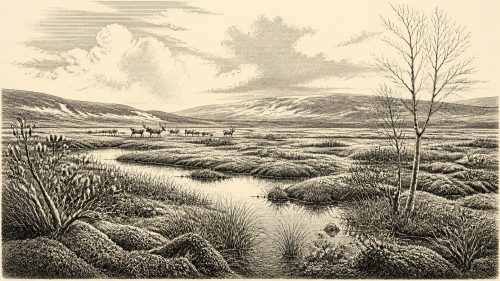
Around 31,795 BCE, Ireland lay within an unstable Late Pleistocene cold phase, rather than the later Last Glacial Maximum. At Derryvree, County Fermanagh, sediments between glacial tills preserve evidence of treeless tundra wetlands, with mosses, sedges, dwarf birch, insects and freshwater pools. Lower sea levels altered coasts, but no certain land bridge or travel routes can be identified. Castlepook Cave, County Cork, records cold-adapted mammals, including reindeer, mammoth and hyaena. A possibly cut-marked reindeer bone suggests an early human visit, not settlement. No securely dated occupation exists; any presence was likely brief, mobile and vulnerable to severe advancing glacial ice.
Maguirebridge’s Freshwater Interval
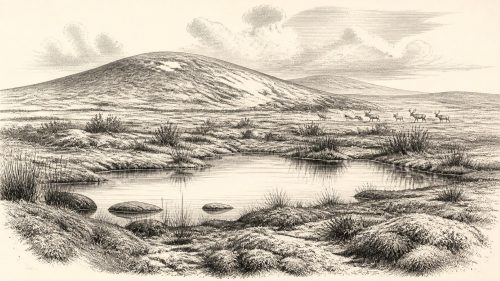
31,794 BCE cannot be treated as a precise Irish historical year, but falls within a fluctuating Late Glacial interval. At Derryvree near Maguiresbridge, Fermanagh, freshwater silts between glacial tills preserve evidence of an ice-free phase: open tundra, wetlands, sedges, mosses and cold-adapted insects. Conditions varied regionally as ice advanced and retreated before later extensive glaciation. Castlepook Cave, Cork, contains reindeer, mammoth and spotted hyena remains, showing a productive cold-stage fauna. A marked reindeer bone may indicate brief human activity around 33,000 years ago, but cannot prove settlement. The sparse record depicts a living, precarious landscape, reconstructed through deposits and probabilities.

Doneraile’s Contested Reindeer Femur
31,793 BCE is a modern filing date, roughly 33,700 years before present, within climatically unstable Marine Isotope Stage 3. Ireland was cold, treeless and regionally varied, with tundra-like wetlands, periglacial terrain and advancing, uneven ice. Castlepook Cave, County Cork, preserves fauna including mammoth, giant deer, reindeer, bears, hyaenas, wolves, foxes and lemmings, showing ecological links beyond Ireland. A marked reindeer femur may record stone-tool use and an early human visit, but disturbed deposits and uncertain dating prevent firm conclusions. Secure butchery evidence at Clare is far later. No settlement, culture, trade or society can be reconstructed; faunal evidence remains paramount.

Elephant Hall’s Reindeer Horizon
Around 33,700 calibrated years before present, Ireland lay within the unstable Late Pleistocene, as ice advanced towards the Last Glacial Maximum. Open grasslands, shrubs and bare ground supported grazing animals, while lower sea levels altered coastlines without proving migration routes. Castlepook Cave, County Cork, preserves Ireland’s richest pre-maximum vertebrate archive, including mammoth, reindeer, giant deer, bear and hyaena, though its disturbed bones represent episodes. A 33,000-year-old reindeer femur bears a possible stone-tool cut mark, suggesting but not confirming an early human visit. No occupation evidence establishes settlement, hunting practices or continuity. It chiefly records environmental change and unresolved human presence.

Mammoth Cave’s Reindeer Femur
Labelled 31,791 BCE, this period in Ireland belongs to later Marine Isotope Stage 3, not a recoverable calendar year. Fluctuating climates, lower seas and changing ice shaped an exposed, treeless landscape before the Last Glacial Maximum. Castlepook Cave in north Cork yielded a reindeer femur bearing a possible stone-tool cut mark, suggesting a brief human encounter around 33,000 radiocarbon years ago. However, disturbed deposits and absent hearths, tools or human remains preclude claims of settlement. Cave fauna, Fermanagh wetland deposits and Kerry speleothems indicate cold, variable habitats supporting mammals and intermittent liquid water. Evidence permits cautious speculation on hunter-gatherer visits.

Sedges Under Maguiresbridge
About 31,790 BCE, Ireland lay in the unstable, cold MIS 3 phase of the last Ice Age, not within a precisely dateable historical year. Inter-till freshwater deposits at Derryvree, County Fermanagh, preserve sedges, mosses, pollen and insects indicating waterlogged, tundra-like open country between ice advances. Comparable deposits confirm living northern environments. Castlepook Cave, County Cork, contains reindeer, wolf, Arctic fox and other cold-country fauna, demonstrating altered connections and seasonal productivity. A reportedly cut-marked reindeer femur may indicate an early human visit, but its context remains uncertain. No evidence supports permanent settlement, institutions or Palaeolithic society; environmental change dominates the record.

Greenagho’s Buried Fen
Around 31,789 BCE, Ireland lay within a volatile later Pleistocene landscape rather than a precisely datable historical year. Ice-free phases supported treeless tundra-steppe wetlands, freshwater pools and open vegetation, as preserved beneath tills at Derryvree and Greenagho. Lower sea levels altered coasts and routes, though no simple land bridge is established. Castlepook Cave yields mammoth, reindeer, giant deer and carnivores, evidencing productive cold open country. A marked reindeer femur may indicate Upper Palaeolithic butchery, but cannot prove settlement. Later glaciation destroyed much evidence while preserving rare deposits. No evidence supports farming, political institutions, permanent communities, or identifiable societies in Ireland.

Derryvree Under Drumlin Ice
31,788 BCE is an orientating date within Marine Isotope Stage 3, not a documented year. At Derryvree, County Fermanagh, organic freshwater deposits between glacial tills indicate an interval of cold, treeless, wet tundra-like conditions before renewed ice advance; radiocarbon calibration gives a broad range rather than certainty. Pollen, mosses, insects and plants reveal diverse microhabitats. Castlepook Cave, County Cork, preserves evidence of mammals including mammoth, reindeer, giant deer, predators and lemmings, although their coexistence cannot be assumed. Ireland's shifting ice, seas, vegetation and animal routes created environments. No reliable evidence establishes human settlement, society, trade or activity at this time.
Cork Femur Debate
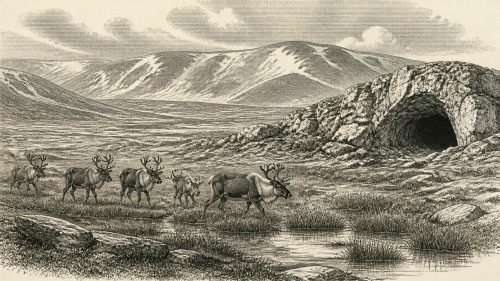
31,787 BCE is a modern proleptic label within late Marine Isotope Stage 3, not a recoverable Irish historical year. Ireland was a cold, variable pre-Last Glacial Maximum landscape, with changing ice, sea levels, open vegetation and mammals including reindeer, deer, bears and hyaenas. Cave deposits and revised radiocarbon dates indicate intermittent animal occupation, but cannot establish permanent human settlement. A marked reindeer femur from Castlepook Cave, County Cork, may show stone-tool processing and possible early human presence. However, its insecure context lacks associated tools, hearths or remains. Until evidence emerges, it remains a record of ice-age environments and cave fauna.

Derryvree’s Roadcut Tundra
31,786 BCE is a modern calendar label, not a date that can be matched to an event recorded in Ireland. No written records, named communities, monuments or securely dated settlements allow historians to describe a single Irish year so far back. In calendar terms the label falls about 33,735 years before AD 1950, the conventional ‘present’ used in radiocarbon dating. It belongs to the later part of the Late Pleistocene, broadly within Marine Isotope Stage 3 (MIS 3), a long and climatically unstable stretch of the last Ice Age. The responsible history of Ireland at this point is therefore a history of dated ranges, cave bones, buried sediments and changing ice margins rather than one of annual chronology.
Mammoth Cave’s Uncertain Butchery
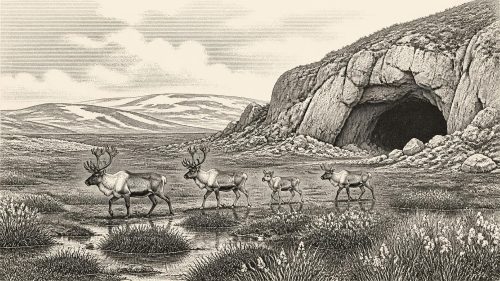
Approximately 31,785 BCE lies within Marine Isotope Stage 3, when Ireland experienced fluctuating cold conditions rather than uniform ice cover. Buried deposits at Derryvree and Greenagho in Fermanagh indicate freshwater tundra environments, while Crag Cave stalagmites record warmer, wetter phases. Castlepook Cave, County Cork, contains Ice-Age fauna and a reindeer femur dated around 33,000 years ago, bearing a possible stone-tool butchery mark. If confirmed, this may represent Ireland’s earliest human activity, but not permanent settlement. Poor excavation contexts, uncertain bone accumulation and absent associated artefacts require caution. Later glaciation transformed landscapes, leaving fragmentary evidence of mobile people, animals and habitats.

Derryvree’s Mossy Waters
Around 31,784 BCE, Ireland lacked recorded history and is best understood through Late Pleistocene environmental evidence rather than precise annual events. At Derryvree, County Fermanagh, freshwater silts between glacial tills preserve tundra vegetation, mosses and Arctic-affinity insects, showing an ice-free interval amid shifting advances. Castlepook Cave, County Cork, yielded remains of reindeer and other cold-stage animals, although deposits combine different periods and revised dating complicates interpretation. A possibly cut-marked reindeer bone suggests a brief early human presence, but cannot prove settlement. Ireland was a changing, cold edge-land, ecologically connected to Europe, later reshaped by expanding ice sheets during subsequent glaciation.
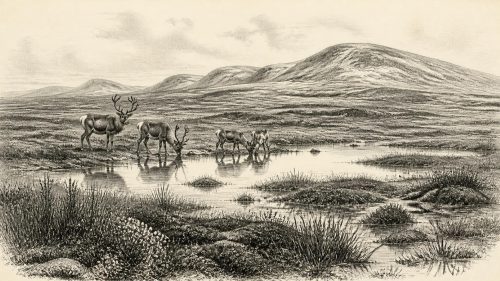
Derryvree’s Bogbean Horizon
The label 31,783 BCE gives a useful point of orientation, but it must not be mistaken for a year that can be recovered from Ireland’s archaeological record. No written calendar existed, no named community is known, and no Irish deposit can be assigned responsibly to that single year. In modern chronological terms it falls roughly 33,700 years before AD 1950, during the Late Pleistocene and Marine Isotope Stage 3 (MIS 3). The evidence instead consists of calibrated ranges, fossil assemblages, sediments and reconstructions of changing ice. Together they illuminate an Ice Age Ireland that was cold, open and environmentally unstable, but not a land with identifiable rulers, settlements or historical events.
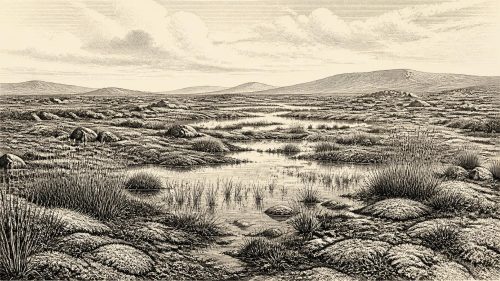
Derryvree’s Reedbed Interval
The nominal date 31,782 BCE is a modern calibration within a broad Late Pleistocene range, not a recorded Irish event. At Derryvree, County Fermanagh, organic freshwater silts between glacial tills document an ice-free interval during Marine Isotope Stage 3. They preserve evidence of tundra, wetland habitats before renewed glaciation sealed them. Comparable northern deposits demonstrate unstable ice margins. Southern caves yield cold-stage fauna, including mammoth, reindeer, giant deer, horse and predators, but mixed assemblages limit precision. No securely dated human settlement exists; a possible modified bone remains inconclusive. Ireland therefore had a changing, active landscape, while human visits remain unproven.

Birm-166 Beneath the Drumlin
At the notional date of 31,781 BCE, Ireland lay in Marine Isotope Stage 3, during a cold, changing interval before the Last Glacial Maximum. Derryvree, County Fermanagh, preserves freshwater organic silts between glacial tills, radiocarbon-dated broadly to 36,900–31,700 calendar years BP. Its plants and insects indicate an ice-free, treeless tundra wetland with pools, sedges, herbs and short growing seasons. Elsewhere, expanding ice, altered coastlines and later erosion obscure conditions. Southern cave faunas demonstrate Late Pleistocene animal networks, but cannot date species precisely to this time. No confirmed human remains, artefacts or settlements exist; Ireland’s evidence is environmental, local and uncertain.
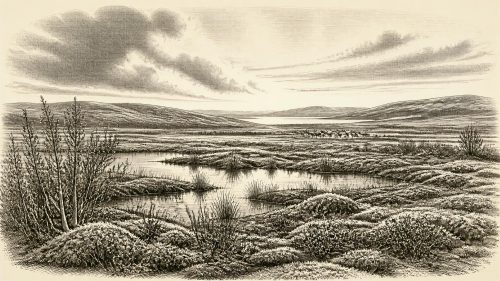
The Fermanagh Tundra Ledger
Nominally 31,780 BCE, this period cannot be reconstructed as a historical year, but falls within the climatically variable Late Pleistocene MIS 3. Inter-till deposits at Derryvree and Greenagho, County Fermanagh, show episodes of ice-free, wet, treeless tundra before later glacial expansion. Cave records confirm environmental fluctuation, while lower sea levels altered coasts and buried or eroded potential sites. Castlepook Cave, County Cork, preserves MIS 3 fauna including mammoth, reindeer, giant deer and predators. A marked reindeer bone may indicate human butchery around 31,000 BC, yet lacks secure archaeological context. Ireland’s evidence therefore documents ecosystems and a possible, transient human presence.
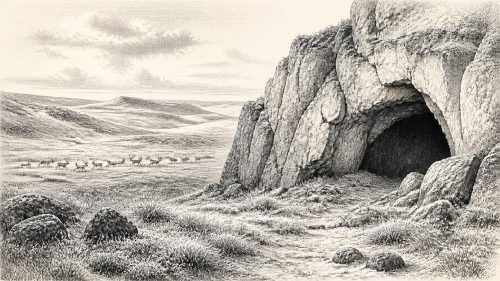
Doneraile’s Reindeer Scar
31,779 BCE denotes an uncertain interval within Marine Isotope Stage 3, rather than a precise Irish event. During fluctuating Ice-Age conditions, Ireland was a cold, open Atlantic-margin landscape, with expanding ice, lower seas and uncertain routes. Castlepook Cave near Doneraile, County Cork, preserves Ireland’s richest late-glacial vertebrate collection, including mammoth, reindeer, giant deer, bear and hyaena. A reindeer femur dated to about 33,000 years ago bears a possible stone-tool cut, plausibly indicating carcass processing by humans. However, disturbed cave deposits and absent settlements, tools or human remains preclude claims for permanent population, culture or ritual. Later glaciation destroyed earlier evidence.
Reindeer Beyond Doneraile
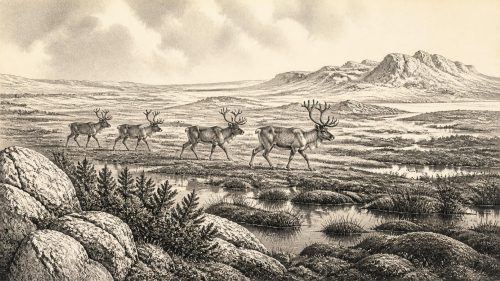
Around 31,778 BCE, Ireland lay within the climatically unstable later Marine Isotope Stage 3, before the Last Glacial Maximum. Lower seas altered coastlines and potential routes. Evidence from Derryvree indicates ice-free areas could support wet, treeless tundra vegetation during milder intervals. Castlepook Cave near Doneraile preserves a disturbed but important Ice Age fauna, including mammoth, giant deer, reindeer, hyaena and bear. A reindeer femur reportedly bears a stone-tool butchery mark and may represent Ireland's earliest human evidence. However, its poor context and uncertain interpretation preclude claims for permanent settlement, communities, routes or institutions. It therefore documents only tentative human presence.

Fermanagh’s Juniper Muskeg
About 31,777 BCE is a modern chronological approximation within MIS 3, not a precisely documented Irish date. Organic sediments beneath till at Derryvree, Fermanagh, indicate an ice-free interval with wet, treeless tundra or muskeg, supporting grasses, sedges, juniper and mosses. Greenagho provides related but earlier evidence. Insects, cave calcite and faunal remains reveal severe, unstable glacial conditions and Ice Age animals, including mammoth, reindeer and hyaena. Cave deposits cannot represent one moment. No secure evidence establishes human settlement; a possibly cut reindeer bone suggests only a tentative visit. Subsequent British-Irish Ice Sheet expansion transformed and obscured these landscapes over time.

Crag Cave’s Living Calcite
During later Marine Isotope Stage 3, around 31,776 BCE, Ireland experienced cold, unstable conditions as the British-Irish Ice Sheet developed, though southern areas retained habitable, intermittently ice-free environments. Crag Cave calcite growth indicates liquid water and absence of permanent local freezing during some episodes. Lower sea levels altered connections with Britain and Europe, enabling diverse mammals, including reindeer, mammoth and hyaena, to reach Ireland. A marked reindeer femur from Castlepook Cave may record human butchery about 33,000 years ago, but poor context prevents firm conclusions. Evidence supports environmental change and possible brief visits, not established human settlement, society or culture.
Castlepook’s Hyaena Country
31,775 BCE is not a date that can be attached to a recorded Irish event. No calendar, settlement sequence or historical witness allows us to identify a happening in that particular year. It is a modern chronological label, equivalent to roughly 33,700 calibrated years before AD 1950, and even that conversion should be treated as an approximation rather than an anniversary. Radiocarbon results must be calibrated, often produce ranges rather than single years, and date particular organic specimens rather than whole landscapes or human communities. The responsible subject is therefore Ireland during the later part of Marine Isotope Stage 3 (MIS 3), within the Late Pleistocene: a cold, unstable interval before the Last Glacial Maximum.

Hollymount’s Freshwater Bed
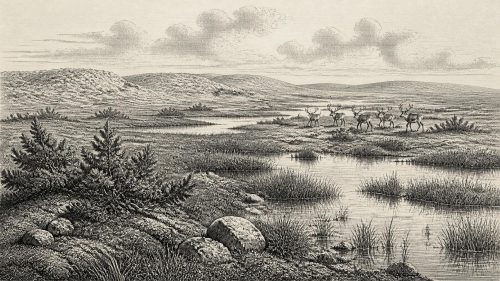
About 31,774 BCE, Ireland lay within the fluctuating cold conditions of Marine Isotope Stage 3, rather than a recoverable historical year. Freshwater sediments at Hollymount/Derryvree, County Fermanagh, dated broadly to 36,900–31,700 calendar years before present, preserve evidence of marshy tundra, mosses, herbs, insects and pools between glacial advances. Comparable northern deposits confirm episodic ice-free conditions. Southern caves indicate cold-adapted fauna, including reindeer, mammoth and predators, although dates and associations remain uncertain. Human presence is unproven: a possibly cut-marked reindeer bone may suggest brief visitation, not settlement. Subsequent British–Irish Ice Sheet expansion transformed and obscured this ecologically active landscape across Ireland.
Fermanagh Silts, Cork Fauna
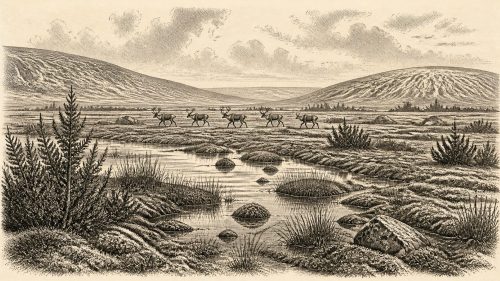
31,773 BCE is a modern chronological label within unstable MIS 3, not a recoverable Irish year. Derryvree, County Fermanagh, preserves freshwater silts between tills, dated broadly to later MIS 3, showing cold, treeless, periglacial wetlands existed between glacial episodes. Castlepook Cave, County Cork, contains a long, mixed record of Ice-Age mammals, including mammoth, reindeer, giant deer, bear and hyaena, rather than a single contemporaneous fauna. A marked reindeer femur may indicate human carcass processing, but no associated tools, settlement or population evidence survives. Lower seas altered access, while major ice expansion later covered much of Ireland during subsequent glacial maximum.

Awbeg Reindeer Signal
Around 31,772 BCE, Ireland lay within the climatically unstable Marine Isotope Stage 3, before the Last Glacial Maximum, but no evidence permits reconstruction of a single year. Calibrated deposits at Derryvree and Greenagho in Fermanagh show intermittent non-glacial environments, including cold wetlands with mosses, sedges and northern insects. Castlepook Cave above County Cork’s Awbeg Valley preserves a diverse, time-averaged fauna, including reindeer, mammoth, giant deer, predators and small cold-adapted mammals. A cut-like mark on a reindeer femur may indicate Upper Palaeolithic butchery, yet cannot prove settlement. Later ice erased evidence; no established human community, polity or culture is securely known.

Birm-166, Reindeer, and Ice
Around 31,771 BCE, Ireland lay within the unstable Late Pleistocene MIS 3, before maximum Last Glacial ice cover. Derryvree, County Fermanagh, preserves organic silts dated broadly to this period, demonstrating a cold, treeless freshwater wetland with sedges, mosses, pools and open ground between glacial advances. Castlepook Cave, County Cork, contained reindeer, mammoth, giant deer, horse, predators and other fauna, indicating varied open-country habitats. A cut-marked reindeer femur may suggest human carcass processing and an early Upper Palaeolithic visit, but proves neither settlement nor sustained occupation. Later ice erosion and rising seas destroyed evidence; environmental records remain firmer than human history.

Aghnadarragh’s Arctic Beetles
About 31,770 BCE, Ireland lay in the climatically unstable Late Pleistocene, although archaeological dating cannot identify conditions in a single year. Fermanagh sediments, including Aghnadarragh beetles, indicate cold, treeless tundra-like mosaics of grasses, shrubs, wetlands and seasonal pools, with severe winters and brief summers. Ireland was not necessarily fully ice-covered: the British–Irish Ice Sheet was expanding but had not reached its later maximum. Castlepook Cave preserves time-averaged remains of mammoth, reindeer, bear, hyaena and other fauna. A possibly cut-marked reindeer bone suggests early human activity, but cannot demonstrate settlement. Evidence supports environmental reconstruction, not claims about societies, routes or polities.
Maguirebridge’s Periglacial Reedbed
The label 31,769 BCE is a modern chronological convenience, not a date that can be recovered from Ireland’s evidence with calendar-year precision. There were no written records, rulers, settlements with annual sequences, or artefacts securely dated to that individual year. Converted to the archaeological convention of years before AD 1950, it falls about 33,718 calibrated years before present (cal BP), within Marine Isotope Stage 3 (MIS 3), an unstable interval of the last Ice Age. The responsible history of Ireland at this depth of time is therefore one of broad, calibrated ranges, fossil deposits and changing landscapes—not a narrative of a particular year.

Derryvree’s Frozen Sedge Basin
31,768 BCE is a nominal modern date, not an identifiable Irish event, and belongs broadly to Late Pleistocene MIS 3. Derryvree, County Fermanagh, preserves freshwater organic sediments between glacial tills, dated broadly to 36,900–31,700 calibrated years BP. They reveal a cold, locally ice-free, treeless periglacial wetland of sedges, mosses, pools and short growing seasons, later overridden by ice. Northern sites corroborate open conditions. Castlepook Cave, County Cork, records cold-adapted fauna including mammoth, reindeer and hyaena, though not necessarily contemporaneously. A marked reindeer bone may indicate early human butchery, but lacks secure supporting context. No evidence establishes permanent settlement or institutions.

Frostwater at Derryvree
Around 31,767 BCE, Ireland lay within the climatically unstable Marine Isotope Stage 3, not a historically identifiable year. Derryvree, County Fermanagh, preserves freshwater sediments dating broadly to 31,700–36,900 cal BP, indicating locally ice-free, treeless wet tundra with pools, sedges, mosses and insects. Castlepook Cave, County Cork, contains faunal remains from a wider period, including reindeer, mammoth, giant deer, bears, wolves and hyaenas, demonstrating biologically active cold-stage environments. A possibly cut-marked reindeer bone may indicate brief human activity, but no settlement is known. Later glaciation destroyed much evidence, leaving an incomplete record of shifting habitats, animal movements and uncertain human presence.

Birm-166’s Lost Waters
Labelled 31,766 BCE, this period cannot be tied to a precise Irish event, but falls within a broad Late Pleistocene calibrated range. Derryvree, County Fermanagh, preserves organic freshwater sediments between tills, indicating locally ice-free, treeless wet tundra with mosses, grasses, sedges, insects and severe seasonal conditions. Comparable northern deposits confirm environmental variation amid advancing glaciation. Castlepook Cave, County Cork, contains Marine Isotope Stage 3 fauna including mammoth, reindeer, hyaena and lemmings, demonstrating cold open habitats. A possibly stone-tool-marked reindeer femur suggests transient human activity, not settlement. Subsequent ice expansion reshaped habitats and erased or buried most evidence of earlier life.

Birm-166 and the Drumlin
At 31,765 BCE, Ireland cannot be described through events or calendar dates, but through fragmentary environmental evidence from Marine Isotope Stage 3. Derryvree, County Fermanagh, preserves freshwater silts between glacial tills, demonstrating an ice-free tundra interval within a shifting climate and later glaciation. Mosses, sedges and pollen indicate exposed periglacial wetlands, not forest. Castlepook Cave, County Cork, contains a chronologically complex fauna of mammoth, reindeer, giant deer and predators, evidencing cold open habitats. A possibly tool-marked reindeer bone may signal brief human activity, but proves neither settlement nor society. Ireland remained climatically dynamic, ecologically connected intermittently, and therefore archaeologically elusive.

Crag Cave’s Winter Drips
Around 31,764 BCE, Ireland was a climatically unstable Late Pleistocene landscape rather than a documented historical society. Derryvree deposits in County Fermanagh reveal freshwater pools, patchy tundra vegetation and periglacial conditions during a broadly dated interval encompassing this label. Crag Cave speleothems in Kerry show intermittent warmer phases when liquid water penetrated limestone. Cave fauna, including reindeer, giant deer, mammoth, bears, wolves and hyaenas, indicates intermittently habitable open country. A marked reindeer bone from Castlepook may suggest human handling, but cannot prove settlement. No evidence supports communities, politics, religion, trade or permanent occupation. Later glaciation obscured much of this record.
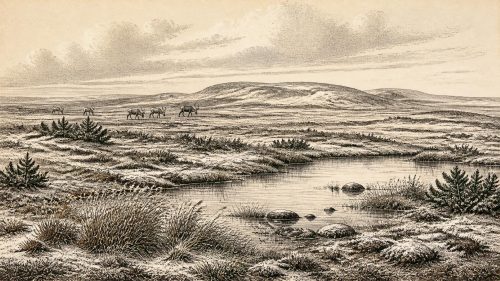
Maguirebridge’s Windblown Pools
“31,763 BCE” is a modern chronological label, not a year that can be recovered from an Irish record of events. Nobody in Late Pleistocene Ireland kept calendars, built dated monuments or left a continuous settlement sequence from which a particular year can be isolated. For this remote period, even the most useful scientific dates are ranges with stated uncertainties. The closest responsible setting is the later part of Marine Isotope Stage 3 (MIS 3), before the Last Glacial Maximum, when climate in north-west Europe fluctuated sharply and the Irish landscape was changing on scales of centuries and millennia rather than political years.

Birm-166’s Permafrost Ledger
31,762 BCE is not a knowable Irish year but a broad Late Pleistocene horizon. Derryvree, County Fermanagh, dated through Birm-166, preserves freshwater silts, plants and small animals from roughly 36,900–31,700 years ago, indicating cold, open tundra and periglacial conditions before the ice sheet's maximum expansion. Castlepook Cave, County Cork, contains mixed remains of mammoth, reindeer, giant deer, bears, hyenas and other fauna, proving episodic animal access. A cut-marked reindeer femur may indicate human butchery, but neither permanent settlement nor associated tools are established. No polities, farming, trade or recoverable culture are evidenced; later ice obscured much of this fragile record.

Castlepook’s Cave-Bear Horizon
31,761 BCE is not a recoverable Irish historical year but a notional point within unstable Marine Isotope Stage 3. Radiocarbon calibration and disturbed deposits permit only broad chronological ranges. Derryvree, Fermanagh, preserves freshwater plants, insects and wetland sediments between tills, demonstrating locally treeless, tundra-like habitats during glacial fluctuations. Castlepook Cave, Cork, yielded MIS 3 remains of reindeer, mammoth, giant deer, bears, wolves, foxes, hyaenas, lemmings and other animals, indicating cold open-country ecosystems. A cut-marked reindeer bone suggests, but cannot prove, Pleistocene human activity. Later ice expansion, erosion and sea-level rise destroyed or buried evidence, leaving environmental traces, not social history.
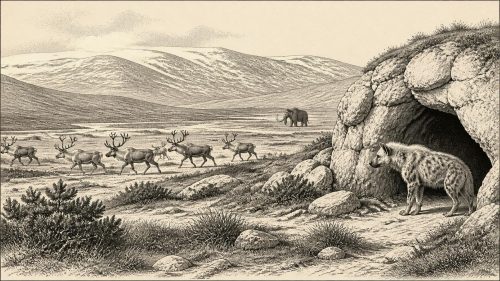
Awbeg Valley Hyena Den
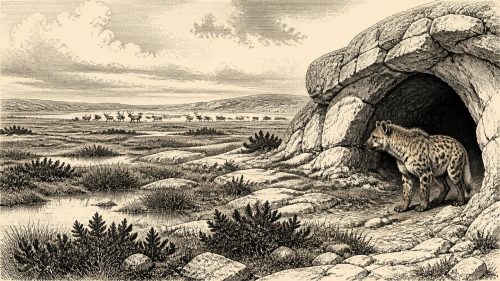
Around 31,760 BCE, Ireland was within the unstable later Marine Isotope Stage 3, approaching the Last Glacial Maximum, not a precisely datable year. Castlepook Cave above County Cork’s Awbeg Valley preserves disturbed but evidence of a cold, open mammal fauna, including reindeer, mammoth, giant deer, wolves, bears and Ireland’s only known spotted hyaenas, probably denning there. Environmental deposits elsewhere confirm fluctuating habitable conditions before expanding ice. A cut-marked reindeer bone may indicate an early human visit, but no hearths, tools or settlements prove occupation. The evidence reveals a changing ecological frontier, while precluding claims about prehistoric society, politics or population.
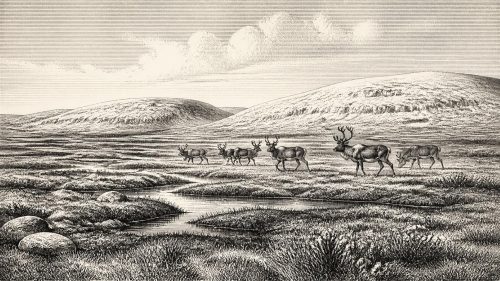
Castlepook’s Tundra Threshold
Around 31,759 BCE, a modern label within late Marine Isotope Stage 3, Ireland was a cold, changing periglacial landscape before the British–Irish Ice Sheet reached its maximum. Derryvree and Greenagho deposits show wetlands and regionally ice-free ground, while pollen, insects and plant remains indicate sparse tundra vegetation. Castlepook Cave preserves MIS 3 fauna including mammoth, reindeer, giant deer, hyaena and Arctic fox, though bone accumulation complicates interpretation. A marked reindeer femur may indicate brief human butchery, not settlement. Lower seas may have eased movement, but routes remained uncertain. Subsequent ice advance buried or destroyed much archaeological evidence across Ireland thereafter.

Shandon’s Reindeer Passage
31,758 BCE is a modern chronological label within climatically unstable Marine Isotope Stage 3, not a precisely datable Irish event. Low sea levels and shifting ice shaped a changing north-west European landscape, while routes into Ireland remain uncertain. Shandon Cave fauna, including reindeer, mammoth, horse, bears and wolves, indicates cold, open habitats and diverse food webs, though cave deposits are not ecological censuses. Castlepook’s marked reindeer bone may evidence human butchery around 33,000 years ago, but cannot prove settlement. Derryvree sediments document treeless freshwater wetlands between glaciations. Later ice transformed or destroyed landscapes, leaving evidence of connections and human presence.
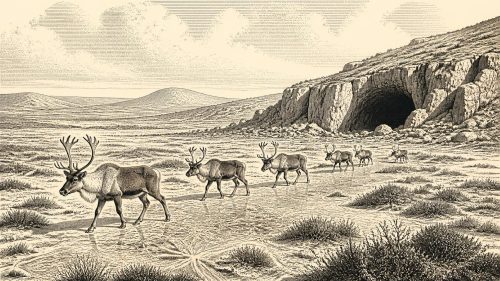
Mammoth Cave’s Single Mark
Around 31,757 BCE, Ireland lay within fluctuating Marine Isotope Stage 3 Ice Age conditions, with uncertain chronology and shifting ice, seas and land connections. Open, seasonal, largely treeless landscapes supported reindeer, mammoth, giant deer, bears, wolves, hyaenas and other cold-adapted fauna. Cave deposits and inter-till sediments provide fragmentary evidence, while older excavations and revised radiocarbon dating require caution. Castlepook, or Mammoth Cave, preserves Ireland's major late-Pleistocene mammal assemblage. A cut-marked reindeer femur may indicate brief Upper Palaeolithic carcass processing, but cannot demonstrate settlement, continuous population or wider social practices. No political, religious or cultural institutions are evidenced. Modern investigation continues.

Crag Cave’s Thawing Calcite
Around 31,756 BCE, Ireland formed an unstable Ice Age frontier during Marine Isotope Stage 3, rather than a precisely datable historical setting. Derryvree sediments in Fermanagh record wet, largely treeless tundra between glacial advances. Castlepook Cave in Cork contains mixed remains of mammoth, reindeer, giant deer and predators, demonstrating a cold-climate fauna over millennia. A marked reindeer bone may indicate brief human butchery, but proves neither settlement nor sustained occupation. Crag Cave calcite shows intermittent thaws, linked to North Atlantic climate shifts. As conditions deteriorated, advancing ice later reshaped landscapes and destroyed, buried or disturbed much earlier evidence of prehistory.

Elephant Hall’s Long Silence
Circa 31,755 BCE, Ireland lay within the volatile later Marine Isotope Stage 3 of the last Ice Age, as the British–Irish Ice Sheet expanded unevenly. Much of the island’s contemporary environment remains uncertain, later glaciation having erased or disturbed evidence. Castlepook Cave, County Cork, preserves Ireland’s richest relevant vertebrate assemblage, including reindeer, mammoth, giant deer, predators and lemmings, indicating cold, open habitats. Its mixed, imperfectly dated deposits document a long faunal sequence, not a single community. A possibly cut-marked reindeer bone suggests but cannot prove early human visitation. No secure evidence establishes settlement, culture or events in this nominal year.
Derryvree’s Menyanthes Seed
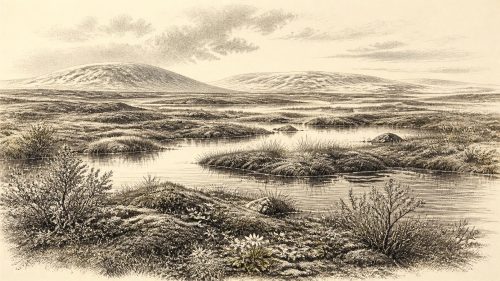
Around 31,754 BCE, Ireland cannot be described through annual events, but Derryvree, County Fermanagh, preserves an environmental horizon from later Marine Isotope Stage 3. Freshwater silts, radiocarbon-dated broadly to 36,900–31,700 years BP, lay between glacial tills, indicating a cold, locally ice-free wetland between ice advances. Mosses, sedges, dwarf willow, mountain avens and bogbean, alongside northern insects, show treeless tundra-like conditions. Cave remains demonstrate intermittent Late Pleistocene mammals, including reindeer, mammoth and hyaena, without proving local coexistence. No secure evidence places humans in Ireland then. Shifting ice, coastlines and climate created varied landscapes, then sealed beneath glacial deposits in subsequent millennia.

Maguirebridge’s Treeless Wetland
Around 33,700 years before 1950, during the volatile later Marine Isotope Stage 3, Ireland’s conditions cannot be reconstructed for a single calendar year. Derryvree near Maguiresbridge preserves organic silts beneath till, showing that an ice-free locality supported cold, treeless wetlands before later glaciation. Castlepook Cave’s mixed, long-accumulated fauna demonstrates links with north-west European Ice-Age environments, but cannot prove all species coexisted. A modified reindeer femur may indicate the earliest human butchery in Ireland, although it provides no evidence of settlement. Overall, fragmentary glacially altered records suggest habitable open landscapes, large mammals, and possible transient foragers, while emphasising substantial uncertainty throughout.

Derryvree’s Dwarf Willow
31,752 BCE is a modern label rather than a precisely recoverable Irish year. Evidence from Derryvree, County Fermanagh, records an ice-free MIS 3 interval between glacial advances, with freshwater silts preserving tundra vegetation including dwarf willow, bogbean, sedges and mosses. Greenagho supports regional ice-free conditions, although Ireland’s ice cover, coastlines and connections remained variable. Castlepook Cave in Cork documents diverse cold-stage fauna, but revised dates prevent assuming contemporaneous species. A marked reindeer bone may indicate Upper Palaeolithic butchery, yet no secure settlement evidence exists. The period is best understood through fragmentary environmental records preceding major ice-sheet expansion across the island.

Derryvree’s Muskeg World
Although 31,751 BCE cannot identify a recoverable Irish year, it corresponds approximately to MIS 3, a climatically unstable Late Pleistocene interval before major glaciation. Environmental archives indicate changing, partly ice-free landscapes, altered coastlines and uncertain connections with Britain. Derryvree, County Fermanagh, preserves freshwater deposits showing cold, treeless tundra vegetation, wetlands and brief productive seasons. Castlepook Cave, County Cork, records diverse cold-adapted fauna, including reindeer, mammoth, giant deer, predators and lemmings, across a long timespan. A possibly cut-marked reindeer bone may suggest fleeting human activity, but proves neither settlement nor society. Later ice and poor preservation limit conclusions about Ireland’s inhabitants.
Cork’s Reindeer Femur
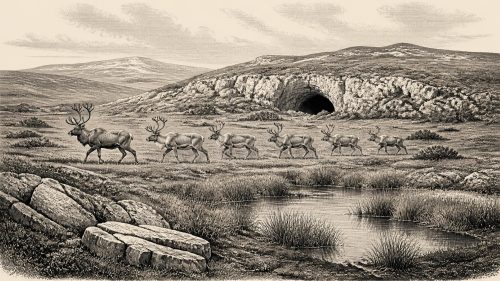
31,750 BCE is a modern label for a broad, climatically unstable MIS 3 interval, not a recoverable Irish historical year. Derryvree, County Fermanagh, preserves freshwater sediments dated broadly to 36,900–31,700 cal BP, indicating cold, treeless tundra wetlands during an ice-free phase between glacial advances. Lower sea levels reshaped coasts and may have enabled animal movements, although specific routes remain unknown. Castlepook Cave, County Cork, yielded diverse cold-stage fauna, including reindeer, mammoth and hyaena. A reindeer femur bearing a possible stone-tool cut may indicate early human presence, but associated artefacts and secure occupation evidence are absent, preventing conclusions about permanent settlement.

Castlepook’s Limestone Gateway
Rather than a recorded historical year, 31,749 BCE represents an uncertain Late Pleistocene interval around 34,000 calibrated years before present, during Marine Isotope Stage 3. Lower sea levels connected Ireland ecologically to north-west Europe, while volatile cold climates, changing vegetation and advancing ice shaped open landscapes. Cave fauna at Castlepook, County Cork, including reindeer, mammoth, musk ox, horse and predators, indicates varied mammoth-steppe habitats, although deposits combine different ages. A cut-marked reindeer femur may evidence a brief human visit around 33,000 years ago, but no settlement, tools or human remains confirm occupation. Glaciation erased evidence, leaving a fragile, revisable archive.
Hyenahall’s Mammoth Toothmarks
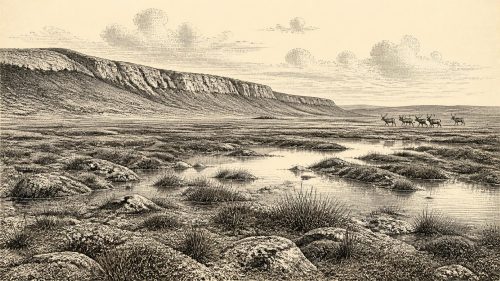
31,748 BCE is a nominal modern date within Marine Isotope Stage 3, not a precisely recoverable Irish event. Derryvree deposits indicate intermittent ice-free, treeless environments of sedges, grasses, juniper, wetlands and severe cold, between glacial advances. Ireland was approaching, rather than experiencing, the Last Glacial Maximum, with variable ice, coastlines and animal access. Castlepook Cave preserves mixed remains of mammoth, reindeer, giant deer, hyaena and other cold-adapted fauna, demonstrating episodic viable food webs. A reindeer femur possibly bears a butchery mark, suggesting transient Upper Palaeolithic human activity, but not settlement. Evidence supports environmental reconstruction, while year-specific narratives remain fundamentally impossible.
The Awbeg Reindeer Femur
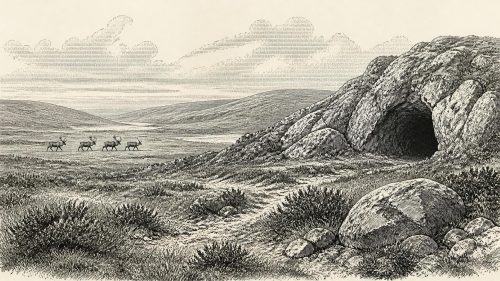
Around 31,747 BCE, Ireland lay within the climatically unstable later Marine Isotope Stage 3, before the Last Glacial Maximum. Lower sea levels altered coasts and routes, but did not ensure a land bridge. Deposits at Derryvree indicate cold, open wetlands with seasonal plant life, while Castlepook Cave preserves diverse fauna, including reindeer, mammoth, giant deer, hyaena and wolf. A reindeer femur from Castlepook bears an incision possibly made by a stone tool, suggesting a brief Upper Palaeolithic human visit. However, disturbed cave deposits and absent campsites preclude evidence of settlement. Re-dating and palaeoecology instead reveal a dynamic Ice Age landscape.
Hyaena Hall’s Bone Map
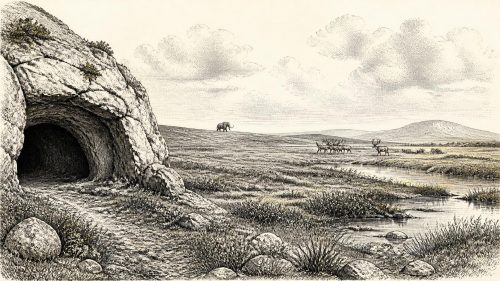
About 31,746 BCE, Ireland formed part of a climatically unstable MIS 3 Ice-Age landscape, with low sea levels, shifting ice margins and changing land connections. Castlepook Cave in County Cork preserves important, imperfect evidence: animal remains indicate open tundra-grassland habitats supporting mammoth, giant deer, reindeer, hyaena, wolves and Arctic species. These bones accumulated through natural processes as well as predators, while early excavation and revised dating limit certainty. A reindeer femur possibly bears a stone-tool cut mark, suggesting an exceptionally early human visit or carcass processing. It cannot prove settlement or continuity. Ireland’s evidence chiefly records fauna and environmental uncertainty.
The Castlepook Bone Archive
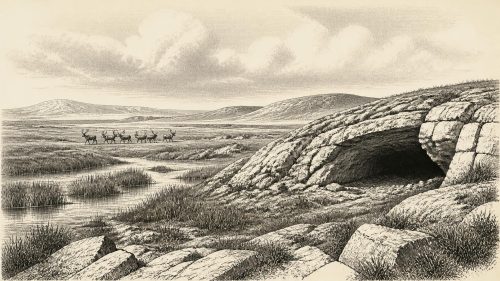
31,745 BCE is a modern chronological label, not a recoverable Irish date in the manner of a medieval annal or a later historical year. No community in Ireland recorded a calendar at this depth of time, and neither archaeology nor palaeoclimate research can attach a particular hunt, migration, birth or political decision to this single year. In modern scientific terms, the point lies approximately 33,700 calendar years before AD 1950, within the Late Pleistocene and broadly within Marine Isotope Stage 3 (MIS 3), a long and climatically unstable interval of the last Ice Age. Evidence must therefore be read in calibrated ranges of centuries or millennia, not as a diary of one year.

Maguirebridge’s Arctic Marsh
At the approximate horizon labelled 31,744 BCE, Ireland lay in late Marine Isotope Stage 3, approaching more extensive glaciation, rather than within a datable historical year. Derryvree, County Fermanagh, preserves freshwater silts between tills, indicating cold, open, periglacial wetlands with mosses, sedges and insects. Castlepook Cave, County Cork, contains MIS 3 remains of mammoth, reindeer, giant deer, bears, wolves and hyaena, demonstrating habitable terrain for large mammals. A possibly cut-marked reindeer bone suggests early human butchery, but cannot prove permanent settlement with certainty. Lower sea levels altered routes and coastlines; surviving evidence supports environmental reconstruction, not political or social history.
Derryvree’s Moss Beds
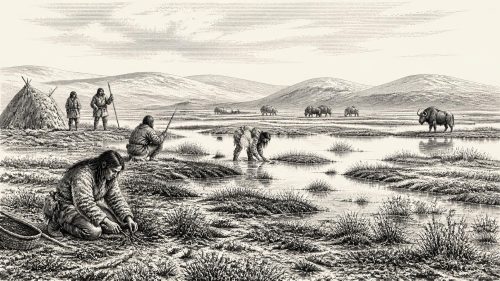
31,743 BCE is not a datable Irish event but an approximate point within unstable Marine Isotope Stage 3. At Derryvree, County Fermanagh, organic freshwater beds between glacial tills indicate a temporarily ice-free wetland, with mosses, sedges, open pools and treeless tundra vegetation. Cave calcite records show recurrent climatic warming episodes. Southern cave remains demonstrate that reindeer, mammoth, giant deer, bears and hyaenas occupied Ireland intermittently, although assemblages span long periods. A cut-marked Castlepook reindeer bone may indicate short human visits, not settlement. No institutions, farming or trade are evidenced. Before maximum glaciation, Ireland supported shifting habitats, fauna and transient foragers.

Castlepook’s Deep Incision
31,742 BCE is a modern label, not a precise Irish date; the relevant setting is later Marine Isotope Stage 3, before glaciation. Ireland was a cold, unstable, open landscape with changing ice margins, lower seas and Pleistocene fauna. Castlepook Cave, County Cork, preserves reindeer, mammoth, giant deer, hyaena and remains, although antiquarian excavation and disturbed deposits limit interpretation. A reindeer femur, roughly 33,000 years old, bears a mark possibly made by a stone tool during butchery. If confirmed, it may be Ireland's earliest human trace, indicating brief activity rather than settlement. Further stratified excavation, dating and taphonomic study are required.

Castlepook’s Stone-Edge Question
31,741 BCE is a modern label for an uncertain Late Pleistocene interval, not a recordable Irish year. Castlepook Cave, County Cork, produced a reindeer femur dated broadly around 33,000 years ago, whose deep fresh-bone incision may represent stone-tool butchery. If confirmed, it would be Ireland’s earliest evidence of human contact, though excavation methods, mixed cave deposits and carnivore activity prevent stronger conclusions. Fauna indicate a cold, varied landscape of tundra, herbivores and predators. Derryvree sediments document ice-free periglacial wetlands during the wider period. Approaching ice-sheet expansion constrained possible mobile visitors; no settlement, society, route or repeated occupation is securely demonstrated.

Doneraile’s Reindeer Incision
At approximately 31,740 BCE, Ireland lay within the fluctuating cold conditions of Marine Isotope Stage 3, before the last British–Irish Ice Sheet reached its greatest extent. Castlepook Cave near Doneraile preserves remains of mammoth, reindeer, giant deer, hyaena, lemmings and other fauna, indicating open, largely treeless habitats. An incised reindeer femur may record processing with a stone tool and therefore a Upper Palaeolithic human visit. However, old excavation context and absence of associated tools or settlement prevent certainty. The evidence neither proves permanent occupation nor later ancestry. Ice and seas obscured traces; later human activity is confirmed in County Clare.
Fermanagh’s Buried Bogbean
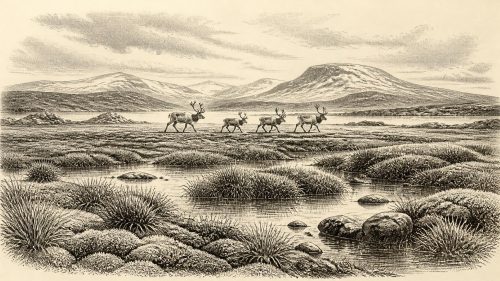
Around 31,739 BCE, Ireland lay within the climatically unstable Late Pleistocene MIS 3, before the Last Glacial Maximum. Derryvree, County Fermanagh, preserves freshwater sediments between glacial tills, indicating cold, open wetland landscapes with sedges, mosses, bogbean and Arctic-alpine plants during an interglacial interval. Southern caves, notably Castlepook and Shandon, contain remains of mammoth, reindeer, giant deer, predators and other Ice-Age fauna, although their deposits span millennia. A cut-marked Castlepook reindeer femur may indicate brief human handling of carcasses, but no securely associated tools, hearths or settlements exist. Ireland’s evidence therefore documents dynamic environments and animals, while human occupation remains unproven.

Derryvree and Castlepook
About 31,738 BCE, Ireland was a climatically unstable Late Pleistocene landmass, not a modern island with documented annual history. Derryvree, County Fermanagh, preserves freshwater sediments between glacial tills, showing an ice-free, cold wetland interval with open, treeless vegetation. Crag Cave, Kerry, records milder episodes through stalagmite growth. Castlepook Cave, Cork, contains a long, disturbed faunal archive including mammoth, giant deer, reindeer, bear, wolf, Arctic fox, lemmings and hyaena. A cut-marked reindeer femur may indicate early human carcass processing, but lacks secure context. Evidence demonstrates changing environments and animals, not settled communities, politics or culture at that precise nominal date, however.

Maguirebridge’s Inter-Till Waters
31,737 BCE is a modern label for a Late Pleistocene, MIS 3 interval, not a documented Irish year. Inter-till freshwater sediments at Derryvree, County Fermanagh, reveal an ice-free phase with cold, periglacial wetlands, plants and insects between glacial advances. Southern caves, especially Castlepook in County Cork, preserve evidence of mammoth, reindeer, giant deer, predators and other cold-stage fauna, though deposits span multiple periods. A marked reindeer bone may indicate early human butchery, yet lacks secure context or associated artefacts. Lower sea levels altered routes, while advancing ice created a volatile ecological frontier. Permanent occupation, polities and Irish identities remain unproven.

Castlepook’s Faunal Mosaic
“31,736 BCE” is a modern calendar label, not a date that can be recovered from an Irish Ice Age deposit. It corresponds only approximately to 33.7 thousand years before the radiocarbon convention of AD 1950. No excavation, fossil layer or climatic record can presently distinguish this particular calendar year from the centuries around it. The responsible setting is therefore a broad one: later Marine Isotope Stage 3 (MIS 3), within the Midlandian Cold Stage of Irish Quaternary history. Calibrated radiocarbon ranges, sediment sequences and ice-sheet reconstructions illuminate that world; they do not yield an annal for a single year.
Hyenahall’s Carnivore Archive
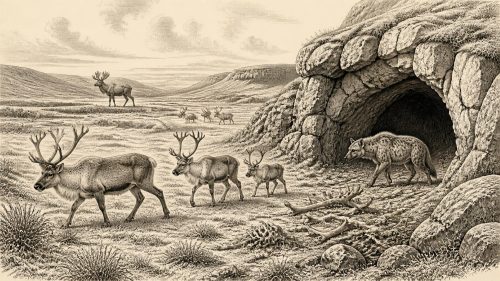
About 33,700 calibrated years before 1950, Ireland lay in a cold, unstable MIS 3 landscape preceding maximum glaciation, with some ice-free ground, periglacial conditions and lower sea levels. Derryvree deposits in Fermanagh preserve tundra-like wetland vegetation, demonstrating locally habitable terrain. Castlepook Cave, Cork, contains Ireland’s richest pre-glacial vertebrate archive, including mammoth, reindeer, giant deer, hyaena, wolf and bear, though its time-mixed, carnivore-modified deposits demand caution. A possibly tool-marked reindeer bone suggests, but cannot prove, brief human presence. No political, cultural or settled community is recoverable; fauna instead reveal changing ecological links with north-west Europe during favourable intervals before extensive ice.
The Awbeg Reindeer Mark
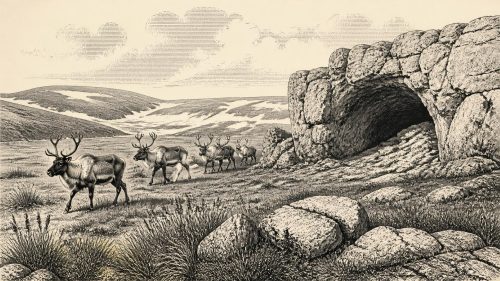
Modern calendar-year precision is not available for Ireland in 31,734 BCE. The date is a retrospective label, roughly equivalent to 33,683 years before AD 1950, rather than a moment that can be isolated in an excavation layer or connected to an event remembered by anyone alive then. At this depth of time, radiocarbon measurements must be calibrated and normally produce ranges rather than a single calendar year. The responsible historical frame is therefore the later part of the Late Pleistocene, within Marine Isotope Stage 3 (MIS 3), a long and climatically unstable phase of the last Ice Age.

Derryvree’s Tundra Interval
Approximately 31,733 BCE, Ireland lay within the unstable Late Pleistocene climate of Marine Isotope Stage 3, not a precisely datable historical year. Derryvree, County Fermanagh, preserves freshwater sediments between tills, indicating a cold tundra wetland interval before renewed glaciation. Mosses and sedges suggest open, treeless terrain, while Crag Cave records milder episodes permitting water flow. Castlepook Cave’s mixed fauna, including mammoth, reindeer and hyaena, demonstrates diverse Ice Age habitats but not contemporaneous populations. A cut-marked reindeer femur may indicate brief human activity, although evidence remains insecure. Overall, geological archives reveal changing ice margins, habitats and uncertainty rather than conventional history.
Fermanagh’s Mountain Avens
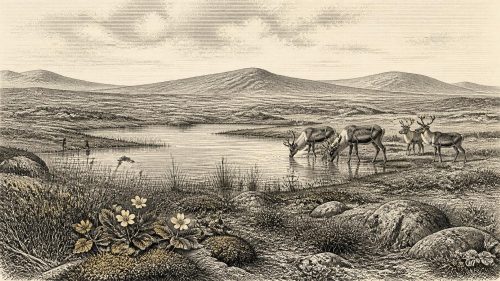
About 31,732 BCE, Ireland cannot be described through annual history, but through uncertain Late Pleistocene evidence. Derryvree, County Fermanagh, preserves freshwater silts between tills, dated broadly to 36,900–31,700 cal BP, indicating ice-free tundra-like wetlands with bogbean, mountain avens and other Arctic-alpine plants. Greenagho supports intermittent northern ice-free conditions, although glacier margins and coastal connections remain uncertain. Castlepook Cave in Cork records diverse MIS 3 fauna, including reindeer, mammoth, giant deer and predators. A possibly cut-marked reindeer bone suggests transient human activity, but no secure settlement evidence exists. Later ice expansion reworked landscapes, leaving environmental fragments rather than recoverable political history.
Derryvree’s Sealed Freshwater Bed
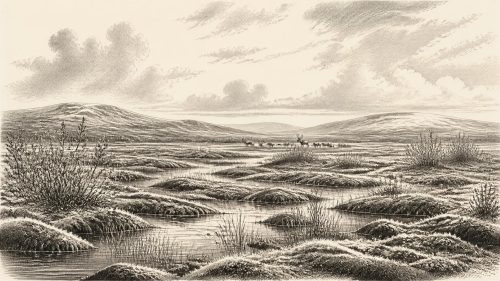
Derryvree, County Fermanagh, preserves freshwater silts between glacial tills, dating broadly to MIS 3 and indicating a temporary ice-free interval around 36,900–31,700 years ago. Its pollen, plants and insects reveal cold, treeless tundra wetlands with local ecological variation amid unstable climate. Cave fauna from Castlepook, County Cork, demonstrates changing communities including reindeer, mammoth and predators, although early excavations limit precision. A marked reindeer femur may indicate Upper Palaeolithic human activity about 33,000 years ago, but cannot prove settlement. Ireland was approaching renewed glaciation; evidence instead supports dynamic environments, cold-adapted animals and possibly brief mobile human visits during this broad interval.

Derryvree’s Coldwater Archive
Around 31,730 BCE, Ireland has no recoverable annual history, only fragmentary Ice Age evidence. Derryvree, County Fermanagh, preserves freshwater silts between tills, radiocarbon dated broadly to 36,900–31,700 calibrated years before present, indicating local tundra wetlands before later glaciation. Comparable northern deposits and Crag Cave demonstrate cold but variable MIS 3 conditions. Southern caves, especially Castlepook, contain diverse fauna including mammoth, reindeer and hyaena, though bones may represent separate episodes. A cut-marked reindeer femur suggests possible Upper Palaeolithic visits, not proven settlement. Later ice erosion and sea-level change destroyed evidence. No political, agricultural, cultural or trade history can be established there.

Castlepook’s Reindeer Corridor
31,729 BCE is not a precise Irish historical date but an approximate position within unstable MIS 3, about 33,700 calibrated years before present. Evidence from Derryvree, Fermanagh, indicates cold, treeless freshwater wetlands supporting sedges, mosses and other adapted life. Castlepook Cave, Cork, preserves fauna including reindeer, mammoth, giant deer, hyaena and Arctic fox, showing ecological links with north-west Europe, although bones may be mixed. A marked reindeer femur possibly records human butchery, suggesting only occasional Upper Palaeolithic visitors, not settlement. No politics, trade or culture can be demonstrated. Growing, uneven ice sheets increasingly transformed habitats and obscured fragmentary Ice-Age records.

Derryvree’s Water-Milfoil Record
Approximately 31,728 BCE, Ireland lay in the climatically unstable Late Pleistocene, within MIS 3, rather than a recoverable historical year. Derryvree, County Fermanagh, preserves freshwater sediments between glacial tills, indicating cold, open, largely treeless wetlands with hardy plants during an ice-free interval. Other Ulster sites support environmental fluctuation. Castlepook Cave’s long-lived faunal assemblage records mammals including mammoth, reindeer, lemmings, hyaena and foxes, but not a single contemporaneous community. A modified reindeer bone may indicate an early human visit, yet permanent occupation remains unproven. Falling temperatures preceded later glaciation, while sparse, uncertain evidence rules out claims about societies, beliefs or events.

Derryvree’s Muskeg Interlude
Labelled 31,727 BCE, this interval cannot be reconstructed as a single Irish year, but falls within late Marine Isotope Stage 3. At Derryvree, County Fermanagh, freshwater silts between glacial tills record an ice-free, periglacial tundra landscape of wetlands, sedges, mosses and sparse vegetation, later overridden by ice. Castlepook Cave, County Cork, preserves cold-adapted fauna including reindeer, mammoth, giant deer, bears and hyaenas, though its deposits span long periods. A cut-marked reindeer femur may indicate early human activity, but remains unconfirmed. Lower sea levels altered coasts, while renewed glaciation increasingly reshaped Ireland’s unstable, ecologically active landscape during this climatically variable period.
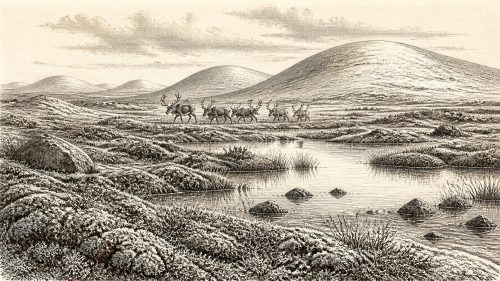
Birm-166’s Pollen Archive
31,726 BCE is a modern label within an imprecisely dated Late Pleistocene interval, rather than a recoverable Irish year. Derryvree, County Fermanagh, preserves freshwater organic sediments between glacial tills, indicating locally ice-free, cold, wet, treeless tundra and muskeg during MIS 3. Castlepook Cave, County Cork, contains a long-accumulated fauna including mammoth, reindeer, giant deer, bear and hyena, but not a single-date census. A marked reindeer femur may indicate Upper Palaeolithic butchery, although it proves neither settlement nor continuity. Ice advances later buried or destroyed evidence. Together these fragmentary archives reveal regionally varied, unstable landscapes, animal life, and possible human visitors.

Derryvree’s Bogbean Marsh
31,725 BCE is a modern label, not a datable Irish year. Evidence from Derryvree, County Fermanagh, indicates a freshwater marsh between glacial advances during MIS 3, containing bogbean, mosses, sedges, herbs and cold-adapted insects. It suggests local treeless tundra-steppe conditions, not continuous ice cover, although dates span centuries or millennia. Ireland’s ice sheet fluctuated regionally; Kerry speleothems record intermittent milder phases. Cave remains show that cold-environment mammals reached Ireland at various times, but deposits are chronologically complex. No securely dated human occupation exists. Together, these records portray Pleistocene landscapes of wetlands, exposed ground, fauna and advancing ice, beyond annual precision.
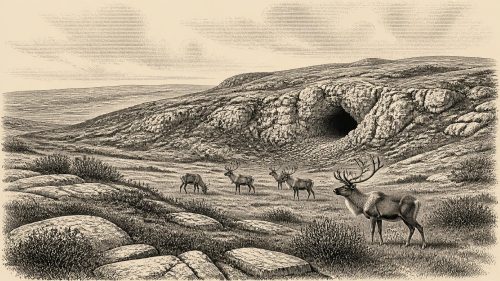
Doneraile’s Cave Interval
Around 31,724 BCE, a modern projection rather than a contemporary date, Ireland lay in unstable late Marine Isotope Stage 3, before the Last Glacial Maximum. Expanding ice sheets, lower seas and shifting landscapes shaped a cold, variably open environment. Castlepook, or Doneraile, Cave in County Cork preserves Ireland’s richest pre-maximum vertebrate record, including mammoth, reindeer, giant deer, bear, hyaena, lemming, Arctic fox and wolf. Revised radiocarbon dates place fauna in MIS 3. A cut-marked reindeer bone may indicate Upper Palaeolithic human activity, but no secure settlement evidence exists. The cave documents changing ecosystems, while glacial erosion and preservation constrain interpretation.
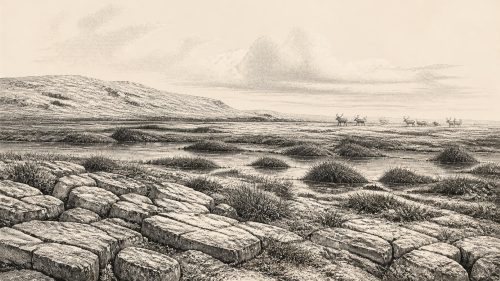
Doneraile’s Scored Reindeer Femur
31,723 BCE is an approximation within unstable Marine Isotope Stage 3, not a datable Irish event. Before the Last Glacial Maximum, parts of Ireland remained ice-free, supporting treeless periglacial wetlands, tundra vegetation and cold-adapted animals. Deposits at Derryvree and Greenagho demonstrate changing environments, while Castlepook Cave preserves faunal remains accumulated over millennia, including mammoth, reindeer and hyaena. A scored reindeer femur, dated broadly to about 33,000 years ago, may indicate Upper Palaeolithic butchery. However, disturbed cave contexts and absent associated tools or settlements prevent proof of permanent occupation. Glaciation and sea-level rise destroyed evidence; Ireland’s human presence therefore remains uncertain.

Elephant Hall’s Reindeer Femur
Around 31,722 BCE, Ireland lay within the cold, unstable Marine Isotope Stage 3, before maximum glaciation. Lower sea levels altered surrounding landscapes, though animal and possible human routes remained uncertain. Castlepook Cave, County Cork, preserves evidence of reindeer, mammoth, giant deer, hyaena and other cold-stage fauna, demonstrating intermittent habitability. A reindeer femur bearing a possible stone-tool cut mark may indicate fleeting human activity, but cannot prove settlement or permanent occupation. Complex cave deposits and revised radiocarbon dating require caution. Wetland and pollen records suggest varied open tundra, sedges and river corridors. Ireland’s deepest past is reconstructed from fragmentary environmental evidence.
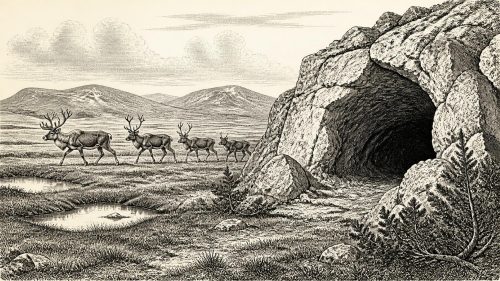
Castlepook’s Marked Reindeer
Rather than marking an exact event, 31,721 BCE falls within the uncertain, climatically unstable MIS 3 period. Derryvree sediments in Fermanagh show an ice-free, treeless tundra wetland with freshwater habitats, while Crag Cave calcite records intermittent milder conditions. Castlepook Cave, County Cork, preserves diverse fauna, including mammoth, giant deer, reindeer, hyaena and lemmings, demonstrating Ireland’s connection to wider European cold-stage ecosystems. A cut-marked reindeer femur may indicate Upper Palaeolithic butchery, but remains contested and cannot prove settlement. Later glaciation likely destroyed or buried earlier evidence. Ireland was a variable, biologically active landscape, perhaps only potentially briefly visited by mobile hunter-gatherers.

Derryvree’s Periglacial Wetland
Circa 31,720 BCE, Ireland lay within the climatically unstable Middle Midlandian, when evidence records environments rather than societies. At Derryvree, County Fermanagh, organic freshwater sediments between two till sheets reveal a periglacial wetland with tundra vegetation, seasonal open water and changing ice conditions, dated broadly to c.36,900–31,700 cal BP. Castlepook Cave, County Cork, preserves diverse Ice Age fauna, including mammoth, reindeer, giant deer, predators and lemmings, accumulated over millennia. A cut-marked reindeer femur may indicate brief human butchery, but remains unconfirmed. No settlement, polity, trade or culture is evidenced. Subsequent ice-sheet expansion eroded and buried much of this deep record.

Maguirebridge’s Bogbean Seed
31,719 BCE is a modern label within a broad, uncertain Late Pleistocene dating range, rather than a recoverable Irish year. Derryvree, County Fermanagh, preserves freshwater sediments between glacial tills, indicating cold, wet tundra-like habitats with sedges, mosses, bogbean and mountain avens during an ice-free local interval. Castlepook Cave, County Cork, contains time-mixed remains of reindeer, mammoth, giant deer, predators and other cold-adapted animals, but cannot reconstruct one contemporary fauna. A possibly tool-marked reindeer bone suggests early human visitation, yet no secure evidence proves settlement or recurrent occupation. Ireland’s landscape, access routes and ice margins remained unstable; later history is unknowable.

Cork’s Palaeolithic Cutmark
Around 33,700 years before present, during the volatile later Marine Isotope Stage 3, Ireland contained open tundra, grassland, wetlands and changing ice margins. Castlepook Cave near Doneraile, County Cork, yielded over 2,000 bones, documenting reindeer, mammoth, giant deer, bears, hyaenas and other Ice-Age fauna. A reindeer femur, dated to roughly 33,000 years ago, bears an incision possibly made by a stone tool during butchery. This may represent Ireland’s earliest human activity, but remains contested. The bone neither proves permanent settlement nor identifies routes of arrival. Glacial erosion and disturbed cave deposits limit certainty, requiring further dating, microscopy and associated artefacts.
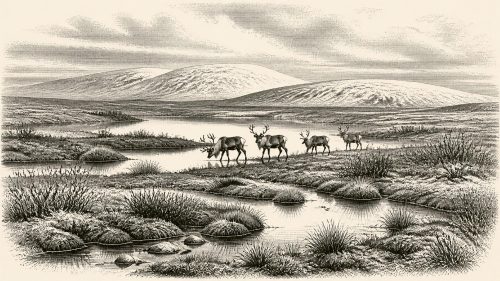
Derryvree’s Mossy Basin
Labelled 31,717 BCE only by modern calibration, this period in Ireland belongs to the fluctuating cold of Marine Isotope Stage 3, not a recoverable single year. Derryvree, County Fermanagh, preserves freshwater organic beds between tills, showing an ice-free wetland of mosses, sedges and open tundra-like vegetation between glacial advances. Crag Cave mineral deposits indicate intermittent milder conditions. Castlepook Cave’s MIS 3 fauna included mammoth, reindeer, giant deer, predators and cold-adapted mammals, although deposits were mixed. A cut-marked reindeer femur may indicate human butchery, but no settlement evidence exists. Subsequent ice-sheet expansion buried or erased much evidence before eventual later deglaciation.

Castlepook’s Ambiguous Chopping Mark
Labelled 31,716 BCE, this period belongs broadly to Marine Isotope Stage 3, not a precisely datable Irish year. Fermanagh deposits at Derryvree and Greenagho indicate cold, ice-free freshwater wetlands during parts of the Late Pleistocene, before advancing ice sheets reshaped Ireland. Castlepook Cave in County Cork yielded Ice-Age fauna, including a reindeer femur with a possible stone-tool butchery mark. Though potentially early evidence of human activity, its old, poorly contextualised collection and lack of associated tools or occupation evidence prevent conclusions about settlement. Lower sea levels did not ensure access; animal and human movements remained uncertain. Later glaciation obscured evidence.
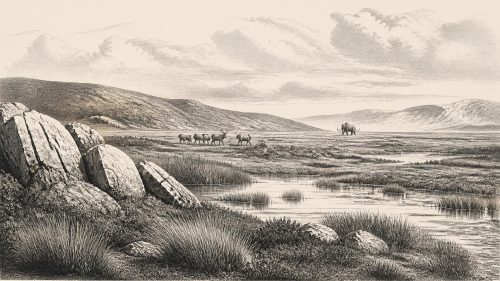
Cork’s Pleistocene Crossroads
Around 31,715 BCE, Ireland lay in the unstable Late Pleistocene before the Last Glacial Maximum, when climate, ice extent and coastlines changed. Evidence comes from animal bones, wetland sediments, pollen and glacial deposits, not historical records. Castlepook Cave in County Cork contained cold-adapted fauna; a reindeer femur bearing a possible stone-tool cut mark may indicate human carcass processing about 33,000 years ago. However, disturbed cave deposits and absent associated tools preclude claims of settlement. Derryvree and other inter-till sites reveal open tundra wetlands and regional environmental variation. Ireland may have hosted intermittent visitors, but sustained Upper Palaeolithic occupation remains unproven.

Derryvree’s Drumlin Window
Around 31,714 BCE, Ireland lay within the climatically unstable Late Pleistocene, not a dated historical moment. Evidence from Derryvree, County Fermanagh, records an ice-free freshwater wetland of open, treeless tundra-like vegetation during later MIS 3, subsequently buried by glacial deposits. Castlepook Cave, County Cork, preserves a complex, long-lived fauna including mammoth, giant deer, reindeer, bears and hyaenas, but not a single contemporary community. A possibly tool-marked reindeer bone suggests tentative Upper Palaeolithic human activity, yet no settlement, tools or other secure assemblage confirms occupation. Changing ice, sea levels and erosion shaped connections and destroyed evidence, leaving ecological and geological history.
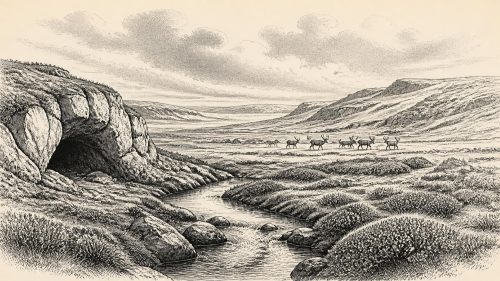
Castlepook’s Reindeer World
Castlepook Cave in north County Cork preserves Ireland’s richest known Late Pleistocene vertebrate archive, spanning roughly 45,700 to 19,950 years before present. During fluctuating Marine Isotope Stage 3, open, cold-adapted habitats supported reindeer, mammoth, giant deer, bears, hyaenas, wolves and lemmings, amid changing seas and growing ice. Cave deposits are disturbed and accumulate over long periods, preventing a precise reconstruction for 31,713 BCE. A reindeer femur bearing a possible stone-tool cut mark may indicate human butchery around 31,000 BC. However, no associated tools, hearths, occupation layers or settlement evidence exist. Castlepook therefore suggests possible brief human presence, not proven habitation.

Derryvree’s Open-Water Interval
31,712 BCE is a modern label for a broad late Marine Isotope Stage 3 interval, not a recoverable annual date. At Derryvree, County Fermanagh, freshwater silts between glacial tills record an ice-free phase, supporting cold, open wetlands of mosses, sedges, grasses, insects and sparse shrubs. Comparable deposits and Kerry cave calcite demonstrate repeated climatic oscillations. Southern caves preserve mammoth, reindeer, giant deer, predators and other fauna, although dates and deposits require caution. No secure evidence establishes human settlement; a possibly cut reindeer bone suggests only a potential brief visit. Later British–Irish Ice Sheet expansion transformed and buried this periglacial landscape.
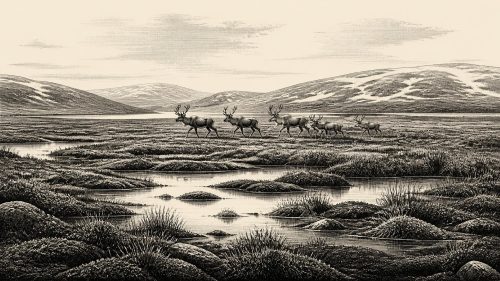
Doneraile’s Reindeer Question
Around 31,711 BCE, Ireland’s history can only be reconstructed through broad archaeological and environmental evidence. During unstable MIS 3 conditions, Derryvree in County Fermanagh preserved an ice-free, periglacial wetland with tundra vegetation. Castlepook Cave near Doneraile yielded remains of reindeer, mammoth, giant deer, hyaena and other Ice-Age animals, accumulated over extended periods. Revised dating places much fauna in MIS 3. A marked reindeer femur may record human carcass processing about 33,000 years ago, suggesting possible brief Upper Palaeolithic visits. However, no secure settlement, tools, hearths or social evidence survives. Ireland remained a changing cold landscape, not a recoverable historical society.

The Cork Reindeer Mark
Around 31,710 BCE, a notional date within Marine Isotope Stage 3, Ireland experienced unstable cold conditions before the Last Glacial Maximum. Fossils and sediments show that intermittently accessible, open landscapes supported reindeer, mammoth, giant deer, predators and northern species. Castlepook Cave in County Cork preserves Ireland’s pre-glacial fauna collection, although its mixed, recorded deposits cannot establish contemporaneous communities. A reindeer femur, dated broadly to about 33,000 years ago, bears a possible stone-tool cut mark, suggesting but not proving brief human butchery. Without associated artefacts or habitation evidence, it cannot demonstrate settlement. The find nevertheless suggests a deeper Irish Palaeolithic past.

Maguirebridge’s Frostbound Fen
Labelled 31,709 BCE only conventionally, this period in Ireland belongs to unstable Late Pleistocene Marine Isotope Stage 3, not a precisely datable event. Derryvree, near Maguiresbridge, preserves freshwater sediments indicating treeless, frost-prone tundra, wetland plants and enduring seasonal ecosystems. Castlepook Cave's bones, accumulated over millennia, document mammoth, giant deer, reindeer, hyaena and other cold-adapted fauna. A possibly stone-tool-cut reindeer femur suggests an early human visit or butchery, but proves neither settlement nor continuous population. Subsequent ice-sheet expansion reshaped and obscured evidence. Ireland was environmentally dynamic, ecologically active and sparsely documented, with claims about society, identity or politics unsupported by evidence.
Crag Cave’s Interrupted Calcite
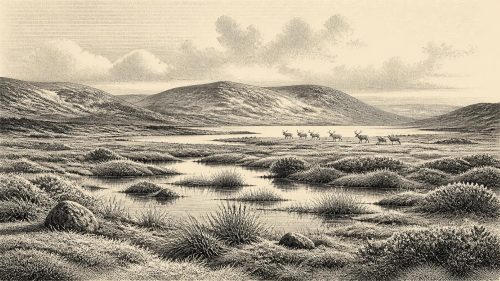
Around 31,708 BCE, Ireland was part of a climatically unstable Late Pleistocene landscape, not a place with a recoverable annual history. Derryvree sediments in Fermanagh indicate cold, open, waterlogged tundra-like habitats with mosses, sedges and northern insects during a broad period encompassing this date. Ice margins, sea levels and vegetation shifted repeatedly before the Last Glacial Maximum. Crag Cave stalagmites record intermittent milder phases, while southern caves preserve varied cold-stage mammals. Castlepook’s marked reindeer bone may indicate human processing, but lacks secure archaeological context. Evidence supports transient animal habitats and possible brief human visits, not settlement, society or political events.
Hyenahall’s Open-Country Fauna
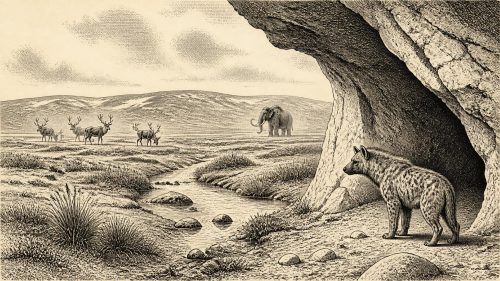
Labelled 31,707 BCE, this period in Ireland belongs broadly to fluctuating Marine Isotope Stage 3, rather than a precisely datable year. Sparse, disturbed evidence indicates that some open, cold landscapes supported mammoth, reindeer, giant deer, lemmings, Arctic foxes, wolves, bears and spotted hyaenas before extensive later glaciation. Castlepook Cave in County Cork accumulated bones over millennia and uniquely records Irish spotted hyaena, revealing overlapping animal activity rather than a single fauna. Fermanagh deposits confirm cold freshwater tundra conditions. A possibly cut-marked reindeer bone suggests human presence, but no secure evidence demonstrates sustained settlement, population, culture or institutions. Ice obscured evidence.
Hollymount Between the Tills
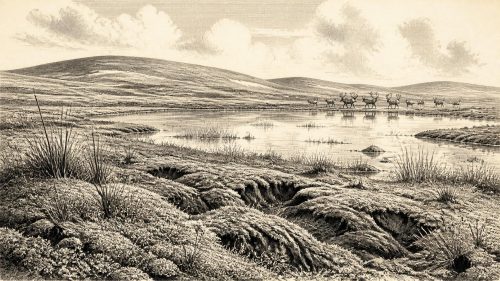
Although labelled 31,706 BCE, this period cannot be dated to a specific Irish year and belongs broadly to later Marine Isotope Stage 3. Freshwater sediments between glacial tills at Derryvree, Fermanagh, reveal treeless, tundra-like wetlands during fluctuating cold conditions, while Hollymount and Greenagho confirm varied non-glacial episodes. Castlepook Cave, Cork, preserves MIS 3 remains of mammoth, giant deer, reindeer, bear, hyena and other fauna, showing ecological links with Britain and Europe. Possible human modification of a reindeer bone suggests seasonal visits, but no secure occupation is known. Ireland’s record documents environmental change and animal life, not settlements, politics or culture.

Castlepook’s Unfinished Question
Around 31,705 BCE, Ireland lay within the unstable MIS 3 Ice Age, with lower seas, uncertain animal routes and changing periglacial environments. Derryvree sediments in Fermanagh indicate open tundra wetlands supporting cold-adapted plants and small animals, rather than forest or agriculture. Castlepook Cave in Cork preserves diverse fauna, including mammoth, reindeer, giant deer, bears, wolves, foxes, lemmings and hyenas, though its mixed deposits cannot reconstruct one community. A cut-marked reindeer bone may indicate an early human visit, but lacks secure archaeological context. No settlement, institutions or trade are evidenced. Dating and stratified excavation are needed to assess Ireland’s Palaeolithic presence.

Mammoth Cave’s Thin Evidence
Around 31,704 BCE, Ireland lay within an unstable Late Pleistocene cold phase, not a precisely datable historical year. Evidence indicates varied, severe environments before maximum ice-sheet expansion. Derryvree, County Fermanagh, preserves freshwater deposits, tundra vegetation, insects and seasonal wet ground, while Crag Cave calcite suggests episodic liquid water. Castlepook Cave, County Cork, yielded mammoth, reindeer, giant deer, bears, hyaena and other fauna, demonstrating habitats for cold-stage animals. A marked reindeer femur may record butchery by Upper Palaeolithic people, but its disturbed context and uncertain interpretation prevent claims for settlement. No communities, artefacts, structures or institutions are securely known. Uncertainty endures.

Aghnadarragh’s Treeless Plain
Around 31,703 BCE, Ireland lay within the climatically unstable Late Pleistocene, as ice expanded before its later maximum. Later glaciation destroyed much evidence, but northern buried sediments preserve pollen, plants and beetles indicating treeless, cold grass-sedge tundra, wet hollows and Arctic-like conditions. Southern caves contain reindeer, giant deer, mammoth, bears, wolves and hyaenas, demonstrating changing habitats and animal movement. A cut-marked Castlepook reindeer bone may suggest transient human activity, but cannot prove settlement or occupation. Shifting seas and ice complicated access to Ireland. No evidence supports societies, trade or institutions. This period is understood through fragmentary deposits and radiocarbon ranges.

Castlepook’s Mammoth Galleries
At the notional date of 31,702 BCE, Ireland lay within the climatically volatile Late Pleistocene, approaching extensive glaciation. Precise dating and ice coverage are impossible to establish, since later ice destroyed or buried much evidence. Castlepook Cave in County Cork preserves mixed MIS 3 deposits containing mammoth, reindeer, giant deer, bears, wolves, Arctic foxes, lemmings and spotted hyaenas, indicating cold, open habitats and links with European fauna. Carnivore activity complicates interpretation. A possibly cut-marked reindeer bone offers disputed evidence of human presence, but no securely dated settlements, tools or human remains exist. Castlepook demonstrates environmental change, habitation possibilities, and uncertainty.

Doneraile’s Ice-Age Hinterland
At the approximate horizon labelled 31,701 BCE, Ireland lay within the cold, unstable later Marine Isotope Stage 3, with open, largely treeless habitats and changing coastlines. Castlepook Cave near Doneraile preserves Ireland’s foremost cold-stage mammal archive, including mammoth, reindeer, giant deer, hyaena, Arctic fox and lemmings, although disturbed, time-depth deposits prevent their coexistence being assumed. A marked reindeer femur may indicate Upper Palaeolithic butchery, yet provides no secure proof of settlement. As ice expanded towards the Last Glacial Maximum, erosion and reworking obscured earlier evidence. This period is understood chiefly through environmental remains, not political, cultural or social history alone.