

31900–31801 BCE

Maguirebridge’s Moss-Rich Silt
Around 31,900 BCE, Ireland’s history is reconstructed from environmental rather than written evidence. Freshwater silts at Derryvree, County Fermanagh, dated broadly to 36,900–31,700 calibrated years BP, preserve a cold, treeless wetland of grasses, sedges, herbs and mosses between glacial deposits. Greenagho confirms earlier ice-free intervals, while ice-sheet growth and retreat made conditions regionally variable. Castlepook Cave, County Cork, contains cold-stage fauna, though deposits span periods and dating remains uncertain. A cut-marked reindeer bone may indicate early human visits, but no secure evidence demonstrates permanent settlement. Glaciers later destroyed or buried evidence, leaving fragmentary records of Ireland’s changing Ice Age landscape.

Fermanagh’s Mossy Pools
Around 31,899 BCE, Ireland lay within the cold, unstable Marine Isotope Stage 3, before the Last Glacial Maximum. Lower sea levels and shifting ice margins altered connections with Britain and Europe, without proving a continuous land route. Derryvree, County Fermanagh, preserves sediments showing an ice-free interlude of treeless wetlands, mosses, pools, grasses, insects and severe seasonal conditions. Castlepook Cave records diverse cold-stage fauna, including mammoth, reindeer, giant deer, wolves and hyaenas, though species did not necessarily coexist. A possibly tool-marked reindeer bone suggests early human activity, but requires testing. No settled communities, economy or social history can be securely reconstructed.
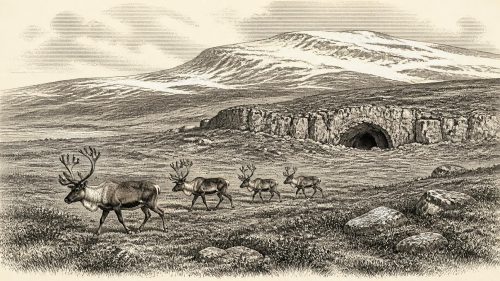
Castlepook’s Reindeer Passage
Circa 31,898 BCE, Ireland lay within the climatically unstable later Marine Isotope Stage 3, not a precisely datable historical year. Castlepook Cave in County Cork preserves the island’s richest faunal archive from this period, including mammoth, reindeer, giant deer, hyaena, wolf and Arctic fox, indicating changing cold, largely open environments. A reindeer bone bearing a possible stone-cut mark may record brief Palaeolithic butchery, but disturbed deposits and absent tools or occupation layers preclude claims of settlement. Altered coastlines may have enabled visitors’ arrival. Approaching glaciation later erased much evidence, making Castlepook’s fragmentary record vital yet necessarily cautious for Irish prehistory.

Doneraile’s Faunal Corridor
Around 31,897 BCE, a modern label corresponding approximately to 33,800 calibrated years before present, Ireland lay within the variable later Pleistocene, before the Last Glacial Maximum. Castlepook Cave near Doneraile, County Cork, preserves Ireland’s richest long-term faunal archive, containing mammoth, giant deer, reindeer, bears, hyaenas and other animals. These remains show intermittent habitats for substantial mammals, but cave processes and early excavation complicate interpretation. A possibly cut-marked reindeer bone may indicate very early human activity, yet remains unconfirmed. No secure contemporary settlements, tools, hearths or human remains exist. Ice reshaped landscapes, leaving cave deposits as fragmentary records of environmental change.
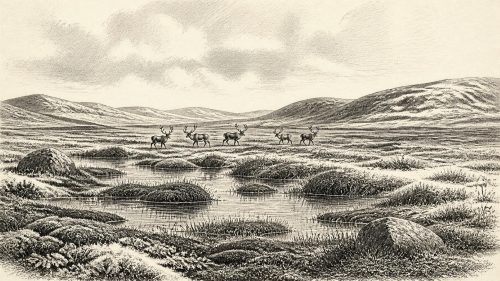
Maguirebridge’s Tundra Lake
About 31,896 BCE, a modern label, Ireland lay in later Marine Isotope Stage 3, before the Last Glacial Maximum. Derryvree near Maguiresbridge preserves sediments beneath glacial tills, indicating ice-free northern ground with treeless tundra, wetlands, pools and cold-adapted plants and insects. Cave evidence from Cork records MIS 3 fauna including mammoth, reindeer, giant deer, bears and hyaenas, though remains span episodes and disturbed contexts. Kerry speleothems indicate milder conditions. Ice expansion was regionally varied and intensified later. No secure human settlement dates to this period; possible butchery evidence remains uncertain. Surviving sediments, bones and calcite reveal a diverse Ice-Age landscape.

Derryvree’s Arctic Lake
At the notional date of 31,895 BCE, Ireland lay within the climatically unstable Marine Isotope Stage 3, before maximum glaciation. Its ice sheet, coastlines and habitats changed markedly across Ireland, precluding a precise national reconstruction. Buried lake sediments at Derryvree, Fermanagh, dated broadly to 36,900–31,700 years before present, demonstrate freshwater and sparse tundra-steppe life during an ice-free interval. Castlepook Cave, Cork, preserves MIS 3 fauna including reindeer, mammoth and predators, though not necessarily contemporaneous. No secure human settlement exists. A possibly tool-marked reindeer bone suggests provisional human activity. Radiocarbon calibration, stratigraphy and environmental proxies provide evidence, but retain substantial uncertainty.
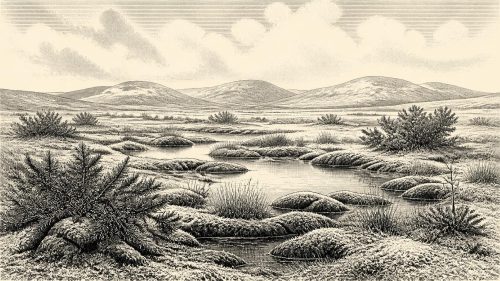
Derryvree’s Treeless Marsh
Around 31,894 BCE, Ireland lay within the unstable Late Pleistocene environment of Marine Isotope Stage 3. Derryvree, County Fermanagh, preserves a marshy, treeless tundra deposit between older and later glacier tills, indicating a temporary ice-free interval. Mosses, grasses, sedges, juniper, herbs and insects supported productive wetland ecosystems despite severe cold and seasonal freezing. Elsewhere, cave remains show that mammoths, giant deer, reindeer, bears, hyaenas and other mammals occupied Ireland during the broader period, though not necessarily simultaneously. Ice-sheet extent, coastlines and migration routes remain uncertain. No secure evidence demonstrates human settlement; possible butchery marks suggest only a tentative, brief visit.
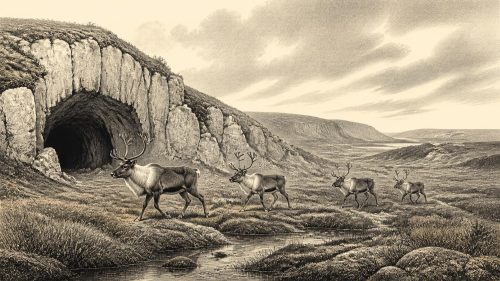
The Doneraile Femur
Castlepook Cave near Doneraile, County Cork, contains a reindeer femur whose deep mark may represent Ireland’s earliest evidence of human activity, perhaps from stone-tool butchery around 33,800 years ago. The date is a broad Late Pleistocene MIS 3 estimate, not a precise annual event, and bone dating records animal death rather than human handling. Excavated deposits were disturbed and include scavenger-accumulated fauna, limiting conclusions. Mammoth, reindeer, giant deer and carnivores indicate cold, open, intermittently habitable landscapes and changing access routes. The find suggests possible brief forager presence, but proves neither settlement, culture, identity nor permanent occupation in Ice Age Ireland.
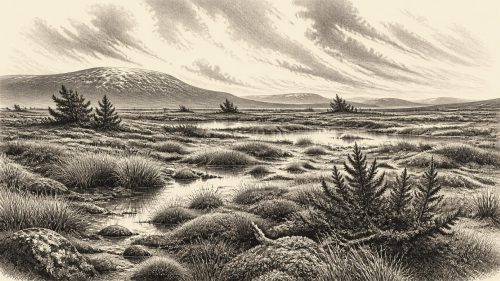
Maguirebridge Between the Tills
Labelled 31,892 BCE, this period cannot be dated to a single Irish calendar year, but falls within Marine Isotope Stage 3. At Derryvree, County Fermanagh, freshwater sediments between glacial tills indicate locally ice-free, treeless tundra, with wetlands, grasses, sedges, herbs, juniper, mosses and severe seasonal conditions. Castlepook Cave, County Cork, preserves mixed evidence of mammoth, reindeer, giant deer and predators, demonstrating intermittent cold-adapted fauna. Possible stone-tool cuts on a dated reindeer bone may suggest brief human visits, but do not prove settlement. Later ice-sheet expansion reshaped or destroyed evidence, leaving a dynamic, sparsely documented glacial Ireland at its western edge.

The Derryvree Drumlin Archive
Around 31,891 BCE, Ireland experienced fluctuating Late Pleistocene cold during Marine Isotope Stage 3, not the later glacial maximum. Derryvree, County Fermanagh, preserves freshwater silts dated broadly to this period, revealing treeless, wet, tundra-like ground between glacial advances. Expanding upland ice, permafrost, seasonal thaw and altered drainage shaped a changing landscape, while lower sea levels modified coasts and possible migration routes. Cave remains show mammoths, reindeer, hyaenas and other mammals occupied Ireland during the wider period. Possible cut marks on a Castlepook reindeer bone may indicate early human visits, but no secure evidence demonstrates settlement, communities, institutions or sustained occupation.

Maguirebridge Sedge Basin
At roughly 31,890 BCE, Ireland was a climatically unstable Late Pleistocene landscape rather than a documented society. Derryvree sediments near Maguiresbridge, Fermanagh, dated broadly to 36,900–31,700 calibrated years BP, show ice-free freshwater habitats with sedges, mosses, herbs, beetles and periglacial tundra conditions. Other deposits and Crag Cave indicate alternating non-glacial and milder phases amid advancing ice. Castlepook Cave preserves time-mixed remains of cold-adapted and other mammals, demonstrating intermittent faunal connections with Eurasia. A marked reindeer bone may record early human butchery, but remains disputed and cannot prove settlement. Subsequent ice-sheet expansion transformed, buried and destroyed much of this fragile landscape.

The Doneraile Reindeer Clue
Around 31,889 BCE, Ireland lay in an unstable Late Pleistocene landscape, as cold intensified and the British–Irish Ice Sheet expanded. Derryvree sediments in Fermanagh reveal open, treeless tundra wetlands supporting grasses, sedges, mosses and grazing animals, although evidence is fragmentary. Castlepook Cave in Cork preserves remains of reindeer, mammoth, giant deer and other cold-stage fauna, but disturbed deposits prevent simple reconstructions. A marked reindeer femur, dated about 33,000 years ago, may record stone-tool butchery and a fleeting Upper Palaeolithic visit. It cannot demonstrate permanent settlement, precise travel routes, or tools, hearths, dwellings or social institutions. Ireland’s human presence remains uncertain.

Castlepook’s Wandering Herds
31,888 BCE is a modern label, not a securely datable Irish event. During Marine Isotope Stage 3, Ireland was a cold, open, climatically unstable landscape before maximum British–Irish Ice Sheet expansion. Derryvree sediments in Fermanagh indicate treeless marshes, with sedges, grasses and low shrubs. Castlepook Cave and other southern caves preserve mixed, imperfectly dated remains of mammoth, reindeer, giant deer, bears, wolves, hyaenas, foxes, hares and lemmings, demonstrating varied cold-stage fauna over time. No secure evidence establishes human settlement, politics or culture, although a possibly cut-marked reindeer bone merits investigation. Later glaciation reshaped Ireland and erased or buried earlier evidence.

Fermanagh’s Interstadial Mosses
Although 31,887 BCE cannot be treated as a recoverable Irish calendar year, it broadly falls within MIS 3, before the Last Glacial Maximum. Fragmentary evidence from Derryvree and Greenagho, County Fermanagh, records cold, open, wet tundra-like environments, with mosses, pools, sparse vegetation and later glacial burial. Castlepook Cave’s mixed fauna demonstrates varied cold-adapted animals, including reindeer, mammoth, giant deer and carnivores, but not a single contemporaneous community. A cut-marked reindeer bone may indicate brief human activity, yet remains uncertain. No settlements, culture, language or political organisation are known. Ireland’s surviving record chiefly reveals changing Ice Age ecology and advancing ice.
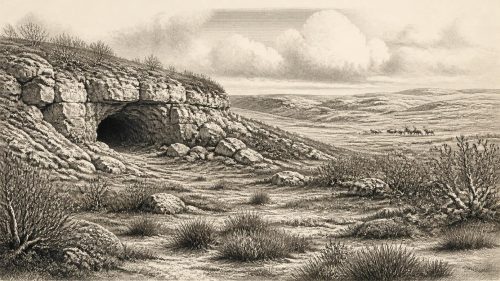
Elephant Hall’s Pleistocene Ledger
31,886 BCE is an imprecise modern label for a fluctuating MIS 3 Ice Age interval around 34,000 calibrated years ago, not a recorded Irish date. Ireland lacked known settlement, states and documentary history, but supported changing cold-adapted fauna. Castlepook Cave, County Cork, particularly Elephant Hall, preserves bones accumulated over millennia, including mammoth, reindeer, giant deer, bears, hyaenas and smaller mammals. Pollen and insect records indicate open, harsh, patchy landscapes. A reportedly cut-marked reindeer femur may signal Upper Palaeolithic butchery, yet remains unconfirmed and cannot demonstrate settlement. Later ice-sheet expansion destroyed or buried evidence, leaving ecological history clearer than human history.

Elephant Hall’s Bone Archive
31,885 BCE is a modern calendar equivalent, not a precisely datable Irish event, and belongs to fluctuating cold conditions of Marine Isotope Stage 3. Ireland’s advancing glaciers, exposed terrain and low sea levels created a changing landscape without a continental land route. Castlepook Cave in County Cork preserves Late Pleistocene remains including reindeer, mammoth, giant deer, hyaena and Arctic fox, indicating cold open habitats. A reindeer femur bearing possible stone-tool marks may suggest a human visit around 33,000 years ago, but disturbance, carnivore damage and absent finds prevent confirmation. No evidence establishes settlement, farming or continuous population; further work required.

Shandon Cave’s Bear Horizon
31,884 BCE is a modern, uncertain calendar conversion within Marine Isotope Stage 3, preceding the Last Glacial Maximum. Ireland experienced variable cold conditions, with shifting ice, periglacial terrain and habitable ice-free areas. Shandon Cave, County Waterford, contains a brown-bear bone whose calibrated range overlaps this period, demonstrating late-Pleistocene animal presence but not exact-year occupation. Cave finds from Shandon and Castlepook indicate intermittent access for mammals including reindeer, horse, mammoth, predators and bears across open, sparsely vegetated habitats. Possible cut marks on a Castlepook reindeer bone suggest, but cannot prove, a brief human visit. No evidence supports settlement or migration routes.

Derryvree’s Buried Lakebed
Around 31,883 BCE, Ireland lay within the unstable cold conditions of Marine Isotope Stage 3, rather than a documented historical era. Derryvree, County Fermanagh, preserves buried freshwater silts dated broadly to this period, demonstrating an ice-free, open tundra landscape before later glaciation. Climatic fluctuations occasionally created milder local conditions. Cave deposits, especially at Castlepook, record varied cold-adapted fauna, including reindeer, mammoth, giant deer and predators, but accumulated over millennia rather than simultaneously. A possibly cut-marked reindeer bone may indicate brief human activity around 33,000 years ago, though no settlement evidence exists. Subsequent ice expansion buried, eroded and obscured sparse record.

Shandon’s Red-Deer World
Around 31,882 BCE, Ireland was a climatically unstable Late Pleistocene landscape, not a settled or historically documented society. Calibrated radiocarbon evidence from Shandon Cave, County Waterford, indicates red deer were present during a broad period overlapping this date. Derryvree sediments in Fermanagh suggest cold, open, seasonally wet tundra habitats, while cave assemblages reveal changing communities of large herbivores, predators and small mammals. Later glaciation destroyed much evidence. Claims for early human visits, including a possibly cut-marked Castlepook bone, remain unproven. No secure Palaeolithic dwellings, tools or burials exist. Ireland’s record instead documents intermittent Ice Age ecological opportunity and fragmented survival.
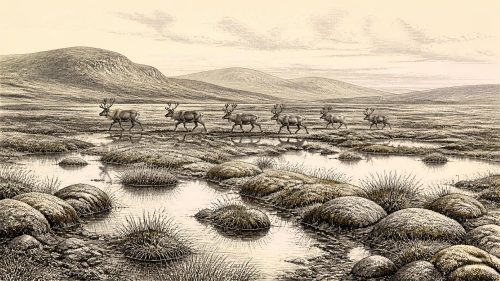
Greenagho’s Tundra Basin
About 31,881 BCE, Ireland lay within the unstable cold conditions of Marine Isotope Stage 3, rather than a precisely datable historical year. Buried freshwater deposits at Derryvree and Greenagho, County Fermanagh, show that north-central areas were periodically ice-free before later glacial advances, supporting treeless, waterlogged tundra of mosses, sedges and shallow pools. Cave remains at Castlepook, County Cork, demonstrate intermittent connections to wider European fauna, including reindeer, mammoth, horse, predators and lemmings. Possible stone-tool marks on a reindeer bone suggest brief human visits, but cannot prove settlement. Expanding ice subsequently covered most of Ireland, preserving only valuable fragmentary environmental evidence.

North Cork’s Single Incision
Around 31,880 BCE, Ireland was a cold, changing landscape on the north-western fringe of Upper Palaeolithic Europe, approaching but preceding the Last Glacial Maximum. Calendar precision is impossible; evidence consists chiefly of cave remains, sediments and glacial landforms. Castlepook Cave, north County Cork, contains Ireland’s richest pre-maximum vertebrate assemblage, including reindeer, mammoth, giant deer, bears and hyenas, indicating habitats able to sustain Ice Age fauna over millennia. Ice was advancing unevenly, though the extent of ice-free ground remains uncertain. A possibly cut-marked reindeer femur suggests a human visit, but lacks secure context. No evidence proves Palaeolithic settlement, society or continuity.

Derryvree’s Buried Fen
Derryvree in County Fermanagh preserves freshwater sediments beneath later glacial till from a broad period spanning the nominal date of 31,879 BCE. Mosses, herbaceous pollen and invertebrates indicate open, treeless tundra with cold wetlands during climatically unstable Marine Isotope Stage 3. Southern caves, especially Castlepook in Cork, contain reindeer, mammoth, hyaena and lemming remains supporting cold-adapted ecosystems. A cut-marked reindeer femur may indicate human butchery around 31,000 BC, but disturbed deposits and absent associated artefacts prevent claims of settlement. Ireland was intermittently ice-free and perhaps occasionally visited before the British–Irish Ice Sheet expanded towards its Last Glacial Maximum much later.
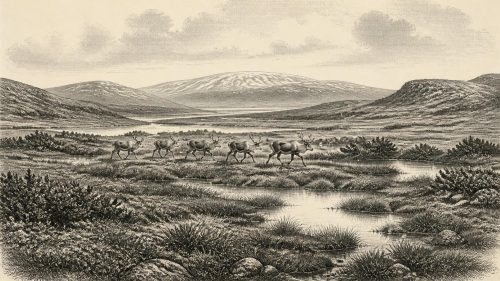
The Awbeg Faunal Window
Around 31,878 BCE, Ireland lay within the unstable cold conditions of Marine Isotope Stage 3, before the Last Glacial Maximum. Derryvree, County Fermanagh, preserves freshwater sediments indicating an ice-free, treeless wet-tundra landscape of sedges, grasses, mosses and juniper. Castlepook Cave, County Cork, yielded late Pleistocene fauna including reindeer, mammoth, giant deer, horse, bear, wolf, arctic fox and hyaena. These sites demonstrate surviving habitats and grazing land before major ice-sheet expansion. Possible butchered bones raise, but do not prove, human presence. No secure evidence supports settlement, farming, communities or specific events. Dating ranges, disturbed deposits and later glaciation require cautious interpretation.

Awbeg Valley Reindeer
31,877 BCE is a modern approximation for a broad later Pleistocene interval, not a recoverable Irish year. Before the Last Glacial Maximum, Ireland contained regionally varied, cold, open tundra and wetlands, evidenced by Derryvree deposits in Fermanagh. Castlepook Cave Cork’s Awbeg valley preserves fauna, including reindeer, mammoth, giant deer, predators and, accumulated across different times rather than one moment. A dated reindeer femur may bear human cut marks, suggesting brief Upper Palaeolithic visitation, but disturbed contexts prevent certainty. No settlements, tools, identities or social institutions are securely known. The evidence portrays active Ice Age ecosystems and possible early human presence.

The Castlepook Reindeer Question
Circa 31,876 BCE, Ireland was a cold, unstable Late Pleistocene landscape, not a historically documented country. Ice-free freshwater environments in Fermanagh, evidenced at Derryvree and Greenagho, show that later glaciation had not yet covered all regions. Castlepook Cave in Cork preserves remains of mammoth, giant deer, reindeer and other cold-adapted fauna, although deposits represent multiple episodes. A cut-marked reindeer femur may indicate brief human butchery or handling, but cannot prove settlement or continuity. Lower sea levels altered coasts without establishing certain migration routes. Expanding ice later transformed and obscured the landscape, leaving sediments and cave bones as the principal archive.

A Femur in North Cork
Around 31,875 BCE, Ireland was entering a colder, increasingly glaciated Late Pleistocene landscape, not yet at the Last Glacial Maximum. Ice, low sea levels, permafrost and open tundra-like habitats shaped a changing island supporting reindeer, horse, mammoth, giant deer and predators. Later glaciation destroyed or disturbed much earlier evidence. Castlepook Cave, County Cork, preserves a reindeer femur, reportedly about 33,000 years old, with possible stone-tool butchery marks. It may indicate a brief pre-glacial human visit, but poor early excavation contexts prevent certainty. No securely dated settlement, tools, hearths, burials or enduring population are known. The date chiefly illustrates evidence's limits.

Fermanagh’s Freshwater Silts
About 31,874 BCE, Ireland lay within the climatically unstable Late Pleistocene, not a date recoverable as a discrete historical year. At Derryvree, County Fermanagh, freshwater silts between till layers indicate an ice-free interval marked by treeless, periglacial terrain, cold-adapted insects, mosses and sedges. The last British–Irish Ice Sheet was building towards its later maximum, while conditions varied regionally and abruptly. Cave remains show a wider Pleistocene fauna, although assemblages cannot define contemporaneous communities. Secure evidence for human settlement is absent; possible early contact remains unproven. This period is understood through fragmentary environmental archives, not political, social or cultural history alone.

Crag Cave’s Interstadial Drips
Around 31,873 BCE, Ireland lay within the unstable MIS 3 phase of the last Ice Age, not a precisely recoverable calendar year. Ice, sea levels, rivers and vegetation changed repeatedly as conditions alternated between milder interstadials and severe stadials. Fermanagh sediments indicate treeless, cold freshwater wetlands with mosses, sedges and northern insects, while southern caves preserve remains of reindeer, giant deer, bears, hyaenas, foxes and hares. Crag Cave speleothems record episodic milder conditions permitting calcite growth. Human presence remains unproven: a possibly cut-marked Castlepook reindeer bone suggests a contested brief visit, whereas later secure evidence does not establish permanent settlement.
Dryas at Derryvree
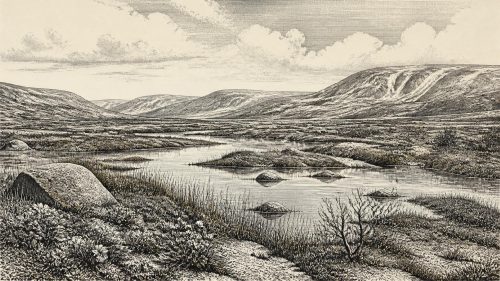
Nominally dated to 31,872 BCE, this period in Ireland belongs to the climatically volatile Late Pleistocene, not a precisely identifiable year. Derryvree, County Fermanagh, preserves freshwater silts between glacial tills, indicating open, treeless tundra with cold-adapted plants including mountain avens. Castlepook Cave, County Cork, contains time-mixed MIS 3 remains of mammoth, giant deer, reindeer, carnivores and smaller cold-stage fauna, but cannot represent one moment or island-wide conditions. A possibly cut-marked reindeer femur suggests human visitation, though disturbed context and absent tools, hearths or settlements prevent confirmation. Lower sea levels changed geography, while ice, habitats and possible access routes remained variable.

Reindeer Bone at Mammoth Cave
About 31,871 BCE is not a meaningful historical year but an approximate label for later MIS 3, roughly 34,000 calibrated years ago. Castlepook, or Mammoth, Cave in County Cork yielded a reindeer femur reportedly bearing stone-tool butchery marks. If confirmed, it may indicate a brief Upper Palaeolithic visit, not permanent settlement. Early excavation, mixed deposits and dating uncertainty require caution. The cave’s fauna, including reindeer, mammoth, giant deer, predators and lemmings, demonstrates a cold, open, changing landscape supporting animals before the glacial maximum. Ireland’s earliest secure human evidence remains a cut-marked bear bone from Clare, dated about 12,810–12,590 calibrated BP.

Doneraile’s Reindeer Threshold
The label 31,870 BCE denotes an approximate Late Pleistocene, Marine Isotope Stage 3 horizon, not a datable Irish year. Ireland experienced cold, periglacial conditions and growing ice, with open tundra-like landscapes and changing routes to Britain and Europe. Castlepook Cave near Doneraile preserves fauna including reindeer, mammoth, giant deer, hyaena, wolves and bears, accumulated over separate episodes. A reindeer femur, possibly cut by a stone tool about 33,000 years ago, may indicate brief Upper Palaeolithic human activity. However, disturbed cave deposits and limited evidence preclude claims of settlement, society or continuous occupation. Climate, ice and faunal movement dominate the record.

Celtic Shelf Horizons
Around 31,869 BCE, Ireland was a cold Late Pleistocene landscape, not a precisely datable historical moment. Before the Last Glacial Maximum, parts of the island remained ice-free, supporting open tundra wetlands, sedges, grasses, mosses and shallow freshwater habitats. Derryvree and Greenagho deposits in Fermanagh demonstrate these conditions, while cave evidence records climatic fluctuations and diverse fauna including mammoth, reindeer, giant deer, predators and smaller cold-adapted animals. Castlepook Cave suggests wider ecological links with north-west Europe, but its disturbed deposits limit precision. Human visits remain possible, yet no secure contemporary settlement exists. Expanding ice later reshaped and obscured much earlier evidence.

Fermanagh’s Silt Interval
Around 31,868 BCE, Ireland lay in the unstable later Marine Isotope Stage 3, as the British–Irish Ice Sheet expanded unevenly. Derryvree, County Fermanagh, preserves freshwater silts between tills, recording an ice-free, sedge-rich tundra wetland later buried by advancing ice. Castlepook Cave, County Cork, contains a complex fauna including mammoth, giant deer, reindeer, predators and cold-adapted species, indicating productive open landscapes during favourable intervals. Butchery marks on a reindeer femur may represent Ireland’s earliest human activity, but cannot prove settlement or continuity. Changing climate, sea levels and ice margins made access and survival precarious. Evidence supports intermittent opportunity, not permanent occupation.
Cork Caves, Fermanagh Silts
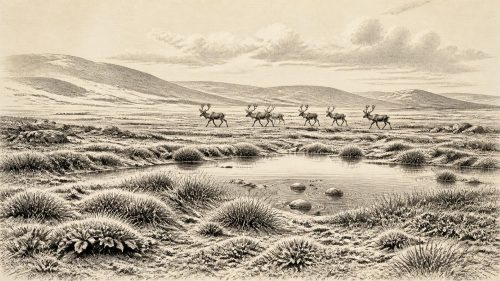
Around 31,867 BCE, Ireland formed part of a climatically unstable late Last Glacial Period landscape, rather than a recognisable historical year. Fermanagh deposits at Derryvree and Greenagho indicate local freshwater, tundra and periglacial conditions before major ice-sheet expansion. Open vegetation supported changing assemblages of cold-stage mammals, documented especially by mixed cave remains at Castlepook, County Cork. A cut-marked reindeer bone there may suggest brief human activity around 33,000 years ago, but cannot establish permanent settlement. Lower sea levels altered possible routes, without proving a land bridge. Later glaciation destroyed or obscured evidence, leaving environmental fragments rather than evidence of societies.
Castlepook’s Faunal Boundary
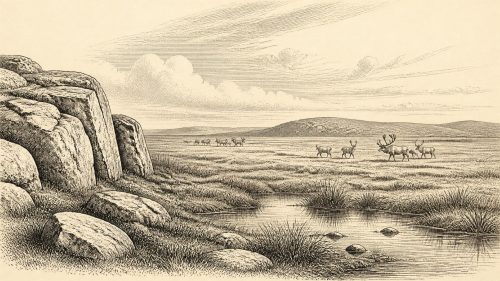
Approximately 33,800 years ago, Ireland lay within the climatically volatile Late Pleistocene, but neither its conditions nor ice extent can be fixed. Competing reconstructions suggest advancing ice alongside patches of open, treeless habitat supporting cold-adapted fauna. Organic deposits and cave assemblages document wetlands, grassland and mammals including deer, giant deer and spotted hyaena. Castlepook Cave provides MIS 3 evidence, revising animal chronologies and suggesting local disappearances before the Last Glacial Maximum. A marked reindeer bone may indicate an early human visit, but no secure settlement evidence exists. Uncertain sea routes, glacial erosion and records define this changing, intermittently habitable island.

Awbeg Limestone Fauna
The label 31,865 BCE denotes an approximate MIS 3 horizon, not an observable year. Ireland was a cold, unstable glacial landscape before the Last Glacial Maximum, with changing ice, lower seas and open habitats. Castlepook Cave near the Awbeg preserves major but imperfectly recorded fauna, including reindeer, mammoth, giant deer, predators and lemmings, showing repeated cold-stage ecological opportunities. Revised dating suggests some remains are older than first believed. A possibly cut-marked reindeer bone may indicate human handling, but insecure context precludes claims of settlement. No evidence supports polities, permanent communities, trade or culture. Later evidence cannot confirm this earlier possibility.

Maguirebridge’s Arctic Silts
At the notional date of 31,864 BCE, Ireland lay in the unstable MIS 3 phase before the Last Glacial Maximum, not beneath uniform ice. Lower seas altered coasts, while glaciers advanced unevenly. Derryvree deposits near Maguiresbridge preserve evidence of open, treeless tundra, wet hollows and severe periglacial conditions; other records show intermittent climatic amelioration. Castlepook Cave documents diverse cold-adapted fauna, including mammoth, reindeer, giant deer and hyaena, accumulated over extended periods. A cut-mark-like incision on a dated reindeer bone may indicate Upper Palaeolithic visitors, but disturbed contexts preclude certainty. No contemporary settlement exists; later glaciation and early excavation obscured traces.
Reindeer by the Awbeg
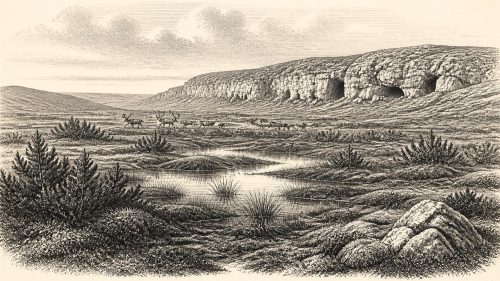
At roughly 31,863 BCE, Ireland experienced an unstable MIS 3 cold phase, with open, wet, treeless tundra recorded at Derryvree and intermittent milder conditions indicated by Crag Cave calcite. The Last Glacial Maximum was approaching, but Ireland was not uniformly ice-covered. Castlepook Cave in County Cork preserves diverse cold-stage fauna, including reindeer, mammoth and hyaena, accumulated over extended periods. A reindeer femur, dated broadly around 33,000 years ago, bears a possible cut mark suggesting human carcass processing. Without secure context, tools or campsites, this indicates only tentative, mobile Upper Palaeolithic visits. Ongoing investigation may clarify Ireland’s fragmentary pre-glacial human record.

Mammoth Cave, Derryvree Silts
About 31,862 BCE, Ireland lay within the volatile MIS 3 phase of the Late Pleistocene, before the Last Glacial Maximum. Derryvree sediments in Fermanagh indicate an ice-free but severe tundra wetland, supporting mosses, insects and freshwater life between roughly 36,900 and 31,700 years ago. Castlepook Cave in Cork preserves bones of mammoth, reindeer, giant deer, hyaena and other cold-adapted animals, although its deposits span millennia and do not represent one community. A possibly cut-marked reindeer bone suggests brief human activity, not settlement. Ireland was a changing landscape of wetlands, grazing animals, predators, caves and fluctuating ice during this remote period.
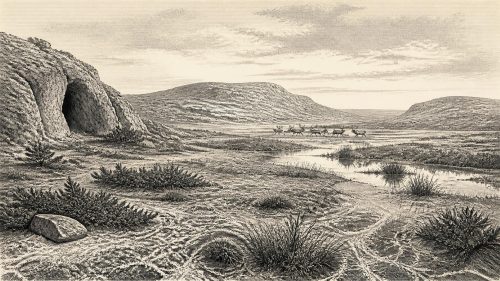
Juniper Beneath the Drumlins
Around 31,861 BCE, Ireland was a climatically unstable Late Pleistocene landscape approaching more extensive glaciation, not a historically documented society. Derryvree sediments in Fermanagh indicate open, treeless tundra or wet muskeg, with grasses, sedges, juniper, herbs and cold-adapted mosses. Castlepook Cave in Cork preserves remains of reindeer, mammoth, giant deer, bears, wolves, hyaenas, Arctic foxes and lemmings, demonstrating a diverse cold-stage fauna. Possible cut marks on a reindeer bone may indicate Upper Palaeolithic human activity, but remain unconfirmed and cannot prove settlement. Later ice reshaped and obscured older landscapes, leaving fragmentary evidence of Ireland’s ecological connection with Ice Age Europe.

Derryvree’s Tundra Sedgebeds
Around 31,860 BCE, Ireland cannot be described through a precise annual chronology, but through uncertain environmental evidence from Marine Isotope Stage 3. At Derryvree, County Fermanagh, organic silts beneath later till record an ice-free, cold landscape of sedges, mosses, wet basins and open tundra-like vegetation. Ice-sheet advance and retreat varied regionally, altering drainage and relative sea levels. Revised cave-bone dates from southern Ireland show brown bears, giant deer, hyaenas and mammoths during broad MIS 3 phases. No accepted evidence demonstrates human settlement then. Later glaciation destroyed much evidence, leaving a fragmentary prehistory interpreted through calibrated ranges, sediments, fossils and probabilities.
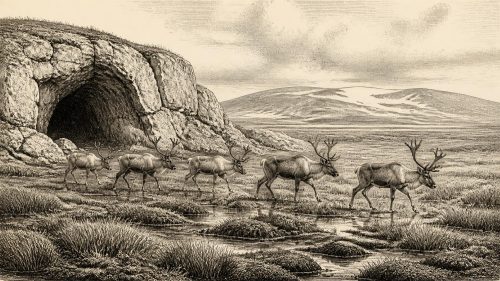
Doneraile’s Reindeer Trace
Around 31,859 BCE, Ireland lay within the climatically unstable Marine Isotope Stage 3 of the last Ice Age, although conditions and ice extent varied regionally. Freshwater deposits at Derryvree, County Fermanagh, preserve evidence of cold, open, wet tundra-like terrain, while other deposits remain fragmentary and difficult to date. Castlepook Cave, County Cork, yielded reindeer, mammoth, giant deer, bear and hyaena remains, demonstrating intermittent animal use of southern Ireland. Re-dating has complicated their chronology. A marked reindeer femur may indicate human butchery about 33,000 years ago, but lacks excavation context. No established Palaeolithic settlement, tools, hearths or social history is known.

Doneraile’s Butchery Debate
Around 34,000 years ago, Ireland was a climatically unstable late-Pleistocene landscape supporting diverse mammals, including mammoth, reindeer, giant deer, hyaena and bear. Castlepook Cave near Doneraile, County Cork, preserves important but disturbed faunal remains. A reindeer femur, tentatively dated around 31,000 BC, bears a mark interpreted as possible stone-tool butchery, raising the prospect of an exceptionally early human visit. However, the bone does not prove settlement, hunting, cultural affiliation or a permanent population. Cave deposits may reflect predators, natural processes and antiquarian excavation. Renewed research seeks intact stratigraphy, reliable dating and associated artefacts to clarify Ireland’s earliest possible human presence.

Derryvree’s Silted Tundra
31,857 BCE is a reference, not a datable Irish year. Derryvree, County Fermanagh, preserves organic silts beneath glacial till, radiocarbon-dated broadly to 36,900–31,700 calendar years ago, indicating cold, open tundra and freshwater habitats during an unstable pre-glacial period. Ice expansion was uneven and later reached its maximum around 26,000 years ago; land connections remain uncertain. Castlepook Cave, County Cork, records Ice Age fauna, but not a single contemporaneous community. A possibly cut-marked reindeer bone suggests a human visit, yet lacks settlement context. No evidence supports claims about society, culture or permanent settlement. These deposits reveal changing habitats at ice’s edge.

Derryvree Between Two Tills
At 31,856 BCE, Ireland was in Marine Isotope Stage 3, a climatically unstable later Pleistocene phase rather than a precisely recoverable year. Derryvree, County Fermanagh, preserves freshwater organic sediments between tills, demonstrating locally ice-free conditions before renewed glaciation. Its mosses, sedges, insects and other remains indicate treeless, wet tundra with shallow water, seasonal growth and severe winters. Cave and fossil evidence shows diverse cold-stage animals reached Ireland, although local dates and species distributions remain uncertain. No secure archaeological evidence proves resident humans. Lower sea levels altered landscapes, but expanding Irish ice later transformed habitats, drainage and shorelines across the island.

Elephant Hall’s Tundra Fauna
Around 31,855 BCE, Ireland formed a variable Late Pleistocene, Marine Isotope Stage 3 landscape rather than a uniformly ice-covered island. Derryvree sediments in Fermanagh record an ice-free, treeless, wet tundra of grasses, sedges, herbs, juniper, mosses and beetles, later overridden by glaciers. Castlepook Cave in Cork preserves bones accumulated over long periods, including mammoth, giant deer, reindeer, bear, wolf and hyaena, demonstrating wider European faunal connections but not coexisting assemblages. A possibly cut-marked reindeer bone suggests early human activity, yet settlement remains unproven. Lower sea levels aided animal dispersal, while evidence for trade, agriculture, politics, ritual or continuous occupation absent.

Castlepook’s Fading Fauna
Around 33,800 calendar years BP (31,854 BCE), Ireland stood near an advancing phase of the Midlandian glaciation, although it was not necessarily ice-covered. Climate was cold, open, wet and largely treeless, with tundra habitats evidenced at Derryvree, Fermanagh. Expanding ice, lowered seas and periglacial processes reshaped terrain and obscured earlier deposits. Castlepook Cave in north Cork preserves remains of reindeer, giant deer, mammoth, predators and other Pleistocene fauna, indicating cold-stage environments, but not a single contemporary community. Human occupation remains unproven: a possibly cut-marked reindeer bone may suggest brief Upper Palaeolithic visitation. Fragmentary evidence permits environmental reconstruction, not social history.

Silts Under a Drumlin
31,853 BCE represents an approximate point within Marine Isotope Stage 3, not a precisely documented Irish year. Before the Last Glacial Maximum, parts of Ireland were ice-free, as Derryvree sediments in Fermanagh show, preserving freshwater, tundra and periglacial conditions later sealed beneath glacial till. Castlepook Cave fauna demonstrate connections with wider north-west European cold-climate ecosystems, though dates and depositional contexts require caution. No secure evidence establishes human settlement or activity; a possibly cut-marked reindeer bone remains inconclusive. Ireland’s record for this period concerns changing ice, lowered seas, vegetation and animal movement, emphasising a fragmentary environmental archive rather than historical events.

Castlepook’s Open Tundra
31,852 BCE is a modern chronological label rather than a recoverable Irish historical year. During volatile MIS 3, Ireland was intermittently ice-free, with open periglacial tundra, freshwater hollows, sparse vegetation and changing climates before later ice-sheet expansion reworked much evidence. Deposits at Derryvree, Greenagho and Hollymount, alongside Kerry speleothems, indicate non-glacial episodes but cannot define conditions everywhere. Cave faunas, notably at Castlepook, include reindeer, mammoth, bear, hare, fox and hyaena, demonstrating ecological links with north-west Europe. A possibly cut-marked reindeer bone suggests human activity around 33,000 years ago but proves neither settlement nor culture. The record is fragmentary and environmental.
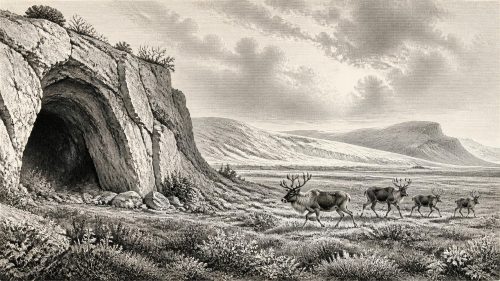
The Doneraile Bone Puzzle
Around 31,851 BCE, Ireland lay within the climatically unstable MIS 3, before the Last Glacial Maximum. Evidence is environmental and archaeological, not historical: cave bones, sediments, pollen and glacial deposits indicate a cold, open, intermittently accessible landscape. Castlepook Cave, County Cork, preserves remains of mammoth, reindeer, giant deer, hyaena and other fauna, although re-dating shows not all overlapped. Derryvree, County Fermanagh, records tundra vegetation and freshwater habitats later buried by ice. A possibly cut-marked Castlepook reindeer bone suggests a brief human visit, but lacks secure context or associated artefacts. Ireland’s human presence then remains unproven; environmental change dominates the record.

Doneraile’s Cave Archive
31,850 BCE is a modern label, not a recoverable Irish historical year, within the unstable later Ice Age. Ireland’s shifting climate, ice margins and lowered seas created changing connections with Britain and continental Europe, though routes remain uncertain. Castlepook Cave near Doneraile preserves Ireland’s richest pre-Last Glacial Maximum fauna, including mammoth, reindeer, giant deer, hyaena, wolves and lemmings, indicating recurring cold open habitats. Cave deposits and revised dating caution against treating these animals as contemporaries. A possibly tool-marked reindeer bone suggests, but cannot prove, temporary human activity. No settlement, tools or surface confirms habitation. Research may refine this environmental archive.

Maguirebridge’s Interstadial Waters
Around 31,849 BCE, Ireland lay in the climatically unstable Marine Isotope Stage 3, not a date archaeology can resolve precisely. Freshwater silts at Derryvree, County Fermanagh, dated broadly to 36,900–31,700 cal BP, indicate a locally ice-free interstadial landscape of open vegetation, wetlands and cold conditions. Castlepook Cave, County Cork, preserves remains of reindeer, deer, bear, fox, hare, lemming, wolf, hyaena and mammoth, showing varied Pleistocene fauna. A cut-marked reindeer bone may indicate Upper Palaeolithic butchery, but cannot demonstrate settlement. Subsequent ice-sheet expansion then profoundly transformed Ireland. Evidence supports only cautious reconstruction of transient habitats, animals and possible brief human visits.

Maguirebridge’s Buried Freshwater
Around 31,848 BCE, Ireland experienced the unstable cold conditions of Marine Isotope Stage 3, rather than a datable historical event. Landscapes varied between ice, periglacial ground, wetlands and exposed shelves, preceding the Last Glacial Maximum. At Derryvree, County Fermanagh, freshwater sediments enclosed by glacial tills preserve evidence of treeless tundra, mosses, sedges, pools and frost-affected terrain. Castlepook Cave, County Cork, contains a fauna including reindeer and Ice Age animals. A possibly tool-marked reindeer bone may indicate human presence, but no settlement, tools or occupation surface survives. The evidence documents environmental change and shifting animal communities, not prehistoric society or politics.

Doneraile’s Reindeer Landscape
Around 31,847 BCE, Ireland lay within the climatically unstable MIS 3 interval, not a precisely datable historical year. Cold, varied landscapes included periglacial tundra wetlands, documented at Derryvree, while later glaciation erased much evidence. Castlepook Cave, County Cork, preserves mixed remains of reindeer, mammoth, giant deer, hyaena, wolves, lemmings and other fauna, indicating periodically open, treeless habitats. A reindeer femur reportedly bears a stone-tool cut mark, suggesting possible human carcass processing around 31,000 BCE. However, no associated tools, hearths or settlement evidence confirm occupation. Changing sea levels, ice and lost coastal deposits obscure access routes. Perhaps transient human visits occurred.
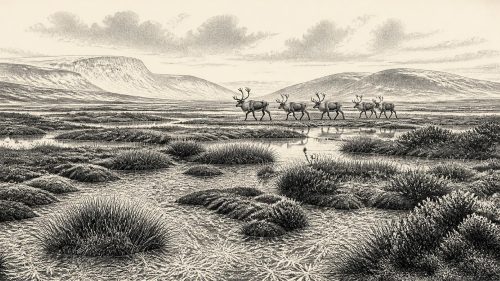
Derryvree’s Moss and Silt
The modern label 31,846 BCE denotes a broad MIS 3 Ice Age interval, not a datable Irish event. At Derryvree, County Fermanagh, buried organic silts, pollen, plants and insects record cold, treeless tundra wetlands, indicating that parts of Ireland supported freshwater habitats before major ice-sheet expansion. Castlepook Cave, County Cork, preserves disturbed but important remains of reindeer, mammoth, bears, wolves, lemmings and other fauna, though species were not necessarily contemporaneous. A cut-marked reindeer femur may indicate Upper Palaeolithic butchery around 31,000 BCE, yet cannot prove settlement. No secure tools, hearths, dwellings or human remains exist. Possible human presence remains unconfirmed.

Castlepook’s Open Season
At the notional date of 31,845 BCE, Ireland lay within the climatically unstable MIS 3 phase of the last Ice Age, approaching wider glaciation but retaining varied ice-free environments. Fermanagh sediments demonstrate freshwater habitats during broad calibrated ranges encompassing this period. Castlepook Cave in County Cork preserves Ireland’s richest Ice Age vertebrate collection, including mammoth, reindeer, giant deer, bears and hyaenas, deposited over millennia. A reportedly cut-marked reindeer femur, about 33,000 years old, may indicate brief Upper Palaeolithic butchery. However, it cannot prove permanent settlement or society. Glacial erosion, complex cave deposits and uncertain dating require caution; animals certainly ranged.

Derryvree’s Frostbound Pool
At 31,844 BCE, Ireland lacks a recoverable annual history; evidence instead describes a changing Late Pleistocene environment. Derryvree, County Fermanagh, preserves freshwater silts between glacial tills, radiocarbon-dated broadly to a range encompassing this period. Plant remains indicate cold, open tundra with wetland niches, rather than continuous ice cover. Castlepook Cave fauna demonstrate cold-stage mammals, including mammoth, reindeer and predators, although disturbed contexts limit conclusions. A possibly tool-marked reindeer bone suggests brief human presence, but remains unconfirmed. Lower sea levels and shifting ice shaped uncertain routes. Approaching later maximum glaciation erased much evidence, leaving deposits and bones as crucial scientific archives.

Derryvree’s Freshwater Window
About 31,843 BCE, Ireland lay within the climatically unstable Late Pleistocene, before the last British–Irish Ice Sheet reached its maximum. Freshwater sediments at Derryvree, County Fermanagh, dated broadly to this period, preserve evidence of ice-free wet tundra, mosses, sedges and herbaceous vegetation between glacial advances. Cave records and faunal collections indicate fluctuating milder phases and varied mammals, including reindeer, mammoth and hyaena, although deposits cannot reconstruct single communities. Possible cut marks on a Castlepook reindeer bone suggest a human visit, not settlement. Subsequent ice expansion destroyed or buried much evidence, leaving fragmentary environmental archives rather than a documented human society.

Awbeg Valley Faunal World
Around 31,842 BCE, Ireland lay in the unstable Late Pleistocene, before the Last Glacial Maximum, when expanding ice alternated with cold, open freshwater landscapes. Inter-till deposits in Fermanagh preserve evidence of grasses, sedges, tundra plants, insects and waterlogged ground. Castlepook Cave above the Awbeg Valley contains Marine Isotope Stage 3 remains of reindeer, mammoth, giant deer, hyaena, wolves and other cold-adapted fauna, demonstrating links with wider north-west Europe. A cut-marked reindeer femur may indicate brief human butchery, but disturbed cave contexts preclude certainty. No settlement, tools, hearths or cultural evidence confirms occupation. Scientific dating and environmental remains define it best.

Castlepook’s Uncertain Visitors
31,841 BCE is an imprecise modern label for Ireland during Marine Isotope Stage 3, when fluctuating Ice Age climates produced severe but intermittently habitable environments. Cave, sediment and climate evidence cannot identify events, peoples or permanent settlement. Castlepook Cave in County Cork preserves Ireland’s richest pre-Last Glacial Maximum vertebrate archive, including mammoth, giant deer, reindeer, bear and hyaena, though disturbed deposits and revised dates demand caution. A marked reindeer femur may indicate human butchery around 31,000 BCE, but lacks secure archaeological context. Ireland therefore supported mobile animal communities and perhaps transient hunter-gatherers, not documented societies, agriculture or established Palaeolithic occupation.

Derryvree’s Fossil Bogbean
Labelled 31,840 BCE, this period in Ireland belongs broadly to the climatically variable later Marine Isotope Stage 3, not to a recoverable historical year. Derryvree, County Fermanagh, preserves freshwater silts between glacial tills, indicating an ice-free interval of cold, treeless, waterlogged tundra with bogbean, mosses, sedges and other plants. Cave finds in southern Ireland show Ice-Age fauna including mammoth, reindeer, giant deer, bears, Arctic foxes and hyaenas, though their dates and contexts vary. Possible human evidence remains inconclusive. Later glaciation transformed and erased much evidence, leaving environmental records rather than evidence of settlement, politics, economy or culture by people locally.

Cork Cave-Bone Archive
31,839 BCE is a retrospective label within Marine Isotope Stage 3, not a securely datable Irish event. During this climatically unstable Late Pleistocene interval, changing ice, sea levels and habitats shaped southern Ireland. Cave deposits at Castlepook, Shandon and Foley preserve evidence of episodic pre-Last Glacial Maximum mammals, including reindeer, horse, bear and cold-adapted species, although assemblages mix dates and revised radiocarbon results remain crucial. Glaciation later destroyed much evidence. No secure human settlement, tools or activity can be assigned to Ireland at this time. The record therefore documents changing environments and fauna, while human presence remains entirely unproven today.

Castlepook’s Bone Chambers
Circa 31,838 BCE, Ireland lay within the variable, cold conditions of Marine Isotope Stage 3, before the Last Glacial Maximum. Castlepook Cave in County Cork preserves remains of mammoth, reindeer, hyaena, bear, wolf, Arctic fox, hare and lemmings, indicating open habitats supporting predators and grazing animals. Cave deposits reflect complex carnivore and natural processes. A marked reindeer femur may indicate human butchery, but lacks secure context and remains unproven. Derryvree, County Fermanagh, records ice-free tundra wetlands between glacial advances. Lower seas altered coasts, though Ireland remained separated from Britain. The evidence reveals changing landscapes, not permanent human settlement or society.

Castlepook’s Scored Femur
Castlepook Cave near Doneraile, County Cork, preserves a mixed Late Pleistocene animal archive spanning roughly 45,700–19,950 years BP. A directly dated reindeer femur, about 33,000 years old, bears a fresh-bone incision possibly made by a stone tool, offering tentative evidence of human butchery before the Last Glacial Maximum. Disturbed deposits and inadequate early excavation records mean it cannot prove settlement, permanent population or a specific culture. Its fauna, including mammoth, reindeer, giant deer and hyaena, indicates a cold, varied landscape. Any visitors were probably mobile hunter-gatherers. Castlepook expands Ireland’s possible human past while underscoring the need for securely stratified evidence.

Maguirebridge’s Tundra Record
Around 31,836 BCE, Ireland lay in the later Marine Isotope Stage 3, before the Last Glacial Maximum, but evidence cannot describe a precise year or society. Derryvree, County Fermanagh, preserves silts dated broadly to 36,900–31,700 calibrated years BP, showing cold, treeless, wet tundra with hardy plants and seasonal periglacial conditions. Castlepook Cave, County Cork, records diverse fauna, including mammoth and reindeer, although species did not necessarily coexist. A possibly cut-marked reindeer bone may indicate brief human activity, but no settlement is proven. Lower seas enabled changing connections with Britain and Europe before advancing ice erased much evidence from this period.

Doneraile’s Reindeer Ledger
31,835 BCE is a modern label for a poorly resolved MIS 3 period, not a recorded Irish year. Radiocarbon dates require calibration, and cave finds often lack secure context. Ireland’s cold, variable Late Pleistocene landscapes included open tundra-like vegetation, wetlands and altered coastlines, while Derryvree provides environmental evidence. Castlepook Cave near Doneraile preserves fauna including reindeer, mammoth, hyaena and bear, accumulated across different times and processes. A cut-marked reindeer femur may indicate butchery by mobile Upper Palaeolithic visitors around 31,000 BCE. However, it proves neither settlement nor continuity. No evidence supports claims about institutions, culture or ritual; further investigation continues.

Derryvree’s Arctic Sediments
At 31,834 BCE, Ireland cannot be described through annual history because evidence consists of geological and palaeontological records rather than written or archaeological chronologies. During Marine Isotope Stage 3, an unevenly growing British–Irish Ice Sheet alternated with areas of open, cold tundra. Derryvree silts, later buried by ice, preserve pollen, mosses and fauna indicating periglacial conditions, while Castlepook Cave records mammals including mammoth, reindeer, giant deer, predators and lemmings across a period. No secure evidence establishes human settlement, institutions or culture. A possibly cut-marked reindeer bone suggests an unconfirmed transient visit. These fragments reveal an Ice Age environment before maximum.

Derryvree’s Sedge Marsh
Labelled 31,833 BCE, this period cannot be dated precisely in Ireland and is best understood as a Late Pleistocene interval within Marine Isotope Stage 3. Sediments at Derryvree and Greenagho show that parts of Ireland remained ice-free, supporting open tundra, sedge marshes and seasonal freshwater habitats before later glaciation. Castlepook Cave preserves remains of reindeer, mammoth and other cold-adapted fauna, although they do not represent a single community. A possible stone-tool cut on a reindeer bone suggests brief human activity, but no secure settlement evidence exists. Subsequent ice-sheet expansion reshaped Ireland, preserving Derryvree as a rare pre-glacial environmental record survival.

Doneraile’s Incised Reindeer Femur
Around 31,832 BCE, Ireland lay within the climatically unstable MIS 3, before the Last Glacial Maximum, with changing ice, exposed shelves and open periglacial habitats. Derryvree sediments in Fermanagh indicate treeless tundra wetlands, while Castlepook Cave near Doneraile preserves mammoth, giant deer, reindeer, bear, wolf and hyaena remains accumulated over time. These finds demonstrate intermittent suitable habitats and animal movements, not a complete landscape or settled population. An incised reindeer femur, dated roughly 33,000 years ago, may record stone-tool butchery and fleeting human activity. However, poor stratigraphic context and absent associated artefacts mean permanent occupation and cultural traditions remain unproven.

Derryvree’s Tundra Silt
31,831 BCE is a modern label, not a recoverable Irish historical year, and evidence belongs broadly to climatically unstable Marine Isotope Stage 3. At Derryvree, Fermanagh, freshwater silts dated to 30,500 radiocarbon years BP, between glacial tills, preserve signs of cold, open, waterlogged tundra rather than woodland. Cave assemblages show that reindeer, giant deer, horse, mammoth, predators and other mammals occupied Ireland during parts of MIS 3. A marked Castlepook reindeer femur may indicate butchery by humans around 33,000 years ago, but remains unconfirmed. Ice advances, changing coastlines and poor preservation limit secure conclusions about settlement, society, movement and subsistence.
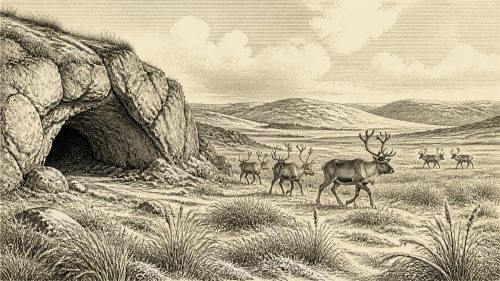
Castlepook’s Lone Incision
31,830 BCE is a modern label for a climatically unstable phase of MIS 3, not a recoverable Irish calendar year. Ireland was cold, largely treeless and open, with changing ice, lowered seas and uncertain access from Britain. Castlepook Cave in County Cork preserves fauna including reindeer, mammoth, giant deer, hyaena, wolves and lemmings, evidencing a wider north-west European cold-stage ecosystem. Cave deposits are complex and bones may reflect predators, water or natural deaths. A deeply incised reindeer femur, reportedly about 33,000 years old, may record stone-tool butchery, but cannot prove settlement. Expanding ice later erased evidence and profoundly transformed Ireland.

Derryvree’s Sedgewater Archive
31,829 BCE is a modern approximation within Marine Isotope Stage 3, not a precisely knowable Irish date. Evidence from Derryvree, County Fermanagh, records freshwater sediments between glacial tills, showing locally ice-free, cold, treeless wetlands before the later ice-sheet maximum. Plants, insects and southern cave deposits indicate fluctuating climates, with water and sparse vegetation persisting during severe conditions. Castlepook Cave preserves mammoth, reindeer, giant deer, predators and lemmings, though its old, disturbed collections require caution. A marked reindeer bone may indicate human activity, but cannot prove settlement. No political or cultural institutions are evidenced; environmental change defines this deep Irish prehistory.

Elephant Hall’s Mammoth Rib
Thirty-one thousand, eight hundred and twenty-eight BCE is a modern label approximating early MIS 3, not a precisely datable Irish event. Ireland’s unstable Late Pleistocene environment included intermittently ice-free, cold open habitats. Derryvree sediments in Fermanagh record wet tundra-like vegetation, while Castlepook Cave in Cork preserves diverse fauna, including mammoth, reindeer, giant deer and predators, although cave deposits are chronologically mixed. A cut-marked reindeer femur may indicate Palaeolithic butchery, but remains unconfirmed evidence of human visitation rather than settlement. No contemporary Irish camps, artefacts, institutions or cultural practices are securely known. These records reveal ecological complexity while leaving visitation unresolved.

Derryvree’s Sub-Till Wetland
Labelled 31,827 BCE only for modern chronology, this period belongs broadly to later Marine Isotope Stage 3, when Ireland experienced unstable Ice Age climates before maximum glaciation. At Derryvree, County Fermanagh, freshwater silts between glacial tills, dated approximately 36,900–31,700 calibrated BP, reveal cold, marshy tundra-steppe supporting aquatic plants, insects and local ecological variation. Castlepook Cave, County Cork, preserves MIS 3 fauna including mammoth, giant deer, reindeer, horse, hyaena and Arctic species, demonstrating changing animal habitats. Possible tool damage on a reindeer bone suggests, but cannot establish, human activity. Lower seas aided movement uncertainly; no secure Palaeolithic occupation evidence exists yet.

Maguirebridge’s Sedgewater Fauna
31,826 BCE is a modern point within a broad, uncertain Late Pleistocene radiocarbon range, rather than a datable Irish event. Organic sediments at Derryvree, County Fermanagh, between glacial tills, record an ice-free, cold freshwater tundra with sedges, mosses, insects and sparse vegetation. Comparable sites confirm intermittent non-glacial conditions before expanding ice culminated later in the Last Glacial Maximum. Castlepook Cave, County Cork, preserves remains of mammoth, reindeer, giant deer, carnivores and smaller animals, evidencing productive open-country ecosystems. A possibly cut-marked reindeer bone raises, but cannot prove, early human presence. No secure evidence supports settlement or social organisation; evidence remains fragmentary.

The Doneraile Limestone Assemblage
31,825 BCE is a reference point, not a recoverable Irish year. During climatically unstable Marine Isotope Stage 3, Ireland contained expanding regional ice, while ice-free areas were open, treeless, cold environments and coastlines differed under lower sea levels. Castlepook Cave, County Cork, preserves a long, disturbed assemblage of mammoth, reindeer, giant deer, hyaena and other fauna, demonstrating intermittent animal occupation rather than a single community. Revised radiocarbon dating places remains earlier in MIS 3. A possibly cut-marked reindeer bone suggests a human visit around 33,000 years ago, but no secure settlement evidence exists. Uncertainty remains central to interpreting this period.

Hyaena Hall’s Reindeer
31,824 BCE is not a recoverable historical year but a point within unstable Marine Isotope Stage 3, before the Last Glacial Maximum. Ireland’s ice, coastlines and possible routes from Britain changed regionally, while evidence is fragmentary. Derryvree, County Fermanagh, preserves older deposits showing treeless, wet tundra with sedges, pools and cold-adapted life. Castlepook Cave, County Cork, yielded mammoth, reindeer, giant deer, bear and Ireland’s only spotted hyaena remains, though its bones span different periods. An incised reindeer femur may indicate human butchery, but lacks secure context. No settlements, tools, institutions or beliefs can be identified; research may clarify human presence.

Maguirebridge’s Tundra Mosses
Around 33,800 cal BP, corresponding broadly to 31,823 BCE, Ireland experienced a climatically unstable late Pleistocene environment before the Last Glacial Maximum. Derryvree, near Maguiresbridge, preserves freshwater silts between tills, dated approximately 35,900 cal BP, indicating locally ice-free, open tundra with mosses, sedges, grasses, herbs and juniper. Cave deposits show that reindeer, giant deer and carnivores reached Ireland at various times, but do not form single snapshots. No securely dated human settlements, tools or institutions exist for this period; early human presence remains unproven. Fragmentary geological and biological evidence instead records seasonal habitats later profoundly reshaped by expanding ice sheets.

The Silent Reindeer Femur
31,822 BCE is a modern chronological approximation, not a recorded Irish year. During late Marine Isotope Stage 3, before maximum glaciation, Ireland was a cold, unstable landscape supporting diverse fauna, including mammoth, reindeer, giant deer, hyaena and lemmings. Castlepook Cave in Cork provides crucial but imperfect evidence, affected by old excavation methods and disturbed deposits. A reindeer femur, dated about 33,000 years ago, bears a mark possibly made by a stone tool, suggesting brief Upper Palaeolithic human visitation. However, no associated tools, hearths or settlement prove occupation. Later ice damaged evidence, leaving human presence in Ireland plausible but still unproven.

Mammoth Cave’s Reindeer Passage
31,821 BCE falls within Ireland’s later Marine Isotope Stage 3, a cold, unstable Pleistocene period known only through sparse environmental and faunal evidence. Castlepook Cave, north Cork, yielded a reindeer femur possibly cut by a stone tool, suggesting brief human carcass processing but not settlement. Derryvree deposits in Fermanagh indicate open, treeless tundra conditions, while Castlepook fauna included reindeer, mammoth, predators and lemmings. Dating remains broad and uncertain, and cave deposits are disturbed. Possible visitors were mobile Upper Palaeolithic hunter-gatherers, though no camps, tools or human remains survive. Changing sea, ice and land routes shaped access before glaciation obscured evidence.

Maguirebridge Mossland
31,820 BCE is a modern approximation within Marine Isotope Stage 3, not a recoverable historical year. Ireland then experienced unstable Ice Age conditions before the Last Glacial Maximum. Derryvree’s buried freshwater sediments in Fermanagh reveal locally ice-free, open tundra or mossy wetland supporting herbs, sedges, insects and seasonal animal life. Castlepook Cave in Cork preserves remains of diverse cold-stage mammals, accumulated across different periods rather than as one community. A marked reindeer femur may indicate butchery by people, but lacks secure archaeological context and cannot demonstrate settlement. Later glaciation destroyed much evidence; environmental change, not human history, is securely documented.

Castlepook’s Deep Winter
Around 31,819 BCE, Ireland was a climatically unstable Late Pleistocene landscape, not a place with recorded human history. Lower seas, shifting ice margins and episodic connections shaped animal movement, although routes remain uncertain. Derryvree deposits in Fermanagh preserve evidence of cold, open tundra vegetation, freshwater habitats and an ice-free interval later buried by glaciers. Castlepook Cave in Cork contains remains of reindeer, mammoth, giant deer, hyaena and other cold-stage animals, demonstrating varied fauna before the Last Glacial Maximum. A marked reindeer femur may indicate human butchery, but cannot prove settlement. Later glaciation destroyed much evidence, leaving uncertainty central to interpretation.

Derryvree’s Inter-Till Pool
Around 31,818 BCE, Ireland experienced an unstable late Marine Isotope Stage 3 environment, not a precisely datable year. Derryvree, County Fermanagh, preserves freshwater organic sediments between glacial tills, showing a regional ice-free interval between advances. Its open, treeless tundra supported wetland plants, insects and grazing animals despite severe cold and seasonal freezing. Cave faunas, especially from Castlepook, County Cork, include reindeer, mammoth, giant deer, predators and scavengers, indicating productive open habitats. A possibly stone-cut reindeer femur raises the prospect of brief human activity, but cannot prove settlement. Evidence instead reveals a dynamic, regionally varied Ice Age landscape preceding maximum glaciation.

The Doneraile Bone Mark
Modern dating places 31,817 BCE within a broad, uncertain Marine Isotope Stage 3 range, rather than a recoverable historical year. Deposits at Derryvree in Fermanagh show that parts of Ireland supported cold, treeless tundra, freshwater hollows and grazing fauna between glacial advances. Castlepook Cave, County Cork, preserves reindeer, mammoth, hyaena and other Ice Age remains, reflecting a wider north-west European ecology. A deep mark on a reindeer femur may be a stone-tool butchery cut, offering evidence of Upper Palaeolithic visitors. However, disturbance, dating limits and absent associated finds preclude claims for settlement, society or continuity. Later ice expansion erased evidence.

The Awbeg Reindeer Incision
31,816 BCE is a modern label for an uncertain Late Pleistocene interval, when Ireland experienced volatile MIS 3 climates, falling seas and expanding ice. Derryvree, County Fermanagh, preserves freshwater sediments between till layers, indicating treeless, periglacial wetland with grasses, sedges, juniper and pools. Castlepook Cave, County Cork, contains mixed, long-accumulated remains of mammoth, reindeer, giant deer and carnivores, but cannot reconstruct one contemporary fauna. A cut-marked reindeer femur may indicate brief Upper Palaeolithic human carcass processing with a stone tool. It does not prove settlement. Subsequent ice expansion reshaped landscapes and destroyed evidence, leaving Ireland a sparsely documented cold-world frontier.

Greenagho’s Sub-Till Wetland
Around 31,815 BCE, Ireland was a regionally varied Late Pleistocene landscape, not a documented society. Low sea levels and fluctuating British–Irish ice permitted intermittent ecological connections, while advancing glaciers altered or destroyed evidence. Inter-till deposits at Derryvree and Greenagho in Fermanagh indicate freshwater wetlands, tundra vegetation and periglacial conditions before later glaciation. Cave assemblages, notably at Castlepook, show that cold-adapted mammals reached Ireland, though their dates and associations remain uncertain. A potentially tool-marked reindeer bone suggests a possible brief human visit, not settlement. No secure evidence supports contemporary communities, politics, religion, trade or enduring occupation; environmental change dominates the record.

Derryvree’s Freshwater Tundra
About 31,814 BCE, Ireland lay within the climatically unstable later Marine Isotope Stage 3, although no evidence permits dating events to a single year. Derryvree, County Fermanagh, preserves freshwater silts beneath later tills, indicating a cold, open, treeless tundra with ponds, mosses and sparse vegetation. Southern caves, particularly Castlepook, contain remains of cold-stage mammals, but mixed deposits and revised dates prevent reconstructing one contemporary fauna. A cut-marked reindeer femur may indicate Upper Palaeolithic human processing, yet lacks secure archaeological context and proves neither settlement nor population. Ireland was a shifting, intermittently habitable glacial frontier documented by sediments, bones and ice.

Derryvree’s Periglacial Pool
Centred on roughly 33,763 calibrated years BP, the article describes Ireland during unstable Marine Isotope Stage 3, not a recoverable single year. Derryvree, County Fermanagh, preserves freshwater sediments between glacial tills, indicating locally ice-free, periglacial tundra with mosses, sedges and cold-adapted insects. Other deposits and cave calcite support fluctuating conditions before later extensive glaciation. Castlepook Cave, County Cork, records diverse cold-stage mammals, including reindeer, mammoth and hyaena, although its chronology is mixed. A modified reindeer bone may indicate human butchery, yet remains contested. Evidence supports changing habitats and animal access, not permanent human settlement or uniform island-wide conditions throughout then.

Derryvree’s Tundra Waters
Around 31,812 BCE, Ireland lay within the unstable cold conditions of Marine Isotope Stage 3, not a precisely datable historical year. At Derryvree, County Fermanagh, freshwater silts later sealed beneath glacial till show an ice-free wet tundra of sedges, mosses, herbs, pools and seasonal freezing. Crag Cave calcite indicates episodic liquid-water conditions, confirming climatic variability. Cave faunas, including reindeer and mammoth, reflect harsh environments but uncertain dates and associations. A possibly cut-marked reindeer bone offers only tentative evidence of human activity. No settlements, polities or economy are known. Changing ice and sea levels made access uncertain before glaciation reshaped Ireland.

Doneraile’s Marked Hindleg
At the notional date of 31,811 BCE, Ireland lay in the variable MIS 3 phase before the Last Glacial Maximum, not in a historically identifiable year. Evidence is necessarily broad and uncertain. Organic sediments at Derryvree indicate a treeless, periglacial wetland with tundra vegetation during an interval encompassing this date. Castlepook Cave preserves remains of cold-adapted fauna, including reindeer, but cave deposits are mixed and imperfectly dated. A marked reindeer femur may indicate human butchery, suggesting transient Upper Palaeolithic visits, not permanent settlement. Low sea levels altered routes but did not guarantee a land bridge. Glaciation destroyed or buried evidence.

Hyaena Land at Castlepook
Around 31,810 BCE, Ireland lay within a changing Late Pleistocene landscape as the British–Irish Ice Sheet began expanding. Evidence from Derryvree, County Fermanagh, indicates treeless tundra, freshwater habitats and cold-adapted plants during an earlier ice-free interval. Castlepook Cave in north Cork produced remains of mammoth, reindeer, giant deer, bears, wolves, foxes, lemmings and spotted hyaenas, demonstrating intermittent links with continental fauna. A marked reindeer femur may indicate human butchery around 31,000 BCE, but lacks securely associated tools or occupation evidence. Any human presence remains hypothetical. Lower sea levels altered routes, while advancing ice later reduced habitable land and destroyed evidence.
Ice Approaches the Irish Landscape
31,809 BCE is a modern chronological marker, not a securely dated Irish event, with no written records, named people or settlements. Ireland then lay within a cold, unstable Late Pleistocene environment as the British-Irish Ice Sheet expanded unevenly. Open tundra, freshwater basins and treeless vegetation survived in places, although later ice destroyed much evidence. Inter-till deposits at Derryvree, County Fermanagh, indicate cold freshwater habitats. Castlepook Cave, County Cork, yielded reindeer, mammoth, giant deer, predators and other fauna, demonstrating substantial pre-glacial animal life. A marked reindeer bone may suggest brief human presence, but cannot prove permanent or continuous settlement in Ireland.

The Derryvree Cold Phase
31,808 BCE is a modern label rather than a recoverable Irish year, representing a broad Middle Midlandian interval within Marine Isotope Stage 3. Ireland’s conditions varied as the British–Irish Ice Sheet grew, producing severe, open periglacial landscapes rather than uniform ice cover. Derryvree and other Fermanagh deposits indicate wet treeless tundra, with sedges, grasses, shrubs, insects and freshwater habitats. Castlepook Cave preserves mammoth, reindeer, giant deer, predators and smaller cold-adapted animals, demonstrating intermittent ecological connections with Britain and Eurasia amid lower sea levels. A possibly cut-marked reindeer bone suggests, but does not prove, Upper Palaeolithic human presence without settlement evidence.
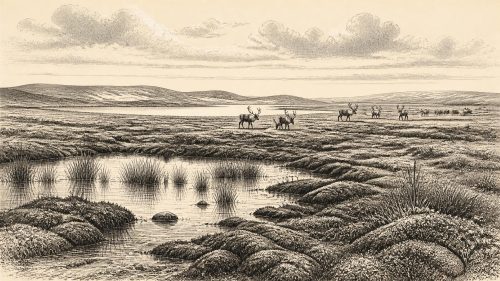
Bogbean Under Derryvree
31,807 BCE is a modern marker within unstable Marine Isotope Stage 3, not a documented Irish year. Derryvree, County Fermanagh, preserves freshwater sediments between glacial tills, dated broadly enough to encompass this period. Bogbean, mosses, sedges, insects and sparse herbs indicate cold, open, wet tundra-like ground during an ice-free interval. Greenagho confirms intermittent freshwater environments, challenging assumptions of continuous ice cover. Castlepook Cave records cold-stage fauna, including reindeer, mammoth, predators and scavengers, but represents successive episodes rather than one community. A possible cut-marked reindeer bone suggests transient Upper Palaeolithic visitors, not settlement. Ireland was a shifting frontier before maximum glaciation.

Glenulra’s Shifting Shore
Circa 31,806 BCE, Ireland lay within the climatically unstable Marine Isotope Stage 3, not a precisely datable single year. Ice margins varied regionally: Glenulra records land depression and high local relative sea levels near northern ice, while southern coasts could remain ice-free. Open, largely treeless tundra-steppe supported hardy plants and animals including reindeer, mammoth, hyaena, bears, hares and foxes, evidenced especially in southern caves. A cut-marked Castlepook reindeer femur may indicate episodic human butchery, but cannot demonstrate settlement. Later glaciation destroyed much evidence. The period is best understood as a changing Ice Age landscape, with human presence uncertain and provisional.

Derryvree’s Muskeg Window
31,805 BCE is a modern label within late Marine Isotope Stage 3, not a date for recoverable Irish events. Ireland experienced unstable glacial conditions, with ice-free areas varying regionally before later ice reshaped evidence. Derryvree’s freshwater sediments, preserved between tills, reveal cold, treeless tundra-like wetlands supporting insects and pools. Southern caves preserve fauna including mammoth, reindeer, giant deer, bear and hyaena, indicating open habitats but complex depositional histories. A possibly cut-marked reindeer bone from Castlepook raises prospects of transient Upper Palaeolithic visitors, yet no settlement or secure human occupation is known. These fragmentary archives demonstrate environmental change, not social history.

A Cut on Cork Bone
Labelled 31,804 BCE, this period falls within unstable Marine Isotope Stage 3, for which only broad calibrated chronologies are defensible. Irish sediments show that some areas were ice-free before the later Last Glacial Maximum, supporting cold, open tundra environments and mobile fauna. Castlepook Cave in County Cork preserves diverse, time-layered Pleistocene animal remains. A reindeer femur, dated broadly to about 33,000 years ago, bears a mark interpreted as stone-tool damage during butchery. If confirmed, it suggests a brief human encounter with a carcass, not settlement. No evidence supports continuous occupation, identities, politics, religion, or culture, while expanding ice transformed Ireland.

Castlepook’s Hyena Corridor
Although 31,803 BCE cannot denote a documented Irish event, it falls within MIS 3, before the Last Glacial Maximum. Ireland then experienced unstable cold conditions, with exposed tundra, wetlands and advancing ice rather than uniform glaciation. Derryvree sediments in Fermanagh indicate periglacial vegetation and freshwater habitats. Castlepook Cave, Cork, preserves a long, disturbed fossil record including mammoth, reindeer, giant deer, predators and lemmings, demonstrating access for Ice Age mammals. A marked reindeer femur may indicate brief Upper Palaeolithic butchery, but lacks secure context or supporting artefacts. Evidence supports animal landscapes and possible transient human visits, not settled population or polity.

The Maguiresbridge Silts
Around 31,802 BCE, Ireland lay within the climatically unstable Marine Isotope Stage 3, not a date capable of supporting annual history. At Derryvree near Maguiresbridge, freshwater silts, mosses, sedges and Arctic insects between till layers record a cold, treeless, locally ice-free interval. Comparable northern deposits show repeated glacial advances and retreats. Castlepook Cave preserves remains of cold-adapted fauna, including reindeer, giant deer, mammoth and predators, accumulated over varied periods. A possibly tool-marked reindeer bone suggests, but cannot prove, brief human presence. Evidence supports environmental change and animal occupation, while rejecting claims about contemporary Irish society, settlement or continuous human ancestry.

Fermanagh’s Moss-and-Sedge Archive
Around 31,801 BCE, a retrospective and imprecise calendar conversion, Ireland lay in the unstable later Marine Isotope Stage 3. At Derryvree, County Fermanagh, organic sediments between tills preserve mosses, sedges and cold-climate insects, indicating open tundra, freshwater hollows and periglacial conditions between ice advances. Related deposits confirm intermittent non-glacial environments, not island-wide conditions. Castlepook Cave, County Cork, contains mixed MIS 3 fauna including mammoth, reindeer, hyaena and bear. A cut-marked reindeer femur may indicate human carcass processing, but cannot prove settlement. Approaching major ice expansion, Ireland’s record remains environmental, fragmentary and cautiously interpreted, with chronology expressed through broad calibrated ranges.